Your new post is loading...

|
Scooped by
Dr. Stefan Gruenwald
September 15, 2016 12:46 PM
|
Space debris from completed missions — inactive satellites, lens covers, fragments from spaceship disengagements — pose a serious and ongoing threat to active communication and navigation satellites used by billions of people on Earth. An article published today by SPIE, the international society for optics and photonics, in Optical Engineering describes a new approach whereby debris orbiting in space could be pushed into the Earth's atmosphere by laser impulses, causing it to burn up. Pieces even smaller than a smartphone represent danger to our ability to share information and find our way. While the locations of major space debris are known, fragments smaller than 10 centimeters are difficult to catalogue, and there are 10 times more small pieces than large ones. Because of their remarkably high speeds — up to 15 kilometers per second — small pieces of debris pose a serious threat for space flight and the operation of satellites such as those involved in communications and navigation. In "Laser-based removal of irregularly shaped space debris", Stefan Scharring, Jascha Wilken, and Hans-Albert Eckel of the German Aerospace Center describe a new approach in applying laser-induced damage principles where using high-energy laser pulses modify the orbit of debris and push it into the atmosphere, causing it to burn up. In the weightlessness of space, the authors note, "a secondary effect of laser-induced damage, which is not immediately apparent in experiments on Earth": when part of an object is ablated, or removed, using a laser beam, the recoil transfers momentum to the object. The authors simulate powerful laser oscillations to hazardous materials with the goal of modifying the debris' orbit so that it re-enters and is destroyed by the atmosphere. Similar laser-based concepts to remove space debris have been proposed in the past. However, the other studies have targeted simple geometric shapes such as plates, cubes, spheres, and cylinders that are optimally oriented to the laser source. The authors point out that the drawback of such studies is that they fail to address geometrically complex or irregularly shaped objects - characteristic of most space debris - and do not account for the random orientation of those objects in space. "Our work constitutes the transition from laboratory experiments with idealized flat targets and optimum laser alignment towards simulations of the real world scenario with arbitrarily shaped debris and limited laser pointing accuracy," said the authors.
|
|
Scooped by
Dr. Stefan Gruenwald
September 15, 2016 12:41 PM
|
According to a leading theory on the origins of black holes, they emerge from dying, exploding stars. Now, researchers using the Hubble Space Telescope claim they might have observed that birth, New Scientist reports. In a study published in Solar and Stellar Astrophysics, the researchers say they saw the red supergiant star N6946-BH1 flare a million times brighter than our sun for several months in 2009 before fading out of visible wavelengths, a likely sign of a brand-new black hole. If this is indeed such an event, it could provide valuable data about black hole life cycles. The researchers will try to confirm this theory over the next few months by searching for the x-ray traces of matter falling into the new hole.
|
|
Scooped by
Dr. Stefan Gruenwald
September 15, 2016 12:36 PM
|
Just keeping an eye on small prostate cancers results in the same 10-year survival rate as treating them, a major study suggests. The UK researchers warned too many men were having procedures that damaged their sex life and caused incontinence. A trial of 1,643 men with small prostate cancers resulted in the same 99% survival rate after a decade for those who had had surgery, radiotherapy or simply monitored the tumor. Experts said the results were "extremely reassuring" for men. "It's a global problem that patients are over-treated," Prof Freddie Hamdy from the University of Oxford, told the BBC. In the trial, men whose prostate cancer had been detected by testing for a chemical - prostate-specific antigen (PSA) - in the blood were either monitored, had surgery to remove the prostate or radiotherapy to kill the tumor. The study, backed by the research wing of the NHS - the National Institute for Health Research - then followed the men for 10 years. The survival rates were the same, but there was a higher risk of side-effects with treatment. There was double the risk of incontinence and problems with sex in those having surgery. Radiotherapy increased the risk of bowel problems. But there was a price to the surveillance option - the prostate cancer progressed in one in five cases. These men could be treated, but it may affect their long-term survival beyond the 10-year study. "It's understandable, if a 55-year-old man is told they have cancer, and they have a family, they don't want to take any risks."
|
|
Scooped by
Dr. Stefan Gruenwald
September 15, 2016 12:30 PM
|
Data from the New Horizons probe reveal what makes Charon’s poles red. Why are Charon's poles dusted with reddish material? Scientists now have learned that Pluto’s moon Charon captures methane shed by its nearby dwarf planet, creating thin reddish coatings on the moon’s poles. In a paper published in Nature, a team of scientists has come up with a process by which methane (CH4) gets trapped during the poles’ long, cold winters, said lead author Will Grundy, a planetary scientist at the Lowell Observatory in Flagstaff, Ariz., and co-investigator on NASA’s New Horizons mission. Grundy heads up the mission’s surface composition team.“Anything that’s streaming out near Charon is attracted to Charon,” Grundy said. Charon’s rotation axis tips about 119°, which means it spins on its “side.” And because the moon is tidally locked with Pluto, for half of Pluto’s year (which is just over a century on Earth) each of the moon’s poles gets almost no direct sunlight, Grundy said. Temperatures plummet to the teens—in kelvins. For reference, 10 kelvins is about –200°C. Like trillions of tiny Ping-Pong balls, methane molecules trapped by Charon’s gravity bounce around on the surface, sticking where it’s too cold to escape, Grundy continued. On the basis of how much methane escapes Pluto, the researchers suggest that methane at the poles accumulates 0.16 millimeter every 1 million Earth years. Although polar ice caps have been seen on other planets, making a polar cap by trapping gas from another body seems to be a new phenomenon, Grundy added.
|
|
Scooped by
Dr. Stefan Gruenwald
September 15, 2016 12:25 PM
|
Researchers have observed quantum effects in electrons by squeezing them into one-dimensional 'quantum wires' and observing the interactions between them. The results could be used to aid in the development of quantum technologies, including quantum computing. Scientists have controlled electrons by packing them so tightly that they start to display quantum effects, using an extension of the technology currently used to make computer processors. The technique, reported in the journal Nature Communications, has uncovered properties of quantum matter that could pave a way to new quantum technologies. The ability to control electrons in this way may lay the groundwork for many technological advances, including quantum computers that can solve problems fundamentally intractable by modern electronics. Before such technologies become practical however, researchers need to better understand quantum, or wave-like, particles, and more importantly, the interactions between them. Squeezing electrons into a one-dimensional 'quantum wire' amplifies their quantum nature to the point that it can be seen, by measuring at what energy and wavelength (or momentum) electrons can be injected into the wire. "Think of a crowded train carriage, with people standing tightly packed all the way down the centre of the carriage," said Professor Christopher Ford of the University of Cambridge's Cavendish Laboratory, one of the paper's co-authors. "If someone tries to get in a door, they have to push the people closest to them along a bit to make room. In turn, those people push slightly on their neighbors, and so on. A wave of compression passes down the carriage, at some speed related to how people interact with their neighbors, and that speed probably depends on how hard they were shoved by the person getting on the train. By measuring this speed, one could learn about the interactions." "The same is true for electrons in a quantum wire – they repel each other and cannot get past, so if one electron enters or leaves, it excites a compressive wave like the people in the train," said the paper's first author Dr Maria Moreno, also from the Cavendish Laboratory.
|
|
Scooped by
Dr. Stefan Gruenwald
September 15, 2016 12:22 PM
|
As you relax and let your mind drift aimlessly, you might remember a pleasant vacation, an angry confrontation in traffic or maybe the loss of a loved one. And now a team of researchers at Duke University say they can see those various emotional states flickering across the human brain. "It's getting to be a bit like mind-reading," said Kevin LaBar, a professor of psychology and neuroscience at Duke. "Earlier studies have shown that functional MRI can identify whether a person is thinking about a face or a house. Our study is the first to show that specific emotions like fear and anger can be decoded from these scans as well." The data produced by a functional MRI hasn't changed, but the group is applying new multivariate statistics to the scans of brain activity to see different emotions as networks of activity distributed across areas of the conscious and unconscious brain. These networks were first mapped by the team in a March 2015 paper in the journal Social, Cognitive and Affective Neuroscience. They identified seven different patterns of brain activity reflecting contentment, amusement, surprise, fear, anger, sadness and neutrality. To build these maps, they had put 32 research subjects into the scanner and exposed them to two music clips and two film clips that had been shown to induce each of the seven emotions. The subjects also completed self-report questionnaires on their mood states for further validation. Analytical software called a machine learning algorithm was then presented with some of the subjects' data and tasked with finding a pattern that concurred with each emotional stimulus. Having learned what each of the seven states ought to look like, the algorithm was then presented with the scans of the rest of the study group and asked to identify their emotional states without knowing which emotion prompt they received. LaBar said the model performed better than chance at this task, despite differences in brain shapes and arousal levels between subjects. "And it proved fairly sensitive," he said. The latest study, appearing Sept. 14 in Plos Biology, followed up by scanning 21 subjects who were not offered stimuli, but were encouraged to let their minds wander. Every thirty seconds, they responded to a questionnaire about their current emotional state.
|
|
Scooped by
Dr. Stefan Gruenwald
September 15, 2016 12:18 PM
|
What does solar wind look like when it first forms from the Sun’s corona? Now, with new satellite images manipulated to remove background light, scientists can answer that question. “This is part of the last major connection we need to make to understand how [the Sun] influences the environment around the Earth,” Craig DeForest, an astrophysicist at the Southwest Research Institute in Boulder, Colo., told Eos. DeForest is the lead author on a new paper describing the novel technique, published last week in the Astrophysical Journal. Back in the 1960s, scientists discovered the solar wind, a constant flow from the Sun of extremely high temperature plasma that’s so hot the Sun’s gravity can’t hold it. Scientists knew that the solar wind was somehow connected to the Sun’s corona—the bright layer of the Sun’s atmosphere that can be seen during a solar eclipse—but until now, scientists weren’t sure how one transitioned into the other.
|
|
Scooped by
Dr. Stefan Gruenwald
September 13, 2016 12:46 PM
|
European mission will shed light on hidden asteroids, the Universe’s expansion and exoplanets. Astronomers the world over are about to get their first taste of a tool that will transform their working lives. Gaia, a space telescope launched by the European Space Agency (ESA) in late 2013, will release its first map of the Milky Way on 14 September. The catalogue will show the 3D positions of 2,057,050 stars and other objects, and how those positions have changed over the past two decades. Eventually, the map will contain one billion objects or more and will be 1,000 times more extensive and at least 10 times more precise than anything that came before.
|
|
Scooped by
Dr. Stefan Gruenwald
September 13, 2016 12:31 PM
|
Astronomers have found evidence of a magnetar - magnetized neutron star - that spins much slower than the slowest of its kind known until now, which spin around once every 10 seconds. The magnetar 1E 1613 - at the centre of RCW 103, the remains of a supernova explosion located about 9,000 light years from Earth - rotates once every 24,000 seconds (6.67 hours), the researchers found. "The source exhibits properties of a highly magnetized neutron star, or magnetar, yet its deduced spin period is thousands of times longer than any pulsar ever observed," Nasa said in a statement. On June 22, 2016, an instrument aboard Nasa's Swift telescope captured the release of a short burst of X-rays from 1E 1613. The Swift detection caught astronomers' attention because the source exhibited intense, extremely rapid fluctuations on a time scale of milliseconds, similar to other known magnetars. These exotic objects possess the most powerful magnetic fields in the universe -trillions of times that observed on the Sun - and can erupt with enormous amounts of energy.
|
|
Scooped by
Dr. Stefan Gruenwald
September 13, 2016 12:26 PM
|
The immune system’s T cells stand as one of the body’s main lines of defense against infection and cancer. But when confronted with an established tumor or a chronic viral infection — situations where they receive many signals for a long time to get out there and do something — T cells often do an odd thing. They just...stop. These T cells exist in a unique state of dysfunction. They are neither anergic (unresponsive to all signals to attack) nor senescent (old and quiescent). Rather, they are stuck, unable to turn against the tumor or invading virus and wipe it out on their own. Their brakes are on. “These cells look like normal activated T cells in many respects, but they don’t make anything that helps promote the immune response,” said Chao Wang, a postdoctoral fellow working with Broad associate members and Brigham and Women’s Hospital researchers Vijay Kuchroo and Ana Anderson. “They may actually hinder the response by producing suppressive factors.” If the brakes could be turned off, however, these cells could be wielded as powerful therapeutic tools. The successful use of checkpoint inhibitors — drugs that interfere with T cell-regulating proteins such as PD-1 and CTLA-4 on dysfunctional T cells — to treat some cancers highlights this approach’s immense promise. But not every patient or every tumor responds to these immunotherapy treatments, suggesting that additional circuits play roles in T cell dysfunction. “The fact that checkpoint blockade works means that you can boost T cell function without pushing the cells into dangerous overactivity,” said Meromit Singer, a postdoctoral fellow working with Kuchroo and Broad core member and Klarman Cell Observatory director Aviv Regev. “By understanding the profile and the mechanisms underlying this dysfunctional state, we might be able to tweak the cells in a way that allows them to act in our favor.” However, when others have looked for gene expression profiles that might tell dysfunctional and healthy, activated T cells apart, they found the profiles to be very similar. It is as though the two states — activation and dysfunction — were coupled. Whether they are lies at the heart of a study Singer, Wang, Anderson, Kuchroo, Regev, and colleagues published recently in Cell. Using a mix of bulk and single cell transcriptomics and functional genomics, the group unwound the transcriptional threads of T cell activation and dysfunction in the context of cancer. Their findings not only revealed a distinct dysfunction gene expression program, but identified two of its major drivers, opening a new landscape of potential therapeutic targets that might be used to rouse dysfunctional T cells and get them back in the ring. The research team started out by comparing gene expression in three T cell populations from a mouse cancer model: 1) severely dysfunctional cells displaying two immune system checkpoint receptors, Tim-3 and PD-1; 2) semi-functional cells carrying PD-1 alone; and 3) fully functional cells with neither marker. Two genes in particular jumped out in the expression data: metallothionein 1 (MT1), a zinc metabolism gene, and its relative MT2. When the team disabled (or “knocked out”) both in a mouse model, it slowed tumor growth but also had a surprising effect on the T cells themselves: The three marker-based cell populations remained, but all three behaved like normal, healthy T cells, even those carrying both dysfunction markers.
|
|
Scooped by
Dr. Stefan Gruenwald
September 13, 2016 12:20 PM
|
A team of researchers with Russia's Karadag Scientific Station–Nature Reserve of RAS has used specially developed underwater microphones to capture for the first time what they claim to be a human-like conversations between a pair of dolphins. Humans have suspected for centuries that dolphins have more advanced communications than other animals—tales of their conversational abilities have been reported by sailors from around the globe. More recently, scientists have been listening to sounds the underwater mammals produce and trying to decipher their meaning—some have claimed they have found that certain pulsed clicks and whistles correspond to certain activities or observations, but to date, none have been able to prove that the dolphins actually carry on conversations. In this new effort, the researchers believe they have come close. To gain a better perspective on dolphin communication, the researchers developed a two-channel hydrophone recording system in the frequency band up to 220 kHz with a dynamic range of 81 dB meant specifically to capture all the sounds produced by a pair of dolphins (named Yasha and Yana) housed in a research pool. They began by recording sounds from just one of the dolphins at a time to match the pulses made to each individual animal—capturing their unique voices. Then they recorded the two animals as they appeared to hold a conversation near the side of the pool. They noted that the animals took turns "speaking" while the other listened—back and forth emitting short pulses of clicks that varied in pitch and volume, which the researchers suggest were similar to words used in human communication—they describe the conversation as eerily reminiscent of two people having a chat. The researchers were not able to decipher the messages the dolphins relayed to one another just yet, but suggest their recordings indicate that dolphins are able to communicate in a highly developed spoken language. We need some young prodigy like Jean-François Champollion who deciphered the Egyptian hieroglyphs to make sense out of these sound fragments.
|
|
Scooped by
Dr. Stefan Gruenwald
September 13, 2016 12:05 PM
|
This view from the Mast Camera (Mastcam) in NASA's Curiosity Mars rover shows an outcrop with finely layered rocks within the "Murray Buttes" region on lower Mount Sharp. The buttes and mesas rising above the surface in this area are eroded remnants of ancient sandstone that originated when winds deposited sand after lower Mount Sharp had formed. Curiosity closely examined that layer -- called the "Stimson formation" -- during the first half of 2016, while crossing a feature called "Naukluft Plateau" between two exposures of the Murray formation. The layering within the sandstone is called "cross-bedding" and indicates that the sandstone was deposited by wind as migrating sand dunes. The image was taken on Sept. 8, 2016, during the 1454th Martian day, or sol, of Curiosity's work on Mars.
|
|
Scooped by
Dr. Stefan Gruenwald
September 11, 2016 7:31 PM
|
Male peacock spiders know how to work their angles and find their light. The arachnids, native to Australia, raise their derriere — or, more accurately, a flap on their hind end — skyward and shake it to attract females. Hairlike scales cover their bodies and produce the vibrant colorations that make peacock spiders so striking. Doekele Stavenga of the University of Groningen in the Netherlands and his colleagues collected Maratus splendens peacock spiders from a park outside Sydney and zoomed in on those scales. Using microscopy, spectrometry and other techniques, the team found that the spiders’ red, yellow and cream scales rely on two pigments, 3-OH-kynurenine and xanthommatin, to reflect their colors. Even white scales contain low levels of pigment. Spines lining these scales scatter light randomly, giving them slightly different hues from different angles. Blue scales are an entirely different story. They’re transparent and pigment-free. Instead, the scales’ architecture reflects iridescent blue and purple hues. Each peapod-like scale is lined with tiny ridges on the outside and a layer of threadlike fibers on the inside. Fiber spacing may determine whether scales appear more blue or more purple. Whether peacock spiders’ eyes can actually see these posterior patterns is an open question, Stavenga and his colleagues write in the August Journal of the Royal Society Interface. Given that other jumping spiders see at least three color ranges, it seems unlikely that such vivid come-hither choreography plays out in black and white.
|
|
|
Scooped by
Dr. Stefan Gruenwald
September 15, 2016 12:43 PM
|
Insect’s guts carry DNA of local mammals. Dung beetles may one day be a conservationist's best friend. Researchers already consider a healthy and diverse population of these poop-eating insects (pictured) a reliable sign of a healthy mammal population. But entomologists have now demonstrated that the beetles can reliably tell just what species are there as well. Many animals hide very well in their environments and so are hard to inventory. It might seem logical to look for their droppings instead. But animal poop is so rich that it gets quickly carted away and buried and can be as hard to find as the animals themselves. However, the researchers rationalized that mammal poop should contain blood and other cells with DNA inside, and that some of this genetic material should survive intact when eaten. So they trapped airborne dung beetles in a Swaziland savanna by hanging up a transparent sheet and selected one individual from each of 10 species to dissect. Then they removed the insects’ pooped-filled guts and sequenced all the DNA they could find there. Finally, they matched those sequences to those in existing DNA databases to learn where the DNA came from. With just 10 beetles, they showed there were blue wildebeest, zebras, mice, cattle, goats, and even humans living nearby, they report this week on bioRxiv, a preprint archive. This was a proof-of-principle study, the authors say, but dung beetles are easy to find and catch by the hundreds. And because genome sequencing is relatively cheap now, it's feasible to analyze DNA in large numbers of the beetles, and possibly to detect species—such as the critically endangered small leopard found on the Arabian Peninsula—without ever laying eyes on them.
|
|
Scooped by
Dr. Stefan Gruenwald
September 15, 2016 12:39 PM
|
The ocean sunfish's immense size has earned it the title of "world's largest bony fish." As you might imagine, getting that bulky takes some serious growing. Researchers recorded a captive sunfish ballooning 880 pounds in fifteen months, an average of 1.8 pounds per day. That's far, far above other ray-finned fish, even ones that are similar in size to the sunfish. Recently, researchers published the first genome sequence of the ocean sunfish. The results rendered insights into the fish's incredible growth rate. "Several sunfish genes involved in the growth hormone and insulin-like growth factor 1 axis signalling pathway were found to be under positive selection or accelerated evolution, which might explain its fast growth rate and large body size," the researchers noted. Indeed insulin-like growth factor 1 (IGF-1) is one of the primary growth hormones in humans, as well. People insensitive to or deficient in the hormone experience stunted growth or dwarfism. The ocean sunfish, on the other hand, seems to produce a boatload of the stuff. This means that with plenty of food, the charismatic fish can grow and grow and grow. Reference: Hailin Pan et. al. "The genome of the largest bony fish, ocean sunfish (Mola mola), provides insights into its fast growth rate." GigaScience 9 Sept 2016 5:36 DOI: 10.1186/s13742-016-0144-3
|
|
Scooped by
Dr. Stefan Gruenwald
September 15, 2016 12:34 PM
|
Visualization was enabled by designing a new artificial magnetic material. The finding means remarkable possibilities to materials research. Researchers at Aalto University and Lawrence Berkeley National Laboratory have demonstrated that polaron formation also occurs in a system of magnetic charges, and not just in a system of electric charges. Being able to control the transport properties of such charges could enable new devices based on magnetic rather than electric charges, for example computer memories. Polarons are an example of emergent phenomena known to occur in condensed matter physics. For instance, an electron moving across a crystal lattice displaces the surrounding ions, together creating an effective quasi-particle, a polaron, which has an energy and mass that differs from that of a bare electron. Polarons have a profound effect on electronic transport in materials.
|
|
Scooped by
Dr. Stefan Gruenwald
September 15, 2016 12:27 PM
|
Induced pluripotent stem cells (iPSCs) are emerging as promising tools for modeling and treating human neural diseases. IPSCs have two main and unique properties: they can self renew indefinitely and they can become any type of cell of an organism - this is why they are called pluripotent. They have properties similar to those of embryonic stem cells (ESCs) but they are produced from adult cells (such as skin cells, for example) rather than from embryos. Indeed, when skin fibroblasts are cultured in a petri dish under the influence of adequate reprogramming factors, they can be reprogrammed into cells that look like ESCs, but which are pluripotent. This seminal discovery by Shinya Yamanaka of Kyoto University was awarded the Nobel Prize in 2012
|
|
Scooped by
Dr. Stefan Gruenwald
September 15, 2016 12:24 PM
|
Humanity is driving an unprecedented extinction of sealife unlike any in the fossil record, hunting and killing larger species in a way that will disrupt ocean ecosystems for millions of years, scientists have found. A new analysis of the five mass extinction events millions of years ago discovered there was either no pattern to which marine species were lost, or smaller species were the ones that disappeared. But today’s “sixth extinction” is unique in the way that the largest species, such as great white sharks, blue whales and southern bluefin tuna, are being pushed to the brink, due to humans’ tendency to fish for larger species more often than smaller ones. The consequences, according to a study published in the journal Science on Wednesday, are devastating for the ecology of the world’s oceans. “If this pattern goes unchecked, the future oceans would lack many of the largest species in today’s oceans,” said Jonathan Payne, associate professor and chair of geological sciences at Stanford University. “Many large species play critical roles in ecosystems and so their extinctions could lead to ecological cascades that would influence the structure and function of future ecosystems beyond the simple fact of losing those species.” The danger is disproportionate to the percentage of threatened species, with the authors warning the loss of giants would “disrupt ecosystems for millions of years even at levels of taxonomic loss far below those of previous mass extinctions”. The loss of larger species in the oceans could have knock-on effects on ecosystems, Payne said, citing the loss of very large predatory sea snails (Triton) from coral reefs, which appears to be one of the reasons behind the explosive growth in numbers of crown of thorns starfish, which eat coral.
|
|
Scooped by
Dr. Stefan Gruenwald
September 15, 2016 12:21 PM
|
Clues from prehistoric droughts and arid periods in California show that today's increasing greenhouse gas levels could lock the state into drought for centuries, according to a study led by UCLA professor Glen MacDonald. A study, published in the Nature.com journal Scientific Reports, looked at how natural climatic forces contributed to centuries-long and even millennia-long periods of dryness in California during the past 10,000 years. These phenomena—sun spots, a slightly different earth orbit, a decrease in volcanic activity—intermittently warmed the region through a process called radiative forcing, and recently have been joined by a new force: greenhouse gases. As long as warming forces like greenhouse gases are present, the resulting radiative forcing can extend drought-like conditions more or less indefinitely, said MacDonald, a distinguished professor of geography and of ecology and evolutionary biology. "Radiative forcing in the past appears to have had catastrophic effects in extending droughts," said MacDonald, an international authority on drought and climate change. "When you have arid periods that persist for 60 years, as we did in the 12th century, or for millennia, as we did from 6,000 to 1,000 B.C., that's not really a 'drought.' That aridity is the new normal." Researchers tracked California's historic and prehistoric climate and water conditions by taking a sediment core in the Sierra Nevada mountains. They pulled a 2-inch-wide, 10-foot-deep cylinder of sediment from the bottom of Kirman Lake and analyzed it in third-of-an-inch sections, creating the most detailed and continuous paleoenvironmental record of California. The team correlated their findings with other studies of California climate history, and for the first time, united all the studies and cross-referenced them with histories of the Pacific Ocean's temperature taken from marine sediment cores and other sources. What they found was not only that periods of increased radiative forcing could produce drought-like conditions that extended indefinitely, but that these conditions were closely tied to prolonged changes in Pacific Ocean surface temperatures.
|
|
Scooped by
Dr. Stefan Gruenwald
September 13, 2016 2:58 PM
|
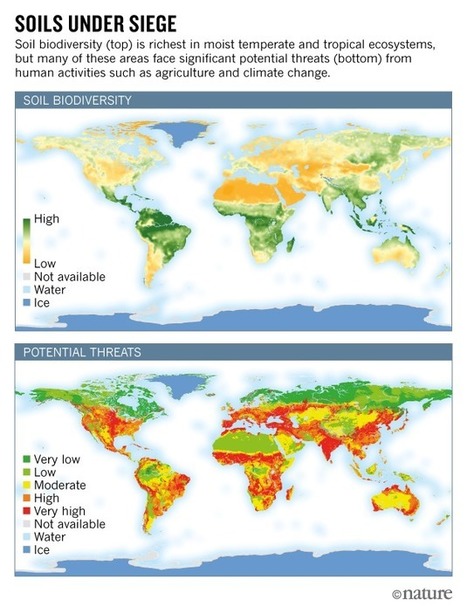
Diana Wall has built a career on overturning assumptions about underground ecosystems. Now she is seeking to protect this endangered world. What is soil biodiversity? How does it vary in space and time? What does it provide to society? What are the main threats to soil biodiversity? What can we do to preserve it? The first ever Global Soil Biodiversity Atlas uses informative texts, stunning photographs and striking maps to answer and explain these and other questions. There are many factors influencing the distribution of soil organisms, how soil biodiversity supports food production, the pressures affecting soil life and the possible interventions to preserve it. Soil is an extremely complex system resulting from the essential interactions between inert and living components. Soils host a myriad of soil organisms ranging in size from a few micrometers to several centimeters, from the microscopic bacteria and archaea to the "giant" earthworms and moles. All these organisms are distributed over space and time, and each ecosystem and season has its unique soil community. Soil organisms interact to provide essential ecosystem services to human beings and the environment, ranging from supporting plant growth to the regulation of climate. Soils are becoming increasingly under pressure and so are the organisms living in them. Intensive agriculture, loss of above ground biodiversity, soil erosion and land degradation are among the most relevant threats to soil life. We can protect soil creatures by taking specific actions. No-tillage, diversification of crops, increasing reforestation and greater use of natural amendments are examples of interventions that may promote life in soils. People need to know about the fascinating world below ground and understand its value.
|
|
Scooped by
Dr. Stefan Gruenwald
September 13, 2016 12:44 PM
|
Evolution of mathematics traced using unusually comprehensive genealogy database. Most of the world’s mathematicians fall into just 24 scientific 'families', one of which dates back to the fifteenth century. The insight comes from an analysis of the Mathematics Genealogy Project (MGP), which aims to connect all mathematicians, living and dead, into family trees on the basis of teacher–pupil lineages, in particular who an individual's doctoral adviser was. The analysis also uses the MGP — the most complete such project — to trace trends in the history of science, including the emergence of the United States as a scientific power in the 1920s and when different mathematical subfields rose to dominance1. “You can see how mathematics has evolved in time,” says Floriana Gargiulo, who studies networks dynamics at the University of Namur, Belgium and who led the analysis. The MGP is hosted by North Dakota State University in Fargo and co-sponsored by the American Mathematical Society. Since the early 1990s, its organizers have mined information from university departments and from individuals who make submissions regarding themselves or people they know about. As of 25 August, the MGP contained 201,618 entries. As well as doctoral advisers (PhD advisers in recent times) and pupils of academic mathematicians, the organizers record details such as the university that awarded the doctorate. Previously, researchers had used the MGP to reconstruct their own PhD-family trees, or to see how many ‘descendants’ a researcher has (readers can do their own search here). Gargiulo's team wanted to make a comprehensive analysis of the entire database and divide it into distinct families, rather than just looking at how many descendants any one person has. After downloading the database, Gargiulo and her colleagues wrote machine-learning algorithms that cross-checked and complemented the MGP data with information from Wikipedia and from scientists' profiles in the Scopus bibliographic database. This revealed 84 distinct family trees with two-thirds of the world’s mathematicians concentrated in just 24 of them. The high degree of clustering arises in part because the algorithms assigned each mathematician just one academic parent: when an individual had more than one adviser, they were assigned the one with the bigger network. But the phenomenon chimes with anecdotal reports from those who research their own mathematical ancestry, says MGP director Mitchel Keller, a mathematician at Washington and Lee University in Lexington, Virginia. “Most of them run into Euler, or Gauss or some other big name,” he says. Although the MGP is still somewhat US centric, the goal is for it to become as international as possible, Keller says. Gargiulo’s team also looked at the dominance of mathematical subfields relative to each other. The researchers found that dominance shifted from mathematical physics to pure maths during the first half of the twentieth century, and later to statistics and other applied disciplines, such as computer science. Idiosyncrasies in the field of mathematics could explain why it has the most comprehensive genealogy database of any discipline. “Mathematicians are a bit of a world apart,” says Roberta Sinatra, a network and data scientist at Central European University in Budapest who led a 2015 study that mapped the evolution of the subdisciplines of physics by mining data from papers on the Web of Science2. Mathematicians tend to publish less than other researchers, and they establish their academic reputation not so much on how much they publish or on their number of citations, but on who they have collaborated with, including their mentors, she says. “I think it’s not a coincidence that they have this genealogy project." At least one discipline is trying to catch up. Historian of astronomy Joseph Tenn of Sonoma State University in California plans by 2017 to launch the AstroGen project to record the PhD advisers and students of astronomers. “I started it," he says, "because so many of my colleagues in astronomy admired and enjoyed perusing the Mathematics Genealogy Project."
|
|
Scooped by
Dr. Stefan Gruenwald
September 13, 2016 12:28 PM
|
In a new study published in the journal Nature, researchers have used state-of-the-art techniques to support the theory that the moon was formed by violent, high-energy impact rather than a mild, low-energy impact. In the 1970s, two sets of astrophysicists independently came to the conclusion that the Moon was created by a glancing collision between a Mars-sized object and the still-forming Earth. The massive impact theory explained many things, like the large size of the Moon in relation to the Earth and the rotation rates of the Earth and Moon, and it gradually became the primary theory for the Moon's formation. In 2001, however, researchers reported the isotopic makeup of various elements in terrestrial and lunar rocks are almost identical. Studies of samples acquired by the Apollo missions in the 1970s indicated Moon rocks have the same amounts of the three stable isotopes of oxygen as Earth rocks. With the odds that an impactor would have the same isotopic signature as the Earth being quite small, this finding is a major stumbling block for the glancing, low-energy impact theory. One prevalent high-energy impact model describes how the impact was so violent, the impactor and Earth's mantle vaporized and blended to form a thick melt/vapor mantle atmosphere that grew to more than 500 times bigger modern-day Earth. The Moon formed as this cloud of material cooled.
|
|
Scooped by
Dr. Stefan Gruenwald
September 13, 2016 12:23 PM
|
It does not take an infinite number of monkeys to type a passage of Shakespeare. Instead, it takes a single monkey equipped with brain-sensing technology – and a cheat sheet. That technology, developed by Stanford Bio-X scientists Krishna Shenoy, a professor of electrical engineering at Stanford, and postdoctoral fellow Paul Nuyujukian, directly reads brain signals to drive a cursor moving over a keyboard. In an experiment conducted with monkeys, the animals were able to transcribe passages from the New York Times and Hamlet at a rate of up to 12 words per minute. Earlier versions of the technology have already been tested successfully in people with paralysis, but the typing was slow and imprecise. This latest work tests improvements to the speed and accuracy of the technology that interprets brain signals and drives the cursor. “Our results demonstrate that this interface may have great promise for use in people,” said Nuyujukian, who will join Stanford faculty as an assistant professor of bioengineering in 2017. “It enables a typing rate sufficient for a meaningful conversation.” The monkeys testing the technology had been trained to type letters corresponding to what they see on a screen. For this study, the animals transcribed passages of New York Times articles or, in one example, Hamlet. The results, which are published September 12 in the Proceedings of the IEEE, show that the technology allows a monkey to type with only its thoughts at a rate of up to 12 words per minute. People using this system would likely type more slowly, the researchers said, while they think about what they want to communicate or how to spell words. People might also be in more distracting environments and in some cases could have additional impairments that slow the ultimate communication rate. “What we cannot quantify is the cognitive load of figuring out what words you are trying to say,” Nuyujukian said.
|
|
Scooped by
Dr. Stefan Gruenwald
September 13, 2016 12:11 PM
|
In 2014, the incorporation of two artificial letters of genetic code into the DNA of E. coli gave the bacteria the distinction of becoming the world's first stable semisynthetic organism. The base pair d5SICS·dNaM was recently reported to incorporate and replicate in the DNA of a modified strain of E. coli. This newly expanded genetic alphabet may allow organisms to store considerably more information in order to translate proteins with unprecedented enzymatic activities. Importantly, however, there is currently no knowledge of the photochemical properties of d5SICS or dNaM—properties that are central to the chemical integrity of cellular DNA. In this contribution, it is shown that excitation of d5SICS or dNaM with near-visible light leads to efficient trapping of population in the nucleoside’s excited triplet state in high yield. Photoactivation of these long-lived, reactive states is shown to photosensitize cells, leading to the generation of reactive oxygen species and to a marked decrease in cell proliferation, thus warning scientists of the potential phototoxic side effects of expanding the genetic alphabet.
|
|
Scooped by
Dr. Stefan Gruenwald
September 13, 2016 12:04 PM
|
Tiny, star-shaped molecules are effective at killing bacteria that can no longer be killed by current antibiotics, new research shows. The study, published Nature Microbiology, holds promise for a new treatment method against antibiotic-resistant bacteria (commonly known as superbugs). The star-shaped structures, are short chains of proteins called 'peptide polymers', and were created by a team from the Melbourne School of Engineering. The team included Professor Greg Qiao and PhD candidate Shu Lam, from the Department of Chemical and Biomolecular Engineering, as well as Associate Professor Neil O'Brien-Simpson and Professor Eric Reynolds from the Faculty of Medicine, Dentistry and Health Sciences and Bio21 Institute. Professor Qiao said that currently the only treatment for infections caused by bacteria is antibiotics. However, over time bacteria mutate to protect themselves against antibiotics, making treatment no longer effective. These mutated bacteria are known as 'superbugs'. "It is estimated that the rise of superbugs will cause up to ten million deaths a year by 2050. In addition, there have only been one or two new antibiotics developed in the last 30 years," he said. Professor Qiao and his team have been working with peptide polymers in the past few years. Recently, the team created a star-shaped peptide polymer that was extremely effective at killing Gram-negative bacteria – a major class of bacteria known to be highly prone to antibiotic resistance – while being non-toxic to the body.
|