Your new post is loading...

|
Scooped by
Dr. Stefan Gruenwald
September 19, 2016 3:12 PM
|
An international team of astronomers has discovered 165 new ultracool brown dwarfs — objects that have a size between that of a gas giant and that of a small star — within about 160 light-years of the Sun. The paper reporting these results will be published in the Astrophysical Journal (arXiv.org preprint). Brown dwarfs are cool, dim objects that are difficult to detect and hard to classify. Sometimes called failed stars, they are too small to sustain hydrogen fusion reactions at their cores, yet they have star-like attributes. Typically, brown dwarfs have masses between 13 and 80 Jupiters — too massive to be planets, yet they possess some planet-like characteristics. Their temperatures can range from nearly as hot as a star to as cool as a planet. Discovering new brown dwarfs will help astronomers to better quantify the frequency at which they occur both in the solar neighborhood and beyond. Knowing the abundance and distribution of these objects provides key information on the distribution of mass in the Universe, and on the mechanism of brown dwarf formation, for example, whether they form in isolation or instead are ejected from larger planetary systems. To that end, Dr. Jasmin Robert of the Université de Montréal and his colleagues from Canada and the United States believed that although hundreds of ultracool brown dwarfs have already been discovered, the techniques used to identify them were overlooking those with more-unusual compositions, which would not show up in the color-based surveys generally used. So the scientists surveyed 28% of the sky and discovered 165 ultracool brown dwarfs (M, L and T types, with temperatures under 3,500 degrees Fahrenheit, or 1,930 degrees Celsius) in the solar neighborhood. “Everyone will benefit from the study of brown dwarfs, because they can often be found in isolation, which means that we can more easily gather precise data on their properties without a bright star blinding our instruments,” said team member Dr. Jonathan Gagné, from the Carnegie Institution for Science in Washington and the Institute for Research on Exoplanets at the Université de Montréal.
|
|
Scooped by
Dr. Stefan Gruenwald
September 19, 2016 3:03 PM
|
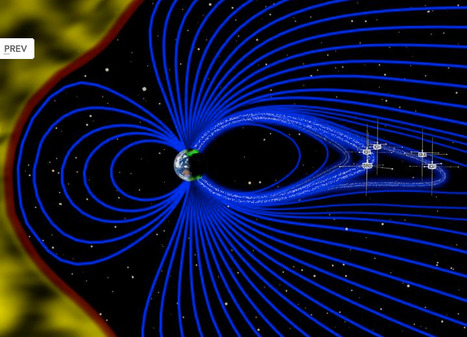
The majestic auroras have captivated humans for thousands of years, but their nature -- the fact that the lights are electromagnetic and respond to solar activity -- was only realized in the last 150 years. Thanks to coordinated multi-satellite observations and a worldwide network of magnetic sensors and cameras, close study of auroras has become possible over recent decades. Yet, auroras continue to mystify, dancing far above the ground to some, thus far, undetected rhythm. Using data from NASA's Time History of Events and Macroscale Interactions during Substorms, or THEMIS, scientists have observed Earth's vibrating magnetic field in relation to the northern lights dancing in the night sky over Canada. THEMIS is a five-spacecraft mission dedicated to understanding the processes behind auroras, which erupt across the sky in response to changes in Earth's magnetic environment, called the magnetosphere. These new observations allowed scientists to directly link specific intense disturbances in the magnetosphere to the magnetic response on the ground. A paper on these findings was published in Nature Physics on Sept. 12, 2016. "We've made similar observations before, but only in one place at a time - on the ground or in space," said David Sibeck, THEMIS project scientist at NASA's Goddard Space Flight Center in Greenbelt, Maryland, who did not participate in the study. "When you have the measurements in both places, you can relate the two things together." Understanding how and why auroras occur helps us learn more about the complex space environment around our planet. Radiation and energy in near-Earth space can have a variety of effects on our satellites - from disrupting their electronics to increasing frictional drag and interrupting communication or navigation signals. As our dependence on GPS grows and space exploration expands, accurate space weather forecasting becomes ever more important. The space environment of our entire solar system, both near Earth and far beyond Pluto, is determined by the sun's activity, which cycles and fluctuates through time. The solar system is filled with solar wind, the constant flow of charged particles from the sun. Most of the solar wind is deflected from Earth by our planet's protective magnetosphere.
|
|
Scooped by
Dr. Stefan Gruenwald
September 19, 2016 2:58 PM
|
The second-largest meteorite ever found has been exhumed outside the small Argentinian town of Gancedo. The 30-ton rock, named after the town, was discovered on September 10 and dug up by an excavation team which was shocked by its massive size. "While we hoped for weights above what had been registered, we did not expect it to exceed 30 tons," Astronomy Association of Chaco president Mario Vesconi said. It is believed to have crashed to earth about 4,000 years ago as part of an iron meteorite shower covering hundreds of square kilometers, 1,000km north-west of Buenos Aires at a site now known as Campo del Cielo. The original asteroid is estimated to have weighed about 600 tons and entered Earth's atmosphere at 14,000 kilometers per hour, where it broke up into a shower of smaller meteorites, according to Scientific American.
|
|
Scooped by
Dr. Stefan Gruenwald
September 19, 2016 2:51 PM
|
HD 133131, also known as HIP 73674, is located approximately 163 light-years from Earth. This binary system was discovered in 1972 by University of Chile astronomers Jurgen Stock and Herbert Wroblewski. Scientists estimate its age at 9.5 billion years, compared to 4.6 billion years for our Sun. The two components of this binary, HD 133131A and HD 133131B, are ‘twins’ of identical spectral type, G2V, which is the same as the Sun. The stars are separated by only 360 AU (astronomical units), making them the most closely separated ‘twin’ pair with detected planets. The next-closest binary system that hosts planets is comprised of two stars that are about 1,000 AU apart. This system is even more rare in that both ‘twins’ host planets. HD 133131A hosts two moderately eccentric planets, labeled b and c. The planets are about 1.4 and 0.6 times the mass of Jupiter, respectively, and orbit their parent star at 1.44 and 4.79 AU. HD 133131B hosts one moderately eccentric planet, labeled b. The planet has 2.5 times the mass of Jupiter and orbits its star at a distance of 6.4 AU. The HD 133131 system is also unusual because both components are ‘metal poor,’ meaning that most of their mass is hydrogen and helium, as opposed to other elements like iron or oxygen. Most stars that host giant planets are ‘metal rich.’ Only six other metal-poor binary systems with exoplanets have ever been found, making this discovery especially intriguing.
|
|
Scooped by
Dr. Stefan Gruenwald
September 19, 2016 2:43 PM
|
The temperature of the Earth’s crust ranges considerably. At its outer edge, where it meets the atmosphere, the crust’s temperature is the same temperature as that of the air. So, it might be as hot as 35 °C in the desert and below freezing in Antarctica. On average, the surface of the Earth’s crust experiences temperatures of about 14°C. However, the hottest temperature ever recorded was 70.7°C (159°F), which was taken in the Lut Desert of Iran as part of a global temperature survey conducted by scientists at NASA’s Earth Observatory. Meanwhile, the coldest temperature ever recorded on Earth was measured at the Soviet Vostok Station on the Antarctic Plateau – which reached an historic low of -89.2°C (-129°F) on July 21st, 1983. That’s quite the range already. But consider the fact that the majority of the Earth’s crust lies beneath the oceans. Far from the Sun, temperatures can reach as low as 0-3° C (32-37.5° F) where the water reaches the crust. Still, a lot balmier than a cold night in Antarctica!
|
|
Scooped by
Dr. Stefan Gruenwald
September 19, 2016 2:35 PM
|
|
|
Scooped by
Dr. Stefan Gruenwald
September 19, 2016 2:29 PM
|
The long non-coding RNA X-inactive specific transcript (XIST) mediates the transcriptional silencing of most genes on the X chromosome. A group of scientists were now able to show that, in human cells, XIST is highly methylated with at least 78 N6-methyladenosine (m6A) residues—a reversible base modification of unknown function in long non-coding RNAs. They show that m6A formation in XIST, as well as in cellular mRNAs, is mediated by RNA-binding motif protein 15 (RBM15) and its paralog RBM15B, which bind the m6A-methylation complex and recruit it to specific sites in RNA. This results in the methylation of adenosine nucleotides in adjacent m6A consensus motifs. Furthermore, a knockdown of RBM15 and RBM15B, or knockdown of the methyltransferase like 3 (METTL3), a proven m6A methyltransferase, impairs XIST-mediated gene silencing. A systematic comparison of m6A-binding proteins shows that the YTH domain containing 1 (YTHDC1) preferentially recognizes m6A residues on XIST and is required for XIST function. Additionally, artificial tethering of YTHDC1 to XIST rescues XIST-mediated silencing upon loss of m6A. These data reveal a pathway of m6A formation and recognition required for XIST-mediated transcriptional repression. The addition of a chemical tag like m6A on an RNA molecule is the critical switch that inactivates one X chromosome in every cell, ensuring healthy development in all female mammals, according to new research by Weill Cornell Medicine investigators. The findings, reported Sept. 7 2016 in Nature, could offer researchers a new scientific avenue to pursue treatments for X-linked chromosomal diseases in females such as Rett syndrome. All cells in female mammals contain two X chromosomes, but only one is needed for proper cell function and development. In order to ensure the proper expression level of genes on the X chromosome, one of the chromosomes is randomly inactivated in every cell in a female mammal. This occurs during embryonic development; once an X chromosome is inactivated, it stays inactive throughout the lifetime of the organism. The process of X chromosome inactivation is triggered by an RNA called XIST. XIST is a long RNA that attaches to the X chromosome to initiate X inactivation. The Weill Cornell Medicine investigators demonstrated that XIST is not alone empowered to turn off an X chromosome in every cell of a female mammal. Rather, XIST is activated once a chemical tag, called a methyl group, is added all along the length of the RNA. The addition of methyl groups enables XIST to function to inactivate the X chromosome. "XIST attaches itself at different points all along the X chromosome, silencing the genes that are located on the X chromosome," said senior author Dr. Samie Jaffrey, a professor of pharmacology at Weill Cornell Medicine. "But exactly how the XIST RNA is capable of silencing genes has been a puzzle. Our study found that XIST is not functional until methyl groups are attached. These act as docking sites to recruit proteins that initiate a cascade of events leading to X chromosome inactivation." Dr. Jaffrey and his colleagues demonstrated in a 2012 study that many RNAs in the cell contain methyl modifications. "We found that methyl modification is a normal feature of most RNAs in the cell," Dr. Jaffrey said. "This includes messenger RNAs that encode proteins, as well as noncoding RNAs such as XIST. "We were particularly surprised by the unusually high number of methyl groups in XIST. That seemed very suspicious," Dr. Jaffrey added. "So we wanted to explore what would happen if we took away the ability of the cell to make methyl modifications in XIST." The researchers used human and mouse cells to study what would happen if they turned off a cell's ability to tag XIST with methyl groups. They found that cells that could not methylate XIST were not able to carry out X chromosome inactivation. The researchers also found a protein, called DC1, that binds to every methyl group on XIST and enables it suppress the X chromosome. When they removed DC1 from the cells, XIST was unable to turn off the X chromosome. "Not only does XIST need methylation, but it also needs DC1 to bind to the methyl groups in XIST," said Dr. Deepak Patil, a postdoctoral associate in Dr. Jaffrey's laboratory and first-author of the study. "The process of X chromosome suppression is a cascade. Methylation of XIST is the switch that starts the process, recruiting DC1, and subsequently the proteins that inactivate the X chromosome." Understanding how X chromosome inactivation occurs may enable researchers to develop therapies for a variety of diseases caused by mutations of genes on the X chromosome. In many cases, women with these diseases have one normal and one mutated X chromosome, but it is the normal chromosome that has been suppressed. One example is Rett syndrome, a neuro-developmental disorder in females in which an X-linked mutation causes neurons to make insufficient amounts of a protein needed for normal neurological development, resulting in a form of autism.
|
|
Scooped by
Dr. Stefan Gruenwald
September 19, 2016 1:56 PM
|
A newly discovered piece of fabric discovered recently at the Huaca Prieta ceremonial mound in northern Peru features the oldest known use of indigo dyes, pushing the earliest known use of the coloring back by nearly 1,600 years, according to research published late last week. According to Smithsonian.com and the Los Angeles Times, Jeffrey Splitstoser, an archaeologist and textile expert from George Washington University, and his colleagues reported in the latest edition of Science Advances that the recently discovered scraps of dyed cotton are thought to be about 6,200 years old, making them over 1,500 years older than the earliest-known dyed fabrics from Egypt and 3,000 years older than the first blue-dyed Chinese textiles. The striped pieces of cloth were originally discovered during a 2007 expedition at Huaca Prieta, a ceremonial mound located on Peru’s north coast that was occupied between 4,000 and 14,500 years ago. Thousands of pieces have been discovered, 800 of which were directly examined by Splitstoser and confirmed to be far older than any dyed textiles discovered to date, including the indigo-dyed bands dating back to Egypt’s Fifth Dynasty (approximately 2400 BC). “It is possible it is the earliest known example of cloth dyeing in the world,” he told the Times last Friday. While not all of the one- to three-foot swatches of cloth used the same weave, each of them had been cut, torn or ripped from a larger piece of cloth, Splitstoser added.
|
|
Scooped by
Dr. Stefan Gruenwald
September 16, 2016 7:03 PM
|
Canada’s Chalk River reactor, which makes large amounts of technetium-99m, will end production next month. Next month, Canada’s Chalk River nuclear-research reactor will halt production of a medical isotope that is widely used in diagnostic scans. Any unplanned outages at the world’s remaining production sites could lead to severe shortages of the radioactive tracer technetium-99m until new facilities come online in 2017 and 2018, the US National Academies of Sciences, Engineering and Medicine warns in a report released on 12 September 2016. Chalk River produces about 20% of the world’s supply of technetium; the rest comes from six other ageing reactors in Europe, Australia and South Africa. These reactors bombard highly enriched uranium (HEU) targets to produce molybdenum-99, which decays into technetium. Stockpiling the radioisotopes is impossible because of their short half-lives — 66 hours for molybdenum-99, and 6 hours for technetium-99m. As a result, supply disruptions can quickly translate into shortages at hospitals, as happened when two reactors shut down for repairs and maintenance in 2009. “What we have is a period of vulnerability that could last into 2018,” says Kevin Crowley, senior director of the academies’ Nuclear and Radiation Studies Board. In the event of shortages, he says, doctors would be forced to delay medical procedures that rely on the isotopes or use alternative technologies. One of the most common medical uses for technetium-99m is single-photon-emission computed tomography (SPECT), which can be used to monitor blood flow in the heart and brain and scan bones for tumours.
|
|
Scooped by
Dr. Stefan Gruenwald
September 15, 2016 6:39 PM
|
A combined team of researchers affiliated with the Army Research Laboratory at Aberdeen Proving Ground, Arizona State University and the University of North Texas has developed a nanocrystalline alloy that combines high mechanical strength with high-temperature creep resistance. In their paper published in the journal Nature, the team describes how they created the material and its properties. Jonathan Cormier with Institut Pprime, UPR CNRS offers a News & Views piece on the work done by the team in the same journal issue and outlines some of the hurdles that stand in the way of the alloy being used in industrial applications.
The European Space Agency (ESA) has released the most detailed map of the Milky Way to date after cataloging the precise positions and brightness of more than 1.1 billion stars. The 3D map released Wednesday, is based on observations from ESA’s Gaia spacecraft, which was launched in 2013 with the express purpose of charting the most detailed map ever of the stars in our galaxy.
Via ThePlanetaryArchives/BlackHorseMedia - San Francisco
The University of Toronto today launched a massive project to sequence the whole genomes of 10,000 people per year, positioning Toronto as a leader in the global race to understand complex diseases. With the population of Toronto among the most diverse in the world, the project will provide an unusual breadth of genetic material to study, said Professor Stephen Scherer, director of U of T’s McLaughlin Centre and the Centre for Applied Genomics at The Hospital for Sick Children (SickKids). He said the move will accelerate the big data revolution and create a new generation of precision therapies. “With sequencing now married to large-scale computation, I believe we in Toronto can help lead the way for precision medicine. Genomic information is the new oil. It’s the resource that’s going to drive technology in the new era. “We’re generating the oil that researchers will use to enable discoveries and to create new products in software, biotechnology and information management that will realize precision medicine.” Information is the new oil.
Via Integrated DNA Technologies
|
|
Scooped by
Dr. Stefan Gruenwald
September 15, 2016 12:48 PM
|
A new study offers some of the most conclusive evidence to date that intelligence is linked to chess skill—a hotly debated issue in psychology. The results refute the idea that expertise is based solely on intensive training. “Chess is probably the single most studied domain in research on expertise, yet the evidence for the relationship between chess skill and cognitive ability is mixed,” says Alexander Burgoyne, a graduate student at Michigan State University and lead author of the study published in the journal Intelligence. “We analyzed a half-century worth of research on intelligence and chess skill and found that cognitive ability contributes meaningfully to individual differences in chess skill.” “When it comes to expertise, training and practice certainly are a piece of the puzzle,” says Zach Hambrick, a psychology professor at Michigan State. “But this study shows that, for chess at least, intelligence is another piece of the puzzle.” For the in-depth study, known as a meta-analysis, the researchers considered nearly 2,300 scholarly articles on chess skill, looking specifically for studies that included a measure of cognitive ability (such as IQ score) and objective chess skill (such as the Elo rating, which ranks players based on game performance). The final sample included 19 studies with about 1,800 total participants.
|
|
|
Scooped by
Dr. Stefan Gruenwald
September 19, 2016 3:08 PM
|
Geologic strain of tides during full and new moons could increase magnitude of tremors. Big earthquakes, such as the ones that devastated Chile in 2010 and Japan in 2011, are more likely to occur during full and new moons — the two times each month when tidal stresses are highest. Earth’s tides, which are caused by a gravitational tug-of-war involving the Moon and the Sun, put extra strain on geological faults. Seismologists have tried for decades to understand whether that stress could trigger quakes. They generally agree that the ocean’s twice-daily high tides can affect tiny, slow-motion tremors in certain places, including California’s San Andreas fault1 and the Cascadia region2 of the North American west coast. But a new study, published on 12 September in Nature Geoscience3, looks at much larger patterns involving the twice-monthly tides that occur during full and new moons. It finds that the fraction of high magnitude earthquakes goes up globally as tidal stresses rise. Satoshi Ide, a seismologist at the University of Tokyo, and his colleagues investigated three separate earthquake records covering Japan, California and the entire globe. For the 15 days leading up to each quake, the scientists assigned a number representing the relative tidal stress on that day, with 15 representing the highest. They found that large quakes such as those that hit Chile and Tohoku-Oki occurred near the time of maximum tidal strain — or during new and full moons when the Sun, Moon and Earth align. For more than 10,000 earthquakes of around magnitude 5.5, the researchers found, an earthquake that began during a time of high tidal stress was more likely to grow to magnitude 8 or above.
|
|
Scooped by
Dr. Stefan Gruenwald
September 19, 2016 3:02 PM
|
An international team including Rice University researchers has discovered a way to fight the overexpression of a protein associated with the proliferation of breast cancer. Dialing down the level of the protein NAF-1 and the activity of the iron-sulfur clusters it transports may be key to halting tumor growth, they reported. In a study this week in the Proceedings of the National Academy of Sciences, the researchers suggest a drug that is typically used to treat type 2 diabetes, pioglitazone, has proven effective at controlling NAF-1 levels. They also discovered that a single mutation to NAF-1 almost completely blocked the ability of cancer cells to proliferate, a result they said supports the idea that lowering NAF-1 expression can help stop tumors. Fine-tuning the drug to specifically address tumors could bring a new weapon to the battle against breast cancer and other cancers, the researchers said. Overexpression of NAF-1 also has been associated with prostate, gastric, cervical, liver and laryngeal cancer, they said. José Onuchic, Rice’s Harry C. and Olga K. Wiess Chair of Physics and professor of physics and astronomy and co-director of the Center for Theoretical Biological Physics (CTBP), worked with Rice research scientist Mingyang Lu, Rice postdoc Fang Bai and scientists from Israel, the University of California, San Diego (UCSD) and the University of North Texas on a multifaceted approach to define the role of NAF-1 in breast cancers. Understanding the mechanism will help the Rice researchers improve computer simulations to aid in the rapid design and testing of novel drugs, Onuchic said. NAF-1 is a member of the NEET family of proteins; these proteins transport clusters of iron and sulfur molecules inside cells. The clusters help regulate processes in cells by controlling reduction-oxidation (redox) and metabolic activity. They naturally adhere to the outer surface of the mitochondria, the “power plant” that supplies cells with chemical energy. Experiments demonstrated that the overexpression of NAF-1 in breast cancer tumors enhanced cancer cells’ ability to tolerate oxidative stress. That enhancement allowed the tumors to become much larger and more aggressive, said Ron Mittler, a professor of biological sciences at the University of North Texas. “Now that we know tumors that overexpress this protein are more sensitive to this type of drug, we can design new drugs in a way that will attack the clusters,” Mittler said.
|
|
Scooped by
Dr. Stefan Gruenwald
September 19, 2016 2:54 PM
|
The most stunning panoramic vistas likely ever snapped by NASA’s Curiosity rover reveal spectacularly layered Martian rock formations in such exquisite detail that they look and feel just like America’s desert Southwest landscapes. They were just captured a week ago and look like a scene straight out of the hugely popular science fiction movie ‘The Martian’ – only they are real !! Indeed several magnificent panoramas were taken by Curiosity in just the past week and you can see our newly stitched mosaic versions of several – above and below. The rock formations lie in the “Murray Buttes” region of lower Mount Sharp where Curiosity has been exploring for roughly the past month. She just finished a campaign of detailed science observations and is set to bore a new sampling hole into the Red Planet, as you read this. While scouting around the “Murray Buttes,” the SUV sized rover captured thousands of color and black and white raw images to document the geology of this thus far most unrivaled spot on the Red Planet ever visited by an emissary from Earth. So the image processing team of Ken Kremer and Marco Di Lorenzo has begun stitching together wide angle mosaic views starting with images gathered by the high resolution mast mounted Mastcam right color camera, or M-100, on Sept, 8, 2016, or Sol 1454 of the robots operations on Mars.
|
|
Scooped by
Dr. Stefan Gruenwald
September 19, 2016 2:49 PM
|
Researchers from the University of Georgia are giving new meaning to the phrase "turning rust into gold"—and making the use of gold in research settings and industrial applications far more affordable. The research is akin to a type of modern-day alchemy, said Simona Hunyadi Murph, adjunct professor in the UGA Franklin College of Arts and Sciences department of physics and astronomy. Researchers combine small amounts of gold nanoparticles with magnetic rust nanoparticles to create a hybrid nanostructure that retains both the properties of gold and rust. "Medieval alchemists tried to create gold from other metals," she said. "That's kind of what we did with our research. It's not real alchemy, in the medieval sense, but it is a sort of 21st century version." Gold has long been a valuable resource for industry, medicine, dentistry, computers, electronics and aerospace, among others, due to unique physical and chemical properties that make it inert and resistant to oxidation. But because of its high cost and limited supply, large scale projects using gold can be prohibitive. At the nanoscale, however, using a very small amount of gold is far more affordable. In the new study published this summer in the Journal of Physical Chemistry C, the researchers used solution chemistry to reduce gold ions into a metallic gold structure using sodium citrate. In this process, if other ingredients-rust in this case-are present in the reaction pot during the transformation process, the metallic gold structures nucleate and grow on these "ingredients," otherwise known as supports. "We are really excited to share our new discoveries. When researchers are looking at gold as a potential material for research, we talk about how expensive gold is. For the first time ever, we've been able to create a new class of cheaper, highly efficient, nontoxic, magnetically reusable hybrid nanomaterials that contain a far more abundant material-rust-than the typical noble metal gold," said Murph, who is also a principal scientist in the National Security Directorate at the Savannah River National Laboratory in Aiken, South Carolina.
|
|
Scooped by
Dr. Stefan Gruenwald
September 19, 2016 2:41 PM
|
For the past 15 years, the big data techniques pioneered by NASA’s Jet Propulsion Laboratory in Pasadena, California, have been revolutionizing biomedical research. On Sept. 6, 2016, JPL and the National Cancer Institute (NCI), part of the National Institutes of Health, renewed a research partnership through 2021, extending the development of data science that originated in space exploration and is now supporting new cancer discoveries. The NCI-supported Early Detection Research Network (EDRN) is a consortium of biomedical investigators who share anonymized data on cancer biomarkers, chemical or genetic signatures related to specific cancers. Their goal is to pool all their research data into a single, searchable network, with the goal of translating their collective work into techniques for early diagnosis of cancer or cancer risk. In the time they’ve worked together, JPL and EDRN’s efforts have led to the discovery of six new Food and Drug Administration-approved cancer biomarkers and nine biomarkers approved for use in Clinical Laboratory Improvement Amendments labs. The FDA has approved each of these biomarkers for use in cancer research and diagnosis. These agency-approved biomarkers have been used in more than 1 million patient diagnostic tests worldwide. “After the founding of EDRN in 2000, the network needed expertise to take data from multiple studies on cancer biomarkers and create a single, searchable network of research findings for scientists,” said Sudhir Srivastava, chief of NCI’s Cancer Biomarkers Research Group and head of EDRN. JPL had decades of experience doing similar work for NASA, where spacecraft transmit hundreds of petabytes of data to be coded, stored and distributed to scientists across the globe. Dan Crichton, the head of JPL’s Center for Data Science and Technology, a joint initiative with Caltech in Pasadena, California, helped establish a JPL-based informatics center dedicated to supporting EDRN’s big data efforts. In the renewed partnership, JPL is expanding its data science efforts to research and applying technologies for additional NCI-funded programs. Those programs include EDRN, the Consortium for Molecular and Cellular Characterization of Screen-Detected Lesions, and the Informatics Technology for Cancer Research initiative.
|
|
Scooped by
Dr. Stefan Gruenwald
September 19, 2016 2:32 PM
|
A New York neuroscience summit aims to coordinate big money brain projects around the world, but will delegates agree on the field's top priorities? As brainy gatherings go, it takes some beating. Neuroscientists are meeting in New York today to agree on a global mission to understand the workings of the human brain and how to fix it when something goes wrong. The lofty aim of the Coordinating Global Brain Projects meeting is to unify worldwide efforts to study the brain, in the same way that international collaborations have spurred on astronomy, physics and genetics. “Neuroscience is coming of age, and it’s now ready for big science,” says Rafael Yuste at Columbia University in New York, who organised today’s meeting with Cori Bargmann at Rockefeller University, also in New York. “This is the first real meeting with all the players in the same room together,” says Yuste. Among those invited are representatives from charities, private companies and national brain research initiatives. The Global Brain Initiative they want to develop will decide which projects and goals to prioritise, as well as how they should be funded. ”We hope to learn what all the active and planned brain projects are around the world,” says Bargmann. “And we want all leaders of these projects to meet in person, so there’s a human connection for future collaboration,” she says. Yuste hopes that the meeting will establish a standing committee made up of representatives from all the main players. < Many big, long-term brain research projects have been established worldwide in recent years, including the $6 billionUS BRAIN Initiative, and Europe’s €1 billion Human Brain Project. Other regions are now entering the fray, with China and Japan both launching major initiatives earlier this year thatseek to understand the human brain by studying monkeys. “China is the big player that hasn’t yet put its cards on the table,” says Yuste. Reconciling these programmes’ priorities and methods may prove a challenge. There is vociferous opposition to research on primate research in several Western nations, where neuroscientists now tend to work with flies, worms, mice and fish instead. But in China and Japan, research is more focused on primates, our closest animal relatives. China’s top priority is to discover the basis of human cognition, with new medical treatments and spin-off benefits for computing as secondary goals. The US BRAIN Initiative, by contrast, is focused firmly on providing better resources and tools for experiments, rather than dictating research priorities. Whatever the differences, the imperative to come together is strong, says Terry Sejnowski of the Salk Institute for Biological Studies in La Jolla, California, who will wrap up the meeting later today. “We need to unite behind a coordinated international brain project bringing together the world’s best and brightest scientists and engineers,” he says.
|
|
Scooped by
Dr. Stefan Gruenwald
September 19, 2016 2:04 PM
|
Forever young? With the rise of brain-controlled robotic limbs, advanced biomedical implants, and life-saving medical treatments, it seems as though in the modern day, we're closer than ever to conquering death. Some hope to extend the human lifetime indefinitely. Singularity proponents hope that eventually we'll be able to upload our consciousness to computers. Now the company Humai aims to bring people back from the dead. From their website: - We're using artificial intelligence and nanotechnology to store data of conversational styles, behavioral patterns, thought processes and information about how your body functions from the inside-out. This data will be coded into multiple sensor technologies, which will be built into an artificial body with the brain of a deceased human.
If it sounds like something out of science fiction, that's because it is. The challenges are significant: taking a dead brain and bringing it back to life; wiring up the brain so that it can control a silicon-based machine; and trying to replicate that vital thing that is you--your personality, your past experiences, your mind. We wouldn't bet on this thing working, at least not anytime soon. But hopefully it won't hurt to try. The CEO and founder of Humai explains: "Our mission is fairly simple to understand but obviously difficult to execute. We'll first collect extensive data on our members for years prior to their death via various apps we're developing. After death we'll freeze the brain using cryonics technology. When the technology is fully developed we'll implant the brain into an artificial body. The artificial body functions will be controlled with your thoughts by measuring brain waves. As the brain ages we'll use nanotechnology to repair and improve cells. Cloning technology is going to help with this too. Every step we take toward understanding how to get your thoughts to control an artificial body will be huge progress. I'm confident that in the process we'll develop a technology that will even save lives. However, the ultimate test will be when we perform the first surgical procedure to implant a human brain to an artificial body." Humai CEO's answer is: "in Bionics, nanotechnology and artificial intelligence. I think the body has limitations and I don't believe the body was evolved with the best possible functions. I think an artificial body will contribute more to the human experience. It will extend the human experience. So much so, that those who accept death will probably change their mind."
|
|
Scooped by
Dr. Stefan Gruenwald
September 19, 2016 1:54 PM
|
For the first time ever, scientists have recorded an explosive phenomenon known as "spaghettification." This phenomenon occurs when an object approaches a black hole and becomes stretched under the immense gravitational force exerted by the black hole. The black hole then devours the object before finally letting loose a massive amount of energy. Two separate research teams were able to record this event by examining infrared light from the black hole disruptions, which was captured and "echoed" by the surrounding space dust and allowed the researchers to measure the intensity of the flares. A study, which has described three such cases, was published last week in Astrophysical Journal. "The black hole has destroyed everything between itself and this dust shell," Sjoert Van Velzen, postdoctoral fellow at Johns Hopkins University and lead author of the study, said in a statement. "It's as though the black hole has cleaned its room by throwing flames." An incredible burst of energy is released each time a black hole consumes a star. This event is called a "stellar tidal disruption" and produces bright flares surrounding the black hole's event horizon. A handful of these events have been recorded and described in recent years, but those studies were not able to provide details beyond the mechanics of the "burp." Black hole flares - "burps" - are filled with X-ray and ultraviolet radiation, which vaporize small pieces of matter and dust. But particles are able to survive the radiation from these flares at a certain distance, leaving a shell of super heated dust a few trillion miles from the black hole's center. This surviving dust gives off infrared radiation, echoing the flare. This infrared emission can be detected for up to a year after the flare hits its brightness peak, according to researchers.
|
|
Scooped by
Dr. Stefan Gruenwald
September 16, 2016 7:01 PM
|
DNA from extinct species forces rethink of elephants’ family tree. Modern elephants are classified into three species: the Asian elephant (Elephas maximus) and two African elephants — the forest-dwellers (Loxodonta cyclotis) and those that live in the savannah (Loxodonta africana). The division of the African elephants, originally considered a single species, was confirmed only in 2010. Scientists had assumed from fossil evidence that an ancient predecessor called the straight-tusked elephant (Paleoloxodon antiquus), which lived in European forests until around 100,000 years ago, was a close relative of Asian elephants. In fact, this ancient species is most closely related to African forest elephants, a genetic analysis now reveals. Even more surprising, living forest elephants in the Congo Basin are closer kin to the extinct species than they are to today’s African savannah-dwellers. And, together with newly announced genomes from ancient mammoths, the analysis also reveals that many different elephant and mammoth species interbred in the past. “It’s mind blowing,” says Tom Gilbert, an evolutionary geneticist at the Natural History Museum of Denmark in Copenhagen. The straight-tusked elephant is little-known even among experts, he says. “And the first thing we hear about it is: here’s the genome.” Love Dalén, a palaeogeneticist at the Swedish Museum of Natural History in Stockholm, says that the study will force a reshuffle of the elephant family tree. “Basically Loxodonta is not valid as a genus name,” he says. He thinks that taxonomists may need to come up with new names for the different species, to better represent the relationship between savannah, forest and straight-tusked elephants.
|
|
Scooped by
Dr. Stefan Gruenwald
September 15, 2016 6:37 PM
|
An anthrax-like disease has been discovered in four countries in Africa, having killed elephants, gorillas, chimps and goats. Researchers have warned the newly discovered distinct and deadly pathogen could pose a risk to human health, saying increased surveillance of the regions where dead animals have been found is needed. Anthrax is a potentially fatal disease for most mammals. It occurs through contact with spores of the bacteria and causes a range of symptoms depending on how it is contracted. It is caused by the pathogen Bacillus anthracis, spore-forming bacteria found naturally in soils around the globe.
|
|
Scooped by
Dr. Stefan Gruenwald
September 15, 2016 6:34 PM
|
Nanoparticles offer a promising way to deliver cancer drugs in a targeted fashion, helping to kill tumors while sparing healthy tissue. MIT chemists have now shown that they can package three or more drugs into a novel type of nanoparticle, allowing them to design custom combination therapies for cancer. In tests in mice, the researchers showed that the particles could successfully deliver three chemotherapy drugs and shrink tumors. In the same study, which appears in the Sept. 14 issue of the Journal of the American Chemical Society, the researchers also showed that when drugs are delivered by nanoparticles, they don't necessarily work by the same DNA-damaging mechanism as when delivered in their traditional form. That is significant because most scientists usually assume that nanoparticle drugs are working the same way as the original drugs, says Jeremiah Johnson, the Firmenich Career Development Associate Professor of Chemistry and the senior author of the paper. Even if the nanoparticle version of the drug still kills cancer cells, it's important to know the underlying mechanism of action when choosing combination therapies and seeking regulatory approval of new drugs, he says. "People tend to take it as a given that when you put a drug into a nanoparticle it's the same drug, just in a nanoparticle," Johnson says. "Here, in collaboration with Mike Hemann, we conducted detailed characterization using an RNA interference assay that Mike developed to make sure the drug is still hitting the same target in the cell and doing everything that it would if it weren't in a nanoparticle." The paper's lead authors are Jonathan Barnes, a former MIT postdoc; and Peter Bruno, a postdoc at MIT's Koch Institute for Integrative Cancer Research. Other authors are grad students Hung Nguyen and Jenny Liu, former postdoc Longyan Liao, and Michael Hemann, an associate professor of biology and member of the Koch Institute.
|
|
Scooped by
Dr. Stefan Gruenwald
September 15, 2016 12:51 PM
|
Researchers studying the behavior of nanoscale materials at the Department of Energy’s Oak Ridge National Laboratory have uncovered remarkable behavior that could advance microprocessors beyond today’s silicon-based chips. The study, featured on the cover of Advanced Electronic Materials, shows that a single crystal complex oxide material, when confined to micro- and nanoscales, can act like a multi-component electrical circuit. This behavior stems from an unusual feature of certain complex oxides called phase separation, in which tiny regions in the material exhibit vastly different electronic and magnetic properties. It means individual nanoscale regions in complex oxide materials can behave as self-organized circuit elements, which could support new multifunctional types of computing architectures. “Within a single piece of material, there are coexisting pockets of different magnetic and/or electronic behaviors,” said ORNL’s Zac Ward, the study’s corresponding author. “What was interesting in this study was that we found we can use those phases to act like circuit elements. The fact that it is possible to also move these elements around offers the intriguing opportunity of creating rewritable circuitry in the material.” Because the phases respond to both magnetic and electrical fields, the material can be controlled in multiple ways, which creates the possibility for new types of computer chips. “It’s a new way of thinking about electronics, where you don’t just have electrical fields switching off and on for your bits,” Ward said. “This is not going for raw power. It’s looking to explore completely different approaches towards multifunctional architectures where integration of multiple outside stimuli can be done in a single material.”
|