Your new post is loading...
The system, which combines camera images of the outside of the patient with three-dimensional X-rays of the inside of the body, is designed to create a detailed path for the spinal surgeon to follow. This could help to improve surgical tool navigation and implant accuracy, as well as reducing procedure times. Spinal procedures have traditionally been carried out using open surgery, in which a large incision is made in the body and the muscles moved aside in order to expose the vertebrae. But this invasive procedure results in a lengthy recovery period and a considerable amount of pain for the patient, according to Ronald Tabaksblat, business leader of image-guided therapy systems at Philips. However, replacing open surgery with minimally-invasive techniques is particularly difficult in the case of spinal procedures such as vertebrae fusion, as screws are inserted which must be positioned with sub-millimeter accuracy, said Tabaksblat. “A small error in one direction and you could hit an artery, causing major bleeding, while a small error in another direction means you could hit a nerve, causing nerve damage or even paralysis,” he said. “This technology is designed to offer the ability to carry out a procedure with a high level of confidence and accuracy, using minimally-invasive techniques.” The system uses high-resolution optical cameras mounted on a flat-panel X-ray detector to image the surface of the patient. It then combines the external view captured by the cameras with the 3D internal view acquired by the X-ray system to create accurate real-time, augmented-reality images of the patient’s anatomy.
Via Daniel Perez-Marcos
The way our brains learn new information has puzzled scientists for decades - we come across so much new information daily, how do our brains store what's important, and forget the rest more efficiently than any computer we've built? It turns out that this could be controlled by the same laws that govern the formation of the stars and the evolution of the Universe, because a team of physicists has shown that, at the neuronal level, the learning process could ultimately be limited by the laws of thermodynamics. "The greatest significance of our work is that we bring the second law of thermodynamics to the analysis of neural networks," lead researcher Sebastian Goldt from the University of Stuttgart in Germany told Lisa Zyga from Phys.org. The second law of thermodynamics is one of the most famous physics laws we have, and it states that the total entropy of an isolated system always increases over time. Entropy is a thermodynamic quantity that's often referred to as a measure of disorder in a system. What that means is that, without extra energy being put into a system, transformations can't be reversed - things are going to get progressively more disordered, because it's more efficient that way. Entropy is currently the leading hypothesis for why the arrow of time only ever marches forwards. The second law of thermodynamics says that you can't un-crack an egg, because it would lower the Universe's entropy, and for that reason, there will always be a future and a past. But what does this have to do with the way our brains learn? Just like the bonding of atoms and the arrangement of gas particles in stars, our brains find the most efficient way to organise themselves. "The second law is a very powerful statement about which transformations are possible - and learning is just a transformation of a neural network at the expense of energy," Goldt explained to Zyga.
Via Kathy Bosiak

|
Scooped by
Dr. Stefan Gruenwald
February 10, 2017 12:24 PM
|
Sandia's Z machine uses electricity to create radiation and high magnetic pressure, which are both applied to a variety of scientific purposes ranging from weapons research to the pursuit of fusion energy. The process starts with wall-current electricity, which Z uses to charge large capacitors — structures designed to store an electric charge and release it instantaneously. In every shot the machine consumes only about as much energy as it would take to light 100 homes for a few minutes. Metal cables arranged like the spokes of a wheel connect the capacitors to a central vacuum chamber, 10 feet in diameter and 20-feet high. The cables, some insulated by water and some by oil, are each as big around as a Volkswagen Beetle and 30-feet long. When the accelerator fires, powerful electrical pulses strike a target at the center of the machine. Each shot from Z carries more than 1,000 times the electricity of a lightning bolt, and is 20,000 times faster. The target is about the size of a spool of thread, and it consists of hundreds of tungsten wires, each thinner than a human hair, enclosed in a small metal container known as a Hohlraum (German for hollow space). The hohlraum serves to maintain a uniform temperature. The flow of energy through the tungsten wires dissolves them into plasma and creates a strong magnetic field that forces the exploded particles inward. The speed at which the particles move is equivalent to traveling from Los Angeles to New York – about 3,000 miles – in slightly less than one second. The particles then collide with one another along the z axis (hence the name Z machine), and the collisions produce intense radiation (2 million joules of X-ray energy) that heats the walls of the hohlraum to approximately 1.8 million degrees Celsius. Instruments that measure these implosions must be even faster in order to record the details of the process. This is an added challenge for researchers who rely on the accuracy of these measurements to understand Z's results and nuclear events in general. Accurate measurements allow scientists to experiment with a variety of target arrangements to create conditions useful for many different purposes.
|
|
Rescooped by
Dr. Stefan Gruenwald
from DNA and RNA research
February 10, 2017 12:19 PM
|
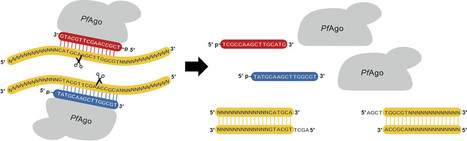
Research by Professor of Chemical and Biomolecular Engineering Huimin Zhao and graduate student Behnam Enghiad is pioneering a new method of genetic engineering for basic and applied biological research and medicine. Their work, reported in ACS Synthetic Biology on February 6 [DOI:10.1021/acssynbio.6b00324], has the potential to open new doors in genomic research by improving the precision and adherence of sliced DNA. “Using our technology, we can create highly active artificial restriction enzymes with virtually any sequence specificity and defined sticky ends of varying length,” said Zhao. “This is a rare example in biotechnology where a desired biological function or reagent can be readily and precisely designed in a rational manner.” Restriction enzymes are essential tools for recombinant DNA technology that have revolutionized modern biological research, however have limited sequence specificity and availability. The Pyrococcus furiosus Argonaute (PfAgo) based platform for generating artificial restriction enzymes (AREs) is capable of recognizing and cleaving DNA sequences at virtually any arbitrary site and generating defined sticky ends of varying length. Restriction enzymes are an important tool in genomic research: by cutting DNA at a specific site, they create a space wherein foreign DNA can be introduced for gene-editing purposes. This process is not only achieved by naturally-occurring restriction enzymes; other artificial restriction enzymes, or AREs, have risen to prominence in recent years. CRISPR-Cas9, a bacterial immune system used for “cut-and-paste” gene editing, and TALENs, modified restriction enzymes, are two popular examples of such techniques. Though useful in genetic engineering, no AREs generate defined “sticky ends”—an uneven break in the DNA ladder-structure that leaves complementary overhangs, improving adhesion when introducing new DNA. “If you can cleave two different DNA samples with the same restriction enzyme, the sticky ends that are generated are complementary,” explained Enghiad. “They will hybridize with each other, and if you use a ligase, you can stick them together.” However, restriction enzymes themselves have a critical drawback: the recognition sequence which prompts them to cut is very short—usually only four to eight base pairs. Because the enzymes will cut anywhere that sequence appears, researchers rely on finding a restriction enzyme whose cut site appears only once in the genome of their organism or plasmid—an often difficult proposition when the DNA at hand might be thousands of base pairs long. This problem has been partially solved simply by the sheer number of restriction enzymes discovered: more than 3600 have been characterized, and over 250 are commercially available. “Just in our freezer, for our other research, we have probably over 100 different restriction enzymes,” said Enghiad. “We look through them all whenever we want to assemble something … the chance of finding the unique restriction site is so low. “Our new technology unifies all of those restriction enzymes into a single system consisting of one protein and two DNA guides. Not only have you replaced them, but you can now target sites that no available restriction enzymes can.” Enghiad and Zhao’s new technique creates AREs through the use of an Argonaute protein (PfAgo) taken from Pyrococcus furiosus, an archeal species. Led by two DNA guides, PfAgo is able to recognize much longer sequences when finding its cut site, increasing specificity and removing much of the obstacles posed by restriction enzymes. Further, PfAgo can create longer sticky ends than even restriction enzymes, a substantial benefit as compared to other AREs.
Via Integrated DNA Technologies
|
|
Rescooped by
Dr. Stefan Gruenwald
from DNA and RNA research
February 10, 2017 12:12 PM
|
Researchers have introduced a new type of “super-resolution” microscopy and used it to discover the precise walking mechanism behind tiny structures made of DNA that could find biomedical and industrial applications. The researchers also demonstrated how the “DNA walker” is able to release an anticancer drug, representing a potential new biomedical technology, said Jong Hyun Choi, an associate professor of mechanical engineering at Purdue University. Synthetic nanomotors and walkers are intricately designed systems that draw chemical energy from the environment and convert it into mechanical motion. However, because they are too small to be observed using conventional light microscopes, researchers have been unable to learn the precise steps involved in the walking mechanisms, knowledge essential to perfecting the technology. “If you cannot resolve or monitor these walkers in action, you will be unable to understand their mechanical operation,” Choi said. He led a Purdue team that has solved this problem by developing a super-resolution microscopy system designed to study the DNA walkers. The new findings appeared in the journal Science Advances on Jan. 20, 2017.
Via Integrated DNA Technologies
|
|
Scooped by
Dr. Stefan Gruenwald
February 9, 2017 6:17 PM
|
Machines and devices used in modern industry are required to withstand harsh conditions. When the environmental temperature changes, the volume of the materials used to make these devices usually changes slightly, typically by less than 0.01%. Although this may seem like a trivial change, over time this thermal expansion can seriously degrade the performance of industrial systems and equipment. Materials that contract on heating, or negative thermal expansion materials, are therefore of great interest to industrial engineers. These materials can be mixed with normal materials, which expand on heating, with the final aim of producing a composite material with its thermal expansion adjusted to a particular value, typically zero, and maintained even at the extremely low operating temperatures used in cryogenic and aerospace engineering. In a new study published in Nature Communications, Nagoya University-led researchers report a reduced ruthenate ceramic material, made up of calcium, ruthenium and oxygen atoms, that shrinks by a record-breaking 6.7% when heated. This is more than double the current record for a negative thermal expansion material, and the bulk material expands again when it is cooled. The results may provide industrial engineers with a new class of composite materials that can be used to increase the accuracy of processes and measurements, to improve the stability of device performance, and to prolong device lifetimes.
|
|
Scooped by
Dr. Stefan Gruenwald
February 9, 2017 6:12 PM
|
Wish you had another hour in the day to get everything done? Just wait 200 million years, when days here on Earth will stretch to 25 hours. While we like to think of the Earth’s rotation as one of the few constants in this world, it’s anything but. For hundreds of millions of years, days have been growing longer and longer. The changes are small enough that our circadian clocks can’t detect them, but atomic clocks certainly can. According to the National Institute of Standards and Technology, which runs the United States’ atomic clocks, days today are longer than those a century ago by two milliseconds. Add that up over millions of years and you start to see real changes—days in the Jurassic period were only 23 hours long, for example.
|
|
Scooped by
Dr. Stefan Gruenwald
February 8, 2017 2:12 PM
|
Antarctic seabirds called skuas are so clever that they can recognize individual humans after seeing them only a few times. Some Korean researchers discovered this by messing with the birds’ nests and then waiting to get attacked. They’re either very brave or have never watched The Birds. The study took place on Antarctica’s King George Island. The animals here didn’t evolve around humans. People have only been making appearances on the island since the 1950s or so. Today 10 countries have research stations on the island. Korea Polar Research Institute scientist Won Young Lee and his coauthors study brown skuas here, which are like big, dark-colored gulls. In the winter of 2014–2015, researchers visited skua nests once a week to check on their eggs and chicks. They suspected that the birds could recognize them, and were unhappy about humans poking at their nests. If a skua wants you to go away, it will give not-so-subtle hints like attacking your head. So the researchers set up an experiment. Starting in the fourth week of their study, two researchers visited each nest at a time. One of them, the “intruder,” had checked on the nest in previous weeks. The other, “neutral” researcher had never been to the nest before. As they approached the nest, the researchers recorded how close they could get before the birds attacked. Then they split up and walked in opposite directions, observing which person the birds chased after. As the weeks went on, skuas attacked from greater distances. But they didn’t attack just anybody. All seven of the nesting pairs directed their attacks at the known intruder. The birds “reacted very aggressively” after five visits, the authors write, including kicking intruders in the head. They ignored the neutral humans. Even though the researcher pairs wore identical clothing for their experiments, the skuas had no trouble spotting people who had fiddled with their nests in the past. The researchers don’t think the birds were using smell to tell them apart, since the site is windy. More likely, the birds relied on human facial features and body postures. This is especially impressive since the birds evolved without ever seeing a human. There’s no reason they should have a natural ability to recognize us. Two other local bird species, sheathbills and Antarctic terns, don’t seem to discriminate between people. The scientists chalk it up to “high cognitive abilities” on the part of brown skuas. In other words, they may just be especially smart. This makes sense; the birds are predators that have to be flexible to find their prey. Brown skuas have been seen chasing other large birds and taking their food. They’ll even steal drops of breast milk from nursing elephant seals. This is a bird you don’t want to cross—and after you do, you might want to wear a mask.
|
|
Scooped by
Dr. Stefan Gruenwald
February 8, 2017 2:06 PM
|
f you ask Jill Price to remember any day of her life, she can come up with an answer in a heartbeat. What was she doing on 29 August 1980? “It was a Friday, I went to Palm Springs with my friends, twins, Nina and Michelle, and their family for Labour Day weekend,” she says. “And before we went to Palm Springs, we went to get them bikini waxes. They were screaming through the whole thing.” Price was 14 years and eight months old.
What about the third time she drove a car? “The third time I drove a car was January 10 1981. Saturday. Teen Auto. That’s where we used to get our driving lessons from.” She was 15 years and two weeks old. The first time she heard the Rick Springfield song Jessie’s Girl? “March 7 1981.” She was driving in a car with her mother, who was yelling at her. She was 16 years and two months old.
Price was born on 30 December 1965 in New York City. Her first clear memories start from around the age of 18 months. Back then, she lived with her parents in an apartment across the street from Roosevelt Hospital in Midtown Manhattan. She remembers the screaming ambulances and traffic, how she used to love climbing on the living room couch and staring out of the window down 9th Avenue. When she was five years and three months old, her family – her father, a talent agent with William Morris who counted Ray Charles among his clients; her mother, a former variety show dancer, and her baby brother – moved to South Orange, New Jersey. They lived in a three-storey, red brick colonial house with a big backyard and huge trees, the kind of place people left the city for. Jill loved it. When she was seven years old, her father was offered a job with Columbia Pictures Television in Los Angeles. He spent a year commuting back and forth from California to New Jersey, until he and her mother decided to move the family out there in the spring of 1974. By 1 July 1974, when Jill was eight and a half, they were living in a rented house in Los Angeles. That was the day, she says, her “brain snapped”. Price was the first person ever to be diagnosed with what is now known as highly superior autobiographical memory, or HSAM, a condition she shares with around 60 other known people. She can remember most of the days of her life as clearly as the rest of us remember the recent past, with a mixture of broad strokes and sharp detail. Now 51, Price remembers the day of the week for every date since 1980; she remembers what she was doing, who she was with, where she was on each of these days. She can actively recall a memory of 20 years ago as easily as a memory of two days ago, but her memories are also triggered involuntarily. It is, she says, like living with a split screen: on the left side is the present, on the right is a constantly rolling reel of memories, each one sparked by the appearance of present-day stimuli. With so many memories always at the ready, Price says, it can be maddening: virtually anything she sees or hears can be a potential trigger. Before Price, HSAM was a completely unknown condition. So what about the day she sent an email to a Dr James McGaugh at University of California, Irvine? That was 8 June 2000, a Thursday. Price was 34 years and five months old. Dr. James McGaugh remembers that day too. At the time, he was director of UC Irvine’s Center for the Neurobiology of Learning and Memory, the research institute that he founded in 1983. In her email, Jill Price said that she had a problem with her memory. McGaugh responded almost immediately, explaining that he worked at a research institute and not a clinic, and that he’d be happy to direct her to somewhere she could find help. Price’s reply was swift and unexpected. “Whenever I see a date flash on the television (or anywhere else for that matter), I automatically go back to that day and remember where I was, what I was doing, what day it fell on and on and on and on and on. It is non-stop, uncontrollable and totally exhausting … Most have called it a gift but I call it a burden. I run my entire life through my head every day and it drives me crazy!!!”
|
|
Scooped by
Dr. Stefan Gruenwald
February 8, 2017 1:48 PM
|
Humanity possesses the means to place probes into orbit around nearby stars. But do we have the patience? Interstellar travel, a timeworn staple of science fiction, can already be science fact if one has cash to spare. For just $100 million or so, a customer could actually purchase a top-of-the-line commercial rocket and ride right out of the solar system. But patience would be key. If launched tomorrow toward the nearest port of call—Proxima b, a potentially habitable Earth-mass planet recently discovered in the triple star system of Alpha Centauri about four light-years away—that rocket would take 80,000 years to arrive. Instead of spending $100 million on a slow boat to the stars, in April of last year the billionaire entrepreneur Yuri Milner announced he would use that same sum to forge a new path to Alpha Centauri within a human lifetime. Called Breakthrough Starshot, the initiative calls for largely abandoning rockets in favor of “light sails”—gossamer-thin reflective sheets that, once unfolded in space, could be propelled to very high speeds by laser beams. Starshot’s tentative plans involve using conventional rockets to place thousands of one-gram, four-meter-wide light sails in Earth orbit as early as the 2040s. Each sail would be embedded with a one-centimeter-wide chip containing cameras, sensors, thrusters and a battery. From Earth orbit, each featherweight spacecraft would be boosted toward Alpha Centauri at 20 percent light-speed by a minutes-long pulse from a ground-based, 100-gigawatt laser array. The interstellar crossing would take just a little over 20 years, so the probes could reach Alpha Centauri in the 2060s.
|
|
Scooped by
Dr. Stefan Gruenwald
February 8, 2017 1:40 PM
|
It wields sea anemones like boxing gloves; if it loses one, it makes another by bisecting the remaining one. The American novelist S. E. Hinton once said, “If you have two friends in your lifetime, you’re lucky. If you have one good friend, you’re more than lucky.” By that logic, boxer crabs are the luckiest creatures alive because they can turn one good friend into two by tearing it in half. These tiny, inch-long crabs carry sea anemones, holding them in place with special hooks on the inner edges of their claws. With their crowns of wavy tentacles, the anemones look like pom-poms, and the crabs like cheerleaders. But those tentacles also pack powerful stings, and a quick jab from them is often enough to ward off an attacking fish. Hence the name: boxer crabs. Most crabs gather food with their powerful claws, but boxer crabs have adapted so thoroughly to holding anemones that their claws are now feeble, delicate tweezers rather than powerful, crushing pincers. Instead, they rely on their anemones. Some species use the anemones like cutlery, dabbing them onto morsels of food and then bringing them over to their mouths. Others wait for the anemones to passively ensnare food, which they then scrape into their mouths with their front legs. If you remove the anemones, as Yisrael Schnytzer and his colleagues from Bar Ilan University have repeatedly done, the crabs struggle to gather enough to eat. The anemones, however, flourish apart from the crabs. When Schnytzer freed them from the crabs’ grasp, their colors got brighter, their tentacles became longer, and they more than doubled in size. Left to their own devices, they can grow far bigger than the crabs that once held them. In the words of Schnytzer’s colleague Ilan Karplus, the crabs cultivate “Bonsai anemones,” deliberately stunting their growth to keep them at a manageable size.
|
|
Scooped by
Dr. Stefan Gruenwald
February 8, 2017 1:34 PM
|
If you remember your high school chemistry, you'll know that helium is a bit of an oddball. This noble gas is the least reactive element on the periodic table, and thanks to its full outer shell, conventional wisdom states that helium cannot interact with other atoms to create stable compounds. While other noble gas elements have shown signs of forming compounds under extreme pressure, helium has remained firmly exclusive - until now. Scientists report creating what appears to be a stable helium-sodium compound, and it challenges some of the most basic assumptions of modern chemistry. "Chemistry changes when you apply high pressure, and this can be achieved inside our Earth and on different planets like Saturn," one of the team, Ivan Popov from Utah State University, told Ryan F. Mandelbaum at Gizmodo. "But this is a book changer." If you need a bit of a refresher on your chemistry facts, helium is the second most abundant element in the Universe, and belongs to a six-member group of elements called the noble gases - so-called because of an apparent 'aloofness' that prevents them from easily forming compounds with other elements. Since earning their 'noble' reputation, some of these gases have shown signs of reactiveness under extreme conditions - you can actually split the noble gases up into two groups, with krypton, xenon, and radon considered to be relatively reactive, and argon, neon, and helium considered to be very unreactive. Researchers have found ways to pair up helium with other elements in the past, but until now, the result has always been fleeting. One of the most common examples of helium interacting with other elements refers to van der Waals forces - attractive or repulsive forces that don't require conventional covalent or ionic bonds to form. Being one of the most abundant elements in the Universe, responsible for forming stars and gas giant planets, helium could play by very different rules out in space and deep within our planet, and researchers have just found the first evidence yet of that weird behavior. "Extremely high pressure, like that found at Earth's core or giant neighbours, completely alters helium's chemistry," one of the team, Alex Boldyrev from Utah State, told Mary-Ann Muffoletto at Phys.org. The researchers used a 'crystal structure-predicting' computer model to predict that under extreme pressures, a stable helium-sodium compound could form. They then physically created the never-before-seen compound, Na2He, in a diamond anvil cell experiment, which allowed them to subject helium and sodium atoms to pressures of around 1.1 million times Earth's atmospheric pressure. "These findings were so unexpected, Boldyrev says, that he and colleagues struggled for more than two years to convince science reviewers and editors to publish their results," says Muffoletto.
|
|
Scooped by
Dr. Stefan Gruenwald
February 8, 2017 1:27 PM
|
It's small but it will rip you apart using only magnetism. Scientists at the University of Warwick have discovered the first white dwarf pulsar we’ve ever seen. The super-dense body is housed in an exotic binary star system 380 light-years away from Earth. Professors Tom Marsh and Boris Gänsicke of the University’s Astrophysics Group together with Dr David Buckley from the South African Astronomical Observatory, have made astronomical history — they have identified the first white dwarf pulsar humanity has ever seen, in the neighboring system of AR Scorpii (AR Sco). Astronomers have been on the lookout for this class of pulsar for over half a century now. AR Sco is only 380 light-years away from Earth, in the Scorpius constellation. It has two stars — a very rapidly spinning former star known as a white dwarf pulsar, and an actual star known as a red dwarf — locked together in a 3.6-hour orbit. The red dwarf isn’t very noticeable in and of itself. It weighs one-third of a Solar mass (the biggest ones reach one-half of a solar mass). It ‘burns’ helium just like our Sun but at a much slower rate. So it’s not particularly hot or very bright at all. Standard red dwarf across the board. However, its choice of companions creates some spectacular interaction which brought the scientists’ attention to the system in the first place. Its neighboring pulsar isn’t much bigger than Earth, but it’s an estimated 200,000 times denser. Like all pulsars, it’s a kind of neutron star and very lively celestial body. What sets it apart is the way it formed. Neutron stars are the naked cores of huge stars squashed by supernovae into pure matter — they’re one huge atomic nuclei, without any empty space for electron orbits or personal space or whatnot. It’s the closest a star can get to a black hole without turning to the dark side. The white dwarf pulsar is smaller, less dense, and formed after the outer layers of a Sun-like star breezed away into a planetary nebula.
|
|
|
Rescooped by
Dr. Stefan Gruenwald
from Popular Science
February 10, 2017 12:31 PM
|
Plants and fungi can use conserved RNA interference machinery to regulate each other’s gene expression—and scientists think they can make use of this phenomenon to create a new generation of pesticides. Plants, silent as they are to our ears, are in constant conversation with their environment. As scientists have developed ever-more-sensitive tools to eavesdrop on this molecular chatter, they’ve discovered not only dialogue among the cells of an individual plant and with the plant’s immediate surroundings, but between different individuals, sometimes of different species and even different kingdoms. The alphabet of this lingua franca is A, C, G, and U. Noncoding RNAs are well known for their ability to control gene expression in cells. And as scientists have demonstrated repeatedly, protein production can be affected not just by RNAs made in the same individual, but by RNAs from altogether different organisms. In recent years, researchers have taken advantage of the ability to traffic RNA between distantly related taxa to selectively inhibit the expression of genes in fungi important for their growth, an approach they say might lead to the development of disease-resistant crops. Scientists have also shown in the lab that this cross-kingdom RNA transfer can go both ways: fungi are also sending RNA dispatches to their plant hosts, and the covert operation could be aiding their invasion. In this conversation between plants and fungi, the organisms rely on a well-worn mechanism of gene-expression regulation that has stood the test of evolutionary time: RNA interference (RNAi). Listening in on the RNA crosstalk between plants and their pathogens could reveal previously unknown facets of basic plant biology, and point the way toward a successful strategy to fend off crop pathogens. Yet, scientists’ manipulation of cross-kingdom RNAi using plants predates their full understanding of exactly how it works or how often it happens in nature.
Via Neelima Sinha
|
|
Scooped by
Dr. Stefan Gruenwald
February 10, 2017 12:25 PM
|
In 2022, there will be a spectacular sky show. Two stars will merge into one, pushing out excess gas into an explosion known as a red nova. At magnitude 2, it will be as bright as Polaris in the sky, and just behind Sirius and Vega in brightness. The collision in the constellation of Cygnus will be visible for up to six months. That’s pretty impressive. What’s more impressive: we’ve never been able to predict a nova before. But Lawrence Molnar, a professor of astronomy and physics at Calvin College, was able to find a pair of oddly behaving stars giving an indication of what might happen. The objects, termed KIC 9832227, are currently contact binaries. Contact binary refers to two objects that are so close they are currently touching. The object was discovered by Kepler. The expected outcome is a merger between the two stars that will put on quite a show. Because both are low mass stars, the expected temperature is low, with Molnar terming it a “red nova.” So how does Molnar know what will happen? After all, as he puts it, it’s “a very specific prediction that can be tested, and a big explosion.” He and his team have an example to look at: V1309 Scorpii. First observed in 2008, astronomers were able to watch the light curve as the event unfolded. First, there were a few “booms” in the sky. Then, a spectacular light show unfolded. Using precovery data, astronomers were able to trace back the evolution from 2001 on, giving a big picture of the decade of progression of the event.
It's been more than 10 years since Japanese researchers Shinya Yamanaka, M.D., Ph.D., and his graduate student Kazutoshi Takahashi, Ph.D., developed the breakthrough technique to return any adult cell to its earliest stage of development (a pluripotent stem cell) and change it into different types of cells in the body. Called induced pluripotent stem cells (iPSCs), this technique opens the doors to medical advances, including generating cartilage cell tissue to repair knees, retinal cells to improve the vision of those with age-related macular degeneration and other eye diseases, and cardiac cells to restore damaged heart tissues. Despite its immense promise, adoption of iPSCs in biomedical research and medicine has been slowed by concerns that these cells are prone to increased numbers of genetic mutations. A new study by scientists at the National Human Genome Research Institute (NHGRI), part of the National Institutes of Health, suggests that iPSCs do not develop more mutations than cells that are duplicated by subcloning. Subcloning is a technique where single cells are cultured individually and then grown into a cell line. The technique is similar to the iPSC except the subcloned cells are not treated with the reprogramming factors which were thought to cause mutations. The researchers published their findings on February 6, 2017, in the Proceedings of the National Academy of Sciences. "This technology will eventually change how doctors treat diseases. These findings suggest that the question of safety shouldn't impede research using iPSC," said Pu Paul Liu, M.D., Ph.D., co-author, senior investigator in NHGRI's Translational and Functional Genomics Branch and deputy scientific director for the Division of Intramural Research. Dr. Liu and his collaborators examined two sets of donated cells: one set from a healthy person and the second set from a person with a blood disease called familial platelet disorder. Using skin cells from the same donor, they created genetically identical copies of the cells using both the iPSC and the subcloning techniques. They then sequenced the DNA of the skin cells as well as the iPSCs and the subcloned cells and determined that mutations occurred at the same rate in cells that were reprogrammed and in cells that were subcloned. Most genetic variants detected in the iPSCs and subclones were rare genetic variants inherited from the parent skin cells. This finding suggests that most mutations in iPSCs are not generated during the reprogramming or iPSC production phase and provides evidence that iPSCs are stable and safe to use for both basic and clinical research, Dr. Liu said.
Via Mariaschnee
|
|
Rescooped by
Dr. Stefan Gruenwald
from TAL effector science
February 10, 2017 12:17 PM
|
Enzymes involved in epigenetic processes such as methyltransferases or demethylases are becoming highly utilized for their persistent DNA or histone modifying efficacy. Scientists now have developed an optogenetic toolbox fused to the catalytic domain (CD) of DNA-methyltransferase3A (DNMT3A-CD) or Ten-Eleven Dioxygenase-1 (TET1-CD) for loci-specific alteration of the methylation state at the promoter of Ascl1 (Mash1), a candidate proneuron gene. Optogenetical protein pairs, CRY2 linked to DNMT3A-CD or TET1-CD and CIB1 fused to a Transcription Activator-Like Element (TALE) locating an Ascl1 promoter region, were designed for site specific epigenetic editing. A differentially methylated region at the Ascl1 promoter, isolated from murine dorsal root ganglion (hypermethylated) and striated cells (hypomethylated), was targeted with these optogenetic-epigenetic constructs. Optimized blue-light illumination triggered the co-localization of TALE constructs with DNMT3A-CD or TET1-CD fusion proteins at the targeted site of the Ascl1 promoter. The researchers found that this spatiotemporal association of the fusion proteins selectively alters the methylation state and also regulates gene activity. This proof of concept developed herein holds immense promise for the ability to regulate gene activity via epigenetic modulation with spatiotemporal precision.
Via dromius
|
|
Scooped by
Dr. Stefan Gruenwald
February 9, 2017 6:22 PM
|
These transient features are so named because they last about 20 milliseconds. Scientists don't know much about the mysterious, powerful electric discharges that sometimes occur in the upper levels of the atmosphere in conjunction with thunderstorms. The first photograph of the phenomenon—which can occur as high as about 90km above the surface of the Earth and are known variously as sprites, pixies, elves, or jets—was only taken from Earth in 1989. Fortunately for scientists interested in these storms, the International Space Station offers an excellent vantage point at an altitude of about 400km. So Danish researchers devised a "Thor experiment"—named after the hammer-wielding Norse god—to study the phenomenon. As part of the experiment, an astronaut on board the station would image thunderstorms under certain conditions, and these observations would be correlated with data collected by satellites and ground-based radar and lightning detection systems. It may sound easy to catch a few quick snaps of electrical storms, but given the station's movement at 28,000km/hour and ephemeral nature of these events, it's actually quite difficult. Sprites and other features got their other-worldly names precisely because they are so short-lived, lasting on the order of 20 milliseconds. When Danish astronaut Andreas Mogensen spent 10 days on the station in September 2015 as part of an ESA-Roscosmos contract that designated him a visiting crew member, one of his primary tasks was to complete the Thor experiment. Perched in the station's cupola, with a Nikon D4 set at 6400 ISO and recording 24 frames per second, Mogensen readied himself to capture images at locations where forecasters predicted thunderstorm activity would occur below.
|
|
Scooped by
Dr. Stefan Gruenwald
February 9, 2017 6:16 PM
|
6% of the electricity generated in America is used to power air-conditioning systems that cool homes and offices. As countries such as Brazil, China and India grow richer, they will surely do likewise. Not only is that expensive for customers, it also raises emissions of greenhouse gases in the form both of carbon dioxide from burning power-station fuel and of the hydrofluorocarbons air conditioners use as refrigerants. As they describe in a paper in this week’s Science, Ronggui Yang and Xiaobo Yin of the University of Colorado, in Boulder, have a possible alternative to all this. They have invented a film that can cool buildings without the use of refrigerants and, remarkably, without drawing any power to do so. Better yet, this film can be made using standard roll-to-roll manufacturing methods at a cost of around 50 cents a square meter. The new film works by a process called radiative cooling. This takes advantage of that fact that Earth’s atmosphere allows certain wavelengths of heat-carrying infrared radiation to escape into space unimpeded. Convert unwanted heat into infrared of the correct wavelength, then, and you can dump it into the cosmos with no come back. Dr Yang and Dr Yin are not the first to try to cool buildings in this way. Shanhui Fan and his colleagues at Stanford University, in California, demonstrated a device that used the principle in 2014. Their material, though, consisted of seven alternating layers of hafnium dioxide and silicon dioxide of varying thicknesses, laid onto a wafer made of silicon. This would be difficult and expensive to manufacture in bulk. Dr Yang’s and Dr Yin’s film, by contrast, was made of polymethylpentene, a commercially available, transparent plastic sold under the brand name TPX. Into this they mixed tiny glass beads. They then drew the result out into sheets about 50 millionths of a metre (microns) thick, and silvered those sheets on one side. When laid out on a roof, the silver side is underneath. Incident sunlight is thus reflected back through the plastic, which stops it heating the building below. Preventing something warming up is not, though, the same as cooling it. The key to doing this is the glass beads. Temperature maintenance is not a static process. All objects both absorb and emit heat all the time, and the emissions are generally in the form of infrared radiation. In the case of the beads, the wavelength of this radiation is determined by their diameter. Handily, those with a diameter of about eight microns emit predominantly at wavelengths which pass straight through the infrared “window” in the atmosphere. Since the source of the heat that turns into this infrared is, in part, the building below, the effect is to cool the building.
|
|
Scooped by
Dr. Stefan Gruenwald
February 9, 2017 11:51 AM
|
A Queensland scientist plays a vital role in the world-first discovery of a middleweight black hole in space, after spending 40 years searching the universe to find it. University of Queensland astronomer Associate Professor Holger Baumgardt said it was the missing link between small and super-sized black holes. Dr Baumgardt said the discovery would help astronomers understand galaxies and how galaxies have formed and evolved. He said black holes were normally either small and weighed a few times the Sun's mass, or supermassive, and weigh millions of times the Sun's mass. But this study showed the first proof of an intermediate-mass black hole existing — weighing 2,200 times the mass of the Sun.
|
|
Scooped by
Dr. Stefan Gruenwald
February 8, 2017 2:10 PM
|
The angular momentum of light plays an important role in many areas, from optical trapping to quantum information. In the usual three-dimensional setting, the angular momentum quantum numbers of the photon are integers, in units of the Planck constantħ. A group of scientists now show that, in reduced dimensions, photons can have a half-integer total angular momentum. They identify a new form of total angular momentum, carried by beams of light, comprising an unequal mixture of spin and orbital contributions. The scientists demonstrate the half-integer quantization of this total angular momentum using noise measurements. They conclude that for light, as is known for electrons, reduced dimensionality allows new forms of quantization.
|
|
Scooped by
Dr. Stefan Gruenwald
February 8, 2017 1:52 PM
|
Some moths use fruit of trees they pollinate as food for their larvae, but one East Asian moth matures within the fruit right until adulthood. Visit a forest in south-east China, say, in mid-March and you might catch one of the more unusual sights in the natural world. The ripe fruit of one species of tree burst open at that time each year – and fully developed moths fly out. Leafflower moths have a special relationship with leafflower trees, of the genus Glochidion. The trees produce male and female flowers in April and May. Most insects overlook them by day, perhaps because they don’t produce nectar. At night, though, the flowers release a perfume that is irresistible to leafflower moths. Females flock to the trees and perform a very specific routine. First, they visit the male flowers, where they carefully collect pollen on their proboscis. Then they head to a female flower, using the pollen to fertilize the bloom. Pollination complete, they lay one egg in the flower. A few months later, the egg hatches. By that time, the fertilized flower should have matured into a fruit, providing the larva with food – it eats two or three of the half-dozen seeds inside. Eventually the intimate relationship with the trees ends when the larva chews its way out of the fruit, pupates on the forest floor over winter and emerges as an adult moth in the spring. One species – E. lanceolaria – does things a little differently. It still lays its eggs in April and May, but the species of tree it chooses – G. lanceolarium – takes ages to bear fruit. In fact, it isn’t until January of the following year that the fruit begin to develop. Only at this point do the larvae emerge from their eggs and begin to feed on the fruit. With their development squeezed into a few short months, the larvae simply metamorphose into adults while still inside the fruit. A few weeks later, in March, the fruits mature – and the moths fly out, just in time to mate and lay their eggs in the tree’s new blooms.
|
|
Scooped by
Dr. Stefan Gruenwald
February 8, 2017 1:43 PM
|
Three new minerals discovered by a Michigan Tech alumnus are secondary crusts found in old uranium mines. They're bright, yellow and hard to find. The mines closed four decades ago, but that doesn’t stop air and water from traveling the long tunnels of Red Canyon. The old opening at the mine—the adit—cuts straight into the hill and has helped make new minerals. The adit opens to a dry panorama in southern Utah. "Have you ever seen The Hills Have Eyes? It's that kind of creepy, barren desert landscape," says Travis Olds '12 and now a graduate student at Notre Dame studying uranyl mineral compounds. He adds that he and others find mineralogy so exciting because of "the idea that there are things we still don't know—and someone can see a pretty crystal and appreciate it." Olds specifically studies uranyl minerals because, as radioactive materials, it is important to know where they are found and how they change in different environments. Within the past year, he found three new uranium minerals in Red Canyon: leesite, leószilárdite and redcanyonite.
|
|
Scooped by
Dr. Stefan Gruenwald
February 8, 2017 1:35 PM
|
A massive chunk of ice roughly the size of Delaware is about to break away from the fourth-largest ice shelf in Antarctica. British scientists have been watching a crack steadily develop in the Larsen C ice shelf for years. But the rift has expanded dramatically in the past few weeks, and there are now only about 12 miles of ice preventing a 1,900-square-mile section from coming free. The split not only will form one of the largest icebergs in history but also will leave Larsen C vulnerable to a complete collapse, which could speed up the flow of glacial ice into the ocean and indirectly add nearly 4 inches to global sea levels. Two neighboring ice shelves, Larsen A and Larsen B, collapsed after similar breakaways. The researchers believe the rift, which is now 100 miles long and 1,000 feet wide, will reach the shoreline imminently.
|
|
Scooped by
Dr. Stefan Gruenwald
February 8, 2017 1:30 PM
|
Pancreatic cancer is known as the “silent killer” because it is usually too advanced by the time it is discovered. An early blood test could change that. Tumor-derived extracellular vesicles (EVs) are of increasing interest as a resource of diagnostic biomarkers. However, most EV assays require large samples and are time-consuming, low-throughput and costly, and thus impractical for clinical use. A group of scientists now describe a rapid, ultrasensitive and inexpensive nanoplasmon-enhanced scattering (nPES) assay that directly quantifies tumour-derived EVs from as little as 1 μl of plasma. The assay uses the binding of antibody-conjugated gold nanospheres and nanorods to EVs captured by EV-specific antibodies on a sensor chip to produce a local plasmon effect that enhances tumor-derived EV detection sensitivity and specificity. The team identified a pancreatic cancer EV biomarker, ephrin type-A receptor 2 (EphA2), and demonstrates that an nPES assay for EphA2-EVs distinguishes pancreatic cancer patients from pancreatitis patients and healthy subjects. EphA2-EVs were also informative in staging tumor progression and in detecting early responses to neoadjuvant therapy, with better performance than a conventional enzyme-linked immunosorbent assay. The nPES assay can be easily refined for clinical use, and readily adapted for diagnosis and monitoring of other conditions with disease-specific EV biomarkers.
|