Your new post is loading...

|
Scooped by
Dr. Stefan Gruenwald
November 10, 2017 1:07 PM
|
Researchers have shown that defects in the molecular structure of perovskites - a material which could revolutionize the solar cell industry - can be "healed" by exposing it to light and just the right amount of humidity. An expanded team, from Cambridge, MIT, Oxford, Bath and Delft, have shown that these defects can be permanently healed, which could further accelerate the development of cheap, high-performance perovskite-based solar cells that rival the efficiency of silicon. Their results are reported in the inaugural edition of the journal Joule, published by Cell Press. Most solar cells on the market today are silicon-based, but since they are expensive and energy-intensive to produce, researchers have been searching for alternative materials for solar cells and other photovoltaics. Perovskites are perhaps the most promising of these alternatives: they are cheap and easy to produce, and in just a few short years of development, perovskites have become almost as efficient as silicon at converting sunlight into electricity. Despite the potential of perovskites, some limitations have hampered their efficiency and consistency. Tiny defects in the crystalline structure of perovskites, called traps, can cause electrons to get "stuck" before their energy can be harnessed. The easier that electrons can move around in a solar cell material, the more efficient that material will be at converting photons, particles of light, into electricity. "In perovskite solar cells and LEDs, you tend to lose a lot of efficiency through defects," said Dr Sam Stranks, who led the research while he was a Marie Curie Fellow jointly at MIT and Cambridge. "We want to know the origins of the defects so that we can eliminate them and make perovskites more efficient." Metal Halide Perovskite Polycrystalline Films Exhibiting Properties of Single Crystals, Joule, DOI: 10.1016/j.joule.2017.08.006
|
|
Scooped by
Dr. Stefan Gruenwald
November 10, 2017 12:59 PM
|
As a young programmer, Joshua Browder built a chatbot to act as a kind of AI lawyer that would help people dispute parking tickets. Not only did it work, but it was hugely popular, which led Browder to expand the program to help anyone harmed by the Equifax scandal sue the company in small claims court. Now his company, DoNotPay, is aiming even higher: by the end of this year, Browder plans to launch an addition to the platform that will you let you sue anyone.
“To be honest, Equifax was just a bit of testing for the product that would let anyone sue anyone,” Browder, one of 2017’s 35 Innovators under 35, said Wednesday at MIT Technology Review’s EmTech MIT conference. “The main use would be for taking down corporations.”
Wherever corporate malfeasance hurts regular people, Browder envisions DoNotPay’s platform coming to the rescue by allowing users to print out documents that they can take to small claims court instead of relying on class action suits and spending years in the appeals process.
“The corporations will just settle and say, ‘We will give you $1,000 if this goes away,’” Browder said. “Which is great, because it means they actually get punished for doing wrong.”
|
|
Scooped by
Dr. Stefan Gruenwald
November 9, 2017 2:10 PM
|
A pair of researchers with Tel Aviv University and the University of Chicago has found evidence suggesting that fusing quarks can release much more energy than anyone thought. To learn more about subatomic particles, researchers at the Large Hadron Collider cause atoms to move at high speeds and then smash them into one another. Doing so forces the component parts of the atoms to be disassociated from one another allowing each to be studied. Those components, scientists have found, are called quarks. Prior research has also shown that when atoms in the collider smash into each other, sometimes the pieces that come apart collide with other parts, fusing them into particles called baryons. Prior work has suggested that energy is involved when quarks fuse together. In studying the properties of one such fusing, a doubly-charmed baryon, the researchers found that it took 130 MeV to force the quarks into such a particular configuration, but they also found that fusing the quarks together wound up releasing 12 MeV more than that. Intrigued by their finding, they quickly focused on bottom quarks, which are much heavier—calculations showed it took 230 MeV to fuse such quarks, but doing so resulted in a net release of approximately 138 MeV, which the team calculated was approximately eight times more than the amount released during hydrogen fusion. Since hydrogen fusion lies at the heart of hydrogen bombs, the researchers were quite naturally alarmed at their findings. So much so that they considered not publishing their results. But subsequent calculations showed that it would be impossible to cause a chain reaction with quarks because they exist for too short a period of time—approximately one picosecond—not long enough to set off another baryon. They decay into much smaller, less dangerous lighter quarks. The researchers point out that their work is still purely theoretical. They have not tried to fuse bottom quarks, though they note it should be technically feasible at the LHC should others find doing so a worthwhile experiment. More information: Marek Karliner et al. Quark-level analogue of nuclear fusion with doubly heavy baryons, Nature (2017). DOI: 10.1038/nature24289
|
|
Scooped by
Dr. Stefan Gruenwald
November 9, 2017 1:50 PM
|
A catalog of live brain cells reveals stunning diversity and intricate shapes, and may help scientists understand the abilities of the human brain. The human brain is teeming with diversity. By plucking out delicate, live tissue during neurosurgery and then studying the resident cells, researchers have revealed a partial cast of neural characters that give rise to our thoughts, dreams and memories. So far, researchers with the Allen Institute for Brain Science in Seattle have described the intricate shapes and electrical properties of about 100 nerve cells, or neurons, taken from the brains of 36 patients as they underwent surgery for conditions such as brain tumors or epilepsy. To reach the right spot, surgeons had to remove a small hunk of brain tissue, which is usually discarded as medical waste. In this case, the brain tissue was promptly packed up and sent — alive — to the researchers. Once there, the human tissue was kept on life support for several days as researchers analyzed the cells’ shape and function. Some neurons underwent detailed microscopy, which revealed intricate branching structures and a wide array of shapes. The cells also underwent tiny zaps of electricity, which allowed researchers to see how the neurons might have communicated with other nerve cells in the brain. The Allen Institute released the first publicly available database of these neurons on October 25, 2017.
|
|
Scooped by
Dr. Stefan Gruenwald
November 9, 2017 11:49 AM
|
The idea of Moon mining has been around for decades, and is becoming more attractive thanks to the NewSpace industry and renewed lunar exploration. Since start of the space age in the 1960s, NASA, the US Army, the Air Force and other space agencies have issued proposals for the creation of a lunar settlement. In all cases, these plans contained allowances for resource utilization to make the base as self-sufficient as possible. However, these plans predated the Apollo program, and were largely abandoned after its conclusion. It has only been in the past few decades that detailed proposals have once again been made. For instance, during the Bush Administration (2001-2009), NASA entrained the possibility of creating a “lunar outpost”. Consistent with their Vision for Space Exploration (2004), the plan called for the construction of a base on the Moon between 2019 and 2024. One of the key aspects of this plan was the use of ISRU techniques to produce oxygen from the surrounding regolith. These plans were cancelled by the Obama administration and replaced with a plan for a Mars Direct mission (known as NASA’s “Journey to Mars“). However, during a workshop in 2014, representatives from NASA met with Harvard geneticist George Church, Peter Diamandis from the X Prize Foundation and other experts to discuss low-cost options for returning to the Moon. The workshop papers, which were published in a special issue of New Space, describe how a settlement could be built on the Moon by 2022 for just $10 billion USD. According to their papers, a low-cost base would be possible thanks to the development of the space launch business, the emergence of the NewSpace industry, 3D printing, autonomous robots, and other recently-developed technologies. In December of 2015, an international symposium titled “Moon 2020-2030 – A New Era of Coordinated Human and Robotic Exploration” took place at the the European Space Research and Technology Center. At the time, the new Director General of the ESA (Jan Woerner) articulated the agency’s desire to create an international lunar base using robotic workers, 3D printing techniques, and in-situ resources utilization. In 2010, NASA established the Robotic Mining Competition, an annual incentive-based competition where university students design and build robots to navigate a simulated Martian environment. One of the most-important aspects of the competition is creating robots that can rely on ISRU to turn local resources into usable materials. The applications produced are also likely to be of use during future lunar missions. Other space agencies also have plans for lunar bases in the coming decades. The Russian space agency (Roscosmos) has issued plans to build a lunar base by the 2020s, and the China National Space Agency (CNSA) proposed to build such a base in a similar timeframe, thanks to the success of its Chang’e program.
|
|
Scooped by
Dr. Stefan Gruenwald
November 3, 2017 4:31 PM
|
Will you be among the first to pick your kids’ IQ? As machine learning unlocks predictions from DNA databases, scientists say parents could have choices never before possible. Nathan Treff was diagnosed with type 1 diabetes at 24. It’s a disease that runs in families, but it has complex causes. More than one gene is involved. And the environment plays a role too. So you don’t know who will get it. Treff’s grandfather had it, and lost a leg. But Treff’s three young kids are fine, so far. He’s crossing his fingers they won’t develop it later. Now Treff, an in vitro fertilization specialist, is working on a radical way to change the odds. Using a combination of computer models and DNA tests, the startup company he’s working with, Genomic Prediction, thinks it has a way of predicting which IVF embryos in a laboratory dish would be most likely to develop type 1 diabetes or other complex diseases. Armed with such statistical scorecards, doctors and parents could huddle and choose to avoid embryos with failing grades. IVF clinics already test the DNA of embryos to spot rare diseases, like cystic fibrosis, caused by defects in a single gene. But these “preimplantation” tests are poised for a dramatic leap forward as it becomes possible to peer more deeply at an embryo’s genome and create broad statistical forecasts about the person it would become. The advance is occurring, say scientists, thanks to a growing flood of genetic data collected from large population studies. As statistical models known as predictors gobble up DNA and health information about hundreds of thousands of people, they’re getting more accurate at spotting the genetic patterns that foreshadow disease risk. But they have a controversial side, since the same techniques can be used to project the eventual height, weight, skin tone, and even intelligence of an IVF embryo. In addition to Treff, who is the company’s chief scientific officer, the founders of Genomic Prediction are Stephen Hsu, a physicist who is vice president for research at Michigan State University, and Laurent Tellier, a Danish bioinformatician who is CEO. Both Hsu and Tellier have been closely involved with a project in China that aims to sequence the genomes of mathematical geniuses, hoping to shed light on the genetic basis of IQ.
|
|
Scooped by
Dr. Stefan Gruenwald
November 1, 2017 3:54 PM
|
Imagine the fabric of space-time peeled back layer by layer. Albert Einstein’s field equations of gravitation revolutionized our understanding of space, time and gravity in 1915. Better known as general relativity, Einstein’s theory defined gravity as curves in the geometry of space-time, overturning Isaac Newton’s classic theory and correctly predicting the existence of black holes and gravity’s ability to bend light. But a century later, the fundamental nature of space-time remains shrouded in mystery: Where does its structure come from? What do space-time and gravity look like in the subatomic quantum realm? The short answer is that we don’t know. But many physicists, writesJennifer Ouellette in “How Quantum Pairs Stitch Space-Time,” have long “suspected a deep connection between quantum entanglement — the ‘spooky action at a distance’ that so vexed Albert Einstein — and space-time geometry at the smallest scales.” How might entanglement stitch together the structured fabric of space-time? One compelling recent idea, writes K.C. Cole in “Wormholes Untangle a Black Hole Paradox,” suggests that quantum entanglement “could be creating the ‘spatial connectivity’ that ‘sews space together,’ according to Leonard Susskind, a physicist at Stanford University and one of the idea’s main architects.” This idea, though still in its infancy, would solve the troublesome black hole firewall paradoxand, enticingly, could help explain quantum gravity. To illustrate how space-time might arise from quantum entanglement, Quanta Magazine invited Owen Cornec, a data visualization fellow at Harvard University’s John F. Kennedy School of Government, to imagine peeling back layers of space to find a network of entanglements. The resulting interactive presentation serves as the third installment of our series on “The Quantum Fabric of Space-Time.” As you explore Cornec’s immersive virtual world, it’s worth noting that it does not attempt to convey how entanglement actually “sews space together” (no one knows what that would look like exactly, or even if this is how reality works), or to depict the holographic concept or the wormholes mentioned in the first two parts of this series.
Just six scientists conquer one of the most complicated genomes ever read. The wheat genome is finally complete. A giant international consortium of academics and companies has been trying to finish the challenging DNA sequence for more than a decade, but in the end, it was a small US-led team that scooped the prize. Researchers hope that the genome of bread wheat (Triticum aestivum) — described in the journal GigaScience this month[1] — will aid efforts to study and improve a staple crop on which around 2 billion people rely. The wheat genome is crop geneticists' Mount Everest. It is huge — more than five times the size of a single copy of the human genome — and harbors six copies of each chromosome, adding up to between 16 billion and 17 billion letters of DNA. And more than 80% of it is made of repetitive sequences. These stretches are especially vexing for scientists trying to assemble the short DNA segments generated by sequencing machines into much longer chromosome sequences. It’s like putting together a jigsaw puzzle filled with pieces of blue sky, says Steven Salzberg, a genomic researcher at Johns Hopkins University in Baltimore, Maryland, who led the latest sequencing effort. “The wheat genome is full of blue sky. All these pieces look like a lot of other pieces, but they’re not exactly alike.”
Via Integrated DNA Technologies
|
|
Scooped by
Dr. Stefan Gruenwald
November 1, 2017 2:52 PM
|
Using the Very Long Baseline Array, a team of astronomers has achieved a record measurement for an improved picture of the Milky Way. Astronomers from the Max Planck Institute for Radio Astronomy in Bonn, Germany, and the Harvard-Smithsonian Center for Astrophysics, using the Very Long Baseline Array, have directly measured a distance of more than 66,000 light-years to a star-forming region. This region, known as G007.47+00.05, is on the opposite side of our Milky Way Galaxy from the Sun. The researchers’ achievement reaches deep into the Milky Way’s terra incognita and nearly doubles the previous record for distance measurement within our Galaxy. Distance measurements are crucial for an understanding of the structure of the Milky Way. Most of our Galaxy’s material, consisting principally of stars, gas, and dust, lies within a flattened disk, in which our Solar System is embedded. Because we cannot see our Galaxy face-on, its structure, including the shape of its spiral arms, can only be mapped by measuring distances to objects elsewhere in the Galaxy. The astronomers used a technique called trigonometric parallax, first applied by Friedrich Wilhelm Bessel in 1838 to measure the distance to the star 61 Cygni in the constellation of the Swan. This technique measures the apparent shift in the sky position of a celestial object as seen from opposite sides of the Earth’s orbit around the Sun. This effect can be demonstrated by holding a finger in front of one’s nose and alternately closing each eye — the finger appears to jump from side to side. Measuring the angle of an object’s apparent shift in position this way allows astronomers to use simple trigonometry to directly calculate the distance to that object. The smaller the measured angle, the greater the distance is. In the framework of the Bar and Spiral Structure Legacy (BeSSeL) Survey, it is now possible to measure parallaxes a thousand times more accurate than Friedrich Bessel. The Very Long Baseline Array (VLBA), a continent-wide radio telescope system, with ten dish antennas distributed across North America, Hawaii, and the Caribbean, can measure the minuscule angles associated with great distances. In this case, the measurement was roughly equal to the angular size of a baseball on the Moon.
|
|
Rescooped by
Dr. Stefan Gruenwald
from Geology
October 31, 2017 4:43 PM
|
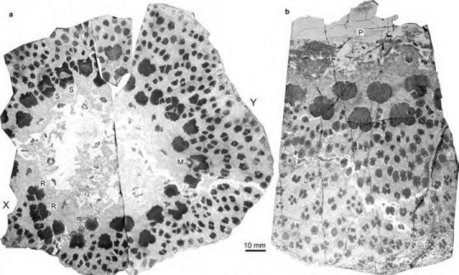
The first trees to have ever grown on Earth were also the most complex, new research has revealed. Fossils from a 374-million-year-old tree found in north-west China have revealed an interconnected web of woody strands within the trunk of the tree that is much more intricate than that of the trees we see around us today. The strands, known as xylem, are responsible for conducting water from a tree's roots to its branches and leaves. In the most familiar trees the xylem forms a single cylinder to which new growth is added in rings year by year just under the bark. In other trees, notably palms, xylem is formed in strands embedded in softer tissues throughout the trunk. Writing in the journal Proceedings of the National Academy of Sciences, the scientists have shown that the earliest trees, belonging to a group known as the cladoxlopsids, had their xylem dispersed in strands in the outer 5 cm of the tree trunk only, whilst the middle of the trunk was completely hollow. The narrow strands were arranged in an organized fashion and were interconnected to each other like a finely tuned network of water pipes. The team, which includes researchers from Cardiff University, Nanjing Institute of Geology and Paleontology, and State University of New York, also show that the development of these strands allowed the tree's overall growth. Rather than the tree laying down one growth ring under the bark every year, each of the hundreds of individual strands were growing their own rings, like a large collection of mini trees. As the strands got bigger, and the volume of soft tissues between the strands increased, the diameter of the tree trunk expanded. The new discovery shows conclusively that the connections between each of the strands would split apart in a curiously controlled and self-repairing way to accommodate the growth.
Via Dr. Catherine Russell
After years of studying advanced cancers, researchers are now training their DNA sequencers on precancerous growths to learn more about how they develop into the full-blown disease. A three-year pilot project funded this month by the US National Cancer Institute (NCI) as part of the National Cancer Moonshot Initiative, will take this approach with lung, breast, prostate and pancreatic cancer. Investigators hope to create a 'pre-cancer genome atlas' by sequencing DNA from precancerous growths, in addition to sequencing RNA from individual tumor cells and identifying the immune cells that have infiltrated the lesions. Another project — a four-year US$5-million effort funded by the charities Stand Up To Cancer, the American Lung Association and LUNGevity announced on 26 October 2017 — will bolster the study in lung cancer by sequencing DNA from precancerous growths in the airway. Doctors sometimes monitor such lesions, taking periodic biopsies to determine if and when they become malignant. One component of this project will track the genetic changes in these biopsies over time. The aim is to find ways to intervene in cancer earlier, when it may be easier to rein in the disease. “There’s a tremendous sense that the rate-limiting step for new approaches for either preventing cancers or detecting them early, is the fundamental lack of knowledge about the earliest molecular events,” says pulmologist Avrum Spira at Boston University in Massachusetts, a leader on both projects. “We just don’t understand what’s going on very early.”
Via Integrated DNA Technologies
|
|
Scooped by
Dr. Stefan Gruenwald
October 31, 2017 4:34 PM
|
A new statistical model has enabled researchers to pinpoint 27 novel genes thought to prevent cancer from forming, in an analysis of over 2000 tumors across 12 human cancer types. The findings could help create new cancer treatments that target these genes, and open up other avenues of cancer research. "Using this powerful toolkit, we've uncovered rare tumor suppressor genes that when lost in mutated cells, cause cancer," says Jonas Demeulemeester, joint first author of the paper and researcher at the Francis Crick Institute. "This could pave the way for the development of personalized cancer treatments." The research, published in Nature Communications, was led by scientists at the Francis Crick Institute and the University of Leuven, in collaboration with the University of Chicago and the University of Oslo. We have two copies of tumor suppressor genes in all of our cells to prevent them from turning cancerous. Similar to the two sets of brakes on a bicycle, both copies of the gene need to be lost in order to release the 'brakes' on tumor formation. These double gene copy deletions can provide clues for tumor suppressor genes in cancer. However, cancer samples normally contain both healthy cells and cancerous cells in unknown proportions, making it difficult to work out if just a single copy or both copies of the gene have been lost in the cancer cells. In addition, it can be difficult to distinguish between harmful deletions of tumor suppressor genes and non-harmful deletions of other genes at fragile sites along the genome. The team developed computational tools to overcome these issues and used them to analyze 2,218 tumors from 12 cancer types including breast, lung and bowel cancers. By determining the relative proportions of cancerous and healthy cells in each sample, they could work out the number of copies of each gene in the cancer cells. This analysis revealed 96 regions of the human genome that are frequently lost during tumor development.
|
|
Scooped by
Dr. Stefan Gruenwald
October 31, 2017 2:42 PM
|
Long-term aspirin use reduces the risk of developing many cancers, a major study has shown. Chinese researchers followed the progress of more than 600,000 people in the largest study to date looking at the link between cancer and aspirin. They found that people who had taken the drug every day for an average of seven years were 47 per cent less likely to develop liver or esophageal cancer and 38 per cent less likely to be diagnosed with gastric cancer. They were also 34 per cent less likely to develop pancreatic cancer, and had a 24 per cent reduced risk of being diagnosed with colorectal cancer.
|
|
|
Scooped by
Dr. Stefan Gruenwald
November 10, 2017 1:04 PM
|
A new type of cell has been found in the eye of a deep-sea fish, and scientists say the discovery opens a new world of understanding about vision in a variety of light conditions. Most vertebrates have a duplex retina comprising two photoreceptor types, rods for dim-light (scotopic) vision and cones for bright-light (photopic) and color vision. However, deep-sea fishes are only active in dim-light conditions; hence, most species have lost their cones in favor of a simplex retina composed exclusively of rods. Although the pearlsides, Maurolicus spp., have such a pure rod retina, their behavior is at odds with this oversimplified visual system. Contrary to other deep-sea fishes, pearlsides are mostly active during dusk and dawn close to the surface, where light levels are intermediate (twilight or mesopic) and require the use of both rod and cone photoreceptors. A new study now elucidates this paradox by demonstrating that the pearlside retina does not have rod photoreceptors only. Instead, it is composed almost exclusively of transmuted cone photoreceptors. These transmuted cells combine the morphological characteristics of a rod photoreceptor with a cone opsin and a cone phototransduction cascade to form a unique photoreceptor type, a rod-like cone, specifically tuned to the light conditions of the pearlsides’ habitat (blue-shifted light at mesopic intensities). Combining properties of both rods and cones into a single cell type, instead of using two photoreceptor types that do not function at their full potential under mesopic conditions, is likely to be the most efficient and economical solution to optimize visual performance. These results challenge the standing paradigm of the function and evolution of the vertebrate duplex retina and emphasize the need for a more comprehensive evaluation of visual systems in general.
|
|
Scooped by
Dr. Stefan Gruenwald
November 9, 2017 2:13 PM
|
A fungal parasite that infects ants and manipulates their behavior to benefit the fungus' reproduction accomplishes this feat without infecting the ants' brains, according to a study led by Penn State researchers. Instead, Ophiocordyceps unilateralis sensu lato—a complex of species sometimes called "zombie ant fungus"—surrounds and invades muscle fibers throughout the ant's body, and fungal cells form a 3-D network that may enable them to collectively control host behavior, the researchers said. Previous research showed that this species-specific parasite controls the behavior of carpenter ant workers, compelling them to climb vegetation and bite into the underside of leaves or twigs, where they die. As the fungus grows in the ant cadaver, it produces a stalk that protrudes from the ant's head and discharges infectious spores onto the ground below, where they can infect other foraging ants. "To better understand how such microbial parasites control animal behavior, we looked at cell-level interactions between the parasite and its carpenter-ant host at a crucial moment in the parasite's lifecycle—when the manipulated host fixes itself permanently to vegetation by its mandibles," said lead author Maridel Fredericksen, former master's degree student in entomology at Penn State, now a doctoral candidate at the University of Basel Zoological Institute, Switzerland. "The fungus is known to secrete tissue-specific metabolites and cause changes in host gene expression as well as atrophy in the mandible muscles of its ant host," she said. "The altered host behavior is an extended phenotype of the microbial parasite's genes being expressed through the body of its host. But it's unknown how the fungus coordinates these effects to manipulate the host's behavior." The image is a 3-D reconstruction of an ant mandible adductor muscle (red) surrounded by a network of fungal cells (yellow).
|
|
Scooped by
Dr. Stefan Gruenwald
November 9, 2017 2:02 PM
|
A new terahertz detector could bring more bandwidth to wearable sensors or intelligent cars—and it bends, too About five years ago, graphene-based photodetectors moved beyond detecting the visible and near-infrared range of the electromagnetic spectrum to push into the terahertz range. This is a big deal because terahertz radiation penetrates materials that block visible and mid-infrared light. Detecting it opened up a range of potential applications in medical diagnostics, process control, and even intelligent vehicles. Also about five years ago, we saw research that combined graphene and quantum dots to create flexible photodetectors. While these photodetectors are great for detecting waves along much of the spectrum, they couldn’t capture terahertz radiation. Now researchers at Chalmers University in Sweden have combined flexibility and terahertz detection into one flexible, graphene-based detector that could lead to new products such as wearable terahertz sensors for medical diagnosis. In research published in the journal Applied Physics Letters, the Chalmers researchers developed a field-effect transistor (FET) built up on a plastic substrate in which the channel is made from graphene. The resulting flexible device can detect signals in the range of 330 to 500 GHz. “Terahertz graphene-based FET detectors have been demonstrated on rigid substrates such as SiO2/Silicon,” said Jan Stake, head of the Terahertz and Millimetre Wave Laboratory at Chalmers. “And flexible devices (graphene and other concepts) have been demonstrated at RF/microwave frequencies.” What the Chalmers team has done to combine flexibility and terahertz detection could also make it possible to build an Internet of Things connected via high-bandwidth 5G technologies.
|
|
Scooped by
Dr. Stefan Gruenwald
November 9, 2017 12:14 PM
|
XSEDE ECSS program helps optimize astrophysics code for Knights Landing processors on Stampede2 supercomputer. Black holes make for a great space mystery. They're so massive that nothing, not even light, can escape a black hole once it gets close enough. A great mystery for scientists is that there's evidence of powerful jets of electrons and protons that shoot out of the top and bottom of some black holes. Yet no one knows how these jets form. Computer code called Cosmos now fuels supercomputer simulations of black hole jets and is starting to reveal the mysteries of black holes and other space oddities. "Cosmos, the root of the name, came from the fact that the code was originally designed to do cosmology. It's morphed into doing a broad range of astrophysics," explained Chris Fragile, a professor in the Physics and Astronomy Department of the College of Charleston. Fragile helped develop the Cosmos code in 2005 while working as a post-doctoral researcher at the Lawrence Livermore National Laboratory (LLNL), along with Steven Murray (LLNL) and Peter Anninos (LLNL). Fragile pointed out that Cosmos provides astrophysicists an advantage because it has stayed at the forefront of general relativistic magnetohydrodynamics (MHD). MHD simulations, the magnetism of electrically conducting fluids such as black hole jets, add a layer of understanding but are notoriously difficult for even the fastest supercomputers. "The other area that Cosmos has always had some advantage in as well is that it has a lot of physics packages in it," continued Fragile. "This was Peter Anninos' initial motivation, in that he wanted one computational tool where he could put in everything he had worked on over the years." Fragile listed some of the packages that include chemistry, nuclear burning, Newtonian gravity, relativistic gravity, and even radiation and radiative cooling. "It's a fairly unique combination," Fragile said. The current iteration of the code is CosmosDG, which utilizes discontinuous Gelarkin methods. "You take the physical domain that you want to simulate," explained Fragile, "and you break it up into a bunch of little, tiny computational cells, or zones. You're basically solving the equations of fluid dynamics in each of those zones." CosmosDG has allowed much higher order of accuracy than ever before, according to results published in the Astrophysical Journal, August 2017. Since 2008, the Texas Advanced Computing Center (TACC) has provided computational resources for the development of the Cosmos code—about 6.5 million supercomputer core hours on the Ranger system and 3.6 million core hours on the Stampede system. XSEDE, the eXtreme Science and Engineering Discovery Environment funded by the National Science Foundation, awarded Fragile's group with the allocation. Fragile has recently enlisted the help of XSEDE ECSS to optimize the CosmosDG code for Stampede2, a supercomputer capable of 18 petaflops and the flagship of TACC at The University of Texas at Austin. Stampede2 features 4,200 Knights Landing (KNL) nodes and 1,736 Intel Xeon Skylake nodes. "We're living in a golden age of astronomy," Fragile said, referring to the wealth of knowledge generated from space telescopes like Hubble to the upcoming James Webb Space Telescope, to land-based telescopes such as Keck, and more. Computing has helped support the success of astronomy, Fragile said. "What we do in modern-day astronomy couldn't be done without computers," he concluded. "The simulations that I do are two-fold. They're to help us better understand the complex physics behind astrophysical phenomena. But they're also to help us interpret and predict observations that either have been, can be, or will be made in astronomy."
|
|
Scooped by
Dr. Stefan Gruenwald
November 8, 2017 3:24 PM
|
The pancreatic cancer and immunotherapy experts at Memorial Sloan Kettering Cancer Center (MSK) have shown for the first time why some people with pancreatic cancer live many more years than others with the deadly disease. Pancreatic cancer is one of the most difficult cancers to treat, with just 7 percent of people surviving more than five years after their diagnosis. Less than 2 percent are alive after ten years. This pioneering study found that people with more of the immune cells called T cells present in their tumor survived longer. Researchers were also able to identify the particular components of the tumor that drew in those immune cells. The results, reported in the journal Nature, have implications for the design of more-effective immunotherapy treatments for people with all types of cancer, including the deadly pancreatic cancer. This study lays the groundwork for future research and could potentially lead to the creation of an effective cancer vaccine. Findings MSK’s Vinod Balachandran, MD, a surgeon-scientist whose laboratory studies pancreatic cancer, and a team of investigators started by asking the simple question: why 5 percent of pancreatic cancer survivors were able to live longer than most of those diagnosed with the deadly disease. They sought to answer this question by examining the differences between tumors from those extremely rare people who survived six years on average and those who did not. Their investigations uncovered that the tumors of long-term survivors of pancreatic cancer had 12 times as many activated T cells, a specialized cancer-fighting immune cell, as people with poorer outcomes. Additionally, researchers discovered that the long-term group’s exceptional survival was linked to the T cells’ ability to recognize novel mutations in cancer proteins that make these cancers resemble infections. The team also discovered that T cells recognizing these novel mutated cancer proteins, called neoantigens, are found in the blood of long-term survivors up to 12 years after the tumors were removed by surgery. This may suggest that these neoantigens could be effective in generating long-lasting “immune memory” against tumors. Based on these striking findings, the group is currently developing clinical trials to examine using these neoantigens as effective cancer vaccines in pancreatic and other cancers. The presence of these neoantigens predicted which patients would be long-term survivors, which suggested their immune systems were attacking them, like "built-in immunotherapy", said Professor Anthony Gill at the Garvan Institute of Medical Research, who is chair of the APGI and study collaborator. "Traditionally, researchers spend a lot of time studying the sick patients, the patients whose cancer comes back, but in this study we've turned that on its head by looking at survivors and what's different about them," Professor Gill said. "If we can learn how the immune system reacts in these long-term survivors, the idea is we might be able to teach the immune systems of other patients to react the same way," he said. The findings could pave the way for a range of potential treatment pathways, including a vaccine or manipulating the microbiome by introducing 'good bacteria', or better-targeted immunotherapies, but the research was still in its early stages, Professor Gill said.
|
|
Scooped by
Dr. Stefan Gruenwald
November 3, 2017 12:39 PM
|
Colloidal quantum dots are electronic materials and because of their astonishingly small size (typically 3-20 nanometers in dimension) they possess fascinating optical properties. Quantum dot solar cells emerged in 2010 as the newest technology on an NREL chart that tracks research efforts to convert sunlight to electricity with increasing efficiency. The initial lead sulfide quantum dot solar cells had an efficiency of 2.9 percent. Since then, improvements have pushed that number into double digits for lead sulfide reaching a record of 12 percent set last year by the University of Toronto.
|
|
Scooped by
Dr. Stefan Gruenwald
November 1, 2017 3:38 PM
|
Using a simple chemical reaction, scientists can make invisible ink appear and disappear as quickly as you can say, "Mischief managed." With many of us spending our time online, we tend to be laser-focused on preventing our personal information from falling into the hands of nefarious hackers. But let’s not forget about the security of print-based communications. Remember how the ink appears and disappears on the Marauder’s Map that appears in Harry Potter and the Prisoner of Azkaban? Basically, scientists are trying to recreate this bit of magic to protect information. But instead of using a password to make the invisible ink show and vanish, researchers are using a simple chemical reaction. In a study released Tuesday in Nature Communications, a group of scientists showcased that lead-based ink can be reversibly made invisible with salt. Using an inkjet printer and a customized ink cartridge, researchers printed images and writing onto parchment paper. The paper comes out as though nothing has been printed; UV and ambient lights also don’t show anything. But add a bit of halide salt and what’s printed quickly appears under UV light. Add more salt, and voila, it’s gone.
|
|
Scooped by
Dr. Stefan Gruenwald
November 1, 2017 2:54 PM
|
A team of researchers has discovered a flaw in the way past ocean temperatures have been estimated up to now. Their findings could mean that the current period of climate change is unparalleled over the last 100 million years. According to the methodology widely used by the scientific community, the temperature of the ocean depths and that of the surface of the polar ocean 100 million years ago were around 15 degrees higher than current readings. This approach, however, is now being challenged: ocean temperatures may in fact have remained relatively stable throughout this period, which raises serious concerns about current levels of climate change. These are the conclusions of a study conducted by a team of French researchers from the French National Center for Scientific Research (CNRS), Sorbonne University and the University of Strasbourg, and Swiss researchers from the Swiss Federal Institute of Technology in Lausanne (EPFL) and the University of Lausanne. The study has just been published in Nature Communications. "If we are right, our study challenges decades of paleoclimate research," says Anders Meibom, the head of EPFL's Laboratory for Biological Geochemistry and a professor at the University of Lausanne. Meibom is categorical: "Oceans cover 70% of our planet. They play a key role in Earth's climate. Knowing the extent to which their temperatures have varied over geological time is crucial if we are to gain a fuller understanding of how they behave and to predict the consequences of current climate change more accurately." How could the existing methodology be so flawed? The study's authors believe that the influence of certain processes was overlooked. For over 50 years, the scientific community based its estimates on what they learned from foraminifera, which are the fossils of tiny marine organisms found in sediment cores taken from the ocean floor. The foraminifera form calcareous shells called tests in which the content of oxygen-18 depends on the temperature of the water in which they live. Changes in the ocean's temperature over time were therefore calculated on the basis of the oxygen-18 content of the fossil foraminifera tests found in the sediment. According to these measurements, the ocean's temperature has fallen by 15 degrees over the past 100 million years.
|
|
Scooped by
Dr. Stefan Gruenwald
October 31, 2017 7:58 PM
|
The AI-created faces on display in a new video by chipmaker NVIDIA are the highest resolution ever produced by a neural network. Chipmaker NVIDIA has developed an AI that produces highly detailed images of human-looking faces, but the people depicted don't actually exist. The system is the latest example of how AI is blurring the line between the "real" and the fabricated. Back in June, an image generator that could turn even the crudest doodle of a face into a more realistic looking image made the rounds online. That system used a fairly new type of algorithm called a generative adversarial network (GAN) for its AI-created faces, and now, chipmaker NVIDIA has developed a system that employs a GAN to create far most realistic-looking images of people. Artificial neural networks are systems developed to mimic the activity of neurons in the human brain. In a GAN, two neural networks are essentially pitted against one another. One of the networks functions as a generative algorithm, while the other challenges the results of the first, playing an adversarial role.
|
|
Scooped by
Dr. Stefan Gruenwald
October 31, 2017 4:42 PM
|
A remarkable law took effect in Luxembourg in August. It provides a legal framework for private companies to exploit resources in space — a sign of the Grand Duchy’s plan to become a global leader for extraterrestrial mining. Reactions to Luxembourg’s space ambitions have moved from incredulity a couple of years ago to guarded admiration. Mainstream space circles see the idea of an extraction industry on asteroids and/or the moon as a serious long-term proposition rather than fantasy. Resources will be used in space, starting with water which can be split by solar power into oxygen and hydrogen fuel for spaceships. Metals for space manufacturing such as iron, tungsten and titanium will follow. Bringing precious metals to Earth is a long term dream. Luxembourg has a history of investing in industries on the eve of take off. It built its economy on a formidable steel industry during the industrial revolution. Later, it moved into financial services, broadcasting and satellite technology, founding SES, the world’s largest private satellite operator, in the 1980s. “We are convinced that the exploration and use of space resources will be necessary, in a first step to facilitate further exploration of outer space [providing fuel and other materials for spacecraft] and at a later stage to meet some of the needs down on Earth,” says Etienne Schneider, Luxembourg’s deputy prime minister.
|
|
Rescooped by
Dr. Stefan Gruenwald
from Papers
October 31, 2017 4:36 PM
|
Advances in soft robotics will be crucial to the next generation of robot–human interfaces. Soft material systems embed safety at the material level, providing additional safeguards that will expedite their placement alongside humans and other biological systems. However, in order to function in unpredictable, uncontrolled environments alongside biological systems, soft robotic systems should be as robust in their ability to recover from damage as their biological counterparts. There exists a great deal of work on self-healing materials, particularly polymeric and elastomeric materials that can self-heal through a wide variety of tools and techniques. Fortunately, most emerging soft robotic systems are constructed from polymeric or elastomeric materials, so this work can be of immediate benefit to the soft robotics community. Though the field of soft robotics is still nascent as a whole, self-healing and damage resilient systems are beginning to be incorporated into three key support pillars that are enabling the future of soft robotics: actuators, structures, and sensors. This article reviews the state-of-the-art in damage resilience and self-healing materials and devices as applied to these three pillars. This review also discusses future applications for soft robots that incorporate self-healing capabilities. Reference: R. Adam Bilodeau & Rebecca K. Kramer Front. Robot. AI, 03 October 2017 https://doi.org/10.3389/frobt.2017.00048
Via Complexity Digest
|
|
Scooped by
Dr. Stefan Gruenwald
October 31, 2017 4:32 PM
|
At the Association for Computing Machinery's Conference on Systems, Programming, Languages and Applications: Software for Humanity (SPLASH), researchers from MIT, the French Alternative Energies and Atomic Energy Commission, and Adobe Research recently presented a new system that automatically produces code optimized for sparse data. Tensor algebra is a powerful tool with applications in machine learning, data analytics, engineering and the physical sciences. Tensors are often sparse and compound operations must frequently be computed in a single kernel for performance and to save memory. Programmers are left to write kernels for every operation of interest, with different mixes of dense and sparse tensors in different formats. The combinations are infinite, which makes it impossible to manually implement and optimize all of them. This work presents for the first time a compiler technique to automatically generate kernels for any compound tensor algebra operation on dense and sparse tensors. The technique is implemented in a C++ library called taco. Its performance is competitive with best-in-class hand-optimized kernels in popular libraries, while supporting far more tensor operations.
|