An advanced space engine in the running at NASA to propel humans to Mars has broken the records for operating current, power and thrust for a device of its kind, known as a Hall thruster, one of three Mars engine prototypes currently in development, that uses electric and magnetic fields to ionize gases like xenon and expels the ions to produce thrust, a much cleaner, safer and more fuel efficient than traditional chemical rockets, but with relatively low thrust and acceleration.
Hall thrusters offer exceptionally efficient plasma-based spacecraft propulsion by accelerating small amounts of propellant very quickly using electric and magnetic fields. They can achieve top speeds with a tiny fraction of the fuel required in a chemical rocket.
"Mars missions are just on the horizon, and we already know that Hall thrusters work well in space," said Alec Gallimore, University of Michigan professor of aerospace engineering . "They can be optimized either for carrying equipment with minimal energy and propellant over the course of a year or so, or for speed—carrying the crew to Mars much more quickly."
The challenge is to make them larger and more powerful. The X3, a Hall thruster designed by researchers at U-M, NASA and the U.S. Air Force, shattered the previous thrust record set by a Hall thruster, coming in at 5.4 newtons of force compared with 3.3 newtons. The improvement in thrust is especially important for crewed mission—it means faster acceleration and shorter travel times. The X3 also more than doubled the operating current record (250 amperes vs. 112 amperes) and ran at a slightly higher power (102 kilowatts vs. 98 kilowatts).
The X3 is one of three prototype "Mars engines" to be turned into a full propulsion system with funding from NASA. Scott Hall, a doctoral student in aerospace engineering at U-M, carried out the tests at the NASA Glenn Research Center in Cleveland, along with Hani Kamhawi, a NASA Glenn research scientist who has been heavily involved in the development of the X3. The experiments were the culmination of more than five years of building, testing and improving the thruster.
Although the photons exchange energy like electrons do, it’s unknown whether the particles are actually bound together as electrons are, and whether photons could produce an effect analogous to superconductivity.
“This is a door that is opened,” says study coauthor Ado Jorio, a physicist at the Universidade Federal de Minas Gerais in Brazil. Now, he says, the questions that must be addressed are, “How far can we push this similarity? Can we find with photons incredible results like we find for electrons?”
In certain solid materials cooled to extremely low temperatures, electrons form partnerships called Cooper pairs (SN: 6/13/15, p. 8), which allow superconductivity to occur. Although the negatively charged particles typically repel one another, two electrons can bind together by exchanging phonons, or quantum packets of vibration, via the lattice of ions within these materials. This alliance coordinates the electrons’ movements and thereby eases their passage through the material, allowing them to flow without resistance. Superconductivity’s potential technological applications — which include energy-efficient power transmission, superstrong magnets and levitating trains — have attracted heaps of scientific interest in the phenomenon.
Now, Jorio and colleagues have shown photons behaving similarly to superconducting electrons. When the researchers shined a laser on water, pairs of photons that emerged from the liquid at the same time tended to have complementary energies. While one photon had lost a little energy, another had gained the same amount of energy, indicating that they were exchanging quantum vibrations. The effect appeared in a variety of transparent materials, says Jorio, and it was observed at room temperature, unlike electron pairing in superconductors.
The team also showed that the exchanged quantum vibrations were “virtual” — appearing only for fleeting moments — just like the vibrations exchanged by electrons. The theory that explains the interaction “is exactly the same as for the electrons,” Jorio says.
Glowing high in the atmosphere, the northern and southern lights shine softly, brilliantly—and on Jupiter, weirdly. Jupiter, like our own planet, has distinct auroras (northern lights by another name) near its poles. An aurora forms when charged particles are accelerated by a planet or brown dwarf’s magnetic field and slam into the atmosphere, creating beautiful lights in the night sky. In the case of Jupiter, many of the electromagnetic waves thrown off by its auroras are x-rays—invisible to human eyes, but key to understanding more about how auroras on Jupiter form.
In a recent study published in Nature Astronomy, astronomers announced that they’d finally been able to observe Jupiter’s southern x-ray hot spot in detail using data from the XMM-Newton and Chandra space observatories in 2007 and 2016. Surprisingly, Jupiter’s x-ray hot spots weren’t exactly in synch across the hemispheres.
In the southern half of the planet, the x-ray rich aurora pulses at a constant rate, spiking about every nine to twelve minutes. The northern one is much more erratic. It dims and brightens at a pace that is seemingly independent of its southerly counterpart. That’s different from Earth, where aurora caused by solar activity tend to affect both north and south poles in a predictable manner.
“The behavior of Jupiter’s X-ray hot spots raises important questions about what processes produce these auroras,” study co-author Licia Ray said in a statement. “We know that a combination of solar wind ions and ions of oxygen and sulfur, originally from volcanic explosions from Jupiter’s moon, Io, are involved. However, their relative importance in producing the X-ray emissions is unclear.”
Scientists had previously discovered that solar storms caused increased activity in Jupiter’s auroras, but they’re interested to know if other factors, like Jupiter’s massive magnetic field, have more of an impact on their formation.
Jupiter's auroras present other mysteries too. Last month NASA scientists measured massive amounts of energy swirling in Jupiter's magnetic field, the kind of energy that produces some of the brightest aurora on earth, but tens of times more powerful. Strangely though, those high levels of energy didn't produce the most intense aurora on Jupiter, another way that its auroras don't quite match up with ours.
Climate change is a looming public health emergency, say experts in a new report, due to high pollution levels, warming temperatures and increased opportunities for disease.
Climate change is already affecting the health of populations around the world, but things are set to get worse if adequate changes aren't made, according to an international consortium of climate experts. Fueling the impact is the fact that more than 2,100 cities globally exceed recommended levels of atmospheric particulate matter -- particles emitted when fuels, such as coal or diesel, are burned and are small enough to get into the lungs -- says a report published Monday in the medical journal The Lancet.
In the UK alone, 44 cities exceeded levels recommended by the World Health Organization. Since 1990, exposure to fine particulate matter -- smaller than 2.5 micrometers in diameter -- increased by 11.2%, the report states, aided by a slow transition away from fossil fuels. Climate change "is the major health threat of the 21st century," said Hugh Montgomery, co-chairman of The Lancet Countdown on health and climate change and director of the Institute for Human Health and Performance at University College London in the UK. "There's an urgent need to address it." The latest report highlights multiple health, weather and economic consequences that need immediate attention.
Poor air quality
"Air pollution is one of the leading causes of premature mortality globally," said Paul Wilkinson, professor of environmental epidemiology at the London School of Hygiene and Tropical Medicine, who co-authored the report. More than 803,000 deaths across 21 Asian countries in 2015 were attributable to pollution from coal power, transport and the use of fossil fuels at home, the report states.
Recent advances in proteomics allow the accurate measurement of abundances for thousands of proteins and phosphoproteins from multiple samples in parallel. Therefore, for the first time, scientists have the opportunity to measure the proteomic profiles of thousands of patient samples or disease model cell lines in a systematic way, to identify the precise underlying molecular mechanism and discover personalized biomarkers, networks and treatments. Here, examples of the successful use of proteomics and phosphoproteomics data sets is reviewed in as well as their integration other omics data sets with the aim of precision medicine. The authors of this study discuss the bioinformatics challenges posed by the generation, analysis and integration of such large data sets and present potential reasons why proteomics profiling and biomarkers are not currently widely used in the clinical setting. They finally discuss ways to contribute to the better use of proteomics data in precision medicine and the clinical setting.
A team of researchers at Peking University has found that tiny arrows made of gold can be used to create exotic new superstructures. In their paper published on the open access site Science Advances, the team describes how the nano-arrows were formed and how they can be used to create 2-D and 3-D supercrystals.
As the search for new useful materials continues, scientists have looked to unusual constructs as a basis upon which to build other objects. One specific area of research involves searching for materials that behave in certain ways at the nano-level, particularly those that respond to light (nanophotonics). This is an area, the researchers note, that is lacking in the production of nanocrystals that are adjustable and complex enough to meet the needs of the growing field. In this new effort, the group has developed a new type of building block for creating such materials—called nano-arrows, they can be used to create unique crystal formations.
The nano-arrows, the team explains were formed from twin pyramids of gold connected on either end to a four-wing shaft also made of gold—the team calls them uniform gold nano-arrows (GNAs). They were made using a controlled gold nanorod overgrowth process. The result is an extremely tiny two-point arrow with tips pointing in opposite directions. The unique shape, the researchers note, and the fact that they are uniform, allows for the construction of unique assemblages. When laid flat, the GNAs can align face to face, allowing for the construction of interesting and possibly useful 2-D web supercrystals, some of which resemble zippers and others woven cloth.
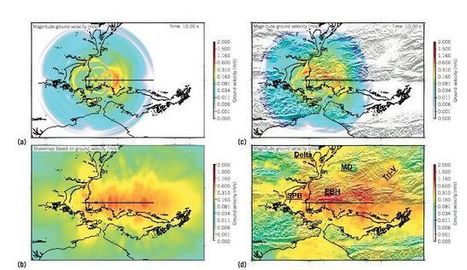
Currently, an interdisciplinary team of researchers are building the first-ever end-to-end simulation code to precisely capture the geology and physics of regional earthquakes, and how the shaking impacts buildings. This work is part of the DOE’s Exascale Computing Project, which aims to maximize the benefits of exascale—future supercomputers that will be 50 times faster than our nation’s most powerful system today—for U.S. economic competitiveness, national security and scientific discovery.
“Due to computing limitations, current geophysics simulations at the regional level typically resolve ground motions at 1-2 hertz (vibrations per second). Ultimately, we’d like to have motion estimates on the order of 5-10 hertz to accurately capture the dynamic response for a wide range of infrastructure,” says David McCallen, who leads an ECP-supported effort called High Performance, Multidisciplinary Simulations for Regional Scale Seismic Hazard and Risk Assessments. He’s also a guest scientist in Berkeley Lab’s Earth and Environmental Sciences Area.
One of the most important variables that affect earthquake damage to buildings is seismic wave frequency, or the rate at which an earthquake wave repeats each second. Buildings and structures respond differently to certain frequencies. Large structures like skyscrapers, bridges, and highway overpasses are sensitive to low frequency shaking, whereas smaller structures like homes are more likely to be damaged by high frequency shaking, which ranges from 2 to 10 hertz and above. McCallen notes that simulations of high frequency earthquakes are more computationally demanding and will require exascale computers.
There sure are a lot of people on planet Earth—a whopping 7 billion and counting. But how does this number, which of course represents the number of people now alive, compare to the number of people who have ever lived? Is it really true, as some folks maintain, that the number of people now alive is greater than the number of people who have lived and died since the dawn of Homo sapiens?
Not so, demographers say. “Back around 1980, and I think before then, there was this thing going around that 75 percent of people ever born were alive at the time,” Carl Haub, a demographer at the Population Reference Bureau, told The Huffington Post. “Occasionally I’ll still have someone call and they want to do a story on that particular number... It’s not true.”
Haub calculates that of all humans who have ever lived, only about 6.5 percent are now alive—which means that the number of people who have ever lived is larger than the world’s current population. Alas, the dead outnumber the living.
“You know, for much of early history there’s just slim evidence of how long people lived,” Haub said, “but it’s really how many were born is the important thing. There are really only two elements in it: what was the size of the population in 50,000 B.C. and in later periods, and how many births were there over the history from then to now?”
A concept truck by Toyota is powered by hydrogen fuel cells and emits nothing but water vapor. Vehicles powered by alternatives to fossil fuel are on the roll. Literally. The Japanese automaker Toyota is rolling out a new line of vehicles powered by hydrogen fuel cells. A concept version of a long-haul truck with the car manufacturer’s new hydrogen-based engine in it will set out with a full load of cargo from Los Angeles and make its way to Long Beach.
“If you see a big-rig driving around the Ports of Los Angeles and Long Beach that seems oddly quiet and quick, do not be alarmed! It’s just the future,” Toyota quips in a statement issued to the press. The trial is part of the Japanese company’s feasibility studies for its brand-new “Project Portal” – a hydrogen fuel cell systemdesigned for heavy-duty trucks. Toyota touts its Project Portal as the next step in its development of zero-emission fuel cell technology for industrial uses.
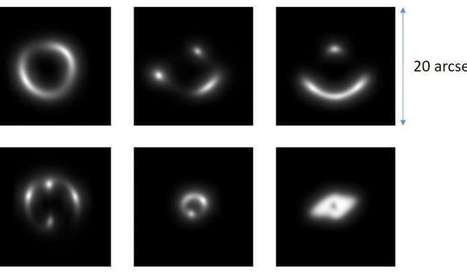
A group of astronomers from the universities of Groningen, Naples and Bonn has developed a method that finds gravitational lenses in enormous piles of observations.
The hunt for gravitational lenses is painstaking. Astronomers have to sort thousands of images. They are assisted by enthusiastic volunteers around the world. So far, the search was more or less in line with the availability of new images. But thanks to new observations with special telescopes that reflect large sections of the sky, millions of images are added. Humans cannot keep up with that pace.
To tackle the growing amount of images, the astronomers have used so-called 'convolutional neural networks'. Google employed such neural networks to win a match of Go against the world champion. Facebook uses them to recognize what is in the images of your timeline. And Tesla has been developing self-driving cars thanks to neural networks.
The astronomers trained the neural network using millions of homemade images of gravitational lenses. Then they confronted the network with millions of images from a small patch of the sky. That patch had a surface area of 255 square degrees. That's just over half a percent of the sky.
IBM Research announced Tuesday (Oct. 24, 2017) that its scientists have developed the first “in-memory computing” or “computational memory” computer system architecture, which is expected to yield yield 200x improvements in computer speed and energy efficiency — enabling ultra-dense, low-power, massively parallel computing systems.
Their concept is to use one device (such as phase change memory or PCM*) for both storing and processing information. That design would replace the conventional “von Neumann” computer architecture, used in standard desktop computers, laptops, and cellphones, which splits computation and memory into two different devices. That requires moving data back and forth between memory and the computing unit, making them slower and less energy-efficient.
The researchers used PCM devices made from a germanium antimony telluride alloy, which is stacked and sandwiched between two electrodes. When the scientists apply a tiny electric current to the material, they heat it, which alters its state from amorphous (with a disordered atomic arrangement) to crystalline (with an ordered atomic configuration). The IBM researchers have used the crystallization dynamics to perform computation in memory.
The researchers believe this new prototype technology will enable ultra-dense, low-power, and massively parallel computing systems that are especially useful for AI applications. The researchers tested the new architecture using an unsupervised machine-learning algorithm running on one million phase change memory (PCM) devices, successfully finding temporal correlations in unknown data streams.
“This is an important step forward in our research of the physics of AI, which explores new hardware materials, devices and architectures,” says Evangelos Eleftheriou, PhD, an IBM Fellow and co-author of an open-access paper in the peer-reviewed journal Nature Communications. “As the CMOS scaling laws break down because of technological limits, a radical departure from the processor-memory dichotomy is needed to circumvent the limitations of today’s computers.”
“Memory has so far been viewed as a place where we merely store information, said Abu Sebastian, PhD. exploratory memory and cognitive technologies scientist, IBM Research and lead author of the paper. But in this work, we conclusively show how we can exploit the physics of these memory devices to also perform a rather high-level computational primitive. The result of the computation is also stored in the memory devices, and in this sense the concept is loosely inspired by how the brain computes.” Sebastian also leads a European Research Council funded project on this topic.
IBM Research announced Tuesday that its scientists have developed the first “in-memory computing” or “computational memory” computer system architecture, which is expected to yield yield 200x improvements in computer speed and energy efficiency — enabling ultra-dense, low-power, massively parallel computing systems. Their concept is to use one device (such as phase change memory or PCM*) for both storing and processing information. That design would replace the conventional “von Neumann” computer architecture, used in standard desktop computers, laptops, and cellphones, which splits computation and memory into two different devices. That requires moving data back and forth between memory and the computing unit, making them slower and less energy-efficient. The researchers used PCM devices made from a germanium antimony telluride alloy, which is stacked and sandwiched between two electrodes. When the scientists apply a tiny electric current to the material, they heat it, which alters its state from amorphous (with a disordered atomic arrangement) to crystalline (with an ordered atomic configuration). The IBM researchers have used the crystallization dynamics to perform computation in memory. The researchers believe this new prototype technology will enable ultra-dense, low-power, and massively parallel computing systems that are especially useful for AI applications. The researchers tested the new architecture using an unsupervised machine-learning algorithm running on one million phase change memory (PCM) devices, successfully finding temporal correlations in unknown data streams.
Regular infusions of a peptide that can selectively seek out and destroy broken-down cells that hamper proper tissue renewal, called senescent cells, showed evidence of improving healthspan in naturally-aged mice and mice genetically engineered to rapidly age. The proof-of-concept study, published March 23 in Cell, found that an anti-senescent cell therapy could reverse age-related loss of fur, poor kidney function, and frailty. It is currently being tested whether the approach also extends lifespan, and human safety studies are being planned.
The peptide took over four years of trial and error to develop and builds on nearly a decade of research investigating vulnerabilities in senescent cells as a therapeutic option to combat some aspects of aging (Trends in Molecular Medicine, 10.1016/j.molmed.2016.11.006). It works by blocking the ability of a protein implicated in senescence, FOXO4, to tell another protein, p53, not to cause the cell to self-destruct. By interfering with the FOXO4-p53 crosstalk, the peptide causes senescent cells to go through apoptosis, or cell suicide.
"Only in senescent cells does this peptide cause cell death," says senior author Peter de Keizer, a researcher of aging at Erasmus University Medical Center in the Netherlands. "We treated mice for over 10 months, giving them infusions of the peptide three times a week, and we didn't see any obvious side effects. FOXO4 is barely expressed in non-senescent cells, so that makes the peptide interesting as the FOXO4-p53 interaction is especially relevant to senescent cells, but not normal cells."
Results appeared at different times over the course of treatment. Fast-aging mice with patches of missing fur began to recover their coats after 10 days. After about three weeks, fitness benefits began to show, with older mice running double the distance of their counterparts who did not receive the peptide. A month after treatment, aged mice showed an increase in markers indicating healthy kidney function.
Senescent cell therapy is one of several strategies being tested in mice aimed at reversing aging or lengthening healthspan. In 2015, the Valter Longo laboratory at the University of Southern California reported that mice on a calorie-restricted diet that mimics fasting benefited from a longer life, a reduction in inflammatory disease, and improved memory (Cell Metabolism, 10.1016/j.cmet.2015.05.012).
And last December, Juan Carlos Izpisua Belmonte at the Salk Institute of Biological Science and colleagues made headlines with their discovery that cellular reprogramming of epigenetic marks could extend lifespan and improve health in fast-aging mice (Cell, 10.1016/j.cell.2016.11.052).
As an ambitious project to map all the cells in the human body gets officially under way, Aviv Regev, Sarah Teichmann and colleagues outline some key challenges.
Our knowledge of the cells that make up the human body, and how they vary from person to person, or throughout development and in health or disease, is still very limited. This week, a year after project planning began, more than 130 biologists, computational scientists, technologists and clinicians are reconvening in Rehovot, Israel, to kick the Human Cell Atlas initiative1 into full gear. This international collaboration between hundreds of scientists from dozens of universities and institutes — including the UK Wellcome Trust Sanger Institute, RIKEN in Japan, the Karolinska Institute in Stockholm and the Broad Institute of MIT and Harvard in Cambridge, Massachusetts — aims to create comprehensive reference maps of all human cells as a basis for research, diagnosis, monitoring and treatment.
Scientists don’t understand the process of speciation, but hybrids can reveal the genes that keep species apart.
Researchers have discovered fish, birds, mice, fruit flies and other animals in the wild carrying DNA from parents of different species. Perhaps the biggest shocker of all was the 2010 discovery that humans had interbred with Neandertals after leaving Africa. Humans still carry genetic souvenirs of the encounters (SN: 6/5/10, p. 5). These discoveries would seem to contradict the biological species concept, which holds that separate species can’t mate and produce fertile offspring.
But the blurred lines between species don’t bother many researchers, says evolutionary biologist Glenn-Peter Sætre of the University of Oslo. He and others are learning from that blurry zone, the place where hybrids thrive or sometimes fail. Finding out why some hybrids make it and others don’t may yield molecular details about how reproductive barriers between species are built, says evolutionary population geneticist Graham Coop of the University of California, Davis. Studying fully reproductively separated species is no good; their barriers are well established, and it’s difficult to know which bricks were laid first. With hybrids, researchers can watch the barriers being erected, Coop and others say. Those studies give researchers insight into the process of speciation, the separation of a population into different species.
Mingling fish
The swordtail fish Xiphophorus nezahualcoyotl inhabits certain rivers in Mexico. The species is a hybrid of X. montezumaeand X. cortezi, found in different rivers. The interbreeding between those species probably took place more than 2,500 generations ago, though swordtails in other rivers have hybridized more recently.
Scientists have now begun to build a list of “speciation genes” — different in different species — that help establish and maintain that parting of the ways. Despite the name, the job of those genes isn’t to draw lines in the sand between species. Those lines are a side effect of the genetic tweaks species gather by chance or while adapting to new environments.
In lab experiments and animal models, UNC and NC State researchers led by Zhen Gu, PhD, designed synthetic beta cells to secrete insulin in response to high blood sugar.
Treating type 1 diabetes and some cases of type 2 diabetes has long required painful and frequent insulin injections or a mechanical insulin pump for insulin infusion. But researchers from the University of North Carolina and NC State have now developed what could be a much more patient-friendly option: artificial cells that automatically release insulin into the bloodstream when glucose levels rise.
These “artificial beta cells” (AβCs) mimic the functions of the body’s natural glucose-controllers, the insulin-secreting beta cells of the pancreas. The loss or dysfunction of these cells causes type 1 diabetes and many cases of type 2 diabetes. The idea is that the AβCs could be subcutaneously inserted into patients, which would be replaced every few days, or by a painless and disposable skin patch.
As the researchers report in Nature Chemical Biology, a single injection of the AβCs into diabetic mice lacking beta cells quickly normalized the animals’ blood glucose levels and kept those levels normal for up to five days.
“Our plan now is to further optimize and test these synthetic cells in larger animals, develop a skin patch delivery system for them, and ultimately test them in people with diabetes,” said principal investigator Zhen Gu, PhD, a professor in the Joint UNC/NC State Department of Biomedical Engineering. Gu also holds appointments in the UNC School of Medicine, the UNC Eshelman School of Pharmacy, and the UNC Diabetes Care Center.
At least six million people in the United States use insulin as a diabetes treatment, either by injection or a mechanical pump. So far, delivered insulin in pill form has been challenging because it’s a large molecule that would be destroyed by digestive enzymes and acids before it could reach the bloodstream.
The major problem with current insulin treatments, however, is not that they can’t be delivered in a pill, but that they can’t control blood glucose levels automatically and efficiently, as normal insulin-secreting pancreatic cells do. Transplants of pancreatic cells can solve that problem in some cases. However, such cell transplants are expensive, require donor cells that are often in short supply, require immune-suppressing drugs, and often fail due to the destruction of the transplanted cells.
Acquista Online La Prescrizione Di Perdita Di Peso Crediamo che i farmaci a volte possano essere molto urgenti da assumere. Se hai urgente bisogno di farmaci, possiamo anche fornirti una consegna espressa,
A protein might be capable of spreading Alzheimer’s through blood transfusions and surgical equipment, but we don’t know yet how much of a risk this is.
Can you catch Alzheimer’s disease? Fear has been growing that the illness might be capable of spreading via blood transfusions and surgical equipment, but it has been hard to find any evidence of this happening. Now a study has found that an Alzheimer’s protein can spread between mice that share a blood supply, causing brain degeneration.
There has been evidence that beta-amyloid may spread like prions. Around 50 years ago, many people with a growth disorder were treated with growth hormone taken from cadavers. Many of the recipients went on to develop CJD, as these cadavers turned out to be carrying prions. But decades later, it emerged in postmortems that some of these people had also developed Alzheimer’s plaques, despite being 51 or younger at the time.
Sharing algorithms can benefit healthcare research and society at large.
“Despite the documented advantages of the open sharing of code, to date, the practice has been extremely limited within the field of cancer drug prediction,” a group of Georgia Tech researchers write in a new PLOS ONE article. But they’re trying to change that.
Calling its project “a gauntlet,” the team wants other researchers to take, use, modify, and expand upon a machine learning platform it built to judge cancer treatment effectiveness using genetic data.
“We feed in genomic data. We use RNA expression data. Basically, we’re just looking for correlations,” John McDonald, PhD, told Healthcare Analytics News™. McDonald is the director of Georgia Tech’s Integrated Cancer Research Center and one of the study’s lead authors. “We put expression data in and we match that to responses to chemotherapeutic drugs.”
He said his team based the algorithm off the NCI-60 cell lines, representing 9 types of cancer. The lines have been tested with more than 1,000 drugs, but researchers built predictive models for only 9 drugs so far, focusing on ovarian cancer.
“The algorithm goes through looking for correlations between various gene expression profiles, and then it will come out and say, ‘These are the most informative features in your gene expression data set in terms of correlating to the response to the drug,’” McDonald explained.
The algorithm assesses treatment accurately more than 80% of the time. He said they’re currently applying it to individual patient samples from Northside Hospital in Atlanta, Georgia.
McDonald stressed the potential for clinical significance in cases where patients fail therapy on the standard of care drugs, which for ovarian cancer are carboplatin and taxol. As many as 30% of patients don’t respond to them. “It’s basically a crapshoot at this point. There’s no logic as to which drug should be tried next,” McDonald said. He added that his algorithm could help suggest drugs for second-line therapies.
Acquista Online La Prescrizione Di Perdita Di Peso Crediamo che i farmaci a volte possano essere molto urgenti da assumere. Se hai urgente bisogno di farmaci, possiamo anche fornirti una consegna espressa,
Quantum physicists in Oriol Romero-Isart's research group in Innsbruck show in two current publications that, despite Earnshaw's theorem, nanomagnets can be stably levitated in an external static magnetic field owing to quantum mechanical principles. The quantum angular momentum of electrons, which also causes magnetism, is accountable for this mechanism.
Already in 1842, British mathematician Samuel Earnshaw proved that there is no stable configuration of levitating permanent magnets. If one magnet is levitated above another, the smallest disturbance will cause the system to crash. The magnetic top, a popular toy, circumvents the Earnshaw theorem: When it is disturbed, the gyrating motion of the top causes a system correction and stability is maintained. In collaboration with researchers from the Max Planck Institute for Quantum Optics, Munich, physicists in Oriol Romero-Isart's research group at the Institute for Theoretical Physics, Innsbruck University, and the Institute for Quantum Optics and Quantum Information, Austrian Academy of Sciences, have now shown that: "In the quantum world, tiny non-gyrating nanoparticles can stably levitate in a magnetic field."
"Quantum mechanical properties that are not noticeable in the macroscopic world but strongly influence nano objects are accountable for this phenomenon," says Oriol Romero-Isart.
Oriol Romero-Isart and his team are optimistic that these levitated nanomagnets can soon be observed experimentally. They have made suggestions on how this could be achieved under realistic conditions. Levitated nanomagnets are a new experimental research field for physicists. Studies of nanomagnets under unstable condition could lead to the discovery of exotic quantum phenomena. In addition, after coupling several nanomagnets, quantum nano magnetism could be simulated and studied experimentally. Levitated nanomagnets are also of high interest for technical applications, for example for developing high precision sensors.
Our planet faces a growing food crisis. According to the United Nations, more than 800 million people are regularly undernourished. By 2050, an additional 2 to 3 billion new guests will join the planetary dinner table.
Meeting this challenge involves not only providing sufficient calories for every person, but also assuring a balanced diet that includes the protein and nutrients that are essential to good health. In a newly published study, we explain how marine microalgae could be a sustainable solution for solving global macro-hunger.
Problems with current food production systems
The current Western diet requires vast amounts of land, water and energy, is heavily polluting and is a major contributor to climate change. Providing nutritious food for an ever-growing global population with increasing per capita demand is pushing our current food production system beyond its limits.
Livestock production is replacing forests with cropland and pastures for meat and animal feed. Nitrogen and phosphorous fertilizer used to grow feed grain and other crops is degrading soils and creating biological dead zones in some 400 estuaries around the world.
Fish are an important source of omega-3 fatty acids and essential amino acids that make up our proteins. However, eating fish has some downsides. They can concentrate heavy metals and toxic organic chemicals in their tissues and pass them on to us. Furthermore, most ocean fisheries are overfished or at maximum production.
1964, a geologist in the Nevada wilderness discovered the oldest living thing on earth, after he killed it. The young man was Donald Rusk Currey, a graduate student studying ice-age glaciology in Eastern Nevada; the tree he cut down was of the Pinus longaeva species, also known as the Great Basin bristlecone pine. Working on a grant from the National Science Foundation, Currey was compiling the ages of ancient bristlecone trees to develop a glacial timeline for the region.
Currey’s ring count for this particular tree reached backward from the present, past the founding of the United States, the Great Crusades, and even the Greek and Roman Empires, to the time of the ancient Egyptians. Sheltered in an unremarkable grove near Wheeler Peak, the bristlecone he cut down was found to be nearly 5,000 years old, taking root only a few hundred years after human history was first recorded. How could a half-dead pine barely 20 feet tall outdo the skyscraper-height sequoias, commonly thought to be the oldest trees alive?
The longevity of Great Basin bristlecones was first recognized in the 1950s by Dr. Edward Schulman, who shocked a scientific community that believed in a correlation between long lifespan and great size. Schulman systematically sampled Great Basin bristlecones in California and Nevada, and published his findings in a 1958 National Geographic article, which revealed several of the trees to be more than 4,000 years old. Schulman’s analysis supported the idea that “adversity begets longevity,” or that the severe conditions in which the bristlecone pine evolved actually helped extend its lifespan.
Over 600 million years ago, animals evolved from a unicellular or colonial organism whose cell(s) captured bacteria with a collar complex, a flagellum surrounded by a microvillar collar. Using principles from evolutionary cell biology, scientists now reason that the transition to multicellularity required modification of pre-existing mechanisms for extracellular matrix synthesis and cytokinesis. Two hypotheses for the origin of animal cell types are being discussed: division of labor from ancient pluri-functional cells and the conversion of temporally alternating phenotypes into spatially juxtaposed cell types. Mechanistic studies in diverse animals and their relatives promise to deepen our understanding of animal origins and cell biology.
Since the start of the CRISPR craze 5 years ago, scientists have raced to invent ever-more-versatile or efficient variations of this powerful tool, which vastly simplifies the editing of DNA. Two studies published in Science and Nature this week broaden CRISPR's reach further still, honing a subtler approach to modifying genetic material that's called base editing. One study extends a strategy for editing DNA, whereas the other breaks new ground by base editing its molecular cousin, RNA.
Both open new avenues for genetic research and even curing diseases. "One shouldn't view base editors as better than CRISPR—they're just different," says David Liu, a chemist at Harvard University who pioneered DNA base editing in a paper in Nature last year and co-authored the latest Nature paper. "It's like, what's better, a boat or a car?"
CRISPR, adapted from a primitive bacterial immune system, does its handiwork by first cutting the double-stranded DNA at a target site in a genome. Base editing, in contrast, does not cut the double helix, but instead uses enzymes to precisely rearrange some of the atoms in one of the four bases that make up DNA or RNA, converting the base into a different one without altering the bases around it. That ability greatly increases the options for altering genetic material. "It's a very worthwhile addition and it's here to stay," says CRISPR researcher Erik Sontheimer of the University of Massachusetts Medical School in Worcester.
A supergiant star's mysterious disappearing act has scientists questioning the standard theories of black hole formation.
It has long been believed that the lives of extremely massive stars end in an explosion of astronomical proportions, a supernova, which leaves behind a black hole. However, recent observations may provide evidence supporting a theory that some large stars can transform into black holes without the supernova explosion usually associated with them.1
Inspired by origami, scientists from the University of York and the Massachusetts Institute of Technology (MIT) have developed a magnet-controlled shape-shifting device which can walk, roll, sail on water or glide.
Dubbed ‘Primer’, the cube-shaped robot carries out these actions by wearing different exoskeletons – accessories which start out as sheets of plastic that fold into specific shapes when heated. After Primer finishes its task, it can shed its ‘skin’ by immersing itself in water, which dissolves the exoskeleton.
Primer’s ability to switch form multiple times to complete different tasks represents a major step forwards in robotics and has potential applications in fields as diverse as healthcare and space exploration.
See-through solar materials that can be applied to windows represent a massive source of untapped energy and could harvest as much power as bigger, bulkier rooftop solar units, MSU scientists report in Nature Energy.
Led by engineering researchers at Michigan State University, the authors argue that widespread use of such highly transparent solar applications, together with the rooftop units, could nearly meet U.S. electricity demand and drastically reduce the use of fossil fuels.
“Highly transparent solar cells represent the wave of the future for new solar applications,” said Richard Lunt, the Johansen Crosby Endowed Associate Professor of Chemical Engineering and Materials Science at MSU. “We analyzed their potential and show that by harvesting only invisible light, these devices can provide a similar electricity-generation potential as rooftop solar while providing additional functionality to enhance the efficiency of buildings, automobiles and mobile electronics.”
Lunt and colleagues at MSU pioneered the development of a transparent luminescent solar concentrator that when placed on a window creates solar energy without disrupting the view. The thin, plastic-like material can be used on buildings, car windows, cell phones or other devices with a clear surface.
The solar-harvesting system uses organic molecules developed by Lunt and his team to absorb invisible wavelengths of sunlight. The researchers can “tune” these materials to pick up just the ultraviolet and the near-infrared wavelengths that then convert this energy into electricity (watch a demonstration of the process here).
Moving global energy consumption away from fossil fuels will require such innovative and cost-effective renewable energy technologies. Only about 1.5 percent of electricity demand in the United States and globally is produced by solar power.
But in terms of overall electricity potential, the authors note that there is an estimated 5 billion to 7 billion square meters of glass surface in the United States. And with that much glass to cover, transparent solar technologies have the potential of supplying some 40 percent of energy demand in the U.S. – about the same potential as rooftop solar units. “The complimentary deployment of both technologies,” Lunt said, “could get us close to 100 percent of our demand if we also improve energy storage.”
To get content containing either thought or leadership enter:
To get content containing both thought and leadership enter:
To get content containing the expression thought leadership enter:
You can enter several keywords and you can refine them whenever you want. Our suggestion engine uses more signals but entering a few keywords here will rapidly give you great content to curate.


 Your new post is loading...