Your new post is loading...

|
Scooped by
Dr. Stefan Gruenwald
February 16, 2018 3:54 PM
|
These notes mean to give an expository but rigorous introduction to the basic concepts of relativistic perturbative quantum field theories, specifically those that arise as the perturbative quantization of a Lagrangian field theory — such as quantum electrodynamics, quantum chromodynamics, and perturbative quantum gravity appearing in the standard model of particle physics.
|
|
Scooped by
Dr. Stefan Gruenwald
February 12, 2018 6:24 PM
|
The Pyeongchang opening ceremonies included a performance by 1,218 drones working in concert—a new world record. The opening ceremony of any Olympics provides pageantry at a global scale, a celebration that, at its best, can create moments every bit as indelible as the games themselves. For the Pyeongchang Games, those watching the curtain-raiser at home also witnessed a sight never seen before: a record-setting 1,218 drones joined in a mechanical murmuration. Drone shows like the one on display at the Pyeongchang Games have taken place before; you may remember the drone army that flanked Lady Gaga at last year's Super Bowl. But the burst of drones that filled the sky Friday night—or early morning, depending on where in the world you watched—comprised four times as many fliers. Without hyperbole, there's really never been anything like it. Intel had planned to produce a live version of the show for the Pyeongchang opening ceremony crowd, but had to scrap it at the last minute due to what the company describes as "impromptu logistical changes." Television audiences, though, were always only going to see the prerecorded version of the record-setting aerial spectacle. And the Intel plans to lean into live shows throughout the week, with a separate, 300-drone act expected to take off nightly for the medal ceremonies. In previous outings, the drone fleet has taken forms like a waving American flag backing Gaga, or a twirling Christmas tree at Disney's Starbright Holidays. The Pyeongchang production, as you might expect, includes more Olympic-themed animations, like a gyrating snowboarder and those iconic interlocking rings, all made possible by careful coding, and the four billion color combinations enabled by onboard LEDs. "In order to create a real and lifelike version of the snowboarder with more than 1,200 drones, our animation team used a photo of a real snowboarder in action to get the perfect outline and shape in the sky," says Natalie Cheung, Intel's general manager of drone light shows. As it turns out, bring 1,218 of those drones into harmony doesn't present much more of a logistical challenge than 300, thanks to how the Shooting Star platform works. After animators draw up the show using 3-D design software, each individual drone gets assigned to act as a kind of aerial pixel, filling in the 3-D image against the night sky. And while more drones does provide a broader canvas, it perhaps more importantly affords a better sense of depth. "What you have is a complete three-dimensional viewing space, so you can create lots of interesting effects and transformations when you use that full capability," says Nanduri. "It's aways easy to fly more drones for an animation and increase the perspective."
|
|
Scooped by
Dr. Stefan Gruenwald
February 12, 2018 3:05 PM
|
Augmented reality company Metaio is developing "Thermal Touch," a technology that combines infrared and visible light cameras to detect the heat signature from your fingers and turn any object into a touchscreen. The technology could be embedded in the smartphones and wearable devices of the future to offer new ways of interacting with our environment. Back in 2004, the best-selling mobile phone had a 128 x 128-pixel screen, no camera or Bluetooth, and a whopping 4 MB of internal memory. Ten years from now, smartphones and other wearable devices will in all likelihood push the envelope much further than we can now imagine, by embedding all sorts of advanced, miniaturized sensors. Metaio, an augmented reality company based in Munich, believes that thermal imaging cameras will be a staple in the personal electronics of the future, and has developed the prototype of a user interface that relies on them to turn any object into a heat-sensitive touchscreen. The prototype, currently mounted on a tablet device, consists of an infrared camera coupled with a standard, visible light camera. The device registers the heat signature left by a person's finger when they touch a surface, and then uses augmented reality software to add new interesting, context-sensitive functions that allow users to interact with their environment in new ways and in real time. For instance, while shopping at the supermarket, you could touch an item and immediately bring up online consumer reviews for that product; design 3D objects and see how they would sit in your room before they're sent to the presses; or even draw the outline of a TV remote on your hand, and then press a virtual button to change the channel or adjust the volume. One interesting feature is that the technology can easily discriminate between the user actually touching a surface and hovering over it, since the heat transfer is significantly reduced. This could open up even more ways of interacting with the environment (and which are likely to look even more bizarre to an outside observer).
|
|
Scooped by
Dr. Stefan Gruenwald
February 12, 2018 2:55 PM
|
Scientists have developed a nanotechnology-based way to silence a key genetic switch involved in the formation of glioblastoma brain cancer. The technique, which delayed tumor growth in mice, consists of an injection of synthetic balls of RNA with a gold nanoparticle core. Researchers think similarly engineered RNA blobs, called spherical nucleic acids(SNAs), could eventually be used to treat Alzheimer’s disease and other neurodegenerative ailments. “We are really excited about this,” says Alexander Stegh, a cancer biologist at the Northwestern University Feinberg School of Medicine in Chicago who helped develop the new cancer-killing SNA platform. “It’s a really novel approach.” One of the biggest challenges for researchers wishing to treat brain-related diseases is crossing the blood-brain barrier, a separation of circulating blood that blocks bacteria and large molecules from entering the brain. Recent attempts to address this issue in brain cancer have involved injecting gene-silencing RNA directly into brain tumors. This method, called RNA interference (RNAi), is designed to neutralize the expression of important oncogenes. But injecting RNA through the skull poses a number of safety and logistical issues, and is inefficient in cases involving more than one tumor site. To address this problem, Stegh teamed up with Northwestern chemist Chad Mirkin to engineer SNAs that serve as RNAi delivery vehicles capable of crossing the blood-brain barrier. They packed the gold-cored spheres full of RNA molecules designed to silence the expression of Bcl2L12, an oncogene that inhibits cancer-suppressing pathways and is over expressed in the brains of people with glioblastoma compared with healthy brains. The researchers injected the SNAs into the tails of glioma-bearing mice. The RNA balls then traveled through the bloodstream to various organs, including the brain. “The really interesting thing is that the SNAs have a GPS-like affinity for cancer cells that causes them to selectively accumulate in the tumor,” Stegh says. The tumor “acts like a sponge,” he explains, allowing the SNAs to enter through its “leaky blood vessels.” Inside the tumor, the RNAs engaged scavenger receptors on the surface of cancer cells. There, the unique three-dimensional architecture of the SNAs—an orientation imparted by the gold core scaffolding—allowed the therapy to turn on the cells’ ability to internalize the RNA balls. Once inside the cells, the RNA molecules bound to the complementary strands of messenger RNA encoded by the Bcl2L12 oncogene. This induced specific degradation of the Bcl2L12-encoded messenger RNA, reducing protein level expression and increasing mouse survival time by several days, on average, compared with sham-treated controls. The study was published online today in Science Translational Medicine.
|
|
Scooped by
Dr. Stefan Gruenwald
February 12, 2018 2:51 PM
|
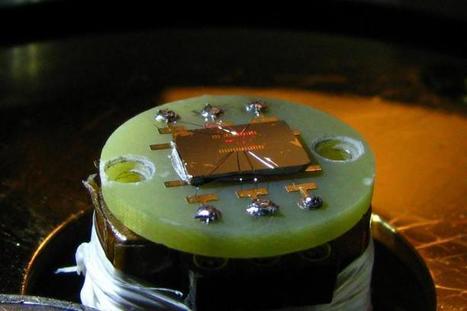
In an open-access paper published in Nature Communications, Ritesh Agarwal, a professor the University of Pennsylvania School of Engineering and Applied Science, and his colleagues say that they have made significant progress in photonic (optical) computing by creating a prototype of a working optical transistor with properties similar to those of a conventional electronic transistor. Optical transistors, using photons instead of electrons, promise to one day be more powerful than the electronic transistors currently used in computers. Agarwal’s research on photonic computing has been focused on finding the right combination and physical configuration of nonlinear materials that can amplify and mix light waves in ways that are analogous to electronic transistors. “One of the hurdles in doing this with light is that materials that are able to mix optical signals also tend to have very strong background signals as well. That background signal would drastically reduce the contrast and on/off ratios leading to errors in the output,” Agarwal explained. The device is based on a cadmium sulfide nanobelt with source (S) and drain (D) electrodes. The fundamental wave at the frequency of ω, which is normally incident upon the belt, excites the second-harmonic (twice the frequency) wave at 2ω, which is back-scattered. Agarwal’s research group started by creating a system with no disruptive optical background signal. To do that, they used a “nanobelt”* made out of cadmium sulfide. Then, by applying an electrical field across the nanobelt, the researchers were able to introduce optical nonlinearities (similar to the nonlinearities in electronic transistors), which enabled a signal mixing output that was otherwise zero. “Our system turns on from zero to extremely large values,” Agarwal said.** “For the first time, we have an optical device with output that truly resembles an electronic transistor.” The next steps toward a fully functioning photonic computer will involve integrating optical circuits with optical interconnects, modulators, and detectors to achieve actual on-chip integrated photonic computation.
|
|
Scooped by
Dr. Stefan Gruenwald
February 12, 2018 2:25 PM
|
A single-dose pill that can halt the flu virus within a day. That's what Japanese drug maker Shionogi claims its new flu treatment can do, the Wall Street Journal reports, but the compound that could relieve one of the worst flu seasons in years wouldn't hit U.S. shelves until at least 2019. It took a median time of 24 hours for Shionogi's experimental compound to kill the flu in American and Japanese patients during a late-stage trial, per the Journal, faster than any flu drug available. And it requires just a single dosage. Compare that to Tamiflu, the popular anti-flu drug that requires twice-a-day doses for five days. In the above trial, Tamiflu took three times longer to kill the virus. Little surprise, then, that Roche — the Swiss company behind Tamiflu — came onboard to help develop the drug, Bloomberg reports. The current flu season is putting Americans in hospitals and emergency rooms at levels not unlike the 2009 swine flu, experts said, with reports of otherwise healthy people dying from the infection. Hence the rush of companies to respond with next-level iterations of anti-viral treatments: Johnson & Jonhnson is working on a drug that blocks many flu viruses' genetic material from replicating, Bloomberg notes, while its development of the "holy grail" — a universal flu vaccine that would prevent the need for new vaccines each year — remains further off. Shionogi's single-day drug has been fast-tracked for approval in Japan and could get approval there next month, the company told the Journal, but it won't submit for U.S. approval until this summer. Flu treatments on the market like Tamiflu remain few and far between. Yet the flu vaccine is only about 30% effective against the flu's most common strain this year, according to the CDC.
|
|
Scooped by
Dr. Stefan Gruenwald
February 11, 2018 2:02 PM
|
MIT neuroscientists have uncovered a cellular pathway that allows specific synapses to become stronger during memory formation. The findings provide the first glimpse of the molecular mechanism by which long-term memories are encoded in a region of the hippocampus called CA3. The researchers found that a protein called Npas4, previously identified as a master controller of gene expression triggered by neuronal activity, controls the strength of connections between neurons in the CA3 and those in another part of the hippocampus called the dentate gyrus. Without Npas4, long-term memories cannot form. “Our study identifies an experience-dependent synaptic mechanism for memory encoding in CA3, and provides the first evidence for a molecular pathway that selectively controls it,” says Yingxi Lin, an associate professor of brain and cognitive sciences and a member of MIT’s McGovern Institute for Brain Research. Lin is the senior author of the study, which appears in the Feb. 8 issue of Neuron. The paper’s lead author is McGovern Institute research scientist Feng-Ju (Eddie) Weng.
|
|
Scooped by
Dr. Stefan Gruenwald
February 11, 2018 1:28 PM
|
New NASA images show layers of ice peeking out of eroded cliffs—a potential boon for future humans on the red planet. At sites across the midsection of Mars, scientists have found layers of water ice buried mere feet beneath the red planet’s surface. The discovery adds crucial detail to Mars’s geologic history, and it may shape how future humans on Mars get their water. "This is a new window into ground ice on Mars," says Colin Dundas, the U.S. Geological Survey geologist who co-discovered the ice layers. Scientists have long theorized that reserves of water ice are locked underground on Mars. In 2002, the NASA Odyssey mission scanned the planet from orbit and detected signs of shallow ground ice at high latitudes. In 2008, the NASA Phoenix mission dug up water ice at its landing site near the Martian north pole. At sites across the midsection of Mars, scientists have found layers of water ice buried mere feet beneath the red planet’s surface. The discovery adds crucial detail to Mars’s geologic history, and it may shape how future humans on Mars get their water. "This is a new window into ground ice on Mars," says Colin Dundas, the U.S. Geological Survey geologist who co-discovered the ice layers. Scientists have long theorized that reserves of water ice are locked underground on Mars. In 2002, the NASA Odyssey mission scanned the planet from orbit and detected signs of shallow ground ice at high latitudes. In 2008, the NASA Phoenix mission dug up water ice at its landing site near the Martian north pole. And in late 2016, scientists using the Mars Reconnaissance Orbiter (MRO)found a buried ice sheet at Mars’s mid-latitudes that holds about as much water as Lake Superior. But until Dundas’s study, published today inScience, scientists struggled to understand the extent and accessibility of Mars’s subsurface ice layers. The eight sites featured in the new study include steep banks where, much like cutting into a cake, erosion has exposed layers of rock and ice that MRO could see from overhead. The bands of ice first appear between three and six feet underground, supporting the notion that Mars’s mid-latitudes periodically saw large snowfalls millions of years ago, when Mars was tilted on its axis at a steeper angle than it is today, says Dundas.
|
|
Scooped by
Dr. Stefan Gruenwald
February 10, 2018 1:32 PM
|
Herman Haverkort performs sound experiments with a mathematical construct called a Hilbert curve and links them through turning-function mapping (mapping directions of line segments in the sketch to pitch, and different levels of refinement to different voices). This can be extended to the sonification of a four-dimensional curve using the same technique. A variation on this scheme yields to sound renderings of the Harmonious Hilbert curves in up to six dimensions.
|
|
Scooped by
Dr. Stefan Gruenwald
February 9, 2018 3:02 PM
|
The quest to understand common diseases takes on unprecedented scope. Researchers now searched for inherited causes of insomnia in the DNA 1,310,010 people. They found 956 different genes linked to the sleep disorder, drawing closer to an explanation of what causes it and, perhaps, to new ways to treat it. The study appears to be the first gene search to involve DNA collected from more than one million people. “It’s amazingly massive,” says Stuart Ritchie, a psychologist involved with genetics research at the University of Edinburgh. On Twitter, scientists let loose with superlatives: “Holy cr*p,” “mammoth,” and “Wow!” Danielle Posthuma organized a record-breaking genetic study involving 1.3 million people to search for the causes of insomnia. The project involved crunching genetic and medical information collected from the UK Biobank and the consumer DNA testing company23andMe. It was led by Danielle Posthuma, a neuroscientist specializing in statistical genetics at Vrije University, in Amsterdam. Termed a “genome-wide association,” this type of study involves comparing the DNA of people with and without a disease. Doing so can unveil which DNA differences are responsible for it.
|
|
Scooped by
Dr. Stefan Gruenwald
February 9, 2018 2:55 PM
|
Research shows that the dye methylene blue is a safe antimalarial that kills malaria parasites at an unprecedented rate. Within two days, patients are cured of the disease and no longer transmit the parasite if they are bitten again by a mosquito. This discovery was made by Radboud university medical center scientists and international colleagues during a research project conducted in Mali. The results will be published in The Lancet Infectious Diseases on February 6th, 2018.
|
|
Rescooped by
Dr. Stefan Gruenwald
from DNA and RNA research
February 9, 2018 2:51 PM
|
The future of rhinos could depend on their DNA. Scientists In collaboration with researchers in the United States, South Africa and Russia, Smithsonian Conservation Biology Institute scientist Klaus-Peter Koepfli has helped to pioneer new technology to save some of the most poached animals on our planet: rhinoceros. In a research paper published in Current Biology magazine in January 2018, co-authored by Koepfli, scientists found a way to bridge the gap between genetic data and legal prosecutions. They have created a vast database containing thousands of samples of DNA from black rhinos and white rhinos. This database, called the Rhino DNA Index System (RhODIS®), includes more than 20,000 samples from horns, carcasses and blood. RhODIS® is run by Dr. Cindy Harper, Director of the Veterinary Genetics Laboratory at the University of Pretoria in South Africa. Koepfli’s primary role in this research was genetic analysis of the collected DNA samples. He examined the DNA and genetic diversity of these rhino species, their subspecies and populations. As rhino populations continue to decrease, so does the remaining genetic diversity of the species. Data from RhODIS® is used to help prosecute poachers. When illegally poached animal parts are seized, DNA analysis can direct scientists to a single animal or poaching event. Even small amounts of animal material that poachers attempt to sell or smuggle can be tested and associated with a specific rhino. The RhODIS® database was modeled after similar practices in human forensics and in elephant ivory DNA databases. Since 2010, more than 5,800 rhinoceros crime cases have been submitted to the RhODIS® database. “This database creates a clear chain of evidence that can link a poacher to a specific animal and to items being sold illegally on the black market,” says Koepfli. “This evidence can then be used to prosecute these poachers.” Using the RhODIS® DNA matching technology, nine poachers have already been prosecuted and convicted. “We are optimistic that there will be many more prosecutions to come,” says Koepfli. “This paper demonstrates how this technology can be used successfully.”
Via Integrated DNA Technologies
|
|
Scooped by
Dr. Stefan Gruenwald
February 8, 2018 4:02 PM
|
Simple processes can make wood tough, impact-resistant—or even transparent. Some varieties of wood, such as oak and maple, are renowned for their strength. But scientists say a simple and inexpensive new process can transform any type of wood into a material stronger than steel, and even some high-tech titanium alloys. Besides taking a star turn in buildings and vehicles, the substance could even be used to make bullet-resistant armor plates. Wood is abundant and relatively low-cost—it literally grows on trees. And although it has been used for millennia to build everything from furniture to homes and larger structures, untreated wood is rarely as strong as metals used in construction. Researchers have long tried to enhance its strength, especially by compressing and “densifying” it, says Liangbing Hu, a materials scientist at the University of Maryland, College Park. But densified wood tends to weaken and spring back toward its original size and shape, especially in humid conditions. Now, Hu and his colleagues say they have come up with a better way to densify wood, which they report in the February 7 Nature. Their simple, two-step process starts with boiling wood in a solution of sodium hydroxide (NaOH) and sodium sulfite (Na2SO3), a chemical treatment similar to the first step in creating the wood pulp used to make paper. This partially removes lignin and hemicellulose (natural polymers that help stiffen a plant’s cell walls)—but it largely leaves the wood’s cellulose (another natural polymer) intact, Hu says. The second step is almost as simple as the first: Compressing the treated wood until its cell walls collapse, then maintaining that compression as it is gently heated. The pressure and heat encourage the formation of chemical bonds between large numbers of hydrogen atoms and neighboring atoms in adjacent nanofibers of cellulose, greatly strengthening the material.
|
|
|
Scooped by
Dr. Stefan Gruenwald
February 12, 2018 6:32 PM
|
Earth’s global surface temperatures in 2017 ranked as the second warmest since reliable instrumental records began in 1880, according to an analysis by NASA released today. Continuing the planet’s long-term warming trend, globally averaged temperatures in 2017 were 1.62 degrees Fahrenheit (0.90 degrees Celsius) warmer than the 1951 to 1980 mean, according to scientists at NASA’s Goddard Institute for Space Studies (GISS) in New York. That is second only to global temperatures in 2016. In a separate, independent analysis, scientists at the National Oceanic and Atmospheric Administration (NOAA) concluded that 2017 was the third-warmest year in their record. The minor difference in rankings is due to the different methods used by the two agencies, although over the long term the agencies’ records remain in strong agreement. Both analyses show that the five warmest years on record all have taken place since 2010. Phenomena such as El Niño or La Niña, which warm or cool the upper tropical Pacific Ocean and cause corresponding variations in global wind and weather patterns, contribute to short-term variations in global average temperature. A warming El Niño event was in effect for most of 2015 and the first third of 2016. Even without an El Niño event – and with a La Niña starting in the later months of 2017 – last year’s temperatures ranked between 2015 and 2016 in NASA’s records. In an analysis where the effects of the recent El Niño and La Niña patterns were statistically removed from the record, 2017 would have been the warmest year on record.
|
|
Scooped by
Dr. Stefan Gruenwald
February 12, 2018 3:07 PM
|
Once said to possess magic powers, narwhal tusks were sold as unicorn horns centuries ago, and still today some mystique surrounds the overgrown tooth protruding from this unique whale's head. Scientists have never been able to pin down the exact purpose it serves, but have now captured the first-ever video evidence of it being used as a hunting tool, helping to unravel some of the mystery. All kinds of theories have emerged regarding the use of the narwhal's tusk. The whales, which feed on squid, cod and shrimp in the Arctic, grow tusks up to 10 ft long (3 m) with up to 10 million nerve endings inside. But why? To bash through ice? Transmit sounds? To spear fish? If you came here looking for dramatic footage of a whale impaling a fish and bursting triumphantly through the water's surface to show off its catch, you may be a little disappointed. Using drones to study narwhal behavior in far northern Canada, scientists have, however, seen narwhals using their tusks to capture their prey, though it is more of a subtle swipe, intended to stun the fish before scooping it up in their mouths. The evidence, gathered by various research groups including the World Wildlife Fund Canada and Fisheries and Oceans Canada, is important all the same. The scientists say learning more about narwhals in the face of changing Arctic conditions will help conservation efforts moving forward.
|
|
Scooped by
Dr. Stefan Gruenwald
February 12, 2018 3:03 PM
|
Molecular Robotics capitalizes on the recent explosion of technologies that read, edit, and write DNA (like next-generation sequencing and CRISPR) to manipulate DNA and its single-stranded cousin, RNA, to create new nanoscale structures and devices that serve a variety of functions. “We essentially treat DNA not only as a genetic material, but as an incredible building block for making molecular sensors, structures, computers, and actuators, all of which self-assemble in a way that today’s traditional robots can’t,” says Tom Schaus, a Staff Scientist at the Wyss Institute who works on Molecular Robotics. Many of the group’s early projects taking advantage of DNA-based self-assembly were static structures. These include DNA folded into 3D origami-like objects and DNA “bricks” whose nucleotide sequences allow their spontaneous assembly into a specified shape, like tiny Lego™ bricks that are pre-programmed to put themselves together to create a castle. The most recent iteration of DNA bricks can incorporate as many as 30,000 unique DNA strands in a single complete structure, and could enable the creation of novel devices for electronics, photonics, and nanoscale machines. The reliable specificity of DNA and RNA’s nucleotide pairing (A always binds with T or U, C always with G) allows for not only the construction of nanoscale structures, but also the programming of dynamic systems that achieve a given goal. For example, Molecular Robotics scientists have created a novel, highly controllable mechanism that automatically builds new DNA sequences from a mixture of short fragments in vitro. It utilizes a set of DNA strands folded into a hairpin shape with a single-stranded “overhang” sequence dangling off one end of the hairpin. The overhang sequence can be programmed to bind to a complementary free-floating fragment of DNA (a “primer”) and then fall off, after extending the primer with a newly synthetized sequence that is identical to part of the hairpin sequence. This hairpin sequence can then serve as a new primer for another hairpin containing a different sequence, and the process can be repeated many times to create long DNA product strands through a technique called “Primer Exchange Reactions” (PER). Not only can PER be used to synthesize DNA sequences automatically, it can be programmed such that it only occurs in the presence of signal molecules, such as specific RNA sequences, thus allowing the system to respond to the molecular cues in the environment much like today’s commercial robots respond to verbal and visual cues. The PER product strand can in turn be programmed to enzymatically cut and destroy particular RNA sequences, record the order in which certain biochemical events happen, or generate components for DNA structure assembly. PER reactions can also be combined into a mechanism called “Autocycling Proximity Recording” (APR), which records the geometry of nano-scale structures in the language of DNA. In this technique, unique DNA hairpins are attached to different target molecules and, if any two targets are close enough together, a reaction between the two hairpins bound to them produces new pieces of DNA that contain a record of both hairpins’ sequences, allowing the shape of the underlying structure to be determined by sequencing that novel DNA.
|
|
Scooped by
Dr. Stefan Gruenwald
February 12, 2018 2:54 PM
|
New imaging technology has revealed how the molecular machines that remodel genetic material inside cells 'grab onto' DNA like a rock climber looking for a handhold. The experiments, reported in Science, use laser light to generate very bright patches close to single cells. When coupled with fluorescent tags this 'spotlight' makes it possible to image the inner workings of cells fast enough to see how the molecular machines inside change size, shape, and composition in the presence of DNA. The Oxford team built their own light microscopy technology for the study, which is a collaboration between the research groups of Mark Leake in Oxford University's Department of Physics and David Sherratt in Oxford University's Department of Biochemistry. The molecular machines in question are called Structural Maintenance of Chromosome (SMC) complexes: they remodel the genetic material inside every living cell and work along similar principles to a large family of molecules that act as very small motors performing functions as diverse as trafficking vital material inside cells to allowing muscles to contract. The researchers studied a particular SMC, MukBEF (which is made from several different protein molecules), inside the bacterium E.coli. David Sheratt and his team found a way to fuse 'fluorescent proteins' directly to the DNA coding for MukBEF, effectively creating a single dye tag for each component of these machines. Up until now conventional techniques of biological physics or biochemistry have not been sufficiently fast or precise to monitor such tiny machines inside living cells at the level of single molecules. 'Each machine functions in much the same way as rock-climber clinging to a cliff face,' says Mark Leake of Oxford University's Department of Physics, 'it has one end anchored to a portion of cellular DNA while the other end opens and closes randomly by using chemical energy stored in a ubiquitous bio-molecule called adenosine triphosphate, or 'ATP': the universal molecular fuel for all living cells.
|
|
Scooped by
Dr. Stefan Gruenwald
February 12, 2018 2:48 PM
|
Cancer-destroying T cells that target other tumors in the body: Effects of in situ vaccination with CpG and anti-OX40 agents Injecting minute amounts of two immune-stimulating agents directly into solid tumors in mice was able to eliminate all traces of cancer in the animals — including distant, untreated metastases (spreading cancer locations), according to a study by Stanford University School of Medicine researchers. The researchers believe this new “in situ vaccination” method could serve as a rapid and relatively inexpensive cancer therapy — one that is unlikely to cause the adverse side effects often seen with bodywide immune stimulation. The approach works for many different types of cancers, including those that arise spontaneously, the study found. “When we use these two agents together, we see the elimination of tumors all over the body,” said Ronald Levy*, MD, professor of oncology and senior author of the study, which was published Jan. 31 in Science Translational Medicine. “This approach bypasses the need to identify tumor-specific immune targets and doesn’t require wholesale activation of the immune system or customization of a patient’s immune cells.” Many current immunotherapy approaches have been successful, but they each have downsides — from difficult-to-handle side effects to high-cost and lengthy preparation or treatment times.** “Our approach uses a one-time application of very small amounts of two agents to stimulate the immune cells only within the tumor itself,” Levy said. “In the mice, we saw amazing, bodywide effects, including the elimination of tumors all over the animal.” Levy’s method reactivates cancer-specific T cells (a type of white blood cell) by injecting microgram (one-millionth of a gram) amounts of the two agents directly into the tumor site.*** Because the two agents are injected directly into the tumor, only T cells that have infiltrated the tumor are activated. In effect, these T cells are “prescreened” by the body to recognize only cancer-specific proteins. Some of these tumor-specific, activated T cells then leave the original tumor to find and destroy other identical tumors throughout the body. The approach worked “startlingly well” in laboratory mice with transplanted mouse lymphoma tumors in two sites on their bodies, the researchers say. Injecting one tumor site with the two agents caused the regression not just of the treated tumor, but also of the second, untreated tumor. In this way, 87 of 90 mice were cured of the cancer. Although the cancer recurred in three of the mice, the tumors again regressed after a second treatment. The researchers saw similar results in mice bearing breast, colon and melanoma tumors. Mice genetically engineered to spontaneously develop breast cancers in all 10 of their mammary pads also responded to the treatment. Treating the first tumor that arose often prevented the occurrence of future tumors and significantly increased the animals’ life span, the researchers found. Finally, researchers explored the specificity of the T cells. They transplanted two types of tumors into the mice. They transplanted the same lymphoma cancer cells in two locations, and transplanted a colon cancer cell line in a third location. Treatment of one of the lymphoma sites caused the regression of both lymphoma tumors but did not affect the growth of the colon cancer cells. “This is a very targeted approach,” Levy said. “Only the tumor that shares the protein targets displayed by the treated site is affected. We’re attacking specific targets without having to identify exactly what proteins the T cells are recognizing.”
|
|
Scooped by
Dr. Stefan Gruenwald
February 11, 2018 2:05 PM
|
Butterfly Network, a startup co-founded by an MIT alumnus, aims to make ultrasound imaging as simple and ubiquitous as blood-pressure or temperature checks — in hospitals and, eventually, in consumers’ homes. The startup has developed a low-cost, handheld scanner, based in part on work done by co-founder Nevada Sanchez ’10, SM ’11, that generates clinical-quality ultrasounds on a smartphone. Ultrasounds are uploaded to the cloud, where any expert with permission can give second opinions or help analyze images. By making ultrasound imaging more ubiquitous, the co-founders aim to help health care professionals more quickly generate life-saving diagnoses. Traditional ultrasound machines rely on vibrating crystals and other components to produce ultrasound images. These are generally large, stationary machines that cost anywhere from $15,000 to $100,000. But the startup’s device, called iQ, which resembles an electric razor that plugs into an iPhone lightning jack, essentially puts an entire ultrasound system on a chip, meaning it’s portable and sells for about $2,000. In November, the U.S. Food and Drug Administration cleared the device for numerous clinical applications, including urological, abdominal, cardiovascular, fetal, gynecological, and musculo-skeletal. Tens of thousands of orders have been placed and will be shipped over the next few months. “First users will be doctors and clinicians who are more comfortable with ultrasounds,” says Sanchez, now the startup’s chip design lead. “But, eventually, everyone from paramedics to nurses to doctors who have never used ultrasound will carry with them.”
After almost three years of record-breaking drought, Cape Town is dealing with a scenario that a major developed city has never faced in the 21st century. In May, the taps could run dry, leaving Capetonians without reliable access to water. Just a few years ago Cape Town’s water supply seemed secure. Access to water in South Africa’s largest city was taken for granted, and affluent residents prided themselves on well-kept lawns and backyard pools. Now, after almost three years of record-breaking drought, Cape Town is dealing with a scenario that a major developed city has never faced in the 21st century. In May, the taps could run dry, leaving Capetonians without reliable access to water. Cape Town has always depended on dams and reservoirs to ensure a steady supply of water, but in recent decades infrastructure projects failed to keep up with population growth. In just over 20 years, Cape Town’s population grew by around 80 per cent, from 2.4 million in 1995 to 4.3 million in 2018. During the same time period dam storage increased by only 15 per cent. Combined with the population boom, erratic weather and a persistent drought have created a severe crisis. Even with water restrictions in place, experts have said that 11 May will be “Day Zero”. This is the official date when reservoir capacity will reach 13.5 per cent and the city will no longer be able to provide water to its residents. City officials, while doing all they can to avert disaster, are reckoning with the fact that the current crisis isn’t a short-term problem. Less frequent rainfall and a changing climate means that drier conditions are likely to become the new normal.
Via Kathy Bosiak
|
|
Scooped by
Dr. Stefan Gruenwald
February 11, 2018 1:25 PM
|
The magnetic field of the Earth is like a shield of protection that saves the atmosphere and life on Earth from the bombardment of hazardous charged particles from space. However, the strength of the magnetic field is not constant and is subject to change that will be accompanied by many consequences. Studies have documented that the Earth's magnetic field changes direction and the reversal happens every several hundred thousand years. The process is often preceded by a drastic weakening of the geomagnetic field. Some of the trends are pointing to the fact that a reversal of Earth's magnetic field is due. The prime signal of it is the depletion of the magnetic field at the rate of 5 percent a century. This is considered a forerunner to the reversal of the magnetic poles, and the consequences will include a breakdown of communication systems and heavy damage to energy infrastructure and electricity transmission systems. So, it is reasonable to assume that the reversal of the geomagnetic field can happen in the next 2,000 years. However, an exact date for the reversal in geomagnetic field is too hard to predict. Over the years, the magnetic power of the Earth has been declining at an alarming rate, especially in the last 160 years. This weakening has been explicit in a vast area in the Southern Hemisphere between Zimbabwe and Chile and known as the South Atlantic Anomaly. Data from observatories show that an unusual feature of reversed polarity beneath southern Africa exists at the core-mantle boundary where the liquid iron in the outer core overlaps with the relatively hard part of the Earth's interior. The geomagnetic field is generated by the flow of molten iron in the liquid outer core of Earth. In the South Atlantic Anomaly, the magnetic field is weak and satellites orbiting the region are vulnerable as protection against radiation is too low and satellite electronics are exposed to radiation risk. At this part, there is a reversal of polarity vis-a-vis the average global magnetic field. According to experts, this patch is the main contributor to the South Atlantic Anomaly, with simulations having shown that such patches like the one below Southern Africa do appear preceding geomagnetic reversals.
|
|
Scooped by
Dr. Stefan Gruenwald
February 9, 2018 3:43 PM
|
This creepy machine, called Alter, runs entirely off a neural network. That means all its incoherent and erratic movements are 100 per cent free of any human control. It’s basically alive. Although Alter looks like it’s dressed up in some kind of Ex Machina cosplay, it’s underneath where all the interesting stuff is happening. Alter has 42 pneumatic actuators and a “central pattern generator,” according to Engadget’s Mat Smith. The CPG essential creates the robotic equivalent of neurons, so the robot can move. Here’s Alter in action via The Japan Times. The robot doesn’t resemble or sound anything like a human just yet. Alter’s erratic movements are based on sensors that can detect noise, temperature, humidity, and proximity. These sensors act as simple stand-ins for our own senses. Also, its strange vocalisations are actually sine waves depicting the movement of the robot’s fingers, according to Engadget. Alter was created by two robotics laboratories in Tokyo and Osaka and is currently on display at Tokyo’s National Museum of Emerging Science and Innovation. The exhibition will end later this week, so the robot isn’t long for public life, but it’s still posing for the paparazzi anyways.
|
|
Rescooped by
Dr. Stefan Gruenwald
from DNA and RNA research
February 9, 2018 2:56 PM
|
As a basic unit of life, the cell is one of the most carefully studied components of all living organisms. Yet details on basic processes such as how cells are shaped have remained a mystery. Working at the intersection of biology and physics, scientists at the University of California San Diego have made an unexpected discovery at the root of cell formation. As reported in the journal Cell on Feb. 8, 2018, biologists Javier Lopez-Garrido, Kit Pogliano and their colleagues at UC San Diego and Imperial College in London found that DNA executes an unexpected architectural role in shaping the cells of bacteria. Studying the bacterium Bacillus subtilis, the researchers used an array of experiments and technologies to reveal that DNA, beyond serving to encode genetic information, also "pumps up" bacterial cells. "Our study illustrates that DNA acts like air in a balloon, inflating the cell," said Lopez-Garrido, an assistant research scientist in UC San Diego's Division of Biological Sciences and the study's first author. "DNA is best known for being the molecule with genetic information but it's becoming more and more obvious that it does other things that are not related to that." The researchers say the results could have relevance in human cells in terms of how they are generated and shaped, as well as aid explanations of basic mechanical processes and the structure of the nucleus and mitochondria. The results could also allow scientists to have a glimpse into the origins of cellular life itself. Modern bacterial cells have evolved a variety of mechanisms to control their internal pressure, said Lopez-Garrido. However, those mechanisms were absent in primitive cells at the dawn of life on earth. The finding that DNA can inflate a cell might allow scientists to achieve a better understanding of the physiology of the first cells on the planet.
Via Integrated DNA Technologies
The universe is highly magnetic, with everything from stars to planets to galaxies producing their own magnetic fields. Astrophysicists have long puzzled over these surprisingly strong and long-lived fields, with theories and simulations seeking a mechanism that explains their generation. Using one of the world's most powerful laser facilities, a team led by University of Chicago scientists experimentally confirmed one of the most popular theories for cosmic magnetic field generation: the turbulent dynamo. By creating a hot turbulent plasma the size of a penny, that lasts a few billionths of a second, the researchers recorded how the turbulent motions can amplify a weak magnetic field to the strengths of those observed in our sun, distant stars, and galaxies. The paper, published this week in Nature Communications, is the first laboratory demonstration of a theory, explaining the magnetic field of numerous cosmic bodies, debated by physicists for nearly a century. Using the FLASH physics simulation code, developed by the Flash Center for Computational Science at UChicago, the researchers designed an experiment conducted at the OMEGA Laser Facility in Rochester, NY to recreate turbulent dynamo conditions. Confirming decades of numerical simulations, the experiment revealed that turbulent plasma could dramatically boost a weak magnetic field up to the magnitude observed by astronomers in stars and galaxies. "We now know for sure that turbulent dynamo exists, and that it's one of the mechanisms that can actually explain magnetization of the universe," said Petros Tzeferacos, research assistant professor of astronomy and astrophysics and associate director of the Flash Center. "This is something that we hoped we knew, but now we do."
Via Mariaschnee
|
|
Scooped by
Dr. Stefan Gruenwald
February 9, 2018 2:48 PM
|
A new startup called Nebula Genomics has released a white paper on its website offering people a way to cash in on their own genomes. Customers would pay to have their genome sequenced, (under $1000) but in return, would receive ownership of the data generated from it, which could then be sold by the customer to companies such as pharmaceutical manufacturers. Furthermore, transactions would occur using blockchain technology used for secure valued transactions such as Bitcoin. Interestingly, the new startup is headed by George Church of Human Genome Project fame. He, along with employees from another of his companies, Veritas Genetics, and other investors, are suggesting that the approach is the wave of the future. They point out that other companies, notably 23andMe and Ancestry.com, retain ownership of user data derived from spit swab genetic samples, leaving customers out of the proceeds when they sell the data to other companies. Unfortunately, the number of people taking part in personal genome sequencing is low, the group claims, because of price and privacy issues. In order to best make use of genomic data, researchers need samples from a lot of people. That would reveal trends that are helpful in identifying currently unknown hereditary disease factors. The only way to get many more people involved, the group suggests, is by guaranteeing that their data will only go where they decide and by bringing the cost down—which they claim can only happen by allowing those who give samples to sell their data to companies working on large research efforts. Nebula Genomics, they claim, is in a position to make that happen. Notably, buyers and sellers would use Nebula tokens as money. Those wishing to have their genome sequenced, for example, would buy a token, which they in turn could sell to another buyer, thereby recovering their initial expenditure. But, as with Bitcoin, the value of tokens can change depending on a variety of factors. And since the tokens can only be redeemed by purchasing someone's DNA data, their value will depend on the willingness of big companies to use them to pay for data. Nebula will tell be able to tell you about your disease risks. Obbad says biotech and pharma companies won’t actually be able to download data shared by owners, just borrow it. Data owners will remain anonymous, while buyers will have to be fully transparent about their identity. Genomic data and transaction records will be secured by a blockchain—the same technology behind cryptocurrencies like Bitcoin. Other startups, like EncrypGen, Luna DNA, and Zenome, say they are building platforms where people can sell their genetic information online—but these services don’t offer genome sequencing. People who want to get their genomes sequenced through Nebula will pay with Nebula tokens, which will also be used by researchers and companies wanting to acquire that data. Nebula hasn’t yet determined how it will distribute tokens, or whether it will have an initial coin offering. Nebula’s goal is to get the price of genome sequencing below $1,000 by working with biotech and pharma companies, which will subsidize a chunk of the cost. He says people will be able to join the platform sometime within the next few months.
|