A team of researchers at the University of Michigan has conducted a thought experiment regarding the nature of a universe that could support life without the weak force. In their paper uploaded to the ArXiv preprint server, the researchers suggest life could be possible in such an alternative universe, but it would definitely be different from what we observe in ours.
Physicists have debated the possibility of the existence of alternate universes for some time, though there is no evidence they exist. In this new thought experiment, the team at UM wondered if one or more of the laws of physics that we have discovered in this universe might not exist in others—if they do exist. Because it would be hard to imagine a universe that could exist without gravity and the strong and electromagnetic forces, the team instead focused on the weak force—the one behind such things as neutrons decaying into protons.
The team wondered what a universe without the weak force would look like. To visualize it, they created a simulation of such a universe starting from the Big Bang. In the simulation, matter was still created and condensed into stars, but from there on, things would be different, because in our universe, the weak force is responsible for the creation of the heavier elements. In a universe without the weak force, the existence of anything other than stars would require more free protons and fewer neutrons (because they could not decay). In such a universe, neutrons and protons could link up to make deuterium.
Stars fueled by deuterium instead of hydrogen, the researchers note, would still shine, they would just look different—likely redder and larger. But such stars could also serve as the source of all of the elements in the periodic table prior to iron, and the stellar winds could carry them out into space. If planets happened to form, they further note, they could hold water made from deuterium rather than hydrogen—and it is not impossible to imagine, they suggest, life forms made with deuterium water.
Panama’s San Lorenzo forest reserve is around the size of Manhattan. For two years, this small area was host to 102 scientists, working together to count everything that crept and crawled. They came from 17 countries, and converged upon a half-hectare of the forest, about the size of half a rugby pitch. They dug into the soil, and ascended into the 40-meter-tall treetops with ropes, balloons, and a giant crane. They unleashed fogs, set up sticky traps, and hacked into pieces of wood. Together, they were part of the largest ever systematic attempt to answer a disarmingly simple question: in a patch of tropical rainforest, how many species of insects and other arthropods are there?
After collecting the critters in 2003 and 2004, and analysing the material for eight years, they got an answer: 6,144 species in that patch of forest. Using computer simulations to scale that up, they estimate that the entire 6,000-hectare Manhattan-sized forest is home to around 25,000 arthropod species.
It’s the first solid estimate of its kind, and it reveals a surprising trend: every hectare of the forest contains almost two-thirds (64 percent) of all the arthropod species in the whole area. “That doesn’t mean that if you cut the forest to just one half-hectare, all those species can exist,” cautions Yves Basset from the Smithsonian Tropical Research Institute, who led the study. “But it’s good news. It suggests that if we do a good job of collecting species in small plots, from soil to canopy, we can get a surprising proportion of what’s in the whole forest.”
Arthropods are animals that are covered in a hard external skeleton and walk on jointed legs. They include the insects, arachnids like spiders and scorpions, millipedes and centipedes, and much more. Pick a land animal randomly, and chances are it’ll be an arthropod.
But how many are there? That’s not an easy question. By their nature, arthropods are small but numerous. Some groups like ants and butterflies are well-studied, but we don’t have good data for more obscure members, which require special techniques, and even more specially trained scientists.
The tropical rainforest, undoubtedly the richest of the planet’s arthropod hubs, poses an extra challenge: it’s very tall. The forest is like a gigantic cake, with each layer having its own character. The residents of the soil are very different from those in the canopy, and the latter is very hard to reach. Sure, you can climb, but if you wanted to do a survey, you need to reach the tops of many trees, and work there for hours.
A group of Korean researchers has used a new means of doing that detecting sooner rather than later — the new detector is called a bioelectronic nose. Led by Dr. Kyung Mi Lee, from Myongji University in the Republic of Korea, the scientists compared the ability to detect indicators of spoilage or contamination of the 'nose' with the ability of trained human testers and with classical detection techniques such as gas chromatography-mass spectroscopy (GC-MS). The comparisons are shown in the figure below.
The bioelectronic nose consists of engineered human odor receptor proteins linked to carbon nanotubes (CNT—the transducers) (full description is given here). This particular nose was designed to detect the compound trimethylamine (TMA) specifically. TMA is produced by bacteria that can contaminate oysters. For comparative purposes, the GC-MS system was used to detect another bacterial product called dimethyl sulfide (DMS), which, when present in sufficient amounts, imparts a fishy, ammonia-like odor that can be detected by the human nose*. And the trained sensory panelists evaluated the oysters on a range of characteristics such as appearance, odor, taste, texture and acceptability (dislike to swallow).
Oysters were obtained from a commercial vendor and stored at 4oC (39oF — refrigerator temperature) or at 36oC (97oF) in closed glass vials. Samples of the air space in the vials was used for the detection of TMA and DMS at serial time points up to 12 days. It wasn't until the 6th day of storage that the panelists indicated a strong 'dislike to swallow' for the oysters, and their tasting of 'fish and pungent' flavor, an indication of the presence of DMS increased daily, as did their detection of a fish and pungent aroma.
When the oysters were stored at 4oC, the GC-MS system detected DMS by day 4; when storage was at 36oC, DMS was detected at day 1. However, the electronic nose was able to detect TMA by day 2 of 4o storage, and on day 1 of 36o storage. In other assays the investigators determined that several bacterial genera were present in the oysters used in these comparisons — including Pseudomonas, Shwanella, and Vibrio. Some of the bacteria found are capable of producing harmful toxins.
A joint China-Austria team has performed quantum key distribution between the quantum-science satellite Micius and multiple ground stations located in Xinglong (near Beijing), Nanshan (near Urumqi), and Graz (near Vienna). Such experiments demonstrate the secure satellite-to-ground exchange of cryptographic keys with ∼kHz rate during the passage of the satellite Micius over a ground station. Using Micius as a trusted relay, a secret key is created between China and Europe at locations separated up to 7600 km on the Earth. These keys are then used for intercontinental quantum-secured real-world communication, such as the transmission of images through a one-time-pad technique between China and Austria, and of a video conference with the Advanced-Encryption-Standard (AES)-128 protocol that refreshed the 128-bit seed keys every second. This work will be published in Physical Review Letters on January 19th 2018.
Private and secure communications are fundamental human needs. In particular, with the exponential growth of Internet use and e-commerce, it is of paramount importance to establish a secure network with global protection of data. Traditional public key cryptography usually relies on the computational intractability of certain mathematical functions. In contrast, quantum key distribution (QKD) uses individual light quanta (single photons) in quantum superposition states to guarantee unconditional security between distant parties. Previously, the quantum communication distance had been limited to a few hundred kilometers, due to the optical channel losses of fibers or terrestrial free space. A promising solution to this problem exploits satellite and space-based link, which can conveniently connect two remote points on the Earth with greatly reduced channel loss because most of the photons’ propagation path is in empty space with negligible loss and decoherence.
A cross-disciplinary multi-institutional team of scientists from the Chinese Academy of Sciences, led by Professor PAN Jianwei, has spent more than ten years developing a sophisticated satellite, Micius, dedicated to quantum science experiments, which was launched on August 2016 and orbits at an altitude of ~500 km. Five ground stations are built in China to cooperate with the Micius satellite, located in Xinglong (near Beijing), Nanshan (near Urumqi), Delingha (37°22’44.43’’N, 97°43’37.01”E), Lijiang (26°41’38.15’’N, 100°1’45.55’’E), and Ngari in Tibet (32°19’30.07’’N, 80°1’34.18’’E). Within a year after the launch, three key milestones for a global-scale quantum internet have been achieved: satellite-to-ground decoy-state QKD with kHz rate over a distance of ~1200 km (Liao et al. 2017, Nature 549, 43); satellite-based entanglement distribution to two locations on the Earth separated by ~1200 km and Bell test (Yin et al. 2017, Science 356, 1140), and ground-to-satellite quantum teleportation (Ren et al. 2017, Nature 549, 70). The effective link efficiencies in the satellite-based QKD were measured to be ~20 orders of magnitudes larger than direct transmission through optical fibers at the same length of 1200 km. The three experiments are the first steps towards a global space-based quantum internet.
Languages have an intriguing paradox. Languages with lots of speakers, such as English and Mandarin, have large vocabularies with relatively simple grammar. Yet the opposite is also true: Languages with fewer speakers have fewer words but complex grammars. Why does the size of a population of speakers have opposite effects on vocabulary and grammar?
Through computer simulations, a Cornell cognitive scientist and his colleagues have shown that ease of learning may explain the paradox. Their work suggests that language, and other aspects of culture, may become simpler as our world becomes more interconnected.
Their study was published Jan. 24 in the Proceedings of the Royal Society B: Biological Sciences.“We were able to show that whether something is easy to learn – like words – or hard to learn – like complex grammar – can explain these opposing tendencies,” said co-author Morten Christiansen, professor of psychology and co-director of the Cognitive Science Program. The researchers hypothesized that words are easier to learn than aspects of morphology or grammar. “You only need a few exposures to a word to learn it, so it’s easier for words to propagate,” he said.
But learning a new grammatical innovation requires a lengthier learning process. And that’s going to happen more readily in a smaller speech community, because each person is likely to interact with a large proportion of the community, he said. “If you have to have multiple exposures to, say, a complex syntactic rule, in smaller communities it’s easier for it to spread and be maintained in the population.”
Conversely, in a large community, like a big city, one person will talk only to a small proportion the population. This means that only a few people might be exposed to that complex grammar rule, making it harder for it to survive, he said.
Studying the exact radii of the planets’ orbits led Johannes Kepler to discover that these orbits aren’t circular but rather elliptical. By 1619 this led him to what we call now Kepler’s laws of planetary motion. And those, in turn, helped Newton to verify Hooke’s hunch that the force of gravity goes as the inverse square of the distance between bodies!
In honor of this, the problem of a particle orbiting in an inverse square force law is now called the Kepler problem. John Carlos Baez, Greg Egan, and Layra Idarani have come across a solid mathematical connection between the Platonic solids and the Kepler problem. And it involves a detour into the 4th dimension! It’s a remarkable fact that the Kepler problem has not just the expected conserved quantities—energy and the 3 components of angular momentum—but also 3 more: the components of the Runge–Lenz vector. To understand those extra conserved quantities, go here:
Noether proved that conserved quantities come from symmetries. Energy comes from time translation symmetry. Angular momentum comes from rotation symmetry. Since the group of rotations in 3 dimensions, called SO(3), is itself 3-dimensional, it gives 3 conserved quantities, which are the 3 components of angular momentum.
None of this is really surprising. But if we take the angular momentum together with the Runge–Lenz vector, we get 6 conserved quantities—and these turn out to come from the group of rotations in 4 dimensions, SO(4), which is itself 6-dimensional. The obvious symmetries in this group just rotate a planet’s elliptical orbit, while the non-obvious ones can also squash or stretch it, changing the eccentricity of the orbit. To be precise, all this is true only for the ‘bound states’ of the Kepler problem: the circular and elliptical orbits, not the parabolic or hyperbolic ones, which work in a somewhat different way.
Why should the Kepler problem have symmetries coming from rotations in 4 dimensions? This is a fascinating puzzle—we know a lot about it, but I doubt the last word has been spoken. For an overview, go here:
Scientists at the National Center for Supercomputing Applications (NCSA), located at the University of Illinois at Urbana-Champaign, have pioneered the use of GPU-accelerated deep learning for rapid detection and characterization of gravitational waves. This new approach will enable astronomers to study gravitational waves using minimal computational resources, reducing time to discovery and increasing the scientific reach of gravitational wave astrophysics. This innovative research was recently published in Physics Letters B.
Combining deep learning algorithms, numerical relativity simulations of black hole mergers—obtained with the Einstein Toolkit run on the Blue Waters supercomputer—and data from the LIGO Open Science Center, NCSA Gravity Group researchers Daniel George and Eliu Huerta produced Deep Filtering, an end-to-end time-series signal processing method. Deep Filtering achieves similar sensitivities and lower errors compared to established gravitational wave detection algorithms, while being far more computationally efficient and more resilient to noise anomalies. The method allows faster than real-time processing of gravitational waves in LIGO's raw data, and also enables new physics, since it can detect new classes of gravitational wave sources that may go unnoticed with existing detection algorithms. George and Huerta are extending this method to identify in real-time electromagnetic counterparts to gravitational wave events in future LSST data.
NCSA's Gravity Group leveraged NCSA resources from its Innovative Systems Laboratory, NCSA's Blue Waters supercomputer, and collaborated with talented interdisciplinary staff at the University of Illinois. Also critical to this research were the GPUs (Tesla P100 and DGX-1) provided by NVIDIA, which enabled an accelerated training of neural networks. Wolfram Research also played an important role, as the Wolfram Language was used in creating this framework for deep learning.
George and Huerta worked with NVIDIA and Wolfram researchers to create this demo to visualize the architecture of Deep Filtering, and to get insights into its neuronal activity during the detection and characterization of real gravitational wave events. This demo highlights all the components of Deep Filtering, exhibiting its detection sensitivity and computational performance.
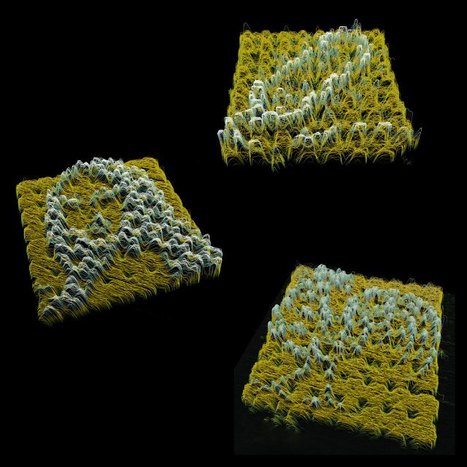
Three new strategies for using DNA to generate large, self-assembling shapes create everything from a nanoscale teddy bear to a nanoscale Mona Lisa.
Nucleic acids (DNA and RNA) are widely used to construct nanometre-scale structures with ever increasing complexity, with possible application in fields such as structural biology, biophysics, synthetic biology and photonics. The nanostructures are formed through one-pot self-assembly, with early kilodalton-scale examples containing typically tens of unique DNA strands. The introduction of DNA origami4, which uses many staple strands to fold one long scaffold strand into a desired structure, has provided access to megadalton-scale nanostructures that contain hundreds of unique DNA strands. Even larger DNA origami structures are possible, but manufacturing and manipulating an increasingly long scaffold strand remains a challenge. An alternative and more readily scalable approach involves the assembly of DNA bricks, which each consist of four short binding domains arranged so that the bricks can interlock. This approach does not require a scaffold; instead, the short DNA brick strands self-assemble according to specific inter-brick interactions. First-generation bricks used to create three-dimensional structures are 32 nucleotides long, consisting of four eight-nucleotide binding domains. Protocols have been designed to direct the assembly of hundreds of distinct bricks into well formed structures, but attempts to create larger structures have encountered practical challenges and had limited success.
A group of scientists now show that DNA bricks with longer, 13-nucleotide binding domains make it possible to self-assemble 0.1–1-gigadalton, three-dimensional nanostructures from tens of thousands of unique components, including a 0.5-gigadalton cuboid containing about 30,000 unique bricks and a 1-gigadalton rotationally symmetric tetramer. They also assembled a cuboid that contains around 10,000 bricks and about 20,000 uniquely addressable, 13-base-pair ‘voxels’ that serves as a molecular canvas for three-dimensional sculpting. Complex, user-prescribed, three-dimensional cavities can be produced within this molecular canvas, enabling the creation of shapes such as letters, a helicoid and a teddy bear. They anticipate that with further optimization of structure design, strand synthesis and assembly procedure even larger structures could be accessible, which could be useful for applications such as positioning functional components.
Alzheimer's disease (AD) has characteristic histopathological, molecular, and biochemical abnormalities, including cell loss; abundant neurofibrillary tangles; dystrophic neurites; amyloid precursor protein, amyloid-β (APP-Aβ) deposits; increased activation of prodeath genes and signaling pathways; impaired energy metabolism; mitochondrial dysfunction; chronic oxidative stress; and DNA damage. Gaining a better understanding of AD pathogenesis will require a framework that mechanistically interlinks all these phenomena. Currently, there is a rapid growth in the literature pointing toward insulin deficiency and insulin resistance as mediators of AD-type neurodegeneration, but this surge of new information is riddled with conflicting and unresolved concepts regarding the potential contributions of type 2 diabetes mellitus (T2DM), metabolic syndrome, and obesity to AD pathogenesis. A team of scientists now review the evidence that (1) T2DM causes brain insulin resistance, oxidative stress, and cognitive impairment, but its aggregate effects fall far short of mimicking AD; (2) extensive disturbances in brain insulin and insulin-like growth factor (IGF) signaling mechanisms represent early and progressive abnormalities and could account for the majority of molecular, biochemical, and histopathological lesions in AD; (3) experimental brain diabetes produced by intracerebral administration of streptozotocin shares many features with AD, including cognitive impairment and disturbances in acetylcholine homeostasis; and (4) experimental brain diabetes is treatable with insulin sensitizer agents, i.e., drugs currently used to treat T2DM.
From all this evidence, they conclude that the term “type 3 diabetes” accurately reflects the fact that AD represents a form of diabetes that selectively involves the brain and has molecular and biochemical features that overlap with both type 1 diabetes mellitus and T2DM.
When a person develops an allergic response to a compound the immune system produces a molecule called Immunoglobulin E (IgE). When these IgE molecules bind to receptors on mast cells, histamines are released which result in various common allergic symptoms from hay fever to asthma. The new study reveals how anti-IgE antibodies can prevent the allergen-induced IgE molecules from binding with the histamine-producing mast cells.
There was great excitement in the laboratory when researchers from Aarhus University recently discovered the unique mechanisms of an antibody that blocks the immune effect behind allergic reactions. The team of researchers from the Departments of Engineering and Molecular Biology and Genetics together with German researchers from Marburg/Giessen has now described the molecular structure and mechanisms of action of the antibody, and the results are surprising.
They were hoping to find new methods to improve existing treatment, but instead they identified how a specific antibody is apparently able to completely inactivate the allergic processes. The antibody interacts in a complex biochemical process in the human body by which it prevents the human allergy antibody (IgE) from attaching to cells, thus keeping all allergic symptoms from occurring.
“We can now describe the interaction of this antibody with its target and the conformational changes very accurately. This allows us to understand, how it interferes with the IgE and its specific receptors on the immune cells of the body, which are responsible for releasing histamine in an allergic reaction," says Edzard Spillner, associate professor at the Department of Engineering, Aarhus University.
Free-space volumetric displays, or displays that create luminous
image points in space, are the technology that most closely resembles the three-dimensional displays of popular fiction. Such displays are capable of producing images in ‘thin air’ that are visible from almost any direction and are not subject to clipping. Clipping restricts the utility of all three-dimensional displays that modulate light at a two-dimensional surface with an edge boundary. These include holographic displays, nanophotonic arrays, plasmonic displays, lenticular or lenslet displays and all technologies in which the light scattering surface and the image point are physically separate.
Engineers now present a free-space volumetric display based on
photophoretic optical trapping that produces full-colour graphics
in free space with ten-micrometre image points using persistence of vision. This display works by first isolating a cellulose particle in a photophoretic trap created by spherical and astigmatic aberrations. The trap and particle are then scanned through a display volume while being illuminated with red, green and blue light. The result is a three-dimensional image in free space with a large colour gamut, fine detail and low apparent speckle. This platform, named the Optical Trap Display, is capable of producing image geometries that are currently unobtainable with holographic and light-field technologies, such as long-throw projections, tall sandtables and wrap-around’ displays. Don't call it a hologram, though.
Jerky mechanical robots are staples of science fiction, but to seamlessly integrate into everyday life they’ll need the precise yet powerful motor control of humans. Now scientists have created a new class of artificial muscles that could soon make that a reality.
The advance is the latest breakthrough in the field of soft robotics. Scientists are increasingly designing robots using soft materials that more closely resemble biological systems, which can be more adaptable and better suited to working in close proximity to humans.
One of the main challenges has been creating soft components that match the power and control of the rigid actuators that drive mechanical robots—things like motors and pistons. Now researchers at the University of Colorado Boulder have built a series of low-cost artificial muscles—as little as 10 cents per device—using soft plastic pouches filled with electrically insulating liquids that contract with the force and speed of mammalian skeletal muscles when a voltage is applied to them.
Three different designs of the so-called hydraulically amplified self-healing electrostatic (HASEL) actuators were detailed in two papers in the journalsScience and Science Robotics last week. They could carry out a variety of tasks, from gently picking up delicate objects like eggs or raspberries to lifting objects many times their own weight, such as a gallon of water, at rapid repetition rates.
“We draw our inspiration from the astonishing capabilities of biological muscle,” Christoph Keplinger, an assistant professor at UC Boulder and senior author of both papers, said in a press release. “Just like biological muscle, HASEL actuators can reproduce the adaptability of an octopus arm, the speed of a hummingbird and the strength of an elephant.”
The artificial muscles work by applying a voltage to hydrogel electrodes on either side of pouches filled with liquid insulators, which can be as simple as canola oil. This creates an attraction between the two electrodes, pulling them together and displacing the liquid. This causes a change of shape that can push or pull levers, arms or any other articulated component.
The design is essentially a synthesis of two leading approaches to actuating soft robots. Pneumatic and hydraulic actuators that pump fluids around have been popular due to their high forces, easy fabrication and ability to mimic a variety of natural motions. But they tend to be bulky and relatively slow.
Dielectric elastomer actuators apply an electric field across a solid insulating layer to make it flex. These can mimic the responsiveness of biological muscle. But they are not very versatile and can also fail catastrophically, because the high voltages required can cause a bolt of electricity to blast through the insulator, destroying it. The likelihood of this happening increases in line with the size of their electrodes, which makes it hard to scale them up. By combining the two approaches, researchers get the best of both worlds, with the power, versatility and easy fabrication of a fluid-based system and the responsiveness of electrically-powered actuators.
One of the designs holds particular promise for robotics applications, as it behaves a lot like biological muscle. The so-called Peano-HASEL actuators are made up of multiple rectangular pouches connected in series, which allows them to contract linearly, just like real muscle. They can lift more than 200 times their weight, but being electrically powered, they exceed the flexing speed of human muscle.
A novel approach to detect bacterial infections in 10-15 minutes is expected to become commercially available next year.
A new device – a biological sensor inside a nanochip – that can detect bacterial infections in ten to 15 minutes will become available in 2016. Devised by a team of scientists from South Africa’s Stellenbosch University, the device is currently being patented. The Technology Innovation Agency has funded a prototype in preparation for commercialization by April 2016.
Pathogenic organisms infect about 250 million people a year. At least 8%, around 20 million people, die. Early detection of infections can prevent many deaths. Since the nanochip was announced as a project of the university in September 2014, progress has been made in developing additional sensing mechanisms, enhancing its capabilities.
The nanochip for early detection of infection came after a chance meeting between the author and microbiologist Leon Dicks, an expert in the field of superconductors and nanoelectrical devices.
While discussing individual current research, we agreed to work to find a way of detecting infections early and accurately. The basis for our research was piezoelectricity, which is how crystals convert mechanical energy into electricity or vice-versa.
A University of Oklahoma astrophysics team has discovered for the first time a population of planets beyond the Milky Way galaxy. Using microlensing—an astronomical phenomenon and the only known method capable of discovering planets at truly great distances from the Earth among other detection techniques—OU researchers were able to detect objects in extragalactic galaxies that range from the mass of the Moon to the mass of Jupiter.
Xinyu Dai, professor in the Homer L. Dodge Department of Physics and Astronomy, OU College of Arts and Sciences, with OU postdoctoral researcher Eduardo Guerras, made the discovery with data from the National Aeronautics and Space Administration's Chandra X-ray Observatory, a telescope in space that is controlled by the Smithsonian Astrophysical Observatory.
"We are very excited about this discovery. This is the first time anyone has discovered planets outside our galaxy," said Dai. "These small planets are the best candidate for the signature we observed in this study using the microlensing technique. We analyzed the high frequency of the signature by modeling the data to determine the mass."
While planets are often discovered within the Milky Way using microlensing, the gravitational effect of even small objects can create high magnification leading to a signature that can be modeled and explained in extragalactic galaxies. Until this study, there has been no evidence of planets in other galaxies.
"This is an example of how powerful the techniques of analysis of extragalactic microlensing can be. This galaxy is located 3.8 billion light years away, and there is not the slightest chance of observing these planets directly, not even with the best telescope one can imagine in a science fiction scenario," said Guerras. "However, we are able to study them, unveil their presence and even have an idea of their masses. This is very cool science."
For this study, OU researchers used the NASA Chandra X-ray Observatory at the Smithsonian Astrophysical Observatory. The microlensing models were calculated at the OU Supercomputing Center for Education and Research.
Scattered around the Milky Way are stars that resemble our own sun—but a new study is finding that any planets orbiting those stars may very well be hotter and more dynamic than Earth. That’s because the interiors of any terrestrial planets in these systems are likely warmer than Earth—up to 25 percent warmer, which would make them more geologically active and more likely to retain enough liquid water to support life, at least in its microbial form.
The preliminary finding comes from geologists and astronomers at Ohio State University who have teamed up to search for alien life in a new way. They studied eight “solar twins” of our sun—stars that very closely match the sun in size, age, and overall composition—in order to measure the amounts of radioactive elements they contain. Those stars came from a dataset recorded by the High Accuracy Radial Velocity Planet Searcher spectrometer at the European Southern Observatory in Chile.
They searched the solar twins for elements such as thorium and uranium, which are essential to Earth’s plate tectonics because they warm our planet’s interior. Plate tectonics helps maintain water on the surface of the Earth, so the existence of plate tectonics is sometimes taken as an indicator of a planet’s hospitality to life.
Of the eight solar twins they’ve studied so far, seven appear to contain much more thorium than our sun—which suggests that any planets orbiting those stars probably contain more thorium, too. That, in turn, means that the interior of the planets are probably warmer than ours.
For example, one star in the survey contains 2.5 times more thorium than our sun, said Ohio State doctoral student Cayman Unterborn. According to his measurements, terrestrial planets that formed around that star probably generate 25 percent more internal heat than Earth does, allowing for plate tectonics to persist longer through a planet’s history, giving more time for live to arise. “If it turns out that these planets are warmer than we previously thought, then we can effectively increase the size of the habitable zone around these stars by pushing the habitable zone farther from the host star, and consider more of those planets hospitable to microbial life,” said Unterborn.
ExTrA is no ordinary planet hunter. Its three 0.6 meter (1.98 feet) telescopes continually scan nearby red dwarf stars for signs of exoplanets by monitoring the amount of light they project. A dip in brightness could signal the passing of an orbiting exoplanet across the side of a red dwarf star that’s facing the Earth. The ExTrA telescopes compare the brightness of each observed star with that of four other reference stars to help spot changes.
Our study of exoplanets is still in its earliest stages — we only just confirmed they existed in 1992. Since then, we’ve confirmed 3,726 planets across 2,792 systems, including around 20 that could potentially be habitable. As we develop better tools to observe these worlds, we’ll be able to make more informed assumptions about their conditions.
The brains of close friends react to the world in similar ways, so does this mean we form natural echo chambers?
You may have a lot of things in common with your friends and brain activity could be one of them. According to a new study that investigated the neural responses of those in real-world social networks, you are more likely to perceive the world in the same way your friends do and this can be seen in patterns of neural activity.
The investigation by scientists at Dartmouth College, published today inNature Communications, examined the brains of 42 first-year graduate students, monitoring their responses to a collection of video clips. What they found was that close friends within this group had the most similar neural activity patterns, followed by friends-of-friends, then friends-of-friends-of-friends. The less subjects identified as friends, the more different their neural responses tended to be.
"Neural responses to dynamic, naturalistic stimuli, like videos, can give us a window into people's unconstrained, spontaneous thought processes as they unfold,” says lead author Carolyn Parkinson, who at the time of the study was a postdoctoral fellow in psychological and brain sciences at Dartmouth. “Our results suggest that friends process the world around them in exceptionally similar ways."
The 42 students were part of a 279-person cohort that filled out a survey to glean who they considered friends in the year group. The researchers gauged closeness based on mutually expressed friendships, and used this to estimate social distances between individuals. The selection of 42 subjects were each shown a range of videos, covering everything from politics to comedy, to elicit a variety of responses.
The fact friends tended to neurologically respond similarly suggests these people perceive the world in similar ways. “Whether we naturally gravitate towards people who perceive, think about and respond to things like we do or whether we become more similar over time, through shared experiences, we don't know,” notes Thalia Wheatley, co-author of the study and an associate professor of psychological and brain sciences at Dartmouth.
Friends show similar neural activity; also good to remember that it has been earlier shown that friends share more genes than would be expected by chance.
Using a combination of 3-D printing and cultured cells, scientists in China have grown new ears for five children born with a defect in one ear called microtia, which impacts the shape and function of the ear. In a first-of-its-kind study, researchers describe how they collected cartilage cells called chondrocytes from the children's microtia ears and used them to grow new ear-shaped cartilage. The new cartilage was based on 3-D-printed models of the children's healthy ears. Then, the researchers transferred the newly engineered ears to the children and performed ear reconstruction, according to a study published this month in the journal EBioMedicine.
"We were able to successfully design, fabricate, and regenerate patient-specific external ears," the researchers wrote in their study, which followed each child for up to 2½ years. "Nevertheless, further efforts remain necessary to eventually translate this prototype work into routine clinical practices," they wrote. "In the future, long-term (up to 5 years) follow-up of the cartilage properties and clinical outcomes ... will be essential."
Microtia is a condition in which a child is born withstructural abnormalities or even the complete absence of the ear, which can result in hearing impairment. The condition is estimated to occur in about one in every 5,000 live births, depending on ethnic background. The prevalence of microtia is higher in Hispanic, Asian, Native American and Andean populations. Typically, microtia treatment options include reconstructive surgery involving various approaches, such as sculpting an artificial "plastic ear" that attaches to the body or using the patient's rib cartilage to create an ear.
Researchers at the National Institute of Standards and Technology (NIST) have built a superconducting switch that "learns" like a biological system and could connect processors and store memories in future computers operating like the human brain.
The NIST switch, described in Science Advances, is called a synapse, like its biological counterpart, and it supplies a missing piece for so-called neuromorphic computers. Envisioned as a new type of artificial intelligence, such computers could boost perception and decision-making for applications such as self-driving cars and cancer diagnosis.
A synapse is a connection or switch between two brain cells. NIST's artificial synapse—a squat metallic cylinder 10 micrometers in diameter—is like the real thing because it can process incoming electrical spikes to customize spiking output signals. This processing is based on a flexible internal design that can be tuned by experience or its environment. The more firing between cells or processors, the stronger the connection. Both the real and artificial synapses can thus maintain old circuits and create new ones.
Even better than the real thing, the NIST synapse can fire much faster than the human brain—1 billion times per second, compared to a brain cell's 50 times per second—using just a whiff of energy, about one ten-thousandth as much as a human synapse. In technical terms, the spiking energy is less than 1 attoJoule, lower than the background energy at room temperature and on a par with the chemical energy bonding two atoms in a molecule.
"The NIST synapse has lower energy needs than the human synapse, and we don't know of any other artificial synapse that uses less energy," NIST physicist Mike Schneider said.
The new synapse would be used in neuromorphic computers made of superconducting components, which can transmit electricity without resistance, and therefore, would be more efficient than other designs based on semiconductors or software. Data would be transmitted, processed and stored in units of magnetic flux. Superconducting devices mimicking brain cells and transmission lines have been developed, but until now, efficient synapses—a crucial piece—have been missing.
For over a century, the two leading theories in physics have had irreconcilable differences, and scientists have scrambled to find ways to square them, to no avail. An experiment proposed in 1957 by American luminary Richard Feynman, is now getting a makeover, and the results could be significant.
Scientists at Oxford University and University College London (UCL), are attempting to overhaul one of the late Nobel Laurette’s experiments and in doing so, hope to heal the rift in a dramatic fashion. Could a Theory of Everything be near? This would be incorporating all four physical forces: gravity, electromagnetism, and the strong and weak nuclear forces, into one solid working theory.
Thus far, theoretical physicist Steven Weinberg, himself a Nobel Laurette, has only been able to combine electromagnetism and the weak nuclear force. A final theory—as Weinberg calls it, would mark the end of physics as we know it. Although the laws of general relativity and quantum mechanics work exceptionally well in their own spheres, some of the rules that govern one area don’t work in the other, and vice-versa. For instance, Relativity explains the gravitational force as it relates to bodies on Earth or in space. But it falls apart on the quantum level.
Thanks to their speed and dexterity, Delta robots are commonly used on assembly lines, but they do need a lot of space to work in. Now, Harvard engineers have developed the world's smallest version of the ubiquitous bot, dubbed the MilliDelta. As its name suggests, the new robot measures just a few millimeters, and could lend a hand in precise picking, packing, manufacturing and even surgery on the micro scale.
In 2011, the team at Harvard's Wyss Institute developed a flatpack fabrication technique for tiny robots, which they call pop-up microelectromechanical systems (MEMS) manufacturing. Over the last few years, the researchers put the idea into action to make a self-assembling crawling robot, and the agile Robobee. The MilliDelta is the latest and smallest creation to be made using this approach, allowing the team to quickly iterate on the design until they reached the current, final version.
"The physics of scaling told us that bringing down the size of Delta robots would increase their speed and acceleration, and pop-up MEMS manufacturing with its ability to use any material or combination of materials seemed an ideal way to attack this problem," says Robert Wood, lead engineer on the Wyss team.
The MilliDelta is made of a composite laminate structure with flexural joints, allowing it much the same dexterity as a full-size Delta robot. The difference is that this one measures a minuscule 15 x 15 x 20 mm (0.6 x 0.6 x 0.8 in), and the MilliDelta can apparently operate in a workspace of about 7 mm3 with precision down to 5 microns.
"With the help of an assembly jig, this laminate can be precisely folded into a millimeter-scale Delta robot," says Hayley McClintock, first author of a study describing the robot. "The MilliDelta also utilizes piezoelectric actuators, which allow it to perform movements at frequencies 15 to 20 times higher than those of other currently available Delta robots."
A robot this small is more than just a curiosity though. The MilliDelta could mimic the applications of its bigger siblings and find use in picking and packing tiny objects, such as electronic components or cells in research labs, or as a steady hand for microscopic-scale surgeries. The mini robot nailed its first experiment, where it was tested as a device for cancelling out human hand tremors.
"We first mapped the paths that the tip of a toothpick circumscribed when held by an individual, computed those, and fed them into the milliDelta robot, which was able to match and cancel them out," says Fatma Zeynep Temel, co-first author of the study.
Bacteria have been defending themselves from phages—viruses that attack bacterial cells—for billions of years, and unlocking the immune mechanisms they use to protect themselves has led to the development of powerful molecular biology tools such as restriction enzymes and CRISPR-Cas9. Now, researchers report in Sciencetoday (January 25) that they have discovered 10 more immune systems that bacteria use to protect themselves against phages and plasmids, opening up the possibility to add new tools to the molecular biology toolbox.
“The researchers have more than doubled the systems that we knew of that are involved in phage defense,” says Lori Burrows, a professor of biochemistry at McMaster University, Ontario, who was not involved in the study. “It’s quite a feat of bioinformatics.”
Bacteria have many sophisticated lines of defense against phages, but it’s unknown how many are still awaiting discovery. Rotem Sorek, a molecular geneticist at the Weizmann Institute of Science in Israel and colleagues sought to comprehensively identify bacterial anti-phage defense systems. They analyzed approximately 45,000 genomes from bacteria and archaea, looking at clusters of genes that are located near so-called “defense islands,” where previously identified defense genes are found. When they came upon genes that looked promising as immune participants, the researchers transferred them into model organism bacteria and then assaulted them with a barrage of phages to test their functions.
Of the 26 anti-phage systems they tested, nine turned out to be involved in antiphage immunity and one in anti-plasmid defense. Sorek’s team named each family after a mythological protective deity, such as Druantia, a Gallic archetype of the eternal mother, and Kiwa, a divine guardian of the ocean in Maori traditions. Although the other 16 systems didn’t ward off pathogens during the assay, it’s still possible they may be valid defense systems, says Sorek. “It is possible that these systems need something that is encoded in the genome of origin that is lacking in the model organism,” he explains. “Another possibility is that the promoters of the systems or other elements are not functioning correctly in the receiving organism.”
Imagine if doctors could see through a patient's skin, and their perspective of the underlying bones and organs changed accordingly as the person moved around. Well, that's what scientists at the University of Alberta have developed – kind of. It's still in the experimental phase, and is known as ProjectDR.
The new technology is bringing the power of augmented reality into clinical practice. The system, called ProjectDR, allows medical images such as CT scans and MRI data to be displayed directly on a patient’s body in a way that moves as the patient does. “We wanted to create a system that would show clinicians a patient’s internal anatomy within the context of the body,” explained Ian Watts, a computing science graduate student and the developer of ProjectDR. The technology includes a motion-tracking system using infrared cameras and markers on the patient’s body, as well as a projector to display the images. But the really difficult part, Watts explained, is having the image track properly on the patient’s body even as they shift and move. The solution: custom software written by Watts that gets all of the components working together.
“There are lots of applications for this technology, including in teaching, physiotherapy, laparoscopic surgery and even surgical planning,” said Watts, who developed the technology with fellow graduate student Michael Fiest. ProjectDR also has the capacity to present segmented images—for example, only the lungs or only the blood vessels—depending on what a clinician is interested in seeing. For now, Watts is working on refining ProjectDR to improve the system’s automatic calibration and to add components such as depth sensors. The next steps are testing the program’s viability in a clinical setting, explained Pierre Boulanger, professor in the Department of Computing Science.
“Soon, we’ll deploy ProjectDR in an operating room in a surgical simulation laboratory to test the pros and cons in real-life surgical applications,” said Boulanger. "We are also doing pilot studies to test the usability of the system for teaching chiropractic and physical therapy procedures.” added Greg Kawchuk, a co-supervisor on the project from the Faculty of Rehabilitation Medicine. Once these pilot studies are complete, the research team expects the deployment of the system in real surgical pilot studies will quickly follow.
MIT researchers have developed a miniaturized system that can deliver tiny quantities of medicine to targeted brain regions as small as 1 cubic millimeter, with precise control over how much drug is given. The goal is to treat diseases that affect specific brain circuits without interfering with the normal functions of the rest of the brain.
“We believe this tiny microfabricated device could have tremendous impact in understanding brain diseases, as well as providing new ways of delivering biopharmaceuticals and performing biosensing in the brain,” says Robert Langer, the David H. Koch Institute Professor at MIT and one of the senior authors of an open-access paper that appears in the Jan. 24 issue of Science Translational Medicine.
The researchers used state-of-the-art microfabrication techniques to construct cannulas (thin tubes) with diameters of about 30 micrometers (width of a fine human hair) and lengths up to 10 centimeters. These cannulas are contained within a stainless steel needle with a diameter of about 150 micrometers. Inside the cannulas are small pumps that can deliver tiny doses (hundreds of nanoliters) deep into the brains of rats — with very precise control over how much drug is given and where it goes.
In one experiment, they delivered a drug called muscimol to a rat brain region called the Substantia Nigra, which is located deep within the brain and helps to control movement. Previous studies have shown that muscimol induces symptoms similar to those seen in Parkinson’s disease. The researchers were able to stimulate the rats to continually turn in a clockwise direction. They also could also halt the Parkinsonian behavior by delivering a dose of saline through a different channel to wash the drug away.
“Since the device can be customizable, in the future we can have different channels for different chemicals, or for light, to target tumors or neurological disorders such as Parkinson’s disease or Alzheimer’s,” says Canan Dagdeviren, the LG Electronics Career Development Assistant Professor of Media Arts and Sciences and the lead author of the paper.
This device could also make it easier to deliver potential new treatments for behavioral neurological disorders such as addiction or obsessive compulsive disorder. (These may be caused by specific disruptions in how different parts of the brain communicate with each other.)
Two computer scientists from the University of Alberta claim to have created a series of algorithms that can decipher unknown alphabetic scripts, and to test their system they have targeted the infamously impenetrable Voynich manuscript.
The Voynich manuscript, named after the Polish book dealer who purchased the codex in 1912, has been the source of enormous controversy over the past century. Dated back to the early 15th century, this manuscript was written in an unknown language that many have struggled to decipher over the years. The mysterious codex has been the source of dozens of different hypotheses, from it being either a hoax or gibberish to the suggestion it is written in a complex cipher yet to be cracked by anyone.
Every year it seems someone comes along with a new Voynich hypothesis. Last year, a history researcher made international news by saying he had finally cracked the code. Nicholas Gibbs claimed the manuscript was actually written in an abbreviated version of Latin and translated it as a women's health manual. Critics of Gibbs' interpretation pretty quickly piled on the critiques suggesting his work combined elements of information we already knew with translations that were fundamentally grammatically incorrect.
The latest attempt to decode the mysterious manuscript comes from Greg Kondrak and Bradley Hauer at the University of Alberta. The duo began by using samples from 400 different languages to algorithmically identify the underlying language of the manuscript. Despite initially suspecting the manuscript was written in Arabic, it turned out the algorithms concluded Hebrew was the most likely language.
"That was surprising," says Kondrak. "And just saying 'this is Hebrew' is the first step. The next step is how do we decipher it."
Hypothesizing the manuscript was encoded using alphagrams (alphabetically ordered anagrams), the duo then developed an algorithm that could decipher the text. "It turned out that over 80 per cent of the words were in a Hebrew dictionary, but we didn't know if they made sense together," says Kondrak.
To get content containing either thought or leadership enter:
To get content containing both thought and leadership enter:
To get content containing the expression thought leadership enter:
You can enter several keywords and you can refine them whenever you want. Our suggestion engine uses more signals but entering a few keywords here will rapidly give you great content to curate.


 Your new post is loading...