Your new post is loading...

|
Scooped by
Dr. Stefan Gruenwald
September 22, 2018 7:40 PM
|
The future of battlefield communications is resting comfortably near your back gums. Next time you pass someone on the street who appears to be talking to themselves, they may literally have voices inside their head…and be a highly trained soldier on a dangerous mission. The Pentagon has inked a roughly $10 million contract with a California company to provide secure communication gear that’s essentially invisible. Dubbed the Molar Mic, it’s a small device that clips to your back teeth. The device is both microphone and “speaker,” allowing the wearer to transmit without any conspicuous external microphone and receive with no visible headset or earpiece. Incoming sound is transmitted through the wearer’s bone matter in the jaw and skull to the auditory nerves; outgoing sound is sent to a radio transmitter on the neck, and sent to another radio unit that can be concealed on the operator. From there, the signal can be sent anywhere. “Essentially, what you are doing is receiving the same type of auditory information that you receive from your ear, except that you are using a new auditory pathway — through your tooth, through your cranial bones — to that auditory nerve. You can hear through your head as if you were hearing through your ear,” said Peter Hadrovic, CEO of Molar Mic creator Sonitus Technologies.He likened the experience to what happens when you eat a crunchy breakfast cereal — but instead of hearing that loud (delightfully marketable) chewing noise, you’re receiving important communications from your operations team.
|
|
Scooped by
Dr. Stefan Gruenwald
September 22, 2018 7:29 PM
|
A British satellite has become the first ever to clear up some space junk, using its onboard net technology. The aptly named RemoveDEBRIS satellite, built by a consortium of space companies and research institutions led by the Surrey Space Centre, released a video of its experimental phase of operation today, featuring the first demonstration of active debris removal technology in human history. “We are absolutely delighted with the outcome of the net technology,” said Professor Guglielmo Aglietti, Director of the Surrey Space Centre, in a statement. “While it might sound like a simple idea, the complexity of using a net in space to capture a piece of debris took many years of planning, engineering and coordination between the Surrey Space Centre, Airbus and our partners – but there is more work to be done. These are very exciting times for us all.” The net capture was one of several trials that RemoveDEBRIS will be performing over the coming months. The satellite is also going to be testing a vision-based navigation system that uses cameras and LiDaR tech to analyse and observe potential pieces of debris and the first harpoon capture tech to be used in orbit.
|
|
Scooped by
Dr. Stefan Gruenwald
September 20, 2018 11:26 PM
|
The government of Burkina Faso granted scientists permission to release genetically engineered mosquitoes anytime this year or next, researchers announced Wednesday. It’s a key step in the broader efforts to use bioengineering to eliminate malaria in the region. The release, which scientists are hoping to execute this month, will be the first time that any genetically engineered animal is released into the wild in Africa. While these particular mosquitoes won’t have any mutations related to malaria transmission, researchers are hoping their release, and the work that led up to it, will help improve the perception of the research and trust in the science among regulators and locals alike. It will also inform future releases. Teams in three African countries—Burkina Faso, Mali, and Uganda—are building the groundwork to eventually let loose “gene drive” mosquitoes, which would contain a mutation that would significantly and quickly reduce the mosquito population. Genetically engineered mosquitoes have already been released in places like Brazil and the Cayman Islands, though animals with gene drives have never been released in the wild. In Africa, the project’s success depends on more than just the science of genetic engineering. The people who live in the areas where the mosquitoes will be released must give their consent, researchers must staff and maintain labs to work with genetically modified animals, and regulators must accept the new technology. The impending release of these mosquitoes serves as a stress test for the whole system. “We’re seeing all those other pieces that are as important, if not more important, than the science itself, lined up and actually being executed in sequence,” said Philip Welkhoff, malaria director at the Bill and Melinda Gates Foundation, which dedicated $70 million to support the research teams in the three countries.
|
|
Scooped by
Dr. Stefan Gruenwald
September 20, 2018 1:44 AM
|
Even tiny amounts of viruses can have disastrous consequences. RNA identification can reveal the type of virus present. A fast and sensitive technique based on optical detection has now been outlined in the journal Angewandte Chemie. Scientists from Germany and Finland have demonstrated the binding of an RNA target to a probe made of gold nanorods and a DNA origami structure. Chirality switches triggered by binding can be measured by circular dichroism spectroscopy.
Identifying the pathogen—often a virus—that is troubling a patient is among the biggest challenges in healthcare. Viruses responsible for Zika fever, AIDS, and hepatitis C contain mutating RNA sequences. Physicians need to know quickly which type of virus their patients have acquired, but current techniques based on multiplying RNA are costly and time-consuming. Now, Tim Liedl from Ludwigs-Maximilians-Universität in Munich, Germany, and his colleagues, have developed a fast detection strategy based on nanoplasmonics, DNA origami, and an optical readout.
Light can induce plasmonic waves in nanosized metal structures smaller than the wavelength of the incident light. This resonance may lead to strongly enhanced light emission even from nanoscopic structures—a feature that is highly interesting for biosensing applications. Liedl and colleagues have created a nanosized sensing probe for RNA molecules.
The probe, a nanosized apparatus made of DNA and gold nanorods, was assembled by the so-called DNA origami technique, which exploits the specific interactions of the DNA bases to fold and glue together single strands in any desired form. The authors constructed two bars of parallel DNA helices loosely connected through a hinge in the middle of the bars. Gold nanorods were placed on top of each of the crossed bars. Both crossing arms were supplied with functionality at their ends: the scientists attached one single DNA sequence complemented with a blocking strand to one arm, and the complementing DNA sequence to the other. In the presence of target RNA, which could be a typical viral RNA sequence, the blocking strand would leave its DNA in favor of RNA hybridization, and both single DNA sequences would complementarily form a double strand whereby the two arms of the cross are pulled together. This structural change introduces chirality to the probe.
|
|
Scooped by
Dr. Stefan Gruenwald
September 18, 2018 7:44 PM
|
Electrogenic ability may be important in how bacteria infect humans, or in how they ferment cheese and yogurt, While bacteria that produce electricity have been found in exotic environments like mines and the bottoms of lakes, scientists have missed a source closer to home: the human gut. University of California, Berkeley, scientists discovered that a common diarrhea-causing bacterium, Listeria monocytogenes, produces electricity using an entirely different technique from known electrogenic bacteria, and that hundreds of other bacterial species use this same process. Many of these sparking bacteria are part of the human gut microbiome, and many, like the bug that causes the food-borne illness listeriosis, which can also cause miscarriages, are pathogenic. The bacteria that cause gangrene (Clostridium perfringens) and hospital-acquired infections (Enterococcus faecalis) and some disease-causing streptococcus bacteria also produce electricity. Other electrogenic bacteria, like Lactobacilli, are important in fermenting yogurt, and many are probiotics. "The fact that so many bugs that interact with humans, either as pathogens or in probiotics or in our microbiota or involved in fermentation of human products, are electrogenic -- that had been missed before," said Dan Portnoy, a UC Berkeley professor of molecular and cell biology and of plant and microbial biology. "It could tell us a lot about how these bacteria infect us or help us have a healthy gut." The discovery will be good news for those currently trying to create living batteries from microbes. Such "green" bioenergetic technologies could, for example, generate electricity from bacteria in waste treatment plants. The research will be posted online Sept. 12, 2018 in advance of Oct. 4, 2018 print publication in the journal Nature.
|
|
Scooped by
Dr. Stefan Gruenwald
September 18, 2018 12:23 PM
|
Using its web as a gill, the diving-bell spider can live underwater with only occasional visits to the surface. The arachnid (Argyroneta aquatica) breathes air from a bubble that it grabs from the surface of water using fine hairs on its abdomen. The spider traps the air within a bell-shaped silken web that it constructs underwater and carries around like an aqualung. It was first described over 250 years ago, but until now biologists didn’t know how it managed to remain underwater without frequent visits to the surface to renew the oxygen in its tiny air bubble. To find out, Roger Seymour from the University of Adelaide in South Australia and Stefan Hetz of Humboldt University in Berlin, Germany, placed 12 spiders in individual aquaria and measured the oxygen levels within the air bubbles using optical fibres tipped with oxygen-sensitive dye. Seymour also measured the concentration of oxygen in the water outside the bubble. “The spider’s web acts like a gill,” says Seymour. The silken web allows oxygen to diffuse from the surrounding water into the depleted air, as well as release carbon dioxide.
|
|
Scooped by
Dr. Stefan Gruenwald
September 17, 2018 10:22 PM
|
The Russian android robot called F.e.d.o.r (Fedor) can do the splits and screw in a light bulb, CEO of Android Technics Research and Production Association Alexander Permyakov told TASS recently. Android Technics is the developer of the robot Fedor. The chief executive confirmed that the robot could do the splits to demonstrate its technical capabilities. Moreover, it can stand on one leg, having vertically lifted the other. "Our chassis allows doing this. However, as part of the tests, this technical possibility did our robot a service when it had to overcome an obstacle," the Android Technics CEO said. The Russian robot also has mobile fingers, he said. "A manipulator has been created but hundreds and, perhaps, thousands of programmers’ work hours are needed to sharpen fine motor skills," he said. "We can also mention the robot’s ability to screw in a light bulb as an example of our own scientific and technical potential, which we have developed beyond the requirements of the Rescuer project," he added. Besides, the robot’s fine motor skills allow Fedor to insert the key in the lock, open the door of an apartment, switch on the light and drive a car. Fedor has been developed by Android Technics and the Advanced Research Fund under a technical assignment from Russia’s Emergencies’ Ministry. Originally, the robot was known under the notional name of Avatar but it has recently received is own name FEDOR, which stands for Final Experimental Demonstration Object Research. Apart from the Rescuer project in the interests of the Emergencies Ministry, the robot will be able to perform other assignments. Thus, the android is set to become the sole passenger of Russia’s new spacecraft Federatsiya in 2021 during the spaceship’s first flight. The Russian robot will be technically simplified before it is serially produced, the chief executive said. "The robot will be serially produced in a long-term perspective even in very large numbers but today what is required is to simplify the design and increase the robot’s service life. That is, it will be produced in a simplified form in the short-term perspective," the Android Technics CEO said.
|
|
Scooped by
Dr. Stefan Gruenwald
September 13, 2018 5:41 PM
|
In 1978, the mathematician John McKay noticed what seemed like an odd coincidence. He had been studying the different ways of representing the structure of a mysterious entity called the monster group, a gargantuan algebraic object that, mathematicians believed, captured a new kind of symmetry. Mathematicians weren’t sure that the monster group actually existed, but they knew that if it did exist, it acted in special ways in particular dimensions, the first two of which were 1 and 196,883. McKay, of Concordia University in Montreal, happened to pick up a mathematics paper in a completely different field, involving something called the j-function, one of the most fundamental objects in number theory. Strangely enough, this function’s first important coefficient is 196,884, which McKay instantly recognized as the sum of the monster’s first two special dimensions. Most mathematicians dismissed the finding as a fluke, since there was no reason to expect the monster and the j-function to be even remotely related. However, the connection caught the attention of John Thompson, a Fields medalist now at the University of Florida in Gainesville, who made an additional discovery. The j-function’s second coefficient, 21,493,760, is the sum of the first three special dimensions of the monster: 1 + 196,883 + 21,296,876. It seemed as if the j-function was somehow controlling the structure of the elusive monster group.
|
|
Scooped by
Dr. Stefan Gruenwald
September 10, 2018 9:56 PM
|
The days of the great Pacific garbage patch may be numbered. A highly anticipated project to scoop up plastic from the massive pool of ocean debris is poised to launch its first phase from Alameda, Calif., on September 8. The creators of the project, called the Ocean Cleanup, say their system can remove 90 percent of the plastic in the patch by 2040. First proposed in a 2012 TED talk by Dutch-born inventor Boyan Slat, who was then just 18 years old, the Ocean Cleanup’s system consists of a snaking line of booms designed to simulate a kind of free-floating coastline that can essentially herd the plastic trash into retrievable piles. The project, based in Delft, the Netherlands, has drawn more than $30 million in donations from sponsors, philanthropists and a crowdfunding campaign. It has also drawn the ire of researchers who worry about possible negative effects on ocean life, or who say the project doesn’t address the majority of ocean plastic — bits called microplastics that are smaller than half a centimeter. The system is designed to capture pieces of plastic ranging in size from a few millimeters to tens of meters across, such as fishing nets. Critics also worry the project will divert attention and money from the root of the problem: too much plastic waste in the first place. Ready for launch A March study in Scientific Reports, led by Ocean Cleanup’s lead oceanographer Laurent Lebreton, estimated that in 2015 the great Pacific garbage patch was scattered across some 1.6 million square kilometers — an area twice the size of Texas — within a vast ocean swirl known as the North Pacific gyre. The patch, the study found, contains about 1.8 trillion pieces of debris, largely consisting of buoyant plastics like polyethylene and polypropylene, floating at the surface. Most of those pieces are smaller than half a centimeter — but by mass, more than 90 percent of the patch is made up of pieces 5 centimeters or bigger, the scientists estimate.
|
|
Scooped by
Dr. Stefan Gruenwald
September 6, 2018 6:00 PM
|
More than a quarter (1.4 billion) of the world's adult population were insufficiently active in 2016, putting them at greater risk of cardiovascular disease, type 2 diabetes, dementia, and some cancers, according to the first study to estimate global physical activity trends over time. The study was undertaken by researchers from the World Health Organization (WHO) and published in The Lancet Global Healthjournal. Together, these estimates demonstrate that there has been little progress in improving physical activitylevels between 2001 and 2016. The data show that if current trends continue, the 2025 global activity target of a 10% relative reduction in insufficient physical activity will not be met. "Unlike other major global health risks, levels of insufficient physical activity are not falling worldwide, on average, and over a quarter of all adults are not reaching the recommended levels of physical activity for good health," warns the study's lead author, Dr. Regina Guthold of the WHO, Switzerland. In 2016, around one in three women (32%) and one in four men (23%) worldwide were not reaching the recommended levels of physical activity to stay healthy—ie, at least 150 minutes of moderate-intensity, or 75 minutes of vigorous-intensity physical activity per week. The new study is based on self-reported activity levels, including activity at work and at home, for transport, and during leisure time, in adults aged 18 years and older from 358 population-based surveys in 168 countries, including 1.9 million participants. Among the study's main findings were: - In 2016, levels of insufficient activity among adults varied widely across income groups—16% in low-income countries compared to 37% in high-income countries.
- In 55 (33%) of 168 countries, more than a third of the population was insufficiently physically active.
- In four countries, more than half of adults were insufficiently active—Kuwait (67%), American Samoa (53%), Saudi Arabia (53%), and Iraq (52%).
- Countries with the lowest levels of insufficient physical activity in 2016 were Uganda and Mozambique (6% each).
- Women were less active than men in all regions of the world, apart from east and southeast Asia. In 2016, there was a difference in levels of insufficient activity between women and men of 10 percentage points or more in three regions: South Asia (43% vs 24%), Central Asia, Middle East and north Africa (40% vs 26%), and high-income Western countries (42% vs 31%).
- Across regions, many individual countries recorded large differences in insufficient activity between women and men. Examples include Bangladesh (40% vs 16%), Eritrea (31% vs 14%), India (44% vs 25%), Iraq (65% vs 40%), Philippines (49% vs 30%), South Africa (47% vs 29%), Turkey (39% vs 22%), the USA (48% vs 32%), and the UK (40% vs 32%).
|
|
Scooped by
Dr. Stefan Gruenwald
September 6, 2018 5:45 PM
|
A Japanese team working to develop a "space elevator" will conduct a first trial this month, blasting off a miniature version on satellites to test the technology. The test equipment, produced by researchers at Shizuoka University, will hitch a ride on an H-2B rocket being launched by Japan's space agency from southern island of Tanegashima next week. The test involves a miniature elevator stand-in—a box just six centimeters (2.4 inches) long, three centimeters wide, and three centimeters high. If all goes well, it will provide proof of concept by moving along a 10-meter cable suspended in space between two mini satellites that will keep it taut.bThe mini-elevator will travel along the cable from a container in one of the satellites. "It's going to be the world's first experiment to test elevator movement in space," a university spokesman told AFP on Tuesday. The movement of the motorized "elevator" box will be monitored with cameras in the satellites. It is still a far cry from the ultimate beam-me-up goals of the project, which builds on a long history of "space elevator" dreams. The idea was first proposed in 1895 by Russian scientist Konstantin Tsiolkovsky after he saw the Eiffel Tower in Paris, and was revisited nearly a century later in a novel by Arthur C. Clarke. But technical barriers have always kept plans stuck at the conceptual stage. Japanese construction firm Obayashi, which is collaborating with the Shizuoka university project, is also exploring other ways to build its own space elevator to put tourists in space in 2050. The company has said it could use carbon nanotube technology, which is more than 20 times stronger than steel, to build a lift shaft 96,000 kilometers (roughly 60,000 miles) above the Earth.
|
|
Scooped by
Dr. Stefan Gruenwald
September 4, 2018 10:04 PM
|
Simply put, a Convolutional Neural Network is a Deep learning model or a multilayered percepteron similar to Artificial Neural Networks which is most commonly applied to analyzing visual imagery. The founding father of Convolutional Neural Networks is the well known computer scientist working in Facebook Yann LeCun who was the first one to use them to solve the hand written digits problem using the famous MNIST Dataset.
|
|
Scooped by
Dr. Stefan Gruenwald
September 4, 2018 4:36 PM
|
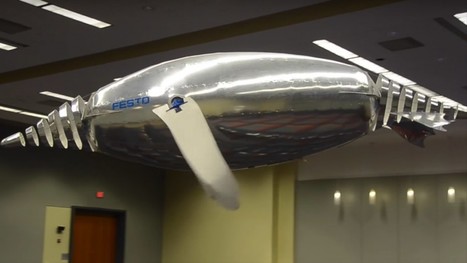
They put even the coolest drones to shame. Just barely making it under the wire of a year full of bizarre and adorable robots, the fancy animal robot-makers at Festo are back with three new flying robots. An industrial automation company, Festo's robotic menagerie also includes herring gulls, kangaroos, ants, an elephant's trunk, and a gripper inspired by the tongue of a chameleon. Festo showed off three new animalistic flying drones at the USA Science and Engineering Festival in Washington, DC last summer, and they can seen beautifully gliding through the air in a video captured by IEEE Spectrum. The eMotionButterfly uses a camera tracking system to fly autonomously, avoiding crashes into the ceiling and walls without human guidance. A kaleidoscope of up to 15 butterflies can work together at once, using the tracking cameras to navigate without crashing into one another. AirJelly, a giant flying jellyfish, is gently propelled up and down by eight tentacles and directed remotely with a bearing inside the helium body. It only weighs about two pounds, and can fly for two hours on one small battery. Last but not least, the AirPenguin is a chubby silver blimp-bot with flippers that help it glide forward through the air, and moveable tail fins and a beak. Each of these creatures seems plucked from alternate reality, where mechanical zoos and Atomic Age-style penguins reign the skies. We'll allow it, even though real penguins don't fly.
|
|
|
Scooped by
Dr. Stefan Gruenwald
September 22, 2018 7:37 PM
|
A Japanese spacecraft has dropped two small rovers onto the surface of an asteroid zooming through space. The unmanned Hayabusa-2 is the first spacecraft to ever successfully place robotic rovers onto an asteroid. Japan’s space agency (JAXA) hopes that the mission will provide clues about the origin of the solar system. Hayabusa-2 first arrived near the asteroid, known as Ryugu and situated 280 million km (170 million miles) from Earth, in June 2018. The spacefrac approached as close as 55m (180 feet) to the asteroid, dropping the rovers and waiting for a minute before rising back to its waiting position about 20 km (12 miles) above the surface. JAXA said the release went successfully. The solar-powered rovers’ voltage plunged as night fell on Ryugu, a sign that they are on the asteroid, according to Hayabusa project team spokesman Takashi Kubota. Each solar-powered robot is around the size of a biscuit tin, and their aim is to capture image of the asteroid’s surface and measure its surface temperature, laying the groundwork for a larger rover and lander that will be released at a later date. They will move by hopping up to 15m (50 feet) at a time across the surface of the 1km-wide asteroid, because its extremely weak gravity makes rolling difficult.
|
|
Scooped by
Dr. Stefan Gruenwald
September 22, 2018 2:34 PM
|
WHEN IT CAME into being in 2006, Twitter seemed perplexing. Publishing teensy, 140-character updates? Whatever was that good for? Twitter seemed like a ghastly mashup of the preening narcissism and nanosecond attention spans that defined the worst trends in digital culture. Tim Ferriss, writer of productivity books, called it “pointless email on steroids.” Who cares what you had for lunch? But critics misunderstood it. What Twitter truly portended wasn’t small, it was huge. As I argued in my first-ever WIRED column more than a decade ago, Twitter represented a massive shift in the way we pay attention to one another. The status update took off and we entered the era we still inhabit: the age of awareness.
Before the age of awareness, people conversed via blog posts, threads in discussion forums, email chains. You read someone’s missive, pondered it, wrote back. It was newfangled and digital, sure, but it nonetheless echoed the tempo of industrial life—the postal service in the Victorian period, bickering with fellow citizens in letters to the editor. Utterances were infrequent and somewhat lengthy.
Twitter inverted that proposition. The posts were microscopic, and they came in a constant spray. Sure, each update was so short as to seem meaningless, if considered on its own. But that’s the thing: Their power was in the aggregate. Follow someone’s updates for weeks, months, or years and you’d develop a rich sense of that person’s internal life. It was like hearing them think out loud, all day long.
|
|
Scooped by
Dr. Stefan Gruenwald
September 20, 2018 1:47 AM
|
In a breakthrough for nanotechnology, engineers at The University of Texas at Austin have developed the first method for selecting and switching the mechanical motion of nanomotors among multiple modes with simple visible light as the stimulus. The capability of mechanical reconfiguration could lead to a new class of controllable nanoelectromechanical and nanorobotic devices for a variety of fields including drug delivery, optical sensing, communication, molecule release, detection, nanoparticle separation and microfluidic automation. The finding, made by Donglei (Emma) Fan, associate professor at the Cockrell School of Engineering's Department of Mechanical Engineering, and Ph.D. candidate Zexi Liang, demonstrates how, depending on the intensity, light can instantly increase, stop and even reverse the rotation orientation of silicon nanomotors in an electric field. This effect and the underlying physical principles have been unveiled for the first time. It switches mechanical motion of rotary nanomotors among various modes instantaneously and effectively. The researchers published their findings in the Sept. 14 issue of Science Advances. Nanomotors, which are nanoscale devices capable of converting energy into movement at the cellular and molecular levels, have the potential to be used in everything from drug delivery to nanoparticle separation. Using light from a laser or light projector at strengths varying from visible to infrared, the UT researchers' novel technique for reconfiguring the motion of nanomotors is efficient and simple in its function. Nanomotors with tunable speed have already been researched as drug delivery vessels, but using light to adjust the mechanical motions has far wider implications for nanomotors and nanotechnology research more generally.
|
|
Scooped by
Dr. Stefan Gruenwald
September 20, 2018 1:38 AM
|
Scientists have created a self-flying glider that uses machine learning to navigate rising air currents, in an experiment that could help our understanding of how birds migrate. Soaring birds ride warm air passages known as thermals to fly and gain height without needing to flap their wings, although no one knows exactly how they do it. To gain insight into what cues birds instinctively use to catch an updrafts, researchers from the University of California San Diego equipped a pilotless glider with an on-board computer allowing it to change direction on the basis of real-time measurements. To help navigate the ever-changing environment, they used machine learning—the glider, which has a wingspan of two meters (six feet), in effect teaches itself how to fly by evaluating each variation in air currents and receiving a reward for every "correct" decision that resulted in increased altitude. In a study published Wednesday in the journal Nature, the team reported that after just 15 hours of test flights, the glider had "learned" how to optimize its position and developed a strategy to catch the warm updrafts. "We find it very impressive as the glider had no prior knowledge about atmospheric physics or aerodynamics," Massimo Vergassola, lead study author, told AFP. Whereas several other studies have shown how fast machines can learn strategies or form algorithms to solve complex problems, thermal updrafts change nearly constantly, making the gliders' task extra taxing. By studying how the glider learned to respond to physical stimulus in flight, Vergassola and his colleagues believe that birds might also take certain physical and visual clues to help them climb thermals, saving vital energy needed for long migrations. Species such as the bar-tailed godwit and shorebird, that can fly upward of 11,500 kilometers (7,145 miles) without stopping, would not be able to do so without these skills.
|
|
Scooped by
Dr. Stefan Gruenwald
September 18, 2018 7:42 PM
|
Researchers from the University of North Carolina at Chapel Hill have come up with a sequence motif-based strategy for sorting out functional similarities between long non-coding RNAs (lncRNAs). The authors of the study described their "sequence evaluation from k-mer representation" (SEEKR) method, which involves quantifying sequence k-mers to compare lncRNA and classify them functionally, in a paper published in Nature Genetics this week. They explained that SEEKR tallies and compares k-mer profiles, tallying k-mers of a given length in each lncRNA and normalizing these counts with insights about the lncRNA's overall length. "We found that lncRNAs of related function often had similar k-mer profiles despite lacking linear homology, and that k-mer profiles correlated with protein binding to lncRNAs and with their sub-cellular localization," senior author J. Mauro Calabrese, a pharmacology researcher at UNC Chapel Hill's Lineberger Comprehensive Cancer Center, and his colleagues wrote. Using this strategy, the team profiled and compared k-mer patterns in 161 lncRNAs known for their conservation in mice and humans, uncovering new and known functional similarities between lncRNAs. It also began clustering human and mouse lncRNAs into k-mer-based "communities" in an effort to understand their functions in relation to their cellular localization and other features. The investigators also used SEEKR — in combination with a "transposable element to test RNA's effect on transcription in cis," or TETRIS assay — to search for lncRNAs with regulatory functions similar to that attributed to Xist, a lncRNA with a documented role in cis-repression of gene expression. In doing so, they picked up a cis-repressive function for another lncRNA called Kcnq1ot1, despite pronounced differences between Xist and Kcnq1ot1 at the linear sequence level. "SEEKR detected significant similarity between the cis-repressive Kcnq1ot1 and Xist lncRNAs where none was found by conventional alignment algorithms," the authors wrote. "We conclude that lncRNAs of related function can have related k-mer profiles even if they lack linear sequence similarity." Likewise, the researchers saw signs that still other lncRNAs — including NEAT1 and MALAT1 — may share previously unappreciated similarities with human and mouse versions of Xist. The repressive activity was more pronounced in lncRNAs with k-mers that were closer to Xist, they reported. The team noted that most lncRNAs are not fully characterized functionally or mechanistically, although thousands have been identified in the human genome, encouraging the group to pursue a method for systematically assessing lncRNA functions. "A major roadblock to progress remains the inability to detect recurrent relationships between lncRNA sequence and function," the authors wrote, explaining that "[a]n understanding of analogous relationships in proteins has enabled the classification of protein families, functional domains, and mechanisms that, in turn, have led to discoveries that have improve the diagnosis and treatment of disease." Based on their results so far, the researchers concluded that SEEKR's k-mer-based classification "is a powerful approach to dete
|
|
Scooped by
Dr. Stefan Gruenwald
September 18, 2018 12:13 PM
|
Assessing DNA for areas of the genome linked to cancer risk could pick out some people with a three-fold increased risk of blood cancer, a new study suggests. The research identified six new DNA regions linked to a higher risk of multiple myeloma, a cancer of white blood cells made in the bone marrow. Together with previously identified areas of the genome, their findings explain part of the inherited risk of myeloma. The people classed as at highest risk based on the genetic information identified so far were at three times the risk of developing the disease as the average individual. Despite there being around 5,700 new cases of myeloma diagnosed in the UK each year, there is still relatively little known about its causes. This study, which was largely funded by Myeloma UK, increases the understanding of the complex genetics that underpin the disease, and could explain why some individuals are more at risk of developing myeloma. In future, specific genes in the newly identified risk regions of the DNA could also be possible targets of new drugs to treat the disease. The research was published in the journal Nature Communications (13 September 2018).
|
|
Scooped by
Dr. Stefan Gruenwald
September 14, 2018 11:51 PM
|
A novel insect-inspired flying robot, developed by TU Delft researchers from the Micro Air Vehicle Laboratory (MAVLab), has been presented in Science (14 September 2018). Experiments with this first autonomous, free-flying and agile flapping-wing robot – carried out in collaboration with Wageningen University & Research – improved our understanding of how fruit flies control aggressive escape maneuvers. Apart from its further potential in insect flight research, the robot’s exceptional flight qualities open up new drone applications. Flying animals both power and control flight by flapping their wings. This enables small natural flyers such as insects to hover close to a flower, but also to rapidly escape danger, which everyone has witnessed when trying to swat a fly. Animal flight has always drawn the attention of biologists, who not only study their complex wing motion patterns and aerodynamics, but also their sensory and neuromotor systems during such agile maneuvers. Recently, flying animals have also become a source of inspiration for robotics researchers, who try to develop lightweight flying robots that are agile, power-efficient and even scalable to insect sizes.
|
|
Scooped by
Dr. Stefan Gruenwald
September 11, 2018 2:08 AM
|
A pair of artificial intelligence Ph.Ds from Cambridge University are going all-in on machine learning as the foundation of autonomous cars. Their company, Wayve, has just released video of a kitted-out Renault Twizy teaching itself to follow a lane from scratch, over the course of about 20 minutes. Wayve's Amar Shah and Alex Kendall believe there's been too much hand-engineering going on as people try to solve the self-driving car problem. "The missing piece of the self-driving puzzle is intelligent algorithms, not more sensors, rules and maps," says Shah, Wayve co-founder and CEO. "Humans have a fascinating ability to perform complex tasks in the real world, because our brains allow us to learn quickly and transfer knowledge across our many experiences. We want to give our vehicles better brains, not more hardware."
|
|
Scooped by
Dr. Stefan Gruenwald
September 10, 2018 9:54 PM
|
Two studies report evidence of superconductivity — the transmission of electricity without resistance — at temperatures higher than seen before. The effect appears in compounds of lanthanum and hydrogen squeezed to extremely high pressures. All known superconductors must be chilled to function, which makes them difficult to use in real-world applications. If scientists found a superconductor that worked at room temperature, the material could be integrated into electronic devices and transmission wires, potentially saving vast amounts of energy currently lost to electrical resistance. So scientists are constantly on the lookout for higher-temperature superconductors. The current record-holder, hydrogen sulfide, which also must be compressed, works below 203 kelvins, or about −70° Celsius. The new evidence for superconductivity is based on a dramatic drop in the resistance of the lanthanum-hydrogen compounds when cooled below a certain temperature. One team of physicists found that their compound’s resistance plummeted at a temperature of 260 kelvins (−13° C), the temperature of a very cold winter day. The purported superconductivity occurred when the material had been crushed with almost 2 million times the pressure of Earth’s atmosphere by squeezing it between two diamonds. Some samples even showed signs of superconductivity at higher temperatures, up to 280 kelvins (about 7° C), physicist Russell Hemley of George Washington University in Washington, D.C., and colleagues report in a study posted online August 23, 2018 at arXiv.org. Hemley first reported signs of the compound’s superconductivity in May 2018 in Madrid at a symposium on superconductivity and pressure. Another group found evidence of superconductivity in a lanthanum-hydrogen compound under chillier, but still record-breaking, conditions. The researchers crushed lanthanum and hydrogen in a diamond press to about 1.5 million times Earth’s atmospheric pressure. When cooled to about 215 kelvins (−58° C), the compound’s resistance falls sharply, physicist Mikhail Eremets of the Max Planck Institute for Chemistry in Mainz and colleagues report in a paper posted online August 21, 2018 at arXiv.org. It’s not clear what the exact structures of the chemical compounds are and whether the two groups are studying identical materials. Differences between the two teams’ samples might explain the temperature discrepancy. By scattering X-rays from the compound, Hemley and colleagues showed that the material’s structure was consistent with LaH10, which contains 10 hydrogen atoms for every lanthanum atom. Hemley’s team had previously predicted that LaH10 would be superconducting at a relatively high temperature. The results are “very exciting,” says theoretical chemist Eva Zurek of the University at Buffalo in New York. However, the studies are not conclusive: They have not been peer reviewed and do not yet show an essential hallmark of superconductivity called the Meissner effect, in which magnetic fields are expelled from the superconducting material (SN: 8/8/15, p. 12). But the results agree with the previous theoretical predictions made by Hemley and colleagues. So, Zurek says, “I would hope and suspect that this is indeed … correct.”
|
|
Scooped by
Dr. Stefan Gruenwald
September 6, 2018 5:56 PM
|
A team of researchers affiliated with several institutions in the U.K. and one in the U.S. has developed a way to use artificial intelligence to predict how cancer might change and spread in patients. The results are published in Nature Methods. Over many years of cancer research, scientists have discovered that tumors actually evolve, allowing them to change their form and the way they spread. Understanding how this evolutionary process works is considered by many in the field to be a key part of learning how to prevent it from happening. As part of this effort, scientists have collected tissue samples from patients hoping to find a pattern in how they change. But this method has proven to be difficult, because when tumors grow, they also tend to develop mutations that have no impact on their ability to spread. In this new effort, the researchers sought to add machine learning to the process in an effort to track evolutionary changes that are involved in spreading. They have named their new system Revolver. The new application uses a machine learning algorithm to study mutation data and detect patterns. They fed their system data describing 768 tumors from 178 patients—each of whom had breast, kidney, bowel or lung cancer. The system sought mutation patterns between patients that appeared to be related to changes that allowed the tumor to spread. Next, they applied what the system had learned to new patients as a way to assess the state of newly developing tumors—it was correctly identified gene mutations in 95 colorectal patients who had mutations that had been previously identified as drivers of evolution in breast, kidney and lung cancers. The researchers note that Revolver is just one of the first steps toward developing computer-based tools to better predict how tumors will evolve—such tools should make it easier for doctors to formulate the best treatment plan for a given patient, hopefully, improving their prognosis.
|
|
Scooped by
Dr. Stefan Gruenwald
September 6, 2018 5:36 PM
|
Scientists have arrived at a key understanding about how cancers in individual patients spread, or metastasize, a study from the Stanford University School of Medicine and other collaborating institutions reports. The study found that mutations that drive cancer growth are common among metastases in a single patient. Most cancer-related deaths are caused by metastases, or secondary tumors in distant locations of the body that have spread away from the original, primary tumor. While primary tumors can often be surgically removed, metastatic tumors typically require treatment such as standard chemotherapy or targeted therapy. The success of such new targeted therapies depends on the presence of a specific mutation in all cancer cells, in particular in metastatic tumors. Until now, most studies that aimed to decode the genetic variability, or heterogeneity, of cancers focused mainly on primary tumors. And while that information is still extremely valuable, it leaves much of the story untold; cancer cells are notorious for their ability to change, evolve and evade treatments, particularly as they spread in the body. “We took samples from multiple untreated metastases of each patient, and we observed a mix of overlapping and differing driver mutations,” said Johannes Reiter, PhD, an instructor of radiology at Stanford. “But through computational analyses, we inferred that the driver mutations that were most likely to contribute to cancer development were shared among all metastases in each patient.” A tumor comprised of billions of cells is riddled with genetic mutations; cancer cells and normal cells acquire multiple mutations as they divide. Identifying the driver mutations that significantly contribute to cancer development is critical to precision oncology, in which doctors aim to treat a patient’s cancer based on its genetic composition. “Doctors might take a sample of the primary tumor and find some mutation — call it mutation X — in a driver gene and then treat it with a drug that targets that driver gene to specifically kill all cells that have mutation X,” Reiter said. “But what if that particular mutation is only present in some of the metastases of the patient?” Only the metastases comprised of cells with mutation X would respond to treatment and shrink or go extinct; those without mutation X would continue to grow. In the end, the doctor wouldn’t see a remission of the patient’s cancer if driver mutations were different across its metastases. “So that’s why it’s very important for us to know whether or not the driver gene mutations are the same across all metastases of the patient,” Reiter said. The paper was published Sept. 7, 2018 in Science.
|
|
Scooped by
Dr. Stefan Gruenwald
September 4, 2018 9:56 PM
|
Glasswing butterflies develop nanostructures on their wings that actually give them “anti-reflective” properties. This allows them to reduce the amount of light bouncing their wings & remain transparent in a terrestrial environment, something few animals on the planet can do. The glasswing butterfly (Greta oto) has, as its name suggests, transparent wings with remarkable low haze and reflectance over the whole visible spectral range even for large view angles of 80°. This omnidirectional anti-reflection behaviour is caused by small nanopillars covering the transparent regions of its wings. In difference to other anti-reflection coatings found in nature, these pillars are irregularly arranged and feature a random height and width distribution. Scientists now simulate the optical properties with the effective medium theory and transfer matrix method and show that the random height distribution of pillars significantly reduces the reflection not only for normal incidence but also for high view angles.
|