


Just as important as reading and using informational text, is writing it! How To stories are one of my favorite types of informational texts for first graders to write. These step by step stories lend themselves to all sorts of creativity.

 Your new post is loading...
 Scoop.it! Just as important as reading and using informational text, is writing it! How To stories are one of my favorite types of informational texts for first graders to write. These step by step stories lend themselves to all sorts of creativity. 
No comment yet.
Sign up to comment
Scoop.it!

via The Scout Report
"Librarians, youth workers, educators, and parents may be interested in The Pirate Tree, "a collective of children's and young adult writers interested in children's literature and social justice issues." With regular editors and writers as well as a number of guest writers, The Pirate Tree features synopses of recently published books, author interviews, and book reviews. Each entry includes a number of tags, allowing visitors to search for related books on specific topics of interest. Tags include, for example, Historical Fiction, Environment, Gender, Disability, Peace, and Family, to name just a few. As the diversity of these subject tags highlights, The Pirate Tree is committed to featuring a wide variety of books across all genres. Reading levels range from picture books to young adult fiction."

diane gusa's curator insight,
November 17, 2016 5:12 AM
The writers at The Pirate Tree seek to expose and discuss literature and writers for children and teenagers that delve into themes of social justice and social conscience.
Scoop.it!

Blogging is a popular activity in classrooms today because it allows students to share their writing with a broader audience and teachers to communicate with parents. There are a myriad of platforms to choose from: edublogs, Kidblog (especially good for elementary age children), Blogger, wordpress, and most LMS systems have a blogging platform built in Via John Evans

Mirta Liliana Filgueira's curator insight,
April 25, 2015 3:31 PM
Aplicaci'on de los blog en el aula. 
Dean Mantz's curator insight,
April 27, 2015 12:53 PM
As I promote the integration of blogging with my preservice students, I have also seen a growth in local teachers adopting the concept. This post shared by @John Evans ,from Daily Genius, takes the discussion to another level with concepts for implementing this form of modern day writing. , from Daily Genius, takes the discussion to another level with concepts for implementing this form of modern day writing.
Scoop.it!

I’m convinced that the deliberate act of writing is a worthwhile endeavor for any person. Writing is mental and physical exercise, and it requires something specific of the practitioner, namely, that he or she is willing to try and express something meaningful.
Scoop.it!

Since the election results were announced, I haven’t mentioned them in any public forum. I was too overwhelmed, and I didn’t want to muddy the waters here; I wanted to stay focused on teaching. Via Jim Lerman
Jim Lerman's insight:
Well worth reading;don't miss this.

Karen Draper's curator insight,
November 14, 2016 9:51 AM
all these things we should remember to do for they are aspects of teaching we often forget in our quest to teach our subjects. We too often forget that we are teaching kids (not robots)with feelings and fears, family problems, and they don't always want to learn what we are there to teach them. They sometime just need lessons on life.
Scoop.it!

"A middle school teacher defeats the three-headed hydra keeping teachers from assigning writing on a daily basis. Find out how she avoided giving extensive feedback on every piece of writing, tackling the complex writing process all at once, and fixating on grammar."
Scoop.it!

So rather than searching for and arguing over a new instructional model, different pedagogy or new standards perhaps we should entertain the idea that the core problem lies elsewhere? A single teacher can't teach more than a hundred students to write. A system that prioritizes what's uniform and convenient rather than what's best for its clientele is going to continue to produce results like we see now. That's a problem far broader than just our writing challenges.
Scoop.it!

Storytelling is a foundational human experience across time and cultures (thank you Joseph Campbell). Stories are a means of entertainment and escape; how we pass on culture and history; a way we connect and belong; and how we share who we are and come to know each other. Humanity has used stories from the very beginning as a fundamental tool to make sense of our world and our selves – from tales around the campfire to Shakespearian theater. Today, we continue to use story to share, express, belong, connect, think, learn and hope but in convergence culture we are doing so via many different media platforms.
Scoop.it!

"Code/Interactive is seeking an enthusiastic professional with teaching experience and an affinity for coding to serve as a full-time Program Manager. This individual will work directly with C/I’s growing program team to deliver the after-school and weekend Code/Lehman computer science program to high school students in partnership with Lehman College.
Click the headline or the photo to learn more Via Jim Lerman
Scoop.it!

A general outline on how to properly format a screenplay with descriptions of the basic elements including scene headings, action lines, character introductions and descriptions, dialogue, parentheticals, transitions, and more.
Scoop.it!

Create comics, cartoons and memes online. Share your creations on Facebook, Twitter or Google+. Free online cartoon maker and comic creator. Via Nik Peachey, WikiBlinks, Jim Lerman

Dr. Helen Teague's curator insight,
October 24, 2016 8:34 AM
Love this new Comic-Cartoon Creator. Thanks, Nic Peachey
Scoop.it!

When it comes to enhancing students writing skills, technology can play a decisive role. In his celebrated work “The Digital Writing Workshop’, author Troy Hicks explains in details how you can integrate technology in your writing instruction to help students become good writers. One key concept in this discussion is viewing writing as a process instead of an end product. Process here insinuates a state of unfinishedness because writing is always a task in the making. Students are continuously engaged in a never-ending process of discovery and sense making through the use of language. In this regard, the writing process is comprised of several phases or stages each of which has a specific role in creating and enhancing students writing skills. Going beyond the problematic of nomenclature, we will stick here with the conventional classification of the writing process as espoused by many scholars including Donal Murray, Donal Graves, Lucy Calkins and many more. This process is composed of four main stages: pre-writing, writing, revising, and publishing. The purpose of today’s post is to provide you with a number of tools and apps to help your students' writing needs in each of these stages.
|
Scoop.it!

What’s going on in this picture? Look closely at the image above or view it in a larger size, then tell us what you see by posting a comment. On Thursday afternoon, we will reveal more about the image and its origins at the bottom of this post
Jim Lerman's insight This is an example of a weekly exercise in visual literacy and oral or written expression published by the NY Times during the school year. It's a great way to improve the perception and communication of students.
Scoop.it!

Students should write every day in every class, says project director Mary Tedrow, who shares some of the techniques she uses to refine a daily writing habit. Via Dr. Tom D'Amico (@TDOttawa) , Yashy Tohsaku
Scoop.it!

Via The Scout Report
"Researchers, students, and instructors use academic databases to find scholarship on topics of interest. Yet it is difficult to get information about how these databases work and what materials are included in - or left out of - them. In response to this challenge, a group of students in a Digital Praxis Seminar at the City University of New York (CUNY) created Beyond Citation, a website dedicated to providing the public with information and analysis about major academic search engines. As of this writing, Beyond Citation features explorations of thirteen major databases, including Google Books, Project MUSE, HathiTrust Digital Library, JSTOR, and ProQuest Historical Newspapers. Each database record includes an Overview outlining what the database contains, available Reviews of each database, and information about Access. In addition, readers will also find a useful Conversations feature, which offers links to outside analysis and criticism about the selected database. Beyond Citation not only helps researchers critically evaluate databases, but also teaches researchers how to use these databases most effectively."
Scoop.it!

Writing is, as a general rule, hard. Defining yourself as a writer can be even harder. Sure, there are other difficult practices like law and medicine out there, but a person becomes a lawyer or a…
Via bobbygw

Penelope's curator insight,
November 15, 2016 4:08 PM
The methods of book writing are myriad, and the how-to's of the craft infinite.These are one blogger's perspective on 27 of the best. I do agree with the recommendations of Stephen King's "On Writing" and Anne Lamott's, "Bird by Bird." Some of the others have been on my list to read. Link to the original article: https://medium.com/@penguinrandomus/write-on-27-of-the-best-books-on-writing-b47a84609448#.7io5lrnqs
Scoop.it!

"A haphazard approach to teaching writing gets overhauled with three critical moves: composing a sample response to any assignment, dissecting that response to identify key elements you want to see in student responses, and adopting an instructional cycle (examine, experiment, execute, and excel) for explicitly teaching writing skills."
Scoop.it!

"Students want to become experts on the topics they are studying, and that's why deep content knowledge and strong vocabulary are the building blocks of an engaging composition. Help students develop a content-rich base for their writing, and then use genre study to uncover the tools for conveying that knowledge."
Scoop.it!

National Novel Writing Month (NaNoWriMo) is coming up, but the time is always ripe for encouraging students of every age to write. And how better to pique their interest and power up their pencils (or keyboards!) than with a video writing prompt? Just about any short, intriguing video can be made into a great writing prompt with the addition of a choice question or two, but I've put together a list of favorites discovered around the web. Happy writing!
Scoop.it!
Digital Storytelling in the Classroom: New Media Pathways to Literacy, Learning, and Creativity http://readybooks.space/?book=1452268258
Via Yashy Tohsaku
Scoop.it!

description by The Scout Report
"Youth Workers and educators dedicated to student-centered pedagogy will want to check out Teach Youth Radio, the official education site for Youth Radio. Youth Radio is a youth driven news broadcast based out of Oakland, California that was established to provide an alternative perspective to the dominant media narrative.
On this site, teachers and youth workers will find resources for teaching journalism skills (including fact-checking, story pitching, and conducting interviews) as well as technical skills for publishing in a variety of formats (including how to make infographics and mobile applications). In addition, teachers may be interested in the site's lesson plans related to helping youth understand the benefits and risks involved in having an online presence. Each of these lesson plans includes links to additional resources to spark ideas or facilitate instruction and discussions."
Scoop.it!
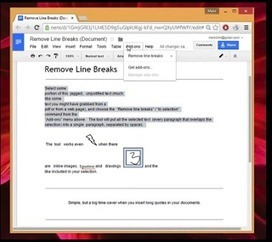
As a teacher, Google Docs is definitely an important tool in your digital toolkit. It provides you with an easy and simple platform wher Via Evdokia Roka
Scoop.it!

Who is your favorite fictional teacher or mentor? Are you in awe of Albus Dumbledore's resounding wisdom, or are you more captivated by Mary Poppin's gleeful whimsy about life? How about Ms. Fizzle's silly but fun advice on making a productive mess? No matter how old you are or what you do for a living, everyone can benefit from an offbeat dollop of wisdom from beloved mentors, teachers, and guides from a variety of fiction sources like television, film, video games, and books! Just like they offered unique and entertaining insights to their own pupils, their wisdom can also enlighten us as we journey through life! While we may not be valiantly saving our country from an onslaught of Huns or harnessing the Force to conquer the Dark Side, these quotes can still apply to our own individual battles and goals. So take a moment and read these inspirational words from both classic and modern sources. Via Ana Cristina Pratas, Jim Lerman
|






