Your new post is loading...

|
Scooped by
Jim Lerman
January 3, 2018 7:53 PM
|
The new "question-of-the-week" is:
What is the biggest mistake teachers make in writing instruction, and what should they do instead?
In Part One, Lisa Eickholdt, Kathleen Neagle Sokolowski, Mary Ann Zehr, Nancy Frey and Valentina Gonzalez share their commentaries. You can listen to a 10-minute conversation I had with David and Jill on my BAM! Radio Show. You can also find a list of, and links to, previous shows here.
Today, Eugenia Mora-Flores, Julia G. Thompson, Karen Sher, Bret Gosselin, Dr. Vicky Giouroukakis, and Emily Geltz contribute their suggestions.
|
|
Rescooped by
Jim Lerman
from Into the Driver's Seat
January 2, 2018 8:23 PM
|
In many ways our brains are nearly limitless in their capacity. No hard cap exists on memories that can be created or skills that can be gained. But there is one function of our brains that is incredibly limited--our attention. In fact, our attention is not just limited, it is severely limited in two distinctly…
|
|
Rescooped by
Jim Lerman
from Into the Driver's Seat
December 29, 2017 8:11 AM
|
How can you ensure that you don’t write at a snail’s pace? The 15 Amazing Ways to Become a Better Writer Infographic outlines great tips on writing faster.
|
|
Rescooped by
Jim Lerman
from Cultivating Creativity
December 26, 2017 8:31 PM
|
|
|
Rescooped by
Jim Lerman
from :: The 4th Era ::
December 24, 2017 2:41 PM
|
Free resource of educational web tools, 21st century skills, tips and tutorials on how teachers and students integrate technology into education
Via Dr. Tom D'Amico (@TDOttawa) , Jim Lerman
|
|
Scooped by
Jim Lerman
December 19, 2017 7:02 PM
|
8th grade and 11th grade writing competitions from NCTE
From the National Council of Teachers of English online newsletter: - You’ve been inspiring writers in your classroom all year long. Consider having their good work recognized through one of NCTE’s student writing awards! Submissions for the Achievement Awards (11th grade) and the Promising Young Writers (8th grade) are open until February 15.
|
|
Rescooped by
Jim Lerman
from Into the Driver's Seat
December 11, 2017 5:12 PM
|
Writing a multimedia ebook or magazine can be a good way for students to illustrate and or further explain portions of fiction and non-fiction stories that they develop. Multimedia publishing tools that include a collaboration component can further help students as they work together with each other or with you to improve their work.
The following five platforms make it possible for students to create and publish multimedia ebooks in their web browsers.
|
|
Scooped by
Jim Lerman
December 5, 2017 12:36 PM
|
Via The Scout Report "For teachers and tutors of English Language Learners (ELLs) or Adult Basic Education (ABE), the Minnesota Literacy Council (MLC) offers suggestions for resources and activities through their regularly-updated Tutor Tips blog. While designed specifically for adult learners, many of these activities could also be adapted for certain K-12 classrooms. Each tutor tip includes a purpose, information about preparation time, materials needed, and detailed procedures. Some tips also include suggestions of how to adapt each activity for students with different language levels. Educators can browse past tutor tips by category including beginning ESL, GED, speaking and listening, and vocabulary. In addition, teachers can also sign up to receive tutor tips via email or by an RSS Feed." Jim Lerman's insight: Some really excellent resources here, some rare finds. Definitely worth a look!
|
|
Rescooped by
Jim Lerman
from Into the Driver's Seat
December 4, 2017 9:30 AM
|
Michael Michalko unveils the secrets of creative genius and brings life-changing creative techniques within everyone’s reach. His arsenal of powerful creative thinking tools can be used to tackle virtually any type of technical problem and to create new ideas. Without a doubt, his tools are the closest thing there is to a tactical instruction manual for thinking like a genius. His tools will help you approach problems with new vision, and you will discover a world of innovative solutions to everyday, and some not-so-everyday, challenges. Jim Lerman's insight: Michalko is indeed one of the leading lights in promotion of creativity. This site offers a tremendous amount of free resources, including a newsletter subscription. I use his books and materials and value them highly. I have no connection with him or his company.
Via Jim Lerman
|
|
Rescooped by
Jim Lerman
from Into the Driver's Seat
December 4, 2017 12:31 AM
|
Description by Richard Byrne "GradeProof is a service designed to help students improve their writing. GradeProof lets students either import documents or write documents within the GradeProof editor. Either way that the students use, the next step is the same. GradeProof identifies spelling, grammar, and phrasing errors within a student's writing. GradeProof highlights and color codes the errors that it identifies for students. Students can then click on each highlighted error to see a suggested change. Students can click on each suggested change to immediately implement the change."
|
|
Rescooped by
Jim Lerman
from Education 2.0 & 3.0
December 2, 2017 8:36 PM
|
Looking for a dose of inspiration for your middle school writing workshop? Look no further than our list of best writing prompts for middle school students.
Via Ana Cristina Pratas, Yashy Tohsaku
|
|
Rescooped by
Jim Lerman
from Into the Driver's Seat
December 2, 2017 8:10 PM
|
"TenMarks has proven itself as an effective online learning platform for math, and its recent writing addition is sure to be a success as well. Students will have fun with the creative writing exercises it provides, and teachers will be able to keep track of individual students’ writing and classroom trends with ease."
-These two learning platforms are not free.
|
|
|
Rescooped by
Jim Lerman
from Into the Driver's Seat
January 3, 2018 7:49 PM
|
What are the best ways to help students -- mainstream and/or English Language Learners -- develop academic vocabulary?
Helping our students develop academic vocabulary knowledge has always been a challenge to us teachers, and the Common Core Standards "up" the challenge and its importance even more.
Today, I'll begin by briefly mentioning some of my own classroom practices (though I won't both duplicating ideas mentioned by others later in the post), and then several educator/authors - Marilee Sprenger; Jane Hill and Kirsten Miller; and Maria Gonzalez - provide guest responses. Lastly, I'll be highlighting contributions from a number of readers.
And if you're looking for even more ideas, you might want to explore my collection of The Best Websites For Developing Academic English Skills & Vocabulary.
|
|
Scooped by
Jim Lerman
December 29, 2017 12:00 PM
|
Data from the last nine weeks of the two-year storytelling program showed that students in the experimental remixing condition had better learning experiences. Students in the remixing condition became increasingly engaged in creating their stories and demonstrated more intrinsic motivation as measured by a questionnaire after completing the activity. Finally, students who experienced the experimental conditions applied various approaches to remixing the model story and asked for more assistance from the English teaching assistant. The remix-oriented approach helped these students maintain engagement and allowed them to tap into their creative self-efficacy. This research could be used to inform future instructional designs to consider providing students with sample projects or artifacts to modify and could change teachers’ understandings of how original work is produced.
How to convey tone in writing? This article shows 5 types of tone in writing with examples. Learn how to vary your writing tone so you can engage readers.
Via Penelope, Lynnette Van Dyke
|
|
Rescooped by
Jim Lerman
from Into the Driver's Seat
December 26, 2017 8:41 PM
|
Free resource of educational web tools, 21st century skills, tips and tutorials on how teachers and students integrate technology into education
|
|
Rescooped by
Jim Lerman
from Into the Driver's Seat
December 25, 2017 12:57 AM
|
Does your data tell a story and can you visualize it? We look at the history and thought processes behind data visualization and successful infographics.
Via José Carlos, Lauren Moss, Jim Lerman
|
|
Scooped by
Jim Lerman
December 22, 2017 10:41 AM
|
"During a class discussion of a text a few weeks ago, I was digging for a more analytical answer and I said, “Yes, but why this word and not another one?” It was one of those teaching lightbulb moments when I realized it was a prompt my students could be asking themselves: Why this and not that?
"It quickly became my go-to question when discussing in class. In AP Lang, I am always trying to get my students to focus on the writer’s purpose. What’s he trying to get me to do/think/believe/understand with this text? I need them to think like the writer–to read like a writer–and see every word on the page as a deliberate choice. Asking students to zero in on the why of one choice gives them a concrete entry point into thinking this way."
|
|
Rescooped by
Jim Lerman
from Cultivating Creativity
December 14, 2017 1:39 PM
|
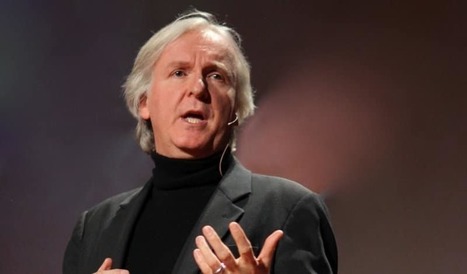
In this post you’ll find our specially curated list of the very best TED talks on storytelling, writing, filmmaking and creativity.
Via José Carlos, Jim Lerman
|
|
Rescooped by
Jim Lerman
from Into the Driver's Seat
December 8, 2017 10:09 AM
|
1. Choose some piece of academic content: something you’ve been reading, discussing or learning about in school. It may be a work of literature, an event in history, a concept in civics, a phenomenon in science or something else entirely. It can be as small as a single haiku or as large as a world-changing event like the Industrial Revolution.
2. Find something published in The New York Times anytime in 2017 or 2018 that you think connects to your chosen subject in some interesting, meaningful way, and explain how.
You might think about the questions we raised above: What relevance does your academic content have to our world today? What does it have to do with your life and the lives of those around you? What parallels do you see between it and something happening in our culture or the news? What lessons does it offer for us today?
|
|
Rescooped by
Jim Lerman
from Into the Driver's Seat
December 5, 2017 12:33 PM
|
If you are working with higher level learners who are looking to develop professional speaking skills, the new LMI PCSL curriculum published by the US State Department is an excellent place to start. The curriculum has a variety of lessons and materials that cover seven different units: Professional Introductions, Conferences as Professional Development, Conference Abstracts, PowerPoint™ for Conferences, Public Speaking and Oral Presentations, Communication for Conferences, and Pronunciation.
|
|
Scooped by
Jim Lerman
December 4, 2017 12:48 AM
|
“The best things in life happen to you when you’re alone,” artist Agnes Martin reflected in her final years. “Oh comforting solitude, how favorable thou art to original thought!” wrote the founding father of neuroscience in his advice to young scientists. The poet Elizabeth Bishop believed that everyone should experience at least one prolonged period of solitude in life. For in true solitude, as Wendell Berry so memorably observed, “one’s inner voices become audible [and] in consequence, one responds more clearly to other lives” — an intuitive understanding of what psychologists have since found: that “fertile solitude” is the basic unit of a full and contented life.
But in the neutral state of aloneness, the psychoemotional line between solitude and loneliness can be as thin as a razor’s edge and as lacerating to the soul. How to draw it skillfully in orienting ourselves to the world, exterior and interior, is what poet, novelist, and memoirist May Sarton (May 3, 1912–July 16, 1995) explores in a beautiful poem she penned ten days after her twenty-sixth birthday, decades before she came to contemplate solitude in stunning prose. Originally titled “Considerations,” the poem was slightly revised and published the following year as “Canticle 6” in Sarton’s second poetry collection, the altogether sublime Inner Landscape (public library).
|
|
Rescooped by
Jim Lerman
from Education 2.0 & 3.0
December 2, 2017 8:37 PM
|
"First, data visualization is not data storytelling. On that we agree. Data visualization, whether simple or complex, helps us make sense of data, but rarely generates insights that stimulate action."
Via Yashy Tohsaku
|
|
Rescooped by
Jim Lerman
from :: The 4th Era ::
December 2, 2017 8:34 PM
|
The Future of StoryTelling Summit presented the perfect opportunity to showcase Power BI’s storytelling prowess. Of course, our team also learned some valuable lessons related to data-driven storytelling, and we’re excited to share these insights to strengthen your storytelling skills.
Via NikolaosKourakos, Yashy Tohsaku, Jim Lerman
|