Your new post is loading...

|
Scooped by
Jim Lerman
December 17, 2012 6:30 PM
|
By Lee Child
"How do you create suspense? I’m asked that question often, and it seems that every writers’ symposium has a class with that title. It’s an important technical issue, and not just for so-called suspense novels. Every novel needs a narrative engine, a reason for people to keep reading to the end, whatever the subject, style, genre or approach.
"But it’s a bad question. Its very form misleads writers and pushes them onto an unhelpful and overcomplicated track."
Description by The Scout Project "Story Builder is designed to make writing fun for students. Users can name up to 10 different characters. They may then enter text from each character, building a story. At the end, they may set their story to music and watch it all play out on the screen. To use the Story Builder, simply select "Get Started." Then enter character names in the boxes on the left hand side of the screen. From there, you may enter the text for each character. Next, choose from seven different styles of music. Once you have selected music, the story will begin to play, accompanied by the soundtrack. Students may also give the story a title and get a short link, which can then be shared. The program is best used with elementary and middle school students."
Via Dr. Tom D'Amico (@TDOttawa)
|
|
Rescooped by
Jim Lerman
from Into the Driver's Seat
December 14, 2012 3:05 PM
|
By Susan Curtis
"Essentially, according to Professor Sue Thomas of the UK’s De Montfort University’s Institute of Creative Technologies, transliteracy is “the ability to read, write and interact across a range of platforms, tools and media from signing and orality through handwriting, print, TV, radio and film, to digital social networks.”
"K-12 teacher librarians have adapted the concept for their students. Joyce Valenza, writing in her School Library Journal blog Neverending Search, is concerned that students understand and can use literacies that take them beyond reading and writing and provides links to several resources. She illustrates the potential of multiple platforms with librarian Brian Hulsey’s video, “Everyday Transliteracy,” from his blog, Strange Dichotomy. His catalog of possible media resources (“avenues for communication”) for sharing a blueberry smoothie recipe is easy for students to understand."
|
|
Rescooped by
Jim Lerman
from Into the Driver's Seat
December 13, 2012 5:40 PM
|
From the website
"A weekly feature done in collaboration with Visual Thinking Strategies in which we publish a Times image without a caption or any other clues about its origins, then invite students to write in to discuss what they see in it. Full information about the image is posted 24 hours later."
|
|
Rescooped by
Jim Lerman
from Into the Driver's Seat
December 11, 2012 12:37 AM
|
Reprinted from the Village Charter School (Trenton, NJ) newsletter, Jan. 27, 2012 "Technology teacher Deanne McBeath gives us a glimpse into how the ongoing iEARN project, Finding Solutions to Hunger, at VCS exceeds the requirement of the NJ Core Curriculum Content Standards for English language arts and literacy in social studies, science, and technical subjects. "The goal of the iEARN project is to open the students' eyes to hunger in the world. Students are learning what constitutes a 'global issue,' how to communicate and collaborate with other cultures, and develop excellent research and problem-solving skills in this online, collaborative learning environment." "The students learned how to make animations to illustrate the information they found when investigating the causes of hunger, and developed essential research and critical thinking skills. In addition, our students learned to analyze the material on the issue of hunger, as it exists in both their community and in the world, by reading and analyzing stories by different authors. "We sent teddy bears to a school in Kenya, and in the process learned what can happen when food is sent to other countries. Our teddy bear gifts were held at the post office for an exorbitant 'fee' that the school in Kenya could not afford to pay. We held a fundraiser to help that school pay the fee, and we learned what it was like when rebels held up UN aid to countries suffering from a food crisis. Our fifth-grade class created a book based on a story about the bears sent to us from the Igwamati Primary School in Kenya."
|
|
Rescooped by
Jim Lerman
from Into the Driver's Seat
December 11, 2012 12:13 AM
|
From the Meograph website: "Meograph helps easily create, watch, and share interactive stories. Our first product combines maps, timeline, links, and multimedia to tell stories in context of where and when. Authoring is structured into a few simple prompts on an intuitive interface. Viewers get a new form of media that they can watch in two minutes or explore for an hour. Sharing is easy: the two most viral types of media are videos and infographics ... Meograph is both." Via Ruth Vilmi
|
|
Rescooped by
Jim Lerman
from :: The 4th Era ::
December 10, 2012 9:49 AM
|
By Jim Taylor, Ph. D. "There is...a growing body of research that technology can be both beneficial and harmful to different ways in which children think. Moreover, this influence isn’t just affecting children on the surface of their thinking. Rather, because their brains are still developing and malleable, frequent exposure by so-called digital natives to technology is actually wiring the brain in ways very different than in previous generations. What is clear is that, as with advances throughout history, the technology that is available determines how our brains develops. For example, as the technology writer Nicholas Carr has observed, the emergence of reading encouraged our brains to be focused and imaginative. In contrast, the rise of the Internet is strengthening our ability to scan information rapidly and efficiently. "The effects of technology on children are complicated, with both benefits and costs. Whether technology helps or hurts in the development of your children’s thinking depends on what specific technology is used and how and what frequency it is used. At least early in their lives, the power to dictate your children’s relationship with technology and, as a result, its influence on them, from synaptic activity to conscious thought. "Over the next several weeks, I’m going to focus on the areas in which the latest thinking and research has shown technology to have the greatest influence on how children think: attention, information overload, decision making, and memory/learning. Importantly, all of these areas are ones in which you can have a counteracting influence on how technology affects your children."
Via Deborah McNelis, M.Ed, Terry Doherty, Meryl Jaffe, PhD, Jim Lerman
"It’s a great pleasure to share affective listening activities here at the Teaching Village. I call them affective listening activities because emotions are very present in the movement, suspense, and laughter they produce. These activities also promote an engaging atmosphere that sparks creativity, enhances attention, and activates students’ memory. Last, they present alternatives to include pronunciation, intonation, and imagination through listening in our classes. These guidelines can be used with recorded stories, movies, and even with songs."
Via Diana Turner, Lynnette Van Dyke
Tweet Student blogging is not a project, but a process. We are continuously striving to refine, improve and re-evaluate. One of my favorite writes, Silvia Rosenthal Tolisano, explores how to help kids write in digital spaces. Features a checklist of factors that contribute to quality of writing. Design Drivers: Learning
Via GBS Digital Learning Pilot
|
|
Rescooped by
Jim Lerman
from :: The 4th Era ::
December 6, 2012 2:56 PM
|
From the website "Adobe has partnered with Sir Ken Robinson, the internationally known author and creativity expert, to develop an exclusive five-part video series outlining his thoughts on the importance and power of creativity in education. You may be familiar with this gifted speaker as he has done several Ted Talks. This is an amazing clip and the fact that Adobe partners with Sir Ken Robinson and showcases his take on, how do you define creativity, really puts this topic in the forefront. Sir Ken Robinson’s chat about changing educational paradigms, and how schools are killing creativity goes hand-in-hand with our recent focus on apps and creativity."
|
|
Rescooped by
Jim Lerman
from Writing with Technology
December 5, 2012 2:28 PM
|
For students, essays are a necessary evil of the experience of getting an education. For teachers, helping students write their essays can be time consuming, and once the students go home, they may lack the support they have in your classroom.
Via Sam Gliksman, Jonathan Jarc, Dalyce Beegle
|
|
Rescooped by
Jim Lerman
from Writing with Technology
December 5, 2012 1:33 PM
|
Writing essays just got simpler! With PaperHelper, You can have your source and paper right next to each other. PaperHelper uniquely splits your iPad screen in half providing you with a Internet Browser and a Document writer. ----------------------------------------------- FEATURES INCLUDE: • Seamlessly surf the web for information and transfer it to your document.
• Keep Track of All your sources with the Sources Button
• Quick Search
• Fonts, Text formats, and more
• Email Your Paper!
• Spell Check!
•AirPrint
•HomePage
•Search Engine Customization
• And so much more!
Via Jonathan Jarc, Dalyce Beegle
|
|
Scooped by
Jim Lerman
December 3, 2012 1:53 PM
|
By Bill Harrison "Fiction alert: Random House is accepting submissions from new novelists for their new digital-only imprints. Mystery/suspense, science fiction/ fantasy/horror, romance/women’s fiction and new adult are the genres in which novels are sought. If Random House editors like your work, they will publish it in ebook form. Although you’ll still be responsible for the bulk of the marketing, having a legacy publisher’s imprint on your book is a big bonus. More information is here. Good luck!"
|
|
|
Rescooped by
Jim Lerman
from :: The 4th Era ::
December 17, 2012 6:18 PM
|
From the website
"In "The Writing Revolution," Peg Tyre traces the problems at one troubled New York high school to a simple fact: The students couldn't write coherent sentences. In 2009 New Dorp High made a radical change. Instead of trying to engage students through memoir exercises and creative assignments, the school required them to write expository essays and learn the fundamentals of grammar. Within two years, the school's pass rates for the English Regents test and the global-history exam were soaring. The school's drop-out rate — 40 percent in 2006 — has fallen to 20 percent.
"The experiment suggests that the trend toward teaching creative writing was hurting American students. In a debate about Tyre's story, we asked a range of experts, from policymakers to Freedom Writers founder Erin Gruwell, to share their thoughts on Tyre's story."
|
|
Scooped by
Jim Lerman
December 17, 2012 12:14 AM
|
From the website
"This post is by Dr Katherine Firth who works in Academic Skills at the University of Melbourne, with a particular interest in research student literacies. Basically, Katherine is a Thesis Whisperer, like me. Unlike me, Katherine is still an active researcher in her field of 20th-century poetry. Over coffee Katherine told me about the ‘Cornell Method’ and kindly agreed to write a post. I found it enlightening, I hope you do too."
|
|
Rescooped by
Jim Lerman
from Into the Driver's Seat
December 14, 2012 2:50 PM
|
By Heather Wolpert-Gawron
Summary by MiddleWeb SmartBrief
"Middle-grades educator Heather Wolpert-Gawron in this blog post describes a project she has created to provide deeper, differentiated learning for students involving communication skills. As part of the project, aligned to the Common Core State Standards focus on argument, Wolpert-Gawron uses TED Talks speeches to help students become content experts on various subjects. Then they each choose a particular subject to advocate for -- eventually coming to a consensus as part of a group -- and use tools, such as websites and podcasts, to communicate their ideas."
|
|
Rescooped by
Jim Lerman
from Into the Driver's Seat
December 13, 2012 5:30 PM
|
By Amanda Christy Brown and Katherine Schulten
"Does the emphasis on reading “informational text” in the new Common Core State Standards set up a “fiction versus nonfiction smackdown” in English classes? If so, is that good or bad?
"In this lesson, students will reflect on their reading experiences in and out of school and discuss the roles that both nonfiction and fiction have played. Then, they will become familiar with what the Common Core standards say about reading, and what critics and supporters have written in reaction, in order to discuss and write about the question “What Should Children Read?”
|
|
Rescooped by
Jim Lerman
from Into the Driver's Seat
December 11, 2012 12:37 AM
|
Reprinted from the Village Charter School (Trenton, NJ) newsletter, Jan. 27, 2012 "Technology teacher Deanne McBeath gives us a glimpse into how the ongoing iEARN project, Finding Solutions to Hunger, at VCS exceeds the requirement of the NJ Core Curriculum Content Standards for English language arts and literacy in social studies, science, and technical subjects. "The goal of the iEARN project is to open the students' eyes to hunger in the world. Students are learning what constitutes a 'global issue,' how to communicate and collaborate with other cultures, and develop excellent research and problem-solving skills in this online, collaborative learning environment." "The students learned how to make animations to illustrate the information they found when investigating the causes of hunger, and developed essential research and critical thinking skills. In addition, our students learned to analyze the material on the issue of hunger, as it exists in both their community and in the world, by reading and analyzing stories by different authors. "We sent teddy bears to a school in Kenya, and in the process learned what can happen when food is sent to other countries. Our teddy bear gifts were held at the post office for an exorbitant 'fee' that the school in Kenya could not afford to pay. We held a fundraiser to help that school pay the fee, and we learned what it was like when rebels held up UN aid to countries suffering from a food crisis. Our fifth-grade class created a book based on a story about the bears sent to us from the Igwamati Primary School in Kenya."
|
|
Scooped by
Jim Lerman
December 10, 2012 1:55 PM
|
By Diego Ribadeneira "Where are all the Latinos? That’s the question raised in an article published Wednesday in The Times that focused on the dearth of books with Latino characters that are aimed at school-age children. (No disrespect meant to the hugely popular Dora the Explorer or her cousin Diego, who started as cartoons.) This is an especially relevant issue given the increasing number of the country’s public school seats occupied by Latinos."
|
|
Scooped by
Jim Lerman
December 10, 2012 12:48 AM
|
By Larry Ferlazzo "As wary of formulaic writing as I am, I have found teaching two simple "formulas" useful to our students to help them develop a sense of self-confidence. One is "ABC" (Answer the Question, Back it up with evidence like a quotation, and make a Comment or Connection) and the other is "PQC" (make a Point, Quote from the text supporting your point, Make a connection to your personal experience, another text, or some other knowledge). You can see examples of these kinds of paragraphs here. Having these simple formulas in mind has clearly helped my students overcome initial reluctance to write, and they have been able to use them as "jumping off points" to writing that is more expansive and complex. "These next three paragraphs are adapted from my upcoming book,Self-Driven Learning: Teaching Strategies for Student Motivation and, specifically, from a chapter on writing instruction I co-authored with Lara and several other colleagues. It focuses on using inductive teaching and learning: "Briefly, one way to use the inductive method in writing instruction is by presenting students with numerous short or longer examples of information on a broader topic (called a "data set") -- let's say "earthquakes" -- which they then to place into categories. Here are
two examples of a data set that are simple and designed for Beginning/Intermediate English Language Learners, but they can also be made far more complex and lengthy."
This case features the work of a collaborative inquiry group that used student work to focus conversations on writing instruction and to examine practices around conferring. The group was formed during the 2010–2011 school year as part of a district initiative that encouraged teachers to form self-selected professional learning teams. The group consisted of two third-grade teachers, a literacy coach, and myself, a teacher collaborator from the Center of Education in Small Urban Communities (CESUC) in the College of Education at the University of Illinois–Urbana-Champaign. The group met on seven designated school improvement days (scheduled in-service days), as well as meeting on additional days they scheduled.
Via Lynnette Van Dyke
|
|
Rescooped by
Jim Lerman
from Into the Driver's Seat
December 6, 2012 5:49 PM
|
By Alison Fromme, Jennifer Cutraro and Katherine Schulten Summary by Accomplished Teacher "Lessons in English and science can go hand in hand through the genre of "lab lit," offer the writers of this blog post. In one suggested exercise, students would discuss recent science topics and determine how they might be used as the basis for a novel or movie. In another exercise, students examine the novel "Frankenstein," which is cited in an accompanying article as probably one of the earliest examples of "lab lit," and the authors also suggest studying scientists' blogs."
|
|
Rescooped by
Jim Lerman
from :: The 4th Era ::
December 6, 2012 2:34 PM
|
I really liked this product when I read about it on Ross LeBrun's new Scoop.it site and was able to get in touch with company Founder and CEO Ruchit Garg. After a little encouragement, Mr. Garg agreed to a make special offer to readers of my Scoop.it sites. -JL --------------------------------------------------------------------- READERS CAN OBTAIN A FREE, ONE-YEAR PRO SUBSCRIPTION TO 9SLIDES, WORTH $100. --------------------------------------------------------------------- Just follow these easy steps: 1- Go to link www.9slides.com/buy 2- Select Yearly option. Coupon only works on Yearly option not on monthly option 3- Use coupon code j1000 , which will bring price down to $0 4- Use credit card for authentication and finalize $0 purchase. This is a limited time offer, and coupon is only available to first 1000 who sign up. Please note the subscription will renew automatically at the end of one year, unless you cancel. -------------------------------------------------------------------- I have no connection with this company and am not receiving anything in exchange for this announcement. -JL -------------------------------------------------------------------- Here is the beginning of an article about 9Slides from TechCrunch By Ryan Lawler "When we talk about online presentations, most are limited just to sharing a slide deck with other users. But slides aren’t great for telling a story. So what happens when you add video? That’s what 9Slides does. 9Slides is a cloud-based service that marries slides with video, allowing its users to create hosted multimedia presentations. Once published, these presentations are available for viewing on almost any connected device with a web browser. "9Slides is all about accessibility, and being able to playback any presentation on any device. The 9Slides player is built-in HTML5, so that presentations and video can be viewed on a wide range of mobile and tablet devices. In addition to traditional web browsers on your PC or Mac, you can also access them on the iPhone, iPad, and most Android devices." To read rest of article, click on the title of this post, or the image, above. -JL
Via Ross LeBrun, Jim Lerman
|
|
Rescooped by
Jim Lerman
from :: The 4th Era ::
December 5, 2012 2:27 PM
|
A thoughtful rumination on how voice to text dictation may shape both written and oral communication. - JL By Robert Rosenberger "In the case of voice-to-text technologies, however, all writing becomes a kind of rehearsal for verbal interaction. In this light, an important effect of computerized dictation technologies is that they could lead people to become more skillful speakers, and thus more thoughtful participants in meaningful discussions. If writers of the future are composing text almost exclusively through computerized dictation, then they may become more thoughtful and nuanced speakers in the process. That is, the effect of dictation technologies may not be just on our writing, but that they may train us to be better verbal communicators, not just with our machines but with our fellow humans too."
|
|
Scooped by
Jim Lerman
December 3, 2012 2:00 PM
|
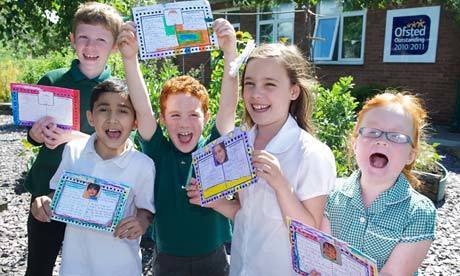
By Tabitha Smith "A one-page profile is exactly what it says on the tin. It's one page of information which has three questions. What do others like and admire about you? What is important to you? And what support do you need? We started using one-page profiles at our school four years ago because we had a year 3 class that wasn't gelling well and I wanted to find a way for the children to get to know one another, and to learn more about themselves, too. The children gather information for the answer to the first question on the profile from their friends and families. It's fun and very good for self-esteem. The other two questions are completed by children and parents, working as a team. "The pilot worked so well that we soon found ourselves introducing one page profiles across whole year groups and then across the whole school. Then we introduced them for staff, too, as an aid to career development. The idea for one-page profiles actually came from one of our parents here in Stockport. Helen Sanderson is a former government advisor and expert on person-centred thinking. Helen had been developing detailed personal profiles for use in health and social care. She recognised that these profiles would help teachers get to know children, too, but they would need to be much simpler to work in schools – hence they became one-page profiles." Via The Accomplished Teacher SmartBrief
|