



Archive of many, many presentations from Unity conferences from 2007-2015. Unity is, by far, the most frequently used software to develop games and VR.

 Your new post is loading... Your new post is loading...
 Scoop.it!
Archive of many, many presentations from Unity conferences from 2007-2015. Unity is, by far, the most frequently used software to develop games and VR. 
No comment yet.
Sign up to comment
Scoop.it!
Designing interactive/narrative experiences for mixed reality is unlike any other medium, and understanding what works and what doesn’t work has been an interesting path. Classic console and video games do not necessarily translate well, and the exciting opportunity for an entirely new form of entertainment seems to be at our fingertips. Graeme Devine here discusses the thought process at Magic Leap and what the road travelled thus far has taught him.
Scoop.it!
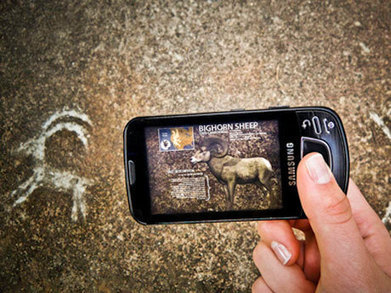
Most people who interact with AR for the first time have a mind-blowing experience but fail to consider classroom applications. In our elementary school classrooms, we use AR to create active learning experiences hitherto inconceivable, and in the process redefine the learning space! Via Nik Peachey, Hee-kyung Kim, Educational Peaks

Dp Chaigneau's curator insight,
November 8, 2013 5:58 PM
Pensando en como unir realidad aumenetada y la formación de usuarios en la biblioteca

Marlo Payne Thurman's curator insight,
November 17, 2013 4:03 PM
Augmeted Reality... huge classroom potential. 
Catherine Pascal's curator insight,
February 28, 2014 9:06 AM
;-) cf "homme augmenté" Georges Balandier
Scoop.it!

"As captivating as it is well designed, this unique website provides an interactive and cinematic experience that details the stages of invention, popularity, public disenchantment, and the eventual rebirth of the chemistry set. We love that users are kept engaged throughout the entire experience, progressing through the timeline by completing brief games and activities. Brimming with interesting facts, images, and quotations, this resource can be considered among the best examples of digital humanities for its use of digital tools and technologies to highlight the historical, cultural, and scientific facets behind this now iconic artifact.
"Have you ever wondered about the origins of the chemistry set or its evolution from the Young Chemists Pocket Companion of 1797 to the modern kits we know today? Stinks, Bangs and Booms answers those questions and more as it traces the rise and fall of the American chemistry set through four interactive chapters: Inception (1791), Heyday (1920-1960), The Decline (1960-1979), and The Resurgence (1980-Today). The engaging online interface was created by Bluecadet and draws upon the plentiful research and archival material of the Chemical Heritage Foundation. Interactive elements and mini-games keep readers interested and users have the opportunity to delve a little deeper or move on to the next section. One particularly interesting activity, featured in the Heyday chapter, includes listening to the short oral histories of professors, business leaders, and others as they remember their first chemistry sets. While most site visitors will be intrigued by the American chemistry set's colorful history, educators and librarians are sure to find many exciting uses for this amazing website."
Scoop.it!

Sketchfab now has native apps for HTC Vive, Oculus Rift, Gear VR, and Google Cardboard on iOS and Android, as well as preliminary WebVR support - see our VR page. This is the place for all related product updates and questions!
Jim Lerman's insight:
Sketchfab now has a forum. Very versatile product.
Scoop.it!

Dennis is the CEO and Founder of x.ai, whose artificial intelligence driven personal assistant lets people schedule meetings using plain English and nothing more than a CC to amy@x.ai. Founded in 2014, x.ai is backed by blue chip investors, including IA Ventures, Firstmark, and Two Sigma Ventures, and located in New York City.
Scoop.it!

Communication today is faster and more ephemeral than ever. We fire off emails, skip the punctuation in our texts, and watch our photos and messages vanish in seconds on Snapchat.
Scoop.it!

From
medium

Storyboards are commonly used in film, web and game design as a quick, effective way to communicate spatial position, sequence, motion and interaction when you’re trying to pre-visualize a scene. They’ve also been used to frame a scene, but what do you do when there’s no frame?
Scoop.it!
Science House, New York, NY A journalist and entrepreneur, Rita uses the Internet and digital environments to innovate work, education, and outreach. In th Via Jim Lerman
Scoop.it!
Imagination age - Wikipedia, the free encyclopediaThe imagination age is a theoretical period beyond the information age where creativity and imagination will become the primary creators of economic value. This contrasts with the information age where analysis and thinking were the main activities. "The concept holds that technologies like virtual reality, user created content and YouTube will change the way humans interact with each other and how they create economic and social structures. A key concept is that the rise of the immersive virtual reality, the cyberspace or the metaverse will raise the value of imagination work of designers, artists, video makers and actors over rational thinking as a foundation of culture and economics. Via Jim Lerman
Scoop.it!
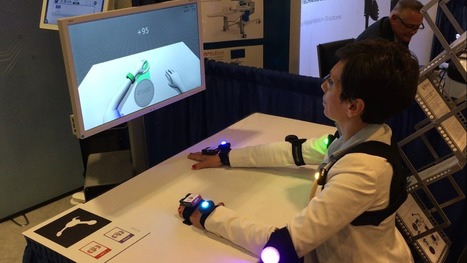
"After a stroke, the earlier the better when it comes to rehab: research has shown the sooner a patient is able to begin the recovery process, their chances improve for regaining lost function. But could virtual-reality rehabilitation promote better success in the real world?
Scoop.it!
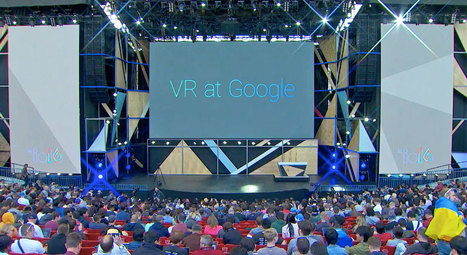
Yesterday, Google announced Daydream, a platform that represents its most serious push yet into VR.
Scoop.it!
Watch the entire Google I/O Keynote here. Some highlights include the new messaging app Allo, the Video conferencing app Duo, the latest in Develope
Jim Lerman's insight:
The full video of the over 2 hour and 8 minute keynote. In the first 11 hours, this video had over 500,000 views.

Jim Lerman's curator insight,
May 19, 2016 4:00 AM
The full video of the over 2 hour and 8 minute keynote. In the first 11 hours, this video had over 500,000 views.
Jim Lerman's curator insight,
May 19, 2016 4:00 AM
The full video of the over 2 hour and 8 minute keynote. In the first 11 hours, this video had over 500,000 views. |
Scoop.it!
This is my FCGP video about wearable technology and its impact on the environment.
Scoop.it!
VR consumer adoption and growth – Is the hype justified?
Scoop.it!
From
medium
Will learner-centred AI be banned from classrooms like smartphones?I was struck by a statement in this promotional video for IBM’s Watson AI technology tha… Via Ana Cristina Pratas
Scoop.it!

How to 3D Sculpt in your Browser (no expensive or complicated software to be downloaded), and then optimise and texture the model using free/opensource software.
Scoop.it!

I’ve long been interested in the potential of 3D virtual worlds for online education so I was delighted when I first found Edorble. I had my own 3D virtual classroom set up within about 5 minutes and was ready to start inviting students and trainee teachers. I think Edorble has huge potential for education, so I was really delighted when Gabe Baker – CEO of Edorble agreed to be interviewed.
Scoop.it!

We are very excited to announce the release of our apps for Virtual Reality – available for Oculus, HTC Vive, Gear VR and Cardboard – as well as initial WebVR support on Sketchfab.
Scoop.it!

By now, you're probably tired of hearing about how virtual reality is the next big thing for movies and games. But here's one you may not have heard yet: that virtual reality could be the next big thing for culinary experiences.
Scoop.it!
Kelsey Ramsden is Canada's Top Female Entrepreneur ranked by Profit and Chatelaine Magazines. In her work she balances venom and virtue, book and stree Via Jim Lerman
Scoop.it!
Rita J. King's lifelong passion for science started in childhood when she first learned about quarks. Today she's Executive Vice President for Busines
Scoop.it!
She thinks of technology as a prism held up to the bright beam of the imagination to create a new global culture and economy. Rita J. King i
Scoop.it!
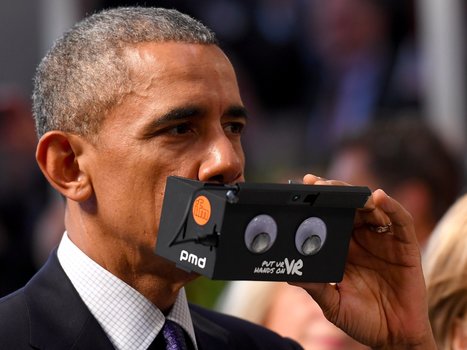
IMAX is getting into the virtual reality business.
Scoop.it!
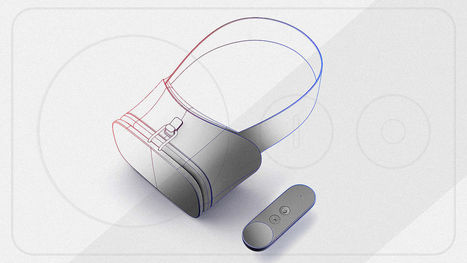
By partnering with manufacturers to build Android phones to a common baseline that can support high fidelity VR, Google was able to design a minimal headset and controller that could serve as a standard to deliver quality VR—without all the cords or gaming PCs.
|





