


From two hours to under twelve minutes, we've distilled, titrated, evaporated and reconstituted Google's annual launch event into something a little bit mor

 Your new post is loading... Your new post is loading...
 Scoop.it!
From two hours to under twelve minutes, we've distilled, titrated, evaporated and reconstituted Google's annual launch event into something a little bit mor 
No comment yet.
Sign up to comment
Scoop.it!
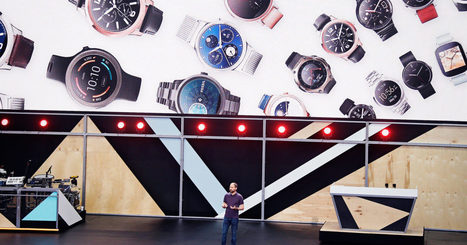
The keynote for Google I/O 2016 just ended, and here's a summary of all the biggest news.
Jim Lerman's insight:
I wish there was more detail about the VR announcement, but this teaser is really tantalizing. This summary is about 2.5 minutes.

Jim Lerman's curator insight,
May 19, 2016 3:31 AM
Written notes, or if you're too lazy, a nice video that captures it all in a couple of minutes. Lots and lots of cool stuff..."coming this fall." The crowd shot in the beginning of the video is quite impressive.
Scoop.it!

From
uxdesign

Virtual reality is emerging as a new medium with the potential of having as strong an impact as radio or television did in the past century. We have the opportunity to build the foundations of interface, experience and interaction design specific for this medium without taking already existing solutions for granted.
Scoop.it!
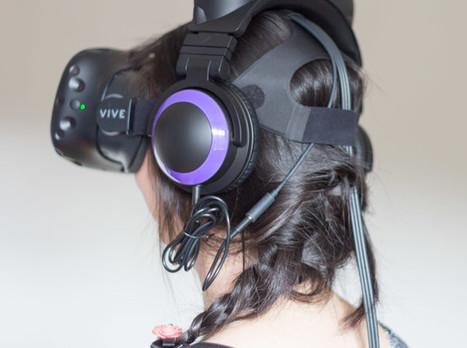
"If you can afford the headset and the inevitable PC upgrade required, you won’t regret buying an HTC Vive. Gaming – computing even – has changed forever. Our verdict of the HTC Vive: 10/10"
Scoop.it!

There is a world of enormous educational potential with video games. Highly acclaimed simulation and tutorial games such as SimCity and Math Blaster have been continuously employed in elementary schools across the country, but the most common software used in education today is the web, word processors and spreadsheets. Via John Evans

Ricard Garcia's curator insight,
May 14, 2016 9:59 AM
Needless to say, VR is something educators must be familiar with!

Ricardo Mendoza's curator insight,
September 19, 2021 9:16 PM
Video games are not just for entertainment purposes, they are also a great form of educational purposes. Virtual reality allows the person to feel they are really there, this is a revolution that will happen in education in the near future. The VR education phenomenon is growing, with programs such as Alchemy VR and EON Reality, as well as with big corporations like Google.
Scoop.it!

2016 will come to be known as the year of VR. This year, three virtual reality headsets will be released commercially, with the Oculus Rift, the Vive HTC, and Sony’s Playstation VR bringing virtual reality and immersive experiences such as my trip to Tehran to the mass market.
Scoop.it!

In a series of videos on the live-streaming app Periscope, she said that her name was Océane, that she was 19 and that she worked in a retirement home. Seated on a couch, she smoked cigarettes, played with her cat, and showed off her tattoos: a rose on her left forearm, a small heart on her right thumb. She engaged with Periscope followers, who asked about her life and her hobbies.
Scoop.it!
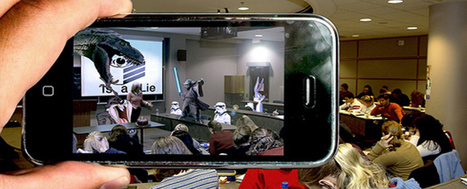
8 great apps and resourses for getting started with AR in the classroom. Well worth reading and trying out.
Scoop.it!
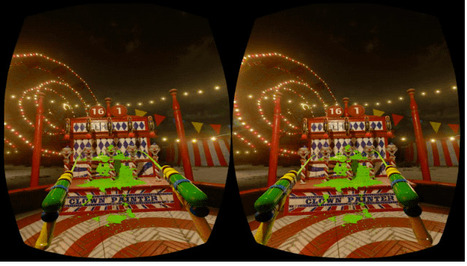
Tonight at NVIDIA's event in Texas, the company showed off some new tools that should help developers make VR experiences even more realistic. CEO Jen-Hsun Huang said its VR Works suite of APIs is getting a "major" upgrade, with the ability to connect haptic controllers to its PhysX physics engine for more realistic feedback, and the "world's first real time physically modeled acoustic simulator." As he described it, the audio engine works on top of the optics API to help it match what you can see. Sight, sound, physics and touch are all enhanced with its new Pascal-based GPUs, and NVIDIA says game developers are already working on implementing the new effects.
Scoop.it!

Rob Morgan is the writer of The Assembly, and he spoke last year at GDC about narrative design in VR and the Via mirmilla, Jim Lerman
Scoop.it!
From
vimeo
Established in 2008, the NYU Game Center is part of NYU's Tisch School of the Arts. We celebrate games as a creative practice, and offer MFA and BFA degrees, as well as public programs on the design, production, and study of games as an aesthetic and cultural form. It is part of our mission to establish New York City as a center of innovation in this important field.
Jim Lerman's insight:
Over 110 videos by and about games and gamers, from one of the East Coast's leading centers of game development activity.
Scoop.it!

"HTC held a conference in Beijing, China on April 26 to announce the formation of a new Accelerator Program for the HTC Vive, which includes a San Francisco location.
Scoop.it!
From
medium
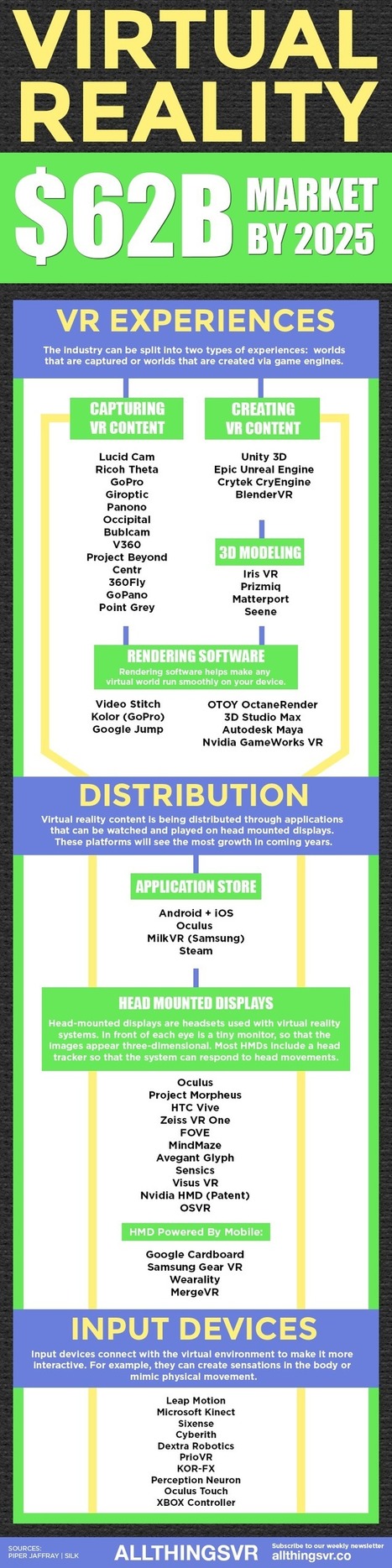
In an industry that is still in a research & development phase, it’s a jumble of big names and new players laying the foundation for the future of VR. Piper Jaffray calls the current state of virtual reality “similar to the state of mobile phones 15 years ago” and that it “will likely take a decade” to truly hit “mainstream”.
Jim Lerman's insight:
Near the bottom of this article is a link to take readers to a version of the infographic that contains links to all the companies and products mentioned.
|
Scoop.it!
Google might be making waves with its low-cost Cardboard virtual reality headset, but that was 2014. Daydream is now. Daydream is hardware and software bake
Jim Lerman's insight:
Slightly more detail on Google's VR announcements
Scoop.it!

When an industry is nascent, it’s hard to dream big. But that doesn’t mean time and resources shouldn’t be dedicated to doing it anyway.
Scoop.it!
We know how to help kids develop into powerful learners. Now, we just need to make that happen in schools. Via Jim Lerman
Jim Lerman's curator insight,
May 15, 2016 12:23 PM
Richardson has lived on the cutting edge of what I'll call "authentic" education for a long time and his books and presentations never fail to challenge, agitate...and offer a view toward successful outcomes. This presentation, from Nov. 2015, is one of a long line that will likely stimulate, engage, and hopefully, motivate you.
Scoop.it!
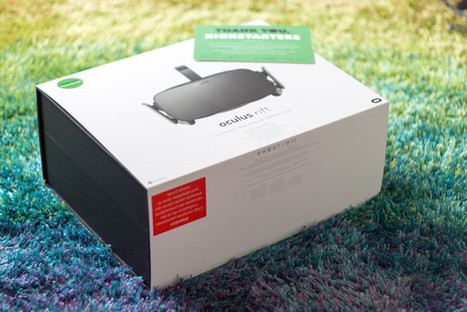
Stunning visuals and ergonomic design make the Oculus Rift an easy winner for some types of games, but the lack of tracked controllers leaves us with a disappointing launch line-up. Our verdict of the Oculus Rift: 9/10
Scoop.it!
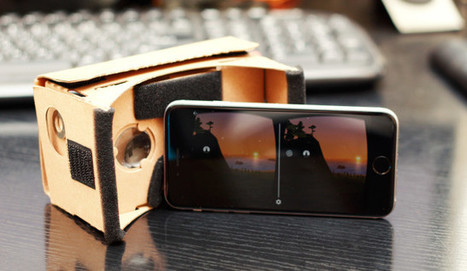
You don't need to spend a few thousand dollars to experience virtual reality when you can use technology you already own instead. Via Nik Peachey, John Evans

Viljenka Savli (http://www2.arnes.si/~sopvsavl/)'s curator insight,
May 22, 2016 8:11 AM
an interesting list with useful tips for VR...
Scoop.it!

Google is moving beyond Cardboard.
Scoop.it!
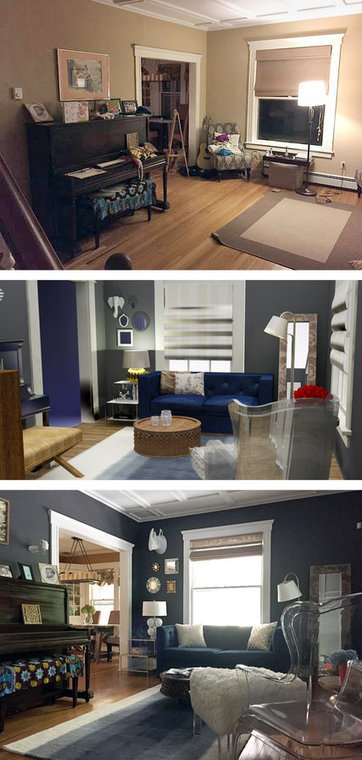
Interior design projects that don’t go well, or don’t happen at all, tend to have one thing in common: a failure of vision. You may fail to envision what you want, and do nothing. Or your vision, when completed, fails to match your fantasy. You live surrounded by your regret or spend even more to fix it.
Scoop.it!

Although virtual reality (VR) and augmented reality (AR) have existed in some form for decades, only recently have they garnered mainstream attention. Via Pedro Sosa, Stephania Savva, Ph.D
Scoop.it!
Jim Lerman's curator insight,
May 8, 2016 12:00 PM
Wonderful and inspiring piece. Share this with someone.
Scoop.it!

Swiss startup MindMaze has raised $100 million in funding to create virtual reality hardware and software to provide clinical treatments for stroke victims.
Scoop.it!

VR was everywhere at the Tribeca FilmFest, where the standouts were animation productions, not video. Expect more, not necessarily better, as headsets spread.
Scoop.it!

"The newspaper also is launching six new video series that will cover everything from the Olympics to how music is made.
|








A somewhat longer summary