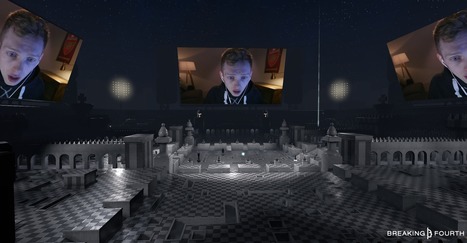
Adding in height and size mapping, Dimensional makes the player feel truly transported into the experience. He or she can duck, peer, and move around in the grid to overcome obstacles in the map. To actually move through the map, it’s as simple as pointing and clicking to transport your grid, and yourself, to a new section of the level—as though you were a chess piece moving with your square.
Hoping to include breathing and dynamic sound registry, as well as rendered corporeal elements, Jackson aims to create a game that responds to the player’s presence—an interactive world as much as an immersive one. To bring the self into an experience is a massive step from being surrounded by one, and should Dimensional be successful, we might be witnessing the future of VR.
I recently interviewed Jackson about his game and the technology and techniques behind it. In Dimensional, we find an approach to storytelling that focuses on the player’s role in the experience that goes beyond the visual. By creating a malleable and responsive environment, Jackson generates a story that feels more lived than viewed.
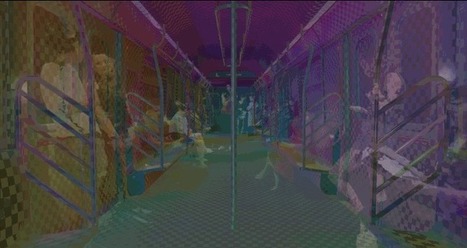
"Specular, a creative studio known for working with emerging technologies, is about to launch a new VR experience called Blackout that explores the inner thoughts of passengers on MTA transit. Viewers don an Oculus Rift headset or Google Cardboard and are transported to a stalled subway car underground. Looking around the car, they can selectively listen in on the other passengers’ thoughts. Part video game and part documentary, Blackout allows viewers to not only ponder the inner worlds of the people around them but also begin to empathize with them.
Blackout is made with DepthKit, a VR filming technique invented by Specular that captures live-action 3D models of real people. It’s powered by the depth sensors that are usually found in video-game controllers, and the models it creates can be inserted into virtual space and viewed from all angles. As Specular claims, “When a virtual reality film is made with DepthKit, it’s like a movie colliding with a video game.”
In virtual reality, you are at the center of every story. Saschka Unseld, head of Oculus Story Studio, wants to keep you there, experiencing virtual worlds directly, with characters who interact with you in real time. You read a book and you watch a film, but in virtual reality, you experience a story. It’s told through your senses, and Unseld and his team are now discovering what that means—how characters should react to you, how to make your experience interactive and responsive. It’s a learning curve that’s just beginning—built on a heritage of storytelling but breaking down the fourth wall in a new way.
IMAX, one company that has more than done its part to push cinema technology forward, is preparing to toss its hat into the virtual reality ring with a set of new initiatives.
Following Google I/O, the firm revealed its plan to develop the IMAX VR camera, “a cinema-grade virtual reality (VR) camera” that will enable producers to shoot 360 degree, 3D content. The cinema tech giant is working with Google on the project, which will use its Jump platform and is expected to take 18 months to be developed. Given the specs, it’ll be an industry camera that isn’t for consumers — unless you want to part with serious amounts of cash.
Beyond that, IMAX said also that it will provide Google with existing cinematic footage for conversion into VR content.
Aside from bringing VR footage to screens, IMAX is also looking to bring VR screens to people. The firm is working to introduce “VR experiences” in malls and other public places, according to the Wall Street Journal. In other words, places where anyone can get access to a VR headset to play games or watch videos.
"...the existence of a unique link between the mind of the creator and the mind of the viewer. It appears to be very specific to this medium and something that could have never existed until presence became a factor.
"But as unique as this is to VR, the best person I’ve found to describe what’s going on here is the great Walter Murch who — twenty years ago — eloquently honed in on an editor’s role in traditional cinema. Oh, the irony.
"Your job (as an editor) is partly to anticipate, partly to control the thought processes of the audience. To give them what they want and/or what they need just before they have to “ask” for it — to be surprising yet self-evident at the same time. If you are too far behind or ahead of them, you create problems, but if you are right with them, leading them ever so slightly, the flow of events feels natural and exciting at the same time. (pg. 69)
"Editing has always been so much more than just cutting out all the bad stuff. More than just slapping stuff together. Editing harnesses the power of discovery. It’s a craft that celebrates the paths our minds choose to take, the psychologically interesting, complex and ‘correct’; patterns that reflect the kinds of shifts of attention and realization that go on in real life (pg. 67). There is significant potential here — and we’ll explore this in the series of blog posts to come."
Brillhart is leading Google's foray into VR at the present time. This is an early post (Jan. 2016) in a series on Medium in which she explores the theory and technique of communicating effectively via VR. This should prove quite interesting and instructive.
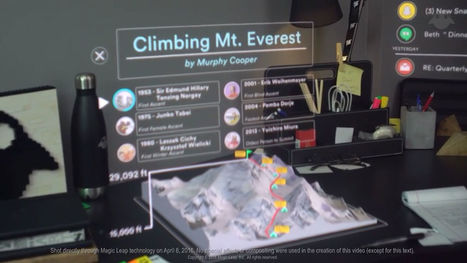
Magic Leap is suing two former employees for breach of contract, alleging the former vice presidents violated intellectual property agreements and misappropriated trade secrets.
According to an Associated Press article, the two defendants in the case, Gary Bradski and Adrian Kaehler, sued the company for wrongful termination earlier this week. According to the complaint filed against Bradski and Kaehler, they both joined Florida-based Magic Leap in late 2013, a year before a massive fundraising round led by Google.
On May 3rd, I hosted a panel full of experts from the education and healthcare industries at the Upload Collective. The panel (recorded at the top of this article) was so rich with thoughts, it can take some time for everything to sink in. It’s important that people should never stop learning new things, so I’ve put together 7 valuable lessons I learned from that panel.
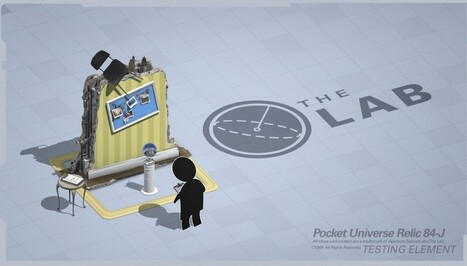
Valve have released the Unity based renderer for its superb VR experience collection The Lab in an effort to encourage adoption of what it sees as optimal rendering techniques for VR experiences.
Although many probably assumed that Valve’s collection of VR experiences, known as The Lab, released to the public just in time for the launch of the HTC Vive, would use the firms in-house developed 3D engine Source 2, it seems that the majority of experiences were actually built using the hugely popular Unity engine (with one notable Robot related exception).
Valve, recognising the popularity of the Unity 3D game engine among virtual reality developers, decided to release their high performance rendering engine which implements techniques developed by them to “provide the highest fidelity experience with the best performance,” for free, to the Unity asset store for developers to learn from and implement. The move was announced by Valve’s Chet Faliszek at Unite Europe in Amsterdam yesterday.
How can we help making become more equitable and inclusive? How can maker ed embrace traditional technology, including computer science? What are the benefits of a maker education, and how do we measure them? In this guide, we hope you’ll find answers to—or at least ideas about—these and other questions that explore the meaning of making.
We’ve also included tips and techniques for building and funding your maker program and honing your maker skills. You’ll learn how to do a lot with a little, and find inspiration for what’s possible—in a school district, college library, even on a bus. For those of you who’ve never been to a maker event—we’ve brought one to you. And if you’re an experienced maker educator ready to up your game, check out our roster of professional development opportunities.
Over the next six months, it’s imperative that all of the major VR platforms give us an opportunity to share who we really are with each other. While counterintuitive, sharing social content today helps reveal to ourselves who we might be deep down inside. I’m craving the ability to share short 360 videos from my social VR sessions with my real life friends on Facebook, Instagram, and Snapchat. They will see a ‘new me’ as an avatar, but an avatar with my soul, my sense of humor, and my (many) flaws.
It’s easy to talk about creating use-cases, but it’s tough to actually execute. The social VR companies have their work cut out. If I was starting a rival social VR platform today, I would immediately:
Use real-life identity Create content sharing features (video, image, and sound) Create VR forums around identity and emotion-inspiring issues Focus on pre-established friend-links
Thoughtful piece, ruminating on how to make VR more social so it will "take off." Some very good ideas here...and don't miss the comments; there are good ideas there too.
"Startup Rivet streams gigs from New York’s Blue Note Jazz Club in 360-degree virtual reality. Now, it’s bringing those services to iOS devices (and Androids too, eventually)."
Two creators making a name for them selves in this burgeoning landscape of Virtual Reality filmmaking are Félix Lajeunesse and Paul Raphael, or most commonly referred to as just Félix and Paul of Félix and Paul Studios, based in Montreal. We were fortunate enough to have them at FoST this year, where we premiered their “Samsung Gear VR Introduction to VR” and showed their project “Strangers with Patrick Watson” in the Story Arcade exhibit. Viewers were immersed in worlds that ranged from the relaxed living room of a famous Canadian musician named Patrick Watson, spending time with a family inside of a Mongolian Yurt, as well as on stage with the Cirque du Soleil troupe.
In addition to showcasing their work at FoST, Félix and Paul taught a workshop in Virtual Reality Storytelling to a handful of lucky attendees. As this is a brand new medium for content creation, Félix and Paul believe that VR should be approached from a completely new lens, rather than repurposing techniques from traditional filmmaking. Based on what we’ve seen, we think they’re on to something. We’ve included the 4 big take-aways from the virtual duo on their explorations into Virtual Reality storytelling below.
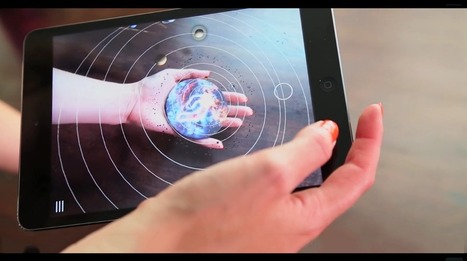
We understand our world through stories. That layer of narrative locks in our experiences, teaching us to remember what we’ve observed. Gaia Dempsey, through her work at DAQRI, has learned that augmented reality doesn’t change that—it just emphasizes it. By applying digital information over the real world, augmented reality allows us to break up what we see into new spaces and interact with them in a new way. Imagine looking at a toolbox and seeing a floating explanation of every tool inside it; or a complex panel of controls overlaid with instructions for exactly how to interact with it, step by step. It’s an incredible new way to learn, to communicate, and to engage.
With tap dancer Michela Marino Lerman, vocalist Vuyo Sotashe, vibraphonist Joel Ross, guitarist Gabe Schnider, bassists Russell Hall (6/7-6/10) and Chris Smith (6/11), saxphonist and clarinetist Patrick Bartley (6/9-6/11), and drummer Kyle Poole
Tuesday-Saturday evenings, doors open at 11:15pm for Late Night Sessions featuring some of the most talented emerging artists in jazz. There are no reservations for Late Night Sessions - just swing by!
One of the things that impressed me most about Ctrl is its lack of a ‘wow’ factor. This isn’t a piece that uses VR spectacle to pull you in. It goes beyond the simple 360 degree format, quickly brushing aside the novelty of being able to look around and stubbornly refusing to use attention-grabbing gimmicks to highlight the freedom you have over perspective. Though this will no doubt be a VR-first for many, the film doesn’t waste the time of experienced viewers. It wants to get right to the heart of VR storytelling.
That said, VR is crucial to just how well the story pulls you in.
"The Brookhaven Experiment's Jarod Pranno recalls a life of creating and the experience of existing in his creation.
"For some, the road to where they are now in virtual reality (VR) is long but those that have developed games and experiences along the way often find that to actually be within something they created can be a powerful feeling. Today’s VR Moments is kindly brought to us by Jarod Pranno, co-founder of Phosphor Studios and project lead on The Brookhaven Experiment.
"It has been a very exciting couple of years seeing virtual reality finally come to fruition, watching countless doors open to new and previously inconceivable computer-generated experiences. Even after playing so many VR demos and games, though, I was not prepared for the overwhelming rush of entering a virtual space that I myself had created."
Brad Herman & Shiraz Akmal recently left DreamWorks Animation to raise $3 million to start SPACES Inc., which is a virtual reality and mixed reality company focusing on storytelling for different brands including Microsoft, NBCUniversal, and The Hettema Group. Brad founded the DreamLab at DreamWorks in order to focus on developing content for mobile and cutting edge immersive technologies like VR, and so he’s been intimately involved with exploring storytelling in VR for the past couple of years. I had a chance to catch up with him at SVVR 2016, where he shared his thoughts about storytelling in VR and mixed reality, how to deal with non-compliant users, how he thinks that VR differs from film & broadway, and one of their first mixed reality projects of Big Blue Bubble’s My Singing Monsters.
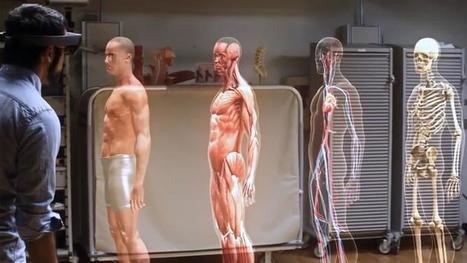
Case Western Reserve Medical School teamed up with Microsoft to test a new technology that might change the way medical students learn human anatomy. When they replaced cadavers with virtual reality headsets, students were able to learn about the human body in ways never before experienced.
The virtual reality headsets, called HoloLenses, display interactive holograms of the human body. While viewing these holograms, students can separate the skeletal system from the muscular, zoom in on each vein in the cardiovascular system, and even focus on individual organs. The holograms can provide labels for each part of the body, allowing students still in the process of learning names of bones and muscles some extra practice. Students and professors can view and interact with the same hologram while wearing different headsets, allowing for an innovative, shared educational experience. With this device, the medical school classroom could take on a new dimension.
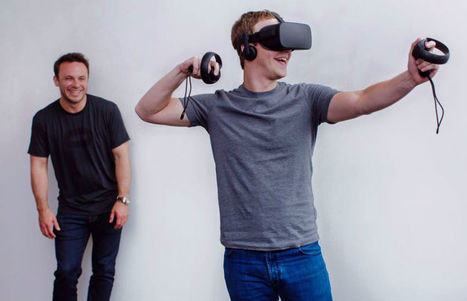
"Facebook has acquired virtual reality audio company Two Big Ears, and it’s using its platform to promote high-quality VR audio. The acquisition, reported by VentureBeat, means that Facebook is rereleasing Two Big Ears’ “Spatial Workstation” software as the Facebook 360 Spatial Workstation, currently available here. According to a statement on the site, the software is supposed to “make VR audio succeed across all devices and platforms,” and Two Big Ears developers will keep working on it alongside employees from Oculus, which is also owned by Facebook.
"First released last fall, the original Spatial Workstation was a platform for mixing audio that sounded realistically three-dimensional. Spatial sound is a big deal for anyone working in virtual reality, and Oculus has been working on it for some time. But unlike several other VR-related acquisitions, this one is clearly being made by Facebook and not Oculus — the program is branded as a Facebook product, and it’s clearly about 360-degree video as well as VR."
To get content containing either thought or leadership enter:
To get content containing both thought and leadership enter:
To get content containing the expression thought leadership enter:
You can enter several keywords and you can refine them whenever you want. Our suggestion engine uses more signals but entering a few keywords here will rapidly give you great content to curate.


 Your new post is loading...