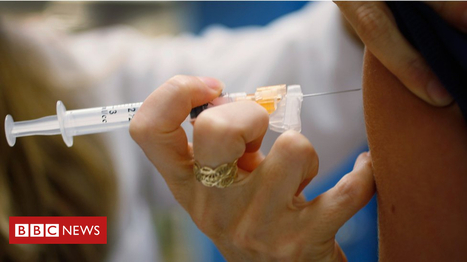
Since the development of the human papillomavirus vaccine, many countries have created implementation programs to bolster vaccination rates and protect their populations. Despite demonstrated efficacy with decreased human papillomavirus–related disease abroad, the vaccine's potential to prevent...
The risk of Congo's latest Ebola outbreak spreading is 'very low' because of the remote area, a Congolese disease expert said Wednesday as medical teams arrived on the scene.
Vaccination is considered as an effective and economical way to against PCV2 infection. However, some of commercial available vaccines are based on inactivated viruses, while the others are based on purified protein of PCV2.
The question has been asked in literally hundreds of real scientific articles, and the answer keeps coming back that there is no link. But that doesn't stop one after another anti-vaccine pseudoscientist coming forward with pathetic evidence to try to "prove" that vaccines cause autism.
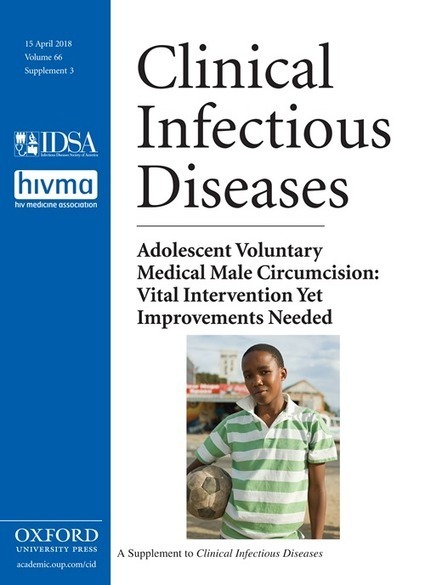
Our new study published in the International Journal of Men’s Health showed that circumcised men have a 4.5 times greater chance of suffering from erectile dysfunction (ED) than intact men, revealing what appears to be a significant acquisition...
The CRISPR/Cas9 system is an efficient genome-editing platform for diverse eukaryotic species, including plants. Recent work harnessed CRISPR/Cas9 technology to engineer resistance to geminiviruses. Here, we discuss opportunities, emerging developments, and potential pitfalls for using this...
The World Health Organisation on Thursday said Sanofi's vaccine against dengue should only be used after testing individuals to assess whether they could have been exposed before to the infection.
The Zika virus crisis exemplified the risk associated with emerging pathogens and was a reminder that preparedness for the worst-case scenario, although challenging, is needed. Herein, we review all data reported during the unexpected emergence of Zika virus in French Polynesia in late 2013. We focus on the new findings reported during this outbreak, especially the first description of severe neurological complications in adults and the retrospective description of CNS malformations in neonates, the isolation of Zika virus in semen, the potential for blood-transfusion transmission, mother-to-child transmission, and the development of new diagnostic assays. We describe the effect of this outbreak on health systems, the implementation of vector-borne control strategies, and the line of communication used to alert the international community of the new risk associated with Zika virus. This outbreak highlighted the need for careful monitoring of all unexpected events that occur during an emergence, to implement surveillance and research programmes in parallel to management of cases, and to be prepared to the worst-case scenario.
Scientists are edging closer to a long-term preventative HIV vaccine, new research suggests.A single injection protected monkeys against a version of the vir...
Previous studies have shown that Merck & Co.’s Ebola vaccine can act fast in human bodies and maintain an antibody response for at least one year. Now, a new study pushes that estimate to two years or more.
The influenza season in South Africa occurs in the winter months and is expected to start in the coming weeks. On average the season begins in the first week of June. However, in past years; the season has started as early as the last week of April and as late as the first week of July. A severe influenza season was experienced in the United States of America and Europe in the winter of 2017-2018. A severe season elsewhere in the world does not mean that South Africa will necessarily experience a severe season in 2018. The severity of a season is due to a combination of factors including the circulating influenza strains, previous immunity in the population and spectrum of underlying illnesses and age distribution of the population. The NICD monitors the progression and severity of the influenza season through its surveillance sites throughout the country to provide real time information on season progression. Annual influenza epidemics result in an estimated three to five million cases of severe illness, and about 290 000-650 000 deaths globally. In South Africa, influenza (commonly known as flu) kills between 6000-11,000 people every year. About half of these deaths are in the elderly, and about 30% in HIV-infected people. The highest rates of hospitalization are in the elderly (65 years and older), HIV-infected people and children less than 5 years old. Pregnant women are also at increased risk of hospitalization and death from flu infections. People with chronic illnesses like diabetes, lung disease, tuberculosis and heart disease are also at increased risk of being hospitalized from the flu. During the flu season in South Africa about 8-10% of patients hospitalized for pneumonia and 25% of patients with flu-like illness (fever and cough) will test positive for influenza. Vaccination is the most effective strategy to prevent influenza. Getting the flu vaccine can reduce flu illnesses, visits to the clinics or to doctors rooms, missed work and school due to flu, as well as prevent flu-related hospitalizations. Vaccinating people with higher risk of severe flu directly protects them from flu infections. Vaccinating pregnant women has been shown to provide protection to both mother and baby during the flu season. HIV-infected adults without severely weakened immune systems also respond well to the vaccine. Vaccination is also recommended for individuals aged >=65 years and individuals with chronic illnesses like diabetes, lung disease, tuberculosis and heart disease. Influenza vaccine for the 2018 season is currently available at public health facilities and at pharmacies. Since it takes about two weeks after vaccination for protective antibodies to develop, it is recommended that people get vaccinated as soon as possible to ensure that they are protected before influenza season starts. The best time to get the flu vaccine is before the season starts (March-June) but getting it later will protect individuals during the rest of the season. Because influenza viruses are constantly changing and immunity from vaccine lasts for about a year, it is necessary to get vaccinated each year before the influenza season. The influenza vaccine that is licensed for use in South Africa covers three of the common influenza strains (influenza A(H3N2), influenza B and influenza A(H1N1)pdm 09). Based on the information on the influenza strains that were circulating during the 2017 Southern Hemisphere influenza season, the 2018 vaccine for the Southern Hemisphere has been changed (changes in influenza B and influenza A(H3N2) component of the vaccine). This means that the vaccine for the 2018 in South Africa will be different from the one which was used in the Northern Hemisphere for 2017/2018 season and the Southern Hemisphere 2017 influenza season. It is also essential to practice good hygiene by properly and frequently washing hands and protecting coughs and sneezes (coughing or sneezing into a tissue or an elbow) to help prevent the spread of seasonal influenza. People who have flu-like symptoms should stay at home to avoid infecting others. Detailed recommendations on target groups, dosages and contraindications for the 2018 can be accessed at http://www.nicd.ac.za/wp-content/uploads/2017/03/Influenza-guidelines-final_24_05_2017.pdf
New study reports that the Epstein-Barr virus (EBV)—best known for causing mono virus—also increases the risks for some people of developing seven other major diseases.
The history of one fake HPV vaccine researcher after another permeates the anti-vaccine religion – it is legendary. We have the multiple-retracted authors, Shaw and Tomljenovic who think that the HPV vaccine is dangerous.
11 Likes, 3 Comments - Smokin Joe Mekhael (@smokinjoemekhael) on Instagram: “I will lead another ANTI-VACCINE ANTI-CHEMTRAIL PRO-FREEDOM RALLY in Newtown on Saturday and my…”...
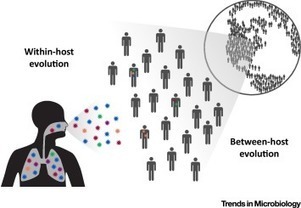
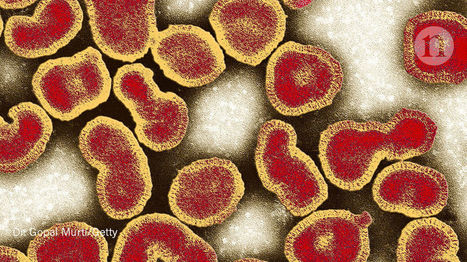
The rapid global evolution of influenza virus begins with mutations that arise de novo in individual infections, but little is known about how evolution occurs within hosts. We review recent progress in understanding how and why influenza viruses evolve within human hosts.
Current influenza vaccines predominantly produce antibodies targeting the viral hemagglutinin (HA). However, during natural infection, the body also produces antibodies targeting the viral neuraminidase (NA).
Malawi, which has one of the highest rates of the deadly HIV/AIDS infections, is on course to eradicate the virus, Jay Levy who co-discovered the AIDS virus 35 years ago said.
What if refilling a prescription was as easy as withdrawing money from an ATM? A South African tech company wants to make that possible. Its innovation, the Pharmacy Dispensing Unit, is being tested in Johannesburg, and health experts say it could provide a strong boost for the fight against...
As the HIV/AIDS epidemic becomes a major problem in Johannesburg, picking up medication at pharmacies has become an all day process. In an attempt to make it easier, an ATM that dispenses medication has been created. The video discusses that this not only makes picking up easier, but it allows patients to have more time to do other things.
Abstract.We predict vaccine efficacy with a measure of antigenic distance between influenza A(H3N2) and candidate vaccine viruses based on amino acid substitu...
HELP US TRANSFORM THE LIVES OF FAMILIES AFFECTED BY THE ZIKA VIRUS... WHAT? Zika hit the headlines in 2015 as the newest tropical borne viral infection, while adults don't usually suffer severe after effects, the implications for pregnant women and their newborn babies are life-changing.
Spending on HIV/AIDS globally between 2000 and 2015 totaled more than half a trillion dollars, according to a new scientific study, the first comprehensive analysis of funding for the disease.
To get content containing either thought or leadership enter:
To get content containing both thought and leadership enter:
To get content containing the expression thought leadership enter:
You can enter several keywords and you can refine them whenever you want. Our suggestion engine uses more signals but entering a few keywords here will rapidly give you great content to curate.


 Your new post is loading...