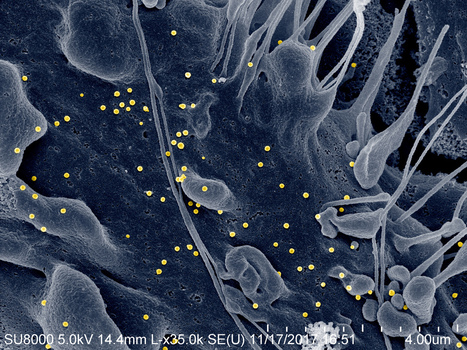
A research team led by UCL and Erasmus University has found a missing piece to the puzzle of why the virus that causes chickenpox and shingles can remain dormant for decades in human cells.
It's been almost 30 years since Salt-N-Pepa implored Americans to set their puritanical misgivings aside and talk about sex, and yet we still struggle with the subject; that fact is abundantly clear when you consider national HPV vaccination rates.
Background. Bleeding from the popular clean-shave ‘chiskop’ haircut was recently reported as prevalent in South Africa (SA), a country with 6.9 million HIV-infected people.
Objectives. To investigate the prevalence of barber hair clipper contamination with blood and HIV and hepatitis B viruses.
Methods. Fifty barbers from three townships in Cape Town, SA, were invited to participate. One clipper from each barber was collected immediately after it had been used for a clean-shave haircut. Each clipper was rinsed with phosphate-buffered saline and then submerged in viral medium. The polymerase chain reaction (PCR) was used to identify the blood-specific RNA marker haemoglobin beta (HBB), hepatitis B virus (HBV) and HIV.
Results. The clean-shave haircut was the most common haircut requested by clients (78%). Of the clippers collected, 42% were positive for HBB, confirming detection of blood, none were positive for HIV, and 4 (8%) were positive for HBV. Two clippers (clippers 16 and 20) were positive on qualitative HBV PCR. HBV DNA from clipper 16 clustered with genotype A sequences from SA, India, Brazil and Martinique, while clipper 20 clustered with SA genotype D sequences. The clipper 20 sequence was identical to a subtype D sequence (GenBank accession AY233291) from Gauteng, SA.
Conclusions. This study confirms that there is significant contamination of barber hair clippers with blood and blood-borne viruses. Hepatitis B was detected with enough DNA copies to pose a risk of transmitting infection. Although HIV was not detected in this small study, the risk of transmission should be quantified. Further studies to investigate barber clipper sterilisation practices and whether the clean-shave hairstyle is an independent risk factor for HIV, HBV and hepatitis C virus infections are warranted. Public education on individual clipper ownership (as is the case with a toothbrush) should be advocated for clean-shave and blade-fade haircuts.
Author summary Some HIV-infected individuals develop antibodies that are capable of neutralizing the majority of HIV strains, a highly desirable function mediated by the antibody Fab portion. While antibodies elicited by current vaccines have failed to recreate this activity, the partial protection seen in the RV144 vaccine trial has been attributed to antibody Fc-mediated effector functions such as cell killing. In this study, we found that HIV-infected individuals who show a diversified and potent Fc response early in infection were more likely to develop broadly neutralizing antibodies later on. Examination of B cell functions associated with good germinal center activity, provided evidence for a common mechanistic link between the regulation of the Fc and Fab mediated activities in these individuals. Our finding of an Fc effector function profile that arises early and predicts neutralization breadth could be used in the evaluation of vaccine candidates designed to generate neutralizing antibodies. Common immune determinants associated with both Fab and Fc function could furthermore be exploited for vaccine design to harness the full potential of HIV-specific antibodies.
One hundred years ago, an outbreak of influenza spread rapidly across the world, and killed more than 50 million—and possibly as many as 100 million—people within 15 months.
Nathan Geffen - a leading voice in the Treatment Action Campaign and founder of GroundUp - is graduating with a PhD for his work on HIV epidemic simulations.
Geffen’s PhD thesis has two components. “The second bit is technical,” he says. “It’s an analysis of several algorithms that can be used for speeding up and improving the quality of simulations of the HIV epidemic and other sexually transmitted infections [STIs].” He explains that mathematical models of STIs often need to account for the diversity, or heterogeneity, of human sexual behaviour and that microsimulations are a type of model well suited to accounting for this heterogeneity. “The other part of my thesis is about how modelling has influenced policy decisions in the past.” As an example, Geffen describes a longstanding debate about when people living with HIV should start ARV treatment. “Should they start as soon as they have been diagnosed as HIV positive or should they start later, when their CD4 cell count drops below a specific level?” In the past the medical guidelines governing this have fluctuated wildly. According to Geffen the most cited model that influenced these decisions was published in 2009 in The Lancet medical journal. It argued for people to start treatment immediately, with some plausability. But it wasn’t until a 2015 clinical study was completed that it was proved that starting ARVs at the time of diagnosis has the best health outcomes for people living with HIV. “This is an example of how modelling can influence policy. It is a fascinating subject because, in contrast to the ridiculous debate over whether HIV causes AIDS, for example, this was a highly rational debate between experts acting on sound evidence but reaching different views. “It attests to both the limits of modelling and its importance in understanding how something is working,” he says. Geffen’s PhD has already resulted in three papers being published, one with a German collaborator that he met online after posting a blog about his work. “I hope to publish further papers too,” he says, “but now that the PhD is done I am going to take a break to focus my attention on GroundUp, for now at least.”
Twenty years ago in February, an esteemed medical journal published a small study that has become one of the most notorious and damaging pieces of researc
TRANSVAC is an infrastructure project that aims to accelerate the development of effective vaccines urgently needed to address European and global healt
In the future, treating human papillomavirus (HPV) may be done with a microwave system. Tests with the device, a compact and portable applicator developed by Emblation Microwave, are underway and have yielded positive results thus far.
According to HPV experts from the University of Glasgow, it w
The full list of weapons used by bacteria against viruses is not known. A computational approach has uncovered nine previously unidentified antiviral systems, encoded by genes near known defence genes in bacterial genomes.
The article "A cynomolgus macaque model for Crimean–Congo haemorrhagic fever" in Nature Microbiology can be found here: https://rdcu.be/K2BD Crimean-Congo hemorrhagic fever virus: a serious, oftentimes deadly pathogen.
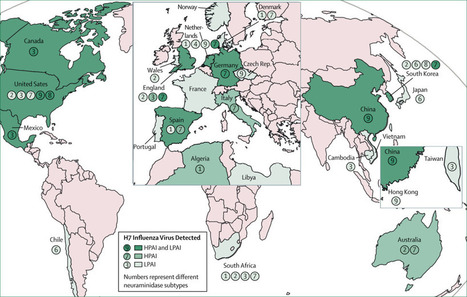
Avian and human influenza A viruses alike have shown a capacity to use the eye as a portal of entry and cause ocular disease in human beings. However, whereas influenza viruses generally represent a respiratory pathogen and only occasionally cause ocular complications, the H7 virus subtype stands alone in possessing an ocular tropism. Clarifying what confers such non-respiratory tropism to a respiratory virus will permit a greater ability to identify, treat, and prevent zoonotic human infection following ocular exposure to influenza viruses; especially those within the H7 subtype, which continue to cause avian epidemics on many continents.
Current influenza vaccines predominantly produce antibodies targeting the viral hemagglutinin (HA). However, during natural infection, the body also produces antibodies targeting the viral neuraminidase (NA). These NA antibodies can provide robust and broad protection and could potentially be elicited prophylactically or via new vaccine strategies or used therapeutically.
Richard Echoku, 54, is one of many HIV-positive Ugandans on second-line antiretroviral treatment, having failed to respond to first-line drugs. “They tested my viral load several times, but it was not suppressing yet I was taking the drugs,” Echoku told The Observer. “However, doctors realized I was not taking my medicine on time especially during stock-outs. Sometimes I could miss getting drugs in hospital for some days,” he said.
Seeing as I have written an ebook on influenza that includes a short history of the 1918 pandemic, I have a rather keen interest in looking up things like case fatality rates, incidences and the like. I have also picked up on a rather worrying discrepancy in oft-quoted figures that just get recirculated without question, in serious and respected publications.
At first, tests were positive for porcine epidemic diarrhea virus. Then something strange happened. The pigs stopped testing positive for that virus — but kept getting sick.
I am presently sitting at a conference where we have just had a session on bats and viruses - and how varied they are, and how prevalent. Here is yet another spillover, due mainly to factory farming - in China, where so many outbreaks have occurred over the years. Time for more surveys, more in depth investigations, more biology...!
To get content containing either thought or leadership enter:
To get content containing both thought and leadership enter:
To get content containing the expression thought leadership enter:
You can enter several keywords and you can refine them whenever you want. Our suggestion engine uses more signals but entering a few keywords here will rapidly give you great content to curate.


 Your new post is loading...
 Scoop.it!