Human papillomaviruses (HPVs) are the causative agents of cervical cancer, the fourth most prevalent cancer in women worldwide. The major capsid protein L1 self-assembles into virus-like particles (VLPs), even in the absence of the minor L2 protein: such VLPs have successfully been used as prophylactic vaccines. There remains a need, however, to develop cheaper vaccines that protect against a wider range of HPV types. The use of the L2 minor capsid protein can potentially address this issue as it has sequence regions conserved across several HPV types, which can elicit cross-neutralising antibodies. Production of HPV VLPs in plants is a viable option to reduce costs; the use of a L1/L2 chimaera which has previously elicited a cross-protective immune response is an option to broaden cross-protection. The objective of this study was to investigate the effect of codon optimisation and of increasing the G+C content of synthetic L1/L2 genes on protein expression in plants. Additionally, we replaced varying portions of the 5’ region of the L1 gene with the wild type (wt) viral sequence to determine the effect of several negative regulatory elements on expression. We showed that GC-rich genes resulted in a 10-fold increase of mRNA levels and three-fold higher accumulation of proteins. However, the highest increase of expression was achieved with a high GC-content human codon-optimised gene, which resulted in a 100-fold increase in mRNA levels and eight- to nine-fold increase i
Hi girls, today I will be talking about the HPV jab given to girls in years 8 and 9. Seriously, it is nothing to be worried about. One second of injection pa...
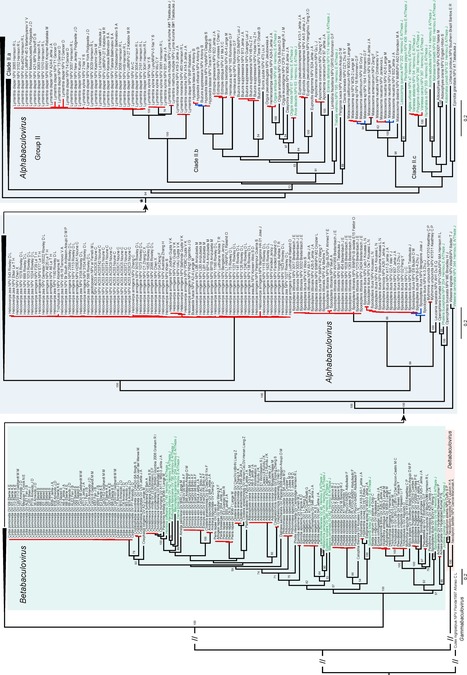
The Baculoviridae, a family of insect-specific large DNA viruses, is widely used in both biotechnology and biological control. Its applied value stems from millions of years of evolution influenced by interactions with their hosts and the environment.
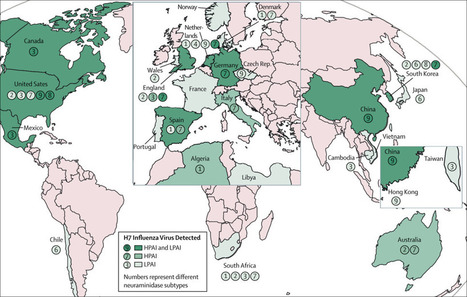
Avian and human influenza A viruses alike have shown a capacity to use the eye as a portal of entry and cause ocular disease in human beings. However, whereas influenza viruses generally represent a respiratory pathogen and only occasionally cause ocular complications, the H7 virus subtype stands...
During 2014-2015, clade 2.3.4.4 H5Nx highly pathogenic (HP) avian influenza A viruses (IAV) were first detected in North America and subsequently caused one of the largest agricultural emergencies in U.S.
HISTORY: Recent evidence has suggested that cottontail rabbits can shed multiple IAV subtypes. We experimentally infected cottontail rabbits with three HP H5Nx IAVs. All rabbits tested shed virus on at least one day by at least one route. Cottontail rabbits appear to be an exception to the limited capacity for replication that has been previously reported for certain other mammalian species inoculated with clade 2.3.4.4 HP H5Nx avian influenza A viruses.
Anal cancer is common in human immunodeficiency virus-infected adults.This randomized trial did not find a benefit from human papillomavirus (HPV) vaccination...
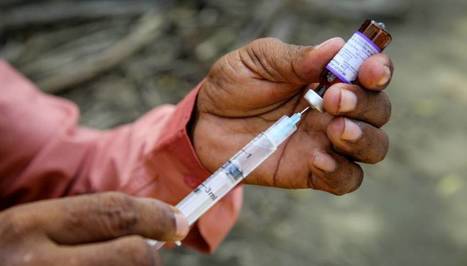
It’s been ten days since Jean René* lost his brother to Ebola virus disease (EVD). "My brother’s wife has come to live with my family," said Jean René, who lives in a community about 20 kilometers north of Mbandaka, the first urban centre in the Democratic Republic of Congo to have confirmed cases of EVD during the current outbreak. Though mourning the loss of his brother, Jean René is comforted because his sister-in-law and the rest of his extended family have received the vaccine against Ebola. Since the family came in contact with a person with Ebola, they are considered at high risk of the disease and have participated in the ring vaccination, which has been taking place in Mbandaka since 21 May 2018. "Ring vaccination is a new and vital tool in the control of Ebola," said Dr Michael Ryan, WHO Assistant Director-General, Emergency Preparedness and Response. "I just spent the day out with the vaccination teams in the community, and for the first time in my experience, I saw hope in the face of Ebola and not terror. This is a major milestone for global public health." The ring vaccination is led by the National Institute of Biomedical Research and the Ministry of Health of the Democratic Republic of the Congo, which is working with a wide range of partners, including WHO, Médecins sans Frontières and UNICEF. Gavi, the Vaccine Alliance, contributed funds towards the operational costs, and through an agreement with Merck, the vaccine developer, helped ensure that 300 000 investigational doses of the vaccine are available in case of an outbreak. The vaccination is being provided to the contacts of confirmed cases, and the contacts of contacts, as well as healthcare workers, front line responders and other people with potential exposure to Ebola. Transfer of Ebola response experience between Guinea and the Democratic Republic of the Congo comes full circle This vaccination effort is also the result of a major collaboration between the Democratic Republic of the Congo and the Republic of Guinea. In 2015, a ring vaccination trial took place in Guinea and found the vaccine to be highly effective against Ebola. Due to the results of the trial, the yet to be licensed rVSV-ZEBOV Ebola vaccine has been approved for ‘compassionate use’ in outbreaks. This means that although the vaccine has not yet been formally approved by a full regulatory process, there is no viable alternative and it has proven sufficiently safe and effective to be recommended for use. Dr Alhassane Toure coordinated the field operations of the Guinea trial, and now he is leading the efforts in the Democratic Republic of the Congo. Guinean authorities gave their approval to loan more than 30 of the country’s health experts to the Democratic Republic of the Congo for the ring vaccination. "I am here to help my brothers and friends in the Democratic Republic of Congo to fight against Ebola," said Dr Alhassane. "Ring vaccination can help stop the spread of the Ebola virus." Dr Alhassane and his team are working with 50 health workers from the Democratic Republic of the Congo to share the expertise they have in ring vaccination. In addition, Dr Ismaila Ibrahima Sani from Niger is coordinating the actions in the field. This transfer of knowledge and cooperation between Guinea and the Democratic Republic of the Congo has now come full circle. "I’m very proud because the Democratic Republic of the Congo sent a team to Guinea the year before last to support Guinea’s fight against Ebola, and now Guinea has sent vaccination experts to help them," said Professor Jean-Jacques Muyembe-Tamfum, Director-General of the National Institute for Biomedical Research. "This is a great example of south-to-south cooperation." Campaign expanding to remote affected areas In the past week, the teams have vaccinated more than 420 eligible people in rings around the four cases of Ebola which have been confirmed in Mbandaka. In addition, the vaccine has been offered to health care workers in the area. "It is possible that there will be new cases confirmed of Ebola in the city," said Ana Maria Henao-Restrepo from the Initiative for Vaccine Research at WHO. "However, it is reassuring to witness that the affected families and communities are accepting our teams and that they have been able to implement ring vaccination." Vaccination has begun in other areas of Equateur Province with confirmed cases of Ebola. On 28 May, ring vaccination began in Bikoro, which is 150 kilometres from the provincial capital. Later this week, vaccinators from Guinea and the Democratic Republic of the Congo are expected to start ring vaccination in Iboko health zone, which is the most remote of the three areas reporting confirmed cases. * name changed to protect privacy
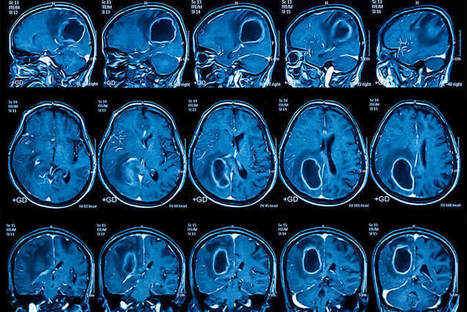
Researchers report a clinical trial of a personalized vaccine that targets glioblastoma brain cancer has successfully improved survival rates for patients.
We have identified and functionally characterized a novel Plasmodium falciparum surface-related antigen (PfSRA) as a potential multistage vaccine candidate.The...
'Vaccine' has an etymology hiding in plain sight: it comes from the fact that the earliest one was derived from cowpox. The Latin word for 'cow' is 'vaccinae,' which was then used for later vaccines of all types.
SEATTLE — June 26, 2018 An HIV vaccine regimen tested in an early-phase clinical trial elicited robust immune responses that appeared to be stronger than those observed in a landmark 2009 study showing that a vaccine can protect people from HIV infection. These findings from the ongoing Phase I/II HVTN 100 study were published on June 10 in Lancet HIV. The trial studied a vaccine regimen designed to improve upon the one used in the 2009 study, the U.S. Military HIV Research Program-led RV144 trial in Thailand, the only study to-date to show protection, albeit modest, in humans. To build on the RV144 findings, the National Institute of Allergy and Infectious Diseases (NIAID) of the National Institutes of Health and the NIAID-funded HIV Vaccines Trials Network (HVTN) joined with other organizations to form the Pox-Protein Public-Private Partnership (P5), a public-private collaboration, to improve upon the potency, breadth and duration of protection seen in RV144. The early results from HVTN 100 show stronger immune responses than some of those recorded in RV144, suggesting the potential for higher levels of protection from the modified vaccine regimen. The vaccine regimen administered in the HVTN 100 trial is based on the RV144 regimen but designed to elicit immune responses to the HIV subtype common in sub-Saharan Africa. In addition, the adjuvant was changed in an effort to improve the immune response to the regimen. Also, an additional vaccination was included at one year in the HVTN 100 trial in an effort to prolong the early protective effect observed in RV144. The trial was chaired by two South African researchers, Professor Linda-Gail Bekker, HVTN 100 Protocol Chair and Dr Fatima Laher, HVTN 100 Co-chair. They collaborated with six South African trial centers to enroll HIV-negative adult volunteers starting in February 2015. Of the 252 people enrolled in the study, 210 received the vaccine regimen and 42 received a salt-water placebo. The researchers followed the volunteers over the years to better understand the immune response to the vaccine. “These early-phase trial results show promise. There was a pre-specified set of immune response criteria to signal whether the regimen should move forward into advanced phase testing or not. Those criteria were met, which is why we are currently conducting HVTN 702, an advanced-phase large-scale trial that seeks to understand if the vaccines can prevent HIV infection in human beings,” explains Bekker, HVTN 100 Protocol Chair. Results from HVTN 100 showed that all volunteers who completed the first four vaccinations developed antibody responses two weeks after the fourth vaccination. Similarly, cellular immune responses were strong. The South African Medical Research Council (SAMRC), one of the partners involved in the study, funded aspects of the immunological studies that were conducted in South Africa. “South Africa is committed to finding a biomedical intervention to prevent HIV transmission. An effective HIV vaccine will be the instrument required to curtail this epidemic,” says Professor Glenda Gray, President and CEO of the SAMRC. The HVTN 100 story continues to unfold “We now know that the vaccine regimen in HVTN 100 can produce strong immune responses early on, but there remains the question of immune durability: Will vaccine-induced immune responses last over time if a fifth vaccination time point is added?” says Laher, HVTN 100 Co-chair. The research team is planning to conclude the HVTN 100 trial this year, and will next report on continued safety, durability, breadth and function of immune responses, and the effects of subsequent boosting vaccinations. “The recent progress in the development of new tools to map the human immune response to vaccination is exciting. The depth of immunity elicited in the HVTN 100 trial is only just beginning to be uncovered. The continued insights from HVTN 100, together with HVTN 702, will provide an opportunity to reveal a full picture of protective immunity,” says Georgia Tomaras, Principal Investigator at the HVTN Laboratory. “The MF59 adjuvant utilized in HVTN 100 was selected because it enhanced the potency, durability and effectiveness of influenza vaccines as compared to more commonly used adjuvants such as alum. Potency was enhanced by this adjuvant in the HVTN 100 vaccine regimen,” says Larry Corey, M.D., Principal Investigator of the HVTN, virologist and faculty member at Fred Hutchinson Cancer Research Center. HVTN 100 and HVTN 702 are part of a larger HIV vaccine research endeavor led by the Pox-Protein Public-Private Partnership, or P5—a diverse group of public and private organizations committed to building on the success of the RV144 trial. The P5 aims to produce an HIV vaccine that could have a significant public health benefit in southern Africa and to advance scientists’ understanding of the immune responses associated with preventing HIV infection. P5 members include NIAID, the Bill & Melinda Gates Foundation, the South African Medical Research Council, HVTN, Sanofi Pasteur, GSK and the U.S. Military HIV Research Program. ### Access to manuscript: https://www.ncbi.nlm.nih.gov/pubmed/29898870 Funding: US National Institute of Allergy and Infectious Diseases (NIAID), and Bill & Melinda Gates Foundation. Authors: Linda-Gail Bekker, Zoe Moodie, Nicole Grunenberg, Fatima Laher, Georgia D Tomaras, Kristen W Cohen, Mary Allen, Mookho Malahleha, Kathryn Mngadi, Brodie Daniels, Craig Innes, Carter Bentley, Nicole Frahm, Daryl E Morris, Lynn Morris, Nonhlanhla N Mkhize, David C Montefiori, Marcella Sarzotti-Kelsoe, Shannon Grant, Chenchen Yu, Vijay L Mehra, Michael N Pensiero, Sanjay Phogat, Carlos A DiazGranados, Susan W Barnett, Niranjan Kanesa-thasan, Marguerite Koutsoukos, Nelson L Michael, Merlin L Robb, James G Kublin, Peter B Gilbert, Lawrence Corey, Glenda E Gray, M Juliana McElrath, on behalf of the HVTN 100 Protocol Team* About Fred Hutchinson Cancer Research Center At Fred Hutchinson Cancer Research Center, home to three Nobel laureates, interdisciplinary teams of world-renowned scientists seek new and innovative ways to prevent, diagnose and treat cancer, HIV/AIDS and other life-threatening diseases. Fred Hutch’s pioneering work in bone marrow transplantation led to the development of immunotherapy, which harnesses the power of the immune system to treat cancer. An independent, nonprofit research institute based in Seattle, Fred Hutch houses the nation’s first National Cancer Institute-funded cancer prevention research program, as well as the clinical coordinating center of the Women’s Health Initiative and the international headquarters of the HIV Vaccine Trials Network. CONTACT Media Relations Aziel Gangerdine HVTN: Director of Communications C 206.384.0945 / O 206.667.7875 agangerd@fredhutch.org
IntroductionParticipatory surveillance systems provide rich crowdsourced data, profiling individuals and their health status at a given time. We explored the usefulness of data from GrippeNet.fr, a participatory surveillance system, to estimate influenza-related illness incidence in France. Methods: GrippeNet.fr is an online cohort since 2012 averaging ca. 5,000 weekly participants reporting signs/symptoms suggestive of influenza. GrippeNet.fr has flexible criteria to define influenza-related illness. Different case definitions based on reported signs/symptoms and inclusions of criteria accounting for individuals' reporting and participation were used to produce influenza-related illness incidence estimates, which were compared to those from sentinel networks. We focused on the 2012/13 and 2013/14 seasons when two sentinel networks, monitoring influenza-like-illness (ILI) and acute respiratory infections (ARI) existed in France. Results: GrippeNet.fr incidence estimates agreed well with official temporal trends, with a higher accuracy for ARI than ILI. The influenza epidemic peak was often anticipated by one week, despite irregular participation of individuals. The European Centre for Disease Prevention and Control ILI definition, commonly used by participatory surveillance in Europe, performed better in tracking ARI than ILI when applied to GrippeNet.fr data. Conclusion: Evaluation of the epidemic intensity from crowdsourced data requires epidemic and intensity threshold estimations from several consecutive seasons. The study provides a standardised analytical framework for crowdsourced surveillance showing high sensitivity in detecting influenza-related changes in the population. It contributes to improve the comparability of epidemics across seasons and with sentinel systems. In France, GrippeNet.fr may supplement the ILI sentinel network after ARI surveillance discontinuation in 2014.
Abstract. We randomized 115 children to trivalent inactivated influenza vaccine (TIV) or placebo.Over the following 9 months, TIV recipients had an increased...
The newly emerging, highly pathogenic avian influenza (HPAI) H5N8 virus of clade 2.3.4.4 was recently detected in wild birds and domestic poultry in Egypt in the 2016/2017 winter season. Vaccination based on commercial H5 vaccines is used as an essential control strategy in Egyptian poultry. Here, we studied the efficacy of the eight most common commercial H5 poultry vaccines in the Egyptian market and compared them with an experimental vaccine based on the Egyptian LPAI H5N8 virus that was prepared by using reverse genetics. The experimental vaccine and Re-5 commercial vaccine were able to completely protect chickens and significantly reduce virus shedding. Our results indicate that most of the commercial poultry H5 vaccines used in the present study were ineffective because the seed viruses in these vaccines are genetically distinct from the H5N8 viruses currently circulating in Egypt. Although some of the commercial vaccines protected chickens from mortality, they failed to prevent chickens from shedding the virus. Accordingly, we recommend updating and reinforcing the H5N8 prevention and control strategies in Egypt. The vaccination strategy should be reconsidered based on currently circulating viruses.
Influenza virus is a frequent pathogen in older adults with ILI. Vaccination reduces the number of influenza virus infections but not the overall number of ILI episodes: other pathogens fill the gap. We suggest the existence of a pool of individuals with high susceptibility to respiratory infections.
Author summary Retroviruses infect a wide range of vertebrates and cause many diseases, such as AIDS and cancers. To date, retroviruses have been rarely characterized in vertebrates other than mammals and birds, impeding our understanding of the diversity and early evolution of retroviruses.
Measles Measles outbreaks continue in Europe. Since 1 January 2018, the highest number of measles cases in the EU were in Greece (1,008), Romania (757), France (429) and Italy (164). Seven deaths have been reported from 4 countries – Romania (3), Italy (2), Greece (1) and France (1). Measles cases continue to occur in Ireland. Since January 2018 there is an on-going outbreak of measles in the Mid West with over 20 cases. In October 2017, more than 10 cases of measles occurred in North Dublin and in the North East. Visit our hot topic for more information. There was a national outbreak in 2016. This involved 40 cases occurring in the South, the South East, the North East, the East and the Midwest. Most cases had not had MMR vaccine. Measles is a highly infectious virus. The main features are fever, cough, red and painful eyes, and a rash. It can cause severe disease resulting in complications such as pneumonia and encephalitis and occasionally death. Although it is most common in young children, it can affect anyone at any age. Vaccination with MMR vaccine is the only way to protect against measles. Two doses of MMR vaccine are required to give the best protection. In Ireland, the first dose is given at 12 months by GPs and the second dose is given to Junior Infants in school by HSE vaccination teams or by GPs in Donegal, Sligo and Leitrim. Travelling abroad? All those travelling to Europe and other parts of the world where measles outbreaks are occurring should make sure they have had MMR vaccine. What should adults and parents do? Make sure you or your children are up to date with your MMR vaccines. Please go to your GP for MMR vaccination if: you are under 40 and have not had 2 doses of MMR vaccine you have a preschool or primary school child who never had MMR vaccine you have a primary school child who missed out on the 2nd dose you are not sure if your child has had 2 doses of MMR vaccine What about children under 12 months of age? There is no change to the routine recommendations from the National Immunisation Advisory Committee (NIAC): MMR vaccine is recommended at 12 months and at 4-5 years of age. However, MMR vaccine is recommended for children aged 6-11 months of age, travelling to other countries or regions where measles outbreaks are reported. In most cases the MMR vaccine provides protection after 14 days. The vaccine is available to healthcare professionals to order free of charge through the National Cold Chain Service. NOTE: If MMR vaccine is given before 12 months of age, this dose is not counted as part of the childhood vaccination programme. MMR vaccine should be repeated at 12 months of age, at least one month after the first vaccine with a further dose at 4 - 5 years of age. What about children under 6 months of age? The MMR vaccine is not recommended before the age of 6 months for infants travelling to areas where there is a measles outbreak. The vaccine is not effective if given before 6 months of age. What about Health Care Workers? Health Care Workers (HCWs) in Ireland should have 2 doses of MMR vaccine. Two of the cases in recent outbreaks in Ireland were HCWs. Further information is available at the links below: Health Protection Surveillance Centre European Centre for Disease Prevention and Control World Health Organization Europe http://www.euro.who.int/en/health-topics/disease-prevention/vaccines-and-immunization/publications/surveillance-and-data/who-epidata World Health Organization http://www.who.int/immunization/monitoring_surveillance/burden/vpd/surveillance_type/active/Global_MR_Update_February_2018.pdf?ua=1 A poster, consent form and frequently asked questions document that can be used during the outbreak are available for download below This page was updated on 21 March 2018
To get content containing either thought or leadership enter:
To get content containing both thought and leadership enter:
To get content containing the expression thought leadership enter:
You can enter several keywords and you can refine them whenever you want. Our suggestion engine uses more signals but entering a few keywords here will rapidly give you great content to curate.


 Your new post is loading...