ABSTRACT Wild ducks and gulls are the major reservoirs for avian influenza A viruses (AIVs). The mechanisms that drive AIV evolution are complex at sites where various duck and gull species from multiple flyways breed, winter, or stage. The Republic of Georgia is located at the intersection of three migratory flyways: the Central Asian flyway, the East Africa/West Asia flyway, and the Black Sea/Mediterranean flyway. For six complete study years (2010 to 2016), we collected AIV samples from various duck and gull species that breed, migrate, and overwinter in Georgia. We found a substantial subtype diversity of viruses that varied in prevalence from year to year. Low-pathogenic AIV (LPAIV) subtypes included H1N1, H2N3, H2N5, H2N7, H3N8, H4N2, H6N2, H7N3, H7N7, H9N1, H9N3, H10N4, H10N7, H11N1, H13N2, H13N6, H13N8, and H16N3, and two highly pathogenic AIVs (HPAIVs) belonging to clade 2.3.4.4, H5N5 and H5N8, were found. Whole-genome phylogenetic trees showed significant host species lineage restriction for nearly all gene segments and significant differences in observed reassortment rates, as defined by quantification of phylogenetic incongruence, and in nucleotide sequence diversity for LPAIVs among different host species. Hemagglutinin clade 2.3.4.4 H5N8 viruses, which circulated in Eurasia during 2014 and 2015, did not reassort, but analysis after their subsequent dissemination during 2016 and 2017 revealed reassortment in all gene segments except NP and NS. Some virus lineages appeared to be unrelated to AIVs in wild bird populations in other regions, with maintenance of local AIVs in Georgia, whereas other lineages showed considerable genetic interrelationships with viruses circulating in other parts of Eurasia and Africa, despite relative undersampling in the area. IMPORTANCE Waterbirds (e.g., gulls and ducks) are natural reservoirs of avian influenza viruses (AIVs) and have been shown to mediate the dispersal of AIVs at intercontinental scales during seasonal migration. The segmented genome of influenza viruses enables viral RNA from different lineages to mix or reassort when two viruses infect the same host. Such reassortant viruses have been identified in most major human influenza pandemics and several poultry outbreaks. Despite their importance, we have only recently begun to understand AIV evolution and reassortment in their natural host reservoirs. This comprehensive study illustrates AIV evolutionary dynamics within a multihost ecosystem at a stopover site where three major migratory flyways intersect. Our analysis of this ecosystem over a 6-year period provides a snapshot of how these viruses are linked to global AIV populations. Understanding the evolution of AIVs in the natural host is imperative to mitigating both the risk of incursion into domestic poultry and the potential risk to mammalian hosts, including humans.
The HIV epidemic is far from over and it's not time to disengage, says International Aids Society President Linda-Gail Bekker.
HIV remains a global challenge. Between 36.7 million and 38.8 million people live with the disease worldwide. And more than 35 million have died of AIDS related causes since the start of the epidemic in the mid-1980s. Two years ago the International Aids Society and The Lancet put together a commission made up of a panel of experts to take stock and identify what the future response to HIV should be. The report is being released to coincide with the 22nd International Aids Conference in Amsterdam. The Conversation Africa’s Health and Medicine Editor Candice Bailey spoke to Head of the International AIDS Society Professor Linda-Gail Bekker, who also led the commission, about its report.
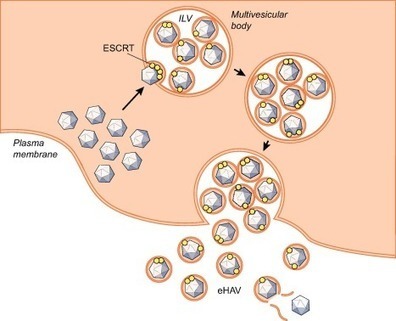
Although epidemic jaundice was well known to physicians of antiquity, it is only in recent years that medical science has begun to unravel the origins of hepatitis A virus (HAV) and the unique pathobiology underlying acute hepatitis A in humans.
Influenza virus continues to be a major health problem due to the continually changing immunodominant head regions of the major surface glycoprotein, hemagglutinin (HA). However, some emerging vaccine platforms designed by biotechnology efforts, such as recombinant influenza virus-like particles (VLPs) have been shown to elicit protective antibodies to antigenically different influenza viruses. Here, using biochemical analyses and cryo-electron microscopy methods coupled to image analysis, we report the composition and 3D structural organization of influenza VLPs of the 1918 pandemic influenza virus. HA molecules were uniformly distributed on the VLP surfaces and the conformation of HA was in a prefusion state. Moreover, HA could be bound by antibody targeting conserved epitopes in the stem region of HA. Taken together, our analysis suggests structural parameters that may be important for VLP biotechnology such as a multi-component organization with (i) an outer component consisting of prefusion HA spikes on the surfaces, (ii) a VLP membrane with HA distribution permitting stem epitope display, and (iii) internal structural components.
People who oppose mandatory vaccination programmes do so on many grounds, and those grounds have shifted over the years. Many of their positions have become more nuanced and, they think, better informed.
Despite being more than ten years since its introduction, global acceptance to the human papillomavirus (HPV) vaccine is still low. The immunogenetic background of the host, and HPV antigen recognition, are important in natural HPV infection, and shoul
The birth and subsequent evolution of optogenetics has resulted in an unprecedented advancement in our understanding of the brain. Its outstanding success does usher wider applications; however, the tool remains still largely relegated to neuroscience.
In the tiny Pacific Nation of Samoa, on Friday 6 July 2018, two babies died shortly after receiving MMR vaccine. How could this happen? Lots of discussion is going around about this tragedy, and even more questions. Here are some responses to the things I have been asked this week summarised under the headings below. About MMR vaccines How safe are MMR vaccines? The risks of measles mumps and rubella People who should forego the MMR vaccine How can vaccination with MMR go wrong? What happened in Samoa? About MMR vaccines MMR vaccines were originally developed in the 1970s to protect against measles, mumps, and rubella, in one convenient jab. However, there is a long history of the development and use of measles-containing these vaccines that extends back to the 1960s. The measles-containing vaccines are called live vaccines. This is because the viruses in the formulation are viable, they can replicate. The viruses need to replicate to get the body to make an immune response that will be protective against disease but they have also been weakened so they are unable to cause disease. These vacciens are extremely effective with measles …
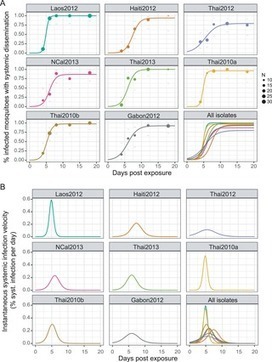
Author summary Transmission of arboviruses by mosquitoes is a time-dependent process because dissemination of the virus from the insect’s digestive tract, where the infection is initially established, to the salivary glands, where it can be transmitted to the next host, typically takes several days.
Vaccines need to be kept cold to remain effective. A lack of power in remote areas makes this difficult, reducing the reach of the life-saving pharmaceuticals.
Protein-based vaccines have been explored as a safer alternative to traditional weakened or killed whole organism based vaccination strategies and have been investigated for their ability to activate the immune system against certain cancers.
Viruses modulate ecosystems by directly altering host metabolisms through auxiliary metabolic genes, which are obtained through random sampling of the host genome and rise to fixation, presumably through improved viral fitness by alleviating key metabolic bottlenecks during infection. Conspicuously, however, viral genomes are not known to encode the core components of translation machinery, such as ribosomal proteins (RPs), though genes for RPs S1 and S21 have been detected in viral metagenomes. Here we augment this little-noticed observation using available reference genomes, global-scale viral metagenomic datasets, and functional assays for select proteins. We identify 15 different RPs across diverse viral genomes arising from cultivated viral isolates (5 RPs in 16 genomes) and metagenome-assembled viruses (14 RPs in 1,403 uncultivated virus genomes). Among these, S21 and L7/L12 are the most common, and functional assays show that both proteins are incorporated into 70S ribosomes when expressed in Escherichia coli, indicating that they might modulate protein translation during infection. Ecological distributions of virus-encoded RPs suggest ecosystem-specific virus adaptations, whereby aquatic viruses appear to selectively incorporate genes for S21, L31 and L33, whereas S6, S9, S15 and S30AE genes are enriched among viruses infecting animal-associated bacteria. Finally, the fact that viruses tend to encode dynamic RPs, suggests that the viral proteins likely replace cellular versions in host ribosomes, likely enabling takeover of host translational machinery.
Virus-like particles (VLPs) are protein-based structures that mimic viruses and bind to antibodies. Because VLPs are not infectious, they show considerable promise as vaccine platforms for many viral diseases, including influenza.
As the global eradication of wild poliovirus nears, the World Health Organization (WHO) is addressing challenges unprecedented in public health. The live, attenuated oral poliovirus vaccine (OPV), used for more than four decades to interrupt poliovirus transmission, and the vaccine of choice for developing countries, is genetically unstable. Reversion of the small number of substitutions conferring the attenuated phenotype frequently occurs during OPV replication in humans and is the underlying cause of the rare cases of vaccine-associated paralytic poliomyelitis (VAPP) in OPV recipients and their close contacts. Whereas VAPP has long been recognized, two other adverse events have been identified more recently: (a) long-term excretion of highly evolved vaccine-derived polioviruses (VDPVs) in persons with primary immunodeficiencies, and (b) polio outbreaks associated with circulating VDPVs in areas with low rates of OPV coverage. Developing a posteradication strategy to minimize the risks of VDPV emergence and spread has become an urgent WHO priority.
During the last decade there has been a growing interest in glycoimmunology, a relatively new research field dealing with the specific interactions of carbohydrates with the immune system. Pathogens’ cell surfaces are covered by a thick layer of oligo- and polysaccharides that are crucial...
A 97-year-old woman's severe case of an untreatable form of squamous cell carcinoma was cleared with injections of the HPV vaccine, her doctors report.
SML NEWS:A child who was not vaccinated against the flu dies of the disease and another 18 children in NSW are hospitalised, as health authorities warn the f...
BACKGROUND: State laws about pharmacists providing HPV vaccine vary considerably, limiting many pharmacists' ability to provide this important cancer prevention service. We characterized physician and parent support for pharmacist-provided HPV vaccination for adolescents who are past due for vaccination.
METHODS: In 2014-2015, we conducted two national US surveys of 776 primary care physicians (PCP) and 1,504 parents of adolescents. Respondents indicated the extent to which they supported pharmacist-provided HPV vaccination for 13-17 year olds who are past due. Respondents could endorse the provision unconditionally, or only if certain conditions were met such as pharmacists receiving proper vaccination training. We used multivariable logistic regression to assess correlates of support.
RESULTS: Most physicians (79%) and parents (81%) endorsed pharmacist-provided HPV vaccination if pharmacists had received proper vaccination training, reported vaccine doses to adolescents' PCP, and referred adolescents to PCPs for other health services. Family medicine physicians were more likely than pediatricians to support trained pharmacists providing HPV vaccination (OR=1.62, CI95%, [1.17-2.22]). Support was also higher among physicians who practiced in Western states (OR=2.11, [1.30-3.40]). Parents' odds of endorsing trained pharmacists provision of HPV vaccine increased with higher overall satisfaction with their pharmacy's services (OR=1.10, [1.02-1.19]), belief in pharmacists' competence in vaccination practices (OR=1.42, [1.18-1.70]), and overall vaccine confidence (OR=1.30, [1.15-1.48]).
CONCLUSIONS: To increase support for HPV vaccination services, pharmacists should raise awareness about their immunization training and standardize vaccination protocols that ensure coordination with primary care.
Bad luck. Terrible misfortune. That's what we think when we hear about a perfectly healthy child who suddenly dies of influenza, a virus most of us can shake off. But what if it isn't luck? What if this kind of deadly infection turns out to be, well, genetic?
In recent metagenomic studies, single-stranded DNA (ssDNA) viruses that infect bacteria have been shown to be diverse and prevalent in the ocean; however, there are few isolates of marine ssDNA phages. Here, we report on a cultivated ssDNA phage (vB_Cib_ssDNA_P1) that infects Citromicrobium bathyomarinum RCC1878 (family Sphingomonadaceae), and other members of the genus. This is the first ssDNA phage reported to infect marine alphaproteobacteria, and represents a newly recognized lineage of the Microviridae infecting members of Sphingomonadaceae, the Amoyvirinae. The ~26 nm diameter polyhedral capsid contains a 4,360 bp genome with 6 open reading frames (ORFs) and a 59.3% G+C content. ORF1 encodes the capsid protein and ORF3 encodes the replication initiator protein. The replication cycle is ~5 hours, followed by a burst releasing about 180 infectious particles. The closest relative of vB_Cib_ssDNA_P1 is a prophage within the genome of Novosphingobium tardaugens strain NBRC16725. Phylogenetic analysis indicates that the vB_Cib_ssDNA_P1 phage and two related prophages, as well as an environmental sequence, form a novel group within the Microviridae. Our results indicate that this is a previously unknown lineage of ssDNA viruses which also supplies a new model system for studying interactions between ssDNA phages and marine bacteria.
To get content containing either thought or leadership enter:
To get content containing both thought and leadership enter:
To get content containing the expression thought leadership enter:
You can enter several keywords and you can refine them whenever you want. Our suggestion engine uses more signals but entering a few keywords here will rapidly give you great content to curate.


 Your new post is loading...