Virology News
198.9K views | +1 today
 
Scooped by Ed Rybicki
onto Virology News
July 10, 2018 5:48 AM
Scoop.it!

HVTN 100 Clinical Trial Findings Advance HIV Vaccine Research and Development

HVTN 100 Clinical Trial Findings Advance HIV Vaccine Research and Development | Virology News | Scoop.it
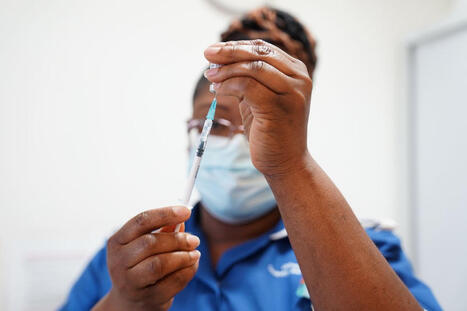
SEATTLE — June 26, 2018 An HIV vaccine regimen tested in an early-phase clinical trial elicited robust immune responses that appeared to be stronger than those observed in a landmark 2009 study showing that a vaccine can protect people from HIV infection.  These findings from the ongoing Phase I/II HVTN 100 study were published on June 10 in Lancet HIV. The trial studied a vaccine regimen designed to improve upon the one used in the 2009 study, the U.S. Military HIV Research Program-led RV144 trial in Thailand, the only study to-date to show protection, albeit modest, in humans.  To build on the RV144 findings, the National Institute of Allergy and Infectious Diseases (NIAID) of the National Institutes of Health and the NIAID-funded HIV Vaccines Trials Network (HVTN) joined with other organizations to form the Pox-Protein Public-Private Partnership (P5), a public-private collaboration, to improve upon the potency, breadth and duration of protection seen in RV144. The early results from HVTN 100 show stronger immune responses than some of those recorded in RV144, suggesting the potential for higher levels of protection from the modified vaccine regimen. The vaccine regimen administered in the HVTN 100 trial is based on the RV144 regimen but designed to elicit immune responses to the HIV subtype common in sub-Saharan Africa. In addition, the adjuvant was changed in an effort to improve the immune response to the regimen.  Also, an additional vaccination was included at one year in the HVTN 100 trial in an effort to prolong the early protective effect observed in RV144. The trial was chaired by two South African researchers, Professor Linda-Gail Bekker, HVTN 100 Protocol Chair and Dr Fatima Laher, HVTN 100 Co-chair. They collaborated with six South African trial centers to enroll HIV-negative adult volunteers starting in February 2015. Of the 252 people enrolled in the study, 210 received the vaccine regimen and 42 received a salt-water placebo. The researchers followed the volunteers over the years to better understand the immune response to the vaccine. “These early-phase trial results show promise. There was a pre-specified set of immune response criteria to signal whether the regimen should move forward into advanced phase testing or not. Those criteria were met, which is why we are currently conducting HVTN 702, an advanced-phase large-scale trial that seeks to understand if the vaccines can prevent HIV infection in human beings,” explains Bekker, HVTN 100 Protocol Chair. Results from HVTN 100 showed that all volunteers who completed the first four vaccinations developed antibody responses two weeks after the fourth vaccination. Similarly, cellular immune responses were strong. The South African Medical Research Council (SAMRC), one of the partners involved in the study, funded aspects of the immunological studies that were conducted in South Africa.  “South Africa is committed to finding a biomedical intervention to prevent HIV transmission. An effective HIV vaccine will be the instrument required to curtail this epidemic,” says Professor Glenda Gray, President and CEO of the SAMRC. The HVTN 100 story continues to unfold “We now know that the vaccine regimen in HVTN 100 can produce strong immune responses early on, but there remains the question of immune durability: Will vaccine-induced immune responses last over time if a fifth vaccination time point is added?” says Laher, HVTN 100 Co-chair. The research team is planning to conclude the HVTN 100 trial this year, and will next report on continued safety, durability, breadth and function of immune responses, and the effects of subsequent boosting vaccinations. “The recent progress in the development of new tools to map the human immune response to vaccination is exciting.  The depth of immunity elicited in the HVTN 100 trial is only just beginning to be uncovered. The continued insights from HVTN 100, together with HVTN 702, will provide an opportunity to reveal a full picture of protective immunity,” says Georgia Tomaras, Principal Investigator at the HVTN Laboratory. “The MF59 adjuvant utilized in HVTN 100 was selected because it enhanced the potency, durability and effectiveness of influenza vaccines as compared to more commonly used adjuvants such as alum.  Potency was enhanced by this adjuvant in the HVTN 100 vaccine regimen,” says Larry Corey, M.D., Principal Investigator of the HVTN, virologist and faculty member at Fred Hutchinson Cancer Research Center. HVTN 100 and HVTN 702 are part of a larger HIV vaccine research endeavor led by the Pox-Protein Public-Private Partnership, or P5—a diverse group of public and private organizations committed to building on the success of the RV144 trial. The P5 aims to produce an HIV vaccine that could have a significant public health benefit in southern Africa and to advance scientists’ understanding of the immune responses associated with preventing HIV infection. P5 members include NIAID, the Bill & Melinda Gates Foundation, the South African Medical Research Council, HVTN, Sanofi Pasteur, GSK and the U.S. Military HIV Research Program. ### Access to manuscript: https://www.ncbi.nlm.nih.gov/pubmed/29898870 Funding:  US National Institute of Allergy and Infectious Diseases (NIAID), and Bill & Melinda Gates Foundation. Authors:  Linda-Gail Bekker, Zoe Moodie, Nicole Grunenberg, Fatima Laher, Georgia D Tomaras, Kristen W Cohen, Mary Allen, Mookho Malahleha, Kathryn Mngadi, Brodie Daniels, Craig Innes, Carter Bentley, Nicole Frahm, Daryl E Morris, Lynn Morris, Nonhlanhla N Mkhize, David C Montefiori, Marcella Sarzotti-Kelsoe, Shannon Grant, Chenchen Yu, Vijay L Mehra, Michael N Pensiero, Sanjay Phogat, Carlos A DiazGranados, Susan W Barnett, Niranjan Kanesa-thasan, Marguerite Koutsoukos, Nelson L Michael, Merlin L Robb, James G Kublin, Peter B Gilbert, Lawrence Corey, Glenda E Gray, M Juliana McElrath, on behalf of the HVTN 100 Protocol Team* About Fred Hutchinson Cancer Research Center At Fred Hutchinson Cancer Research Center, home to three Nobel laureates, interdisciplinary teams of world-renowned scientists seek new and innovative ways to prevent, diagnose and treat cancer, HIV/AIDS and other life-threatening diseases. Fred Hutch’s pioneering work in bone marrow transplantation led to the development of immunotherapy, which harnesses the power of the immune system to treat cancer. An independent, nonprofit research institute based in Seattle, Fred Hutch houses the nation’s first National Cancer Institute-funded cancer prevention research program, as well as the clinical coordinating center of the Women’s Health Initiative and the international headquarters of the HIV Vaccine Trials Network. CONTACT Media Relations Aziel Gangerdine HVTN: Director of Communications C 206.384.0945 / O 206.667.7875 agangerd@fredhutch.org
No comment yet.
Virology News
Topical news snippets about viruses that affect people.  And other things. Like Led Zeppelin. And zombies B-)
Curated by Ed Rybicki
Your new post is loading...
Scooped by Ed Rybicki
January 19, 2023 6:04 AM
Scoop.it!

Cann's Principles of Molecular Virology - 7th Edition

Cann's Principles of Molecular Virology - 7th Edition | Virology News | Scoop.it

Cann's Principles of Molecular Virology, - 7th Edition, revised by EP Rybicki. Print Book. ISBN 9780128227848. Now published!!


"Cann's Principles of Molecular Virology, Seventh Edition provides an easily accessible introduction to modern virology, presenting principles in a clear and concise manner. The new edition provides the history of virology and the fundamentals of the molecular basis of how viruses work.


Instructor review copies: click on this link.

https://protect-za.mimecast.com/s/qU2qCNxKq0i0ZNRQxcmeDdo

No comment yet.
Scooped by Ed Rybicki
March 24, 8:33 AM
Scoop.it!

Ancient 'syphilis-like' disease in Vietnam challenges long-held assumptions on congenital infection

The findings of a new study by a Charles Sturt University researcher and colleagues challenge a long-standing assumption used by scientists studying ancient disease. The study is published in the International Journal of Osteoarchaeology.
No comment yet.
Scooped by Ed Rybicki
March 24, 8:32 AM
Scoop.it!

Wildflower folk remedy shows modern potential for tackling antibiotic resistance

Scientists have proven that a wildflower steeped in folklore for its medicinal powers has genuine healing qualities—and the potential to help combat antibiotic resistance. Tormentil, a yellow wildflower found in heath and boglands in the UK, Ireland and across Europe, can inhibit the growth of one of the world's most deadly pathogens.
No comment yet.
Scooped by Ed Rybicki
March 24, 8:31 AM
Scoop.it!

Single-cell sequencing reveals unexpected protist diversity

Researchers from the Earlham Institute, in collaboration with the Department of Biology at the University of Oxford, have discovered three previously unrecognized lineages of the protist Bodo, each with its own bacterial endosymbiont (a symbiotic organism living within the body of its host).
No comment yet.
Scooped by Ed Rybicki
March 24, 8:30 AM
Scoop.it!

Nanoparticles enable large-scale production of advanced cell therapies

Researchers from Xi'an Jiaotong-Liverpool University (XJTLU) in China have developed a streamlined process that makes it easier to produce tiny therapeutic particles released by cells, called exosomes, which are being explored as a new type of medical treatment. Using a nanoparticle-based system, the researchers were able to overcome a major barrier that has slowed the medical and industrial deployment of these therapies. Their findings were published in the journal Advanced Science.
No comment yet.
Scooped by Ed Rybicki
March 24, 8:29 AM
Scoop.it!

Stolen chloroplasts maintained by host-made proteins offer clues to plant cell origins

Every plant cell is the product of a biological merger billions of years ago. Chloroplasts are key structures in plants and algae that capture sunlight, but originally they were free-living bacteria that took up residence inside another cell. Over time, these partners became more closely integrated by sharing genes, proteins, and roles.
No comment yet.
Scooped by Ed Rybicki
March 10, 5:59 AM
Scoop.it!

The coldest 'stars' in the galaxy might actually be alien megastructures

Ever since physicist Freeman Dyson first proposed the concept in 1960, the "Dyson sphere" has been the holy grail of techno-signature hunters. A highly advanced civilization could build a "sphere" (or, in our more modern understanding, a "swarm" of smaller components) around their host star to harvest its entire energy output. We know, in theory at least, that such a swarm could exist—but what would it actually look like if we were able to observe one? A new paper, available on the arXiv pre-print server and soon to be published in Universe from Amirnezam Amiri of the University of Arkansas, digs into that question—and in the process discloses the types of stars that are the most likely to find them around.
No comment yet.
Scooped by Ed Rybicki
March 10, 5:58 AM
Scoop.it!

How a protein pair ensures that faulty mRNA is destroyed

Nonsense-mediated mRNA decay (NMD) is one of the most important processes in our cells to ensure that no faulty or incomplete proteins are produced. Scientists have now identified a central mechanism behind this control system.
No comment yet.
Scooped by Ed Rybicki
March 10, 5:57 AM
Scoop.it!

Amphotericin B promotes respiratory viral entry by enhancing late endosomal maturation and fusion via glucocerebrosidase-mediated ceramide remodeling | Nature Communications

This study reveals that Amphotericin B activates glucocerebrosidase to remodel late endosomal lipid and protein composition, promoting respiratory viral entry. This highlights a risk of secondary viral infections during antifungal therapy.
No comment yet.
Scooped by Ed Rybicki
March 10, 5:56 AM
Scoop.it!

An interstellar comet packed with alcohol? What ALMA found in 3I/ATLAS

Comet 3I/ATLAS continues to make astonishing headlines, thanks to new findings from astronomers using the Atacama Large Millimeter/submillimeter Array (ALMA). This new research reveals that 3I/ATLAS is packed with an unusually large amount of the organic molecule methanol—more than almost all known comets in our own solar system.
No comment yet.
Scooped by Ed Rybicki
March 10, 5:55 AM
Scoop.it!

Nearby red dwarf star hosts at least four planets—with one in the habitable zone

In 2020, a study confirmed that two planets orbited the nearby red dwarf, GJ 887. Now, astronomers have confirmed the existence of two additional planets orbiting GJ 887 in a new study published in Astronomy and Astrophysics. The new study suggests that one of these newly confirmed planets is in the habitable zone.
No comment yet.
Scooped by Ed Rybicki
March 10, 5:55 AM
Scoop.it!

Scientists trace crop viruses back to the last Ice Age

Long before humans cultivated crops or sailed between continents, a group of plant viruses was already evolving among wild plants in Eurasia. According to a new international study published in Plant Disease, the ancestors of modern tymoviruses likely emerged before the last Ice Age, reshaping scientists' understanding of the vast evolutionary history of plant disease.
No comment yet.
Scooped by Ed Rybicki
March 10, 5:54 AM
Scoop.it!

Deep ocean microbes may already be prepared to tackle climate change

Deep-sea waters are warming due to heat waves and climate change, and it could spell trouble for the oceans' delicate chemical and biological balance. However, a study published in Proceedings of the National Academy of Sciences demonstrates that the microbe Nitrosopumilus maritimus may already be adapting well to warmer, nutrient-poor waters. Researchers predict that these surprisingly adaptable iron-dependent ammonia-oxidizing archaea will play an important role in reshaping ocean-nutrient distribution in a changing climate.
No comment yet.
Scooped by Ed Rybicki
March 24, 8:34 AM
Scoop.it!

Multifunctional ACE2-nanobody fusion design for pan-specific neutralization and cardiovascular protection in SARS coronavirus infection

Severe acute respiratory syndrome coronaviruses use the ACE2 receptor for viral entry while downregulating its activity, potentially leading to hypertension and major organ injuries.Dual-action technologies based on soluble ACE2 aimed to neutralize the virus while restoring ACE2's normal enzymatic...
No comment yet.
Scooped by Ed Rybicki
March 24, 8:33 AM
Scoop.it!

Discovery of genetic switch could help turn rice into a perennial crop

Rice is a vital crop that feeds more than half of the world's population. In the wild, many rice species are perennials that live for several years, but the varieties we eat today are typically annuals that must be replanted every season. That is an expensive process for farmers requiring continual labor, seeds and field preparation to keep up with demand. But a cheaper solution may be on the way one day.
No comment yet.
Scooped by Ed Rybicki
March 24, 8:32 AM
Scoop.it!

Genome-hopping 'Starships' may explain why some pest-killing fungi stop working

A new study from Kiel University shows how the massive exchange of mobile genetic elements between fungi can impair their effectiveness against insects and ticks. Microbial fungi, such as the genus Metarhizium, are often used in biological pest control. These fungi attack harmful insects and ticks, thus representing an ecological alternative to chemical agents. However, how effective these fungi remain is determined by an evolutionary arms race between the fungus and its host.
No comment yet.
Scooped by Ed Rybicki
March 24, 8:31 AM
Scoop.it!

Study details neuropsychiatric symptoms and biological mechanisms of long COVID

Nearly three years since the SARS-CoV-2 pandemic was declared over, conservative estimates suggest that between 80 million and 400 million people worldwide have long COVID. This chronic condition associated with the infection is linked to more than 200 symptoms, including fatigue and shortness of breath, as well as neuropsychiatric issues ranging from cognitive dysfunction and sleep disorders to depression and memory loss. These issues impact quality of life and hinder the performance of daily tasks and work.
No comment yet.
Scooped by Ed Rybicki
March 24, 8:29 AM
Scoop.it!

Covid-19 immunity likely to lower risk of another SARS pandemic – study

Covid-19 immunity likely to lower risk of another SARS pandemic – study | Virology News | Scoop.it
Researchers also found existing Covid-19 vaccines could help slow or stop the spread of a new coronavirus.
No comment yet.
Scooped by Ed Rybicki
March 24, 8:29 AM
Scoop.it!

No link between Covid-19 vaccines and sudden cardiac death

No link between Covid-19 vaccines and sudden cardiac death | Virology News | Scoop.it
The study reveals COVID-19 vaccines do not increase sudden cardiac death risk in youth, highlighting the importance of accurate health messaging.
No comment yet.
Scooped by Ed Rybicki
March 10, 5:58 AM
Scoop.it!

DART images reveal asteroids can toss slow 'cosmic snowballs' between moons

About 15% of asteroids near Earth have small moons orbiting them, making binary asteroid systems common in our cosmic neighborhood.
No comment yet.
Scooped by Ed Rybicki
March 10, 5:57 AM
Scoop.it!

Infection-acquired protection against SARS-CoV-2 infection and clinical severity by number of prior infections | Nature Communications

Prior infection is protective against SARS-CoV-2 infection, but the degree of protection provided by multiple subsequent infections is not clear. Here, the authors use data from a household transmission study in Nicaragua and show that 1, 2 or 3+ infections are associated with increasing...
No comment yet.
Scooped by Ed Rybicki
March 10, 5:57 AM
Scoop.it!

Preparation of targeted lipid nanoparticles for precision nucleic acid delivery | Nature Protocols

Preparation of targeted lipid nanoparticles for precision nucleic acid delivery | Nature Protocols | Virology News | Scoop.it
This protocol outlines the steps to prepare functionalized lipid nanoparticles covalently conjugated with whole antibodies or antibody fragments for targeted nucleic acid delivery to different tissues or cell types.
No comment yet.
Scooped by Ed Rybicki
March 10, 5:56 AM
Scoop.it!

Pathogenic virus infects and structurally reorganizes human cells, finds new study

Orthohantaviruses, such as the Puumala virus, are widespread in Europe, causing flu-like illnesses and severe kidney damage in those infected. It is increasingly considered a zoonotic threat. Researchers from the Medical Faculty of the University of Duisburg-Essen and the University Hospital Essen, Germany, have gained new insights into how these viruses alter the internal structure of their host cells. Their findings are published in the Journal of General Virology.
No comment yet.
Scooped by Ed Rybicki
March 10, 5:55 AM
Scoop.it!

Microbes hitchhiking on marine snow could limit how deep carbon sinks

In some parts of the deep ocean, it can look like it's snowing. This "marine snow" is the dust and detritus that organisms slough off as they die and decompose. Marine snow can fall several kilometers to the deepest parts of the ocean, where the particles are buried in the seafloor for millennia.
No comment yet.
Scooped by Ed Rybicki
March 10, 5:55 AM
Scoop.it!

Infection-Acquired Immunity: Impact of Prior COVID-19 Cases

Infection-Acquired Immunity: Impact of Prior COVID-19 Cases | Virology News | Scoop.it
In a groundbreaking advancement that could reshape our understanding of immunity within the COVID-19 pandemic, a recent study published in Nature Communications reveals compelling insights into how protection against SARS-CoV-2 infection—and the severity of ensuing illness—varies significantly depending...
No comment yet.
Scooped by Ed Rybicki
March 10, 5:54 AM
Scoop.it!

CRISPR-based technique unlocks healing power of mitochondria for heart failure therapy

After a heart attack, the heart struggles to recoup and maintain energy. One-third of patients develop heart failure as a result—a condition that impacts 6.8 million Americans and carries a high lifetime risk, with 1 in 4 adults in the U.S. expected to develop the condition during their lifetime. This makes finding lasting treatment a medical priority.
No comment yet.