




Vectorology - GEG Tech top picks
23.4K views |
+3 today
 Your new post is loading...
 Scoop.it!
BigField GEG Tech's insight:
This review is timely in this regard, since it analyzes key challenges and major findings from the last two decades and evaluates future prospects of brain gene delivery. 
Scoop.it!
BigField GEG Tech's insight:
Here, the scientists report that lentiviral CRISPR/Cas9 vectors are highly efficient in introducing mutations in the precursor miRNA sequence, thus leading to the loss of miRNA expression and function. This study indicates that lentiviral CRISPR/Cas9-mediated miRNA gene editing is an effective approach to address miRNA function, and disruption of miR-21 inhibits EMT in ovarian cancer cells.
Scoop.it!
BigField GEG Tech's insight:
In this wotk, the scientists investigate the effect of silencing of hexokinase genes (HK1, HK2, and HK3) in colorectal cancer (HT-29, SW 480, HCT-15, RKO, and HCT 116) and melanoma (MDA-MB-435S and SK-MEL-28) cell lines using short hairpin RNA (shRNA) lentiviral vectors. They demonstrated that simultaneous inactivation of HK1 and HK2 was sufficient to decrease proliferation and viability of melanoma and colorectal cancer cells. Their results suggest that HK1 and HK2 could be the key therapeutic targets for reducing aerobic glycolysis in examined cancers.
Scoop.it!

Autosomal Recessive Osteopetrosis (ARO) is a severe bone disease characterized by increased bone density due to impairment in osteoclast resorptive function or differentiation. Hematopoietic ste
BigField GEG Tech's insight:
Autosomal Recessive Osteopetrosis (ARO) is a severe bone disease characterized by increased bone density due to impairment in osteoclast resorptive function or differentiation. Of note, whether lack of RANKL production might cause a defect also in the bone marrow (BM) stromal compartment, possibly contributing to the pathology, is unknown.To verify this possibility the scientists generated and characterized BM mesenchymal stromal cell (BM-MSC) lines from wild type and Rankl-/- mice, and found that Rankl-/- BM-MSCs displayed reduced clonogenicity and osteogenic capacity. The differentiation defect was significantly improved by lentiviral transduction of Rankl-/- BM-MSCs with a vector stably expressing human soluble RANKL (hsRANKL). Expression of Rankl receptor, Rank, on the cytoplasmic membrane of BM-MSCs pointed to the existence of an autocrine loop possibly activated by the secreted cytokine.
Scoop.it!
BigField GEG Tech's insight:
The objective of this study was to develop a viable and reliable technique of delivering viral vectors to rat trigeminal ganglia. The results show that injection needles can be advanced precisely at the trigeminal fossa and that viral vectors can successfully transduce trigeminal ganglia. Moreover, the levels of calcitonin gene-related peptide at trigeminal ganglia were down-regulated on day 7 after viral transduction. Pain levels returned to baseline by day 7 following injection. Therefore, the scientists suggest that our trigeminal ganglion-targeting technique could be used for delivering genes or drugs to rat trigeminal ganglia.
Scoop.it!
BigField GEG Tech's insight:
The CRISPR-Cas9 system is revolutionizing genomic engineering by democratizing the genome editing tools. However, in several cases, the power of this system is sorely limited by the efficiency of delivery, notably for in vivo contexts. The vectorization of the CRISPR system in lentiviral vectors can address this issue throuht its very high efficency of delivery in many experimental contexts. Furthermore, new generations of lentiviral vectors which are non integrating or remaining in RNA phase induce transient expression and avoid off target and genotoxic effets.
Scoop.it!

Tetracycline-regulated systems with efficient temporal and dose regulation of transgene expression are useful for development of ne
BigField GEG Tech's insight:
In this work, the authors show that the T11 tetracycline-regulated promoter enabled improved transgene expression in a murine transplantation model. The established system allows further development of tetracycline-regulated experimental models to investigate normal and malignant hematopoiesis.
Scoop.it!
BigField GEG Tech's insight:
In this study, the scientists designed a recombinant lentiviral vector expressing four fragments of mouse CCR3 shRNA (pLVX‑mCCR3‑1+2+3+4‑shRNA). They show that downregulation of mCCR3 significantly inhibited proliferation of the eosinophils. Furthermore, the present study found that the downregulation of mCCR3 significantly promoted apoptosis of the eosinophils. These results suggest that mCCR3 silencing may serve as a putative approach for the treatment of allergic rhinitis.
Scoop.it!
BigField GEG Tech's insight:
In this trial report, the scientists demonstrated potent anti-leukemia activities of CART19s in Chinese patients with R/R ALL. Disease relapse remained the main obstacle. However, patients with a high risk of relapse after CART19s might benefit from subsequent haploidentical hematopoietic stem cell transplantation.
Scoop.it!

Akerman et al. studied the function of human β cell lncRNAs with RNAi, CRISPRi, and
BigField GEG Tech's insight:
In this work, the authors used lentiviral vectors carrying amiRNAs targeting TFs and lncRNAs to investigate the function of β cell-specific lncRNAs and transcription factors. This revealed lncRNAs that function in concert with transcription factors to regulate β cell-specific transcriptional networks. They further demonstrate that the lncRNA PLUTO affects local 3D chromatin structure and transcription of PDX1, encoding a key β cell transcription factor, and that both PLUTO and PDX1 are downregulated in islets from donors with type 2 diabetes or impaired glucose tolerance. These results implicate lncRNAs in the regulation of β cell-specific transcription factor networks.
Scoop.it!
BigField GEG Tech's insight:
In the present study, the authors designed a KCTD12 lentiviral vector to generated a human uveal melanoma cell line (OCM-1) stably expressing KCTD12. They first demonstrated that KCTD12 effectively suppressed the proliferation of OCM-1 cells and limited the spread of OCM-1 cells. In addition, inhibition of KCTD12-overexpressing OCM-1 cell xenograft growth in nude mice was observed. Taken together, KCTD12 may serve as a novel therapeutic target for patients with uveal melanoma.
Scoop.it!
BigField GEG Tech's insight:
Spinal cord ischemia–reperfusion (I/R) injury is a severe clinical condition, while the mechanism is still not clarified and the therapeutic approach is limited. In this study, the authors used lentiviral vectors to knock down MDM2 or over-express p53 genes in primary cultured spinal cord neurons. Their results demonstrated that MDM2-p53 pathway plays a pivotal role in the protective effect of PC against OGD-reperfusion injury and PC may be a feasible therapy strategy in the treatment for spinal cord I/R injury.
|
Scoop.it!
BigField GEG Tech's insight:
In this work, the scientists investigated the pseudotyping efficiency of HIV-1 based lentiviral vectors with alphaviral envelope proteins from the Chikungunya Virus (CHIKV-G) and Sindbis Virus (SINV-G). High titre CHIKV-G pseudotyped vector efficiently transduced various human and mouse neural cell lines and normal human astrocytes (NHA) in vitro. Although transduction was broad, tropism for NHAs was observed. In vivo stereotaxic delivery in striatum, thalamus and hippocampus respectively in the adult rat brain revealed localised transduction restricted to striatal astrocytes and hippocampal dentate granule neurons.
Scoop.it!

Two neuronal pathways originating in the central amygdala coordinate distinct behaviors
BigField GEG Tech's insight:
Here, the scientists reveal a critical role for the central nucleus of the amygdala in predatory hunting. Both optogenetic and chemogenetic stimulation of central amygdala of mice elicited predatory-like attacks upon both insect and artificial prey.
Scoop.it!
BigField GEG Tech's insight:
In this work, the author design adenovirus vectors to overexpress VHL, normoxia-active HIF-α, and lentiviral vectors to silence HIF-α. The results showed that overexpression of VHL was more successful at inhibiting fibrosis compared with silencing HIF-1α plus HIF-2α. Normoxia-active HIF-1α or HIF-2α prevented the inhibitory effect of VHL on liver fibrosis, indicating that attenuating fibrosis via VHL is HIF-1α- and HIF-2α-dependent to some extent. These results suggest that VHL may be considered a new target to inhibit liver fibrosis.
Scoop.it!
BigField GEG Tech's insight:
Scientists are developing a new generation of non-integrating viral vectors capable of nuclear persistence through serial mitotic cycles and stable under selection to offset the comparatively lower transduction rates. Here, the authors review the competing approaches to develop such non-integrating lentiviral (NILV) episome vectors that faithfully replicate in stem cells.
Scoop.it!
BigField GEG Tech's insight:
Here, the scientists assessed the effect of passive immunization against α-syn in a new mouse model of axonal transport and accumulation of α-syn. For these purpose, non-transgenic, α-syn knock-out and mThy1-α-syn tg (line 61) mice received unilateral intra-cerebral injections with a lentiviral (LV)-α-syn vector construct followed by systemic administration of the monoclonal antibody 1H7 (recognizes amino acids 91-99) or control IgG for 3 months. Unilateral LV-α-syn injection resulted in axonal propagation of α-syn in the contra-lateral site with subsequent behavioral deficits and axonal degeneration. Passive immunization with 1H7 antibody reduced the axonal accumulation of α-syn in the contra-lateral side and ameliorated the behavioral deficits. Together this study supports the notion that immunotherapy might improve the deficits in models of synucleinopathy by reducing the axonal propagation and accumulation of α-syn. This represents a potential new mode of action through which α-syn immunization might work.
Scoop.it!

Fanconi anemia (FA) is a rare genetic syndrome characterized by progressive marrow failure. Gene therapy by infusion of FA-corrected autologou
BigField GEG Tech's insight:
In this review the authors will focus on the different obstacles, unique to FA gene therapy, and how they been overcome through the development of optimized protocols for FA HSC culture and transduction and the engineering of new gene transfer tools for FA HSCs. These combined advances in the field hopefully will allow the correction of the FA hematological defect in the near future.
Scoop.it!

Direct reprogramming of mouse fibroblasts toward Leydig-like cells by defined factors,
BigField GEG Tech's insight:
Male hypogonadism is a condition affecting almost a third of the elderly male population. The most common treatment option is testosterone replacement therapy, but the practice can have significant side effects. A recent development in stem cell research opens a new way. The scientists report success in reprogramming mice fibroblasts into LCs by expressing three transcriptional factors, Dmrt1, Gata4, and Nr5a1 thanks to lentiviral vectors. Their new findings may facilitate future applications in regenerative medicine in this field.
Scoop.it!

To understand the mechanisms underlying higher brain functions, we need to analyze the roles of specific neuronal pathways or cell types forming the complex neural networks. In the neuroscience field,
BigField GEG Tech's insight:
Previously, scientists developed novel types of lentiviral vectors showing high efficiency of retrograde gene transfer in the central nervous system, termed highly efficient retrograde gene transfer (HiRet) vector and neuron-specific retrograde gene transfer (NeuRet) vector. In this review, the authors give an outline of the HiRet and NeuRet vectors and describe recent representative applications of these viral vectors for studies on neural circuits.
Scoop.it!
BigField GEG Tech's insight:
HIV-1-based lentiviral vectors efficiently transduce genes to human, but not rhesus, primary T cells and hematopoietic stem cells (HSCs). Recently, HIV-1 variants that encode combinations of LNEIE mutations in capsid (CA) protein and SIVmac239 Vif were found to replicate efficiently in rhesus primary T cells. Thus, in the present study, the scinetists tested whether HIV-1 vectors packaged by a packaging construct containing these CA substitutions could efficiently transduce both human and rhesus primary CD4 T cells. To accomplish this, they made LNEIE mutations in the packaging construct CEMΔ8.9, and generated recombinant HIV-1 vectors packaged by ∆8.9 WT or ∆8.9 LNEIE. Their results show that ∆8.9 LNEIE-packaged HIV-1 vector overcomes rhesus TRIM5α restriction and efficiently transduces both human and rhesus primary T cells.
Scoop.it!
BigField GEG Tech's insight:
In this work, the authors used lentiviral vectors which express CRISPR system to identify factors that affect hematopoiesis. Their results illustrates well how population-based genetic studies can provide key insights into poorly understood cell differentiation processes of considerable physiologic relevance.
Scoop.it!
BigField GEG Tech's insight:
Nuclear protein-1 (NUPR1), located on chromosome 16p11.2, is a stress response factor that plays an important role in the growth and migration of human malignant tumor cells. Here the scientists designed a lenyiviral vector to knockdown NUPR1. They demonstrated that this inhibition suppressed glioblastoma cell growth by arresting the cell cycle and inducing cell apoptosis via decreases in the expression of ERK1/2, p38 MAPK and caspase-3.
Scoop.it!
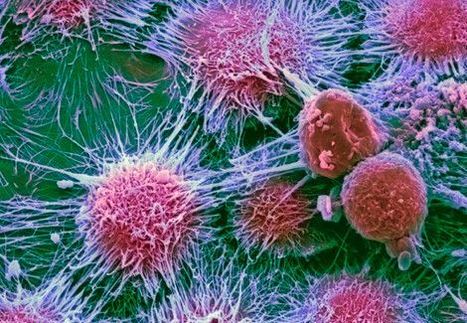
Radiation-induced SOD2 overexpression sensitizes colorectal cancer to radiation while protecting normal tissue
BigField GEG Tech's insight:
In this study, the scientists design a lentiviral vector to overexpress SOD2 under the control of a chimeric promoter C9BC/CMV. In vitro experiments revealed that radiation-induced SOD2 overexpression inhibited tumor cell proliferation and decreased apoptosis among normal cells as compared to untransfected cells. Similar effects were observed in vivo. Thus radiation-induced SOD2 overexpression via the chimeric C9BC promoter increased the radiosensitivity of HT-29 human colorectal cancer cells and concurrently protected normal CCD 841 CoN colorectal cells from radiation damage.
|









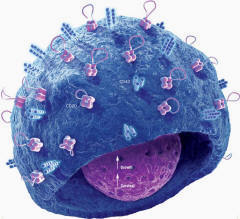







In this work, the scientists investigated the use of a “rapid” lentiviral transduction protocol in a murine Fanca−/− model.