


Vectorology - GEG Tech top picks
23.4K views |
+3 today
 Your new post is loading...
 Scoop.it!
BigField GEG Tech's insight:
The scientists used lentiviral vectors to deliver CRISPR/Cas9 to disrupt the gene for the class II transactivator (CIITA). They observed that the loss-of-function arises from bi-allelic gene disruption in CIITA that leaves other essential properties of the cells intact, including self-assembly into blood vessels in vivo, and that the altered phenotype can be rescued by re-introduction of CIITA expression. 
Scoop.it!
BigField GEG Tech's insight:
To identify the function of Azin1 in vivo, the scientists used lentiviral vectors that either over-express or knockdown Azin1 which were stereotaxically delivered into the supraoptic nuclei or the neurons of the paraventricular of the hypothalamus. Azin1 shRNA delivery significantly increased the expression of arginine vasopressin mRNA and decreased plasma osmolality with a significant effect on food intake.
Scoop.it!
BigField GEG Tech's insight:
The author show generation and cardiomyocyte differentiation potential of iPS cells from thymic epithelial cells of a patient with ventricular septal defect (VSD) by overexpressing the four factors: OCT4, SOX2, NANOG, and LIN28 with lentiviral vectors. The self-renewal and pluripotency of the VSD-iPS cells was verified in iPS cells by in vitro expression of pluripotency markers and formation of teratoma in vivo.
Scoop.it!
BigField GEG Tech's insight:
The authors validated a lentiviral system specifically expressed miRNA126 in cells with high BCL-2 levels, downregulated VEGF expression, inhibited MAPK pathway activation and downregulated BCL-2 expression via suppression of AP1, and as a whole, reduced apoptosis-resistant endothelial cells, while the effects of miRNA126 on normal endothelial cells were relatively small.
Scoop.it!
BigField GEG Tech's insight:
The authors demonstrated thanks to a lentiviral vector containing the TdTomato protein gene under the control of the phosphoglycerate kinase (PGK) that it is possible to label human EPCs without affecting adhesion, chromosomal stability or cell death.
Scoop.it!
BigField GEG Tech's insight:
The authors used a lentiviral vector which expresses RNAi ERCC1. The silencing of ERCC1 reversed SKOV3/DDP cell resistance to cisplatin and increased sensitivity to cisplatin resistance in cisplatin-resistant ovarian cancer cells. Interference of ERCC1 promoted the apoptosis of SKOV3/DDP cells and prevented cell mitosis by inducing G0/G1 phase arrest. Thus, ERCC1 could be a potential therapeutic target for the therapy of cisplatin-resistant ovarian cancer and it would provide new ideas for epigenetic therapy of drug-resistant epithelial ovarian cancer.
Scoop.it!
BigField GEG Tech's insight:
The authors performed a phase 1–2 open-label trial involving 12 participants to evaluate the safety and efficacy of gene therapy with a recombinant adeno-associated virus 2/2 (rAAV2/2) vector carrying the RPE65 and measured visual function over the course of 3 years Improvements in retinal sensitivity were evident, to varying extents, in six participants for up to 3 years, peaking at 6 to 12 months after treatment and then declining. No associated improvement in retinal function was detected by means of ERG. Three participants had intraocular inflammation, and two had clinically significant deterioration of visual acuity. Comparison with the results obtained in the dog model indicates that there is a species difference in the amount of RPE65 required to drive the visual cycle and that the demand for RPE65 in affected persons was not met to the extent required for a durable, robust effect.
Scoop.it!
BigField GEG Tech's insight:
In this article, the scientists compared AAV vectors based on serotypes 1 to 9 anf lentivira vector (LV) for their capability to transduce cultured primary rat and human Schwann cells and nerve segments.They observed that LV vectors are more effective than all AAV serotypes tested in transducing cultured rat and human Schwann cells. In rat nerve segments AAV5, 7 and 9 are not significantly different from LV vectors although there is a tendency for LV vectors to transduce a larger proportion of cells. AAV2 targeted Schwann cells in human nerve segments while LV predominantly transduces perineural fibroblasts.
Scoop.it!
BigField GEG Tech's insight:
The authors designed a lentivral vector to deliver CRISPR/Cas9 system in endothelial cells to disrupt the gene for the class II transactivator (CIITA). They showed the observed loss-of-function arises from bi-allelic gene disruption in CIITA that leaves other essential properties of the cells intact, including self-assembly into blood vessels in vivo, and that the altered phenotype can be rescued by re-introduction of CIITA expression.
Scoop.it!
BigField GEG Tech's insight:
In this study, the scientists describe a novel bimolecular fluorescence complementation (BiFC) lentiviral expression tool to study Nef interactions with host cellular proteins in the context of viral infection. This study confirmed the interaction between Nef and PACS-1 and demonstrated co-localization of this complex with LAMP-1 positive endolysosomal vesicles.
Scoop.it!
BigField GEG Tech's insight:
Thanks to a lentiviral vector, the authors have upregulated CIAPIN1 and observed the cells arrest in G1/S phase and a significantly inhibition of the growth of the RPMI‑8226 MM cell line in vitro and in vivo. Their results suggest that the CIAPIN1 gene is a potential tumor suppressor.
Scoop.it!
BigField GEG Tech's insight:
Employing a murine model of retinal disease, the scientists demonstrate that ciliary neurotrophic factor (CNTF) confers life-long protection against photoreceptor degeneration. The mechanisms underlying CNTF-mediated neuroprotection were explored through transcriptome analysis, revealing widespread up-regulation of proteolysis inhibitors, which may prevent cellular/extracellular matrix degradation and complement activation in neurodegenerative diseases.
|
Scoop.it!
BigField GEG Tech's insight:
In this study, the authors injected a lentiviral to overexpress the Neuropeptide Y (NPY) into the paraventricular nucleus (PVN) of rats fed a high fat (HFD) or low-fat diet. 8 weeks later, in vivo intravenous glucose tolerance tests and euglycemic-hyperinsulinemic clamp revealed that insulin resistance of adipose tissue were induced by NPY overexpression with or without HFD. NPY increased food intake, but did not change blood glucose, glycated hemoglobin A1c (HbA1c) or lipid levels.
Scoop.it!
BigField GEG Tech's insight:
In this study, the authors investigated dual exon skipping of dystrophin and myostatin pre-mRNAs using phosphorodiamidate morpholino oligomers conjugated with an arginine-rich peptide (B-PMOs). Intraperitoneal administration of B-PMOs was performed in neonatal mdx males on the day of birth, and at weeks 3 and 6. At week 9, they observed in treated mice normalization of muscle mass, a recovery in dystrophin expression, and a decrease in muscle necrosis, particularly in the diaphragm.
Scoop.it!
BigField GEG Tech's insight:
In this study, an AAV9 vector encoding canine sodium iodide symporter (NIS) was administered to adult immunocompetent dogs via epicardial injection, coronary infusion without and with cardiac recirculation, or endocardial injection via a novel catheter with curved needle and both end- and side-holes. Direct epicardial or endocardial injection resulted in strong cardiac expression while expression after intracoronary infusion or cardiac recirculation was undetectable.These data are relevant to efforts to develop cardiac gene delivery as heart failure therapy.
Scoop.it!
BigField GEG Tech's insight:
The authors described methods compliant to good manufacturing practices (GMP) to produce LV and SmartDC-TRP2. Feasibility of monocyte transduction in a bag system and cryopreservation following a 24-hour standard operating procedure were achieved. After thawing, 50% of the initial monocyte input was recovered and SmartDC-TRP2 self-differentiated in vitro, showing uniform expression of DC markers, detectable LV copies and a polyclonal LV integration pattern not biased to oncogenic loci. GMP-grade SmartDC-TRP2 expanded TRP2-specific autologous CTLs in vitro. These results demonstrated a simpler GMP-compliant method of manufacturing an effective individualized DC vaccine. Such DC vaccine, when in combination with checkpoint inhibition therapies, might provide higher specificity against melanoma.
Scoop.it!
BigField GEG Tech's insight:
In the present study, rat primary cortical astrocytes have been transduced with a lentiviral vector encoding shRNA targeted Srxn1. In this way, they demonstrate that Srxn1 protects primary rat cortical astrocytes from OGD- or H2O2-induced apoptosis and that involves the activation of the mitochondrial apoptotic pathway, which suggests that Srxn1 may be a potential target in the treatment of cerebral ischemia.
Scoop.it!
BigField GEG Tech's insight:
The authors generated iPS cells with a single lentiviral “stem cell cassette” vector since embryonic murine fibroblasts, and then differentiated these iPS cells into thyroid cells after transfection with PAX8 and NKX2-1 by Activin A and TSH stimulation.
Scoop.it!
BigField GEG Tech's insight:
The authors used PPARγ and M3-PPARγ-lentiviral vectors to convert human myoblasts into adipocytes. Although the transduction of either PPARγ or M3-PPARγ induced adipogenesis in myoblasts, M3-PPARγ drastically induced the brown adipocyte markers of UCP1, CIDEA, and PRDM16 by 1,050, 2.4, and 5.0 fold, respectively and increased mitochondria contents by 4 fold, compared to PPARγ.
Scoop.it!
BigField GEG Tech's insight:
In this video protocol the scientists give a step by step explanation of lentiviral transduction in organoids of primary intestinal epithelium and of processing and downstream analysis of these cultures by quantitative RT-PCR, RNA-microarray and immunohistochemistry.
Scoop.it!
BigField GEG Tech's insight:
In this study, the authors observed that the titer of Lv-Kir-DN (dominant-negative) was higher than that of Lv-Kir2.1, suggesting a negative effect of induced K+ currents on viral titer. They then blocked Kir2.1 currents with the selective blocker Ba2+ during Lv-Kir2.1 production, and obtained about a 5-fold increase in the titer. Higher extracellular K+ concentrations increased the titer of Lv-Kir2.1 about 9-fold. Channel blockade also increased the titers of the lentivirus expressing Kv1.4 and TREK channels, but not HERG. The increase in titer correlated with the K+ currents generated by the channels expressed.
Scoop.it!
BigField GEG Tech's insight:
To test long-term effects of chronic synaptic activation on Aβ pathology, the scientistss adopted optogenetics and transduced stabilized step-function opsin, a channelrhodopsin engineered to elicit a long-lasting neuronal hyperexcitability, into the hippocampal perforant pathway of APP transgenic mice. In vivo microdialysis revealed a ∼24% increase in the hippocampal interstitial fluid Aβ42 levels immediately after acute light activation and five months of chronic optogenetic stimulation increased Aβ burden specifically in the projection area of the perforant pathway(∼2.5-fold).
Scoop.it!
BigField GEG Tech's insight:
The authors injected lentiviral vector expressing CREB3L1CA into rat supraoptic nuclei and paraventicular nuclei and observed the increase of Arginine vasopressin (AVP) biosynthesis. They thus identify CREB3L1 as a regulator of AVP transcription in the rat hypothalamus.
Scoop.it!
BigField GEG Tech's insight:
The authors created a number of custom designed AAV and lentiviral vectors that were optimized for large transgenes, by minimizing DNA sequences that were not essential, utilizing short promoter sequences and utilizing a very short 3′ untranslated sequence.
|

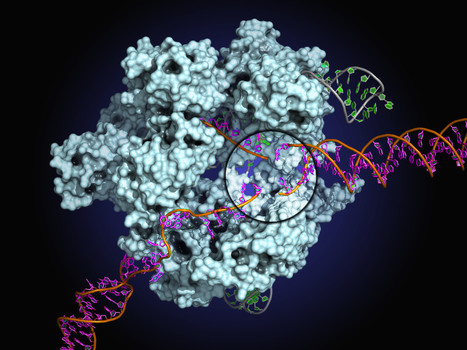







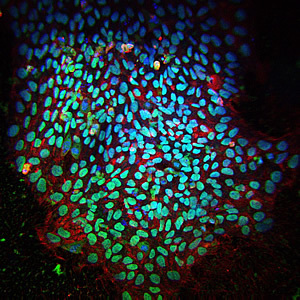







In this study, the authors knock down with a shRNA lentiviral vector the methyl CpG binding protein 2 (MeCP2) which enhances NF-κB activation in human peripheral blood mononuclear cells. They observed that MeCP2 deficiency increases expression of TNFα and other inflammatory cytokines by enhancing NF-κB signaling.
www.geg-tech.com/Vectors