


lenti

 Your new post is loading...
 Scoop.it!
BigField GEG Tech's insight:
The authors used shRNA lentiviral vectors directed against HIF1A and EPAS1 in neuroblastoma (NBL) cell lines. They show that, the inhibition of HIF1A and EPAS1 combined with all-trans retinoic acid (ATRA) treatment led to an acquired glial-cell phenotype and enhanced expression of glial-cell differentiation markers. These findings open the way for additional lines of attack in the treatment of NBL minimal residue disease. 
Scoop.it!
BigField GEG Tech's insight:
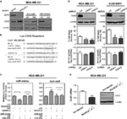
Here, the authors used shRNA lentiviral vectors to knock out KLF4 or miR-206 in MDA-MB-231 cells and determine its effect on Mammary cancer stem-like cells (MaCSCs) abundance. Their results identify miR-206 as an effector of KLF4-mediated prosurvival signaling in MaCSCs through repression of PDCD4 and CX43.
Scoop.it!
BigField GEG Tech's insight:
This study investigated the role of KLF4 in angiogenesis and underlying molecular mechanisms in human retinal microvascular endothelial cells (HRMECs). In this way, the authors used lentiviral vectors which mediated inducible expression and shRNA knockdown of KLF4. The demonstrated that KLF4 promotes angiogenesis by transcriptionally activating VEGF expression, thus activating the VEGF signaling pathway in HRMECs.
Scoop.it!
BigField GEG Tech's insight:
In this study, the authors sought to investigate the susceptibility of adult mouse Sca1+ side population CSCs to reprogramming by supplementing the triad of GATA4, MEF2C, and TBX5 (GMT), and more specifically by testing the effect of the missing co-activator, Myocd.Inthis way, they used various combinations of doxycycline-inducible lentiviral vectors. They conclude that transductions with MYOCD + TBX5 facilitated the identification of differentiating cells and the validation of this combinatorial reprogramming strategy.
Scoop.it!
BigField GEG Tech's insight:
In this study, the barrier activity of an insulator element from the human ankyrin-1 gene was analyzed in a lentiviral vector carrying an antisickling human β-globin gene. The presence of the Ankyrin insulator element did not change transgene expression in human hematopoietic cells in short-term erythroid culture or in vivo in primary murine transplants. However, analysis in secondary recipients showed that the lentiviral vector with the Ankyrin element preserved transgene expression, whereas expression from the vector lacking the Ankyrin insulator decreased in secondary recipients.
Scoop.it!
BigField GEG Tech's insight:
In the present study, the scientists investigated the effect of lentiviral vector-mediated survivin shRNA delivery in gastric cancer cell lines. In this way, they observed that knockdown of survivin significantly inhibites the proliferation and migration in the gastric cancer cells and tumorigenicity in a xenograft animal model.
Scoop.it!
BigField GEG Tech's insight:
The authors present simple protocols to produce and titrate lentiviral vectors, infect mammary epithelial cells, and check for contamination with replication-competent viruses.
Scoop.it!
BigField GEG Tech's insight:
In this review, the authors place into context the role of mammalian target of rapamycin (mTOR) pathways in HSC quiescence and function, endocytic regulation, and lentiviral gene delivery.
Scoop.it!
BigField GEG Tech's insight:
In this study, the authors used lentiviral vectors miR-101 and anti-miR-101 to invectigate miR-101's role in regulation of ABCA1 and cholesterol. They show that miR-101 promotes intracellular cholesterol retention under inflammatory conditions through suppressing ABCA1 expression and suggests that the miR-101-ABCA1 axis may play an intermediary role in the development of NAFLD and vascular atherosclerosis.
Scoop.it!
BigField GEG Tech's insight:
The scientists used AAV vectors to reproduce Dmd exon 78 missplicing switch in mice and observed muscle fibre remodelling and ultrastructural abnormalities including ringed fibres, sarcoplasmic masses or Z-band disorganization, which are characteristic features of dystrophic DM1 skeletal muscles.
Scoop.it!
BigField GEG Tech's insight:
In this study, the authors used several lentiviral vectors expressing shRNA to point out a significant correlation between E2F1 and PATCHED1, GLI1 and GLI2 expression in human melanomas.They find that E2F1 is a crucial mediator of HEDGEHOG (HH) signaling and it is required for melanoma cell proliferation and xenograft growth induced by activation of the HH pathway.
Scoop.it!
BigField GEG Tech's insight:
In this study, the authors tested strategies to optimize the protein production. For this aim, they tested lentiviral vectors containing EF1α promoter with or without HS4 insulator, SFFV promoter and UCOE and CMV promoter with or without β-globin intron The results suggest that all five vectors can stably transduce 293T cells, producing long term transgene expression with different efficiencies. However, neither the insulator nor the UCOE improved the GFP expression. The vectors containing the promoter CMV or CMV (β-globin intron) generated the highest gene expressions, manifesting as more favorable candidates for recombinant protein production in HEK293T cells.
|
Scoop.it!
BigField GEG Tech's insight:
Thanks to a lentiviral vector, the authors generated stable cell lines which express PDCD5 to investigate its role. They showed that PDCD5 interacts with P53 but not with Tip60. Altogether, their results suggest a role of PDCD5 in the regulation of p53 function but unrelated to cell cycle arrest or apoptosis, at least in the cell types investigated.
Scoop.it!
BigField GEG Tech's insight:
In this study, the scientists describe the used of sendai vectors for the high scale production of puripotent stem cells.Their procedure optimizations allowed them to make more than two hundred well-characterized lines per year.
Scoop.it!
BigField GEG Tech's insight:
In this study, the scientists focus on the role of dystroglycan (DG) in dendritic development and branching. In this purpose, they used a lentiviral vector to deliver short-hairpin RNA (shRNA) that specifically silences DG in cultured hippocampal neurons. They found that DG knockdown exerted an inhibitory effect on dendritic tree growth and arborization. In other hand, the overexpression of DG promoted dendritic length and branching. These results suggest that DG controls dendritic arborization.
Scoop.it!
BigField GEG Tech's insight:
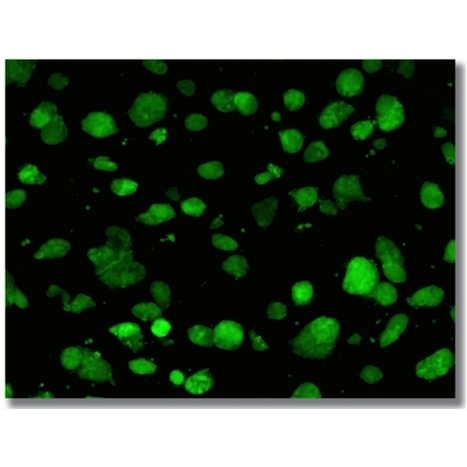
The authors constructed a LentiSema3A-EGFP to tested the effect of Sema3 expression in the tongue squamous cell carcinoma (SSC-9). The observed a significantly decrease of angiogenesis and tumor growth in mice. Mechanistically, Sema3A inhibited the phosphorylation of VEGFR2, as well as Src and FAK, downstream of the VEGF/VEGFR2 pathway.
Scoop.it!
BigField GEG Tech's insight:
Thanks to a Fox01 lentiviral vector the authors established a link between the anti-oxidative activity of FoxO1 and the TGF-β-induced secretion of extracellular matrix proteins which indicates the new role of FoxO1 in protecting mesangial cells under high glucose conditions.
Scoop.it!
BigField GEG Tech's insight:
To mimic the downregulation or upregulation of TNIP1, the authors used lentiviral vectors (TNIP1 shRNA or rTNIP1). Intradermal injection of TNIP1 shRNA in BALB/c mice led to exaggerated psoriatic conditions in imiquimod (IMQ)-induced psoriasis-like dermatitis. These findings indicate that TNIP1 has a protective role in psoriasis and therefore could be a promising therapeutic target.
Scoop.it!
BigField GEG Tech's insight:
In this study, the authors used lentiviral delivery of CRISPR-Cas9 machinery and conditional reprogramming culture methods to knockout the MUC18 gene in human primary nasal airway epithelial cells (AECs). They validated this tool to madiate knockouts in AEC culture, and suggest a pro-inflammatory role for MUC18 in airway epithelial response to bacterial and viral stimuli.
Scoop.it!
BigField GEG Tech's insight:
In this study the scientists investigated the feasibility, safety and efficiency of a minimally invasive, lentiviral based approach for the sustained in-vivo modification of renal tubular epithelial cells. They observed transgene expression confined to the renal cortex and sustained beyond 2 months post injection. Furthermore, they demonstrate the ability of this methodology to induce long-term, in-vivo knockdown of candidate genes either through somatic recombination of floxed alleles or by direct delivery of specific shRNA sequences.
Scoop.it!

Molecular Therapy — Methods & Clinical Development, Published online: 18 March 2015; | doi:10.1038/mtm.2015.4
BigField GEG Tech's insight:
In this sutdy, the scientists report the development of a HIV-based vector production system that utilizes helper-dependent adenovirus (HDAd). According the authors, the lentiviral vectors thus produced and pseudotyped VSV show an IU 10- to 30-fold higher, compared to plasmid transfection.
Scoop.it!
BigField GEG Tech's insight:
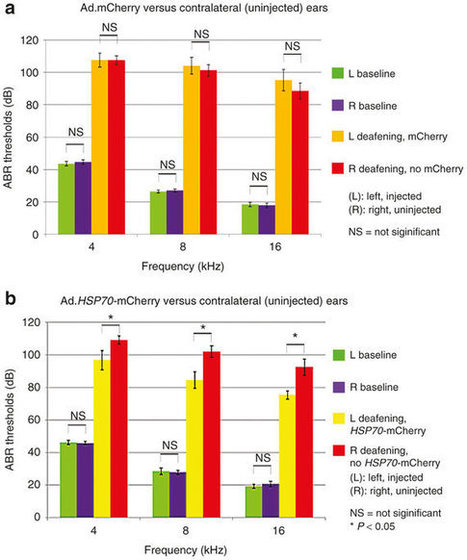
The authors tested whether viral-mediated overexpression of HSP70 can protect hair cells (HCs) and hearing from severe ototoxicity (kanamycin and furosemide) in guinea pigs. Adenovirus-HSP70 mCherry (Ad.HSP70-mCherry) was injected to experimental animals and exhibited a significant preservation of inner HCs but outer HCs were not protected.The authors think that HSP70 augmentation may represent a potential therapy attenuating ototoxic inner HC loss.
Scoop.it!
BigField GEG Tech's insight:
In this study, the authors used a tricistronic lentiviral vector (LV) encoding for cytokines, interleukin-4 and a melanoma antigen.to induce the differentitation of monocytes in smart dendritic cells (SmartDC-TRP2). SmartDC-TRP2 shows uniform expression of DC markers, detectable LV copies and a polyclonal LV integration pattern not biased to oncogenic loci.
Scoop.it!
BigField GEG Tech's insight:
In this study, the authors designed and constructed a transfer vector to express the toxin in transduced cells but not in packaging cells.
|












Thanks to lentiviral vectors, the authors investigate the role of UBE3C and ANXA7 in glioma. Their data reveal that high UBE3C expression contributes to glioma progression by ubiquitination and degradation of ANXA7, and thus presents a novel target for glioma therapy.
www.geg-tech.com/Vectors