


Vectorology - GEG Tech top picks
23.4K views |
+2 today
 Your new post is loading...
 Scoop.it!
BigField GEG Tech's insight:
The authors used a lentiviral vectors which expresses GFP to test its ability to label and track human placenta-derived mesenchymal stem cells (hPMSCs). They observed that this type of lentiviral vector has no adverse influences on the cellular or biochemical properties of hPMSCs or markers. 
Scoop.it!
BigField GEG Tech's insight:
The authors use a lentiviral vector expressing channelrhodopsin-2 (ChR2+) in catecholaminergic neurons (C1 and A5) to determine which of physiological responses are elicited when retrotrapezoid nucleus neurons (RTN) are selectively activated.They observed that RTN neurons activate breathing powerfully and, unlike the C1 cells, have minimal effects on blood pressure (BP) and have a weak arousal capability at best. A5 neuron stimulation produces little effect on breathing and BP, but does appear to facilitate arousal.
Scoop.it!
BigField GEG Tech's insight:
The authors present the recent results of lentiviral vectors mediated gene therapy for WAS showing stable multilineage engraftment leading to haematological and immunological improvement, and discuss the differences with respect to the WAS RV trial. They also describe recent clinical results of SCID-X1 gene therapy with SIN γ-RV and the perspectives of targeted genome editing techniques, following early preclinical studies showing promising results in terms of specificity of gene correction.
Scoop.it!
BigField GEG Tech's insight:
The authors observed that, after RNAi transduction, the relative expression levels of HIF-1α mRNA and Glut-1 under hypoxia were reduced and the relative expression levels of HIF-1α protein also decreased. Compared with the control group, the inhibition rates of cell proliferation under different viral dosages were 5.98%, 15.65%, 26.42%, and 40.81%, respectively, positively correlated with the vector doses.
Scoop.it!
BigField GEG Tech's insight:
By engineering a panel of versatile piggyBac vectors and constructing recombinant adenoviruses expressing piggyBac transposase (PBase), the authors demonstrate that adenovirus-mediated PBase expression significantly enhances the integration efficiency and expression level of transgenes in mesenchymal stem cells and osteosarcoma cells, compared to that obtained from co-transfection of the CMV-PBase plasmid.
Scoop.it!
BigField GEG Tech's insight:
The authors used shRNA lentiviral vector technology to down-regulate HMGN5 expression in 5637 cells. HMGN5 knockdown suppressed invasion induced G1/S cell cycle arrest but not apoptosis and thus contributed to decreased cell viability in urothelial bladder cancer (UBC) 5637 cells. In vivo study further showed that HMGN5 knockdown affected the tumorigenesis of 5637 cells in nude mice. In conclusion HMGN5 contributes to the growth and invasion of UBC 5637 cell line and HMGN5 could be exploited as a target for therapy in UBC.
Scoop.it!
BigField GEG Tech's insight:
The authors generated a lentiviral vector to silencing STAT3 expression. They observed that the konwdown of STAT3 blocks the effects of IL-10 which regulates the adult subventricular zone neurogenesis by up-regulating the expression of pro-neural genes and modulating cell cycle exit.
Scoop.it!
BigField GEG Tech's insight:
Luigi Naldini et al. showed that gene therapy using lentiviral vectors targeting the expression of a canine factor IX transgene in hepatocytes was well tolerated and provided a stable long-term production of coagulation factor IX in dogs with hemophilia B. By exploiting three different mouse models designed to amplify the consequences of insertional mutagenesis, they showed that no genotoxicity was detected with these lentiviral vectors.
Scoop.it!
BigField GEG Tech's insight:
In the present study, the authors constructed a lentiviral RASAL1 expression vector to to transduce the human poorly differentiated gastric adenocarcinoma cell line, BGC-823. The results showed that the over-expression of RASAL1 led to a significant reduction in both
Scoop.it!
BigField GEG Tech's insight:
The authors compared the human Artemis promoter (APro) to the moderate-strength human PGK promoter and the strong human EF1α promoter to regulate expression of Artemis after ex vivo lentiviral transduction of hematopoietic stem cells (HSC) in a murine model of SCID-A. Recipient animals treated with the PGK-Artemis vector exhibited moderate repopulation of their immune compartment, yet demonstrated a defective proliferative T lymphocyte. Animals treated with the EF1α-Artemis vector displayed high levels of T lymphocytes but an absence of B lymphocytes and deficient lymphocyte function. In contrast, transduction with the APro-Artemis vector supported effective immune reconstitution to wild-type levels resulting in a fully functional T and B lymphocyte responses.
Scoop.it!
BigField GEG Tech's insight:
Thanks to Non Integrating Lentiviral Vectors which express ZFN, the scientists demonstrated efficient targeted cleavage at the beta-globin locus with minimal off-target modification. By co-delivering a homologous donor template, high levels of gene modification were achieved in CD34+ hematopoietic stem and progenitor cells (HSPCs).
Scoop.it!
BigField GEG Tech's insight:
A human bFGF gene segment was delivered into rat amniotic epithelial cells (AECs) by lentiviral. RGCs counting implicated that RGCs numbers of the cell transplantation groups were significantly higher than that of the control group, and the AECs/hbFGF group was significantly higher than that of the AECs group. Moreover GAP-43 integral optical density value in the control group was significantly lower than that of the cell transplantation groups, and the value in the AECs/hbFGF group was significantly higher than that of the AECs group.
|
Scoop.it!
BigField GEG Tech's insight:
Six of the 7 patients were alive at the time of last follow-up (mean and median follow-up, 28 months and 27 months, respectively) and showed sustained clinical benefit. One patient died 7 months after treatment of preexisting drug-resistant herpes virus infection. Eczema and susceptibility to infections resolved in all 6 patients. Autoimmunity improved in 5 of 5 patients. No severe bleeding episodes were recorded after treatment, and at last follow-up, all 6 surviving patients were free of blood product support and thrombopoietic agonists. All 6 surviving patients exhibited high-level, stable engraftment of functionally corrected lymphoid cells. The degree of myeloid cell engraftment and of platelet reconstitution correlated with the dose of gene-corrected cells administered.
Scoop.it!
BigField GEG Tech's insight:
The authors report the feasibility of a novel reprogramming process based on vectors derived from the non-integrating vaccine strain of measles virus (MV). The reprogramming vector cocktail with the OCT4-expressing MV vector and SOX2-, KLF4- and cMYC-expressing lentiviral vectors efficiently transduced human skin fibroblasts and formed iPSC colonies.
Scoop.it!
BigField GEG Tech's insight:
To elucidate the function of the NLRP3 inflammasome and the mechanisms that lead to its expression and activation, the scientists use a lentiviral vectors encoding short hairpin RNAs to knock down NLRP3 and caspase-1 in human dental pulp fibroblasts (HDPFs).
Scoop.it!
BigField GEG Tech's insight:
In this study, by constructing chimeric Ad5F35 adenoviruses carrying CRISPR/Cas9 components, the authors efficiently transduced primary CD4+ T lymphocytes and disrupted CCR5 expression, and the positively transduced cells were conferred with HIV-1 resistance.
Scoop.it!
BigField GEG Tech's insight:
The authors design a protocol to produce very efficient lentiviral vectors pseudotyped with the rabies virus envelope glycoprotein for retrograde delivery. They demonstrate the usefulness of these vectors by selectively targeting corticothalamic and corticotectal neurons for high-level expression of a fluorophore in knock-in reporter mice.
Scoop.it!
BigField GEG Tech's insight:
This review will discuss current knowledge of LVs and the applications of this viral vector-based delivery vehicle to cancer immunotherapy.
Scoop.it!
BigField GEG Tech's insight:
The authors used customized transcription activator-like effector nucleases (TALENs) targeting HIV LTR site to excise HIV proviral DNA. A single transfection of TALEN-encoding mRNA resulted in more than 80% of lentiviral vector DNA being successfully removed from the T cell lines. Furthermore, they developed a lentiviral vector system that takes advantage of the efficient proviral excision with TALENs and permits the simple selection of gene-transduced and excised cells in T cell lines.
Scoop.it!
BigField GEG Tech's insight:
The authors describe a general method for construction of stable packaging cell lines that continuously produce lentiviral vectors. This uses Cre recombinase-mediated cassette exchange to insert a codon-optimised HIV-1 Gag-Pol expression construct in a continuously expressed locus in 293FT cells. Subsequently Rev, envelope and vector genome expression cassettes are serially transfected. Vector titers in excess of 106 transducing units/ml can be harvested from the final producer clones, which can be increased to 108 TU/ml by concentration.
Scoop.it!
BigField GEG Tech's insight:
Here the authors describe a general protocol for the production of self-inactivating lentiviral vector particles and their purification to high titers by either ultracentrifugation or ultrafiltration. Next they provide a basic procedure to transduce human pluripotent stem cells and propagate clonal cell lines.
Scoop.it!
BigField GEG Tech's insight:
The scientists show here that introduction of lentivirus and gammaretroviral vectors into cells by transduction increased translation (superinduction) of cotransfected genes but not most endogenous proteins.Superinduction was independent of the unfolded protein, stress, and interferon responses and did not require retroviral vector transcription. Retroviral vectors elevated cap-dependent translation initiation without increased mammalian target of rapamycin (mTOR) kinase activity.
Scoop.it!
BigField GEG Tech's insight:
The authors used a lentiviral vector to express basic fibroblast growth factor (bFGF) in order to investigate the influence of bFGF on osteogenic gene expression. Changes in osteogenic gene expression indicated that the bone marrow stem cells from the experimental group had better osteogenic ability, as compared with the control cells. Therefore, bFGF‑transduced cells may be useful seed cells for bone tissue engineering.
Scoop.it!
BigField GEG Tech's insight:
The authors describe a dox inducible CRISPR/Cas9 lentiviral vector system allowing for ubiquitous and efficient gene deletion in murine and human cells. Dox treatment resulted in 60%–80% mutation rates using the inducible sgRNA as compared to only 5%–10% for the inducible Cas9.
|






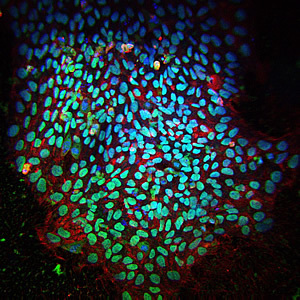




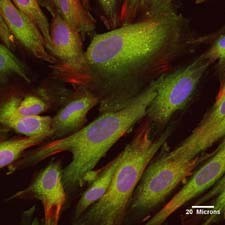






The authors used a CXCR-7-shRNA lentiviral vectors to investigate its effect on TRAIL-mediated apoptosis and suppression of invasive migration and the underlying mechanisms.They observed that knock-down of CXCR-7 expression leads to augmented TRAIL-mediated suppression of MCF-7 cell proliferation and invasion.
www.geg-tech.com/Vectors