




Vectorology - GEG Tech top picks
23.4K views |
+3 today
 Your new post is loading...
 Scoop.it!
BigField GEG Tech's insight:
The authors used a lentiviral vector to express miR-145. After transduction of ECA109, they observed a significantly inhibition of esophageal cancer cell proliferation. Moreover, the number of cells at the G2/M stage, as well as the cell apoptotic rate, in the miR-145-transduced group was significantly increased (P < 0.05). 
Scoop.it!
BigField GEG Tech's insight:
Here, the authors designed a lentiviral vector to overexpressed miR-451a. They observed the downregulation of migration inhibitory factor (MIF) expression in mRNA and protein levels and the inhibition of cell proliferation, colony formation, and invasion of breast cancer cells. Downregulation of miR-451a upregulated MIF expression and increased breast cancer cell growth, invasion, and tamoxifen sensitivity.
Scoop.it!

Molecular Therapy — Methods & Clinical Development, Published online: 17 June 2015; | doi:10.1038/mtm.2015.20
BigField GEG Tech's insight:
The scientists developed a method employing a hollow fiber bioreactor traditionally used for cell expansion to generate a large scale of clinical grade lentiviral vector suitable for the generation of induced pluripotent stem cells (iPSCs). They have demonstrated the growth, transfection, and vector-producing capability of 293T producer cells in this system.
Scoop.it!
BigField GEG Tech's insight:
Using a shRNA lentiviral vector, the authors demonstrated that the loss of LKB1 expression altered the cellular response to erlotinib treatment, resulting in impaired ATP homeostasis and an increase in reactive oxygen species. Furthermore, erlotinib selectively blocked mammalian target of rapamycin signaling, inhibited cell growth and activated apoptosis in LKB1-deficient cells. These findings may have significant implications for the design of novel NSCLC treatments that target dysregulated metabolic and signaling pathways in LKB1-deficient tumors.
Scoop.it!
BigField GEG Tech's insight:
Thanks to several lentiviral vectors, the scientists have investigated the potential dichotomous role of YAP in UCC response to chemotherapy utilizing two patient-derived xenograft models recently established. Constitutive expression and activation of YAP inversely correlated with in vitro and in vivo cisplatin sensitivity. YAP overexpression protected while YAP knockdown sensitized UCC cells to chemotherapy and radiation effects via increased accumulation of DNA damage and apoptosis.
Scoop.it!
BigField GEG Tech's insight:
Thanks to different shRNA lentiviral vectors, the authors identified and characterized a molecular mechanism controlling MTSS1 expression, which impinges on a pro-tumorigenic role of MTSS1 in breast tumors. We found that in normal and in cancer cell lines ΔNp63 is able to drive the expression of MTSS1 by binding to a p63-binding responsive element localized in the MTSS1 locus.
Scoop.it!
BigField GEG Tech's insight:
Thanks to Lentiviral vectors expressing full-length human SULT2B1b protein or siRNA targeting human SULT2B1b, the authors show that SULT2B1b expression correlates with colorectal carcinoma (CRC) progression and metastasis and may serve as a novel prognostic biomarker and potential therapeutic target for patients with CRC.
Scoop.it!
BigField GEG Tech's insight:
The authors tested a Doxycycline (Dox)-inducible “all-in-one” lentiviral vector (Lv.TII vectors) design which expresses a reverse transactivator protein (rtTA2S-M2) in human hematopoietic cells. Functionality of Dox-inducible hCDD expression was demonstrated by a more than 10-fold increase in cytosine arabinoside (Ara-C) resistance of Lv.TII.CDD transduced K562 cells. In addition, Lv.TII.CDD transduced CD34+ derived myeloid cells were protected from up to 300 nM Ara-C.
Scoop.it!
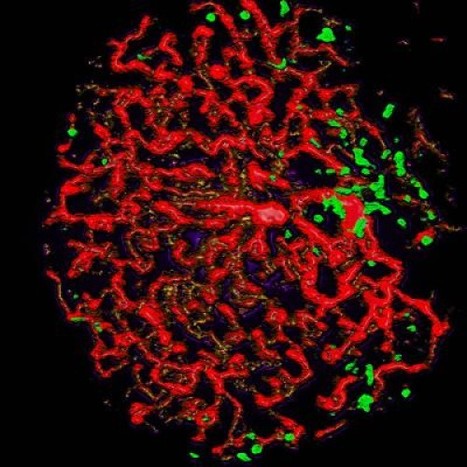
Successful normalization of blood glucose in patients transplanted with pancreatic islets isolated from cadaveric donors established the proof-of-c...
BigField GEG Tech's insight:
Here, the authors describe a simple and easy-to-use lentiviral transduction protocol that allows the transduction of approximately 80 % of mouse and human islet cells while preserving islet architecture, metabolic function and glucose-dependent stimulation of insulin secretion.
Scoop.it!
BigField GEG Tech's insight:
Here, the authors designed HER2/neu-specific lentiviruses using this in vitro pseudotyping approach to transduce specifically cells that express the target receptor at high levels in a co-culture. They envision that the described technology could provide a powerful, broadly applicable platform for the incorporation of cell-targeting functionality onto viral vectors.
Scoop.it!

A 3D human neural cell culture system for modeling Alzheimer's disease
BigField GEG Tech's insight:
In this study, the authors descibe a protocol based on the used of lentiviral vectorsto generate a3D human neural cell culture. in 1-2 days for modeling Alzheimer's disease. The aggregation of Aβ is observed after 6 weeks of differentiation, followed by robust tau pathology after 10–14 weeks.
Scoop.it!
BigField GEG Tech's insight:
The authors used lentiviral vectors to express B-cell maturation antigen (BCMA), PS1 wt or PS mutant to investigate their interactions and biological functions. They demonstrated that shedding of BCMA by γ-secretase controls plasma cells in the bone marrow and yields a potential biomarker for B-cell involvement in human autoimmune diseases.
|
Scoop.it!

A biweekly scientific journal publishing high-quality research in molecular biology and genetics, cancer biology, biochemistry, and related fields
BigField GEG Tech's insight:
To enable in vivo CRISPR/Cas9-mediated gene inactivation in the pancreas, the authors generated a Cre-regulated Cas9 allele and lentiviral vectors that express Cre and a single-guide RNA. CRISPR-mediated targeting of Lkb1 in combination with oncogenic Kras expression led to selection for inactivating genomic alterations, absence of Lkb1 protein, and rapid tumor growth that phenocopied Cre-mediated genetic deletion of Lkb1.
Scoop.it!
BigField GEG Tech's insight:
In this study, the authors knocked down or ectopically expressed miR-223 in cord blood CD34+ cells using lentiviral vectors. While miR-223 knockdown delayed myelo-erythroid precursor differentiation in vitro, it increased myeloid progenitors in vivo following serial xenotransplantation. Ectopic miR-223 expression increased erythropoiesis, T and early B lymphopoiesis in vivo.
Scoop.it!

Molecular Therapy — Methods & Clinical Development, Published online: 8 July 2015; | doi:10.1038/mtm.2015.23
BigField GEG Tech's insight:
Here, the authors have generated late-onset Pompe disease-specific induced pluripotent stem cell (iPSC) and differentiated them into cardiomyocytes. Differentiated cardiomyocyte shows glycogen accumulation and lysosomal enlargement. Lentiviral GAA rescue improves GAA enzyme activity and glycogen accumulation in iPSC. The efficacy of gene therapy is maintained following the cardiomyocyte differentiation. Lentiviral GAA transfer ameliorates the disease-specific change in cardiomyocyote.
Scoop.it!
BigField GEG Tech's insight:
Thanks to shRNA lentiviral vectors which target promyelocytic leukemia (PML), the authors show PML depletion induces telomere damage, nuclear and chromosomal abnormalities, and senescence. This work provides a novel view of the physiologic function of PML, which participates in telomeres surveillance in normal cells.
Scoop.it!
BigField GEG Tech's insight:
Genetically modified mesenchymal stem cells have been used in attempts to increase the expression of interleukin‑1 receptor antagonist (IL‑1Ra); however, the attempts thus far have been unsuccessful. In this sutdy, the scientists designed a lentiviral vector which is able to efficiently express exogenous Il‑1Ra in murine bone marrow‑derived mesenchymal stem cells under certain conditions and had a marked capacity for proliferation.
Scoop.it!
BigField GEG Tech's insight:
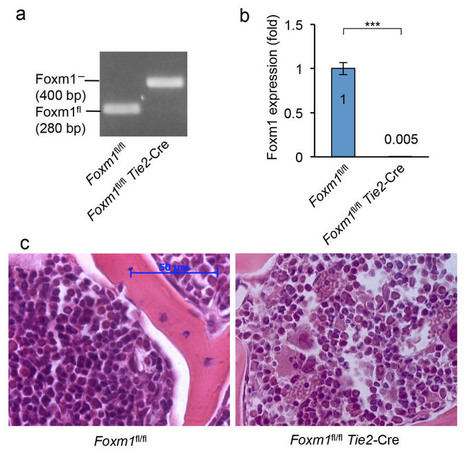
Here, the authors used an inducible lentiviral vector to express Nurr1. They find that Foxm1 directly bound to the promoter region of the gene encoding the receptor Nurr1, inducing transcription, while forced expression of Nurr1 reversed the loss of quiescence observed in Foxm1-deficient cells in vivo. Thus, these studies reveal a previously unrecognized role for Foxm1 as a critical regulator of the quiescence and self-renewal of HSCs mediated at least in part by control of Nurr1 expression.
Scoop.it!
BigField GEG Tech's insight:
The authors used a LentiCRISPR-sgTRF2-1 to knockdown TERF2. They observe an exacerbation of mitotic telomere deprotection which increases the ratio of cells that died during mitotic arrest and sensitized cancer cells to mitotic poisons. They propose a crisis pathway wherein chromosome fusions induce mitotic arrest, resulting in mitotic telomere deprotection and cell death, thereby eliminating precancerous cells from the population.
Scoop.it!

Wiskott-Aldrich syndrome (WAS) is a life-threatening disorder characterized by immunodeficiency, thrombocytopenia and eczema. Hematopoietic stem ce...
BigField GEG Tech's insight:
In this study, the scientists developed a series of codon-optimized WASP-expressing alpha-, gammaretro- and lentiviral selfinactivating vectors and have performed comparative studies with regard to expression, vector dose and genotoxicity in vitro. The safety profile of SIN vectors was superior, as evidenced by decreased genotoxicity in a murine hematopoietic progenitor cell - based in vitro immortalization assay. Using an in vitro OP9 stroma cell - based co-culture system, they provide evidence that a codon-optimized lentiviral vector improves the B-cell differentiation block characteristic of WAS.
Scoop.it!
BigField GEG Tech's insight:
In this study, the scientist used lentiviral vectors (LVs) delivering short-hairpin RNA sequences (shRNAs) to obtain striatum-specific gene knockdown of Ras-GRF1 and Ras-GRF2. The consequences of these genetic manipulations were evaluated in the 6-hydroxydopamine mouse model of Parkinson's disease. They show that Ras-GRF1 but not Ras-GRF2 striatal gene-knockdown reduced l-DOPA-induced GABA and glutamate release in the substantia nigra pars reticulata, a neurochemical correlate of dyskinesia. Furthermore, inactivation of Ras-GRF1 provided a prolonged anti-dyskinetic effect for up to 7 weeks and significantly attenuated symptoms in animals with established LID.
Scoop.it!
BigField GEG Tech's insight:
The scientists designed a lentiviral vector (LV) which combines Mokola-G envelope, glutamine synthetase promoter and two distinct microRNA target sequences. This LV provides a powerful tool for efficient and cell-type-specific gene silencing in the central nervous system. The authors anticipate that this LV will be a potent and versatile system to improve the targeting of cell populations for fundamental as well as therapeutic applications.
Scoop.it!
BigField GEG Tech's insight:
The authors summarize relevant laboratory-based advances in understanding recessive dystrophic epidermolysis bullosapathogenesis as well as recent steps toward translating this knowledge into targeted therapies.
Scoop.it!

Lineage conversion induced by pluripotency factors involves transient passage through an iPSC stage
BigField GEG Tech's insight:
In this study, the scientists used an inductible lentiviral vector OSKM (which expresses Oct4, Klf4, Sox2 and c-Myc) in mouse fibroblasts to induce pluripotent stem cells (iPSCs) and to induce neural stem cells (iNSCs) under conditions previously shown to induce only iNSCs. Their data suggest that iNSC generation from fibroblasts using OKSM and other pluripotency-related reprogramming factors requires passage through a transient iPSC state.
|

















In this study, the authors report that small, ∼70-bp tRNA promoters can be used to express high levels of tRNA:sgRNA fusion transcripts that are efficiently and precisely cleaved by endogenous tRNase Z to release fully functional sgRNAs. This novel sgRNA expression strategy should greatly facilitate the construction of effective AAV-based Cas9/sgRNA vectors for future in vivo use.
www.geg-tech.com/Vectors