


Vectorology - GEG Tech top picks
23.4K views |
+3 today
 Your new post is loading...
 Scoop.it!
BigField GEG Tech's insight:
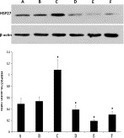
The scientists investigated the effects of HSP27 expression on cytoskeleton dynamics and contractile function of human bladder smooth muscle cells (BSMCs) in vitro. In this goal, they used lentiviral vectors to overexpress or knock down HSP27. They show that the structure of actin filaments in HSP27 over-expressed cells recovered and F/G-actin ratio significantly increased at 12 h after stretching which is not the case in HSP27 knock-down cells. In addition, the contractile force of BSMCs was enhanced by over-expression of HSP27 and attenuated by knock-down of HSP27, suggesting a pivotal role of HSP27 in regulating bladder smooth muscle contraction. 
Scoop.it!
BigField GEG Tech's insight:
In this study, the authors designed a non integrating lentiviral vector which expresses diphtheria toxin A under the control of the Survivin promoter which is dramatically activated in cancer tissues and cells. Their results suggest that the IDLV system that we generated possesses therapeutic potential in cancers in vitro and in vivo.
Scoop.it!
BigField GEG Tech's insight:
In this study, the authors used an shRNAlentiviral vector to knockdown the LAPTM4B to study its implication in the human serous adenocarcinoma cell line. They observed that transduced cells exhibited significant decreases in cell motility and invasion. Furthermore, LAPTM4B depletion resulted in a significant decrease in PCNA, VEGF, MMP2, MMP9 and CDK12 expression. These results suggest that LAPTM4B expression may be an oncogene-inducing feature of invasive ovarian cancer cells and may be a potential therapeutic target for ovarian cancer treatment.
Scoop.it!
BigField GEG Tech's insight:
Alpha-fetoprotein (AFP) is overexpressed in hepatocellular carcinoma (HCC) and could be a potential target for adoptive immunotherapy. In this study, the authors modify T cells thanks to a lentiviral vector which expresses TCR α/β chain genes of AFP. They observe that the number of IFN-γ secretion T cells and the specific cytotoxicity in tumor-bearing NOD/SCID mice are significantly raised in transgenic CTLs. TCR gene transfer seems to be a promising strategy for the treatment of HCC.
Scoop.it!
BigField GEG Tech's insight:
In this study, the authors highlight the role of the AT motif thanks to the use of lentiviral vector which express the luciferase driven by the AT motif ×7. They show that activation of AT motifs is circadian, with decreased amplitude and robustness of these oscillations in Zfhx3Sci/+ SCN slices.
Scoop.it!
BigField GEG Tech's insight:
In this work, the authors combine lentiviral vector an CRISPR system. to identify genes whose loss sensitizes human cells to phenformin, a complex I inhibitor of mitochondria.
Scoop.it!

employed a conditional RNA interference knockdown strategy with a lentiviral vector encoding a short hairpin p53
BigField GEG Tech's insight:
Thanks to a conditional RNA interference knockdown strategy with a lentiviral vector encoding a short hairpin p53, the authors show that skeletal muscle dedifferentiation during newt limb regeneration depends on a programmed cell death response by myofibres.
Scoop.it!
BigField GEG Tech's insight:
This review summarizes the results of gene therapy in animal models for peripheral nerve repair and try to identify key areas of future research in the domain of PNS-gene therapy. The authors discuss the route and mode of delivery of the vector to human patients, the efficacy and safety of the vector, and the choice of the patient population for a first possible proof-of-concept clinical study.
Scoop.it!
BigField GEG Tech's insight:
Here, the authors used a Non Integrating Lentiviral Vector (NILV) to express Igf-1 under the control of the synapsin promoter which is neuron specific. Their investigations of neurotrophic effects on primary rat neuronal cultures demonstrated that neurons transduced with the NILV Igf-1 vectors had complete protection upon with drawal of exogenous trophic support. However, striatal transduction of such vectors into 6-OHDA-lesioned rats provided neither protection of dopaminergic substantia nigra neurons nor improvement of animal behavior. GEG Tech provides LV inetgrating and non integrating with syn promoter. For more information, please contact us nicolas.grandchamp@geg-tech.com Or have a look here: http://www.geg-tech.com/Vectors/index.php/line-lenti-one-epi.html?promoter=39
Scoop.it!
BigField GEG Tech's insight:
Accurate measurement of biological vector titre is a key parameter for in vivo study and gene therapy. Here, the authors designed a qPCR system for the single-tube assessment of lentiviral vector copy numbers that is suitable for analyses in at least 33 different mammalian species, including human and other primates, mouse, pig, cat and domestic ruminants.
Scoop.it!
BigField GEG Tech's insight:
In this study, the authors compare AAV and lentiviral vectors for gene transfer to human skin in a xenotransplanted mouse model. They observed that with all serotypes tested with AAV (1,2,5,6,8 and 9), the expression was low whereas lentiviral vectors led to extensive and persistent transgene expression. The study demonstrates limited capacity of single-stranded AAV vectors of six commonly used serotypes for gene delivery to human skin in vivo.
Scoop.it!
BigField GEG Tech's insight:
In this report, the authors present data that demonstrate the feasibility of using the human sodium-iodide symporter (hNIS) as a reporter gene for tracking neural stem cell (NSC) after transplantation in the brain using SPECT/CT imaging. In this purpose, neural stem cells were isolated from the hippocampus of adult rats (Hipp-NSC) and transduced with a lentiviral vector containing the hNIS gene. Their results show that the expression of the hNIS allows for the repeated visualization of NSC in vivo in the brain using SPECT/CT imaging and it does not affect the ability of Hipp-NSC to generate neuronal and glial cells in vitro and in vivo.
|
Scoop.it!
BigField GEG Tech's insight:
Here, the authors downregulation LAPTM4B gene expression in NIH:OVCAR3 cells thanks to a sh lentiviral vector. The transduced cells exhibited significant decreases in cell motility and invasion. Furthermore, LAPTM4B depletion resulted in a significant decrease in PCNA, VEGF, MMP2, MMP9 and CDK12 expression. These results suggest that LAPTM4B expression could be an oncogene-inducing feature of invasive ovarian cancer cells and could be a potential therapeutic target for ovarian cancer treatment.
Scoop.it!
BigField GEG Tech's insight:
In this study, the authors investigate the effect of growth-associated protein-43 (GAP-43) on bone marrow mesenchymal stem cell (BMSC) differentiation in a rat model of traumatic optic neuropathy (TON). They realize GAP‑43 overexpression and GAP‑43 knockdown thanks different lentiviral vectors. In this way, they show that GAP‑43 promoted BMSC differentiation into neuron-like cells, and intravitreally injected GAP-43/BMSCs promoted the process of nerve repair in a rat model of TON.
Scoop.it!
BigField GEG Tech's insight:
To investigate the role of SOCS3 in erythropoiesis, the author used a shRNA lentiviral vectors which knockdowns this gene. They found that the inhibition of the gene induced erythroid expansion in HSCs. Conversely, Ectopic expression of SOCS3 in progenitor cells blocked erythroid expansion and erythroid colony formation of HSCs. These results provided new insight into the mechanism of erythropoietic development.
Scoop.it!
BigField GEG Tech's insight:
In this study, the authors present a modular lentiviral vector system, which provides expression of constitutive and inducible components.To validate this tool, they constitutively expressed Meis1 followed by inducible co-expression of collaborating partner Hoxa9 under the control of tetracycline responsive promoters. They demonstrated dose-dependent blockade of myeloid differentiation when both Meis1/Hoxa9 were concomitantly overexpressed in primary HPCs in vitro, but the absence of the transformed phenotype in non-induced samples or when Hoxa9 expression was down-regulated.
Scoop.it!
BigField GEG Tech's insight:
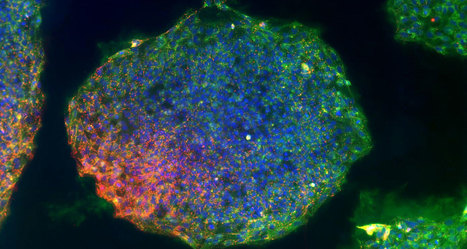
The scientists used a lentiviral vector expressing OCT4, SOX2, KLF4, and cMYC to transduce human somatic fibroblasts in insulin-rich defined medium and generate Ips. Human fibroblasts grown in this medium showed higher proliferation, enhanced expression of insulin signaling and cell cycle genes, and a switch from glycolytic to oxidative phosphorylation metabolism, but they displayed poor reprogramming efficiency compared with cells grown in normal medium.
Scoop.it!
BigField GEG Tech's insight:
Through the use of a shRNA lentiviral vector which targets Irf6, the scientists show that is a mediator of TGFβ3, which regulates an epithelial mesenchymal transition and fusion process during the embryonic palate development.
Scoop.it!
BigField GEG Tech's insight:
In this study, the authors used a lentiviral vector to overexpress miR-9 which is negatively regulates by N-myc. They show that miR-9 can inhibit the proliferation of granule cell precursors (GCPs) and highlight N-myc like a key switch regulating of this process.
Scoop.it!
BigField GEG Tech's insight:
Here the scientists designed a novel lentiviral vectors (CD4-LV) that have been rendered selective for human or simian CD4+ cells by surface engineering.For this purpose, the authors have pseudotyped the LVs with the fusion protein H-aCD4D29.2 F. They successfully tested the CD4-LV in vitro to express Ag receptors and in vivo to express FOXP3.
Scoop.it!
|








|
Scooped by
BigField GEG Tech
July 29, 2015 2:10 PM
|
Scoop.it!
BigField GEG Tech's insight:
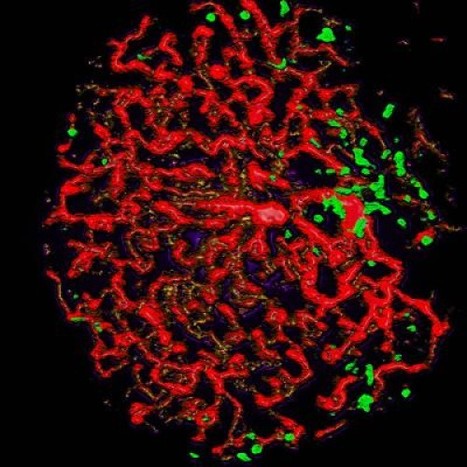
In this study, the scientists use a lentiviral vector which expresses PDX1, a master regulator gene required for embryonic development of the pancreas and is crucial for normal pancreatic islets activities in adults. After transduction of human bone marrow cells (MSCs) in order to generate insulin producing cells (IPCs), they detected secretion of insulin and C-peptide in the presence of glucose. These results suggest that lentiviral vectors PDX1 can induce pancreatic differentiation.
|
|
Scooped by
BigField GEG Tech
July 28, 2015 2:36 AM
|
Scoop.it!

BigField GEG Tech's insight:
In this sutdy, the scientists tested the effect of SAMHD1 in lentiviral transduction rate. Thanks to a lentiviral vectors which expresses Vpx, a shRNA against SAMHD1. In this conditions, they observed a modest but significant increase in the transduction efficiency which suggests that SAMHD1 has some limited efficacy in blocking reverse transcription but the major barrier occurs before.
|
|
Scooped by
BigField GEG Tech
July 27, 2015 10:22 AM
|
Scoop.it!

BigField GEG Tech's insight:
You’re on holiday but shouldn’t forget about science!
Play with us our Lenti summer game and get up to 500€ voucher or the free shipping on your next order or a hammock to have some good time during your holidays.
How to play?
Very simple: just propose your answer to the question as a comment to the post on our LinkedIn company page post before Sunday, 2nd August, 2015 midnight, Paris time, the winners will be drawn from all correct answers returned. We will contact drawn winners to arrange the shipment of their lots.
Here is the question:
Who is the second author of the first publication describing the pseudotyping of a lentiviral vector with a Mokola glycoprotein envelope?





In this work, the authors design a CRISPR cas9 system compatible with an AAV packaging. These strategy can facilitate construction of AAV vectors that have optimal multiplexed sgRNA expression and function.
www.geg-tech.com/Vectors