


Vectorology - GEG Tech top picks
23.4K views |
+3 today
 Your new post is loading...
 Scoop.it!
BigField GEG Tech's insight:
Here the authors used a lentiviral vector which overexpresses integrin B1 to transduce endothelial cells. These cells are injecrted into mice which have femorla arteries occluded. Four weeks later, blood perfusion of the ischemic limb was significantly augmented. Intravenous administration of ECFCs engineered to home to ischemic tissue appears to efficiently mediate therapeutic angiogenesis in a mouse model of peripheral artery disease. 
Scoop.it!
BigField GEG Tech's insight:
In this study, the scientists used lentiviral vectors to overexpress a human cytidine deaminase and a multidrug resistance 1. Efficient chemoprotection of CDD and MDR1 transduced hematopoietic 32D as well as primary lin− cells was proven in the context of Ara-C and anthracycline application. Both, CTX-R transduced 32D as well as primary hematopoietic cells displayed marked resistance at concentrations 5–20 times the LD50 of non-transduced control cells. Moreover, simultaneous CDD/MDR1 gene transfer resulted in similar protection levels even when combined Ara-C anthracycline treatment was applied. Furthermore, significant enrichment of transduced cells was observed upon cytotoxic drug administration.
Scoop.it!
BigField GEG Tech's insight:
Here the authors used a lentiviral vectors which expresses LIN28A to explore its effect in regulating gamma-globin gene expression and HbF levels in cultured adult erythroblasts. Their results suggest that erythroblast targeting of LIN28A expression is sufficient for increasing fetal hemoglobin expression in adult human erythroblasts.
Scoop.it!
BigField GEG Tech's insight:
Gene therapy for rare inherited neurologic diseases has entered the clinics. One strategy relies upon the replacement of brain microglia using hematopoietic stem cell gene therapy with lentiviral vectors. Therapeutic success using this approach has been obtained in X-linked adrenoleukodystrophy and metachromatic leukodystrophy. The other strategy relies upon the intracerebral administration of adeno-associated virus vectors encoding lysosomal enzymes. Therapeutic trials are ongoing in Batten's disease, metachromatic leukodystrophy, and Sanfilippo type A and B diseases.
Scoop.it!

Virology. 2015 Nov 30;488:162-168. doi: 10.1016/j.virol.2015.11.012. [Epub ahead of print]
BigField GEG Tech's insight:
Lentiviral vectors are commonly pseudotyped with the heterologous envelope VSV-G due to its broad host tropism and stability conferred. However, in some cases, the sensibility of VSV-G by human complement hinders the use of lentiviral vectors for broader applications. In this study, the authors evaluated two serologically distinct novel viral envelopes derived from Chandipura (CNV-G) and Piry (PRV-G) vesiculoviruses to pseudotype lentiviral vectors. They showed that these envelopes do not interfere the production of high titer vector stocks and demonstrated the ability of lentiviral vectors CNV-G and PRV-G to transduce different cell types such as epithelial, fibroblast or neuroblast origin cells (GHOST, HeLa, BHK, MDCK and N2a cells) and also non-adherent cells such as lymphocytic lineage (Sup-T1, CEM, Jurkat cells). Finally, they tested the resistance of the different lentiviral vectors to the inactivation by five sera from different donors. While VSV-G pseudotype was inactivated significantly with a 70–80% reduction in the overall titer, the PRV-G pseudotype showed only 10–45% drop and CNV-G pseudotype decreased in titer by 45–65%. Overall, the resistance of CNV-G and PRV-G to serum inactivation relative to that of VSV-G is significant (p<0.05), thus indicating the relative stability of these for in vivo use. In conclusion, CNV-G and PRV-G pseudotyped vectors are expected to fill a gap when alternative envelope proteins are needed to transduce a particular cell type and when neutralizing immune responses preclude the use of the standard VSV-G pseudotyped vectors for in vivo gene delivery.
Scoop.it!
BigField GEG Tech's insight:
In this sutdy, the authors used lentiviral vectors to oiverexpressed or silenced (shRNA) ITGα5 and ITGβ1 which are fibronectin receptors that are abundantly expressed on the surface of vascular smooth muscle cells (VSMCs). ITGβ1 was markedly associated with the proliferation and migration of VSMCs whereas ITGα5 did not exert any effects on VSMCs. The results of the present study may provide a possible therapeutic target for the prevention and treatment of early vascular disease associated with VSMCs.
Scoop.it!
A PCR-Based Method to Construct Lentiviral Vector Expressing Double Tough Decoy for miRNA Inhibition
BigField GEG Tech's insight:
DNA vector-encoded Tough Decoy (TuD) miRNA inhibitor is attracting increased attention due to its high efficiency in miRNA suppression. Here, the authors demonstrated that dTuD is the most efficient method in miRNA inhibition in vitro and in vivo. Using this method, a mini dTuD library against 88 human miRNAs was constructed and used for a high-throughput screening (HTS) of AP-1 pathway-related miRNAs. Seven miRNAs were identified as candidates involved in AP-1 pathway regulation. This novel method allows for an accurate and cost-effective generation of dTuD miRNA inhibitor, providing a powerful tool for efficient miRNA suppression in vitro and in vivo.
Scoop.it!
BigField GEG Tech's insight:
Here, Tomas Bjorklund review design choices for enabling expression of two functional protein or RNA sequences from a single viral vector. These type of tools are very useful in neuroscience-related field of neuronal control and modulation, e.g., using optogenetics or DREADDs, but are also desirable in applications of CRISPR/Cas9 in situ genome editing and more refined therapeutic approaches.
Scoop.it!
BigField GEG Tech's insight:
Here the authors describe a simple protocol for the production of lentiviral vectors (LV) by triple transfection into HEK-293 cells, and the subsequent purification of virions from the cellular media. The current protocol is versatile, and can be easily modified to fit the specific needs of the researcher in order to produce relatively high-titer LV vectors which can be used to transduce a wide variety of cells both in vitro and in vivo.
Scoop.it!
BigField GEG Tech's insight:
In this works, the authors design a doxycycline-inducible self-inactivating (SIN) lentiviral vectors for endothelial-specific expression. They tested two different design and containing two transgenes either the same or opposite orientation with respect to the vector sequence. The results showed that the vector with these two expression cassettes placed in opposite directions was optimal, characterized by a robust induction of the transgene expression (17.7- to 73-fold) in the presence of doxycycline in several endothelial cell lines, but without leakiness when uninduced.
Scoop.it!
BigField GEG Tech's insight:
CAR-T has become a hype within the biotech field. But it would not have been possible without the lentiviral vectors!
Scoop.it!
BigField GEG Tech's insight:
CTDP1 was overexpressed in many human lung cancer.In this work, the authors used a shRNA lentiviral vector to knockdown CTDP1 expression. They observe that inhibition of CTDP1 expression significantly suppressed cell growth, induced G0/G1 phase arrest and repressed cell colony formation. These data show that CTDP1 played an important role in cell proliferation and may be a useful therapeutic target in human lung cancer.
|
Scoop.it!
BigField GEG Tech's insight:
The relationship between RIZ1 expression and glioma prognosis remains unclear. In this study, U251 cell lines were stably transduced with ectogenic RIZ1 using a lentiviral vector to investigate the effects of induced expression of RIZ1 on cell proliferation, cell cycle, and apoptosis. The results suggest that high RIZ1 labeling is indicative of lower grades of gliomas and is associated with better progression-free and overall survival rates. Therefore, RIZ1 may be a promising therapeutic target for patients with gliomas.
Scoop.it!
BigField GEG Tech's insight:
Here, human intestinal tissue specimens were obtained from endoscopic biopsy or surgical resections performed at Johns Hopkins Hospital. Crypts were isolated, enteroids were propagated in culture, induced to undergo differentiation, and transduced with lentiviral vectors. Undifferentiated or crypt-like, and differentiated or villus-like, human enteroids represent distinct points along the crypt–villus axis; they can be used to characterize electrolyte transport processes along the vertical axis of the small intestine. The duodenal enteroid model revealed that NBCE1 might be a target in the intestinal mucosa for treatment of secretory diarrheas.
Scoop.it!
BigField GEG Tech's insight:
Vectofusin-1 enhances the infectivity of lentiviral vectors pseudotyped with various envelope glycoproteins. In this study, the scientists compared a family of Vectofusin-1 isomers and showed that Vectofusin-1 remains the lead peptide for HSPCs transduction enhancement with LVs pseudotyped with Vesicular Stomatitis Virus glycoproteins (VSV-G-LVs) but also with modified Gibbon Ape Leukemia Virus glycoproteins (GALVTR-LVs).
Scoop.it!
BigField GEG Tech's insight:
At present,hematopoietic stem cell transplantation (HSCT) is the only definitive treatment that can cure CGD and reverse organ dysfunction. Timing, donor selection and conditioning regimens remain the key points of this therapy. In recent years, gene therapy (GT) for XR-CGD has been proposed as an alternative to HSCT for CGD patients without a matched donor. After the failure of the first trials performed with retroviral vectors, some groups have proposed the use of regulated SIN-lentiviral vectors targeting gp91phoxexpression in myeloid cells to increase the safety and efficacy of the GT-protocols.
Scoop.it!
BigField GEG Tech's insight:
Here, the authors used a lentiviral vectors to overexpress SVCT2 in N2a cells and analyze the effects on neurite formation. They observed an increase in the number of MAP2+ neurites and filopodia in N2a cells. Furthermore overexpression of SVCT2 and treatment with AA promoted ERK1/2 phosphorylation. These data suggest that enhanced expression of the high affinity AA transporter SVCT2, which tightly regulates intracellular AA concentrations, induces neuronal branching that then activates key signaling pathways that are involved in the differentiation and maturation of cortical neurons during postnatal development.
Scoop.it!

The past 30 years have witnessed the development of cell and gene therapies for the treatment of diverse human diseases. Each of these approaches has inherent advantages and disadvantages; however, the two methods align in that, essentially, they are both .
BigField GEG Tech's insight:
This review provides a general background of AAV gene therapy and cell therapies, and highlights reports demonstrating apparently conflicting data of productive transduction and vector-induced toxicity using recombinant AAV in stem and stem-like cells.
Scoop.it!
BigField GEG Tech's insight:
Here, the authors designed shRNA lentiviral vectors which target GFP and evaluated the effects of various factors on silencing efficiency including stem length, loop sequence, antisense location as well as the ratio between AGO2 and shRNA. They found that 19 ~ 21-bp stem and 6- or 9-nt loop structure in the sense-loop-antisense (S-L-AS) orientation was an optimal design in the AGO2-shRNA system. Furthermore, they observed that simultaneous expression of shRNA and AGO2 can achieve robust silencing effect. However, the titers of packaged lentivirus from constitutive expression of AGO2 vector were extremely low, severely limiting its broad application. Here, they demonstrated that the problem can be significantly improved by using the inducible expression of AGO2 lentiviral system.
Scoop.it!
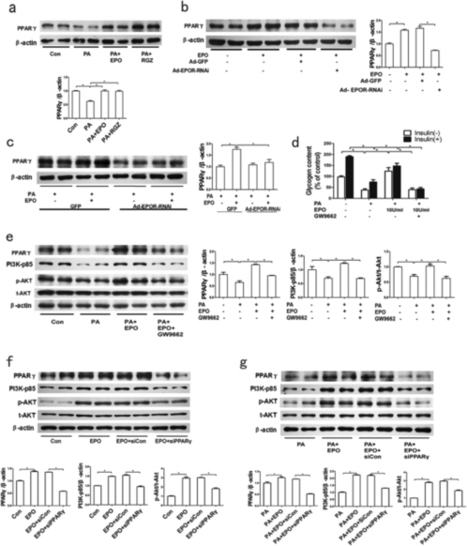
Erythropoietin (EPO) has beneficial effects on glucose metabolism and insulin resistance. However, the mechanism underlying these effects has not yet been elucidated.
BigField GEG Tech's insight:
This study aim to investigate how EPO affects hepatic glucose metabolism. The scientists observe that lentiviral vector-mediated hepatic PPARγ silencing in HFD-fed C57BL/6 mice impaired EPO-mediated increases in glucose tolerance, insulin sensitivity and hepatic AKT activation. Their results suggest that PPARγ is involved in EPO/EPOR-induced AKT activation, and targeting the PPARγ/AKT pathway via EPO may have therapeutic implications for hepatic insulin resistance and type 2 diabetes.
Scoop.it!
BigField GEG Tech's insight:
Here, the authors describe the protocol of ex vivo delivery of growth factors such as GDNF or VEGF via lentiviral vector-mediated genetic modification of human mesenchymal stem cells (hMSCs) and hMSC transplantation into the skeletal muscle of a familial amyotrophic lateral sclerosis rat model.
Scoop.it!
BigField GEG Tech's insight:
Pseudotyping of lentiviral vectors with different envelope glycoproteins not only confers the neurotropism to the vectors, but also alters the preference of sites of vector entry into neuronal cells. For example, lentiviral vectors pseudotyped with fusion envelope glycoproteins composed of different sets of rabies virus glycoprotein and VSV-G segments that enter predominantly axon terminals of neurons and are transported through axons retrogradely to their cell bodies, resulting in enhanced retrograde gene transfer. This retrograde gene transfer takes a considerable advantage of delivering the transgene into neuronal cell bodies situated in regions distant from the injection site of the vectors and provide interesting strategies for gene therapy of neurological and neurodegenerative disorders.
Scoop.it!

Expression of a biotin acceptor peptide-containing protein with potential incorporation on the lentiviral envelope as a viral surface engineering platform
BigField GEG Tech's insight:
In this study, the scientists modified the lentiviral envelope with avidin-biotin for better targeting properties. Their results indicate the possibility of cell surface expression and further biotinylation of dis-GS-BAP protein in ongoing studies.
Scoop.it!
BigField GEG Tech's insight:
In this study, the authors used a Cre-Flex lentiviral vectors to study neurogenesis in the dentate gyrus with bioluminescence imaging and histological techniques. Stereotactic injection of the Cre-Flex vectors into the dentate gyrus of transgenic Nestin-Cre mice resulted in specific labeling of the nestin-positive neural stem cells. The long-term fate mapping revealed that a stable pool of labeled nestin-positive neural stem cells continuously contributes to the generation of newborn neurons in the mouse brain until 9 months post injection. In conclusion, the Cre-Flex technology is a valuable tool to address remaining questions regarding neural stem cell identity and behavior in the dentate gyrus.
|





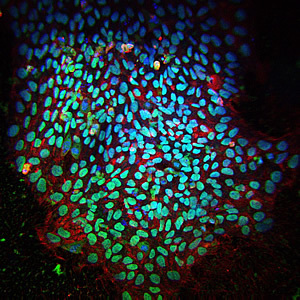










In this study, the authors develop and test a direct gene-editing approach to induce exon deletion and recover dystrophin expression in the mdx mouse model of DMD. Delivery by adeno-associated virus (AAV) of clustered regularly interspaced short palindromic repeats (CRISPR)-Cas9 endonucleases coupled with paired guide RNAs flanking the mutated Dmd exon23 resulted in excision of intervening DNA and restored Dystrophin reading frame in myofibers, cardiomyocytes, and muscle stem cells following local or systemic delivery. AAV-Dmd CRISPR-treatment partially recovered muscle functional deficiencies and generated a pool of endogenously corrected myogenic precursors in mdx mouse muscle.