Your new post is loading...
BigField GEG Tech's insight:
Here, the authors coupled hematopoietic stem cells (HSCs) transplantation with ex vivo transduction of syngeneic HSCs with lentiviral vectors to express proinsulin II to prevent T1D in nonobese diabetic (NOD) mice. They observe that the mean insulitis score was significantly reduced, and diabetes was nearly completely prevented in recipients of transduced HSCs expressing proinsulin II. They conclude that syngeneic transplantation of HSCs transduced ex vivo with lentiviral vectors to encode proinsulin II is a novel strategy to prevent T1D.
BigField GEG Tech's insight:
Friedreich's ataxia (FRDA) is a predominantly neurodegenerative disease caused by recessive mutations that produce a deficiency of frataxin. In this study, the authors combine lentiviral vector and erpesviral vector to demonstrate the potential therapeutic usefulness of neurotrophins like BDNF to protect frataxin-deficient neurons from degeneration.
BigField GEG Tech's insight:
In this study, the authors investigated the contribution of epigenetic factors HDAC1 and DAXX to the developmental perturbation hypothesized to underlie schizophrenia (SZ). For this purpose, they designed lentiviral vectors carrying short hairpin RNA interference (shRNAi) for HDAC1 and DAXX. Their results point to a key role of both HDAC1 and DAXX in the regulation of GAD67 in GABAergic HiB5 cells, strongly suggesting that these epigenetic/transcription factors contribute to mechanisms underlying GABA cell dysfunction in SZ.
BigField GEG Tech's insight:
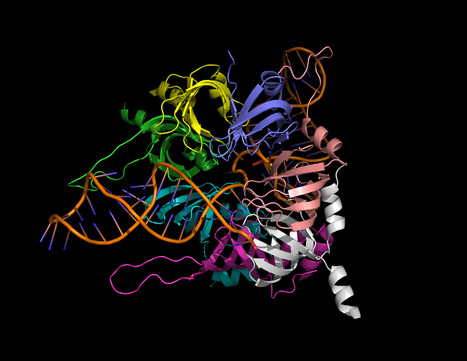
Here the authors used AAV vectors for gene therapy of liver disease. They combine this vector with the CRISPR cas9 system to generate stable gene modification. They intravenously infuse two AAVs, one expressing Cas9 and the other expressing a guide RNA and the donor DNA, into newborn mice with a partial deficiency in the urea cycle disorder enzyme, ornithine transcarbamylase. This resulted in reversion of the mutation in 10% (6.7–20.1%) of hepatocytes and increased survival in mice challenged with a high-protein diet, which exacerbates disease.
BigField GEG Tech's insight:
In this study, the authors used lentiviral vectors to investigate how resistant clones evolve during drug therapy. They observe that acquired resistance caused by the EGFRT790M gatekeeper mutation can occur either by selection of pre-existing EGFRT790M-positive clones or via genetic evolution of initially EGFRT790M-negative drug-tolerant cells. Their findings provide evidence that clinically relevant drug-resistant cancer cells can both pre-exist and evolve from drug-tolerant cells, and they point to therapeutic opportunities to prevent or overcome resistance in the clinic. www.geg-tech.com:Vectors
BigField GEG Tech's insight:
In this study, the authors generated lentiviral to express channel rhodopsin (ChR2) and halorhodopsin (NpHR) tagged with fluorophores and driven by GAD67 or CCK promoters. They transduced neuronal cultures and rodent brain in vivo, They observe that in vitro 90% of LV-CCK-NpHR2.0-EYFP expressing neurons were CCK+ and in vivo LV-GAD67-ChR2-mCherry was expressed in 2.6%, LV-GAD67-NpHR2.0-EYFP in ~15%, LV-CCK-NpHR2.0-EYFP in 47%of hippocampal GABA+ interneurons. In conclusion, LV-CCK-NpHR2.0-EYFP may be useful to target CCK+ interneurons in culture. However, GAD67/CCK-driven lentiviral constructs are expressed in vivo, but expression is not specific for interneurons. Better understanding of GAD67 and CCK promoter structure or alternative techniques are required to reliably target opsins to interneurons using viral vectors.
BigField GEG Tech's insight:
In this study, the authors demonstrate the feasibility of such an approach using a therapeutic grade, self-inactivating-lentiviral vector, encoding codon-optimized COL7A1, to transduce RDEB fibroblasts under conditions suitable for clinical application. Gene-modified RDEB fibroblasts deposited type VII collagen at the dermal-epidermal junction of human RDEB skin xenografts placed on NOD-scidIL2Rgammanull recipients, with reconstruction of human epidermal structure and regeneration of anchoring fibrils at the dermal-epidermal junction. Fibroblast-mediated restoration of protein and structural defects in this RDEB model could open the way for therapeutic applications in man.
BigField GEG Tech's insight:
Here the authors evaluated whether NUP98-HOXA10HD fusion gene could be used to expand engrafting human primitive CD34+ cells in an immunodeficient mouse model. Gene transfer was achieved using a lentiviral based vector. The engraftment of mobilized peripheral blood human CD34+ cells grown in culture for one week after gene transfer was evaluated 3–4 months after transplant and found to be 2–3 fold higher in the NUP98-HOXA10HD groups as compared to controls. These data suggest an expansive effect at least at the short term human repopulating cell level. Further evaluation in long term repopulating models and investment in a NUP98-HOXA10HD protein seems worthy of consideration. www.geg-tech:Vectors
BigField GEG Tech's insight:
The present study was intended to combine three therapeutic approaches in a well-defined rat model of spinal cord injury, A guidance channel was implanted at the lesion site with native Schwann cells or Schwann cells that had been previously transduced with a lentiviral vector carrying the GDNF gene. Thereafter, the scientists injected the animals with lentiviral vectors carrying a shRNA for GFAP (Lv-shGFAP), which has recently been shown to block glial scar formation. Functional evaluations showed that Lv-shGFAP induced a significant improvement in recovery in animals grafted with Schwann cells. Importantly, this study confirms that glial scar formation is a major impediment for axonal sprouting after spinal cord injury, and emphasizes the importance of serotonergic innervation for locomotor function. Moreover we show a significant additive effect of a combinatorial approach to axonal regeneration in the injured spinal cord. www.geg-tech.com:Vectors
Article published by the Endocrine Society
BigField GEG Tech's insight:
In this work, the authors used lentiviral vectors to investigate non-coding sequences adjacent to the human GLUCAGON and ARX genes, which are expressed in islet α cells. Elements with high evolutionary conservation were cloned into lentiviral vectors to direct fluorescent reporter expression in primary human islets.They found that rat Glucagon promoter was not specific for human α cells, but that addition of human GLUCAGON untranslated region (UTR) sequences substantially enhanced specificity of labeling in both cultured and transplanted islets to a degree not previously reported, to our knowledge. Specific transgene expression from these cis-regulatory sequences in human α-cells should enable targeted genetic modification and lineage tracing.
BigField GEG Tech's insight:
Calimmune Inc., a clinical-stage gene therapy company, has expanded its intellectual property estate covering Cytegrity™, an innovative lentiviral vector manufacturing technology, through a second licensing agreement with St. Jude Children’s Research Hospital. Financial terms of the deal were not disclosed.
BigField GEG Tech's insight:
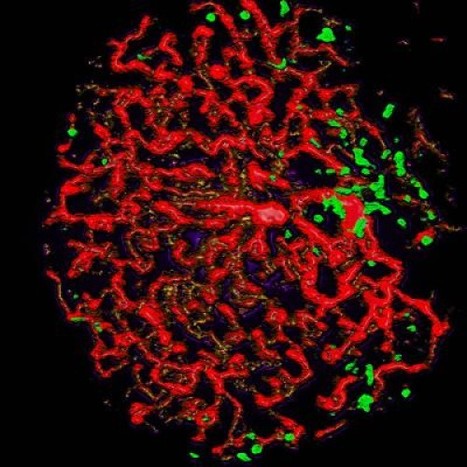
In the present work, the scientists study the regenerative potential of neural stem/progenitor cells (NPCs) thanks to a lentiviral vector which expresses IGF-I in a mouse model of hippocampal mechanical injury. NPC transplantation rescued the injury-induced spatial learning deficits as revealed in the Morris Water Maze. Moreover, it had beneficial effects on the host tissue by reducing astroglial activation and microglial/macrophage accumulation while enhancing generation of endogenous oligodendrocyte precursor cells. One or two months after transplantation the grafted NPCs had migrated towards the lesion site and in the neighboring myelin-rich regions. Transplanted cells differentiated toward the oligodendroglial, but not the neuronal or astrocytic lineages, expressing the early and late oligodendrocyte markers NG2, Olig2, and CNPase. The newly generated oligodendrocytes reached maturity and formed myelin internodes. These current and previous observations illustrate the high plasticity of transplanted NPCs which can acquire injury-dependent phenotypes within the host CNS, supporting the fact that reciprocal interactions between transplanted cells and the host tissue are an important factor to be considered when designing prospective cell-based therapies for CNS degenerative conditions.
BigField GEG Tech's insight:
Inthis study, the authors used a lentiviral vector which overexpresses BMP-2 to demonstrated that the combination of local BMP-2 (recombinant protein or a product of gene therapy) plus systemic OPG-Fc is more effective than BMP-2 alone in promoting bone repair. Their data indicate that osteoclasts can diminish healing responses to BMP-2 and that RANKL inhibition may thus accentuate BMP-2 efficacy. |
BigField GEG Tech's insight:
Oxidative stress has been linked to several ocular diseases, initiating an inflammatory response that increases tissue injury. The Nrf2 transcription factor regulates expression of antioxidant genes and is tightly regulated by Kelch-Like ECH-Associated Protein 1. Here the authors evaluate the antioxidant and anti-inflammatory properties of an adeno-associated virus vector delivering an Nrf2-derived peptide that binds Keap-1.
BigField GEG Tech's insight:
This review puts into perspective the clinical experience of gene therapy for SCID-X1 with, the development and implementation of new generations of safer vectors such as SIN-γ-retroviral or lentiviral vectors as well as major advances in integrome knowledge.
BigField GEG Tech's insight:
The role of RhoA on Schwann cell during development is still unclear. To investigate that, the scientists designed a lentiviral vector-mediated short hairpin (sh) RNA targeting RhoA to knock down the expression of RhoA in the cultured Schwann cells in vitro and after LV injection of rats sciatic nerves. They observe that RhoA knockdown resulted in hypomyelination and significant decrease of the thickness of myelin in the transfected area. Overall data of current study suggested that RhoA plays a critical role in Schwann cell biology and is essential for myelination in developing peripheral nerve.
Cas9-mediated gene editing corrects hereditary tyrosinemia in a mouse model.
BigField GEG Tech's insight:
In this study, the authors combine lipid nanoparticle–mediated delivery of Cas9 mRNA with adeno-associated viruses encoding a sgRNA and a repair template to induce repair of a disease gene in mouse model of human hereditary tyrosinemia.Treatment rescued disease symptoms such as weight loss and liver damage. The efficiency of correction was >6% of hepatocytes after a single application, suggesting potential utility of Cas9-based therapeutic genome editing for a range of diseases.
BigField GEG Tech's insight:
In this study, the authors constructed a lentiviral vector expressing a third generation CAR comprising a Podoplanin (PDPN) specific antibody [NZ-1-based single chain variable fragment (scFv)] with CD28, 4-1BB, and CD3ζ intracellular domains.The generated CAR T cells were specific and effective against PDPN-positive GBM cells in vitro. Systemic injection of the CAR T cells into an immunodeficient mouse model inhibited the growth of intracranial glioma xenografts in vivo. CAR T cell therapy that targets PDPN would be a promising adoptive immunotherapy to treat mesenchymal GBM.
BigField GEG Tech's insight:
Suicide gene therapy is a very attractive approach for severe diseases such as cancer. However, this type of strategy is limited by the development of efficient gene transfer tool to deliver this type of genes. Indeed, they often induce toxic effects during their production in viral vectors which makes difficult to vectorize them in lentiviral vectors. To overcome this limitation, the authors of this study designed a lentiviral vector which contains an intron with two poly-A signals and several stop codons between the promoter and transgene. In this way, the gene of interest is not express during the production cycle by the packaging cells. They tested this design with the GFP under the control of CMV. They detected no expression of the reporter gene during the production and between 65% and 78% of positive cells after transduction step (hela and 293T cells). Furthermore, the PCR test on genomic DNA of transduced cells confirmed the splicing of the intron. This study presents a novel method for overcoming the toxicity issue of toxin genes during production of viral vectors using intron splicing trick for preferential gene expression in transduced cells without affected drastically the titer of the vector. The authors have designed and constructed a transfer vector which will have promising applications in more efficient suicide gene therapy.
To know more about the Article To know more about GEG Tech’s lentiviral vectors
BigField GEG Tech's insight:
Here the scientists used a lentiviral vector to evaluate the potential of recombinant human FIX (rhFIX) expression in 293T and SK-Hep-1 human cell lines. Their result suggest that SK-Hep-1 cell line prove to be very effective in rhFIX production, and it can be used as a novel biotechnological platform for the production of recombinant proteins.
BigField GEG Tech's insight:
This review focuses on progress made toward achieving gene therapy, the current state of the field, consideration of factors that may determine clinical success, and prospects for future development.
BigField GEG Tech's insight:
Huntington’s disease is a fatal neurodegenerative disease characterized by impairments in motor control, and cognitive and psychiatric disturbances. In this chapter, viral vector-mediated approaches used in modeling the key neuropathological features of the disease including the production of abnormal intracellular protein aggregates, neuronal dysfunction and degeneration and motor impairments in rodents are described.
BigField GEG Tech's insight:
In this chapter, the scientists describe a protocol of ex vivo delivery of growth factors via lentiviral vector-mediated genetic modification of human mesenchymal stem cells (hMSCs) transplantation into the skeletal muscle of a familial l amyotrophic lateral sclerosis (ALS)rat model. They show that intramuscular growth factor delivery via hMSCs can enhance neuromuscular innervation and motor neuron survival in a rat model of ALS
BigField GEG Tech's insight:
Disease-inducible promoters for the treatment of rheumatoid arthritis (RA) have the potential to provide regulated expression of therapeutic proteins in arthritic joints. Here, the authors design an inducible lentiviral CXCL10p-IL10. Their results show that CXCL10 promoter activation is strongest at 8-12h after stimulation with the pro-inflammatory cytokine TNFα and is re-inducible after 96h. In addition, the CXCL10 promoter showed a significant response to RA patient serum, compared to serum from healthy individuals. In conclusion CXCL10 promoter-regulated IL-10 overexpression could provide disease-inducible local gene therapy suitable for RA.
BigField GEG Tech's insight:
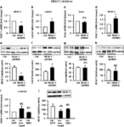
Here the authors used a entiviral vector which expresses Tat‑interacting protein (TIP)30 to investigate its role and whether TIP 30 was able to regulate tumorigenesis and predict the clinical outcome of patients with glioma. In vitro experiments revealed that upregulation of TIP30 expression inhibited cell growth and induced cell apoptosis. In addition, TIP30 expression markedly attenuated cell migration and invasion, as determined by wound healing and transwell assays. Upregulation of TIP30 expression in glioma cells decreased the expression levels of EGFR and its associated downstream molecules phosphorylated extracellular signal‑regulated kinases (ERK) and phosphorylated AKT, as determined by western blot analysis. The results of the present study indicated that TIP30 may suppress oncogenesis and glioma progression, thereby improving the prognosis of patients with glioma. Therefore, TIP30 may prove useful as a prognostic biomarker, and as a potential target for glioma therapy. |
Your new post is loading...
Hope!