


Vectorology - GEG Tech top picks
23.4K views |
+3 today
 Your new post is loading...
 Scoop.it!
BigField GEG Tech's insight:
Here, the authors look back at delivery strategies having been used in the in vivo delivery of ZFN, TALEN and CRISPR/Cas9 system, followed by methodologies currently undergoing testing in clinical trials, and potential delivery strategies provided by analyzing characteristics of nucleases and commonly used vectors. 
Scoop.it!
BigField GEG Tech's insight:
Clustered, regularly interspaced, short palindromic repeats (CRISPR)/Cas9 technology has been demonstrated to be a useful tool for generating targeted mutations in cell lines and mice. However, the use of CRISPR/Cas9 in a constitutively expressed manner can often result in low targeting efficiencies and lethality due to mutations in essential genes. Here, the authors describe the use of an inducible lentiviral vector platform, enabling rapid transduction and enrichment of CRISPR/Cas9 positive cells and high levels of targeted mutations upon induction.
Scoop.it!

Peroxisome proliferator-activated receptor-γ coactivator-1 alpha (PGC-1α) is a crucial neuronal regulator in the brain.
BigField GEG Tech's insight:
Peroxisome proliferator-activated receptor-γ coactivator-1 alpha (PGC-1α) is a crucial neuronal regulator in the brain. However, its role in the spinal cord and the underlying regulating mechanisms remain poorly understood. Here the authors used a lentiviral vector to overexpress PGC-1α. They realize intraspinal injections of the vector after spinal cord injury (SCI) in rats. Their results suggest that gene delivery of PGC-1α exerts a significant neuroprotective effect following traumatic SCI, which could serve as a promising treatment for repair of the injured cord, and RhoA–ROCK pathway inhibition may partially underlie this neuroprotection.
Scoop.it!
BigField GEG Tech's insight:
This review will provide an overview of gene transfer to the primary site of glaucoma pathogenesis, the outflow tract, and discuss what has been accomplished and which approaches have not yet been attempted.
Scoop.it!
BigField GEG Tech's insight:
Here, the authors describe the production and application of lentiviral vectors to express cell death proteins in eukaryotic cells. A packaging cell line, usually HEK293T cells, is transfected with viral packaging plasmids and your gene of interest, which is flanked by long terminal repeat sites with an internal ribosome entry site in the 5′UTR (Un translated region). Virions are harvested from the supernatant and can be directly used to transduce target cells. Varied selection markers as well as a variety of promoters that regulate expression of the gene of interest make this system attractive for a wide range of application in many cell lines or in whole organisms.
Scoop.it!

Click here to edit the content
BigField GEG Tech's insight:
Here the authors used a lentiviral vector to investigate non-invasive in vivo monitoring of CD44-positive cancer stem-like cells in breast cancer by γ-irradiation. They generated a breast cancer cell line stably expressing fLuc gene by use of recombinant lentiviral vector controlled by CD44 promoter (MCF7-CL). They irradiated MCF7-CL spheres and observed the effects by immunofluorescence and flow cytometry. Their results indicate that increased CD44 expression, caused by general feature of CSCs by irradiation and sphere formation, can be monitored by using bioluminescence imaging. This system could be useful to evaluate CD44- expressed CSCs in breast cancer by BLI in vivo as well as in vitro for radiotherapy.
Scoop.it!
BigField GEG Tech's insight:
The researcher has developed rabies virus-like particles (RV-VLPs) with immunogenic features expressed in mammalian cells for vaccine applications. In this chapter the methods to obtain and characterize a stable HEK293 cell line expressing RV-VLPs are detailed and the authors also describe immunization protocols to study the immunogenicity of RV-VLPs.
Scoop.it!

Liver fibrosis, the accumulation of extracellular matrix proteins caused by chronic liver damage, results from the activation of hepatic stellate cells. In a new study, Arriazu et al. explore in detail the mechanisms by which the multifunctional protein osteopontin drives hepatic fibrosis, and show that interaction with HMGB1 mediates the fibrogenic response.
BigField GEG Tech's insight:
The authors identified RAGE as the key mediator of HMGB1 effects on HSCs by using lentiviral expression vectors to achieve small hairpin expression knockdown of either TLR2, TLR4 and TLR9 or RAGE, and then showed that only knockdown of RAGE decreased HMGB1-induced collagen expression.
Scoop.it!

At the forefront of medicine, Gene Therapy brings you the latest research into genetic and cell-based technologies to treat disease. It also publishes Progress & Prospects reviews and News and Commentary articles, which highlight the cutting edge of the field.
BigField GEG Tech's insight:
The CRISPR/Cas9 system has democratized genome editing and opens the door to an unprecedented use of genome editors. This powerful method is allowing researchers to ask questions that were previously unaskable, leading to new insights into the basis of fundamental biological processes and to new innovative therapeutic strategies for treating disease. However, one major concern is off-target effects, particularly with long-term expression of Cas9 nuclease when traditional expression methods such as via plasmid/viral vectors are used. To overcome this limitation, researchers designed lentiviral vectors with prepackaged Cas9 protein to induce its transient expression. They construct an “all in one vector” to express sgRNAs in association with pre-packaged Cas9 which is fused with Gag protein (sgRNA/Cas9P LV). First, they validated the sgRNA/Cas9P LV to edit the CD4 gene in Jurkat cells and observed the expected cleavage in 3/20 clones. Then they tested this tool to inactivate HIV latency and targeted the LTR region of the virus. They observed a 28% rate of mutation for LTR in J-LAT cells. Finally, they found that pre-packaging Cas9 protein in LV particle reduced off-target editing of chromosome 4:-29134166 locus by CCR5 sgRNA, compared with continued expression from the vector. The combination of a high efficient delivery method with a transient expression system is very interesting to express genome editing tools. However, lentiviral vectors are integrative and non-integrating lentiviral vectors show a background of integration. Even if the integrations events are about the sgRNA and not the Cas9, they can generated genotoxicity and constitute a major limitation for therapeutic strategies. GEG Tech has developed a new generation of lentiviral vectors with a very high level of biosafety: the Lenti-One Trans Vectors. This generation of LV has a mutation of the reverse transcriptase and consequently the vector genome remains in RNA form. None DNA form of vectors is detected and no background of integration is observed even with high doses of vectors. This new generation of lentiviral vectors has been successfully tested for genome editing tools delivery including the CRISPR/Cas9 system. Lenti-One Trans vectors are very attractive and promising tools to design therapeutic strategies.
To know more about the Article To know more about GEG Tech To know more about Lenti-One Trans Vectors
Scoop.it!
BigField GEG Tech's insight:
Leukocyte Adhesion Deficiency Type I (LAD-I) is a primary immunodeficiency caused by mutations in the ITGB2 gene, and is characterized by recurrent and life-threatening bacterial infections. In this study, the authors used three different lentiviral vectors conferring ubiquitous or preferential expression of CD18 in myeloid cells. All vectors induced stable hCD18 expression in hematopoietic cells from mice with a hypomorphic Itgb2 mutation (CD18HYP), both in vitro and in vivo after transplantation of corrected cells into primary and secondary CD18HYP recipients. hCD18+ hematopoietic cells from transplanted CD18HYP mice also showed restoration of mCD11a surface co-expression. Furthermore, these vectors were able to correct the phenotype of human myeloid cells derived from CD34+ progenitors defective in ITGB2 expression. These results support for the first time the use of hCD18-LVs for the treatment of LAD-I patients in clinical trials.
Scoop.it!
BigField GEG Tech's insight:
In this review, the authors discuss existing and emerging strategies for directing genetic manipulations to targeted neurons in the adult primate central nervous system. They review the literature on viral vectors for gene delivery to neurons, focusing on adeno-associated viral vectors and lentiviral vectors, their tropism for different cell types, and prospects for new variants with improved efficacy and selectivity.
Scoop.it!
BigField GEG Tech's insight:
In this work, the authors successfully used a lentiviral vector with a myelin-specific promoter to achieve targeted expression in adult myelinating Schwann cells in a widespread distribution throughout the peripheral nervous system. This translatable approach restored the expression of a neuropathy-associated gene and led to a phenotypic, functional, and pathological rescue of a neuropathy model. These results have important implications for further preclinical and clinical testing in this and other types of inherited demyelinating neuropathies.
|
Scoop.it!
BigField GEG Tech's insight:
A paper by Guan et al (2016) in this issue ofEMBO Molecular Medicine reports on the direct CRISPRs/Cas9-mediated correction in the liver of a hemophilia-causing point mutation in FIX.
Scoop.it!
BigField GEG Tech's insight:
Lentiviral vectors (LVs) are currently considered the gold standard for hematopoietic stem cell (HSC) gene therapy and for immunotherapies with genetically modified T cells. LVs have commonly been pseudotyped with the heterologous vesicular stomatitis virus envelope glycoprotein (VSV-G), which confers broad tropism and stability to the vector. However, VSV-G is inactivated by human serum complement, making it unsuitable for in vivo delivery when vector amount is limiting. The authors of the study has developed and used a cocal vesiculovirus envelope glycoprotein to pseudotype LV. The cocal envelope glycoprotein shares 71.5% identity at the amino acid level with the VSV-G Indiana envelope, and cocal pseudotyped LVs (cocal LVs) were found to have broad tropism and to be more resistant to inactivation by human serum than VSV-G pseudotyped LVs. Here the authors describe the development of high titer 3rd generation self-inactivating (SIN) LV based on the cocal envelope. They designed the protocol and generated a producer cell line for the large scale production of high titer cocal LV. Their results show that Cocal-pseudotyped LVs has a resistance to human serum inactivation and outperform VSV-G vectors in the transduction of human and nonhuman primate CD34+ and CD4+ T cells. This work is a good drawing of the flexibility of LV pseudotyping. This flexibility can be leveraged to enhance the efficiency of transduction in specific experimental contexts but also to target particular cell types. For example, GEG Tech takes advantage of LV pseudotyping to develop vectors with the Mokola envelope which allows to transduce specifically the astrocytes. Furthermore GEG Tech R&D is developing several other envelopes with attractive features which will be soon available. Keep in touch!
To know more about the Article
To know more about GEG Tech
To know more about Mokola Envelope
Scoop.it!
BigField GEG Tech's insight:
In mammals, interferon-inducible transmembrane proteins (IFITMs) prevent infections by various enveloped viruses. Here the authors show that he knockdown of IFITM3 in DF-1 cells by siRNA increased the infectivity of a vesicular stomatitis virus G protein-pseudotyped lentiviral vector, suggesting that lower levels of IFITM3 are still sufficient to restrict this viral vector.
Scoop.it!
BigField GEG Tech's insight:
In this study, the scientists used lentiviral vectors as a novel technology to produce a monoclonal antibody against CXCR4 They observe that this vector could effectively stimulate the production of 39 kDa CXCR4 antibody in vivo after immunization. Their method may have application on effective and large-scale production of the CXCR4 monoclonal antibody, which will be a potential tool for the diagnosis and treatment of human cancers.
Scoop.it!
BigField GEG Tech's insight:
In this work, the authors designed self-inactivating lentiviral vectors expressing multiple siRNAs targeting the CCR5 cellular gene as well as vif and tat/revviral transcripts, under the control of different RNA polymerase III promoters (U6, 7SK, H1) to inhibit different steps of virus life cycle. The efficacy of selected developed combinatorial vectors in interfering with viral replication was evaluated in human primary CD4+ T lymphocytes and the scientists observed two effective anti-HIV combinatorial vectors that conferred protection against R5- and X4- tropic viruses. These findings contribute to gain further insights in the design of RNAi-based gene therapy approaches against HIV-1 for clinical application.
Scoop.it!
BigField GEG Tech's insight:
Here, the authors used a lentiviral gene therapy approach to treat five SCID-X1 patients with persistent immune dysfunction despite haploidentical hematopoietic stem cell (HSC) transplant in infancy. Follow-up data from two older patients demonstrate that lentiviral vector γc transduced autologous HSC gene therapy after nonmyeloablative busulfan conditioning achieves selective expansion of gene-marked T, NK, and B cells, which is associated with sustained restoration of humoral responses to immunization and clinical improvement at 2 to 3 years after treatment. Similar gene marking levels have been achieved in three younger patients, albeit with only 6 to 9 months of follow-up. Lentiviral gene therapy with reduced-intensity conditioning appears safe and can restore humoral immune function to posthaploidentical transplant older patients with SCID-X1.
Scoop.it!
BigField GEG Tech's insight:
Here, the authors describe the use of an inducible lentiviral vector platform, enabling rapid transduction and enrichment of CRISPR/Cas9 positive cells and high levels of targeted mutations upon induction.
Scoop.it!
BigField GEG Tech's insight:
The present study examined the effects of transforming growth factor (TGF)-β3, connective tissue growth factor (CTGF) and tissue inhibitor of metalloproteinase 1 (TIMP1) gene transduction, using a lentiviral vector, on rabbit intervertebral disc degeneration in vivo, with the intention of investigating their potential use in gene therapy. The lenti‑TGFβ3‑P2A‑CTGF‑T2A‑TIMP1 was injected into degenerative lumbar intervertebral discs and the results indicated that the degeneration was ameliorated in the experimental group when compared with the control and the puncture group. Furthermore, the expression levels of type II collagen and aggreca is significantly higher in the experimental group. These results indicate the potential of gene therapy in treatment of intervertebral disc degeneration.
Scoop.it!
BigField GEG Tech's insight:
In this study, the authors used a lentiviral vector to co-express HIF‑1α and GFP in CRC SW480, SW620, LoVo and HCT116 cells. HIF‑1α‑expressing cells were injected intraperitoneally into a nude mouse xenograft model. The results demonstrated that HIF-1α was not expressed in CRC cells in normoxic conditions. Stable expression of HIF‑1α promoted migration in the SW480 cells. Following intraperitoneal injection of nude mice with SW480‑HIF‑1α, a significant number of tumor nodules formed in the intestinal. The successful construction of the dual expression HIF‑1α and GFP visualization xenograft model provides a good foundation for the screening of HIF-1α-related functions and for investigating the therapeutic potential of drugs that target HIF-1α.
Scoop.it!
BigField GEG Tech's insight:
In this study, the authors used lentiviral vectors to investigated the protective effect of SIRT3 for Parkinson’s disease (PD) cell model. They observe that SIRT3 knockdown significantly worsen rotenone-induced decline of cell viability and enhanced cell apoptosis, exacerbated the decrease of SOD and GSH, and augmented the accumulation of α-synuclein. While SIRT3 overexpression dramatically increased cell viability, and decreased cell apoptosis, prevented the accumulation of α-synuclein, suppressed the reducing of SOD and GSH, decreased ROS generation. These results show that SIRT3 has neuroprotective effect in PD cell model and suggest that it could be developed into a therapeutic agent for PD patients.
Scoop.it!
Click here to edit the content
BigField GEG Tech's insight:
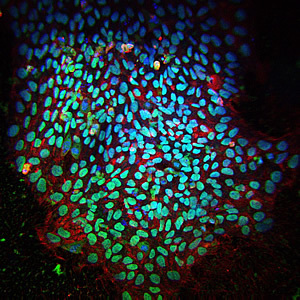
In this study, the authors used a lentiviral vector (LV) to express the basic fibroblastic growth factor (bFGF) in stem cells for tendon healing and remodelling in rat Achilles tendon defect model. Twelve weeks after injection of stem cells modified with the LV, they observe no significant differences in the (immuno)-histological results between the tested and control group. Interestingly, in later stages stem cells had hardly any effects on biomechanical results. This study inspires a critical and reflected use of stem cells in tendon healing.
Scoop.it!
BigField GEG Tech's insight:
In this study, the authors investigate the use of VSV-G-pseudotyped lentiviral vectors in B-cells for exploring the impact of microRNAs on tolerance to Rituximab. Notably, they find that robust lentiviral transduction of cancerous B-cell lines markedly and specifically enhances the resistance of transduced germinal center B-cells (GCBs) to Rituximab. Their results demonstrate the feasibility of using the lentiviral gene delivery platform in studies addressing the impact of specific microRNAs on Rituximab responsiveness.
|










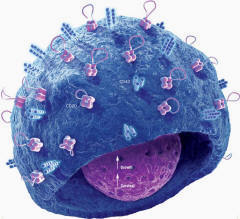










Here The authors describe two protocols designed to generate mature human NK cells from gene-modified hematopoietic stem cells. These protocols use chimeric antigen receptor as the transgene, but could potentially be modified for the expression any particular transgene in human NK cells.