


Vectorology - GEG Tech top picks
23.4K views |
+3 today
 Your new post is loading...
 Scoop.it!
BigField GEG Tech's insight:
ProSavin, a lentiviral vector (LV)-based gene therapy approach aimed at restoring local and continuous dopamine production, through delivery of three enzymes in the dopamine biosynthesis pathway, was tested in a phase I/II clinical study of patients with advanced Parkinson’s disease (PD). Although improvements in motor behaviour were observed, the data indicated that higher levels of dopamine replacement may be required to maximise benefit. Here the authors attempted to increase production of dopamine, and its precursor L-Dopa in LV transduced cells, by optimising the gene order in the ProSavin expression cassette. One vector, EIAV-TCiA, was selected for further characterisation and showed significant improvements in dopamine and L-Dopa production compared with ProSavin, in human neuronal cells. Further characterisation of EIAV-TCiA demonstrated expression of all three dopamine enzymes in vivo and faithful delivery and integration of the expected gene expression cassette within the genome of target cells, as assessed by northern and Southern blotting. Clinical evaluation of this vector will be performed to assess the benefits in patients with PD. 
Scoop.it!
BigField GEG Tech's insight:
This review focuses on CARs recognizing the B cell antigen CD19. Both retro- and lentiviral vectors are used encoding the different anti-CD19 CAR constructs comprising costimulatory molecules like CD28, CD137/4-1BB and OX40 either alone (2nd generation CARs) or in combination (3rd generation CARs). Current up-to-date published studies on anti-CD19 CAR therapy for acute lymphoblastic leukemia (ALL), chronic lymphocytic leukemia (CLL) and Non-Hodgkin lymphoma (NHL) with observed side effects are discussed and an outlook on 59 ongoing trials is given.
Scoop.it!
BigField GEG Tech's insight:
Herein the scientists describe the design and synthesis of a new series of coumarin derivatives searching for novel HIV-1 integrase (IN) allosteric inhibitors.
Scoop.it!
BigField GEG Tech's insight:
Chronic Granulomatous Disease (CGD) is a primary immunodeficiency due to a deficiency in one of the subunits of the NADPH oxidase complex. Here, the scientists show use hematopoietic stem cells transduced with regulated lentiviral vectors, to restore the functional activity of NADPH oxidase complex in a mouse model of acute infection that closely mimic the airway infection in CGD patients. They show that this strategy saved mice from death caused by S. aureus, significantly reducing the bacterial load and lung damage, similarly to WT mice even at low vector copy number (VCN).
Scoop.it!
BigField GEG Tech's insight:
Hookipa is starting its first clinical trial for a vaccine against human cytomegalovirus. This is the leading candidate of its platform for novel viral vectors, which promises to yield better vaccines for infections and cancer.
Scoop.it!
Molecular Therapy — Nucleic Acids is a new international all open-access journal publishing top-quality basic, translational and clinical research in the broad fields of nucleic acid-based therapeutics to treat and/or correct genetic and acquired disease.
BigField GEG Tech's insight:
Here, the scientists characterize a lab-derived AAV chimeric (AAV2g9), which displays favorable central nervous system attributes derived from both parental counterparts, AAV2 and AAV9. A single intracranial injection of AAV2g9 vectors encoding guide RNAs targeting the schizophrenia risk gene MIR137 (encoding MIR137) in CRISPR/Cas9 knockin mice resulted in brain-specific gene deletion with no detectable events in the liver. This engineered AAV vector is a promising platform for treating neurological disorders through gene therapy, silencing or editing modalities.
Scoop.it!
BigField GEG Tech's insight:
In this work, the scientists show that lentiviral vectors that constitutively express a Nullbasic-ZsGreen1 (NB-ZSG1) fusion protein by the eEF1α promoter led to robust long-term inhibition of HIV-1 replication in Jurkat cells. Their results suggest that the reduction of HIV-1 promoter-associated RNAPII and epigenetic changes in viral nucleosomes indicate that Nullbasic can inhibit HIV-1 replication by enforcing viral silencing in cells.
Scoop.it!
BigField GEG Tech's insight:
Non-integrating lentiviral vectors or also known as integrase-defective lentiviral (IDLV) hold a great promise for gene therapy application. Here the scientists describe the system of IDLV which is produced through mutation in the integrase enzymes at the position of D64 located within the catalytic core domain. They show that the percentage of GFP-positive cells decreased from ~50 % to almost 0, up to 10 days post-transduction. They conclude that integrase-defective lentivirus will be a suitable choice for safer clinical applications. It preserves the advantages of the wild-type lentiviral vectors but with the benefit of transgene expression without stable integration into host genome, therefore reducing the potential risk of insertional mutagenesis.
GEG Tech provides a large range of IDLVs and also several lines of this type of vector with different intergase mutations (including D64V).
Feel free to contact us if you need more information about that
www.geg-tech.com
Scoop.it!
BigField GEG Tech's insight:
In this study, the scientists have developed a lentiviral vector (CCoq9WP) able to overexpress Coq9 mRNA and COQ9 protein in mouse embryonic fibroblasts (MEFs) and hematopoietic progenitor cells (HPCs) from Coq9R239X mice, an animal model of mitochondrial encephalopathy due to primary Coenzyme Q (CoQ) deficiency. Ectopic over-expression of Coq9 in both cell types restored the CoQ biosynthetic pathway and mitochondrial function, improving the fitness of the transduced cells. These results show the potential of the CCoq9WP lentiviral vector as a tool for gene therapy to treat mitochondrial encephalopathies.
Scoop.it!
BigField GEG Tech's insight:
Cardiac autoimmune reaction takes part in myocarditis, dilated cardiomyopathy and heart failure. The special structure of iron-sulfur protein (ISP) is responsible for the oxidative stress in oxidative phosphorylation, which is also a target that is easily attacked by various damage factors. Here the authors used a lentiviral vector to restore succinate dehydrogenase iron-sulfur protein function— and thus resume myocardial mitochondria function and myocardial function is hypothesized to alleviate the experimental autoimmunity myocarditis
Scoop.it!
BigField GEG Tech's insight:
Here the authors tested the ability of the lentiviral vector to generate stable cell line without transduction step. Indeed, they observe that a co-transfection of a Human Embryonic Kidney (HEK) 293 packaging cell line with Gag–pol (GP) and a transfer vector, without the envelope vector, produces a stable cell line after 2 weeks of selection. They conclude that if the packaging cell is also the target cell, then gene integration leading to a stable cell line can be accomplished without viral particle infection.
Scoop.it!
BigField GEG Tech's insight:
In this work the scientists describe a method for generating lentivirus that is simple to perform and does not require the purchase of non-standard equipment to transduce primary human T cells. Therefore, they provide an optimized protocol that is easy to implement and allow transduction with high efficiency and reproducibility.
|
Scoop.it!
BigField GEG Tech's insight:
Many retinal gene therapy clinical trials require subretinal injections of small volumes of adeno-associated viral (AAV) vector solutions in patients with retinal dystrophies, using equipment not specifically designed for this purpose. Here the scientists therefore evaluated an optimised injection system in order to identify variables that might influence the rate of injection and final dose of vector delivered.
Scoop.it!
BigField GEG Tech's insight:
One of the major challenges of gene replacement therapy for treatment of duchenne muscular dystrophy is the large size of the dystrophin cDNA of ~14 kb, exceeding the packaging capacity of conventional viral vectors. In order to optimise a dystrophin cDNA construct for therapeutic application the scientists designed and produced four human mini-dystrophins within the packaging capacity of lentiviral vectors. Two novel mini-dystrophins retained the centrally-located nNOS-anchoring domain in order to achieve sarcolemmal nNOS restoration which is lost in most internally deleted dystrophin constructs.This initial assessment aimed to determine the overall suitability of different constructs for cloning into lentiviral vectors for ex vivo gene delivery to stem cells for future preclinical studies.
Scoop.it!
BigField GEG Tech's insight:
The design of an effective HIV-1 vaccine remains a major challenge. Here, we evaluated the immunogenicity of a SIV-based IDLV-Env in nonhuman primates. The results of this study suggest that an IDLV-Env-based vaccine induces functional, comprehensive, and durable immune responses in Rhesus macaques.
Scoop.it!
BigField GEG Tech's insight:
In this wory, the scientists used used a combination of lentiviral vectors expressing hepatic fate-conversion factors with Oct4, Sox2,Klf4, and Myc to convert mouse embryonic fibroblasts into hepatic cells ( iHepL cells). When transplanted into partial hepatectomized and hepatic irradiated mice, iHepL cells differentiated into hepatocytes and cholangiocytes. However, iHepL cells formed malignant non-teratoma cell aggregations in one out of five engrafted livers and five out of five xenografts assays. All the cells in these tumors had silenced key hepatic fate-conversion factors, and lost hepatic features. This study highlights the dangers of using pluripotency factors in reprogramming strategies when fate-conversion factors are silenced in vivo, and urges us to perform extensive tumorigenic tests in reprogrammed cells.
Scoop.it!
BigField GEG Tech's insight:
A new type of medicine was approved in Europe at the end of May that culminated from the successful convergence of two fields of science: stem cell transplantation and gene therapy. Strimvelis, a patient-specific gene-modified stem cell medicine for ADA-SCID (a fatal immunometabolic disorder similar to the bubble-boy disease), was developed by scientists at the San Raffaele Hospital and Telethon Institute (TIGET) in Milan, then later partnered with GSK.
Scoop.it!
BigField GEG Tech's insight:
These study identify a previously uncharacterized but consistent cellular response to viral components and provide a novel example of environmentally modified epigenome.
Scoop.it!
BigField GEG Tech's insight:
In this study, the scientists used a lentiviral vector which express shRNA Notch1, known as a cell fate regulator, to investigate its role in the mechanism of endometriosis. The results showed that LV-Notch1-shRNA led to a significant decline of clonogenicity and migration in human endometrial stem cells in vitro, as well as the size of endometriotic lesions in murine models. These data provide evidence that specific inhibition of Notch1 alters endometriotic tissue growth and progression, and may represent a promising potential therapeutic avenue.
Scoop.it!
BigField GEG Tech's insight:
The Perelman School of Medicine at the University of Pennsylvania has launched a program to create new viral vectors to find quicker and better treatments for an array of diseases. James M. Wilson, M.D., Ph.D., director of the Orphan Disease Center, will lead an interdisciplinary team of over 30 scientists.
Scoop.it!
BigField GEG Tech's insight:
In this work, the scientists designed a two AAV system to deliver Cas9 and sgRNA against YFP. Five weeks after intravitreal injection of Thy1-YFP transgenic mouse model, they observed a reduction of YFP-positive cells in transduced retinal cells. Thei finfing suggest that genomic modification of cells in the adult retina can be readily achieved by viral-mediated delivery of CRISPR/Cas.
Scoop.it!
BigField GEG Tech's insight:
The first clinical trial of lentiviral gene therapy in ophthalmology met its primary objective, demonstrating safety and tolerability of subretinal administration of a lentiviral vector expressing anti-angiogenic proteins in patients with advanced exudative age-related macular degeneration.
Scoop.it!
BigField GEG Tech's insight:
Here, the authors describe an approach to model invasive lobular breast carcinoma (ILC) by intraductal injection of lentiviral vectors encoding Cre recombinase, the CRISPR/Cas9 system, or both in female mice carrying conditional alleles of theCdh1 gene, encoding for E-cadherin. They observe that lentiviral delivery of a Pten targeting single-guide RNA (sgRNA) in mice with mammary gland-specific loss of E-cadherin and expression of Cas9 efficiently induced ILC development. This versatile platform can be used for rapid in vivo testing of putative tumor suppressor genes implicated in ILC, providing new opportunities for modeling invasive lobular breast carcinoma in mice.
Scoop.it!
BigField GEG Tech's insight:
This chapter explains how to establish in vitro and in vivo systems to study transgene dose-dependent mechanisms affecting cell fate decisions of genetically modified hematopoietic cells.
|












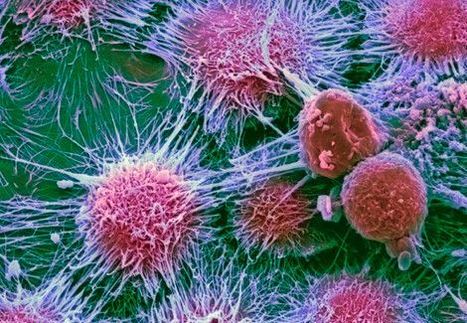





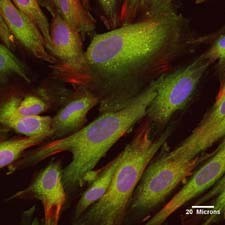





Primary human bronchial epithelial cells are difficult to transduce. This protocol describes the production of lentiviruses and their concentration as well as the optimal culture conditions necessary to achieve highly efficient transductions in these cells throughout differentiation to a pseudostratified epithelium.