


Rising lumber demand stoked by the housing recovery is reinvigorating U.S. timber towns as the forest-products industry gets back on its feet after a long malaise.

 Your new post is loading...
 Scoop.it! Rising lumber demand stoked by the housing recovery is reinvigorating U.S. timber towns as the forest-products industry gets back on its feet after a long malaise. 
No comment yet.
Sign up to comment
Scoop.it!

Measures to prevent illegal timber, which is estimated to account for 30% of the global trade, from entering the EU come into force on Sunday. *** Operators, which refers to "those who first place a timber product on the EU market" - through a "due diligence" system - are required to "make every effort to ensure that the wood they trade in is legal". The due diligence system (DDS) comprises of three elements, including access to information relating to shipments' country of origin, quantity and suppliers' details; evaluation that the timber was produced in compliance with the laws of the country of origin; taking additional steps to ensure the legality of the timber if there is any doubt over its provenance. In addition, the EUTR requires traders ("those who sell or buy the timber already on the EU market") to keep "adequate information so that the wood they deal in can be easily traced".
Scoop.it!

A national conservation group has reached an agreement to buy nearly 20,000 acres of timberland in northwestern Sonoma County, a move that derails the long-disputed, forest-to-vineyards conversion project pushed by CalPERS, the giant state workers pension plan. The $24.5 million purchase of the so-called Preservation Ranch, to be completed by the end of May, is led by The Conservation Fund, based in Virginia. It would contribute up to $6 million toward the purchase. *** The Conservation Fund owns and manages 55,000 acres of forest in Mendocino County and would use the new property for sustainable timber production and possibly for the sale of carbon credits. The purchase would eliminate the threat of subdivision for rural estates and commercial vineyard development.
Scoop.it!

Over the past 25 years, millions of Maine taxpayer dollars have been used to conserve more than half a million acres in the Pine Tree State through the state-run Land for Maine’s Future program. The question of whether public money should be used to purchase or otherwise protect often privately-owned parcels of forest, farms and the waterfront is a big one. And in an era of tight budgets and often-polarizing debate about private enterprise versus the role of the state, the issue can get heated — especially as the program has shifted its sights from conserving acres of forested wilderness to protecting places such as working farms and Maine’s working waterfront.
Scoop.it!

In the past year, Latin America’s forests saw progress and setbacks that will shape ecosystem health with implications for forest policy in 2013. Here’s a look at issues to watch in the year ahead.
Scoop.it!

Business angels are spreading their wings into the forestry sector, with Edinburgh-based syndicate Par Equity preparing to launch a £10 million timber fund. The firm, founded by Paul Atkinson in 2008, believes that at least 50 investors will pile into the fund, which will probably feature a mix of individuals and institutions. Par Equity has already tested the waters with a trading partnership over the past two years, which brought together 18 investors to buy around £2m-worth of forestry. Atkinson told Scotland on Sunday that Par Forestry Partnership had bought three forests in Scotland – at Armadale in West Lothian, in Ayrshire and along the M74 motorway – and that his firm expects to close a deal in Wales in the coming week. “This is a long-term form of investment, because it can take 35 years for trees to grow to the right size to be harvested,” Atkinson explained.
Scoop.it!

Every six months, Forisk builds a composite housing starts outlook based on publicly-available, independent forecasts from professionals in the housing industry. These include Fannie Mae, Freddie Mac, Mesirow Financial and the National Association of Home Builders (NAHB), as well as long-term assumptions from the Energy Information Administration’s (EIA) model of the US economy (Figure 1). Our 2013 Base Case peaks at 1.75 million housing starts in 2018. For comparison, our Mid-Year 2012 Base Case peaked at 1.78 million housing starts in 2017. Overall, housing has recovered a bit quicker than forecasted in 2012 with the expectation of a slightly flatter, long-term trend. In this Composite Outlook, the primary source of sensitivity with respect to lumber demand is the assumed single-to-multi-family housing mix.
Scoop.it!

[Kentucky Teachers' Retirement System investment portfolio] returned 13.4% for the year ended Dec. 31, surpassing its policy benchmark by 60 basis points. *** International equity was the top performer at 17.3%. It was followed by domestic equity, 16.6%; high-yield bonds, 15.6%; real estate, 12.2%; alternatives, 8.8%; fixed income, 6.9%; and timber, 3.1%.
Scoop.it!
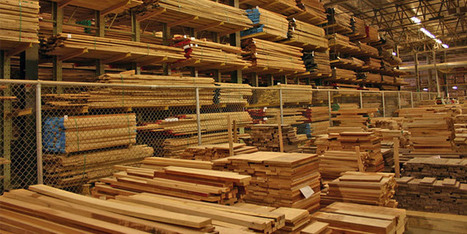
Softwood lumber prices in the US and Canada are back on the rise as an improving housing market in the US has fed through to higher levels of demand and Canadian exports of softwood lumber to China are booming, the latest report has found. In its January 2013 edition of Timber Trends released earlier this week by The Campbell Group, LLC, forest economist Bruce P. Glass says that after a lull following the GFC, prices of softwood lumber in North America shot back up last year as American housing starts recovered. Glass says a 19 per cent rise in US housing starts in the year to October helped underpin price increases of southern pine and western hemlock of 48 per cent and 32 per cent, respectively, in the year leading to last November. Saw log prices, however, have not been affected as pine log prices in the US South have hardly moved in two years and saw log prices in the northern US have been stable for the better part of 12 months.
Prentiss & Carlisle's insight:
Pick up the Campbell Group report here: https://www.campbellgroup.com/_assets/downloads/public/publicationdoc/Jan_13_TT.pdf
Scoop.it!

The Minnesota Department of Natural Resources (DNR) recently accepted a donation of 2,751 acres of land in Cass County in north-central Minnesota from The Nature Conservancy. The property is adjacent to more than 200,000 acres of land owned by the county, the DNR and the U.S. Forest Service. *** The property contains mixed forests of pine, hardwoods, small ponds and wetlands and more than 3,000 feet of shoreline on Camp Lake. More than half of the property is within the Leech Lake watershed. The land includes more than five miles of grant-in-aid snowmobile trails. The donation will bring about more opportunities for hunting, fishing and paddling along undeveloped shoreline, hiking, bird watching and other activities. *** The Potlatch Corp. previously owned and managed the property and The Nature Conservancy acquired it in May. The nonprofit acquired the property with $3.1 million in private money raised as part of the Minnesota Forest Legacy Partnership, a coalition that includes business and conservation groups, along with the DNR. The groups have worked together to conserve more than 338,000 acres of industrial forest land to provide wildlife habitat, protect jobs and ensure public access for outdoor recreation.
Scoop.it!

Sweden's second buffer fund hopes to increase its agricultural and timberland investments beyond the current 10% strategic benchmark for real estate, the fund's chief investment strategist has told IPE. Speaking shortly after the SEK241bn (€28bn) AP2 announced returns of 13.5% in 2012, boosting its assets under management to the highest-ever level, Tomas Franzén said he was "quite pleased" with the results. *** "I would say agriculture and timber is probably a better diversifier [than real estate]. So, to the extent we find the investment vehicles we think will add the value we expect, I guess we will continue building that as well." He said a potential change in the strategic asset allocation would see overall alternatives exposure increased alonside the current 10% real estate ceiling – and that the latter would likely be weighted in favour of agriculture and timber. "As long as we get the kind of investments we have been getting so far, it will be more valuable for us to tilt it towards timber and agriculture," he said.
Scoop.it!

Brookfield Infrastructure posted solid results for the year ended December 31, 2012 with funds from operations ("FFO") totalling $462 million ($2.41 per unit) compared to FFO of $392 million ($2.41 per unit) in 2011. This 18% increase in year-over-year FFO was primarily driven by significant expansion projects that were successfully commissioned during the year and to a lesser extent, new investments. FFO per unit of $2.41 was flat compared to the prior year as investments made with proceeds from recent equity offerings did not fully contribute to cash flows during the year. Brookfield Infrastructure's payout ratio was 62%, which is well within its target range of 60%-70%, and it earned a solid AFFO yield of 10%. *** Brookfield Infrastructure's timber platform reported FFO of $22 million in 2012, compared to $33 million in the prior year. Results reflect soft demand from Asia early in the year, which caused average realized prices to decline by more than 7%, combined with operational restrictions due to a prolonged fire season that impacted its harvest in the second half of the year. For the year, exports represented 41% of total log sales, which was down from 47% in the prior year as demand in the domestic markets strengthened with early stages of recovery in the U.S. housing market. *** In December, Brookfield Infrastructure completed the sale of a 12.5% interest in its Canadian timberlands to an institutional investor for approximately $85 million, which is equivalent to its IFRS book value.
|
Scoop.it!

The U.S. Lumber Coalition is seriously concerned by the recent announcement of log export policy changes in British Columbia (BC), particularly an increase in the “fee in lieu of domestic manufacturing” applied to many log exports that will take effect on March 1.ent of log export policy changes in British Columbia (BC). Log export restrictions have the effect of insulating BC lumber mills from world market prices for logs, which have increased significantly in recent years as China and other countries have increased their demand for North American logs. The recent announcement of measures to tighten log export restrictions on the BC Coast will allow BC lumber producers to pay even further below-market prices for their log inputs. Logs harvested from public or private lands in BC must be advertised to local mills before they can be exported. If a local mill offers to pay the prevailing domestic log price – which can be much lower than the export price – for a particular log sort, export of that sort is prohibited. Further, even when permission to export is granted, a “fee in lieu of domestic manufacture” is assessed on logs harvested from public and some private land. This fee is often much greater than the price that BC charges to harvest standing timber on public land. Effective March 1, the “fee in lieu” on the BC Coast will be increased by 20 percent.
Scoop.it!

The proposed sale of Coillte’s harvesting rights could lead to the closure of all ten of Ireland’s sawmills with the loss of 2,500 jobs, according to the Irish Timber Council (ITC). *** Pat Glennon, Chairman of the Irish Timber Council said: "Ireland’s sawmill operators are already paying a premium for Coillte sawlogs which account for 80% of the available supply in Ireland. Any purchaser of the harvesting rights is naturally going to take advantage of this and increase prices further in order to secure a quick return on their investment.
Prentiss & Carlisle's insight:
For background on the government proposal, see: Washington Post story.
Scoop.it!

The Hardwick-based conservation group hopes to convince 26 communities in Hampden, Hampshire and Worcester counties to back conservation efforts to protect a large swath of unprotected forestland in south-central Massachusetts.
Scoop.it!

Rayonier (RYN) is one of the few timber REITs in the industry, and has one of the lowest payout ratios in the industry, which could easily be lifted and in turn drive its dividend yield to over 5%; what's more is thestock is undervalued by as much as 35%. We believe there are significant value prospects buried in Rayonier. The timber company completed its recent conversion to REIT status and should see upside in the near future thanks to a rebound in housing. The unique timber and pulp combo also provides exposure to various industries, and we see the downside limited given the company's vast asset base. We believe the opportunity is unique given the current investing environment, one with both income and growth prospects. This is especially intriguing given the current market, where other dividend stocks might be trading richly as investors flock to yield.
Scoop.it!

... just this week, Thermogen Industries signed a letter of intent with the Eastport Port Authority in Eastport, Maine, to build a 200,000 to 300,000-ton torrefied wood pellet manufacturing facility on land adjacent to the port’s Estes Head Terminal. Following completion of engineering and site design, Thermogen aims to formally begin the permitting process with a goal of starting construction as early as possible in 2014. In Millinocket, Maine, the company already has a fully-permitted project that work on began in October. Down in Mississippi, New Biomass Energy just reported it had made a third shipment of torrefied wood pellets—4,000 tons—to Europe. The company is working on expanding its plant to commercial scale—150,000 to 200,000 tons—and expects the project to be complete this year. Finally, Oregon-based H3M Energy has reached several milestones in the las few years, including completion of a 50,000-ton demonstration-scale torrefied briquette facility, and construction commencement of a small commercial plant. While Europe continues to be well ahead of us in regard to torrefaction, the market here appears to be progressing.
Scoop.it!
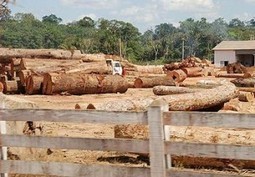
Interpol’s first international operation against illegal logging and forest crimes has resulted in nearly 200 arrests and the seizure of millions of dollars’ worth of timber and some 150 vehicles across Latin America. During the period from September 17 to November 17, 2012, law enforcement agencies in 12 countries in Central and South America worked together under the auspices of Interpol’s Environmental Crime Programme. *** Seizures of wood and other forest products during the operation are estimated at more than 50,000 cubic meters of seized wood, enough to fill 2,000 trucks, with a total value of roughly US$8 million. But that is a small fraction of the global illegal timber trade, which David Higgins, manager of the Environmental Crime Programme at Interpol, estimates to be worth between US$30 billion and 100 billion annually.
Scoop.it!

Idaho's private forestry companies want to buttress their protections against federal wildfire lawsuits that they say have been costly for companies elsewhere. *** Sierra Pacific Industries paid nearly $50 million and donated 22,500 acres to settle a lawsuit over a 2007 wildfire that prosecutors said was caused by unsupervised, bulldozer-riding employees on a red-flag warning day.
Scoop.it!

An investment company bought 7.5 percent of Deltic Timber Corp.’s outstanding stock Thursday, the day after Deltic said it would purchase the remaining interest in an El Dorado-based fiberboard plant.
Prentiss & Carlisle's insight:
Full article requires subscription. Wellington Management, an asset manager and investment advisor, is the buyer. SEC filing here: http://www.sec.gov/Archives/edgar/data/902219/000090221913000146/sec_filing.htm
Scoop.it!
Prentiss & Carlisle's insight:
See page 9: Thirty-seven percent of real estate investors are now interested in co-investments, 39% in joint ventures and 35% in separate accounts. Increased appetite for these types of investment is a result of institutions seeking the skill, resources, and unique opportunities that many real estate firms can offer, but with the additional control over their portfolios that would not be available through blindpool fund commitments.
Scoop.it!

New rules on potential clear-cutting of Adirondack forests are on the verge of being adopted by the Adirondack Park Agency, with environmental groups warning changes could fuel much more logging. On Tuesday, an environmental coalition urged Gov. Andrew Cuomo to put the brakes on Thursday's planned vote by the park agency, while a spokesman for the timber industry said fears of rampant clear-cutting are unfounded. *** Under existing rules, the APA conducts an environmental review before its commissioners consider permits to clear-cut 25 acres or more. Permits are rare, with only three sought and then issued in the last two decades. Under the changes, which could affect hundreds of thousand of acres of privately owned forests, logging permits for clear-cuts of any size would be granted routinely to forest owners whose property was certified as environmentally sustainable by either of two outside not-for-profit groups — the Forest Stewardship Council or the Sustainable Forest Initiative. Existing requirements for public notice and comment prior to a permit being issued would be discontinued, and a vote by park commissioners would no longer be required before permits were issued. *** Opponents likened that to the APA outsourcing authority over logging in the Adirondacks to the two certification programs, while also leaving the public uninformed about potential clear-cuts until after logging had already started. "Any debate over clear-cutting as a tool is not the point. It can do some good in some habitats," said Dan Plumley, a partner with Adirondack Wild: Friends of the Forest Preserve, a Niskayuna-based environmental group. "The point is public transparency and maintaining the authority and role of the park agency. People want to know that the agency is still watching." *** Keith McKeever, a spokesman for the park agency, said changes would give loggers a "greater sense of predictability" and encourage more property owners to join two certification program that have "the highest forestry standards in the world." He said the changes would mean "healthier forests and longer-term investments in the region's forest product industry."

Haley Abrams's comment,
April 13, 2014 2:48 AM
I agree with Ann Marie on how this article shows the struggles that the government faces with outside groups. These struggles are an important of our government so that one group does not gain so much power. And these struggles will hopefully allow that best discussions to be made.
Scoop.it!

Wood energy pellets: love them or hate them. It all depends upon your perspective and understanding. That’s why the U.S. Endowment for Forestry and Communities (the Endowment) today released two new reports on the rapidly-growing wood energy pellet industry: “The Wood Pellet Value Chain: An economic analysis of the wood pellet supply chain from the Southeast United States to European Consumers,” and “Applying Pathways to Sustainability: A case study of how hypothetical bioenergy facilities in VA and GA can increase the sustainability of their supply chains.”
|





