Your new post is loading...
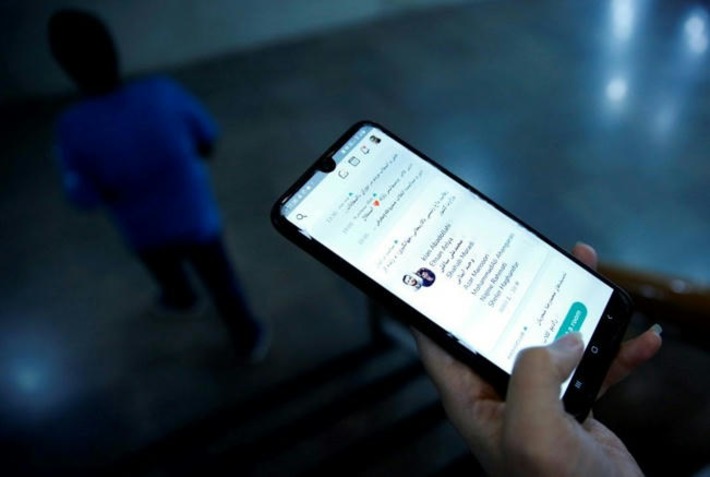
Google regularly releases a developer preview version of the upcoming Android version. For numerous apps, the Android 13 Tiramisu will have a ‘Panlingual’ function. It’s only been a few months since Google released the Android 12 mobile operating system, and already rumors regarding Android 13 are circulating. Tiramisu is the name of the next version of Android, which follows the alphabetic naming scheme. Google will announce the next-generation Android OS after the stable release of Android 12L, which is an operating system for large-screen devices like tablets. Android 12 was dubbed Snow Cone, and Android 11 was dubbed Red Velvet Cake, for those who aren’t up to date. Google usually reveals the next in Android through a developer preview version. According to a report by Android Police, Android 13 will enable users to use multiple languages for applications on their phones. In other words, users will be able to set a preferred language for each application on their smartphone. The feature is codenamed’ Panlingual’. It will be very helpful for multilingual smartphone users. As spotted by XDA Developers, the feature is available inside the Languages & Input setting menu. Additionally, the language can also be tweaked inside the App Info section in settings. The first look at Android Tiramisu has been revealed by XDA Developers. According to the publication, one of its sources had access to the early version of Android’s upcoming OS. The publication shares multiple screenshots of features that will come to Android 13. However, since there is some time to the official launch of the Android 12 operating system, Google might reiterate upon the initial version and make a few changes here and there. Hence, readers shall take this information with a pinch of salt. Apart from the application languages, Android 13 might let users opt-in for receiving notifications. Up until now, all the applications that are installed on Android have the permission to create a notification for the user. With Android 13, Google seems to have adopted a different approach to prevent notification spam for a user. Just like users can control location and camera permission for several applications, they might be able to control notifications on a per-app basis. Rumours about a new feature called TARE or The Android Resource Economy have also become strong along with the initial look at the Android 13. News Summary: - ‘Panlingual’ feature in Android 13 Tiramisu will support languages per app
- Check all news and articles from the latest Security news updates.
While there has been a considerable increase in interest for local languages, north-eastern and several northern regions are still overlooked, the industry opines According to the IAMAI-Kantar ICUBE 2020 report, the number of active Internet users in India is expected to increase by 45% in the next five years and touch 900 million by 2025 from around 622 million in 2020. This increase will be driven by higher adoption in rural India, which has clocked a 13% growth to 299 million internet users, or 31% of India’s rural population, over the past year, the report said. Add this to a Google report from earlier this year that stated that 90% of Indian internet users prefer consuming content in their own language and one realises the mammoth size of growth opportunity brands can have if they target this local language speaking cohort. This means the need to create content in at least 22 languages apart from English, and drive it to more than 800 million people. As the year inches towards ending, exchange4media.com explores how much closer to this goal could the advertisers manage to reach in 2021. Brands bend to advertising in local languages The growth of the digital population was extensively fueled in the last year because of the pandemic and that was when brands too started taking their local language quest more seriously. 2021 saw some prominent strides in that direction. As FoxyMoron National Strategy Director Nakul Dutt shares, “We have seen so many of our clients taking the vernacular route this year. I mean sectors like BFSI and e-commerce were big on it for quite some time now, but several other categories are taking it more seriously now. The most interesting one is I think ad-tech; the players are trying to reach out to a wider audience now and they realise vernacular advertising could be the key.” Kestone President Piyush Gupta adds, “The quicker growth of Indian language internet users necessitated the development of localised digital platforms. For any OTT or online material, including local language or translation to local language has become a requirement. Companies that need to reach out to remote markets, such as BFSI, FMCG, and pharma, prefer platforms in India that provide regional language alternatives.” Top languages dominated by the southern mix Based on their own experiences and client preferences, the industry highlights Tamil, Kannada, Malayalam, and Telugu amongst the most popular languages when it comes to advertising. Carat India VP - Digital Media Planning Megha Ahuja highlights, “Hindi, Tamil, Telugu and Bengali are the most widely used languages on the platform, growing by over 2X over the past 1 year. Bengali and Malayalam are witnessing the fastest growth in terms of adoption among new customers.” Grapes COO & Strategy Head Shradha Agarwal notes, “Regional languages such as Bengali, Gujarati, Kannada and Marathi, among others are providing marketers with a perfect place to reach, and target effectively. Also, Tamil, Kannada and Telugu have witnessed a sharp increase in consumption. Our clients such as Gas-O-Fast, Health OK, Prega News and many others keep coming with regional content because they have a stronghold in their respective markets.” Piyush Gupta gives further perspective in terms of numbers, “While Hindi is still the language of choice for most businesses, according to an internet usage research, Tamil (53 per cent), Telugu (44 per cent), and Marathi (34 per cent) are all among the top choices. Some languages, such as Gujarati and Malayalam, are not yet on the list of favourite internet languages, despite the fact that they are spoken by a large number of Indians.” Albeit, Nakul Dutt adds that Malayalam and Gujarati are showing strong signs of growth and could take up a bigger share of the pie in the coming years. However, it seems that languages like Kashmiri, Konkani, Assamese, Dogri etc are still predominantly away from the eyes of the marketers right now. Another aspect that advertisers are currently not focussing extensively on is banking on various dialects to reach out to a more targeted audience, apart from a few content creator partnerships. In India, based on census data, there are more than 19,500 mother tongues. Agarwal points out, “As of now, marketers are focusing on those markets which have different languages. Hindi in UP or Hindi in Delhi doesn’t make a big difference. Hence, marketers prefer to use that spend in other languages. However, some brands are collaborating with influencers and content creators but only when there is a need.” Ahuja adds, “Brands are using creator ads on social platforms to reach the audience in the local dialect. Majorly gaming, crypto, FMCG and Fintech.” Swamy says, “Dialect is a very interesting yet difficult space to crack. The diverse options that the different states of India offer can be overwhelming for brands. I would say that not much has happened in this space yet. Some brands have tried where they want to hyper-localize their content communication. But if done right, brands can reap huge benefits for sure. It will be great to see national brands getting in an A-lister influencer like Rashmi Mandanna doing content in Kodava Takk accent for the hyper-local Karnataka audience.”
Brands still translating and not creating relevant content
Another issue that still dominates the local language marketing industry is that there are far fewer creators who can think and write in local languages. As Dutt points out, “Most of us think in English first and then try to translate it into other languages. But there are so many cultural nuances in India that get missed in the process. Certain things, if directly translated, would mean something completely different in another language. Marketers need to look beyond this formula now.” Logicserve Digital Sr VP - Creative, Social, PR, Marcom Manesh Swamy agrees, “Hindi and, in some cases, English have been the guardrail when it comes to languages used for traditional advertising. But as the Indian audiences are building digital confidence, they are discovering information at their fingertips. The old model of creating communication in one language and literally translating into other languages will no longer appeal to this evolving audience.”
Influencer marketing is a key channel but not perfect Another key aspect of local language advertising is the use of influencers but certain marketers are making a mistake in using them popularly as well. Nakul Dutt notes that around 60% of the influencers that the brands are trying to reach out to regional consumers are based out of metropolitan areas of Delhi, Mumbai, Bengaluru etc. And while they might be skilled in communicating in certain regional languages, their followers might not actually be the right target audience for the advertiser. However, the space is still young and evolving and brands should be keeping an eye out for picking the right relevant talent, not solely based on the number of followers. Swamy highlights, “As audiences are consuming more regional content, regional influencers have scaled up their game in the last few years which has opened up doors for branded content creators as well. Google India has shared that regional YouTube is 21% of the overall user base, which is a huge opportunity for marketers and content creators.” How the future looks like The industry is quite bullish about the coming year when it comes to the growth of content and advertising in local languages. Ahuja says, “A majority of mobile users are using instant messaging and chat apps in the local language to communicate. These instant messaging apps are mostly used by users belonging to the age group of 45 to 55 years in the local language. Gen Z has more inclination towards music and video streaming apps like Netflix, Amazon Prime Video, and YouTube Music to consume content in the local language.” Swamy notes, “Again, as per Google India, 20% of search queries in India are in vernacular languages, and, as a brand, it would be not right to miss this growing segment. Brands that are investing in building relevant experiences for regional audiences will see better business results. It will be great to see some hyper-local campaigns spread across the marketing funnel.” Agarwal concludes, “90% of YouTube users preferred watching content in Indian languages. The adoption rate of regional languages on platforms such as Facebook, Google, YouTube, etc. has been consistently growing over the past few years. This stimulates the fact the local language market will witness greater acceptance from users as they find it more reliable and engaging to see the content in their native language. The gravitation of users to respond to a digital ad in their native language will push the growth of local language advertisements in the digital medium.” Read more news about (internet advertising India, internet advertising, advertising India, digital advertising India, media advertising India)
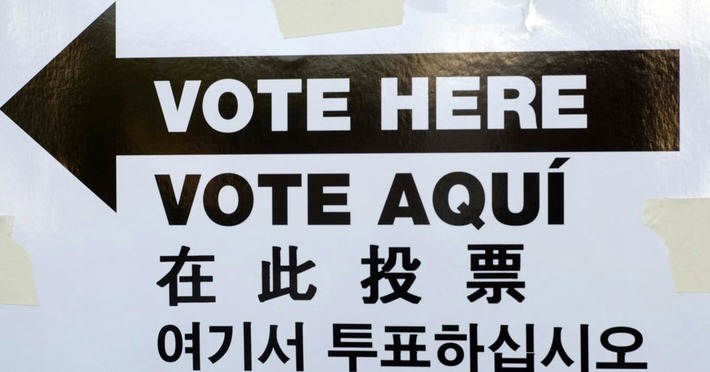
Among those jurisdictions is DuPage County. The federal Voting Rights Act requires local officials in any community with significant groups of non-English-proficient citizens to provide election materials in that group’s language. As Americans and their elected representatives debate who should be allowed to vote and what rules should govern eligibility and registration, one key issue isn’t getting much attention: the ability for people to vote in languages other than English. Communities with relatively high numbers of voting-age citizens with limited English-language proficiency tend to have lower voter turnout. This problem worsens when the people who are not proficient in English also don’t have very much education. They include places like the counties containing Cleveland, Salt Lake City and Rochester, New York — and some counties neighboring Chicago and Washington, D.C. The federal Voting Rights Act requires local officials in any community with significant groups of non-English-proficient citizens to provide election materials in that group’s language. That includes materials such as “any registration or voting notices, forms, instructions, assistance or other materials or information relating to the electoral process, including ballots.” Every five years, the U.S. Census Bureau announces the list of voting jurisdictions — states, counties, municipalities, American Indian and Alaska Native areas — that meet those criteria. The latest list came out Dec. 8, declaring that 331 jurisdictions in 30 states must offer non-English voting materials. These locations are home to 80.2 million voting-age citizens, including 20 million Hispanic people. As researchers at Boise State University’s Idaho Policy Institute, we expect this information to affect the 2022 midterm election, the 2024 presidential election and beyond. Who is covered? People who speak Spanish, and Asian, Native American and Alaska Native languages, are the focus of this policy, because the federal government has decided they have “suffered a history of exclusion from the political process.” Former University of Michigan law professor Brenda Abdellal has said the Voting Rights Act provision should be expanded to include protections for other groups, too, such as Arab Americans. The 2021 Census Bureau designations create the largest increase to date in the number of jurisdictions that must provide non-English election materials and the number of people who will have access to them. Since the last designations in 2016, the number of covered jurisdictions has jumped by 68, a 26% increase. In comparison, the 2016 designations saw only a 6% increase in new jurisdictions over the prior 2011 designations. California, Florida and Texas are still required to provide Spanish-language ballots for every statewide election, even if specific local communities don’t need to do so. Although officials in jurisdictions not covered by the Voting Rights Act provisions may also choose to offer these materials, we expect this new set of requirements to result in changes for a large portion of newly covered jurisdictions. The number of voting-age citizens who can receive non-English materials is increasing as well. Under the 2016 designations, 68.6 million voting-age citizens lived in covered areas. The 2021 designations add 11.6 million to that number. Broken down by ethnicity, the number of Hispanic voting-age citizens living in jurisdictions required to offer Spanish-language ballots has increased by 22.7%. This increase is nearly double the 12.4% increase seen between 2011 and 2016. DuPage County is among the jurisdictions that will now be required to provide election materials in Spanish. The Conversation, from U.S. Census data Likewise, the number of Asian citizens living in jurisdictions required to offer Asian-language ballots has risen by 21.5%, a sharp contrast to the 2% increase from 2011 to 2016. This change may reflect the growth of the Asian population in the U.S., which nearly doubled from 2000 to 2019 and is expected to double again by 2060. The number of Alaska Native and American Indian citizens living in jurisdictions required to offer Alaska Native and American Indian language ballots has not increased as dramatically — by just 6.3%. However, the fact that it has increased at all is notable, as this is the first time since at least 2002 that the number has not decreased. Wisconsin is the state with the most new jurisdictions, 47, with many towns being newly covered for American Indian languages. Important changes Expanding the languages in which voting information is available boosts participation in the electoral process. The Voting Rights Act was amended in 1975 to require additional languages. In the following 30 years, Hispanic voter registration doubled. In previous elections, counties that offered non-English assistance have seen increased voting by language minority groups, especially for first-generation citizens. While there may be increased voting in those counties, other research suggests that election language assistance does not help increase voter registration for people who don’t speak English fluently. Overall, studies show that language assistance, and especially Spanish-language ballots, make it easier for immigrant populations to engage in the election process, resulting in increased voter turnout among Hispanic citizens. As minority populations continue to grow in many communities — the Hispanic population is the fastest-growing group in more than 2,000 counties — Section 203 of the Voting Rights Act will continue playing a key role in providing access to the voting booth for millions of Americans. Gabe Osterhout and Lantz McGinnis-Brown are research associates from the Idaho Policy Institute at Boise State University. This article was originally published on theconversation.com
Computers have become amazingly precise at translating spoken words to text messages and scouring huge troves of data for answers to complex questions – as long as you speak English or another of the world’s dominant languages By MATT O'BRIEN and CHINEDU ASADU Associated Press 23 December 2021, 14:38 • 6 min read LAGOS, Nigeria -- Computers have become amazingly precise at translating spoken words to text messages and scouring huge troves of information for answers to complex questions. At least, that is, so long as you speak English or another of the world’s dominant languages. But try talking to your phone in Yoruba, Igbo or any number of widely spoken African languages and you’ll find glitches that can hinder access to information, trade, personal communications, customer service and other benefits of the global tech economy. “We are getting to the point where if a machine doesn’t understand your language it will be like it never existed,” said Vukosi Marivate, chief of data science at the University of Pretoria in South Africa, in a call to action before a December virtual gathering of the world's artificial intelligence researchers. American tech giants don’t have a great track record of making their language technology work well outside the wealthiest markets, a problem that’s also made it harder for them to detect dangerous misinformation on their platforms. Marivate is part of a coalition of African researchers who have been trying to change that. Among their projects is one that found machine translation tools failed to properly translate online COVID-19 surveys from English into several African languages. “Most people want to be able to interact with the rest of the information highway in their local language,” Marivate said in an interview. He's a founding member of Masakhane, a pan-African research project to improve how dozens of languages are represented in the branch of AI known as natural language processing. It’s the biggest of a number of grassroots language technology projects that have popped up from the Andes to Sri Lanka. Tech giants offer their products in numerous languages, but they don't always pay attention to the nuances necessary for those apps work in the real world. Part of the problem is that there’s just not enough online data in those languages — including scientific and medical terms — for the AI systems to effectively learn how to get better at understanding them. Google, for instance, offended members of the Yoruba community several years ago when its language app mistranslated Esu, a benevolent trickster god, as the devil. Facebook's language misunderstandings have been tied to political strife around the world and its inability to tamp down harmful misinformation about COVID-19 vaccines. More mundane translation glitches have been turned into joking online memes. Omolewa Adedipe has grown frustrated trying to share her thoughts on Twitter in the Yoruba language because her automatically translated tweets usually end up with different meanings. One time, the 25-year-old content designer tweeted, “T’Ílù ò bà dùn, T’Ílù ò bà t’òrò. Èyin l’ęmò bí ę şe şé,” which means, “If the land (or country, in this context) is not peaceful, or merry, you’re responsible for it.” Twitter, however, managed to end up with the translation: “If you are not happy, if you are not happy.” For complex Nigerian languages like Yoruba, those accent marks -- often associated with tones -- make all the difference in communication. ‘Ogun’, for instance, is a Yoruba word that means war, but it can also mean a state in Nigeria (Ògùn), god of iron (Ògún), stab (Ógún), twenty or property (Ogún). “Some of the bias is deliberate given our history," said Marivate, who has devoted some of his AI research to the southern African languages of Xitsonga and Setswana spoken by his family members, as well as to the common conversational practice of “code-switching” between languages. “The history of the African continent and in general in colonized countries, is that when language had to be translated, it was translated in a very narrow way,” he said. "You were not allowed to write a general text in any language because the colonizing country might be worried that people communicate and write books about insurrections or revolutions. But they would allow religious texts.” Google and Microsoft are among the companies that say they are trying to improve technology for so-called “low-resource” languages that AI systems don't have enough data for. Computer scientists at Meta, the company formerly known as Facebook, announced in November a breakthrough on the path to a “universal translator" that could translate multiple languages at once and work better with lower-resourced languages such as Icelandic or Hausa. That's an important step, but at the moment, only large tech companies and big AI labs in developed countries can build these models, said David Ifeoluwa Adelani. He's a researcher at Saarland University in Germany and another member of Masakhane, which has a mission to strengthen and spur African-led research to address technology “that does not understand our names, our cultures, our places, our history.” Improving the systems requires not just more data but careful human review from native speakers who are underrepresented in the global tech workforce. It also requires a level of computing power that can be hard for independent researchers to access. Writer and linguist Kola Tubosun created a multimedia dictionary for the Yoruba language and also created a text-to-speech machine for the language. He is now working on similar speech recognition technologies for Nigeria’s two other major languages, Hausa and Igbo, to help people who want to write short sentences and passages. “We are funding ourselves," he said. "The aim is to show these things can be profitable.” Tubosun led the team that created Google’s “Nigerian English” voice and accent used in tools like maps. But he said it remains difficult to raise the money needed to build technology that might allow a farmer to use a voice-based tool to follow market or weather trends. In Rwanda, software engineer Remy Muhire is helping to build a new open-source speech dataset for the Kinyarwanda language that involves a lot of volunteers recording themselves reading Kinyarwanda newspaper articles and other texts. “They are native speakers. They understand the language,” said Muhire, a fellow at Mozilla, maker of the Firefox internet browser. Part of the project involves a collaboration with a government-supported smartphone app that answers questions about COVID-19. To improve the AI systems in various African languages, Masakhane researchers are also tapping into news sources across the continent, including Voice of America’s Hausa service and the BBC broadcast in Igbo. Increasingly, people are banding together to develop their own language approaches instead of waiting for elite institutions to solve problems, said Damián Blasi, who researches linguistic diversity at the Harvard Data Science Initiative. Blasi co-authored a recent study that analyzed the uneven development of language technology across the world's more than 6,000 languages. For instance, it found that while Dutch and Swahili both have tens of millions of speakers, there are hundreds of scientific reports on natural language processing in the Western European language and only about 20 in the East African one. ——— O'Brien reported from Providence, Rhode Island.
Impossible de parler à son téléphone en yoruba, en igbo ou dans une autre langue africaine largement répandue pour accéder à l'information, au commerce, aux communications personnelles et aux autres avantages des nouvelles technologies. L'intelligence artificielle (IA) est devenue incroyablement précise dans la traduction des mots prononcés en textos et dans l'exploration d'énormes quantités d'informations pour trouver des réponses à des questions complexes. Du moins, tant que cela se fait en anglais ou une autre des "langues dominantes". Essayez de parler à votre téléphone en yoruba, en igbo ou dans une autre langue africaine largement répandue et vous rencontrerez des problèmes qui peuvent entraver l'accès à l'information, au commerce, aux communications personnelles, au service à la clientèle et à d'autres avantages de l'univers numérique. "Nous arrivons au point où si une machine ne comprend pas votre langue, ce sera comme si elle n'avait jamais existé", devait déclarer Vukosi Marivate, chef de la science des données à l'université de Pretoria en Afrique du Sud, lors d'un rassemblement mondial virtuel de chercheurs en intelligence artificielle. Outils linguistiques Les géants américains de la tech ne se pressent pas pour rendre leurs outils linguistiques fonctionnels en dehors des marchés établis, un problème qui a également rendu plus difficile la détection de "fake news" sur leurs plateformes. Vulkosi Marivate est un membre fondateur de Masakhane, une coalition de chercheurs africains qui essaient d'y remédier. Une de leurs recherches révèle que les outils de traduction automatique ne parvenaient pas à traduire correctement les enquêtes en ligne sur la Covid-19 de l'anglais vers plusieurs langues africaines. Langage naturel "La plupart des gens veulent interagir avec le reste de l'autoroute de l'information dans leur langue locale", soutient Vulkosi Marivate. Masakhane est un projet de recherche panafricain visant à améliorer la représentation de dizaines de langues dans la branche de l'IA connue sous le nom de traitement du langage naturel. Il s'agit du plus grand des nombreux projets de technologie linguistique de base qui ont vu le jour des Andes au Sri Lanka. Les géants de la technologie proposent leurs produits dans de nombreuses langues, mais ils ne prêtent pas toujours attention aux nuances nécessaires pour que ces applications fonctionnent dans le monde réel. Le problème vient en partie du fait qu'il n'y a tout simplement pas assez de données en ligne dans ces langues - y compris les termes scientifiques et médicaux - pour que les systèmes d'IA puissent apprendre efficacement à mieux les comprendre. Problèmes de traduction Google, par exemple, a offensé les membres de la communauté Yoruba il y a plusieurs années lorsque son application linguistique a mal traduit Esu, un dieu farceur bienveillant, en diable. Les malentendus linguistiques de Facebook ont été liés à des conflits politiques dans le monde entier et à son incapacité à réduire les fausses informations sur les vaccins contre la Covid-19. Des problèmes de traduction plus banals ont été transformés en mèmes en ligne. Omolewa Adedipe s'est sentie frustrée en essayant de partager ses idées sur Twitter en langue yoruba, car ses tweets traduits automatiquement ont généralement une signification différente. Un jour, cette conceptrice de contenus de 25 ans a tweeté : "T'Ílù ò bà dùn, T'Ílù ò bà t'òrò. Èyin l'ęmò bí ę şe şé", qui signifie : "Si la terre (ou le pays, dans ce contexte) n'est pas paisible, ou joyeuse, vous en êtes responsable." Twitter, cependant, a proposé la traduction suivante : "Si tu n'es pas heureux, si tu n'es pas heureux". Préjugés Pour les langues nigérianes complexes comme le yoruba, ces marques d'accentuation - souvent associées à des tons - font toute la différence dans la communication. "Ogun", par exemple, est un mot yoruba qui signifie "guerre", mais il peut aussi désigner un État du Nigeria (Ògùn), le dieu du fer (Ògún), poignarder (Ógún), 20 ou des biens (Ogún). "Certains préjugés sont délibérés, compte tenu de notre histoire", argumente Vulkosi Marivate, qui a consacré une partie de ses recherches sur l'IA aux langues d'Afrique australe, le xitsonga et le setswana, parlées par les membres de sa famille, ainsi qu'à la pratique courante du "code-switching" entre les langues. Langues à faibles ressources "L'histoire du continent africain et en général des pays colonisés, c'est que lorsque la langue devait être traduite, elle l'était de manière très obtuse", rappelle-t-il. "Vous n'étiez pas autorisé à écrire un texte général dans n'importe quelle langue parce que le pays colonisateur pouvait être inquiet que les gens communiquent et écrivent des livres sur les insurrections ou les révolutions. Mais ils autorisaient les textes religieux." Google et Microsoft font partie des entreprises qui disent essayer d'améliorer la technologie pour les langues dites "à faibles ressources" pour lesquelles les systèmes d'IA n'ont pas assez de données. Les informaticiens de Meta, la société anciennement connue sous le nom de Facebook, ont annoncé en novembre une percée sur la voie d'un "traducteur universel" qui pourrait traduire plusieurs langues à la fois et mieux fonctionner avec les langues à faibles ressources comme l'islandais ou l’haoussa. Main-d'oeuvre technologique C'est un grand pas en avant, mais pour l'instant, seuls les grandes entreprises technologiques et les grands laboratoires d'IA des pays développés peuvent construire ces modèles, affirme David Ifeoluwa Adelani, chercheur à l'université de la Sarre, en Allemagne. Ce membre de Masakhane souhaite renforcer et encourager la recherche menée par les Africains pour lutter contre une technologie "qui ne comprend pas nos noms, nos cultures, nos lieux, notre histoire." Pour améliorer les systèmes, il faut non seulement davantage de données, mais aussi une analyse humaine attentive de la part de locuteurs natifs qui sont sous-représentés dans la main-d'œuvre technologique mondiale. Elle nécessite également une puissance de calcul à laquelle les chercheurs indépendants n'ont pas toujours accès. Reconnaissance vocale L'écrivain et linguiste Kola Tubosun a créé un dictionnaire multimédia etune machine de synthèse vocale pour la langue Yoruba. Il travaille actuellement sur des technologies de reconnaissance vocale similaires pour les deux autres langues principales du Nigeria, l’haoussa et l'igbo, afin d'aider les personnes qui souhaitent écrire des phrases et des passages courts. "Nous nous finançons nous-mêmes", déclare-t-il. "L'objectif est de montrer que ces choses peuvent être rentables". Kola Tubosun a dirigé l'équipe qui a créé la voix et l'accent "anglais nigérian" de Google, utilisés dans des outils comme les cartes. Selon lui, il est difficile de réunir les fonds nécessaires pour construire une technologie qui pourrait permettre à un agriculteur d'utiliser un outil vocal pour suivre les tendances du marché ou de la météo. Locuteurs natifs Au Rwanda, l'ingénieur logiciel Remy Muhire participe à la création d'un nouvel ensemble de données vocales en libre accès pour la langue kinyarwanda, qui implique de nombreux volontaires s'enregistrant en train de lire des articles de journaux et d'autres textes en kinyarwanda. "Ce sont des locuteurs natifs. Ils comprennent la langue", explique Remy Muhire, chercheur à Mozilla, fabricant du navigateur Firefox. Une partie du projet implique une collaboration avec une application pour smartphone soutenue par le gouvernement qui répond aux questions sur la Covid-19. Pour améliorer les systèmes d'IA dans les différentes langues africaines, les chercheurs de Masakhane exploitent également les sources d'information du continent, notamment le service haoussa de Voice of America et la BBC diffusée en igbo. Diversité linguistique De plus en plus, des gens se regroupent pour développer leurs propres approches linguistiques au lieu d'attendre que les institutions résolvent les problèmes, souligne Damián Blasi, chercheur sur la diversité linguistique au sein de la Harvard Data Science Initiative. Coauteur d'une étude récente sur le développement inégal des technologies linguistiques dans les quelque 6 000 langues du monde, Damián Blasi a constaté que si le néerlandais et le swahili comptent tous deux des dizaines de millions de locuteurs, il existe des centaines de rapports scientifiques sur le traitement du langage naturel dans les langues d'Europe de l'Ouest et seulement une vingtaine dans celles d'Afrique de l'Est.
Mon, December 20, 2021, 2:00 PM·3 min read DANBURY, Conn., December 20, 2021--(BUSINESS WIRE)--Translators without Borders (TWB), the leading global community of linguists who translate critical information for organizations all over the world, is excited to announce that Lionbridge, a global leader in translation and localization, is their first sapphire-level sponsor. TWB started out as a volunteer community of mainly translators and has grown enormously over the years to over 60,000 community members in 148 countries. Growing a global community starts at a grassroots level. Individuals and supporters volunteer time, expertise, and other resources. The formal sponsorship program supported by leading companies like Lionbridge enables TWB to expand its global impact and establish a foundation for continued growth. To help build on the work of TWB, in 2021, the organization grew into CLEAR Global. But TWB remains at its core, with the world’s largest community of humanitarian linguists central to the mission — helping people get vital information and be heard, whatever language they speak. Chief Executive Officer of CLEAR Global Andrew Bredenkamp shares, "We work with nonprofit partners and international organizations such as the UN to reach the millions of people who speak a marginalized language or are affected by a crisis. We rely on funding and donors to keep us going and aid in our ability to grow the organization and our sponsorship program. Lionbridge has been a sponsor of ours since the beginning. They’re a significant and reliable ally as we work to grow our organization. Sponsorships are really key to us being able to invest in growth, expand our resources and increase our impact." This sponsorship highlights Lionbridge’s continued efforts to aid communication across cultures and languages. Lionbridge looks forward to continuing to work with TWB to help increase access to critical knowledge and information, in a language and format that people understand. "Our mission is to break barriers and build bridges and we are a company that values cultural outreach," Chief Executive Officer John Fennelly said, "That mission aligns perfectly with the inclusive community that TWB has created. We’re proud to strengthen our partnership with them to support their global growth and impact." View the video interview between John Fennelly and Andrew Bredenkamp. About Lionbridge Lionbridge partners with brands to break barriers and build bridges all over the world. For more than 20 years, we have helped companies connect with global customers and employees by delivering localization and training data services in 350+ languages. Through our world-class platform, we orchestrate a network of one million passionate experts in 5000+ cities, who partner with brands to create culturally rich experiences. Relentless in our love of linguistics, we use the best of human and machine intelligence to forge understanding that resonates with our customers’ customers. Based in Waltham, Mass., Lionbridge maintains solution centers in 26 countries. Learn more at www.lionbridge.com. About Translators without Borders, part of CLEAR Global
Translators without Borders (TWB) is a global community of over 60,000 translators and language specialists offering language services to humanitarian and development organizations globally. The community of linguists donate their time and skills to translate critical information for millions of people around the world, so everyone has the information they need and want. TWB is part of CLEAR Global, a US-based nonprofit that also comprises CLEAR Tech and CLEAR Insights. CLEAR Global helps people get vital information and be heard, whatever language they speak. The organization does this through research and scalable language technology solutions that improve two-way communication with communities that speak marginalized languages. Learn more at translatorswithoutborders.org and clearglobal.org View source version on businesswire.com: https://www.businesswire.com/news/home/20211220005015/en/ Contacts Lionbridge Media
Rebecca Wilkie
mediainquiries@lionbridge.com
Dear readers and indefatigable friends, We woke up this morning with a surprise message for our attention on the Metaglossia portal @ scoop.it: “You are a giant among curators. Congratulations on leveling The World of Indigenous Languages up to Gold!” The message was delivered at 12:11 AM and should be no mean feat for amateur curators. However, we see the message as a booster rather than a consecration. Indeed, there is far more work ahead, as we hope for the culture of mutual understanding to become an essential feature of humanness and humanity. We humbly dedicate this to each and every one of you for your fidelity to Metaglossia since its inception as a specialist concept a little over ten years ago. We thank you immensely for recognising the relevance of our advocacy at these critical moments in international and national histories. We sincerely appreciate your unflinching support for our modest contribution to better interpersonal and intercommunity relations, notably through new and fairer approaches to diversity and intercultural communication, most specifically through a better understanding of and inclusive approaches to translation, interpreting, terminology and lexicography. Wishing you the very best this season and throughout 2022! For the #Metaglossia Team Charles Tiayon #metaglossiaforever
Cette allocation ne peut donc pas être apparentée à un salaire ou à une rémunération, sous quelque forme que ce soit, puisqu’elle n’est pas obtenue en contrepartie d’un travail accompli dans un lien de subordination avec l’AUF. L’AUF et la RFI Roumanie s'associent pour mettre en place de 20 stages professionnels à distance destinés aux étudiant.e.s francophones inscrit.e.s dans un établissement membre de l'AUF autre que la Roumanie.
Les stages auront une durée de 4 mois et se dérouleront du 1er mars au 1er juillet 2022. Tous les stages s'effectueront à distance. Activités de stage Les tâches principales des stages relèveront de la traduction d’articles de presse nationale vers le français (domaines : santé, société, économie, culture). Le volume de travail sera d’un article par semaine. Conditions de candidature : - être inscrit.e dans une université membre de l’AUF en Europe centrale et orientale autre que la Roumanie (https://www.auf.org/membres/) dans une filière de journalisme, communication, langues étrangères, traduction ou autre domaine apparenté ;
- avoir un excellent niveau de français ;
- faire preuve de ce que le stage fait partie intégrante du cursus universitaire et qu’il est sanctionné par des crédits ou par une note ;
- avoir le statut d’étudiant.e pendant toute la durée du stage (mars-juillet 2022).
Critères de sélection des candidatures éligibles : - la cohérence du stage avec la formation suivie ;
- la qualité de l’épreuve de traduction.
Procédure de sélection : L’AUF et la RFI analyseront les candidatures des étudiant.e.s et sélectionneront d’un commun accord les étudiants bénéficiaires avant le 1er mars 2022. Les étudiant.e.s retenu.e.s seront notifié.e.s par l’AUF et les résultats seront publiés sur le site de l’AUF. Une fois les bénéficiaires sélectionnés, une convention quadripartite nominale de stage sera conclue entre l’AUF, la RFI, l’établissement d’origine et l’étudiant.e. À l’issue du stage, la RFI et l’AUF s’engage à établir une attestation de fin de stage pour les étudiant.e.s stagiaires. La RFI communiquera en permanence avec l’AUF notamment en ce qui concerne l’assiduité des stagiaires. Prise en charge : Les 20 stagiaires retenu.e.s bénéficieront d’une allocation de 60 euros brut par mois de la part de l’AUF, pour une durée de 4 mois. Dépôt de la candidature : Le/La candidat.e doit remplir le formulaire en ligne disponible à l’adresse http://formulaires.auf.org/ : Appels d’offres en cours – Stages de traduction langue nationale-français en partenariat avec la RFI Roumanie (Europe centrale et orientale). Il doit joindre les documents suivants : - copie de la carte d’étudiant valide pour l’année 2021 – 2022 ou autre justificatif du statut étudiant ;
- CV actualisé ;
- épreuve de traduction langue nationale – langue française :
- les candidat.e.s doivent choisir un article pertinent de la presse nationale (santé, économie, culture, société, etc.), d’environ 6000-8000 caractères (espaces compris), le traduire en français et le déposer en format .docx, .doc ou .pdf ;
- critères de sélection de l’article : article d’une source média crédible qui soit intéressant pour le public du pays d’origine de l’étudiant.e (au niveau national) et qui pourrait être pertinent pour un public régional/international ;
- une attestation numérisée ou un message électronique de la part du responsable de formation dans l’établissement d’origine (chef de département ou doyen) indiquant son accord pour ce stage et la prise en compte du stage dans le cursus par des crédits ou par une note, en format .pdf .
Modèle de message : « Je, soussigné(e) ____________, dans ma fonction de _______________, j’exprime mon accord pour la participation de l’étudiant.e/ des étudiant.e.s _____________ au stage professionnel à distance à la RFI Roumanie qui se déroulera de mars au juillet 2022 dans l’éventualité de sa sélection pour une mobilité de stage professionnel accordée par l’Agence universitaire de la Francophonie. Par la présente j’atteste que le stage professionnel fait partie intégrante du cursus universitaire et que sa réalisation est validée par notre établissement par la modalité suivante : nombre de crédits, note sur le supplément du diplôme. » Avis L’AUF, en tant que personne morale privée qui favorise la compréhension interculturelle au sein des pays de la Francophonie, soutient le l’insertion professionnelle des diplômés en octroyant une aide financière (dite « allocation de mobilité de stage professionnel ») aux étudiant.e.s de ses établissements membres qui vient abonder, le cas échéant, des allocations obtenues par l’étudiant auprès de l’État, d’établissements publics ou privés d’enseignement supérieur, d’établissements publics ou d’organismes publics et privés de recherche. Il est porté à l’attention des candidats que l’AUF n’est pas un établissement public ayant une mission statutaire d’enseignement supérieur et de recherche. À ce titre, l’octroi d’une allocation de stage professionnel n’implique pas le recrutement de l’étudiant.e par l’AUF ou l’instauration d’une relation de travail ou d’un quelconque lien de subordination entre l’AUF et l’étudiant.e sélectionné.e. Cette allocation ne peut donc pas être apparentée à un salaire ou à une rémunération, sous quelque forme que ce soit, puisqu’elle n’est pas obtenue en contrepartie d’un travail accompli dans un lien de subordination avec l’AUF. Par ailleurs, l’AUF n’exerce aucun pouvoir disciplinaire et de contrôle sur le bénéficiaire d’une allocation pour mobilité de stage professionnel. La scolarité et les recherches de l’étudiant restent régies par les règles en vigueur au sein de son établissement d’origine et/ou d’accueil. Tout candidat à une allocation de stage professionnel de l’AUF est fortement incité à rechercher d’autres apports lui permettant de combler tous les besoins rencontrés durant sa période de stage professionnel, particulièrement auprès de son établissement d’origine et/ou d’accueil. Pour plus d’informations : stages-eco@auf.org.
"The truth of the matter is that even if half the world's population uses the internet today, it's the elite of the world -- mainly those living in cities, mainly those with a good income," Goran Marby, head of the US-based non-profit, told AFP in an interview. When website addresses using writing systems like Chinese and Arabic were introduced back in 2009, it was hailed as a step that would transform the internet. But 12 years later, the vast majority of the web remains wedded to the Roman alphabet -- and ICANN, the organisation in charge of protecting the internet's infrastructure, is on a mission to change it. "The truth of the matter is that even if half the world's population uses the internet today, it's the elite of the world -- mainly those living in cities, mainly those with a good income," Goran Marby, head of the US-based non-profit, told AFP in an interview. "Shouldn't we give people the opportunity to use their own scripts, their own keyboards, their own narratives?" It's thanks to ICANN -- the Internet Corporation for Assigned Names and Numbers -- that when you type an address at the top of the screen, your computer can find the web page you're looking for. These days it's theoretically possible to type an address in more than 150 scripts, including obscure ones like ancient Egyptian hieroglyphs, and watch the page load. But large parts of the internet remain incompatible with writing systems other than the Latin alphabet. Many US websites, for example, would not allow you to make a purchase or subscribe to their newsletter if you entered an email address in Tamil or Hebrew. When a group of bodies including ICANN tested the world's top 1,000 websites last year, only 11 percent accepted a Chinese or Arabic email address when trying, for example, to contact them via an online form. - Western-centric since conception - One of ICANN's priorities for the coming years is to ensure that 28 commonly used writing scripts are usable across the internet. The problem isn't restricted to the West: in China even WeChat, the country's most popular messaging app, does not recognise email addresses written in Chinese characters. Chinese web addresses often use strings of numbers, like the dating site 5201314.com. This is partly because it can be hard to remember how to spell a web address in pinyin, the romanised version of Chinese, and partly because number-based puns work well in Mandarin ("520" sounds like "I love you"). In many parts of the world, people have simply tried to adapt to an internet that doesn't speak their language. "It never even crossed my mind," said Cairo finance worker Hadeer al-Shater, when asked whether she had considered setting up an Arabic-script email account. "The whole point is to be able to communicate with the rest of the world. And unfortunately
There is no straight one-to-one translation from one language to another for many concepts. Even when there is, such translations typically contain various connections and meanings that a non-native speaker would easily miss. However, when the idea is anchored in visual examples, the meaning may be more evident. Although each person’s associations with the term may differ significantly, the meaning becomes more evident when they are presented with a visual of the intended concept. Take the word “wedding,” for example. In English, a bride in a white gown and a groom in a tuxedo are frequently associated, however in Hindi (शादी), a bride in brilliant colors and a guy in a sherwani may be a more fitting association. It is now feasible to eliminate ambiguity in translation by displaying a text combined with a supporting image, thanks to recent developments in neural machine translation and image recognition. For high-resource languages like English, previous research has made significant progress in learning image–text combined representations. These representation models aim to store the picture and text as vectors in a shared embedding space where the image and the text describing it are close to each other. For example, ALIGN and CLIP have shown that when given enough training data, training a dual-encoder model (i.e., one with two independent encoders) on image-text pairs using a contrastive learning loss works exceptionally well. Unfortunately, for most languages, comparable image–text pair data does not exist at the same scale. In fact, the top ten languages with the most data, such as English and Chinese, account for more than 90% of this sort of online data, with substantially less data for under-resourced languages. To get around this problem, manual collection of image–text pair data should be done for under-resourced languages. However, this would be a difficult task given the project’s scope, or use pre-existing datasets (e.g., translation pairs) to inform the necessarily learned representations for multiple languages. Google has launched MURAL: Multimodal, Multitask Retrieval Across Languages, a representation model for image–text matching that leverages multitask learning applied to image–text pairs in tandem with translation pairs encompassing 100+ languages. With MURAL, users can use visuals instead of words to express words that don’t have a direct translation in the target language. For example, the Malagasy term “valiha” refers to a form of tube zither that has no direct translation in most languages but may be simply communicated through visuals. MURAL Architecture The MURAL architecture is based on the ALIGN structure. However, it is used in a multitasking manner. Unlike ALIGN that utilizes a dual-encoder architecture to bring together image representations and related text descriptions, MURAL does the same thing while also extending it across languages by integrating translation pairings. MURAL handles two contrastive learning tasks: - Image-Text matching
- Text–text (bitext) matching, with the text encoder module shared by both.
From the image–text data, the model learns correlations between images and text, as well as representations for hundreds of different languages from translation pairs. Image-to-Text and Text-to-Image Retrieval in Multiple Languages The team chose the task of cross-modal retrieval (i.e., retrieving relevant images given a text and vice versa) to demonstrate MURAL’s capabilities, and the main focus was on the results of a variety of academic image–text datasets covering well-resourced languages, such as MS-COCO (and its Japanese variant, STAIR), Flickr30K (in English) and Multi30K (extended to German, French, and Czech), XTD (extended to German, French, and Czech), and (test-only set with seven well-resourced languages: Italian, Spanish, Russian, Chinese, Polish, Turkish, and Korean). MURAL consistently outperforms state-of-the-art models, other benchmarks, and competitive baselines across the board, according to empirical evidence. Furthermore, MURAL performs admirably for the vast majority of under-resourced languages on which it has been tested. Retrieval Analysis ALIGN and MURAL for English (en) and Hindi (hindi) retrieved zero-shot samples on the WIT dataset (hi) were compared. In under-resourced languages like Hindi, MURAL outperforms ALIGN in retrieval, indicating a greater understanding of text semantics. Even in a language with a lot of resources, like French, MURAL exhibits a higher understanding of specific terms. Embeddings Visualization Researchers have previously demonstrated that displaying model embeddings can reveal interesting links between languages — for example, representations acquired by a neural machine translation (NMT) model have been shown to form clusters based on their language family membership. A subset of languages from the Germanic, Romance, Slavic, Uralic, Finnic, Celtic, and Finno-Ugric language families are visualized in a similar way (widely spoken in Europe and Western Asia). The text embeddings of MURAL are compared to those of LaBSE, a text-only encoder. MURAL’s embeddings, which are trained with a multimodal aim, display some clusters that are consistent with areal linguistics (where elements are shared by languages or dialects in a geographic area) and contact linguistics, in contrast to LaBSE’s representation (where languages or dialects interact and influence each other). For many under-resourced languages, utilizing translation pairings helps overcome the lack of image-text pairs and increases cross-modal performance. In addition, there are clues of areal and contact linguistics in the text representations trained using a multimodal model, which is intriguing. This necessitates a deeper investigation into the various connections learned implicitly by multimodal models like MURAL. Beyond well-resourced languages, this study will encourage more research in the multimodal, multilingual domain, where models develop representations of and link across languages (represented via images and text). Paper: https://arxiv.org/pdf/2109.05125.pdf Reference: https://ai.googleblog.com/2021/11/mural-multimodal-multi-task-retrieval.html
An overlap between populations of grizzly bears and Indigenous groups points to a wider phenomenon known as 'biocultural diversity' When scientists started to work in the dense pine forests of British Columbia to analyse the DNA of grizzly bears, they discovered three distinct, genetically different groups. The bears were spread across an area of 23,500 square kilometres – land that falls within the territories of the Nuxalk, Haílzaqv, Kitasoo/Xai’xais, Gitga’at, and Wuikinuxv Indigenous nations, groups associated with three Indigenous language families. This latter fact proved to be hugely significant. According to Lauren Henson, a researcher at the Rainforest Conservation Foundation, who co-led the study, none of the geographical divides that you might think would explain the formation of three different bear groups – water barriers, terrain ruggedness, ice or snow – turned out to have any real relevance. Instead, ‘the genetic groups of grizzly bears actually corresponded to the spatial locations of Indigenous language families.’ She believes that this is the first time that a species’ genetic co-occurrence with human language has been documented. The research indicates that both bears and people maintain familial links to territories that have been passed down through generations. It suggests a parallel in the resources used by both bears and people, but also a cultural equivalency between the two. This phenomenon, part of what is called ‘biocultural diversity’ (the idea that there are links between biodiversity and cultural diversity) has long existed. Larry Gorenflo, a professor at Penn State College in Pennsylvania, is fascinated by the concept. In 2012, his research team analysed the geographic ranges of more than 6,900 human languages to examine their overlap with biodiversity. A total of 3,202 languages, nearly half of those on Earth, were found to occur within just 35 ‘biodiversity hotspots’ – regions with an abundance of endemic species. Small biodiversity hotspots in the East Melanesian Islands, the Guinean Forests of West Africa, Indo- Burma, Mesoamerica and Wallacea each harboured more than 250 different languages. There are two main theories that seek to explain the high numbers of languages within biodverse areas. The first holds that because humans living in rich, biodiverse areas would have had access to more resources when languages were evolving, the ability to communicate across a wide area would have been less important. ‘You can keep your own thing going on instead of learning somebody else’s language,’ says Gorenflo. The second, more global theory, suggests that the expansion of people, crops and diseases from Europe gradually reduced cultural and linguistic diversity around the planet, but disproportionately affected less biodiverse areas. ‘Temperate zones were colonised by Europeans, who were more comfortable there than in the tropics,’ Gorenflo explains. Either way, ‘understanding the relationship is important because linguistic diversity and biodiversity loss are co-occurring,’ says Gorenflo. Language loss in many of the world’s biodiversity hotspots, such as the Americas, has reached 60 per cent in the last 35 years. ‘The connections are so entwined that I’m not sure we can conserve biodiversity without conserving cultural and linguistic diversity.’ Many conservationists point to this co-occurrence as a manifestation of Indigenous people’s deep connections with natural landscapes. In British Columbia, for example, ‘the first Five Nations Indigenous peoples have been stewarding the land for thousands of years,’ says Henson. She and Gorenflo both advocate for increased involvement of Indigenous communities within conservation programmes; the grizzly bear study was conducted with the involvement of the governments of the relevant Indigenous nations. It’s a subject that has long been debated in conservation circles and was brought to the fore once again at the recent COP26 climate conference. Some Indigenous people have pointed to the fact that the hurried creation of new protected areas could lead to displacement of Indigenous groups, removing the people with the deepest understanding of the landscape. Many would like to see legal ownership of such territories given to Indigenous peoples. Gorenflo believes that this would serve the dual purpose of preserving the cultural integrity and linguistic diversity of such groups, while ceding control to communities who better understand the land and its inhabitants. In some areas, such a conservation strategy is already proving effective. Earlier this year, the UN Food and Agriculture Organisation released a report showing that Amazonian deforestation rates were significantly lower in areas where Indigenous and tribal land rights had been formally recognised. Moreover, areas managed by Indigenous peoples have the highest abundance of wildlife. A 2019 study of more than 15,000 geographical areas across Canada, Brazil and Australia found that the total numbers of birds, mammals and amphibians are highest on lands that are managed by Indigenous communities. ‘Not all have the same outlook,’ says Gorenflo. ‘But in many cases, Indigenous peoples don’t want to exploit natural resources. If you know that your and your descendants’ futures depend on the way you manage natural resources, you’ll probably take better care of them.’
Wednesday, November 24, 2021 It is now official. 7 July of each year is World Kiswahili Language Day as declared by UNESCO Member States in its 41st Session, Paris, 2021. Kiswahili is one of the most widely used languages of the African family, and the most widely spoken in sub-Saharan Africa. It is among the 10 most widely spoken languages in the world, with more than 200 million speakers. It is one of the lingua franca in many countries within East, Central and Southern Africa as well as in the Middle East. It is also taught across major universities and colleges globally. Kiswahili language is one of the official languages of the African Union (AU), Southern African Development Community (SADC) and East African Community (EAC). It is therefore, an indispensable tool in achievement of the Sustainable Development Goals 2030 and in facilitating regional integration particularly in the implementation of the African Continental Free Trade Agreement (ACFTA). In the 1950s the United Nations established the Kiswahili language unit of United Nations Radio, and today Kiswahili is the only African language within the Directorate of the Global Communications at the United Nations. So why July 7? 7 July, which was the day in 1954 that Tanganyika African National Union (TANU) under the late Mwalimu Julius Kambarage Nyerere, First President of the United Republic of Tanzania, adopted Kiswahili as a unifying language for independence struggles. Indeed, former President and Father of the Nation of Kenya, the late Mzee Jomo Kenyatta, also used Kiswahili language through the use of the popular “Harambee” slogan in mobilizing the people of Kenya in the struggle against colonialism. In addition, on 7 July 2000, the East African Community (EAC) was re-established to rekindle the spirit of cooperation and integration among the East African people of the United Republic of Tanzania, Kenya and Uganda where Kiswahili language is widely spoken. Rwanda, Burundi and South Sudan later joined the EAC and are now members. “Having a language recognized by the UN is a big thing! Kiswahili is the first African Language to have this honour. Kenya's permanent representative to UNESCO France Amb. Phyllis Kandie played a major role. Kenya and Tanzania have been very instrumental in making this a reality” says Prof. Iribe Mwangi, Department of Linguistics, Languages and Literature, University of Nairobi. The international day will be celebrated by all stakeholders, in recognition of the global relevance of Kiswahili as a language of global communication built in the daily life of Africans in a constant enrichment of its multiculturality.
L’Organisation des Nations Unies pour l’éducation, la science et la culture (UNESCO) a institué officiellement, depuis hier mercredi 24 novembre, le 7 juillet de chaque année Journée mondiale du swahili. Selon un média kenyan (Habari za Un) qui donne l’info, cette décision a été prise lors d’une réunion des États membres de l’organisation réunis au siège de l’Unesco à Paris. Une résolution spéciale pour annoncer la Journée a été approuvée à l’unanimité par tous les membres. Avec cette décision, le swahili devient ainsi la première langue africaine à être reconnue par une journée spéciale célébrée. Avec 120 à 150 millions de locuteurs, le swahili est l’une des langues transfrontalières les plus florissantes. Elle est la langue nationale en Tanzanie, au Kenya et en République démocratique du Congo. Mais, aussi lingua franca (utilisée sur une aire géographique assez vaste) au Burundi, dans le Nord du Mozambique, en Ouganda, au Rwanda, au Sud de la Somalie et dans une moindre mesure au Malawi, au Soudan du sud et en Zambie. Il est également la langue de la Communauté d’Afrique de l’Est, de la Communauté de développement d’Afrique Australe et de l’Union africaine. Dina Buhake
Forum des As / MCP, via mediacongo.net
O livro Divã ocidento-oriental (em alemão West-östlicher Divan), de Johann Wolfgang Goethe, está entre os cinco finalistas do prêmio Jabuti de 2021, na categoria Tradução. A obra foi publicada em março de 2020, e a tradução é um dos resultados do doutorado do professor Daniel Martineschen, da área de alemão do Curso de Letras e Literaturas Estrangeiras do Centro de Comunicação e Expressão (CCE) da Universidade Federal de Santa Catarina (UFSC). A tese, intitulada O lugar da tradução no West-östlicher Divan de Goethe, foi defendida em 2016 no Programa de Pós-Graduação em Letras (PPGLetras) da Universidade Federal do Paraná (UFPR) e trata de questões de tradução na poetologia do Divã.
“O Divã ocidento-oriental é o resultado do movimento de Goethe em direção ao Oriente, ‘de onde há milênios têm chegado a nós tantas coisas grandiosas, boas e belas’. Este desejo teve sua gênese no encontro do poeta alemão com o Diwan — palavra persa para ‘coletânea’ ou ‘ciclo de poemas’ — do poeta persa Hafez. Reunindo mais de 500 gazéis (poemas curtos e líricos, de temática mística ou amorosa), o Diwan de Hafez circulava pelo Oriente desde o século XIV”, traz a apresentação do trabalho pela editora Estação Liberdade (460 p.).
Daniel Martineschen atuou durante anos como tradutor técnico e juramentado para o idioma alemão no estado do Paraná. Atualmente é professor do curso de Letras Alemão da UFSC e é coordenador da área de alemão. Sua pesquisa na Universidade atualmente gira em torno da área da prática de tradução, com um projeto de investigação das possibilidades da tradução em dupla.
Outras traduções suas incluem: Travessia: uma história de amor, de Anna Seghers (2014) e Béla Guttmann: Uma lenda do futebol do século XX, de Detlev Claussen (2014), ambos publicados pela editora Estação Liberdade; e Gente alemã: uma coleção de cartas, organizada por Walter Benjamin (2020), pela editora Nave de Florianópolis.
Sobre o prêmio
O professor Daniel não é o único representante da UFSC entre os finalistas do Prêmio Jabuti neste ano. A doutoranda Monique Malcher de Carvalho, do Programa de Pós-Graduação Interdisciplinar em Ciências Humanas, também é finalista na categoria Conto, com a obra Flor de Gume (editora Pólen Livros, 112 p.), seu livro de estreia. A Câmara Brasileira do Livro (CBL) divulgou a relação dos finalistas de cada uma das 20 categorias do prêmio na última terça-feira, 16 de novembro.
Os vencedores serão revelados na cerimônia de premiação, que está marcada no dia 25 de novembro, às 19h, pelo YouTube da CBL. O evento ocorrerá de forma remota pelo segundo ano seguido por causa da pandemia. O mestre de cerimônia será o ator Dan Stulbach. O vencedor de cada categoria recebe R$ 5 mil e a estatueta do Jabuti. E os premiados dos eixos Literatura e Não Ficção concorrem ao troféu de Livro do Ano, com premiação no valor de R$ 100 mil.
O editor e tradutor Marcos Marcionilo é o responsável pela curadoria da 63ª edição do prêmio. No conselho, que selecionou os jurados, há especialistas e profissionais de diversas áreas do conhecimento. A edição deste ano registrou 3.422 inscrições, um aumento de 31% em relação a 2020. Neste ano, o Prêmio Jabuti homenageia ainda Ignácio de Loyola Brandão. Autor de 47 livros e membro da Academia Brasileira de Letras (ABL), a Personalidade Literária do ano também coleciona prêmios, entre eles, cinco estatuetas do Jabuti.

|
Scooped by
Charles Tiayon
February 6, 2020 3:37 AM
|
Les Editions Papyrus Afrique annoncent la parution officielle de trois ouvrages, à l’occasion du 34e anniversaire de la disparition du Pr Cheikh Anta Diop, le 7 février 2020.
Il s’agit de la 3e réédition de ‘’Paalel Njuumri’’ (La cruche de miel) du Pr Aboubacry Moussa Lam ; la 2e réédition de ‘’Sawru Ganndal’’ (Canne de la connaissance) du même auteur et ‘’Fuuta uuri kam’’ du Professeur Mamoudou Sidiki Ka.
La même source ajoute que durant ce mois de février, les Editions Papyrus Afrique dédient huit livres à paraître au courant du mois, au Pr Cheikh Anta Diop et à tous les militants des langues africaines décédés.
La note cite entre autres ouvrages ‘’Mémoires de cajou’’, un roman d’Abdou Latif Ndiaye, en coédition avec les Editions Sankofa et Gurli du Burkina Faso, ‘’Pooye e nguurndam Ceerno Sa’iidu Nuuru Taal’’, une traduction en pulaar de l’ouvrage de Cheikh Mouhamadou Khalil Ba, ‘’Yaama neex’’, un recueil de nouvelles en wolof de Moumar Guèye, ‘’Jime dummbirdu’’, poèmes posthumes du poètes mauritanien Ly Djibril Hammé en pulaar.
Il y a aussi ‘’’Islam e pinal fulbe’’ (Islam et culture pulaar) de Bacca Ba, ‘’Amical Cabral l’insoumis’’, une pièce de théâtre du cinéaste Moussa Yoro Bathily, ‘’Sunu naanuwaay Seex Ahmad Tijjani Al Faatimi’’ de l’imam Kabir Cheikh Ahmad Tidjane Kane et ‘’Nguurdam nelaado’’ de Harouna Sy.
Papyrus Afrique est une maison d’édition, publiant principalement en langues africaines et se fixe comme mission le développement d’une littérature moderne en langues nationales.
Les Editions, créées en 1996, ont à leur actif plusieurs ouvrages et disposent d’un large lectorat dans la sous-région ouest-africaine et dans la diaspora en Europe et aux USA.
Elles publient également un mensuel d’informations générales en wolof et pulaar Lasli/Njëlbéen.
La maison d’édition fondée et dirigée par Seydou Nourou Ndiaye, a été lauréate du Prix Alioune Diop pour la promotion de l’édition en Afrique en 2002.
Elle a aussi reçu le premier Prix national pour la promotion de l’édition au Sénégal en 2005.
Seydou Nourou Ndiaye a été élevé Chevalier de l’Ordre des Arts et des Lettres de la République du Sénégal en 2003.
rts.sn
|
|
Scooped by
Charles Tiayon
February 6, 2020 3:35 AM
|
Les Editions Papyrus Afrique annoncent la parution officielle de trois ouvrages, à l’occasion du 34e anniversaire de la disparition du Pr Cheikh Anta Diop, le 7 février 2020.
Il s’agit de la 3e réédition de ‘’Paalel Njuumri’’ (La cruche de miel) du Pr Aboubacry Moussa Lam ; la 2e réédition de ‘’Sawru Ganndal’’ (Canne de la connaissance) du même auteur et ‘’Fuuta uuri kam’’ du Professeur Mamoudou Sidiki Ka.
La même source ajoute que durant ce mois de février, les Editions Papyrus Afrique dédient huit livres à paraître au courant du mois, au Pr Cheikh Anta Diop et à tous les militants des langues africaines décédés.
La note cite entre autres ouvrages ‘’Mémoires de cajou’’, un roman d’Abdou Latif Ndiaye, en coédition avec les Editions Sankofa et Gurli du Burkina Faso, ‘’Pooye e nguurndam Ceerno Sa’iidu Nuuru Taal’’, une traduction en pulaar de l’ouvrage de Cheikh Mouhamadou Khalil Ba, ‘’Yaama neex’’, un recueil de nouvelles en wolof de Moumar Guèye, ‘’Jime dummbirdu’’, poèmes posthumes du poètes mauritanien Ly Djibril Hammé en pulaar.
Il y a aussi ‘’’Islam e pinal fulbe’’ (Islam et culture pulaar) de Bacca Ba, ‘’Amical Cabral l’insoumis’’, une pièce de théâtre du cinéaste Moussa Yoro Bathily, ‘’Sunu naanuwaay Seex Ahmad Tijjani Al Faatimi’’ de l’imam Kabir Cheikh Ahmad Tidjane Kane et ‘’Nguurdam nelaado’’ de Harouna Sy.
Papyrus Afrique est une maison d’édition, publiant principalement en langues africaines et se fixe comme mission le développement d’une littérature moderne en langues nationales.
Les Editions, créées en 1996, ont à leur actif plusieurs ouvrages et disposent d’un large lectorat dans la sous-région ouest-africaine et dans la diaspora en Europe et aux USA.
Elles publient également un mensuel d’informations générales en wolof et pulaar Lasli/Njëlbéen.
La maison d’édition fondée et dirigée par Seydou Nourou Ndiaye, a été lauréate du Prix Alioune Diop pour la promotion de l’édition en Afrique en 2002.
Elle a aussi reçu le premier Prix national pour la promotion de l’édition au Sénégal en 2005.
Seydou Nourou Ndiaye a été élevé Chevalier de l’Ordre des Arts et des Lettres de la République du Sénégal en 2003.
rts.sn
|
|
Scooped by
Charles Tiayon
February 6, 2020 3:32 AM
|
L’Afrique est le berceau d’un tiers des langues parlées dans le monde. L'arabe, le kiswahili, le haoussa, le yorouba, le lingala ou encore le kinyarwanda, pour ne citer qu’elles, font partie des 2 000 langues dénombrées en Afrique.
Moyen de communication par excellence, la langue est l’un des éléments essentiels de l’identité individuelle, collective et nationale des locuteurs qui la parlent. Sur le continent, on sait que les langues officielles sont généralement des langues européennes comme le français au Mali, ou l’anglais en Tanzanie.
C’est essentiellement dans les pays anglophones que les langues africaines ont un statut officiel, qu’on illustrera avec le tswana au Botswana. Mais, face à ce constat, comment conserver les langues locales et pérenniser leur existence ? Comment le digital peut-il jouer en faveur de la préservation des langues ? Face à la mondialisation, comment les jeunes s'approprient leur idiome ?
|
|
Scooped by
Charles Tiayon
February 6, 2020 3:31 AM
|
Dakar, 3 fev (APS) - Les Editions Papyrus Afrique annoncent la parution officielle de trois ouvrages, à l’ occasion du 34e anniversaire de la disparition du Pr Cheikh Anta Diop, le 7 février 2020.
Selon une note transmise à l’APS, il s’agit de la 3e réédition de ‘’Paalel Njuumri’’ (La cruche de miel) du Pr Aboubacry Moussa Lam ; la 2e réédition de ‘’Sawru Ganndal’’ (Canne de la connaissance) du même auteur et ‘’Fuuta uuri kam’’ du Professeur Mamoudou Sidiki Ka.
La même source ajoute que durant ce mois de février, les Editions Papyrus Afrique dédient huit livres à paraître au courant du mois, au Pr Cheikh Anta Diop et à tous les militants des langues africaines décédés.
La note cite entre autres ouvrages ‘’Mémoires de cajou’’, un roman d’Abdou Latif Ndiaye, en coédition avec les Editions Sankofa et Gurli du Burkina Faso, ‘’Pooye e nguurndam Ceerno Sa’iidu Nuuru Taal’’, une traduction en pulaar de l’ouvrage de Cheikh Mouhamadou Khalil Ba, ‘’Yaama neex’’, un recueil de nouvelles en wolof de Moumar Guèye, ‘’Jime dummbirdu’’, poèmes posthumes du poètes mauritanien Ly Djibril Hammé en pulaar.
Il y a aussi ‘’’Islam e pinal fulbe’’ (Islam et culture pulaar) de Bacca Ba, ‘’Amical Cabral l’insoumis’’, une pièce de théâtre du cinéaste Moussa Yoro Bathily, ‘’Sunu naanuwaay Seex Ahmad Tijjani Al Faatimi’’ de l’imam Kabir Cheikh Ahmad Tidjane Kane et ‘’Nguurdam nelaado’’ de Harouna Sy.
Papyrus Afrique est une maison d’édition, publiant principalement en langues africaines et se fixe comme mission le développement d’une littérature moderne en langues nationales.
Les Editions, créées en 1996, ont à leur actif plusieurs ouvrages et disposent d’un large lectorat dans la sous-région ouest-africaine et dans la diaspora en Europe et aux USA.
Elles publient également un mensuel d’informations générales en wolof et pulaar Lasli/Njëlbéen.
La maison d’édition fondée et dirigée par Seydou Nourou Ndiaye a été lauréate du Prix Alioune Diop pour la promotion de l’édition en Afrique en 2002.
Elle a aussi reçu le premier Prix national pour la promotion de l’édition au Sénégal en 2005. Seydou Nourou Ndiaye a été élevé Chevalier de l’Ordre des Arts et des Lettres de la République du Sénégal en 2003.
OID/AKS
|
|
Scooped by
Charles Tiayon
December 6, 2019 1:15 AM
|
Within the case of adults, quite a few social or work elements would affect A number of research have proven that adults learn higher than children Picture: iStock There have been few instances that it has been stated that children have some benefit in studying languages with respect to adults. Is it a difficulty of […]
|
|
Scooped by
Charles Tiayon
December 6, 2019 1:14 AM
|
|
|
Scooped by
Charles Tiayon
December 6, 2019 12:52 AM
|
62 of the British population cannot speak any other languages apart from English according to a survey by the British Council, by contrast the…
|
|
Scooped by
Charles Tiayon
December 6, 2019 12:51 AM
|
|
|
Scooped by
Charles Tiayon
September 12, 2019 5:30 PM
|
Advancements in machine translation technology are helping consumers, gamers and small businesses Money talks, and soon it will be easier to understand. Language barriers can hinder international commerce, but that problem is increasingly being solved by machine-based translation programs, which are becoming sophisticated enough to enable people in different countries to communicate as if they spoke the same language. Lily Chen, a sales manager with electronic-forklift company Taixing Jichuan Hydraulic Machinery Co. Ltd. in China, said she’s used Alibaba Group Holding Ltd.’s BABA, +0.01% built-in translation tools to communicate with buyers in Europe and the U.S. In an interview with MarketWatch using the technology, she explained that her English was “not very good” when she began as a salesperson and the translation software first helped her conduct professional communications with a customer in Germany and, later, with other buyers. “I was a little nervous at first, but from the customer’s reply, the customer fully understood the meaning of the translation, which made me feel very confident,” Chen said. She deemed the software able to handle “the professional vocabulary of electric forklifts,” including fork width, loading capacity and after-sale service. Translation programs aren’t yet tracked specifically by economists, but they have the potential to boost international trade, which stood at $19.5 trillion last year according to World Trade Organization estimates. E-commerce’s international expansion One big opportunity exists in e-commerce, where the giants of online shopping are already beginning to incorporate translation technology into their businesses. Take eBay Inc. EBAY, +0.98%, the San Jose, Calif.-based online marketplace, which quickly learned that while the internet has made it easy to connect buyers and sellers, international expansion wouldn’t be particularly effective if shoppers weren’t able to understand product listings from abroad. The result is a system that enables shoppers to make search queries in their preferred language and receive translated product listings, while also taking into account the context of a customer’s request. Machine translation has to be smart enough to adjust its behavior based on whether someone is looking for a Galaxy Note 10 smartphone or a galaxy-print sweatshirt, for example, since the branded product doesn’t need to be rendered into a different language. “Anything that supports cross-border trade so that someone from outside the U.S. is capable of engaging in e-commerce is where the power of global trade lives,” said Sanjeev Katariya, an eBay vice president who focuses on artificial intelligence. EBay’s push for machine translation has helped the company increase Latin American exports by nearly 20%, according to researchers from the Massachusetts Institute of Technology, and illustrates the potential for increased commercial activity as translation technologies gain wider adoption in business. “By embedding translation tools, you’re fostering the most critical thing in trade: trust.”John Caplan of Alibaba The positive impact from translation ties into the “gravity” theory of trade, explains MIT professor Erik Brynjolfsson, in that trade between countries is usually dependent on how close they are geographically. “You can reduce transportation costs and make the world smaller by 20% or you can introduce translation and have the same effect,” he said in an interview. Machine translation vs human translation The stakes are high for retailers as e-commerce gets more global. In order to be accessible in the places where 90% of the world’s online spending happens, businesses must offer support on their sites for the 15 most economically beneficial languages, according to Donald DePalma, the chief research officer at Cambridge, Mass.-based CSA Research. Just four years ago, they would have only needed to feature 11 languages. To reach even more spenders -- 99% of the online marketplace -- today requires support for 56 languages. Yet many sites offer support for far fewer. CSA looked at some 2,800 of the most trafficked sites globally and found that only 63% were multilingual. Those featured support for 7.8 languages, on average, in addition to the main language. There’s a big gap between the average number of languages supported and the full scope of those that offer businesses some economic interest. “Machine translation provides some way for companies to get to more people,” DePalma said. This is particularly true in instances where companies may want to use human translation for the most critical parts of their sites but rely on computers to handle the rest. CSA’s research didn’t capture how many of the top sites incorporated machine translation rather than human translation in their customer-facing presence, and in general it can be difficult to determine how many companies are making use of the technology due to the various ways it gets incorporated into businesses. Small-business benefits While eBay is among the online retailers that have offered machine translation for several years, a budding opportunity exists in business-to-business e-commerce, a market that U.S. government estimates say could be six times as large as the consumer-facing e-commerce market. Here, the technology has the potential to enable business conversations that were once nearly impossible due to language barriers. While larger enterprises can afford to hire human translators if they wish to work with a foreign partner, smaller operations don’t always have that luxury. A cornerstone of Alibaba’s commercial platform is a real-time translation tool that lets small businesses communicate with suppliers overseas. Some 100,000 buyers exchange a total of 2 billion translated text messages every week on the Alibaba.com global-trade platform, and the company plans to introduce live video-chat translations later this year. The idea behind Alibaba’s offering is that small businesses hesitate to look globally for suppliers because of language barriers but may be open to international commerce if they could effectively communicate. Translation technology lets companies “operate like multinational companies but do so from wherever it is they do business,” said John Caplan, Alibaba’s head of North American B2B operations. “By embedding translation tools, you’re fostering the most critical thing in trade, which is trust, because if you can understand the person you’re doing business with and communicate clearly, you both can make informed decisions.” Virtual lingua franca for gamers For gamers, it’s easy enough to find people on the other side of the world willing to play at any given time, but communication problems have long kept players confined to what Microsoft MSFT, +0.02% Distinguished Engineer Arul Menezes calls “language zones.” His company’s Translator product is now embedded in the chat function of games from Machine Zone, a Palo Alto, Calif.-based developer. “If you were a Polish player, you could go online and there might be no other Polish players there,” Menezes said. “This basically globalized their product.” Microsoft is also building Translator into its core offerings, such that speakers can give a PowerPoint presentation at a conference and allow those in the room who speak other languages to follow along with written translations on their own devices. The technology opens up the content of a presentation to people who ordinarily wouldn’t have been able to understand it. Airbnb automatically translates communications between guests and hosts prior to arrival, so recent college graduate Julia Peña was surprised to get to her rental outside Los Angeles only to discover that her host didn’t speak any English. While Julia was there, however, the host made use of a “conversation” function on Google Translate GOOG, -0.10% GOOGL, -0.15% to ask Peña about her day and even offer to make her breakfast before a big job interview. “It was definitely more comfortable being able to talk to each other,” Peña said of Google’s conversation function, which lets both parties speak into their mobile devices in their own languages and hear translated versions of what the other said. ‘Huge demand’ While natural-language processing may never be able to capture the nuance and culture of a specific place, MIT’s Brynjolfsson said it’s easy to imagine a world in which we talk the way we normally would, only with little headphones that render the words into another tongue. An early attempt at reaching that end game comes from Chinese mobile gaming company Cheetah Mobile Inc. CMCM, +3.46% , which is using Microsoft Translator in a small hand-held device meant to help tourists purchase items when they head abroad. “Chinese travelers are one of the biggest groups of international travelers but when they go overseas, very few people speak Chinese,” said Menezes, who founded the Microsoft Translator product. “There’s huge demand for this kind of technology.” In general, online habits tend to lead offline habits, according to Brynjolfsson, so the future of machine translation promises more physical-world applications for the technology. While machine translation is getting smarter, many consumers still have memories of the humorous, incorrect outputs they’ve gotten from Google Translate and other programs while trying to send emails or complete homework assignments. For businesses and customers to trust the technology in a commercial setting, users need to feel more secure about the results since their cash is on the line. “The forgiveness factor drops in monetary transactions,” eBay’s Katariya said. Shoppers who buy the wrong product because the description got lost in translation might abandon a retailer forever. But Microsoft’s Menezes believes machine translation is near a point where it will be indistinguishable from human translation. He said the company’s research product, a more academic version of its translation system, is already “at parity” with output from human translators. Microsoft is working to scale that research technology so that it’s suitable for consumer and business use cases. “You know you’ve really achieved success when a technology becomes invisible and fades into the background,” he said. “We’re on the cusp of the point where people take translation for granted because it just works.”
|
|
Scooped by
Charles Tiayon
August 15, 2018 11:15 PM
|
Le département des sciences du langage et de la communication de l’Université Alassane Ouattara de Bouaké a organisé la troisième édition du colloque international dénommé Atelier d’Abidjan pour les langues Négro-africaines et la Grammaire Générative (ABILANG). Le thème de cette édition est « la structure du nom, du syntaxe nominal et de la phrase dans les langues Volta-Congo (Gur, Kru, Kwa) et Mandé: aspects génétiques et typologiques ». C’est le campus 2 de l’UAO de Bouaké qui a abrité la célébration, les 8 et 9 août 2018.
Deux jours de rencontre durant lesquels 92 communicants dont des enseignants-chercheurs et doctorants, venus de la Côte d’Ivoire, des États-Unis, du Nigeria et du Burkina Faso se sont exprimés sur l’importance de la langue maternelle africaine. La valorisation de la langue maternelle africaine, tel est le projet d’ABILANG.
Selon le directeur d’ABILANG, Pr Joseph Bogny Yapo de l’Université Félix Houphouët-Boigny de Cocody, ABILANG est une structure ayant pour but de décrire les langues, d’enrichir et de faire des manuels didactiques afin de permettre à tout le monde d’apprendre facilement et de comprendre sa langue maternelle. « Pourquoi ne pas traduire les traités scientifiques dans nos langues en vue d’aider nos populations à comprendre le monde et les transformations auxquelles nous assistons » a-t-il expliqué.
Pour le Pr Kossonou Théodore de l’Université Félix Houphouët-Boigny, parler sa langue maternelle permet d’affirmer son identité culturelle et sa personnalité. « Quand vous perdez votre langue, vous perdez une grande partie de vote âme. Nous avons remarqué que tous les pays développés se sont développés à travers leur propre langue. Il faut que nous utilisions et que nous fassions la promotion de nos langues maternelles » a-t-il conseillé.
De nombreux autres participants ont meublé ce colloque international. Entre autres, celle du Pr Heath Jeffrey de l’Université de Michigan des États-Unis, qui a entretenu les participants sur la thématique « génétique et typologie dans le Delta du Niger ».
Les participants souhaitent que les populations comprennent que les langues qu’elles parlent, sont les moyens dont elles disposent pour le développement économique, sociopolitique, leur développement dans tous les sens.
Danielle YESSO
|
|
Scooped by
Charles Tiayon
July 12, 2018 4:46 AM
|
Facebook to launch Inuktut edition in 2019
Inuktut speakers now helping with translations in new app
Facebook will be available in the Inuit language by 2019, the social media company announced on July 9, on Nunavut Day.
Facebook will be available in the Inuit language by 2019, the social media company announced on July 9, on Nunavut Day.
And Inuktut speakers can now help with the translation of words from English into Inuktut, using the Translate Facebook app, to suggest translations for words such as “friend.”
Once someone has suggested a translation, others can vote for “up” or against “down” it. A news release from Facebook Canada says that when “a translation has been voted up enough, it becomes the official proposed translation for that string.”
These are stepping stones to the planned launch of Facebook in Inuktut in 2019, provided Facebook receives enough feedback from Inuktut speakers.
Facebook built the Translate Facebook app in 2007 to allow users to translate the interface into their languages, says the news release. The result is that Facebook is now available in more than 100 languages and, according to the social-media giant, is used by over one billion people in languages other than English.
The availability of the translation app in Inuktut is due to a partnership among Facebook Canada, Nunavut Tunngavik Incorporated and Inuit Uqausinginnik Taiguusiliuqtiit, the Inuit language authority.
“Facebook’s recognition of their role in the promotion and use of Inuktut is very much welcomed, particularly in Nunavut where it is the public majority language. This is refreshing because Inuit in Nunavut use Facebook to connect,” said Aluki Kotierk, president of NTI, in the news release.
“Providing an interface and allowing communications in our language is one of the ways we can encourage our people to use our language in all areas including the very widely used social media,” said Mary Thompson, chairperson of the IUT.
David Joanasie, Nunavut’s minister for languages, underlined the need to help unilingual Inuit elders remain connected with their children and grandchildren in other communities. An Inuktut version of Facebook “will help strengthen and normalize the use of Inuktut on social media by all Nunavummiut,” he said.
|

Curated by Charles Tiayon
Translator,
Lecturer and Consultant in Translation, Terminology, Lexicography and Intercultural Issues
Founder and CEO, METAGLOSSIA
|