 Your new post is loading...

|
Scooped by
dromius
October 25, 2019 2:22 AM
|
Meygret et al, 2019 Integrative and conjugative elements (ICEs) are modular mobile genetic elements that can disseminate through excision, circularization, and transfer. Mycoplasma ICEs have recently been found distributed among some mycoplasma species and there is accumulating evidence that they play a pivotal role in horizontal gene transfers. The occurrence of ICEs has not been documented in Mycoplasma hominis, a human urogenital pathogen responsible for urogenital infections, neonatal infections and extragenital infections. In this study, we searched for, characterized, and compared ICEs by genome analyses of 12 strains of M. hominis. ICEs of 27–30 kb were found in one or two copies in seven of the 12 M. hominis strains sequenced. Only five of these ICEs seemed to be functional, as assessed by detection of circular forms of extrachromosomal ICE. Moreover, the prevalence of ICEs in M. hominis was estimated to be 45% in a collection of 120 clinical isolates of M. hominis, including 27 tetracycline-resistant tet(M)-positive isolates. The proportion of ICEs was not higher in isolates carrying the tet(M) gene, suggesting that ICEs are not involved in tetracycline resistance. Notably, all M. hominis ICEs had a very similar structure, consisting of a 4.0–5.1 kb unusual module composed of five to six juxtaposed CDSs. All the genes forming this module were specific to M. hominis ICEs as they had no homologs in other mycoplasma ICEs. In each M. hominis ICE, one to three CDSs encode proteins that share common structural features with transcription activator-like (TAL) effectors involved in polynucleotide recognition and signal transduction in symbiotic plant pathogen bacteria. The conserved and specific structure of M. hominis ICEs and the high prevalence in clinical strains suggest that these ICEs may confer a selective advantage for the physiology or pathogenicity of this human pathogenic bacterium. These data open the way for further studies aiming at unraveling horizontal gene transfers and virulence factors in M. hominis.
|
|
Scooped by
dromius
October 15, 2019 2:36 PM
|
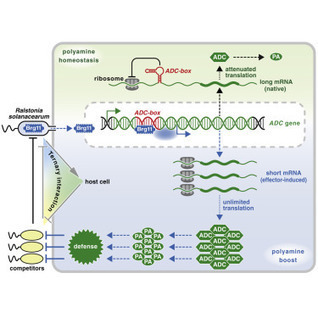
Wu et al, 2019 Pathogenic bacteria inject effector proteins into host cells to manipulate cellular processes and facilitate the infection. Transcription-activator-like effectors (TALEs), an effector class in plant pathogenic bacteria, transcriptionally activate host genes to promote disease. We identify arginine decarboxylase ( ADC) genes as the host targets of Brg11, a TALE-like effector from the plant pathogen Ralstonia solanacearum. Brg11 targets a 17-bp sequence that was found to be part of a conserved 50-bp motif, termed the ADC-box, upstream of ADC genes involved in polyamine biosynthesis. The transcribed ADC-box attenuates translation from native ADC mRNAs; however, Brg11 induces truncated ADC mRNAs lacking the ADC-box, thus bypassing this translational control. As a result, Brg11 induces elevated polyamine levels that trigger a defense reaction and likely inhibits bacterial niche competitors but not R. solanacearum. Our findings suggest that Brg11 may give R. solanacearum a competitive advantage and uncover a role for bacterial effectors in regulating ternary microbe-host-microbe interactions.
|
|
Scooped by
dromius
October 2, 2019 7:20 AM
|
(via T. Schreiber, thx) Peng et al, 2019 Plants are vulnerable to disease through pathogen manipulation of phytohormone levels, which otherwise regulate development, abiotic, and biotic responses. Here, we show that the wheat pathogen Xanthomonas translucens pv. undulosa elevates expression of the host gene encoding 9-cis-epoxycarotenoid dioxygenase (TaNCED-5BS), which catalyzes the rate-limiting step in the biosynthesis of the phytohormone abscisic acid and a component of a major abiotic stress-response pathway, to promote disease susceptibility. Gene induction is mediated by a type III transcription activator-like effector. The induction of TaNCED-5BS results in elevated abscisic acid levels, reduced host transpiration and water loss, enhanced spread of bacteria in infected leaves, and decreased expression of the central defense gene TaNPR1. The results represent an appropriation of host physiology by a bacterial virulence effector.
|
|
Scooped by
dromius
September 15, 2019 9:40 AM
|
Tsuji & Imanashi 2019 Epigenetic modification, as typified by cytosine methylation, is a key aspect of gene regulation that affects many biological processes. However, the biological roles of individual methylated cytosines are poorly understood. Sequence-specific DNA recognition tools can be used to investigate the roles of individual instances of DNA methylation. Transcription activator-like effectors (TALEs), which are DNA-binding proteins, are promising candidate tools with designable sequence specificity and sensitivity to DNA methylation. In this review, we describe the bases of DNA recognition of TALEs, including methylated cytosine recognition, and the applications of TALEs for the study of methylated DNA. In addition, we discuss TALE-based epigenome editing and oxidized methylated cytosine recognition.
|
|
Scooped by
dromius
August 9, 2019 9:09 PM
|
Li et al, 2019 TALes (Transcription Activator-Like effectors) represent the largest family of type III effectors among pathogenic bacteria and play a critical role in the process of infection. Strains of Xanthomonas oryzae pv. oryzae (Xoo) and some strains of other Xanthomonas pathogens contain large numbers of TALe genes. Previous techniques to clone individual or a complement of TALe genes through conventional strategies are inefficient and time-consuming due to multiple genes (up to 29 copies) in a given genome and technically challenging due to the repetitive sequences (up to 33 nearly identical 102-nucleotide repeats) of individual TALe genes. Thus, only a limited number of TALe genes have been molecularly cloned and characterized, and the functions of most TALe genes remain unknown. Here, we present an easy and efficient cloning technique to clone TALe genes selectively through in vitro homologous recombination and single strand annealing and demonstrate the feasibility of this approach with four different Xoo strains. Based on the Gibson assembly strategy, two complementary vectors with scaffolds that can preferentially capture all TALe genes from a pool of genomic fragments were designed. Both vector systems enabled cloning of a full complement of TALe genes from each of four Xoo strains and functional analysis of individual TALes in rice in approximately one month compared to three months by previously used methods. The results demonstrate a robust tool to advance TALe biology and a potential for broad usage of this approach to clone multiple copies of highly competitive DNA elements in any genome of interest.
|
|
Scooped by
dromius
June 7, 2019 5:06 AM
|
(via T. Lahaye, thx) Luo et al, 2019 Plant genome editing is a major advance in the production of novel plant genotypes. There is, however, only a single previous report of applying this technology to hexaploid wheat using TALEN‐mediated gene editing to produce heritable modifications (Wang et al., 2014). Here, we describe highly efficient TALEN editing of a uidA transgene and a second endogenous gene, lr21Ψ, in bread wheat with efficiencies exceeding most previous TALEN and CRISPR/Cas9 reports in this species.
|
|
Scooped by
dromius
May 9, 2019 3:18 AM
|
(via T. Lahaye, thx) Chen & Chen 2019 Cytomegalovirus (CMV) infections are still a global health problem, because the latent viruses persist in humans and cause recurring disease. Currently, there are no therapies for CMV latent infections and the therapies for active infections are limited by side effects and other problems. It is impossible to eradicate latent viruses in animals. HCMV (human CMV) is specific to human diseases; however, it is difficult to study HCMV due to its host specificity and long life cycle. Fortunately, MCMV (murine CMV) provides an excellent animal model. Here, three specific pairs of transcription activator-like effector nuclease (TALEN) plasmids (MCMV1–2, 3–4, and 5–6) were constructed to target the MCMV M80/80.5 sequence in order to test their efficacy in blocking MCMV lytic replication in NIH3T3 cell culture. The preliminary data showed that TALEN plasmids demonstrate specific targeting and cleavage in the MCMV M80/80.5 sequence and effectively inhibit MCMV growth in cell culture when the plasmid transfection is prior to the viral infection. The most specific pairs of TALEN plasmids (MCMV3–4) were further used to confirm the negative regulation of latent MCMV replication and gene expression in Balb/c mice. The injection of specific TALEN plasmids caused significant inhibition in the copy number level of immediately early gene (ie-1) DNA in five organs of mice, when compared with the controls. The result demonstrated that TALENs potentially provide an effective strategy to remove latent MCMV in animals.
|
|
Scooped by
dromius
March 30, 2019 7:28 AM
|
(via T. Lahaye, thx) Zhang et al (2019) TALE has always had potential as a gene-editing and regulatory tool. However, with the advent of CRISPR/Cas9, an easier to use tool with the same function, TALE has recently been abandoned because of the time-consuming and low-efficiency process required for its construction. The off-target activity of CRISPR/Cas9 has been a challenge to its in vivo application. By contrast, TALE has been applied in vivo for gene editing and therapy because of its high targeting capability. To overcome the key limitation of the TALE technique, we developed a high-efficiency method for constructing custom TALEs. We created 62 new monomers and developed a new pipeline that enabled assembly of custom TALEs in just 1 day. We verified the new method by assembling nine TALEs targeting the promoters of two transcription factor genes: HNF4α and E47. The expression of the two endogenous genes in two cancer cells, HepG2 and PANC1, was activated by the constructed TALEs, which promoted differentiation of the two cancer cells. Using the new method, custom TALEs can be generated as easily and rapidly as CRISPR, thus promoting the wide application of TALE-based techniques.
|
|
Scooped by
dromius
March 23, 2019 8:05 AM
|
|
|
Scooped by
dromius
March 1, 2019 8:44 AM
|
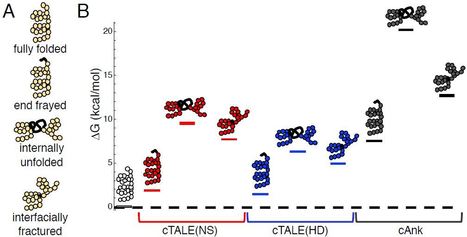
(via T. Lahaye, thx) Geiger-Schuller et al, 2019 Transcription activator-like effectors (TALEs) bind DNA through an array of tandem 34-residue repeats. How TALE repeat domains wrap around DNA, often extending more than 1.5 helical turns, without using external energy is not well understood. Here, we examine the kinetics of DNA binding of TALE arrays with varying numbers of identical repeats. Single molecule fluorescence analysis and deterministic modeling reveal conformational heterogeneity in both the free- and DNA-bound TALE arrays. Our findings, combined with previously identified partly folded states, indicate a TALE instability that is functionally important for DNA binding. For TALEs forming less than one superhelical turn around DNA, partly folded states inhibit DNA binding. In contrast, for TALEs forming more than one turn, partly folded states facilitate DNA binding, demonstrating a mode of 'functional instability' that facilitates macromolecular assembly. Increasing repeat number slows down interconversion between the various DNA-free and DNA-bound states.
|
|
Scooped by
dromius
February 13, 2019 1:16 AM
|
Gudeta, 2019 The emergence of genome editing methods promises a real revolution in genetic engineering. These technologies rely on engineered nucleases that cleave DNA in a sequence-specific manner because of the presence of a sequence-specific DNA-binding domain or RNA sequence. Genome editing by engineered nuclease have the potential to change the genomic architecture of a genomeat precise locations, with desired accuracy.Several engineered nucleases, including zinc finger nucleases (ZFNs) and TAL effectors nucleases (TALENs) and CRISPR CAS 9 have been used in plants, promising to revolutionize conventional methods of genetic engineering. Targeted editing of the genomes of an organism used to improve productivity and quality of crops.Given the power of genome editing tools and the increasing number of researchers using and developing these tools, a revolutionary change is taking place in crop that resistance to various biotic and abiotic stresses to meet the increasing demand for food and ensure world food security in the future. The reviewhighlights the broad applicability of engineered Nuclease (ZFN, TALEN, and CRISPR CAS 9)mediated targeted plant genome editing and their application for development of designer crops
|
|
Scooped by
dromius
February 4, 2019 5:03 AM
|
Schreiber et al, 2019 Transcription activator-like effectors (TALEs) are bacterial Type-III effector proteins from phytopathogenic Xanthomonas species that act as transcription factors in plants. The modular DNA-binding domain of TALEs can be reprogrammed to target nearly any DNA sequence. Here we design and optimize a two-component AND gate system for synthetic circuits in plants based on TALEs. In this system, named split-TALE (sTALE), the TALE DNA binding domain and the transcription activation domain are separated and each fused to protein interacting domains (IDs). Physical interaction of IDs leads to TALE-reconstitution and can be monitored by reporter gene induction. This setup was used for optimization of the sTALE scaffolds, which result in an AND-gate system with an improved signal-to-noise ratio. We also provide a toolkit of ready-to-use vectors and single modules compatible with Golden Gate cloning and MoClo syntax. In addition to its implementation in synthetic regulatory circuits, the sTALE system allows the analysis of protein-protein interactions in planta.
|
|
Scooped by
dromius
January 22, 2019 10:07 AM
|
Metje-Sprink et al, 2019 Genome Editing using engineered endonuclease (GEEN) systems rapidly took over the field of plant science and plant breeding. So far, Genome Editing techniques have been applied in more than fifty different plants; including model species like Arabidopsis; main crops like rice, maize or wheat as well as economically less important crops like strawberry, peanut and cucumber. These techniques have been used for basic research as proof-of-concept or to investigate gene functions in most of its applications. However, several market-oriented traits have been addressed including enhanced agronomic characteristics, improved food and feed quality, increased tolerance to abiotic and biotic stress and herbicide tolerance. These technologies are evolving at a tearing pace and especially the field of CRISPR based Genome Editing is advancing incredibly fast. CRISPR-Systems derived from a multitude of bacterial species are being used for targeted Gene Editing and many modifications have already been applied to the existing CRISPR-Systems such as (i) alter their protospacer adjacent motif (ii) increase their specificity (iii) alter their ability to cut DNA and (iv) fuse them with additional proteins. Besides, the classical transformation system using Agrobacteria tumefaciens or Rhizobium rhizogenes, other transformation technologies have become available and additional methods are on its way to the plant sector. Some of them are utilizing solely proteins or protein-RNA complexes for transformation, making it possible to alter the genome without the use of recombinant DNA. Due to this, it is impossible that foreign DNA is being incorporated into the host genome. In this review we will present the recent developments and techniques in the field of DNA-free Genome Editing, its advantages and pitfalls and give a perspective on technologies which might be available in the future for targeted Genome Editing in plants. Furthermore, we will discuss these techniques in the light of existing– and potential future regulations.
|
|
|
Scooped by
dromius
October 22, 2019 6:20 PM
|
Kremer et al, 2019 (see also http://bioprolab.ufpel.edu.br/targeTALE/) We present a novel tool to identify TALE genes in the genome of Xanthomonas strains and their respective targets. The analysis of the results obtained by TargeTALE in a proof-of-concept validation demonstrate that, at optimum setting, approximately 93% of the predicted target genes with available expression data were confirmed as upregulated during the infection, indicating that the tool might be useful for researchers in the field.
|
|
Scooped by
dromius
October 10, 2019 1:03 PM
|
The partnership will leverage bluebird’s mRNA-based megaTAL technology that is used to silence, editor or insert genetic components. Novo Nordisk has a hemophilia portfolio. The initial focus will be on correcting FVIII-clotting factor deficiency. No financial details were disclosed.
MegaTALs are a single-chain fusion enzyme. It combines the natural DNA cleaving processes of Homing Endonucleases (HEs) with the activity of transcription activator-like (TAL) effectors at the DNA binding region. These proteins are easily engineered to recognize specific DNA sequences.
|
|
Scooped by
dromius
September 26, 2019 4:24 AM
|
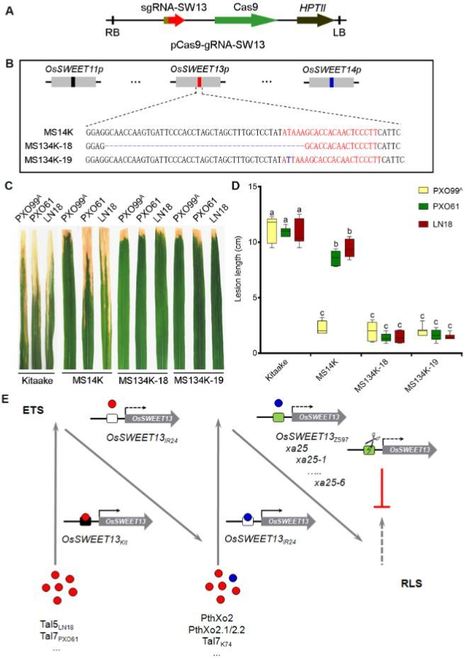
(via T. Schreiber, thx) Xu et al, 2019 To engineer broad-spectrum bacterial blight resistance, we used CRISPR/Cas9-mediated gene editing to disrupt the TALE-binding elements (EBEs) of two S genes, OsSWEET11 and OsSWEET14, in rice cv. Kitaake, which harbors recessive resistance allele of Xa25/OsSWEET13. The engineered rice line MS14K exhibited broad-spectrum resistance to most Xoo strains with a few exceptions, suggesting that the compatible strains may contain new TALEs. We identified Tal5LN18 and Tal7PXO61, two types of PthXo2-like TALEs, as major virulence factors in the compatible Xoo strains LN18 and PXO61, respectively, and found that Xoo encodes at least five types of PthXo2-like effectors. Given that PthXo2/PthXo2.1 target OsSWEET13 for transcriptional activation, the genomes of 3000 rice varieties were analyzed for EBE variations in OsSWEET13 promoters, and ten Xa25-like haplotypes were identified. Tal5LN18 and Tal7PXO61 were shown to bind slightly different EBE sequences in the OsSWEET13 promoter and activated its expression. CRISPR/Cas9 technology was then used to generate InDels in the EBE of the OsSWEET13 promoter in the mutant MS14K. This resulted in the creation of new germplasm with three edited OsSWEET EBEs and broad-spectrum resistance against all Xoo strains tested. Our findings illustrate how to disarm TALE-S co-evolved loci to generate broad-spectrum resistance through the loss of effector-triggered susceptibility in plants.
|
|
Scooped by
dromius
August 9, 2019 9:13 PM
|
(via T. Lahaye, thx) Perez-Quintero and Szurek, 2019 Transcription activator-like effectors (TALEs) from the genus are proteins with the remarkable ability to directly bind the promoters of genes in the plant host to induce their expression, which often helps bacterial colonization. Metaphorically, TALEs act as spies that infiltrate the plant disguised as high-ranking civilians (transcription factors) to trick the plant into activating weak points that allow an invasion. Current knowledge of how TALEs operate allows researchers to predict their activity (counterespionage) and exploit their function, engineering them to do our bidding (a Manchurian agent). This has been possible thanks particularly to the discovery of their DNA binding mechanism, which obeys specific amino acid–DNA correspondences (the TALE code). Here, we review the history of how researchers discovered the way these proteins work and what has changed in the ten years since the discovery of the code. Recommended music for reading this review can be found in the .
|
|
Scooped by
dromius
June 22, 2019 5:47 PM
|
Muecke & Boch, 2019 (in German) Plant-pathogenic bacteria of the genus Xanthomonasuse transcriptionactivator-like effectors (TALEs) to induce gene expression in host plantsand promote disease. Deciphering the code of TALE-DNA binding in 2009was a milestone, which enabled researchers to predict TALE virulence targets and generate resistant plants with modern genome editing tools.
|
|
Scooped by
dromius
May 27, 2019 4:36 PM
|
(via T. Schreiber, thx) Huang et al, 2019 Pacific abalone, Haliotis discus hannai, is an economically important marine mollusk species and an important model animal for studies on ecological, fertilization and developmental biology. While embryonic injection and genome editing have been wildly used in gene function study and trait improvement in many species, they have not been developed in abalones. In this study, we reported an effective method to inject exogenous materials in H. discus hannai unfertilized eggs. The injected eggs could be fertilized at a ratio of 52.6% ± 5.9% and hatch at a ratio of 14.6% ± 1.6%. On the base of this, we further developed an efficient genome editing approach in this species with the transcription activator-like effector nuclease (TALEN) technique. Two TALEN pairs targeting the coding sequence of the abalone nodal gene were assembled and tested. While one of the TALEN pairs showed no detectable mutation efficacy, the other one generated mutations in 50% of the targeted loci. The mutation includes small insertions and deletions and base pair replacements like that reported in other species when the TALEN method was applied. Overall, this is the first study to demonstrate site-specific genome editing in abalone. This work can serve as a reference for future studies focusing on the functional genomics in mollusks.
|
|
Scooped by
dromius
April 12, 2019 6:14 AM
|
Hui et al, 2019 Many plant-pathogenic Xanthomonas rely largely on secreting virulence transcription activator-like effectors (TALEs) proteins into plant nucleus to activate host susceptibility genes to cause disease, the process is dependent on pathogen TALEs association with host plants basal transcription factor IIA small subunit TFIIAγ. TFIIAγ together with large subunit TFIIAαβ constitute as a key component of RNA polymerase II complex for transcriptome initiation. However, whether TFIIAαβ coordinates or competes with pathogen TALEs for interaction with TFIIAγ to activate transcript of TALEs-targeting genes is unclear. Here, we showed that TALE-carrying bacterial pathogens Xanthomonas oryzae pv. oryzae (Xoo) and Xanthomonas oryzae pv. oryzicola (Xoc), the causal agent for bacterial leaf blight and bacterial leaf streak in rice, using their major virulence TALEs to physically associate with N-terminal of OsTFIIAγ5. OsTFIIAα and OsTFIIAβ which are post-translationally mature proteins of OsTFIIAαβ separately bound to N- and C-terminal of OsTFIIAγ5. OsTFIIAα coordinated with TALEs for binding with OsTFIIAγ5 to upregulate rice susceptibility genes to cause disease. Conversely, suppression of OsTFIIAαβ attenuated TALEs-targeting genes transcription, thus improved broad-spectrum disease resistance of rice to Xoo and Xoc. These results provide an applicable strategy for improving resistance to TALE-carrying pathogens in rice by appropriate suppression of plant basal transcription factors expression.
|
|
Scooped by
dromius
March 26, 2019 5:53 AM
|
(via T. Schreiber, thx) Jia et al, 2019 Recently, CRISPR‐Cas12a (Cpf1) from Prevotella and Francisella was engineered to modify plant genomes. In this report, we employed CRISPR‐LbCas12a (LbCpf1), which is derived from Lachnospiraceae bacterium ND2006, to edit a citrus genome for the first time. First, LbCas12a was used to modify the CsPDS gene successfully in Duncan grapefruit via Xcc‐facilitated agroinfiltration. Next, LbCas12a driven by either the 35S or Yao promoter was used to edit the PthA4 effector binding elements in the promoter (EBEPthA4‐CsLOBP) of CsLOB1. A single crRNA was selected to target a conserved region of both Type I and Type II CsLOBPs, since the protospacer adjacent motif (PAM) of LbCas12a (TTTV) allows crRNA to act on the conserved region of these two types of CsLOBP. CsLOB1 is the canker susceptibility gene, and it is induced by the corresponding pathogenicity factor PthA4 in Xanthomonas citri by binding to EBEPthA4‐CsLOBP. A total of seven 35S‐LbCas12a‐transformed Duncan plants were generated, and they were designated as #D35s1 to #D35s7, and ten Yao‐LbCas12a‐transformed Duncan plants were created and designated as #DYao1 to #DYao10. LbCas12a‐directed EBEPthA4‐CsLOBP modifications were observed in three 35S‐LbCas12a‐transformed Duncan plants (#D35s1, #D35s4 and #D35s7). However, no LbCas12a‐mediated indels were observed in the Yao‐LbCas12a‐transformed plants. Notably, transgenic line #D35s4, which contains the highest mutation rate, alleviates XccΔpthA4:dCsLOB1.4 infection. Finally, no potential off‐targets were observed. Therefore, CRISPR‐LbCas12a can readily be used as a powerful tool for citrus genome editing.
|
|
Scooped by
dromius
March 19, 2019 7:56 AM
|
Chen et al, 2019 Transgenic Toxoplasma gondii was successfully generated by the TALEN system. The eGFP-tagged AAH2 could be detected by in vivo imaging.
This study verified the feasibility of using TALEN technology for T. gondii research and provided an in vivo imaging method for in vivo research of bradyzoite-stage proteins.
|
|
Scooped by
dromius
February 25, 2019 2:34 AM
|
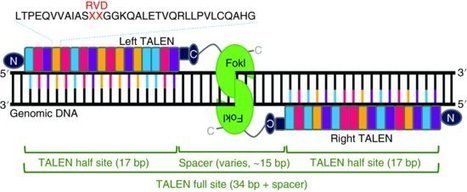
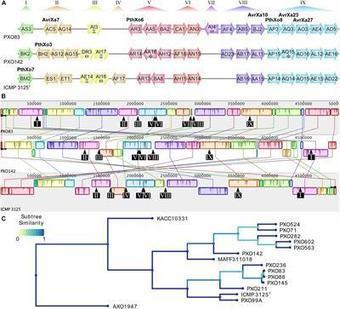
Muecke et al, 2019 Rice-pathogenic Xanthomonas oryzae bacteria cause severe harvest loss and challenge a stable food supply. The pathogen virulence relies strongly on bacterial TALE (transcription activator-like effector) proteins that function as transcriptional activators inside the plant cell. To understand the plant targets of TALEs, we determined the genome sequences of the Indian X. oryzae pv. oryzae (Xoo) type strain ICMP 3125T and the strain PXO142 from the Philippines. Their complete TALE repertoire was analyzed and genome-wide TALE targets in rice were characterized. Integrating computational target predictions and rice transcriptomics data, we were able to verify 12 specifically induced target rice genes. The TALEs of the Xoo strains were reconstructed and expressed in a TALE-free Xoo strain to attribute specific induced genes to individual TALEs. Using reporter assays, we could show that individual TALEs act directly on their target promoters. In particular, we show that TALE classes assigned by AnnoTALE reflect common target genes, and that TALE classes of Xoo and the related pathogen X. oryzae pv. oryzicola share more common target genes than previously believed. Taken together, we establish a detailed picture of TALE-induced plant processes that significantly expands our understanding of X. oryzae virulence strategies and will facilitate the development of novel resistances to overcome this important rice disease.
|
|
Scooped by
dromius
February 4, 2019 5:08 AM
|
(via T. Lahaye, thx) Deng et al, 2019 Transcription activator-like effectors (TALEs) are modular proteins derived from the plant Xanthomonas sp. pathogen that can be designed to target unique DNA sequences following a simple cipher. Customized TALE proteins can be used in a variety of molecular applications that include gene editing and transcriptional modulation. Presently, we provide a brief primer on the design and construction of TALEs. TALE proteins can be fused to a variety of different effector domains that alter the function of the TALE upon binding. This flexibility of TALE design and downstream effect may offer therapeutic applications that are
discussed in this section. Finally, we provide a future perspective on TALE technology and what challenges remain for successful translation of gene-editing strategies to the clinic.
|
|
Scooped by
dromius
January 23, 2019 4:15 AM
|
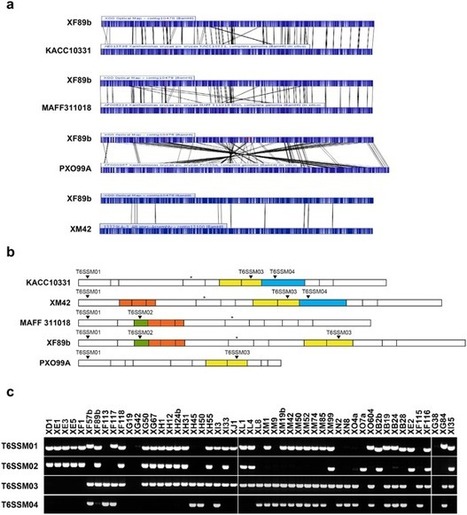
(via T. Schreiber, thx.) Chien et al, 2019 Rice bacterial blight caused by Xanthomonas oryzae pv. oryzae (Xoo) is a major rice disease. In Taiwan, the tropical indica type of Oryza sativa originally grown in this area is mix-cultivated with the temperate japonica type of O. sativa, and this might have led to adaptive changes of both rice host and Xoo isolates. In order to better understand how Xoo adapts to this unique environment, we collected and analyzed fifty-one Xoo isolates in Taiwan. Three different genetic marker systems consistently identified five groups. Among these groups, two of them had unique sequences in the last acquired ten spacers in the clustered regularly interspaced short palindromic repeats (CRISPR) region, and the other two had sequences that were similar to the Japanese isolate MAFF311018 and the Philippines isolate PXO563, respectively. The genomes of two Taiwanese isolates with unique CRISPR sequence features, XF89b and XM9, were further completely sequenced. Comparison of the genome sequences suggested that XF89b is phylogenetically close to MAFF311018, and XM9 is close to PXO563. Here, documentation of the diversity of groups of Xoo in Taiwan provides evidence of the populations from different sources and hitherto missing information regarding distribution of Xoo populations in East Asia.
|














https://pijnpillen.com/Producten/buy-flakka-a-pvp/
https://pijnpillen.com/Producten/buy-ultram-online/
https://pijnpillen.com/Producten/ketamine-poeder-kopen/
https://pijnpillen.com/Producten/buy-micro-mushrooms/
https://pijnpillen.com/Producten/carisoprodol-nederland-kopen/
https://pijnpillen.com/Producten/koop-natriumcyanide/
https://pijnpillen.com/Producten/koop-vicodin-online/
https://pijnpillen.com/Producten/koop-dmt-netherland/
https://pijnpillen.com/Producten/koop-dexedrine/
https://pijnpillen.com/Producten/koop-vyvanse-online/
https://pijnpillen.com/Producten/koop-morphine/
https://pijnpillen.com/Producten/buy-4-aco-dmt-usa/
https://pijnpillen.com/Producten/oxycodon-hcl-kopen/
https://pijnpillen.com/Producten/koop-suboxone-strips/
https://pijnpillen.com/Producten/koop-percocet-online/
https://pijnpillen.com/Producten/koop-oxycontin-online/
https://pijnpillen.com/Producten/buy-flakka-a-pvp/
https://pijnpillen.com/Producten/fentanyl-pleister-kopen/
https://pijnpillen.com/Producten/buy-seconal-sodium/
https://pijnpillen.com/Producten/fentanyl-poeder-kopen/
https://pijnpillen.com/Producten/koop-morphine/
https://pijnpillen.com/Producten/buprenorfine-kopen/
https://pijnpillen.com/Producten/koop-vyvanse-online/
https://pijnpillen.com/Producten/carisoprodol-nederland-kopen/
https://pijnpillen.com/Producten/koop-natriumcyanide/
https://pijnpillen.com/Producten/koop-dmt-netherland/
https://pijnpillen.com/Producten/koop-vicodin-online/
https://pijnpillen.com/Producten/gouden-leraar-paddenstoelen/
%3C/a""> ">buy-flakka-a-pvp
buy-ultram-online
%3C/a""> ">ketamine-poeder-kopen
%3C/a""> ">buy-micro-mushrooms
carisoprodol-nederland-kopen
koop-natriumcyanide
%3C/a""> ">koop-vicodin-online
%3C/a""> ">koop-dmt-netherland
koop-dexedrine
%3C/a""> ">koop-morphine
buy-4-aco-dmt-usa
oxycodon-hcl-kopen
koop-suboxone-strips
%3C/a""> ">koop-percocet-online
acheter adipex
buy-flakka-a-pvp
%3C/a""> ">fentanyl-pleister-kopen
buy-seconal-sodium
fentanyl-poeder-kopen
koop-morphine
buprenorfine-kopen
koop-vyvanse-online
carisoprodol-nederland-kopen
koop-natriumcyanide
koop-dmt-netherland
koop-vicodin-online
gouden-leraar-paddenstoelen
https://acheteroxycodone.eu/produit/comprar-cianuro-de-sodio/