 Your new post is loading...

|
Scooped by
dromius
July 7, 2020 4:48 AM
|
(via T Schreiber, thx) Carter et al., 2020 Endosymbiotic bacteria are found in diverse fungi, but little is known about how they communicate with their hosts. Some plant pathogenic bacteria use type III-translocated TAL effectors to control host transcription, and TAL-like proteins are encoded in genomes of the fungal endosymbiotic bacterium Mycetohabitans rhizoxinica. In this paper, we present evidence that these proteins are, like TAL effectors, type III-secreted, nuclear-localizing effectors that perturb host transcription and show that one enhances tolerance of the fungal host to cell membrane stress. Our characterization of an effector in a bacterial–fungal symbiosis opens a new door to molecular understanding of these interkingdom partnerships. Our findings also provide insight into the functional diversity and evolution of the TAL effector protein family.
|
|
Scooped by
dromius
May 4, 2020 1:01 PM
|
(via T. Lahaye, thx) Suman & Vikram Nain, 2020 Bacterial blight disease in rice is caused by Xanthomonas oryzae pv. oryzae (XOO) through binding of type III secretion system effectors to susceptibility genes in host. PthXo1 effectors secreted by XOO binds to promoter region of sugar transporter gene Os8N3 thereby activating dominant allele of Xa13 susceptibility gene in rice. Introgression of recessive xa13 allele by molecular breeding programs have successfully imparted resistance against PthXo1 effector mediated disease in few rice cultivars. However, molecular breeding mediated introgression of disease resistance in hundreds of susceptible cultivars is a daunting task. Recent advancements in the field of genome editing technology by use of engineered nucleases ZFN, TALEN and CRISPR-Cas9 system allow fast and précised modifications in the genome. Therefore, the present study focus on designing of Xa13 locus specific TALENs for introducing bacterial blight resistance in Indica rice through TALEN mediated genome editing. Total three hundred thirty-three TALENs were designed against promoter region of Xa13. Out of these, One-hundred thirty-nine pairs of TALENs that follow Streubel’s guidelines and having targets with >40% GC content were retained. Further, Screening of these selected TALENs on basis of distance of their putative cleavage site from PthXo1 effectors binding site in rice genome resulted into eleven TALEN pairs. These eleven TALEN pairs were further screened for their number of putative targets in host genome and on the TAL score. Finally only three pairs possess a unique target site and score below a cut-off of four. Best scoring TALEN pair was selected for designing of TALEN coding gene sequences codon-optimized for high level expression in rice. These TALEN coding genes can be used for introducing deletions in Xa13 promoter and impart resistance against bacterial blight disease in rice.
|
|
Scooped by
dromius
April 25, 2020 8:58 AM
|
(Via T. Lahaye, thx) Pino-Barrio et al, 2020 The promising ability to genetically modify hematopoietic stem and progenitor cells by precise gene editing remains challenging due to their sensitivity to in vitro manipulations and poor efficiencies of homologous recombination. This study represents the first evidence of implementing a gene editing strategy in a murine safe harbor locus site that phenotypically corrects primary cells from a mouse model of Fanconi anemia A. By means of the co-delivery of transcription activator-like effector nucleases and a donor therapeutic FANCA template to the Mbs85 locus, we achieved efficient gene targeting (23%) in mFA-A fibroblasts. This resulted in the phenotypic correction of these cells, as revealed by the reduced sensitivity of these cells to mitomycin C. Moreover, robust evidence of targeted integration was observed in murine wild type and FA-A hematopoietic progenitor cells, reaching mean targeted integration values of 21% and 16% respectively, that were associated with the phenotypic correction of these cells. Overall, our results demonstrate the feasibility of implementing a therapeutic targeted integration strategy into the mMbs85 locus, ortholog to the well-validated hAAVS1, constituting the first study of gene editing in mHSC with TALEN, that sets the basis for the use of a new safe harbor locus in mice.
|
|
Scooped by
dromius
March 29, 2020 4:31 PM
|
Richter et al, 2020 (Preprint) The association of the agriculturally significant phytopathogenic fungus Rhizopus microsporus with the bacterial endosymbiont Burkholderia rhizoxinica is a remarkable example of bacteria controlling host physiology and reproduction. Here, we show that a group of transcription activator-like effectors (TALEs) called Burkholderia TALE-like proteins (BATs) from B. rhizoxinica are essential for the establishment of the symbiosis. Mutants lacking BAT proteins are unable to induce host sporulation. Utilising novel microfluidic devices in combination with fluorescence microscopy we observed the accumulation of BAT-deficient mutants in specific fungal side-hyphae with accompanying increased fungal re-infection. High-resolution live imaging revealed septa biogenesis at the base of infected hyphae leading to compartmental trapping of BAT-deficient endobacteria. Trapped endosymbionts showed reduced intracellular survival, suggesting a protective response from the fungal host against bacteria lacking specific effectors. These findings underscore the involvement of BAT proteins in maintaining a balance between mutualism and antagonism in bacterial-fungal interactions and provide deeper insights into the dynamic interactions between bacteria and eukaryotes.
|
|
Scooped by
dromius
March 3, 2020 4:09 AM
|
(via T. Lahaye, thx) Tian et al, 2020 Pyramidization of resistance genes, such as nucleotide-binding leucine-rich repeat proteins, from diverse cultivars, landraces, and domesticated or wild germplasm accessions offers the most direct practice for this purpose. Nevertheless, the facts of a narrow resistance spectrum and limited number or even shortage of such resistance genes to many specific pathogens leave an immediate question to be resolved in such a situation. In light of the evidence that all compatible pathogens trigger a conserved and wide range of host genes, namely susceptibility genes for their proliferation, management of those genes are of equal importance and promising for improvement in crop disease resistance
|
|
Scooped by
dromius
February 8, 2020 5:23 PM
|
(via T. Lahaye, thx) Martín Fernández et al, 2020 Genome editing has become one of the most powerful tools in present‐day stem cell and regenerative medicine research, but despite its rapid acceptance and widespread use, some elements of the technology still need improvement. In this unit, we present data regarding the use of a new, more efficient type of transcription activator‐like effector nuclease (TALEN) for gene editing. Our group has generated bicistronic genes in which classical TALEN coding sequences are linked by 2A elements to different reporter molecules, such as fluorochromes (TALEN‐F) or membrane receptors (TALEN‐M). This structure results in two proteins transcribed from the same transcript, of which the second (the reporter) can be used as the target for selection by fluorescence‐assisted cell sorting (FACS) or magnetic‐activated cell sorting (MACS). The application of these new TALEN genes allows a rapid enrichment of cells in which both members of the TALEN pair are active, thus eliminating the need for lengthy selection in culture and laborious characterization of a large number of clones.
|
|
Scooped by
dromius
January 31, 2020 7:51 AM
|
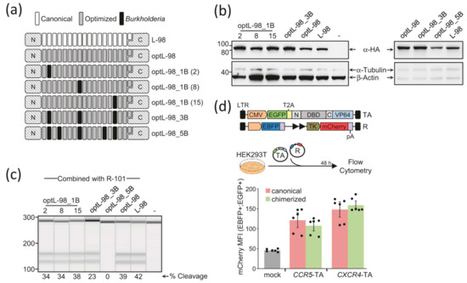
(via T. Lahaye, thx) Fang et al, 2020 Designer effectors based on the DNA binding domain (DBD) of Xanthomonas transcription activator-like effectors (TALEs) are powerful sequence-specific tools with an excellent reputation for their specificity in editing the genome, transcriptome, and more recently the epigenome in multiple cellular systems. However, the repetitive structure of the TALE arrays composing the DBD impedes their generation as gene synthesis product and prevents the delivery of TALE-based genes using lentiviral vectors (LVs), a widely used system for human gene therapy. To overcome these limitations, we aimed at chimerizing the DNA sequence encoding for the TALE-DBDs by introducing sufficient diversity to facilitate both their gene synthesis and enable their lentiviral delivery. To this end, we replaced three out of 17 Xanthomonas TALE repeats with TALE-like units from the bacterium Burkholderia rhizoxinica. This was combined with extensive codon variation and specific amino acid substitutions throughout the DBD in order to maximize intra- and inter-repeat sequence variability. We demonstrate that chimerized TALEs can be easily generated using conventional Golden Gate cloning strategy or gene synthesis. Moreover, chimerization enabled the delivery of TALE-based designer nucleases, transcriptome and epigenome editors using lentiviral vectors. When delivered as plasmid DNA, chimerized TALEs targeting the CCR5 and CXCR4 loci showed comparable activities in human cells. However, lentiviral delivery of TALE-based transcriptional activators was only successful in the chimerized form. Similarly, delivery of a chimerized CXCR4-specific epigenome editor resulted in rapid silencing of endogenous CXCR4 expression. In conclusion, extensive codon variation and chimerization of TALE-based DBDs enables both the simplified generation and the lentiviral delivery of designer TALEs, and therefore facilitates the clinical application of these tools to precisely edit the genome, transcriptome and epigenome
|
|
Scooped by
dromius
December 28, 2019 5:49 AM
|
Khojasteh et al, 2019 Bacterial leaf streak caused by different pathovars of Xanthomonas translucens is the most important seed-borne bacterial disease of small grain cereals. However, variations in the virulence-associated genomic areas of the pathogen remain uninvestigated. In this study the diversity of transcription activator-like effectors (TALE) was investigated using the Southern blotting of BamHI-digested genomic DNAs in the Iranian strains of X. translucens. All the 65 X. translucens strains were assigned into 13 genotypes where 57 X. translucens pv. undulosa (Xtu) strains were placed in genotypes 1-8, and seven X. translucens pv. translucens (Xtt) strains were placed in genotypes 9-12. Interestingly, we did not find any TALE genes in the strain XtKm7 (genotype 13), which showed to be pathogenic only on barley. Virulence and aggressiveness of these strains in greenhouse conditions were in agreement with the TALE-based clustering of the strains in the pathovar level, though variations were observed in the aggressiveness of X. translucens pv. undulosa strains. In general, strains containing higher numbers of putative TALE genes were more virulent on wheat and barley than strains containing fewer. This is the first TALE-based genetic diversity analysis on X. translucens strains which provide novel insights into the virulence repertories and genomic characteristics of the pathogen. Further investigations using TALE mutagenesis and complementation analysis are warranted to precisely elucidate the role of each detected X. translucens TALEs in bacterial virulence and aggressiveness either on wheat or barley.
|
|
Scooped by
dromius
December 24, 2019 4:28 PM
|
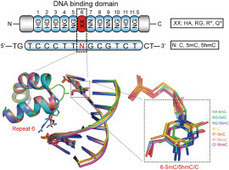
Liu et al, 2019 Transcription activator-like effectors (TALEs) recognize DNA through repeat-variable diresidues (RVDs) and TALE-DNA interactions are sensitive to DNA modifications. Our previous study deciphered the recognition of 5-methylcytosine (5mC) and 5-hydroxymethylcytosine (5hmC) by TALEs. Here, we report seven crystal structures of TALE-DNA complexes. The 5mC-specific RVD HA recognizes 5mC through van der Waals interactions and exhibits highly similar loop conformation to natural RVDs. The degenerate RVD RG contact 5mC and 5hmC via van der Waals interactions as well, however, its loop conformation differs significantly. The loop conformations of universal RVD R* and 5hmC-specific RVD Q* are similar to that of RG, while the interactions of R* with C/5mC/5hmC and Q* with 5hmC are mediated by waters. Together, our findings illustrate the molecular basis for the specific recognition of 5mC and 5hmC by multiple non-canonical TALEs and provide insights into the plasticity of the TALE RVD loops.
|
|
Scooped by
dromius
December 15, 2019 7:33 AM
|
|
|
Scooped by
dromius
November 21, 2019 12:33 PM
|
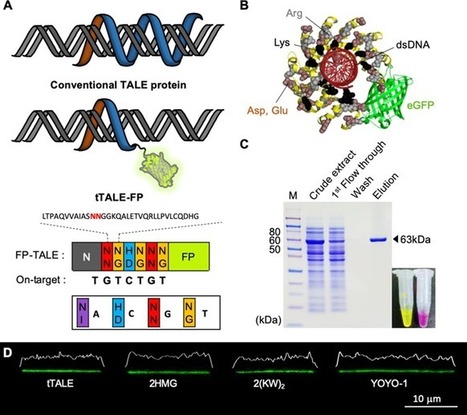
(via T. Lahaye, thx.) Shin et al, 2019 Large DNA molecules are a promising platform for in vitro single-molecule biochemical analysis to investigate DNA-protein interactions by fluorescence microscopy. For many studies, intercalating fluorescent dyes have been primary DNA staining reagents, but they often cause photo-induced DNA breakage as well as structural deformation. As a solution, we previously developed several fluorescent-protein DNA-binding peptides or proteins (FP-DBP) for reversibly staining DNA molecules without structural deformation or photo-induced damage. However, they cannot stain DNA in a condition similar to a physiological salt concentration that most biochemical reactions require. Given these concerns, here we developed a salt-tolerant FP-DBP: truncated transcription activator-like effector (tTALE-FP), which can stain DNA up to 100 mM NaCl. Moreover, we found an interesting phenomenon that the tTALE-FP stained DNA evenly in 1 × TE buffer but showed AT-rich specific patterns from 40 mM to 100 mM NaCl. Using an assay based on fluorescence resonance energy transfer, we demonstrated that this binding pattern is caused by a higher DNA binding affinity of tTALE-FP for AT-rich compared to GC-rich regions. Finally, we used tTALE-FP in a single molecule fluorescence assay to monitor real-time restriction enzyme digestion of single DNA molecules. Altogether, our results demonstrate that this protein can provide a useful alternative as a DNA stain over intercalators.
|
|
Scooped by
dromius
October 28, 2019 9:25 PM
|
Eom et al, 2019 Blight-resistant rice lines are the most effective solution for bacterial blight, caused by Xanthomonas oryzae pv. oryzae (Xoo). Key resistance mechanisms involve SWEET genes as susceptibility factors. Bacterial transcription activator-like (TAL) effectors bind to effector-binding elements (EBEs) in SWEET gene promoters and induce SWEET genes. EBE variants that cannot be recognized by TAL effectors abrogate induction, causing resistance. Here we describe a diagnostic kit to enable analysis of bacterial blight in the field and identification of suitable resistant lines. Specifically, we include a SWEET promoter database, RT–PCR primers for detecting SWEET induction, engineered reporter rice lines to visualize SWEET protein accumulation and knock-out rice lines to identify virulence mechanisms in bacterial isolates. We also developed CRISPR–Cas9 genome-edited Kitaake rice to evaluate the efficacy of EBE mutations in resistance, software to predict the optimal resistance gene set for a specific geographic region, and two resistant ‘mega’ rice lines that will empower farmers to plant lines that are most likely to resist rice blight. Strategic deployment of blight-resistant rice lines is enabled by a molecular diagnostic kit.
|
|
Scooped by
dromius
October 26, 2019 11:18 AM
|
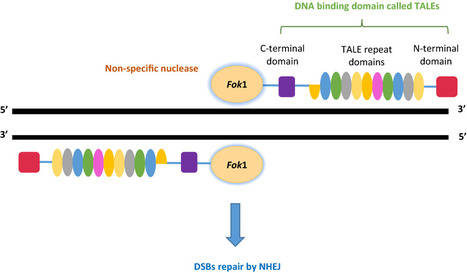
Ahmed et al, 2019 The advent of sequence-specific nucleases such as ZFNs (zinc finger nucleases), TALENs (transcription activator-like effector nucleases), and CRISPR (clustered regularly interspaced short palindromic repeats), in particular, have allowed for the precise and efficient introduction of genetic variation into the genome. The newly developed CRISPR-associated protein 9 (Cas9) variants, base-editing systems, novel RNA-directed nucleases, and DNA-free CRISPR/Cas9 delivery methods offer great opportunities for plant genome engineering. China has made tremendous progress in the field of GE for crop improvement to meet the demand of growing population. Herein, we reviewed the recent progress in GE of different crops in China, highlighting advanced GE tools/methods, and also discussed the specific challenges and prospects of plant GE.
|
|
|
Scooped by
dromius
June 29, 2020 2:30 PM
|
Atef et al, 2020 The technology of transcription activator-like effector (TALE) is based on designing and synthesizing DNA binding protein as a molecular tool for specific targeting of any desired gene. TALE-like proteins were originally identified in bacteria including two plant pathogenic bacteria and one fungal symbiotic bacteria (namely Paraburkholderia rhizoxinica). Plant transcription activator protein can be customly designed based on the information of the original Paraburkholderia TALE-like protein (BAT). In the present study, we designed a new protein in order to reorder the repeat domain to specifically target the minimal BS3 promoter. This modified BAT sequence was fused to nuclear localization signal (NLS) at the 5` end and Herpes simplex virus VP16 activation domain at the 3` end, then designed protein sequence was reverse translated, de novo synthesized and cloned in a plant expression system. Nicotiana benthamiana plants were co-transformed via agro-infiltration method with the expression cassette with the modified BAT sequence to target the effector binding element (EBE) of the minimal BS3 promoter that drives GUS gene of the mBS3::GUS cassette. Two days post inoculation, plant leaves were GUS-stained and strong signal was detected as indicator for GUS gene activation by the modified BAT sequence. This data suggests that the synthesized BAT protein could be used as a custom transcription activator of any desired genes in plant.
|
|
Scooped by
dromius
April 29, 2020 5:03 AM
|
(via. T. Schreiber, thx) Timilsina et al, 2020 Xanthomonas spp. encompass a wide range of plant pathogens that use numerous virulence factors for pathogenicity and fitness in plant hosts. In this Review, we examine recent insights into host–pathogen co-evolution, diversity in Xanthomonas populations and host specificity of Xanthomonas spp. that have substantially improved our fundamental understanding of pathogen biology. We emphasize the virulence factors in xanthomonads, such as type III secreted effectors including transcription activator-like effectors, type II secretion systems, diversity resulting in host specificity, evolution of emerging strains, activation of susceptibility genes and strategies of host evasion. We summarize the genomic diversity in several Xanthomonas spp. and implications for disease outbreaks, management strategies and breeding for disease resistance. In this Review, Jones and colleagues describe the extremely diverse Xanthomonas spp. and how these plant pathogens use their extensive repertoire of effectors for virulence and immune evasion. Understanding these prototypical plant pathogens paves the way to combat disease.
|
|
Scooped by
dromius
April 16, 2020 4:06 AM
|
(via T. Schreiber, thx) Haq et al, 2020 Bacterial blight of cotton (BBC), which is caused by the bacterium Xanthomonas citri pv. malvacearum (Xcm), is a destructive disease in cotton. Transcription activator-like effectors (TALEs), encoded by tal-genes, play critical roles in the pathogenesis of xanthomonads. Characterized strains of cotton pathogenic Xcm harbor 8–12 different tal genes and only one of them is functionally decoded. Further identification of novel tal genes in Xcm strains with virulence contributions are prerequisite to decipher the Xcm-cotton interactions.
In this study, we identified six tal genes in Xss-V2–18, a highly-virulent strain of Xcm from China, and assessed their role in BBC. RFLP-based Southern hybridization assays indicated that Xss-V2–18 harbors the six tal genes on a plasmid. The plasmid-encoded tal genes were isolated by cloning BamHI fragments and screening clones by colony hybridization. The tal genes were sequenced by inserting a Tn5 transposon in the DNA encoding the central repeat region (CRR) of each tal gene. Xcm TALome evolutionary relationship based on TALEs CRR revealed relatedness of Xss-V2–18 to MSCT1 and MS14003 from the United States. However, Tal2 of Xss-V2–18 differs at two repeat variable diresidues (RVDs) from Tal6 and Tal26 in MSCT1 and MS14003, respectively, inferred functional dissimilarity. The suicide vector pKMS1 was then used to construct tal deletion mutants in Xcm Xss-V2–18. The mutants were evaluated for pathogenicity in cotton based on symptomology and growth in planta. Four mutants showed attenuated virulence and all contained mutations in tal2. One tal2 mutant designated M2 was further investigated in complementation assays. When tal2 was introduced into Xcm M2 and expressed in trans, the mutant was complemented for both symptoms and growth in planta, thus indicating that tal2 functions as a virulence factor in Xcm Xss-V2–18.
Overall, the results demonstrated that Tal2 is a major pathogenicity factor in Xcm strain Xss-V2–18 that contributes significantly in BBC. This study provides a foundation for future efforts aimed at identifying susceptibility genes in cotton that are targeted by Tal2.
|
|
Scooped by
dromius
March 8, 2020 9:06 AM
|
(Via T. Lahaye, thx) Carter et al, 2020, Preprint Symbioses of bacteria with fungi have only recently been described and are poorly understood. In the symbiosis of Mycetohabitans (formerly Burkholderia ) rhizoxinica with the fungus Rhizopus microsporus, bacterial type III (T3) secretion is known to be essential. Proteins resembling T3-secreted transcription activator-like (TAL) effectors of plant pathogenic bacteria are encoded in the three sequenced Mycetohabitans spp. genomes. TAL effectors nuclear localize in plants, where they bind and activate genes important in disease. The Burkholderia TAL-like (Btl) proteins bind DNA but lack the N- and C-terminal regions in which TAL effectors harbor their T3 and nuclear localization signals, and activation domain. We characterized a Btl protein, Btl19-13, and found that, despite the structural differences, it can be T3-secreted and can nuclear localize. A btl19-13 gene knockout did not prevent the bacterium from infecting the fungus, but the fungus became less tolerant to cell membrane stress. Btl19-13 did not alter transcription in a plant-based reporter assay, but 15 R. microsporus genes were differentially expressed in comparisons both of the fungus infected with the wildtype bacterium vs the mutant and with the mutant vs. a complemented strain. Southern blotting revealed btl genes in 14 diverse Mycetohabitans isolates. However, banding patterns and available sequences suggest variation, and the btl19-13 phenotype could not be rescued by a btl gene from a different strain. Our findings support the conclusion that Btl proteins are effectors that act on host DNA and play important but varied or possibly host-genotype-specific roles in the M. rhizoxinica-R. microsporus symbiosis.
|
|
Scooped by
dromius
February 8, 2020 5:26 PM
|
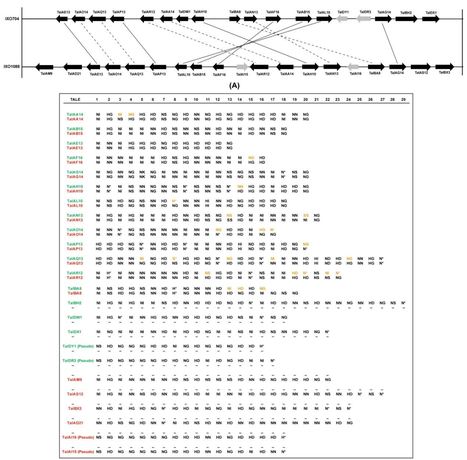
(via. T Schreiber, thx) Kaur et al, 2020 Xanthomonas oryzae pv. oryzae (Xoo) is a serious pathogen of rice which displays tremendous inter-strain variation. The emergence of highly virulent strains of Xoo is a major threat to rice cultivation. Evolutionary insights into genome dynamics of highly virulent strains as compared to the less virulent ones are crucial for understanding the molecular basis of exceptional success of Xoo as a highly evolved plant pathogen. In the present study, we report a complete genome sequence of Xoo strains with extreme virulent pathotypes (XVPs) characterized based on their reaction towards ten resistance (Xa) genes. One strain, IXO1088 can overcome resistance mediated by all the ten resistance genes while the other strain IXO704 cannot overcome any of them. Interestingly, our investigation revealed that XVPs display dramatic variation in the genome structure with numerous rearrangements/inversions. Moreover, XPVs also possess distinct transposon content and prophage elements that may provide genomic flux required for the acquisition of novel gene cassettes and structural changes in the genome. Interestingly, analysis of transcription activator-like effector (TALE) proteins, which are major virulence determinants of Xanthomonas pathogen show marked variation in the TALE content and DNA binding domain of tal genes. Overall, the present study indicates the possible role of mobilomes and repetitive elements in major structural and sequence alterations, which may be leading to the emergence of novel and extreme pathotypes. The knowledge and resource of XVPs will be invaluable in the further systematic understanding of evolution and management of variant pathotypes of Xoo.
|
|
Scooped by
dromius
February 7, 2020 5:13 AM
|
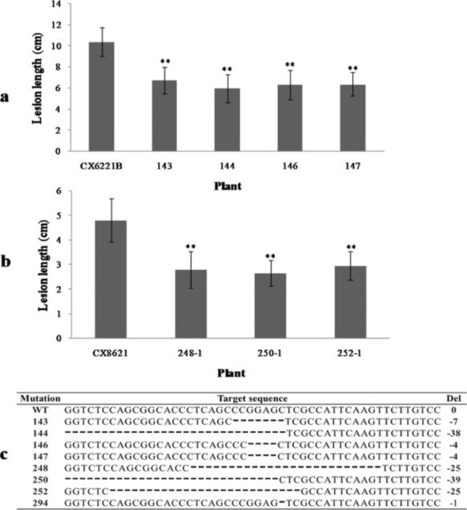
(via T. Schreiber. thx) Han et al, 2020 The xa5 gene encodes a basal transcription factor (TFIIAγ) protein with wide spectrum resistance to bacterial blight caused by Xanthomonas oryzae pv. Oryzae (Xoo) in rice. It was only found in a few rice ecotypes, and the recessive characteristics limited its application in breeding. Here, we employed a TALEN-based technique to edit its dominant allelic TFIIAγ5 and obtained many mutant TFIIAγ5 genes. Most of them reduced rice susceptibility to varying degrees when the plants were challenged with the Xoo. In particular, the knocked-out TFIIAγ5 can reduce the rice susceptibility significantly, although it cannot reach the xa5-mediated resistance level, indicating TFIIAγ5 is a major component involved in disease susceptibility. In addition, the mutant encoding the protein with deletion of the 32nd amino acid or amino acid insertion between 32nd and 33rd site confers rice with the similar resistance to that of the knocked-out TFIIAγ5. Thus, the amino acids around 32nd site are also the important action sites of TFIIAγ5 besides the 39th amino acid previously reported. Moreover, the integration of xa5 into TFIIAγ5-knockout plants conferred them with a similar resistance as IRBB5, the rice variety containing the homozygous xa5 gene. Thus, TFIIAγ5 was not simply regarded as a resistant or a susceptible locus, as the substitution of amino acids might shift its functions.
|
|
Scooped by
dromius
January 8, 2020 3:42 AM
|
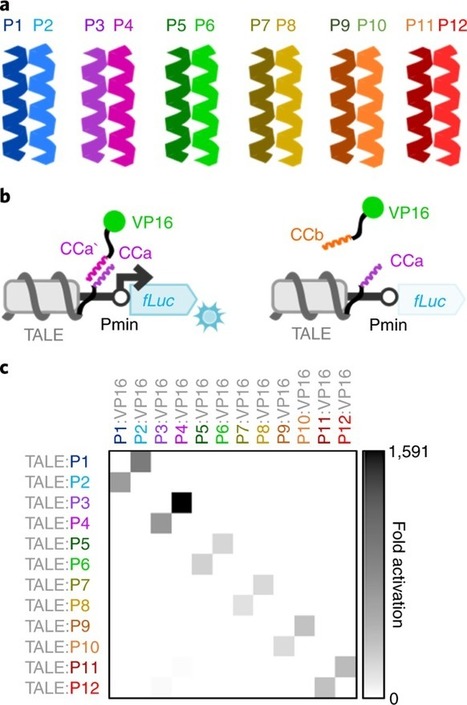
via T. Schreiber (thx) Lebar et al, 2020 Protein interactions guide most cellular processes. Orthogonal hetero-specific protein–protein interaction domains may facilitate better control of engineered biological systems. Here, we report a tunable de novo designed set of orthogonal coiled-coil (CC) peptide heterodimers (called the NICP set) and its application for the regulation of diverse cellular processes, from cellular localization to transcriptional regulation. We demonstrate the application of CC pairs for multiplex localization in single cells and exploit the interaction strength and variable stoichiometry of CC peptides for tuning of gene transcription strength. A concatenated CC peptide tag (CCC-tag) was used to construct highly potent CRISPR–dCas9-based transcriptional activators and to amplify the response of light and small molecule-inducible transcription in cell culture as well as in vivo. The NICP set and its implementations represent a valuable toolbox of minimally disruptive modules for the recruitment of versatile functional domains and regulation of cellular processes for synthetic biology. A set of orthogonal coiled-coil peptide heterodimers were developed to enable control of protein localization as well as transcriptional regulation by enhancing effector recruitment to TALE and CRISPR–dCas9 systems in mammalian cells and in vivo.
|
|
Scooped by
dromius
December 28, 2019 5:48 AM
|
Cuculis et al, 2019 Recent advances in gene editing have been enabled by programmable nucleases such as transcription activator-like effector nucleases (TALENs) and CRISPR–Cas9. However, several open questions remain regarding the molecular machinery in these systems, including fundamental search and binding behavior as well as role of off-target binding and specificity. In order to achieve efficient and specific cleavage at target sites, a high degree of target site discrimination must be demonstrated for gene editing applications. In this work, we studied the binding affinity and specificity for a series of TALE proteins under a variety of solution conditions using in vitro fluorescence methods and molecular dynamics (MD) simulations. Remarkably, we identified that TALEs demonstrate high sequence specificity only upon addition of small amounts of certain divalent cations (Mg2+, Ca2+). However, under purely monovalent salt conditions (K+, Na+), TALEs bind to specific and non-specific DNA with nearly equal affinity. Divalent cations preferentially bind to DNA over monovalent cations, which attenuates non-specific interactions between TALEs and DNA and further stabilizes specific interactions. Overall, these results uncover new mechanistic insights into the binding action of TALEs and further provide potential avenues for engineering and application of TALE- or TALEN-based systems for genome editing and regulation.
|
|
Scooped by
dromius
December 17, 2019 6:51 PM
|
Anderson et al. (2019) Transcription activator‐like effector (TALE) proteins have been used extensively for targeted binding of fusion proteins to loci of interest in (epi)genome engineering. Such approaches typically utilize four canonical TALE Repeat Variable Diresidue (RVD) types, corresponding to the identities of two key amino acids, to target each nucleotide. Alternate RVDs with improved specificity are desired. Here we focused on 7 non‐canonical RVDs that have been suggested to have improved specificity for their target nucleotides. We used custom protein binding microarrays (PBMs) to characterize the DNA‐binding activity of 65 TALEs containing these alternate or corresponding canonical RVDs at multiple positions to ~5,000 unique DNA sequences per protein. We found that none of the non‐canonical thymine‐targeting RVDs displayed stronger preference for thymine than did the canonical RVD. Of the non‐canonical RVDs with putatively improved specificity for guanine, only EN and NH showed greater discrimination of guanine over adenine. This improved specificity, however, comes at a cost: more substitutions of a non‐canonical RVD for a canonical RVD generally decreased the protein's DNA‐binding activity. Our results highlight the need to investigate RVD‐nucleotide specificities in multiple protein contexts and suggest that a balance between canonical and non‐canonical RVDs is needed to build TALEs with improved specificity.
|
|
Scooped by
dromius
December 7, 2019 5:46 PM
|
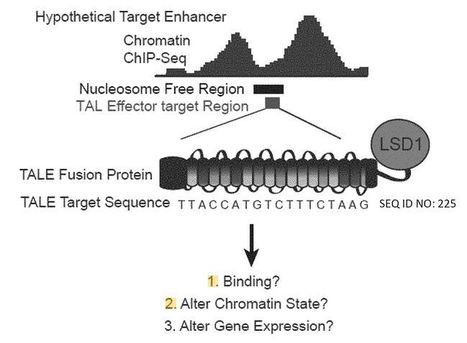
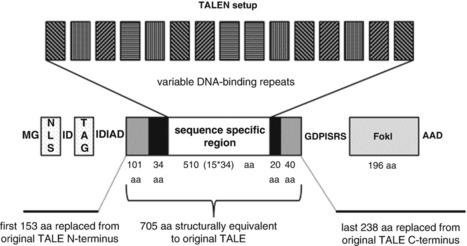
(via T. Lahaye, thx) Forner, 2019 TAL effector nucleases (TALENs) are powerful tools to create specific knockout mutants in plants. The use of an optimized TALEN backbone and the choice of promoters that are strongly active in the stem cells of the shoot apical meristem are key to a high rate of heritable targeted mutations. Recommendations for construct design and screening for mutants are given in this chapter.
|
|
Scooped by
dromius
November 15, 2019 3:31 AM
|
Researchers from Cellectis today published a proof-of-concept study detailing the activity of “smart” T-cells capable of sensing and reacting to tumors with micro secretions of therapeutic proteins that improve their ability to fight cancerous cells, potentially paving the way for a next generation of tightly-controlled, highly active—and potentially safer—CAR T-cell treatments.
By using gene editing—notably Cellectis’ proprietary TALEN® technology—to rewire the TCRα, CD25 and PD1 genes along the TCR activation pathway, the company said, CAR T-cells were able to reshape the tumor microenvironment by micro secreting the pro-inflammatory cytokine Interleukin 12 (IL-12) in a tumor- and time-dependent manner.
|
|
Scooped by
dromius
October 28, 2019 9:23 PM
|
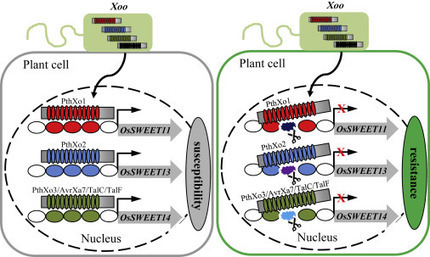
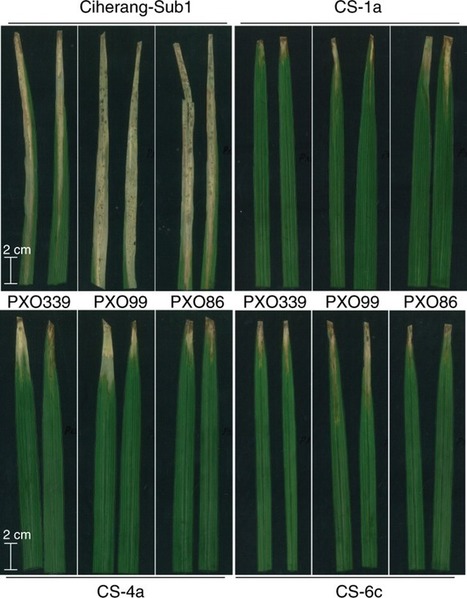
Oliva et al, 2019 Bacterial blight of rice is an important disease in Asia and Africa. The pathogen, Xanthomonas oryzae pv. oryzae (Xoo), secretes one or more of six known transcription-activator-like effectors (TALes) that bind specific promoter sequences and induce, at minimum, one of the three host sucrose transporter genes SWEET11, SWEET13 and SWEET14, the expression of which is required for disease susceptibility. We used CRISPR–Cas9-mediated genome editing to introduce mutations in all three SWEET gene promoters. Editing was further informed by sequence analyses of TALe genes in 63 Xoo strains, which revealed multiple TALe variants for SWEET13 alleles. Mutations were also created in SWEET14, which is also targeted by two TALes from an African Xoo lineage. A total of five promoter mutations were simultaneously introduced into the rice line Kitaake and the elite mega varieties IR64 and Ciherang-Sub1. Paddy trials showed that genome-edited SWEET promoters endow rice lines with robust, broad-spectrum resistance. Genome editing of three SWEET gene promoters endows rice with resistance to all Xanthomonas bacterial blight strains tested.
|













https://pijnpillen.com/Producten/buy-flakka-a-pvp/
https://pijnpillen.com/Producten/buy-ultram-online/
https://pijnpillen.com/Producten/ketamine-poeder-kopen/
https://pijnpillen.com/Producten/buy-micro-mushrooms/
https://pijnpillen.com/Producten/carisoprodol-nederland-kopen/
https://pijnpillen.com/Producten/koop-natriumcyanide/
https://pijnpillen.com/Producten/koop-vicodin-online/
https://pijnpillen.com/Producten/koop-dmt-netherland/
https://pijnpillen.com/Producten/koop-dexedrine/
https://pijnpillen.com/Producten/koop-vyvanse-online/
https://pijnpillen.com/Producten/koop-morphine/
https://pijnpillen.com/Producten/buy-4-aco-dmt-usa/
https://pijnpillen.com/Producten/oxycodon-hcl-kopen/
https://pijnpillen.com/Producten/koop-suboxone-strips/
https://pijnpillen.com/Producten/koop-percocet-online/
https://pijnpillen.com/Producten/koop-oxycontin-online/
https://pijnpillen.com/Producten/buy-flakka-a-pvp/
https://pijnpillen.com/Producten/fentanyl-pleister-kopen/
https://pijnpillen.com/Producten/buy-seconal-sodium/
https://pijnpillen.com/Producten/fentanyl-poeder-kopen/
https://pijnpillen.com/Producten/koop-morphine/
https://pijnpillen.com/Producten/buprenorfine-kopen/
https://pijnpillen.com/Producten/koop-vyvanse-online/
https://pijnpillen.com/Producten/carisoprodol-nederland-kopen/
https://pijnpillen.com/Producten/koop-natriumcyanide/
https://pijnpillen.com/Producten/koop-dmt-netherland/
https://pijnpillen.com/Producten/koop-vicodin-online/
https://pijnpillen.com/Producten/gouden-leraar-paddenstoelen/
%3C/a""> ">buy-flakka-a-pvp
buy-ultram-online
%3C/a""> ">ketamine-poeder-kopen
%3C/a""> ">buy-micro-mushrooms
carisoprodol-nederland-kopen
koop-natriumcyanide
%3C/a""> ">koop-vicodin-online
%3C/a""> ">koop-dmt-netherland
koop-dexedrine
%3C/a""> ">koop-morphine
buy-4-aco-dmt-usa
oxycodon-hcl-kopen
koop-suboxone-strips
%3C/a""> ">koop-percocet-online
acheter adipex
buy-flakka-a-pvp
%3C/a""> ">fentanyl-pleister-kopen
buy-seconal-sodium
fentanyl-poeder-kopen
koop-morphine
buprenorfine-kopen
koop-vyvanse-online
carisoprodol-nederland-kopen
koop-natriumcyanide
koop-dmt-netherland
koop-vicodin-online
gouden-leraar-paddenstoelen
https://acheteroxycodone.eu/produit/comprar-cianuro-de-sodio/