Your new post is loading...

|
Scooped by
dromius
January 14, 2014 5:59 AM
|
Hu et al, 2013 Citrus bacterial canker (CBC) disease occurs worldwide and incurs considerable costs both from control measures and yield losses. Bacteria that cause CBC require one of six known type III transcription activator-like (TAL) effector genes for the characteristic pustule formation at the site of infection. Here, we show that Xanthomonas citri subspecies citri strain Xcc306, with the type III TAL effector gene pthA4 or with the distinct yet biologically equivalent gene pthAw from strain XccAw, induces two host genes, CsLOB1 and CsSWEET1, in a TAL effector-dependent manner. CsLOB1 is a member of the Lateral Organ Boundaries (LOB) gene family of transcription factors, and CsSWEET1 is a homolog of the SWEET sugar transporter and rice disease susceptibility gene. Both TAL effectors drive expression of CsLOB1 and CsSWEET1 promoter reporter gene fusions when coexpressed in citrus or Nicotiana benthamiana. Artificially designed TAL effectors directed to sequences in the CsLOB1 promoter region, but not the CsSWEET1 promoter, promoted pustule formation and higher bacterial leaf populations. Three additional distinct TAL effector genes, pthA*, pthB, and pthC, also direct pustule formation and expression of CsLOB1. Unlike pthA4 and pthAw, pthB and pthC do not promote the expression of CsSWEET1. CsLOB1 expression was associated with the expression of genes associated with cell expansion. The results indicate that CBC-inciting species of Xanthomonas exploit a single host disease susceptibility gene by altering the expression of an otherwise developmentally regulated gene using any one of a diverse set of TAL effector genes in the pathogen populations.
|
|
Scooped by
dromius
January 13, 2014 11:20 AM
|
(via T. Lahaye, thx) Gaber et al, 2014 Electronic computer circuits consisting of a large number of connected logic gates of the same type, such as NOR, can be easily fabricated and can implement any logic function. In contrast, designed genetic circuits must employ orthogonal information mediators owing to free diffusion within the cell. Combinatorial diversity and orthogonality can be provided by designable DNA- binding domains. Here, we employed the transcription activator–like repressors to optimize the construction of orthogonal functionally complete NOR gates to construct logic circuits. We used transient transfection to implement all 16 two-input logic functions from combinations of the same type of NOR gates within mammalian cells. Additionally, we present a genetic logic circuit where one input is used to select between an AND and OR function to process the data input using the same circuit. This demonstrates the potential of designable modular transcription factors for the construction of complex biological information-processing devices.
|
|
Scooped by
dromius
January 10, 2014 12:00 PM
|
(via T. Lahaye, thx) Feng et al, 2013 Currently, for genomic editing in cultured cells, two plasmids encoding a pair of TALENs are co-transfected, followed by limited dilution to isolate cell colonies with the intended genomic manipulation. However, uncertain transfection efficiency becomes a bottleneck, especially in hard-to-transfect cells, reducing the overall efficiency of genome editing. We have developed a robust TALENs system in which each TALEN plasmid also encodes a fluorescence protein. Thus, cells transfected with both TALEN plasmids, a prerequisite for genomic editing, can be isolated by fluorescence-activated cell sorting. Our improved TALENs system can be applied to all cultured cells to achieve highly efficient genomic editing. Furthermore, an optimized procedure for genomic editing using TALENs is also presented. We expect our system to be widely adopted by the scientific community.
|
|
Scooped by
dromius
January 10, 2014 8:42 AM
|
(via T. Schreiber, thx) Beumer and Carroll, 2014 • TALENS, ZFNs, and CRISPRs have all been successfully used in Drosophila.
• A variety of criteria are presented to evaluate the best reagent for an experiment.
• Tools for target choice, reagent construction and mutant screening are presented. .
|
|
Scooped by
dromius
January 9, 2014 3:25 AM
|
(via T. Lahaye, thx) Li et al, 2014 We sought to use RNA-seq to reveal potential target genes of C. sinensis activated by PthA, TalA, TalB, TalC and TalD. For this, RNAs were isolated from citrus leaf regions where six strains ... (containing 4 pthA homologs and pthA) were inoculated, while water-treated citrus was used as a control.
...
to predict the target sequences (UPT box) by PthA and the other PthA homologs of Xcc049A strain based on the code as described in the previous study (Boch et al., 2009).
...
From the consequence of the third approach we used, in total, 108 up-regulated genes were found (Supplemental Dataset 1). Then, using the genome database of “The Citrus sinensis Annotation Project” (http://citrus.hzau.edu.cn/orange/index.php), we obtained all the promoters of these 108 genes ...
To identify the potential UPT boxes, two online programs (Target Finder ... and Talgetter...) (Doyle et al., 2012; Grau et al., 2013) were used to search the promoter sequences by inputting RVDs of
TalA, TalB, TalC, TalD and PthA (Figure 1D and Supplemental Table 1). Intriguingly, both programs generated identical results, and revealed that the promoter of gene Cs7g27640
which got a score much higher than other predicted targets, contained a UPT box that was predicted to match both PthA and TalC (KF682432) ...
To confirm that the gene Cs7g27640, encoding a lateral organ boundaries (CsLOB) domain containing protein, is the target activated by PthA and TalC, we checked the
transcription pattern of this gene in our first two comparison approaches mentioned above. The results showed that the gene was highly expressed when citrus leaves were inoculated
with Xcc strains containing either PthA or TalC, and the expression level decreased dramatically in the absence of PthA or TalC.
|
|
Scooped by
dromius
January 4, 2014 7:48 AM
|
(via T. Lahaye, thx) Treen et al, 2013 Here, we report that TALENs are highly effective at inducing mutations in specific genomic loci in the ascidian chordate Ciona intestinalis. In Ciona there are well-established methods to introduce exogenous DNA by electroporation, and we show that this method can be used to introduce constructs that can express TALENs ubiquitously or in specific tissues. Our current protocols enable the rapid analysis of hundreds of TALEN-induced mutants. TALEN electroporations result in a high rate of mutations. These mutations can result in gene knockouts that recapitulate previously described functions of Fgf3 and Hox12. We show that TALENs can work efficiently to cause tissue-specific knockouts and demonstrate this by knocking out Hox12 in the epidermis and Fgf3 in neural tissues. We also use tissue-specific knockouts to reveal a new function of Fgf3 during ascidian larval metamorphosis.
|
|
Scooped by
dromius
January 2, 2014 7:01 AM
|
Reyon et al, 2014 Customized DNA-binding domains made using transcription activator-like effector (TALE) repeats are rapidly growing in importance as widely applicable research tools. TALE nucleases (TALENs), composed of an engineered array of TALE repeats fused to the FokI nuclease domain, have been used successfully for directed genome editing in various organisms and cell types. TALE transcription factors (TALE-TFs), consisting of engineered TALE repeat arrays linked to a transcriptional regulatory domain, have been used to up- or downregulate expression of endogenous genes in human cells and plants. This unit describes a detailed protocol for the recently described fast ligation-based automatable solid-phase high-throughput (FLASH) assembly method. FLASH enables automated high-throughput construction of engineered TALE repeats using an automated liquid handling robot or manually using a multichannel pipet. Using the automated approach, a single researcher can construct up to 96 DNA fragments encoding TALE repeat arrays of various lengths in a single day, and then clone these to construct sequence-verified TALEN or TALE-TF expression plasmids in a week or less. Plasmids required for FLASH are available by request from the Joung lab (http://eGenome.org). This unit also describes improvements to the Zinc Finger and TALE Targeter (ZiFiT Targeter) web server (http://ZiFiT.partners.org) that facilitate the design and construction of FLASH TALE repeat arrays in high throughput.
|
|
Scooped by
dromius
December 28, 2013 4:15 PM
|
(via T. Lahaye, thx) Liu et al, 2013 Here, we designed synthetic TALEs that bind to the flanking regions of the TATA-box motif on the CaMV 35S promoter for the purpose of understanding the engineerable ‘hot-spots’ for increasing transgene expression. We demonstrated that transient expression of de novo-engineered TALEs using agroinfiltration could significantly increase reporter gene expression in stable transgenic tobacco expressing the orange fluorescent protein reporter gene pporRFP under the control of synthetic inducible, minimal or full-length 35S promoters. Moreover, the additive effects of a combination of two different synthetic TALEs could significantly enhance the activation effects of TALEs on reporter gene expression more than when each TALE was used individually. We also studied the effects of the C-terminal domain and the activation domain of synthetic TALEs, as well as the best ‘hot-spots’ on the 35S promoter on targeted transgene activation. Furthermore, TALE activation of the Arabidopsis MYB transcription factor AtPAP1 (PRODUCTION OF ANTHOCYANIN PIGMENT 1) in stable transgenic tobacco gave rise to a dark purple colour on infiltrated leaves when driven by four copies of cis-regulatory elements of pathogenesis-related gene (PR1) with enhancer motifs B and A1 from the 35S promoter. These results provide novel insights into the potential applications of synthetic TALEs for targeted gene activation of transgenes in plants.
|
|
Scooped by
dromius
December 28, 2013 1:58 AM
|
Stella et al, 2014 Although a large number of fully sequenced bacterial genomes are available, TALE proteins have only been identified in two plantpathogens: Xanthomonas spp. and Ralstonia solanacearum. Theconstant release of new genomic data prompted us to search for newmodular DNA-binding proteins. Thus, we looked for DNA-bindingproteins containing differences in their modular sequence. We founda protein fulfilling this condition in Burkholderia rhizoxinica, asymbiotic bacterium that lives in the cytosol of Rhizopus microsporus,which has previously been identified (Schornack et al., 2013;hereafter termed BurrH; UniProtKB E5AV36_BURRH; gene ID9979518; gene symbol RBRH_01844). BurrH shows a modularorganization; however, the sequences of the modules display fewconserved residues. The protein contains 19 repeats able to recognizea 19 bp DNA target. Here, we report the expression, purification,crystallization and preliminary X-ray diffraction analysis of this novelmodular domain in its apo form and in complex with the DNA target.
|
|
Scooped by
dromius
December 27, 2013 8:21 AM
|
(via T. Lahaye, thx) Thanisch et al, 2013 Epigenetic regulation of gene expression involves, besides DNA and histone modifications, the relative positioning of DNA sequences within the nucleus. To trace specific DNA sequences in living cells, we used programmable sequence-specific DNA binding of designer transcription activator-like effectors (dTALEs). We designed a recombinant dTALE (msTALE) with variable repeat domains to specifically bind a 19-bp target sequence of major satellite DNA. The msTALE was fused with green fluorescent protein (GFP) and stably expressed in mouse embryonic stem cells. Hybridization with a major satellite probe (3D-fluorescent in situ hybridization) and co-staining for known cellular structures confirmed in vivo binding of the GFP-msTALE to major satellite DNA present at nuclear chromocenters. Dual tracing of major satellite DNA and the replication machinery throughout S-phase showed co-localization during mid to late S-phase, directly demonstrating the late replication timing of major satellite DNA. Fluorescence bleaching experiments indicated a relatively stable but still dynamic binding, with mean residence times in the range of minutes. Fluorescently labeled dTALEs open new perspectives to target and trace DNA sequences and to monitor dynamic changes in subnuclear positioning as well as interactions with functional nuclear structures during cell cycle progression and cellular differentiation.
|
|
Scooped by
dromius
December 20, 2013 3:05 AM
|
(via T. Lahaye, thx) Sun & Zhao Transcription-activator like effector nucleases (TALENs) are tailor-made DNA endonucleases and serve as a powerful tool for genome engineering. Site-specific DNA cleavage can be made by the dimerization of FokI nuclease domains at custom-targeted genomic loci, where a pair of TALENs must be positioned in close proximity with an appropriate orientation. However, the simultaneous delivery and coordinated expression of two bulky TALEN monomers (>100 kDa) in cells may be problematic to implement for certain applications. Here, we report the development of a single-chain TALEN (scTALEN) architecture, in which two FokI nuclease domains are fused on a single polypeptide. The scTALEN was created by connecting two FokI nuclease domains with a 95 amino acid polypeptide linker, which was isolated from a linker library by high-throughput screening. We demonstrated that scTALENs were catalytically active as monomers in yeast and human cells. The use of this novel scTALEN architecture should reduce protein payload, simplify design and decrease production cost.
|
|
Scooped by
dromius
December 15, 2013 6:42 AM
|
(via T. Lahaye, thx) Liang et al, 2013 Here, we report, for the first time, targeted mutagenesis in Zea mays using TALENs and the CRISPR/Cas system. We designed five TALENs targeting 4 genes, namely ZmPDS, ZmIPK1A, ZmIPK, ZmMRP4, and obtained targeting efficiencies of up to 23.1% in protoplasts, and about 13.3% to 39.1% of the transgenic plants were somatic mutations. Also, we constructed two gRNAs targeting the ZmIPK gene in maize protoplasts, at frequencies of 16.4% and 19.1%, respectively. In addition the CRISPR/Cas system induced targeted mutations in Zea mays protoplasts with efficiencies (13.1%) similar to those obtained with TALENs (9.1%). Our results show that both TALENs and the CRISPR/Cas system can be used for genome modification in maize.
|
|
Scooped by
dromius
December 13, 2013 8:32 AM
|
(via T. Lahaye, thx) Hayashi et al, 2013 Regeneration of a lost tissue in an animal is an important issue. Although regenerative studies have a history of research spanning more than a century, the gene functions underlying regulation of the regeneration are mostly unclear. Analysis of knockout animals is a very powerful tool with which to elucidate gene function. Recently, transcription activator-like effector nucleases (TALENs) have been developed as an effective technique for genome editing. This technique enables gene targeting in amphibians such as newts that were previously impossible. Here we show that newts microinjected with TALEN mRNAs designed for targeting the tyrosinase gene in single-cell stage embryos revealed an albino phenotype. Sequence analysis revealed that the tyrosinase genes were effectively disrupted in these albino newts. Moreover, precise genome alteration was achieved using TALENs and single strand oligodeoxyribonucleotides. Our results suggest that TALENs are powerful tools for genome editing for regenerative research in newts.
|
|
|
Scooped by
dromius
January 13, 2014 11:42 AM
|
(via T. Lahaye, thx) Sommer et al, 2014 Generation of mouse models by introducing transgenes using homologous recombination is critical for understanding fundamental biology and pathology of human diseases. Here we investigate whether artificial transcription activator-like effector nucleases (TALENs)—powerful tools that induce DNA double-strand breaks at specific genomic locations—can be combined with a targeting vector to induce homologous recombination for the introduction of a transgene in embryonic stem cells and fertilized murine oocytes. We describe the generation of a conditional mouse model using TALENs, which introduce double-strand breaks at the genomic locus of the special AT-rich sequence-binding protein-1 in combination with a large 14.4 kb targeting template vector. We report successful germline transmission of this allele and demonstrate its recombination in primary cells in the presence of Cre-recombinase. These results suggest that TALEN-assisted induction of DNA double-strand breaks can facilitate homologous recombination of complex targeting constructs directly in oocytes.
|
|
Scooped by
dromius
January 11, 2014 3:34 PM
|
(via T. Lahaye, thx) Wefers et al, 2014 Gene engineering for generating targeted mouse mutants is a key technology for biomedical research. Using TALENs as nucleases to induce targeted double-strand breaks, the mouse genome can be directly modified in zygotes in a single step, without the need for embryonic stem cells. Thereby, Knockout and Knockin alleles can be generated fast and efficiently by embryo microinjection of TALEN mRNAs and targeting vectors. In this article we present an introduction into the TALEN technology and provide protocols for the application of TALENs in mouse zygotes.
|
|
Scooped by
dromius
January 10, 2014 11:56 AM
|
(via T. Lahaye, thx) Liu et al, 2014 The transcription activator-like effector nucleases (TALENs) strategy has been widely used to delete and mutate genes in vitro. This strategy has begun to be used for in vivo systemic gene manipulation, but not in an organ-specific manner. In this study, we developed a modified, highly efficient TALEN strategy using a dual-fluorescence reporter. We used this modified strategy and, within 5 weeks, we successfully generated kidney proximal tubule-specific gene Ttc36 homozygous knockout mice. Unilateral nephrectomy was performed on the 6-week-old founders (F0) to identify the knockout genotype prior to the birth of the offspring. This strategy was found to have little effect on reproduction in the knockout mice and inheritability of the knockout genotypes. The modified TALEN knockout strategy in combination with unilateral nephrectomy can be readily used for studies of gene function in kidney development and diseases.
|
|
Scooped by
dromius
January 9, 2014 5:35 PM
|
(via T. Lahaye) Bart, 2014 We focus on the staple food crop cassava and its pathogen, Xanthomonas axonopodis pv. manihotis (Xam). Bacterial pathogens within the genus Xanthomonas deliver type three effectors (T3Es) into the cells of their plant hosts to promote virulence. We use genomic approaches to understand the conservation of T3Es on a pathogen population level. Highly conserved effectors represent ideal targets for disease resistance. In addition, we characterize a specific class of T3Es, the transcription activator-like (TAL) effector family and report a major role for bacterial population growth and symptom development for TAL14Xam668 and TAL20Xam668, respectively. We identify pathogen-induced transcriptional changes using RNA-seq and identify cassava target genes for each TAL effector. TAL20Xam668 specifically induces MeSWEET10a, a member of the sugar transporter family of susceptibility genes previously characterized in rice. TAL14Xam668 induces a pectate lyase, a novel class of TAL-targeted susceptibility genes. We show that induction of these genes is a highly conserved virulence strategy employed by Xam during infection of cassava and propose strategies for durable engineered resistance.
|
|
Scooped by
dromius
January 9, 2014 2:33 AM
|
Curtin et al, 2014 (Poster) Advances in legume research have been frustrated by a lack of mutants and mutagenesis methodologies. This is especially relevant as scientists seek to explore the biological functions of gene candidates discovered through methods such as RNA-seq or genome-wide association studies (GWAS). Here we demonstrate a suite of mutagenesis platforms including; Tnt1 retro-transposons, hairpin constructs, zinc-finger (ZFNs), TAL-effector (TALENs) and CRISPRs (RNA-guided) nucleases to engineer Dicer-like and nodulation mutants in soybean and Medicago truncatula respectively. We have used the genetic transformation of Tnt1, hairpin, ZFNs, TALENs and CRISPR to knock-out/down single copy and duplicated legume genes, both in hairy root and whole plant systems. Some of the target genes were chosen in order to explore and optimize the features of knock-out/down systems (e.g., phytoene desaturase), while others were identified by soybean homology to Arabidopsis Dicer-like genes or by GWAS of nodulation in Medicago. These developments demonstrate the utility of these mutagenesis platfo
|
|
Scooped by
dromius
January 4, 2014 7:45 AM
|
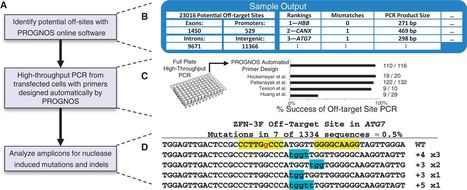
(via T. Lahaye, thx) Fine et al, 2013 Although engineered nucleases can efficiently cleave intracellular DNA at desired target sites, major concerns remain on potential ‘off-target’ cleavage that may occur throughout the genome. We developed an online tool: predicted report of genome-wide nuclease off-target sites (PROGNOS) that effectively identifies off-target sites. The initial bioinformatics algorithms in PROGNOS were validated by predicting 44 of 65 previously confirmed off-target sites, and by uncovering a new off-target site for the extensively studied zinc finger nucleases (ZFNs) targeting C-C chemokine receptor type 5. Using PROGNOS, we rapidly interrogated 128 potential off-target sites for newly designed transcription activator-like effector nucleases containing either Asn-Asn (NN) or Asn-Lys (NK) repeat variable di-residues (RVDs) and 3- and 4-finger ZFNs, and validated 13 bona fide off-target sites for these nucleases by DNA sequencing. The PROGNOS algorithms were further refined by incorporating additional features of nuclease–DNA interactions and the newly confirmed off-target sites into the training set, which increased the percentage of bona fide off-target sites found within the top PROGNOS rankings. By identifying potential off-target sites in silico, PROGNOS allows the selection of more specific target sites and aids the identification of bona fide off-target sites, significantly facilitating the design of engineered nucleases for genome editing applications.
|
|
Scooped by
dromius
December 28, 2013 4:18 PM
|
(via T. Lahaye, thx) Uhde-Stone et al, 2013 Despite their growing popularity, little is known about binding site parameters that influence TALE-mediated gene activation in mammalian cells. We demonstrate that TALE activators modulate gene expression in mammalian cells in a position- and strand-dependent manner. To study the effects of binding site location, we engineered TALEs customized to recognize specific DNA sequences located in either the promoter or the transcribed region of reporter genes. We found that TALE activators robustly activated reporter genes when their binding sites were located within the promoter region. In contrast, TALE activators inhibited the expression of reporter genes when their binding sites were located on the sense strand of the transcribed region. Notably, this repression was independent of the effector domain utilized, suggesting a simple blockage mechanism. We conclude that TALE activators in mammalian cells regulate genes in a position- and strand-dependent manner that is substantially different from gene activation by native TALEs in plants. These findings have implications for optimizing the design of custom TALEs for genetic manipulation in mammalian cells.
|
|
Scooped by
dromius
December 28, 2013 1:02 PM
|
(via T. Lahaye, thx) Ma et al, 2013 We describe a transcription activator-like effector (TALE)-based strategy, termed “TALEColor,” for labeling specific repetitive DNA sequences in human chromosomes. We designed TALEs for the human telomeric repeat and fused them with any of numerous fluorescent proteins (FPs). Expression of these TALE–telomere–FP fusion proteins in human osteosarcoma's (U2OS) cells resulted in bright signals coincident with telomeres. We also designed TALEs for centromeric sequences unique to certain chromosomes, enabling us to localize specific human chromosomes in live cells. Meanwhile we generated TALE–FPs in vitro and used them as probes to detect telomeres in fixed cells. Using human cells with different average telomere lengths, we found that the TALEColor signals correlated positively with telomere length. In addition, suspension cells were followed by imaging flow cytometry to resolve cell populations with differing telomere lengths. These methods may have significant potential both for basic chromosome and genome research as well as in clinical applications.
|
|
Scooped by
dromius
December 27, 2013 8:23 AM
|
(via T. Lahaye, thx) Huang et al, 2013 Tandem repeats (TRs) are abundant and widely distributed in eukaryotic genomes. TRs are thought to have various functions in gene transcription, DNA methylation, nucleosome position and chromatin organization. Variation of repeat units in the genome is observed in association with a number of diseases, such as Fragile X Syndrome, Huntington's disease and Friedreich's ataxia. However, the underlying mechanisms involved are poorly understood, largely owing to the technical limitations in modification of TRs at definite sites in the genome in vivo. Transcription activator-like effector nucleases (TALENs) are widely used in recent years in gene targeting for their specific binding to target sequences when engineered in vitro. Here, we show that the repair of a double-strand break (DSB) induced by TALENs adjacent to a TR can produce serial types of mutations in the TR region. Sequencing analysis revealed that there are three types of mutations induced by the DSB repair, including indels only within the TR region or within the flanking TALEN target region or simutaneously within both regions. Therefore, desired TR mutant types can be conveniently obtained by using engineered TALENs. These results demonstrate that TALENs can serve as a convenient tool for modifying TRs in the genome in studying the functions of TRs.
|
|
Scooped by
dromius
December 20, 2013 1:43 PM
|
(via M. Moscou, thx) Liu et al, 2013 Basic research has provided a much better understanding of the genetic networks and regulatory hierarchies in plants. To meet the challenges of agriculture, we must be able to rapidly translate this knowledge into generating improved plants. Therefore, in this Review, we discuss advanced tools that are currently available for use in plant biotechnology to produce new products in plants and to generate plants with new functions. These tools include synthetic promoters, 'tunable' transcription factors, genome-editing tools and site-specific recombinases. We also review some tools with the potential to enable crop improvement, such as methods for the assembly and synthesis of large DNA molecules, plant transformation with linked multigenes and plant artificial chromosomes. These genetic technologies should be integrated to realize their potential for applications to pressing agricultural and environmental problems.
|
|
Scooped by
dromius
December 16, 2013 8:00 AM
|
Several new plant breeding techniques (NPBTs) have been developed during the last decade which makes it possible to precisely perform genome modifications in plants. The major problem, besides technical aspects, is the vagueness of regulation concerning these new techniques. Since the definition of eight NPBTs by a European expert group in 2007 there is an ongoing debate whether the resulting plants and their products have to be covered by GMO legislation. Obviously, cover by GMO legislation would hamper severely the use of NPBT because genetically modified (GM) plants have to pass a costly and time consuming GMO approval procedure in the EU. In this review we compare some of the NPBTs defined by the EU expert group to classical breeding techniques and conventional transgenic plants. The list of NPBTs might be shortened (or extended) during the international discussion process initiated by OECD. From the scientific point of view it can be argued that plants developed by NPBTs are often indistinguishable from classically bred plants and not expected to possess higher risks for health and the environment. In light of the debate on the future regulation of NPBTs and the evidence accumulated on the Biosafety of GM plants commercialized and risk assessed worldwide it can be suggested that plants modified by crop genetic improvement technologies including GM, NPBTs or other future techniques should be evaluated concerning the new trait and the resulting end product instead of the technique used to create the new plant variety.
|
|
Scooped by
dromius
December 13, 2013 8:37 AM
|
(via T. Lahaye, thx) Lisa Li et al, 2013 Genetic mutations in humans are associated with congenital disorders and phenotypic traits. Gene therapy holds the promise to cure such genetic disorders, although it has suffered from several technical limitations for decades. Recent progress in gene editing technology using tailor-made nucleases, such as meganucleases (MNs), zinc finger nucleases (ZFNs), TAL effector nucleases (TALENs) and, more recently, CRISPR/Cas9, has significantly broadened our ability to precisely modify target sites in the human genome. In this review, we summarize recent progress in gene correction approaches of the human genome, with a particular emphasis on the clinical applications of gene therapy.
|