Your new post is loading...

|
Scooped by
dromius
February 19, 2014 5:26 AM
|
(via T. Schreiber, thx) Huang et al, 2014 Transcription activator-like effector nucleases (TALENs) are engineered endonucleases composed of a customized transcription activator-like effector (TALE) DNA-binding domain and a FokI DNA cleavage domain. TALENs induce DNA double-strand breaks (DSBs) at their target sites on the chromosome and have been successfully used for genome engineering in many species and cultured cells. Zebrafish is a very popular model organism in both basic and clinical research. Here, we describe the details of construction of customized TALENs using the “Unit Assembly” (UA) method, as well as three applications of zebrafish genome manipulations using TALENs: gene knock-out, large chromosome deletion, and gene knock-in by homologous recombination.
|
|
Scooped by
dromius
February 17, 2014 3:09 AM
|
(via T. Lahaye, thx) Guilinger et al, 2014 Although transcription activator–like effector nucleases (TALENs) can be designed to cleave chosen DNA sequences, TALENs have activity against related off-target sequences. To better understand TALEN specificity, we profiled 30 unique TALENs with different target sites, array length and domain sequences for their abilities to cleave any of 1012 potential off-target DNA sequences using in vitro selection and high-throughput sequencing. Computational analysis of the selection results predicted 76 off-target substrates in the human genome, 16 of which were accessible and modified by TALENs in human cells. The results suggest that (i) TALE repeats bind DNA relatively independently; (ii) longer TALENs are more tolerant of mismatches yet are more specific in a genomic context; and (iii) excessive DNA-binding energy can lead to reduced TALEN specificity in cells. Based on these findings, we engineered a TALEN variant that exhibits equal on-target cleavage activity but tenfold lower average off-target activity in human cells.
|
|
Scooped by
dromius
February 12, 2014 6:11 AM
|
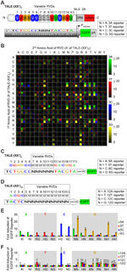
(via T. Lahaye, thx) Yang et al, 2014 The most striking feature of a transcription activator-like effector (TALE) is the presence of a central DNA-binding region composed of tandem repeats of about 34 amino acids. Two hypervariable residues at positions 12 and 13 (repeat-variable diresidues or RVDs) in each repeat bind to DNA, and this modular DNA-binding feature of TALE repeats has inspired the development of custom-designed TALE repeats for gene editing. The nucleotide recognition preference of the commonly used RVDs has been experimentally or computationally determined. For instance, RVD NN has a high preference for both G and A. The rare RVDs, NK and NH, have better specificity for guanine than NN, but their affinity is relatively lower. We thus decided to conduct a thorough investigation of potential RVDs, which cover all possible combinations of amino acid diresidues, for their DNA recognition capabilities.
|
|
Scooped by
dromius
February 8, 2014 8:45 AM
|
(via T. Schreiber, thx) Fichtner et al, 2014 Recently, the use of programmable DNA-binding proteins such as ZFP/ZFNs, TALE/TALENs and CRISPR/Cas has produced unprecedented advances in gene targeting and genome editing in prokaryotes and eukaryotes. These advances allow researchers to specifically alter genes, reprogram epigenetic marks, generate site-specific deletions and potentially cure diseases. Unlike previous methods, these precision genetic modification techniques (PGMs) are specific, efficient, easy to use and economical. Here we discuss the capabilities and pitfalls of PGMs and highlight the recent, exciting applications of PGMs in molecular biology and crop genetic engineering. Further improvement of the efficiency and precision of PGM techniques will enable researchers to precisely alter gene expression and biological/chemical pathways, probe gene function, modify epigenetic marks and improve crops by increasing yield, quality and tolerance to limiting biotic and abiotic stress conditions.
|
|
Scooped by
dromius
February 6, 2014 3:09 AM
|
Small and Puchta, 2014 Synthetic biology is generally held to be the rational design of biological components to achieve a desired purpose. It attempts to replace the inherent messiness of biology with the ordered precision and predictability of engineering. It's a tall task, and requires an intimate understanding of the biological process that is to be engineered. Not surprisingly, much of the initial work has been done in bacteria where such detailed understanding is a little easier to obtain. Complex multicellular organisms such as plants pose additional problems, but as this special issue demonstrates, this has not prevented rapid progress. Fortunately, synthetic biology lends itself well to a reductionist approach, as illustrated by the ‘BioBricks’ popularised by the annual iGEM competition (Boyle et al., 2012). This allows relatively complex and sophisticated ‘devices’ to be constructed from simple components. In fact, one of the strengths of synthetic biology is that new synthetic tools can be developed that, once obtained, permit the creation of new levels of artificial biological synthesis. Thus synthetic biology is progressing via ‘bootstrapping’, or as Baron von Münchhausen would have put it, is pulling itself out of the swamp by its own hair.
|
|
Scooped by
dromius
February 5, 2014 5:23 AM
|
(via T. Schreiber, thx) Yamaji and Hanada 2014 Sphingolipids are essential components in eukaryotes and have various cellular functions. Recent developments in genome-editing technologies have facilitated gene disruption in various organisms and cell lines. We here show the disruption of various sphingolipid metabolic genes in human cervical carcinoma HeLa cells by using transcription activator-like effector nucleases (TALENs). A TALEN pair targeting the human CERT gene (alternative name COL4A3BP) encoding a ceramide transport protein induced a loss-of-function phenotype in more than 60% of HeLa cells even though the cell line has a pseudo-triploid karyotype. We have isolated several loss-of-function mutant clones for CERT, UGCG (encoding glucosylceramide synthase), and B4GalT5 (encoding the major lactosylceramide synthase), and also a CERT/UGCG double-deficient clone. Characterization of these clones supported previous proposals that CERT primarily contributes to the synthesis of SM but not GlcCer, and that B4GalT5 is the major LacCer synthase. These newly established sphingolipid-deficient HeLa cell mutants together with our previously established stable transfectants provide a ‘sphingolipid-modified HeLa cell panel,’ which will be useful to elucidate the functions of various sphingolipid species against essentially the same genomic background.
|
|
Scooped by
dromius
January 30, 2014 6:40 AM
|
Cellectis plant sciences, the plant genome engineering company and subsidiary of Cellectis SA (Paris:ALCLS), has signed two new agreements with Bayer CropScience, a subsidiary of Bayer AG and a leader in the areas of seeds, crop protection and non-agricultural pest control, on gene editing in plants. The agreements extend the companies’ existing partnership to introduce targeted modifications to selected plant genes and genomes. The financial terms of these agreements are not disclosed.
|
|
Scooped by
dromius
January 24, 2014 10:49 AM
|
(via T. Lahaye, thx) Juillerat et al, 2014 The last few years have seen the increasing development of new DNA targeting molecular tools and strategies for precise genome editing. However, opportunities subsist to either improve or expand the current toolbox and further broaden the scope of possible biotechnological applications. Here we report the discovery and the characterization of BurrH, a new modular DNA binding protein from Burkholderia rhizoxinica that is composed of highly polymorphic DNA targeting modules. We also engineered this scaffold to create a new class of designer nucleases that can be used to efficiently induce in vivo targeted mutagenesis and targeted gene insertion at a desired locus.
|
|
Scooped by
dromius
January 22, 2014 11:24 AM
|
Knock in in Silkworm, see Daimon et al., 14–25.
Knock out in Xenopus laevis, see Suzuki et al., 108–114.
Knock out in zebrafish, see Kawahara et al., 26–33.
Knock out in medaka, see Kinoshita et al., 98–107.
principal mechanisms of Genome editing by Zinc-finger nucleases method,
TAL effector nucleases method
CRISPR/Cas method
Knock out in sea urchin, see Hosoi et al., 92–97.
Knock out in rat, see Mashimo, 46–52.
Transgenic marmoset, see Kishi et al., 53–62.
Gene editing mediated by CRISPR/Cas method
|
|
Scooped by
dromius
January 22, 2014 6:45 AM
|
(via T. Lahaye, thx) Strouse et al, 2014 The regulation of gene editing is being elucidated in mammalian cells and its potential as well as its limitations are becoming evident. ssODNs carry out gene editing by annealing to their complimentary sequence at the target site and acting as primers for replication fork extension. To effect a genetic change, a large amount of ssODN molecules must be introduced into cells and as such induce a Reduced Proliferation Phenotype (RPP), a phenomenon in which corrected cells do not proliferate. To overcome this limitation, we have used TAL-Effector Nucleases (TALENs) to increase the frequency, while reducing the amount of ssODN required to direct gene correction. This strategy resolves the problem and averts the serious effects of RPP. The efficiency of gene editing can be increased significantly if cells are targeted while they progress through S phase. Our studies define new reaction parameters that will help guide experimental strategies of gene editing
|
|
Scooped by
dromius
January 19, 2014 12:28 PM
|
(via T. Lahaye, thx) Zakria et al, 2014 Xanthomonas oryzae pv. oryzicola (Xoc) causes bacterial leaf streak (BLS), a devastating disease of rice in Asia countries. Xoc utilizes repertoires of transcriptional activator-like effectors (TALEs) to manipulate host resistance or susceptibility; thus TALEs can determine the outcome of BLS. In this report, we studied genetic diversity in putative tale genes of 65 Xoc strains that originated from nine provinces of southern China. Genomic DNAs from the 65 strains were digested with BamHI and hybridized with an internal fragment of avrXa3, a tale gene originating from the related pathogen, X. oryzae pv. oryzae (Xoo) that causes bacterial leaf blight (BLB). Southern blot analysis indicated that the strains contained a variable number (9 to 22) of avrXa3-hybridizing fragments (e.g. putative tale genes). Based on the number and size of hybridizing bands, strains were classified into 14 genotypes (designated 1 to 14), and genotypes 3 and 10 represented 29.23% and 24.64% of the total, respectively. A high molecular weight BamHI fragment (HMWB; ~6.0 kb) was present in 12 of the 14 genotypes, and sequence analysis of the HMWB revealed the presence of a C-terminally-truncated tale, an insertion element related to IS1403, and genes encoding phosphoglycerate mutase (pgm) and endonuclease V (enaV). Primers were developed from the 6.0-kb HMWB fragment and showed potential in genotyping Xoc strains by PCR. Virulence of Xoc strains was assessed on 23 rice cultivars containing different R genes for BLB. The Xoc strains could be grouped into 14 pathotypes (I to XIV), and the grouping of strains was almost identical to the categories determined by genotypic analysis. In general, strains containing higher numbers of putative tale genes were more virulent on rice than strains containing fewer tales. The results also indicate that there are no gene-for-gene relationships between the tested rice lines and Xoc strains. To our knowledge, this is the first description of genetic diversity of Xoc strains based on tale gene analysis.
|
|
Scooped by
dromius
January 17, 2014 4:59 AM
|
(via T. Lahaye, thx) Lin et al, 2014 While the initial TALEN-design guidelines are very useful, user-friendly tools defining optimal TALEN designs for robust genome editing need to be developed. Here we evaluated existing guidelines and developed new design guidelines for TALENs based on 205 TALENs tested, and established the scoring algorithm for predicting TALEN activity (SAPTA) as a new online design tool. For any input gene of interest, SAPTA gives a ranked list of potential TALEN target sites, facilitating the selection of optimal TALEN pairs based on predicted activity. SAPTA-based TALEN designs increased the average intracellular TALEN monomer activity by >3-fold, and resulted in an average endogenous gene-modification frequency of 39% for TALENs containing the repeat variable di-residue NK that favors specificity rather than activity. It is expected that SAPTA will become a useful and flexible tool for designing highly active TALENs for genome-editing applications. SAPTA can be accessed via the website at http://baolab.bme.gatech.edu/Research/BioinformaticTools/TAL_targeter.html.
|
|
Scooped by
dromius
January 16, 2014 3:11 AM
|
(via T. Schreiber, thx) Kim et al, 2013 microRNAs are important regulators that degrade mRNAs or prevent their translation and thereby have key roles in development and several diseases. Various methods to inhibit microRNAs exist and allow one to study their function, but Kim et al. took a departure from previous piecemeal approaches and designed tools to efficiently knock out 274 of the 1,600 human microRNA loci. The researchers produced a library of 540 pairs of transcription activator-like effector nucleases (TALENs) to delete genes for important human microRNAs and, as a proof of principle, generated single and double knockout cell lines for miR-141 and miR-200c in only a few weeks. The cells showed the expected upregulation of mRNAs containing motifs of the deleted microRNAs.
|
|
|
Scooped by
dromius
February 19, 2014 5:22 AM
|
(via T. Schreiber, thx) Aryan et al. 2014 The Culicine mosquito, Aedes aegypti, is both a major vector of arthropod-borne viruses (arboviruses) and a genetic model organism for arbovirus transmission. TALE nucleases (TALENs), a group of artificial enzymes capable of generating site-specific DNA lesions, consist of a non-specific FokI endonuclease cleavage domain fused to an engineered DNA binding domain specific to a target site. While TALENs have become an important tool for targeted gene disruption in a variety of organisms, application to the mosquito genome is a new approach. We recently described the use of TALENs to perform heritable genetic disruptions in Ae. aegypti. Here, we provide detailed methods that will allow other research laboratories to capitalize on the potential of this technology for understanding mosquito gene function. We describe target site selection, transient embryo-based assays to rapidly assess TALEN activity, embryonic microinjection and downstream screening steps to identify target site mutations.
|
|
Scooped by
dromius
February 14, 2014 12:37 PM
|
(via T. Schreiber, thx) Zheng et al, 2014 To activate expression of host genes that contribute to pathogen growth, pathogenic Xanthomonas bacteria inject their transcription activator-like effectors (TALEs) into plant cells and the TALEs bind to target gene promoters by the central repeat region consisting of near-perfect 34-amino-acid repeats (34-aa repeats). Based on the recognition codes between the 34-aa repeats and the targeted nucleotides, TALE-based technologies, such as designer TALEs (dTALEs) and TALE nucleases (TALENs), have been developed. Amazingly, every natural TALE invariantly has a truncated last half-repeat (LHR) at the end of the 34-aa repeats. Consequently, all the reported dTALEs and TALENs harbored their LHRs too. Here, we show that the LHRs in dTALEs are dispensable for the function of gene activation by both transient expression assays in Nicotiana benthamiana and gene-specific targeting in rice genome, indicating TALEs might originate from a single progenitor. In light of this finding, we demonstrated that dTALEs can be constructed through two simple steps. Moreover, the activation strengths of dTALEs lacking the LHR were comparable to those of dTALEs harboring the LHR. Our results provided new insights into the origin of natural TALEs, and will facilitate simplification in design and assembly of TALE-based tools such as dTALEs and TALENs in the near future.
|
|
Scooped by
dromius
February 12, 2014 3:08 AM
|
(via T. Lahaye, thx) Ponce de Leon et al, 2014 We report the first targeted genomic integration in the rat using TALENs (Transcription Activator-Like Effector Nucleases) by homology-derived recombination (HDR). We assembled TALENs and designed a linear donor insert targeting a pA476T mutation in the rat Glucocorticoid Receptor (Nr3c1) namely GRdim, that prevents receptor homodimerization in the mouse. TALEN mRNA and linear double-stranded donor were microinjected into rat one-cell embryos. Overall, we observed targeted genomic modifications in 17% of the offspring, indicating high TALEN cutting efficiency in rat zygotes.
|
|
Scooped by
dromius
February 6, 2014 11:32 AM
|
(via T. Lahaye, thx) Hu et al, 2014 The newly developed transcription activator-like effector protein (TALE) and clustered regularly interspaced short palindromic repeats/Cas9 transcription factors (TF) offered a powerful and precise approach for modulating gene expression. In this article, we systematically investigated the potential of these new tools in activating the stringently silenced pluripotency gene Oct4 (Pou5f1) in mouse and human somatic cells. First, with a number of TALEs and sgRNAs targeting various regions in the mouse and human Oct4 promoters, we found that the most efficient TALE-VP64s bound around −120 to −80 bp, while highly effective sgRNAs targeted from −147 to −89-bp upstream of the transcription start sites to induce high activity of luciferase reporters. In addition, we observed significant transcriptional synergy when multiple TFs were applied simultaneously. Although individual TFs exhibited marginal activity to up-regulate endogenous gene expression, optimized combinations of TALE-VP64s could enhance endogenous Oct4 transcription up to 30-fold in mouse NIH3T3 cells and 20-fold in human HEK293T cells. More importantly, the enhancement of OCT4 transcription ultimately generated OCT4 proteins. Furthermore, examination of different epigenetic modifiers showed that histone acetyltransferase p300 could enhance both TALE-VP64 and sgRNA/dCas9-VP64 induced transcription of endogenous OCT4. Taken together, our study suggested that engineered TALE-TF and dCas9-TF are useful tools for modulating gene expression in mammalian cells.
|
|
Scooped by
dromius
February 5, 2014 4:53 PM
|
Zinc-finger nucleases and transcription activator-like effector nucleases are novel gene-editing platforms that are contributing to redefine the boundaries of modern biological research. They are composed of a non-specific cleavage domain and a tailor made DNA-binding module, which enables a broad range of genetic modifications by inducing efficient DNA double-strand breaks at desired loci. Among other remarkable uses, these nucleases have been employed to produce gene knockouts in mid-size and large animals, such as rabbits and pigs, respectively. This approach is cost effective, relatively quick, and can produce invaluable models for human disease studies, biotechnology or agricultural purposes. Here we describe a protocol for the efficient generation of knockout rabbits using transcription activator-like effector nucleases, and a perspective of the field.
|
|
Scooped by
dromius
January 31, 2014 4:48 PM
|
(via T. Lahaye, thx) Tian et al, 2014 The recognition between disease resistance (R) genes in plants and their cognate avirulence (Avr) genes in pathogens can produce a hypersensitive response of localized programmed cell death. However, our knowledge of the early signaling events of the R gene–mediated hypersensitive response in plants remains limited. Here, we report the cloning and characterization of Xa10, a transcription activator–like (TAL) effector-dependent R gene for resistance to bacterial blight in rice (Oryza sativa). Xa10 contains a binding element for the TAL effector AvrXa10 (EBEAvrXa10) in its promoter, and AvrXa10 specifically induces Xa10 expression. Expression of Xa10 induces programmed cell death in rice, Nicotiana benthamiana, and mammalian HeLa cells. The Xa10 gene product XA10 localizes as hexamers in the endoplasmic reticulum (ER) and is associated with ER Ca2+ depletion in plant and HeLa cells. XA10 variants that abolish programmed cell death and ER Ca2+ depletion in N. benthamiana and HeLa cells also abolish disease resistance in rice. We propose that XA10 is an inducible, intrinsic terminator protein that triggers programmed cell death by a conserved mechanism involving disruption of the ER and cellular Ca2+ homeostasis.
|
|
Scooped by
dromius
January 29, 2014 1:35 AM
|
(via T. Lahaye, thx) Ochiai et al, 2014 Cancer-prone syndrome of premature chromatid separation with mosaic variegated aneuploidy [PCS (MVA) syndrome] is a rare autosomal recessive disorder characterized by constitutional aneuploidy and a high risk of childhood cancer. We previously reported monoallelic mutations in the BUB1B gene (encoding BUBR1) in seven Japanese families with the syndrome. No second mutation was found in the opposite allele of any of the families studied, although a conserved BUB1B haplotype and a decreased transcript were identified. To clarify the molecular pathology of the second allele, we extended our mutational search to a candidate region surrounding BUB1B. A unique single nucleotide substitution, G > A at ss802470619, was identified in an intergenic region 44 kb upstream of a BUB1B transcription start site, which cosegregated with the disorder. To examine whether this is the causal mutation, we designed a transcription activator-like effector nuclease–mediated two-step single-base pair editing strategy and biallelically introduced this substitution into cultured human cells. The cell clones showed reduced BUB1B transcripts, increased PCS frequency, and MVA, which are the hallmarks of the syndrome. We also encountered a case of a Japanese infant with PCS (MVA) syndrome carrying a homozygous single nucleotide substitution at ss802470619. These results suggested that the nucleotide substitution identified was the causal mutation of PCS (MVA) syndrome.
|
|
Scooped by
dromius
January 24, 2014 4:49 AM
|
Linert et al, 2014 Recent progress in DNA manipulation and gene circuit engineering has greatly improved our ability to programme and probe mammalian cell behaviour. These advances have led to a new generation of synthetic biology research tools and potential therapeutic applications. Programmable DNA-binding domains and RNA regulators are leading to unprecedented control of gene expression and elucidation of gene function. Rebuilding complex biological circuits such as T cell receptor signalling in isolation from their natural context has deepened our understanding of network motifs and signalling pathways. Synthetic biology is also leading to innovative therapeutic interventions based on cell-based therapies, protein drugs, vaccines and gene therapies.
|
|
Scooped by
dromius
January 22, 2014 10:31 AM
|
(via T. Lahaye, thx) Liu et al, 2014 Delivery of TAL effector nucleases into cells has proven challenging as the large size and highly repetitive nature of the TAL effector DNA-binding domain precludes their incorporation into many types of viral vectors. Furthermore, viral and non-viral gene delivery methods carry the risk of insertional mutagenesis and have been shown to increase the off-target activity of site-specific nucleases. We previously demonstrated that direct delivery of zinc-finger nuclease proteins enables highly efficient gene knockout in a variety of mammalian cell types with reduced off-target effects. Here we show that conjugation of cell-penetrating poly-Arg peptides to a surface-exposed Cys residue present on each TAL effector repeat imparted cell-penetrating activity to purified TALEN proteins. These modifications are reversible under reducing conditions and enabled TALEN-mediated gene knockout of the human CCR5 and BMPR1A genes at rates comparable to those achieved with transient transfection of TALEN expression vectors. These findings demonstrate that direct protein delivery, facilitated by conjugation of chemical functionalities onto the TALEN protein surface, is a promising alternative to current non-viral and viral-based methods for TALEN delivery into mammalian cells.
|
|
Scooped by
dromius
January 20, 2014 5:48 PM
|
Scott et al (2014) TALE (transcription activator-like effector) proteins can be tailored to bind to any DNA sequence of choice and thus are of immense utility for genome editing and the specific delivery of transcription activators. However, to perform these functions, they need to occupy their sites in chromatin. In the present study, we have systematically assessed TALE binding to chromatin substrates and find that in vitro TALEs bind to their target site on nucleosomes at the more accessible entry/exit sites, but not at the nucleosome dyad. We show further that in vivo TALEs bind to transcriptionally repressed chromatin and that transcription increases binding by only 2-fold. These data therefore imply that TALEs are likely to bind to their target in vivo even at inactive loci.
|
|
Scooped by
dromius
January 19, 2014 12:21 PM
|
Background Genomic structure variation (GSV) is widely distributed in various organisms and is an important contributor to human diversity and disease susceptibility. Efficient approaches to induce targeted genomic structure variation are crucial for both analytic and therapeutic studies of GSV. Here, we presented an efficient strategy to induce targeted GSV including chromosomal deletions, duplications and inversions in a precise manner. Results Utilizing Transcription Activator-Like Effector Nucleases (TALEN) designed to target two distinct sites, we demonstrated targeted deletions, duplications and inversions of an 8.9 Mb chromosomal segment, which is about one third of the entire chromosome. We developed a novel method by combining TALEN-induced GSV and single stranded oligodeoxynucleotide (ssODN) mediated gene modifications to reduce unwanted mutations occurring during the targeted GSV using TALEN or Zinc finger nuclease (ZFN). Furthermore, we showed that co-introduction of TALEN and ssODN generated unwanted complex structure variation other than the expected chromosomal deletion. Conclusions We demonstrated the ability of TALEN to induce targeted GSV and provided an efficient strategy to perform GSV precisely. Furthermore, it is the first time to show that co-introduction of TALEN and ssODN generated unwanted complex structure variation. It is plausible to believe that the strategies developed in this study can be applied to other organisms, and will help understand the biological roles of GSV and therapeutic applications of TALEN and ssODN.
|
|
Scooped by
dromius
January 16, 2014 3:15 AM
|
(via T. Schreiber, thx) Merkert et al, 2014 Genetic engineering of human induced pluripotent stem cells (hiPSCs) via customized designer nucleases has been shown to be significantly more efficient than conventional gene targeting, but still typically depends on the introduction of additional genetic selection elements. In our study, we demonstrate the efficient nonviral and selection-independent gene targeting in human pluripotent stem cells (hPSCs). Our high efficiencies of up to 1.6% of gene-targeted hiPSCs, accompanied by a low background of randomly inserted transgenes, eliminated the need for antibiotic or fluorescence-activated cell sorting selection, and allowed the use of short donor oligonucleotides for footprintless gene editing. Gene-targeted hiPSC clones were established simply by direct PCR screening. This optimized approach allows targeted transgene integration into safe harbor sites for more predictable and robust expression and enables the straightforward generation of disease-corrected, patient-derived iPSC lines for research purposes and, ultimately, for future clinical applications.
|