Your new post is loading...

|
Scooped by
dromius
March 27, 2014 8:52 AM
|
Zhang et al. 2014 Drosophila is a well-established genetic model organism: thousands of point mutations, deficiencies or transposon insertions are available from stock centers. However, to date, it is still difficult to modify a specific gene locus in a defined manner. A potential solution is the application of transcription activator-like effector nucleases (TALENs), which have been used successfully to mutate genes in various model organisms. TALENs are constructed by fusion of TALE proteins to the endonuclease FokI, resulting in artificial, sequence-specific endonucleases. They induce double strand breaks, which are either repaired by error-prone non-homologous end joining (NHEJ) or homology directed repair (HDR). We developed a simple TALEN-based protocol to mutate any gene of interest in Drosophila within approximately two months. We inject mRNA coding for two TALEN pairs targeting the same gene into embryos, employ T7 endonuclease I screening of pooled F1 flies to identify mutations and generate a stable mutant stock in the F3 generation. We illustrate the efficacy of our strategy by mutating CG11617, a previously uncharacterized putative transcription factor with an unknown function in Drosophila. This demonstrates that TALENs are a reliable and efficient strategy to mutate any gene of interest in Drosophila.
|
|
Scooped by
dromius
March 20, 2014 9:39 AM
|
(via T. Lahaye, thx) Lee et al, 2014 Xanthomonas axonopodis pv. glycines 8ra is a causal agent of bacterial pustule disease in soybean. This bacterium possesses transcription activator-like (TAL) effectors which are useful for genetic/protein engineering applications in higher organisms including plants and humans. Here, we report that the draft genome sequence consists of 5,337,885-bp double-stranded DNA encoding 4,674 open reading frames (ORFs) in 13 different contigs. This genome sequence would be useful in applications of TAL effectors in genetic engineering and in elucidating virulence factors against plants.
|
|
Scooped by
dromius
March 18, 2014 6:21 PM
|
(via T. Lahaye, thx) Takeuchi et al. 2014 LAGLIDADG homing endonucleases (meganucleases) are sequence-specific DNA cleavage enzymes used for genome engineering. Recently, meganucleases fused to transcription activator-like effectors have been demonstrated to efficiently introduce targeted genome modifications. However, retargeting meganucleases to genomic sequences of interest remains challenging because it usually requires extensive alteration of a large number of amino acid residues that are situated in and near the DNA interface. Here we describe an effective strategy to extensively redesign such an extensive biomolecular interface. Well-characterized meganucleases are computationally screened to identify the best candidate enzyme to target a genomic region; that protein is then redesigned using iterative rounds of in vitro selections within compartmentalized aqueous droplets, which enable screening of extremely large numbers of protein variants at each step. The utility of this approach is illustrated by engineering three different meganucleases to cleave three human genomic sites (found in two exons and one flanking intron in two clinically relevant genes) and a fourth endonuclease that discriminates between single-nucleotide polymorphism variants of one of those targets. Fusion with transcription activator-like effector DNA binding domains significantly enhances targeted modification induced by meganucleases engineered in this study. Simultaneous expression of two such fusion endonucleases results in efficient excision of a defined genomic region.
|
|
Scooped by
dromius
March 14, 2014 3:26 AM
|
Carroll 2014 Current technology enables the production of highly specific genome modifications with excellent efficiency and specificity. Key to this capability are targetable DNA cleavage reagents and cellular DNA repair pathways. The break made by these reagents can produce localized sequence changes through inaccurate nonhomologous end joining (NHEJ), often leading to gene inactivation. Alternatively, user-provided DNA can be used as a template for repair by homologous recombination (HR), leading to the introduction of desired sequence changes. This review describes three classes of targetable cleavage reagents: zincfinger nucleases (ZFNs), transcription activator–like effector nucleases (TALENs), and CRISPR/Cas RNA-guided nucleases (RGNs). As a group, these reagents have been successfully used to modify genomic sequences in a wide variety of cells and organisms, including humans. This review discusses the properties, advantages, and limitations of each system, as well as the specific considerations required for their use in different biological systems.
|
|
Scooped by
dromius
March 13, 2014 4:28 AM
|
(via T. Lahaye, thx) Moore et al, 2014 Transcription activator-like effectors (TALEs) are proteins secreted by Xanthomonas bacteria to aid the infection of plant species. TALEs assist infections by binding to specific DNA sequences and activating the expression of host genes. Recent results show that TALE proteins consist of a central repeat domain, which determines the DNA targeting specificity and can be rapidly synthesized de novo. Considering the highly modular nature of TALEs, their versatility, and the ease of constructing these proteins, this technology can have important implications for synthetic biology applications. Here, we review developments in the area with a particular focus on modifications for custom and controllable gene regulation.
|
|
Scooped by
dromius
March 12, 2014 4:06 AM
|
(via T. Schreiber, thx) Jia et al, 2014 Current methods of TALEN delivery involves introduction of foreign genetic materials, such as plasmid DNA or mRNA, through transfection. Here, we show an alternative way of TALEN delivery, bacterial type III secretion system (T3SS) mediated direct injection of the TALEN proteins into human cells. Bacterially injected TALEN was shown to efficiently target host cell nucleus where it persists for almost 12 hours. Using a pair of TALENs targeting venus gene, such injected nuclear TALENs were shown functional in introducing DNA mutation in the target site. Interestingly, S-phase cells seem to show greater sensitivity to the TALEN mediated target gene modification. Accordingly, efficiency of such genome editing can easily be manipulated by the infection dose, number of repeated infections as well as enrichment of S phase cells. This work further extends the utility of T3SS in the delivery of functional proteins into mammalian cells to alter their characters for biomedical applications.
|
|
Scooped by
dromius
March 8, 2014 6:36 AM
|
Wang et al, 2014 Bacterial blight (BB), caused by Xanthomonas oryzae pv. oryzae (Xoo), is not only a disease devastating rice production worldwide, but also an ideal model system for the study of the interaction between plants and their bacterial pathogens. The rice near-isogenic line (NIL) CBB23, derived from a cross between a wild rice Oryza rufipogon accession (RBB16) and a susceptible indica rice variety (Jingang 30), is highly resistant to all field Xoo strains tested so far. Although the BB resistance of CBB23 has been widely used in rice breeding programmes, the mechanism of its extremely broad-spectrum resistance remains unknown. Here, we report the molecular cloning of an avirulence gene, designated as avrXa23, from Xoo strain PXO99A. We validate that AvrXa23, a novel transcription activator-like effector, specifically triggers the broad-spectrum BB resistance in CBB23. The prevalence of avrXa23 in all 38 Xoo strains surveyed may explain the broad-spectrum feature of BB resistance in CBB23. The results will significantly facilitate the molecular cloning of the corresponding resistance (R) gene in the host, and provide new insights into our understanding of the molecular mechanism for broad-spectrum disease resistance in plants.
|
|
Scooped by
dromius
February 28, 2014 2:32 AM
|
(via T. Lahaye, thx) Cernadas et al, 2014 Bacterial leaf streak of rice, caused by Xanthomonas oryzae pv. oryzicola (Xoc) is an increasingly important yield constraint in this staple crop. A mesophyll colonizer, Xoc differs from X. oryzae pv. oryzae (Xoo), which invades xylem to cause bacterial blight of rice. Both produce multiple distinct TAL effectors, type III-delivered proteins that transactivate effector-specific host genes. A TAL effector finds its target(s) via a partially degenerate code whereby the modular effector amino acid sequence identifies nucleotide sequences to which the protein binds. Virulence contributions of some Xoo TAL effectors have been shown, and their relevant targets, susceptibility (S) genes, identified, but the role of TAL effectors in leaf streak is uncharacterized. We used host transcript profiling to compare leaf streak to blight and to probe functions of Xoc TAL effectors. We found that Xoc and Xoo induce almost completely different host transcriptional changes. Roughly one in three genes upregulated by the pathogens is preceded by a candidate TAL effector binding element. Experimental analysis of the 44 such genes predicted to be Xoc TAL effector targets verified nearly half, and identified most others as false predictions. None of the Xoc targets is a known bacterial blight S gene. Mutational analysis revealed that Tal2g, which activates two genes, contributes to lesion expansion and bacterial exudation. Use of designer TAL effectors discriminated a sulfate transporter gene as the S gene. Across all targets, basal expression tended to be higher than genome-average, and induction moderate. Finally, machine learning applied to real vs. falsely predicted targets yielded a classifier that recalled 92% of the real targets with 88% precision, providing a tool for better target prediction in the future. Our study expands the number of known TAL effector targets, identifies a new class of S gene, and improves our ability to predict functional targeting.
|
|
Scooped by
dromius
February 27, 2014 3:08 AM
|
Li et al, 2014 Injection of TALEN mRNAs into mouse zygotes transferred into foster mothers efficiently generated founder mice with heritable mutations in targeted genes. Immunofluorescent visualization of phosphorylated histone-2A (γH2AX) combined with fluorescence in situ hybridization (FISH) revealed that TALEN pairs targeting the Agouti locus induced site-directed DNA breaks in zygotes within six hours of injection, an activity that continued at reduced efficiency in two-cell embryos. TALEN-Agouti mRNAs injected into zygotes of brown FvB X C57BL/6 hybrid mice generated completely black pups, confirming that mutations were induced prior to, and/or early after, cell division. Founder mice, many of which were mosaic, transmitted altered Agouti alleles to F1 pups to yield an allelic series of mutant strains. Although mutations were targeted to “spacer” sequences flanked by TALEN binding sites, larger deletions that extended beyond the TALEN-binding sequences were also detected and were similarly inherited through the germ line. Zygotic co-injection of TALEN mRNAs directed to Agouti, miR-205, and the Arf tumor suppressor locus yielded pups containing frequent and heritable mutations of two or three genes. Simultaneous gene editing in zygotes affords an efficient approach for producing mice with compound mutant phenotypes, bypassing constraints of conventional mouse knock-out technology in embryonic stem cells.
|
|
Scooped by
dromius
February 25, 2014 3:12 AM
|
(via T. Lahaye & T. Schreiber, thx both) Pereira et al, 2014 Based on, 1) the TAL effector-DNA binding code, 2) gene expression data of Xc and XaC-infiltrated sweet orange leaves, and 3) citrus hypocotyls transformed with PthA2, PthA4 or PthC1, we have identified a collection of Citrus sinensis genes potentially targeted by Xc and XaC TAL effectors. Our results suggest that similar with other strains of Xanthomonas TAL effectors, PthA2 and PthA4, and PthC1 to some extent, functionally converge. In particular, towards induction of genes involved in the auxin and gibberellin synthesis and response, cell division, and defense response. We also present evidence indicating that the TAL effectors act as transcriptional repressors and that the best scoring predicted DNA targets of PthA"s" and PthC"s" in citrus promoters predominantly overlap with or localize near to TATA boxes of core promoters, supporting the idea that TAL effectors interact with the host basal transcriptional machinery to recruit the RNA pol II and start transcription.
|
|
Scooped by
dromius
February 24, 2014 2:53 AM
|
Lin et al, 2013 Transcription activator-like effector nucleases (TALENs) have rapidly developed into a powerful tool for genome editing. To avoid labor-intensive and time-consuming experimental screening for active TALENs, a scoring system can help select optimal target sites. Here we describe a procedure to design active TALENs using a scoring system named Scoring Algorithm for Predicted TALEN Activity (SAPTA) and a method to test the activity of individual and pairs of TALENs.
|
|
Scooped by
dromius
February 23, 2014 9:41 AM
|
(via T. Schreiber & T. Lahaye, thx both!) Takasu et al. 2014 TALENs are used for site-specific mutagenesis in an extended range of organisms including insects. We will describe here a simple TALEN-based mutagenesis protocol suitable for the generation of germline mutations in Bombyx mori and Drosophila melanogaster. The protocol includes assembly of specific TAL modules, in vitro synthesis of TALEN RNAs, egg microinjection and mutation detection using PCR analysis. Our procedure allows a high frequency induction of NHEJ mutations, which often allows the reception of homozygous mutants already in the G1.
|
|
Scooped by
dromius
February 20, 2014 2:48 AM
|
Liu et al, 2014 Recent advances in gene editing technology have introduced the potential for application of mutagenesis approaches in nonhuman primates to model human development and disease. Here we report successful TALEN-mediated mutagenesis of an X-linked, Rett syndrome (RTT) gene, methyl-CpG binding protein 2 (MECP2), in both rhesus and cynomolgus monkeys. Microinjection of MECP2-targeting TALEN plasmids into rhesus and cynomolgus zygotes leads to effective gene editing of MECP2 with no detected off-target mutagenesis. Male rhesus (2) and cynomolgous (1) fetuses carrying MECP2 mutations in various tissues including testes were miscarried during midgestation, consistent with RTT-linked male embryonic lethality in humans. One live delivery of a female cynomolgus monkey occurred after 162 days of gestation, with abundant MECP2 mutations in peripheral tissues. We conclude that TALEN-mediated mutagenesis can be an effective tool for genetic modeling of human disease in nonhuman primates.
|
|
|
Scooped by
dromius
March 21, 2014 7:43 AM
|
(via T. Lahaye, thx) Lei et al, 2014 Sequence-programmable transcription activator-like effector (TALE) proteins have emerged as a highly efficient tool for genome engineering. Recent crystal structures depict a transition between an open unbound solenoid and more compact DNA-bound solenoid formed by the 34 amino acid repeats. How TALEs switch conformation between these two forms without substantial energetic compensation, and how the repeat-variable di-residues (RVDs) discriminate between the cognate base and other bases still remain unclear. Computational analysis on these two aspects of TALE–DNA interaction mechanism has been conducted in order to achieve a better understanding of the energetics. High elasticity was observed in the molecular dynamics simulations of DNA-free TALE structure that started from the bound conformation where it sampled a wide range of conformations including the experimentally determined apo and bound conformations. This elastic feature was also observed in the simulations starting from the apo form which suggests low free energy barrier between the two conformations and small compensation required upon binding. To analyze binding specificity, we performed free energy calculations of various combinations of RVDs and bases using Poisson–Boltzmann surface area (PBSA) and other approaches. The PBSA calculations indicated that the native RVD–base structures had lower binding free energy than mismatched structures for most of the RVDs examined. Our theoretical analyses provided new insight on the dynamics and energetics of TALE–DNA binding mechanism.
|
|
Scooped by
dromius
March 19, 2014 11:01 AM
|
(via T. Lahaye, thx) Gurushidze et al, 2014 In the present study, we expressed TALENs in pollen-derived, regenerable cells to establish the generation of instantly true-breeding mutant plants. A gfp-specific TALEN pair was expressed via Agrobacterium-mediated transformation in embryogenic pollen of transgenic barley harboring a functional copy of gfp. Thanks to the haploid nature of the target cells, knock-out mutations were readily detected, and homozygous primary mutant plants obtained following genome duplication. In all, 22% of the TALEN transgenics proved knocked out with respect to gfp, and the loss of function could be ascribed to the deletions of between four and 36 nucleotides in length. The altered gfp alleles were transmitted normally through meiosis, and the knock-out phenotype was consistently shown by the offspring of two independent mutants. Thus, here we describe the efficient production of TALEN-mediated gene knock-outs in barley that are instantaneously homozygous and non-chimeric in regard to the site-directed mutations induced. This TALEN approach has broad applicability for both elucidating gene function and tailoring the phenotype of barley and other crop species.
|
|
Scooped by
dromius
March 14, 2014 6:02 AM
|
(via T. Lahaye, thx) Wu et al, 2014 Although targeted gene addition could be stimulated strikingly by a DNA double strand break (DSB) created by either zinc finger nucleases (ZFNs) or TALE nucleases (TALENs), the DSBs are really mutagenic and toxic to human cells. As a compromised solution, DNA single-strand break (SSB) or nick has been reported to mediate high efficient gene addition but with marked reduction of random mutagenesis. We previously demonstrated effective targeted gene addition at the human multicopy ribosomal DNA (rDNA) locus, a genomic safe harbor for the transgene with therapeutic potential. To improve the transgene integration efficiency by using TALENs while lowering the cytotoxicity of DSBs, we created both TALENs and TALE nickases (TALENickases) targeting this multicopy locus. A targeting vector which could integrate a GFP cassette at the rDNA locus was constructed and co-transfected with TALENs or TALENickases. Although the fraction of GFP positive cells using TALENs was greater than that using TALENickases during the first few days after transfection, it reduced to a level less than that using TALENickases after continuous culture. Our findings showed that the TALENickases were more effective than their TALEN counterparts at the multi-copy rDNA locus, though earlier studies using ZFNs and ZFNickases targeting the single-copy loci showed the reverse. Besides, TALENickases mediated the targeted integration of a 5.4 kb fragment at a frequency of up to 0.62% in HT1080 cells after drug selection, suggesting their potential application in targeted gene modification not being limited at the rDNA locus.
|
|
Scooped by
dromius
March 13, 2014 5:55 PM
|
(via T. Lahaye, gute Nacht...)
Deng et al, 2014
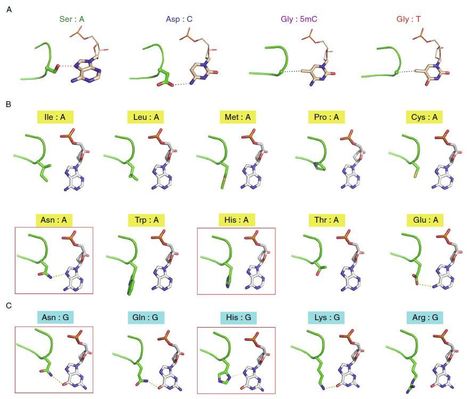
Transcription activator-like (TAL) effectors specifically bind to double stranded (ds) DNA through a central domain of tandem repeats. Each TAL effector (TALE) repeat comprises 33–35 amino acids and recognizes one specific DNA base through a highly variable residue at a fixed position in the repeat. Structural studies have revealed the molecular basis of DNA recognition by TALE repeats. Examination of the overall structure reveals that the basic building block of TALE protein, namely a helical hairpin, is one-helix shifted from the previously defined TALE motif. Here we wish to suggest a structure-based re-demarcation of the TALE repeat which starts with the residues that bind to the DNA backbone phosphate and concludes with the base-recognition hyper-variable residue. This new numbering system is consistent with the α-solenoid superfamily to which TALE belongs, and reflects the structural integrity of TAL effectors. In addition, it confers integral number of TALE repeats that matches the number of bound DNA bases. We then present fifteen crystal structures of engineered dHax3 variants in complex with target DNA molecules, which elucidate the structural basis for the recognition of bases adenine (A) and guanine (G) by reported or uncharacterized TALE codes. Finally, we analyzed the sequence-structure correlation of the amino acid residues within a TALE repeat. The structural analyses reported here may advance the mechanistic understanding of TALE proteins and facilitate the design of TALEN with improved affinity and specificity.
|
|
Scooped by
dromius
March 13, 2014 4:07 AM
|
(via T. Lahaye, thx) Copeland et al, 2014 TALEs, CRISPR/Cas, and sRNAs can be easily fashioned to bind any specific sequence of DNA (TALEs, CRISPR/Cas) or RNA (sRNAs) because of the simple rules governing their interactions with nucleic acids. This unique property enables these tools to repress the expression of genes at the transcriptional or post-transcriptional levels, respectively, without prior manipulation of cis-acting and/or chromosomal target DNA sequences. These tools are now being harnessed by synthetic biologists, particularly those in the eukaryotic community, for genome-wide regulation, editing, or epigenetic studies. Here we discuss the exciting opportunities for using TALEs, CRISPR/Cas, and sRNAs as synthetic trans-acting regulators in prokaryotes.
|
|
Scooped by
dromius
March 11, 2014 11:47 AM
|
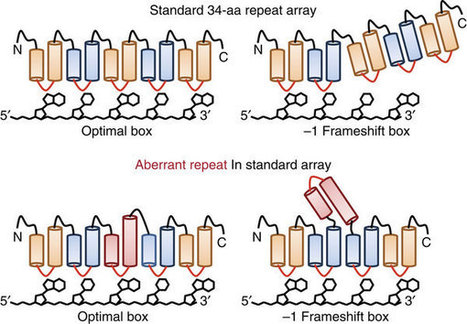
(via T. Lahaye, thx) Richter et al, 2014 So far, TALE repeats are described to bind as a consecutive array to a consecutive DNA sequence, in which each repeat independently recognizes a single DNA base. This modular protein architecture enables the design of any desired DNA-binding specificity for biotechnology applications. Here we report that natural TALE repeats of unusual amino-acid sequence length break the strict one repeat-to-one base pair binding mode and introduce a local flexibility to TALE–DNA binding. This flexibility allows TALEs and TALE nucleases to recognize target sequence variants with single nucleotide deletions. The flexibility also allows TALEs to activate transcription at allelic promoters that otherwise confer resistance to the host plant.
|
|
Scooped by
dromius
March 7, 2014 6:28 AM
|
de Lange et al, 2014 Whether rice, yeast, or fly there is barely a model organism not yet reached by transcription activator like effectors (TALEs) and their derivative fusion proteins. Insights into fundamental biology are now arriving on the back of work in the last years to develop these proteins as tools for molecular biology. This began with the publication of the simple cipher determining base-specific DNA recognition by TALEs in 2009 and now encompasses a huge variety of established fusion proteins mediating targeted modifications to transcriptome, genome, and recently, epigenome. Straightforward design and exquisite specificity, allowing unique sites to be targeted even within complex eukaryote genomes, are key to the popularity of this system. Synthetic biology is one field that is just beginning to make use of these properties with a number of recent publications demonstrating TALE-mediated regulation of synthetic genetic circuits. Intense interest has surrounded the CRISPR/Cas9 system within the last twelve months and it is already proving its mettle as a tool for targeted gene modifications and transcriptional regulation. However, questions over off-target activity and means for independent regulation of multiple Cas9-guide RNA pairs will have to be resolved before this method enters into the synthetic biology toolbox. TALEs are already showing promise as regulators of synthetic biological systems, a role that will likely be developed further in the coming years.
|
|
Scooped by
dromius
February 27, 2014 3:10 AM
|
Holkers et al, 2014 Transcription activator-like effector nucleases (TALENs) are designed to cut the genomic DNA at specific chromosomal positions. The resulting DNA double strand break activates cellular repair pathways that can be harnessed for targeted genome modifications. TALENs thus constitute a powerful tool to interrogate the function of DNA sequences within complex genomes. Moreover, their high DNA cleavage activity combined with a low cytotoxicity make them excellent candidates for applications in human gene therapy. Full exploitation of these large and repeat-bearing nucleases in human cell types will benefit largely from using the adenoviral vector (AdV) technology. The genetic stability and the episomal nature of AdV genomes in conjunction with the availability of a large number of AdV serotypes able to transduce various human cell types make it possible to achieve high-level and transient expression of TALENs in numerous target cells, regardless of their mitotic state. Here, we describe a set of protocols detailing the rescue, propagation and purification of TALEN-encoding AdVs. Moreover, we describe procedures for the characterization and quantification of recombinant viral DNA present in the resulting AdV preparations. The protocols are preceded by information about their underlying principles and applied in the context of second-generation capsid-modified AdVs expressing TALENs targeted to the AAVS1 “safe harbor” locus on human chromosome 19.
|
|
Scooped by
dromius
February 26, 2014 9:05 AM
|
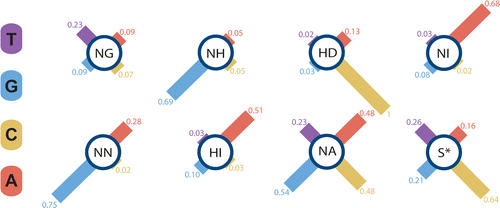
(via T. Lahaye, thx) Juillerat et al, 2014 A key issue when designing and using DNA-targeting nucleases is specificity. Ideally, an optimal DNA-targeting tool has only one recognition site within a genomic sequence. In practice, however, almost all designer nucleases available today can accommodate one to several mutations within their target site. The ability to predict the specificity of targeting is thus highly desirable. Here, we describe the first comprehensive experimental study focused on the specificity of the four commonly used repeat variable diresidues (RVDs; NI:A, HD:C, NN:G and NG:T) incorporated in transcription activator-like effector nucleases (TALEN). The analysis of >15 500 unique TALEN/DNA cleavage profiles allowed us to monitor the specificity gradient of the RVDs along a TALEN/DNA binding array and to present a specificity scoring matrix for RVD/nucleotide association. Furthermore, we report that TALEN can only accommodate a relatively small number of position-dependent mismatches while maintaining a detectable activity at endogenous loci in vivo, demonstrating the high specificity of these molecular tools. We thus envision that the results we provide will allow for more deliberate choices of DNA binding arrays and/or DNA targets, extending our engineering capabilities.
|
|
Scooped by
dromius
February 24, 2014 3:25 AM
|
(via T. Lahaye, thx) Li et al, 2014 Human pluripotent stem cells (hPSCs) offer unprecedented opportunities to study cellular differentiation and model human diseases. The ability to precisely modify any genomic sequence holds the key to realizing the full potential of hPSCs. Thanks to the rapid development of novel genome editing technologies driven by the enormous interest in the hPSC field, genome editing in hPSCs has evolved from being a daunting task a few years ago to a routine procedure in most laboratories. Here, we provide an overview of the mainstream genome editing tools, including zinc finger nucleases, transcription activator-like effector nucleases, clustered regularly interspaced short palindromic repeat/CAS9 RNA-guided nucleases, and helper-dependent adenoviral vectors. We discuss the features and limitations of these technologies, as well as how these factors influence the utility of these tools in basic research and therapies.
|
|
Scooped by
dromius
February 24, 2014 2:50 AM
|
Chen et al, 2014 Targeted gene mutagenesis is a powerful tool for elucidating gene function and facilitating genetic improvement in rice. TALENs (transcription activator-like effector nucleases), consisting of a custom TALE DNA binding domain fused to a nonspecific FokI cleavage domain, are one of the most efficient genome engineering methods developed to date. The technology of TALENs allows DNA double-strand breaks (DSBs) to be introduced into predetermined chromosomal loci. DSBs trigger DNA repair mechanisms and can result in loss of gene function by error-prone non-homologous end joining (NHEJ), or they can be exploited to modify gene function or activity by precise homologous recombination (HR). In this paper, we describe a detailed protocol for constructing TALEN expression vectors, assessing nuclease activities in vivo using rice protoplast-based assays, generating and introducing TALEN DNAs into embryogenic calluses of rice and identifying TALEN-generated mutations at targeted genomic sites. Using these methods, T0 rice plants resulting from TALEN mutagenesis can be produced within 4–5 months.
|
|
Scooped by
dromius
February 20, 2014 4:00 AM
|
Chen & Gao 2013 Precise genome modification with engineered nucleases is a powerful tool for studying basic biology and applied biotechnology. Transcription activator-like effector nucleases (TALENs), consisting of an engineered specific (TALE) DNA binding domain and a Fok I cleavage domain, are newly developed versatile reagents for genome engineering in different organisms. Because of the simplicity of the DNA recognition code and their modular assembly, TALENs can act as customizable molecular DNA scissors inducing double-strand breaks (DSBs) at given genomic location. Thus, they provide a valuable approach to targeted genome modifications such as mutations, insertions, replacements or chromosome rearrangements. In this article, we review the development of TALENs, and summarize the principles and tools for TALEN-mediated gene targeting in plant cells, as well as current and potential strategies for use in plant research and crop improvement.
|