Your new post is loading...

|
Scooped by
dromius
November 27, 2014 1:51 PM
|
(via T. Schreiber, thx!) Sprink et al, 2014 Genome editing technologies using sequence specific nucleases (SSNs) became a tremendously powerful and precise tool for reverse genetic approaches and applied biology. Transcription activator-like effector nucleases (TALENs) in particular, consisting of a free designable DNA binding domain and a nuclease, have been exploited today by a huge number of approaches in many different organisms. The convenience of designing the DNA binding domain and straightforward protocols for their assembly, as well as the broad number of applications in different scientific fields made it Natures method of the year 2011. TALENs act as molecular scissors by introducing double strand breaks (DSBs) to the DNA at a given location. The DSBs are subsequently repaired by the cell itself using different repair pathways such as non-homologous end joining (NHEJ) or homologous recombination (HR). These mechanisms can lead to deletions, insertions, replacements or larger chromosomal rearrangements. By offering a template DNA it is possible to channel the repair in direction of HR. In this article we review the recent findings in the field of SSN approaches with emphasis on plants.
|
|
Rescooped by
dromius
from Plant Genomics
November 25, 2014 3:55 AM
|
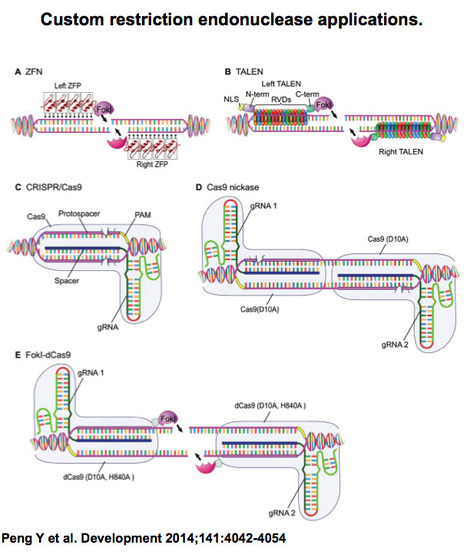
Chen et al, 2014 Genetic modification has long provided an approach for “reverse genetics”, analyzing gene function and linking DNA sequence to phenotype. However, traditional genome editing technologies have not kept pace with the soaring progress of the genome sequencing era, as a result of their inefficiency, time-consuming and labor-intensive methods. Recently, invented genome modification technologies, such as ZFN (Zinc Finger Nuclease), TALEN (Transcription Activator-Like Effector Nuclease), and CRISPR/Cas9 nuclease (Clustered Regularly Interspaced Short Palindromic Repeats/Cas9 nuclease) can initiate genome editing easily, precisely and with no limitations by organism. These new tools have also offered intriguing possibilities for conducting functional large-scale experiments. In this review, we begin with a brief introduction of ZFN, TALEN, and CRISPR/Cas9 technologies, then generate an extensive prediction of effective TALEN and CRISPR/Cas9 target sites in the genomes of a broad range of taxonomic species. Based on the evidence, we highlight the potential and practicalities of TALEN and CRISPR/Cas9 editing in non-model organisms, and also compare the technologies and test interesting issues such as the functions of candidate domesticated, as well as candidate genes in life-environment interactions. When accompanied with a high-throughput sequencing platform, we forecast their potential revolutionary impacts on evolutionary and ecological research, which may offer an exciting prospect for connecting the gap between DNA sequence and phenotype in the near future.
Via Biswapriya Biswavas Misra
|
|
Scooped by
dromius
November 21, 2014 4:05 AM
|
(via T. Schreiber, thx) Nakade et al, 2014 Genome engineering using programmable nucleases enables homologous recombination (HR)-mediated gene knock-in. However, the labour used to construct targeting vectors containing homology arms and difficulties in inducing HR in some cell type and organisms represent technical hurdles for the application of HR-mediated knock-in technology. Here, we introduce an alternative strategy for gene knock-in using transcription activator-like effector nucleases (TALENs) and clustered regularly interspaced short palindromic repeats (CRISPR)/CRISPR-associated 9 (Cas9) mediated by microhomology-mediated end-joining, termed the PITCh (Precise Integration into Target Chromosome) system. TALEN-mediated PITCh, termed TAL-PITCh, enables efficient integration of exogenous donor DNA in human cells and animals, including silkworms and frogs. We further demonstrate that CRISPR/Cas9-mediated PITCh, termed CRIS-PITCh, can be applied in human cells without carrying the plasmid backbone sequence. Thus, our PITCh-ing strategies will be useful for a variety of applications, not only in cultured cells, but also in various organisms, including invertebrates and vertebrates.
|
|
Scooped by
dromius
November 14, 2014 2:15 PM
|
(via T. Schreiber, thx) Majerle et al, 2014 The high mutation rate of the human immunodeficiency virus type 1 (HIV-1) virus is a major problem since it evades the function of antibodies and chemical inhibitors. Here, we demonstrate a viral detection strategy based on synthetic biology principles to detect a specific viral function rather than a particular viral protein. The resistance caused by mutations can be circumvented since the mutations that cause the loss of function also incapacitate the virus. Many pathogens encode proteases that are essential for their replication and that have a defined substrate specificity. A genetically encoded sensor composed of a fused membrane anchor, viral protease target site, and an orthogonal transcriptional activator was engineered into a human cell line. The HIV-1 protease released the transcriptional activator from the membrane, thereby inducing transcription of the selected genes. The device was still strongly activated by clinically relevant protease mutants that are resistant to protease inhibitors. In the future, a similar principle could be applied to detect also other pathogens and functions.
|
|
Scooped by
dromius
November 12, 2014 5:32 AM
|
(via T. Lahaye, thx) Umasankar et al, 2014 Clathrin-mediated endocytosis is an evolutionarily ancient membrane transport system regulating cellular receptivity and responsiveness. Plasmalemma clathrin-coated structures range from unitary domed assemblies to expansive planar constructions with internal or flanking invaginated buds. Precisely how these morphologically-distinct coats are formed, and whether all are functionally equivalent for selective cargo internalization is still disputed. We have disrupted the genes encoding a set of early arriving clathrin-coat constituents, FCHO1 and FCHO2, in HeLa cells. Endocytic coats do not disappear in this genetic background; rather clustered planar lattices predominate and endocytosis slows, but does not cease. The central linker of FCHO proteins acts as an allosteric regulator of the prime endocytic adaptor, AP-2. By loading AP-2 onto the plasma membrane, FCHO proteins provide a parallel pathway for AP-2 activation and clathrin-coat fabrication. Further, the steady-state morphology of clathrin-coated structures appears to be a manifestation of the availability of the muniscin linker during lattice polymerization. Clathrin-mediated endocytosis is an evolutionarily ancient membrane transport system regulating cellular receptivity and responsiveness. Plasmalemma clathrin-coated structures range from unitary domed assemblies to expansive planar constructions with internal or flanking invaginated buds. Precisely how these morphologically-distinct coats are formed, and whether all are functionally equivalent for selective cargo internalization is still disputed. We have disrupted the genes encoding a set of early arriving clathrin-coat constituents, FCHO1 and FCHO2, in HeLa cells. Endocytic coats do not disappear in this genetic background; rather clustered planar lattices predominate and endocytosis slows, but does not cease. The central linker of FCHO proteins acts as an allosteric regulator of the prime endocytic adaptor, AP-2. By loading AP-2 onto the plasma membrane, FCHO proteins provide a parallel pathway for AP-2 activation and clathrin-coat fabrication. Further, the steady-state morphology of clathrin-coated structures appears to be a manifestation of the availability of the muniscin linker during lattice polymerization. - See more at: http://elifesciences.org/content/3/e04137.abstract?maxtoshow=&hits=10&RESULTFORMAT=1&andorexacttitle=and&andorexacttitleabs=and&fulltext=TAL%20effector&andorexactfulltext=phrase&searchid=1&FIRSTINDEX=0&sortspec=date&fdate=1/1/1753&tdate=12/31/2014&resourcetype=HWCIT#sthash.SZlgnto1.dpufClathrin-mediated endocytosis is an evolutionarily ancient membrane transport system regulating cellular receptivity and responsiveness. Plasmalemma clathrin-coated structures range from unitary domed assemblies to expansive planar constructions with internal or flanking invaginated buds. Precisely how these morphologically-distinct coats are formed, and whether all are functionally equivalent for selective cargo internalization is still disputed. We have disrupted the genes encoding a set of early arriving clathrin-coat constituents, FCHO1 and FCHO2, in HeLa cells. Endocytic coats do not disappear in this genetic background; rather clustered planar lattices predominate and endocytosis slows, but does not cease. The central linker of FCHO proteins acts as an allosteric regulator of the prime endocytic adaptor, AP-2. By loading AP-2 onto the plasma membrane, FCHO proteins provide a parallel pathway for AP-2 activation and clathrin-coat fabrication. Further, the steady-state morphology of clathrin-coated structures appears to be a manifestation of the availability of the muniscin linker during lattice polymerization. - See more at: http://elifesciences.org/content/3/e04137.abstract?maxtoshow=&hits=10&RESULTFORMAT=1&andorexacttitle=and&andorexacttitleabs=and&fulltext=TAL%20effector&andorexactfulltext=phrase&searchid=1&FIRSTINDEX=0&sortspec=date&fdate=1/1/1753&tdate=12/31/2014&resourcetype=HWCIT#sthash.SZlgnto1.dpuf
|
|
Scooped by
dromius
November 12, 2014 4:59 AM
|
(via T. Lahaye, thx) Werner & Gossen 2014 We created tet operator (tetO)-specific TALEs (tetTALEs), with an identical DNA-binding site as the Tet repressor (TetR) and the TetR-based transcription factors that are extensively used in eukaryotic transcriptional control systems. Different constellations of tetTALEs and tetO modified chromosomal transcription units were analyzed for their efficacy in mammalian cells. We find that tetTALE-silencers can entirely abrogate expression from the strong human EF1α promoter when binding upstream of the transcriptional control sequence. Remarkably, the DNA-binding domain of tetTALE alone can effectively counteract trans-activation mediated by the potent tettrans-activator and also directly interfere with RNA polymerase II transcription initiation from the strong CMV promoter. Our results demonstrate that TALEs can act as highly versatile tools in genetic engineering, serving as trans-activators, trans-silencers and also competitive repressors.
|
|
Scooped by
dromius
November 6, 2014 4:47 AM
|
(via T. Schreiber, thx) Yao et al, 2014 Pigs are ideal organ donors for xenotransplantation and an excellent model for studying human diseases, such as neurodegenerative disease. Transcription activator-like effector nucleases (TALENs) are used widely for gene targeting in various model animals. Here, we developed a strategy using TALENs to target the GGTA1, Parkin and DJ-1 genes in the porcine genome using Large White porcine fibroblast cells without any foreign gene integration. In total, 5% (2/40), 2.5% (2/80), and 22% (11/50) of the obtained colonies of fibroblast cells were mutated for GGTA1, Parkin, and DJ-1, respectively. Among these mutant colonies, over 1/3 were bi-allelic knockouts (KO), and no off-target cleavage was detected. We also successfully used single-strand oligodeoxynucleotides to introduce a short sequence into the DJ-1 locus. Mixed DJ-1 mutant colonies were used as donor cells for somatic cell nuclear transfer (SCNT), and three female piglets were obtained (two were bi-allelically mutated, and one was mono-allelically mutated). Western blot analysis showed that the expression of the DJ-1 protein was disrupted in KO piglets. These results imply that a combination of TALENs technology with SCNT can efficiently generate bi-allelic KO pigs without the integration of exogenous DNA. These DJ-1 KO pigs will provide valuable information for studying Parkinson's disease.
|
|
Scooped by
dromius
November 2, 2014 11:47 AM
|
(via T. Schreiber, thx) Lau et al, 2014 Virus-derived gene transfer vectors have been successfully employed to express the transcription activator-like effector nucleases (TALENs) in mammalian cells. Since the DNA-binding domains of TALENs consist of the variable di-residue (RVD)-containing tandem repeat modules and virus genome with repeated sequences is susceptible to genetic recombination, we investigated several factors that might affect TALEN cleavage efficiency of baculoviral vectors. Using a TALEN system designed to target the AAVS1 locus, we observed increased sequence instability of the TALE repeat arrays when a higher multiplicity of infection (MOI) of recombinant viruses was used to produce the baculoviral vectors. We also detected more deleterious mutations in the TALE DNA-binding domains when both left and right TALEN arms were placed into a single expression cassette as compared to the viruses containing one arm only. The DNA sequence changes in the domains included deletion, addition, substitution, and DNA strand exchange between the left and right TALEN arms. Based on these observations, we have developed a protocol using a low MOI to produce baculoviral vectors expressing TALEN left and right arms separately. Cotransduction of the viruses produced by this optimal protocol provided an improved TALEN cleavage efficiency and enabled effective site-specific transgene integration in human cells.
|
|
Scooped by
dromius
October 3, 2014 3:31 AM
|
Gupta and Musunuru, 2014 This review will outline the recent development of genome-editing technology, culminating with the use of CRISPR-Cas9 to generate novel mammalian models of disease. While the road to using this same technology for treatment of human disease is long, the pace of innovation over the past five years and early successes in model systems build anticipation for this prospect.
|
|
Scooped by
dromius
October 2, 2014 3:30 PM
|
(via T. Schreiber) Shin et al, 2014 Precise HR-mediated genome editing is still technically challenging in zebrafish. Here, we establish a GFP reporter system for measuring the frequency of HR events in live zebrafish embryos. By co-injecting a TALE nuclease and GFP reporter targeting constructs with homology arms of different size, we defined the length of homology arms that increases the recombination efficiency. In addition, we found that the configuration of the targeting construct can be a crucial parameter in determining the efficiency of HR-mediated genome engineering. Implementing these modifications improved the efficiency of zebrafish knock-in generation, with over 10% of the injected F0 animals transmitting gene-targeting events through their germline. We generated two HR-mediated insertion alleles of sox2 and gfap loci that express either superfolder GFP (sfGFP) or tandem dimeric Tomato (tdTomato) in a spatiotemporal pattern that mirrors the endogenous loci. This efficient strategy provides new opportunities not only to monitor expression of endogenous genes and proteins and follow specific cell types in vivo, but it also paves the way for other sophisticated genetic manipulations of the zebrafish genome.
|
|
Scooped by
dromius
October 2, 2014 3:32 AM
|
Harrison and Studholme, 2014 Xanthomonas axonopodis pathovar vasculorum strain NCPPB 900 was isolated from sugarcane on Reunion island in 1960. Consistent with its belonging to fatty acid type D, multi-locus sequence analysis confirmed that NCPPB 900 falls within the species X. axonopodis. This genome harbours sequences similar to plasmids pXCV183 from X. campestris pv. vesicatoria 85-10 and pPHB194 from Burkholderia pseudomallei. Its repertoire of predicted effectors includes homologues of XopAA, XopAD, XopAE, XopB, XopD, XopV, XopZ, XopC and XopI and transcriptional activator-like (TAL) effectors and it is predicted to encode a novel phosphonate natural product also encoded by the genome of the phylogenetically distant X. vasicola pv. vasculorum. Availability of this novel genome sequence may facilitate the study of interactions between xanthomonads and sugarcane, a host-pathogen system that appears to have evolved several times independently within the genus Xanthomonas and may also provide a source of target sequences for molecular detection and diagnostics.
|
|
Scooped by
dromius
September 30, 2014 2:09 AM
|
(via T. Lahaye, thx) Reyon et al, 2014 This unit describes a detailed protocol for the recently described fast ligation-based automatable solid-phase high-throughput (FLASH) assembly method. FLASH enables automated high-throughput construction of engineered TALE repeats using an automated liquid handling robot or manually using a multichannel pipet. Using the automated approach, a single researcher can construct up to 96 DNA fragments encoding TALE repeat arrays of various lengths in a single day, and then clone these to construct sequence-verified TALEN or TALE-TF expression plasmids in a week or less. Plasmids required for FLASH are available by request from the Joung lab (http://eGenome.org). This unit also describes improvements to the Zinc Finger and TALE Targeter (ZiFiT Targeter) web server (http://ZiFiT.partners.org) that facilitate the design and construction of FLASH TALE repeat arrays in high throughput.
|
|
Scooped by
dromius
September 26, 2014 9:29 AM
|
(via T. Lahaye, thx) Transcription factors (TFs) act within wider regulatory networks to control cell identity and fate. Numerous TFs, including Scl (Tal1) and PU.1 (Spi1), are known regulators of developmental and adult haematopoiesis, but how they act within wider TF networks is still poorly understood. Transcription activator-like effectors (TALEs) are a novel class of genetic tool based on the modular DNA-binding domains of Xanthomonas TAL proteins, which enable DNA sequence-specific targeting and the manipulation of endogenous gene expression. Here, we report TALEs engineered to target the PU.1-14kb and Scl+40kb transcriptional enhancers as efficient new tools to perturb the expression of these key haematopoietic TFs. We confirmed the efficiency of these TALEs at the single-cell level using high-throughput RT-qPCR, which also allowed us to assess the consequences of both PU.1 activation and repression on wider TF networks during developmental haematopoiesis. Combined with comprehensive cellular assays, these experiments uncovered novel roles for PU.1 during early haematopoietic specification. Finally, transgenic mouse studies confirmed that the PU.1-14kb element is active at sites of definitive haematopoiesis in vivo and PU.1 is detectable in haemogenic endothelium and early committing blood cells. We therefore establish TALEs as powerful new tools to study the functionality of transcriptional networks that control developmental processes such as early haematopoiesis.
|
|
|
Scooped by
dromius
November 25, 2014 5:32 AM
|
(via T. Schreiber, thx) Ikmi et al, 2014 Non-bilaterian phyla represent key lineages for exploring the evolutionary history of early animals. However, despite an increasing number of sequenced genomes from early-branching metazoans, efficient and reproducible methodologies for analysis of gene function remain a major challenge. Here we report the utilization of the TALEN and CRISPR/Cas9 systems to induce targeted mutations and homologous recombination-mediated transgenesis in the sea anemone Nematostella vectensis. We also present a new method to isolate genetically modified animals using engineered selection cassettes introduced by homologous recombination. Taken together, these methods will permit sophisticated gain- and loss-of-function analyses in Nematostella and perhaps other early metazoan species that allow for zygotic injection.
|
|
Scooped by
dromius
November 25, 2014 2:27 AM
|
(via T. Schreiber, thx) Araki & Ishii 2014 Genome editing technology, including zinc finger nucleases (ZFNs), transcription activator-like effector nucleases (TALENs), and clustered regularly interspaced short palindromic repeat (CRISPR)/Cas, has enabled far more efficient genetic engineering even in non-human primates. This biotechnology is more likely to develop into medicine for preventing a genetic disease if corrective genome editing is integrated into assisted reproductive technology, represented by in vitro fertilization. Although rapid advances in genome editing are expected to make germline gene correction feasible in a clinical setting, there are many issues that still need to be addressed before this could occur. We herein examine current status of genome editing in mammalian embryonic stem cells and zygotes and discuss potential issues in the international regulatory landscape regarding human germline gene modification. Moreover, we address some ethical and social issues that would be raised when each country considers whether genome editing-mediated germline gene correction for preventive medicine should be permitted.
|
|
Rescooped by
dromius
from Amazing Science
November 17, 2014 1:13 PM
|
Recent advances in the targeted modification of complex eukaryotic genomes have unlocked a new era of genome engineering. From the pioneering work using zinc-finger nucleases (ZFNs), to the advent of the versatile and specific TALEN systems, and most recently the highly accessible CRISPR/Cas9 systems, we now possess an unprecedented ability to analyze developmental processes using sophisticated designer genetic tools. Excitingly, these robust and simple genomic engineering tools also promise to revolutionize developmental studies using less well established experimental organisms.
Modern developmental biology was born out of the fruitful marriage between traditional embryology and genetics. Genetic tools, together with advanced microscopy techniques, serve as the most fundamental means for developmental biologists to elucidate the logistics and the molecular control of growth, differentiation and morphogenesis. For this reason, model organisms with sophisticated and comprehensive genetic tools have been highly favored for developmental studies. Advances made in developmental biology using these genetically amenable models have been well recognized. The Nobel prize in Physiology or Medicine was awarded in 1995 to Edward B. Lewis, Christiane Nüsslein-Volhard and Eric F. Wieschaus for their discoveries on the ‘Genetic control of early structural development’ usingDrosophila melanogaster, and again in 2002 to John Sulston, Robert Horvitz and Sydney Brenner for their discoveries of ‘Genetic regulation of development and programmed cell death’ using the nematode worm Caenorhabditis elegans. These fly and worm systems remain powerful and popular models for invertebrate development studies, while zebrafish (Danio rerio), the dual frog species Xenopus laevis and Xenopus tropicalis, rat (Rattus norvegicus), and particularly mouse (Mus musculus) represent the most commonly used vertebrate model systems. To date, random or semi-random mutagenesis (‘forward genetic’) approaches have been extraordinarily successful at advancing the use of these model organisms in developmental studies. With the advent of reference genomic data, however, sequence-specific genomic engineering tools (‘reverse genetics’) enable targeted manipulation of the genome and thus allow previously untestable hypotheses of gene function to be addressed.
Via Dr. Stefan Gruenwald
|
|
Scooped by
dromius
November 13, 2014 5:52 AM
|
Sun & Zhao 2014 Sickle cell disease (SCD) is the most common human genetic disease which is caused by a single mutation of human β-globin (HBB) gene. The lack of long-term treatment makes the development of reliable cell and gene therapies highly desirable. Disease-specific patient-derived human induced pluripotent stem cells (hiPSCs) have great potential for developing novel cell and gene therapies. With the disease-causing mutations corrected in situ, patient-derived hiPSCs can restore normal cell functions and serve as a renewable autologous cell source for the treatment of genetic disorders. Here we successfully utilized transcription activator-like effector nucleases (TALENs), a recently emerged novel genome editing tool, to correct the SCD mutation in patient-derived hiPSCs. The TALENs we have engineered are highly specific and generate minimal off-target effects. In combination with piggyBac transposon, TALEN-mediated gene targeting leaves no residual ectopic sequences at the site of correction and the corrected hiPSCs retain full pluripotency and a normal karyotype. Our study demonstrates an important first step of using TALENs for the treatment of genetic diseases such as SCD, which represents a significant advance toward hiPSC-based cell and gene therapies.
|
|
Scooped by
dromius
November 12, 2014 5:08 AM
|
(via T. Lahaye, thx) Li et al, 2014 The development of nuclease-mediated Genome Editing represents a significant technological advance and may prove to be as important as PCR and DNA sequencing. Regardless, this technology puts the power of genome re-orchestration into the hands of research scientists for the first time and may lead to a paradigm shift in many biological fields. We present background information, so the reader has a greater understanding for the basis of this technology. We also discuss TAL effector nuclease (TALEN) as the latest engineered nuclease tool, its implementation and uses and present a yeast-based protocol that may be helpful in transitioning this technology to other fungal species.
|
|
Scooped by
dromius
November 11, 2014 4:43 AM
|
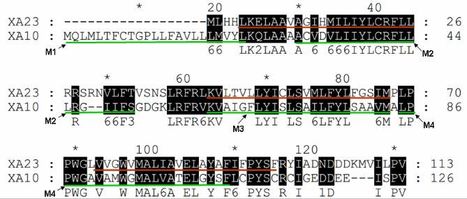
(via T. Schreiber, thx) Wang et al, 2014 The majority of plant disease resistance (R) genes encode proteins that share common structural features. However, the transcription activator-like effector (TALE) associated executor type R genes show no considerable sequence homology to any known R genes. We adopted a map-based cloning approach and TALE-based technology to isolate and characterize Xa23, a new executor R gene derived from the wild rice (Oryza rufipogon) that confers an extremely broad spectrum of resistance to bacterial blight caused by Xanthomonas oryzae pv. oryzae (Xoo). Xa23 encodes a 113-amino acid protein that shares 50% identity to the known executor R protein XA10. The predicted transmembrane helices in XA23 also overlap with those of XA10. Unlike Xa10, however, Xa23 transcription is specifically activated by AvrXa23, a TALE present in all examined Xoo field isolates. Moreover, the susceptible xa23 allele has an identical open reading frame of Xa23, but differs in promoter region by lacking the TALE binding-element (EBE) for AvrXa23. XA23 can trigger strong hypersensitive response in rice, tobacco and tomato. Our results provide the first evidence that plant genomes have an executor R gene family in which members execute their function and spectrum of disease resistance by recognizing the cognate TALEs in pathogen.
|
|
Scooped by
dromius
November 5, 2014 8:51 AM
|
(Jiang et al, 2013) In this review, various molecular tools used in filamentous fungi are compared and discussed, including methods for genetic transformation (e.g., protoplast transformation, electroporation, and microinjection), the construction of random mutant libraries (e.g., restriction enzyme mediated integration, transposon arrayed gene knockout, and Agrobacterium tumefaciens mediated transformation), and the analysis of gene function (e.g., RNA interference and transcription activator-like effector nucleases). We also focused on practical strategies that could enhance the efficiency of genetic manipulation in filamentous fungi, such as choosing a proper screening system and marker genes, assembling target-cassettes or vectors effectively, and transforming into strains that are deficient in the nonhomologous end joining pathway.
|
|
Scooped by
dromius
October 28, 2014 6:53 PM
|
The Biotechnology and Biological Sciences Research Council (BBSRC) has published a position statement on new and emerging techniques for crop improvement. These novel techniques, which can introduce precise genetic changes into plants, are currently being used in research labs as a tool to help understand the function of genes. Commercial applications are likely to follow: new and improved crop varieties produced with these methods could be available world-wide over the coming years.
|
|
Scooped by
dromius
October 3, 2014 1:30 AM
|
Perkel, 20014 Until relatively recently, the power of molecular biology was at once vast and limited. Researchers who wanted to knock out specific genes to see what they did mostly had to restrict such studies to mice, and specific strains at that. Now a new class of genome- and epigenome-editing tools is reshaping the landscape. From Arabidopsis to humans to zebrafish, researchers are finding that, generally speaking, when it comes to the genome, if they can dream it, they can build it.
|
|
Scooped by
dromius
October 2, 2014 4:16 AM
|
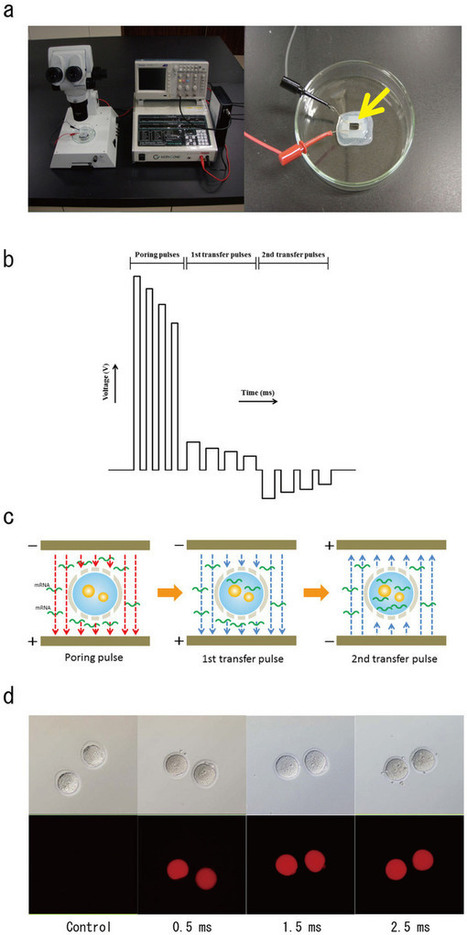
(via T. Schreiber, thx) Kaneko et al, 2014 The microinjection of endonucleases into embryos requires a high skill level, is time consuming, and may cause damage to embryos. Here, we demonstrate that the electroporation of endonuclease mRNAs into intact embryos can induce editing at targeted loci and efficiently produce knockout rats. It is noteworthy that the electroporation of ZFNs resulted in an embryonic survival rate (91%) and a genome-editing rate (73%) that were more than 2-fold higher than the corresponding rates from conventional microinjection. Electroporation technology provides a simple and effective method to produce knockout animals.
|
|
Scooped by
dromius
September 30, 2014 4:58 AM
|
(via T. Schreiber, thx) Lebar et al, 2014 Bistable switches are fundamental regulatory elements of complex systems, ranging from electronics to living cells. Designed genetic toggle switches have been constructed from pairs of natural transcriptional repressors wired to inhibit one another. The complexity of the engineered regulatory circuits can be increased using orthogonal transcriptional regulators based on designed DNA-binding domains. However, a mutual repressor-based toggle switch comprising DNA-binding domains of transcription-activator-like effectors (TALEs) did not support bistability in mammalian cells. Here, the challenge of engineering a bistable switch based on monomeric DNA-binding domains is solved via the introduction of a positive feedback loop composed of activators based on the same TALE domains as their opposing repressors and competition for the same DNA operator site. This design introduces nonlinearity and results in epigenetic bistability. This principle could be used to employ other monomeric DNA-binding domains such as CRISPR for applications ranging from reprogramming cells to building digital biological memory.
|
|
Scooped by
dromius
September 30, 2014 2:06 AM
|
(via T. Lahaye, thx) Mariano et al, 2014 We developed a TALEN scaffold which expresses both TALEN monomers from a single open reading frame in equal molar amount by linking both monomers with a 2A self-cleaving peptide sequence. This TALEN scaffold, named pTAL10, demonstrates higher levels of genome editing than co-transfected TALENs at similar levels of transfection efficiencies when analyzed for TALEN-induced small insertions and deletions.
|