Your new post is loading...

|
Scooped by
Loïc Lepiniec
July 28, 2017 3:10 AM
|
Significance
Seed development is biphasic, consisting of the morphogenesis phase when the basic plant body plan is established and the maturation phase when the embryo accumulates storage reserves and becomes desiccation tolerant. Despite the importance of seeds as human food and animal feed, little is known about the gene-regulatory networks that operate during these phases. We identified genes that are regulated genetically and transcriptionally by a master regulator of seed development, LEAFY COTYLEDON1 (LEC1). We show that LEC1 transcriptionally regulates genes involved in photosynthesis and other developmental processes in early and maturation genes in late seed development. Our results suggest that LEC1 partners with different transcription factors to regulate distinct gene sets and that LEC1 function is conserved in Arabidopsis and soybean seed development.
|
|
Rescooped by
Loïc Lepiniec
from Plant Sciences
July 28, 2017 1:55 AM
|
Scientists genetically engineer the world’s first blue chrysanthemum
By Elizabeth PennisiJul. 26, 2017 , 2:00 PM
True blue flowers are a rarity in nature—they occur only in select species like morning glories and delphiniums. Now, researchers have created a genuinely blue chrysanthemum by adding two genes to the normally pink or reddish flower. The advance could be applied to other species—and it may mean that florists wanting to hawk blooms of blue will no longer have to dye them.
“This [advance] is of great impact,” says Toru Nakayama, a plant biochemist at Tohoku University in Sendai, Japan, who was not involved with the work. There are several popular commercial species for which no true blue varieties exist, he notes.
Via Saclay Plant Sciences
IPS2 on the top ! INRA, UPSud, UPSaclay visiting IPS2 and SPS
from the left, L. Hemidy (INRA Versailles-Grignon), C. Caranta (INRA division of Plant Breeding and Biology), C. Paulin (UPSud Faculty of Sciences), M. Crespi (IPS2), P. Mauguin (INRA CEO), G. Bloch (Head University Paris-Saclay) and L. Lepiniec (SPS Labex) on the top of IPS2!
Via Saclay Plant Sciences, Life Sciences UPSaclay
You will find in this newsletter a lot of information about Research, Teaching and Training, Equipment, Innovation or Scientific animation in the SPS LabEx. You will see in particular the excellent results of the flagship projects during the first phase of the LabEx (2012-2016) and of partnership projects (SPS'Innov), as well as the results of the last call for research projects. Finally, do not forget to look at the agenda for the months to come and to note in particular the dates of the next SPS meeting (October 23-24, 2017, Versailles), the Saclay Plant'Innov' 2017 meeting (November 21, 2017, Orsay) and the second international SPS conference (July 4-6, 2018).
Via Saclay Plant Sciences, Life Sciences UPSaclay
|
|
Scooped by
Loïc Lepiniec
July 20, 2017 9:41 AM
|
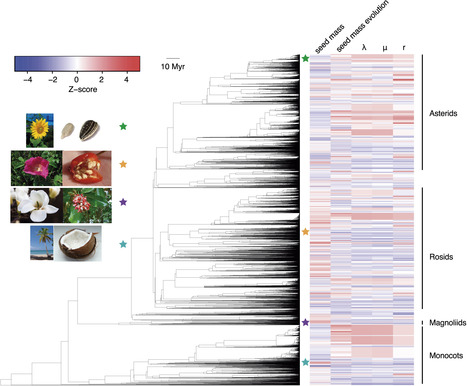
Author summary Why are some groups of flowering plants extremely diverse while others are very poor in species? Are the traits of species and the rate at which they evolve important in generating this uneven distribution of biodiversity? By using the largest available phylogenetic tree of plants coupled with an unparalleled trait dataset, we analysed how seed size and its rate of change across the phylogeny are correlated with the rate of species formation. Seed size is crucial to plant evolution because it is related to adaptation to environment and influences many aspects of plant life history, including dispersal, resistance to damage and colonisation potential. We found that faster rates of seed size change were associated with faster rates of speciation, probably by fostering the appearance of reproductive barriers between lineages. We also found that smaller seeded species speciated faster than larger seeded ones. These results underscore the importance of morphological traits, and particularly their rate of evolution, in promoting species divergence across one of the largest radiations of organisms on the planet.
|
|
Scooped by
Loïc Lepiniec
July 12, 2017 1:28 AM
|
Transcriptional repression involves a class of proteins called corepressors that link transcription factors to chromatin remodeling complexes. In plants such as Arabidopsis thaliana, the most prominent corepressor is TOPLESS (TPL), which plays a key role in hormone signaling and development. Here we present the crystallographic structure of the Arabidopsis TPL N-terminal region comprising the LisH and CTLH (C-terminal to LisH) domains and a newly identified third region, which corresponds to a CRA domain. Comparing the structure of TPL with the mammalian TBL1, which shares a similar domain structure and performs a parallel corepressor function, revealed that the plant TPLs have evolved a new tetramerization interface and unique and highly conserved surface for interaction with repressors. Using site-directed mutagenesis, we validated those surfaces in vitro and in vivo and showed that TPL tetramerization and repressor binding are interdependent. Our results illustrate how evolution used a common set of protein domains to create a diversity of corepressors, achieving similar properties with different molecular solutions.
|
|
Scooped by
Loïc Lepiniec
July 9, 2017 4:35 PM
|
Genomics and domestication of wheat
Modern wheat, which underlies the diet of many across the globe, has a long history of selection and crosses among different species. Avni et al. used the Hi-C method of genome confirmation capture to assemble and annotate the wild allotetraploid wheat (Triticum turgidum). They then identified the putative causal mutations in genes controlling shattering (a key domestication trait among cereal crops). They also performed an exome capture–based analysis of domestication among wild and domesticated genotypes of emmer wheat. The findings present a compelling overview of the emmer wheat genome and its usefulness in an agricultural context for understanding traits in modern bread wheat.
|
|
Scooped by
Loïc Lepiniec
July 4, 2017 7:40 AM
|
Abstract The CAPRICE (CPC) gene encodes a R3-type MYB transcription factor that promotes differentiation of root hair cells in Arabidopsis thaliana. Here, we have compared the functions of five CPC-homologous genes for epidermal cell differentiation using CPC promoter-driven transgenic plants. Our results show that TRIPTYCHON (TRY) and ENHANCER OF TRY AND CPC2 (ETC2) were less effective in root hair cell differentiation and were unstable in root epidermal cells when compared with CPC, ETC1 or CPC LIKE MYB3 (CPL3). The deletion of the extended C-terminal domain of TRY and ETC2 enhanced protein stability and conferred the ability to induce root hair cell differentiation on them. Treatment with MG132, a proteasome inhibitor, also led to the accumulation of TRY, indicating that TRY proteolysis is mediated by the proteasome-dependent pathway. Our results indicate that the CPC family includes relatively stable (CPC, ETC1 and CPL3) and unstable (TRY and ETC2) proteins that might be degraded by the proteasome. Our findings provide new insights into the regulatory mechanism of CPC family proteins that mediate root hair cell differentiation and should be useful in understanding epidermal development.
|
|
Scooped by
Loïc Lepiniec
June 13, 2017 2:40 AM
|
Plants and animals are very different, but they both exhibit similar information processing methods, new research shows.
|
|
Scooped by
Loïc Lepiniec
June 10, 2017 2:30 AM
|
DEADLINES EXTENDED
The 12th Triennial Conference of
The International Society for Seed Science
10 — 14 September, 2017 • Monterey, California USA
|
|
Scooped by
Loïc Lepiniec
June 8, 2017 3:13 PM
|
Chasing Scattered Genes: Identifying Specialized Metabolite Pathway Genes through Global Coexpression Analysis[OPEN]
Plants produce scores of specialized metabolites (SMs) to attract or repel the organisms around them and to cope with life in a variable environment. For thousands of years, we have been exploiting these compounds to feed, heal, and anoint us. Many more SMs remain to be discovered: The chemical constituents of only 15% of the estimated 350,000 plant species on Earth have thus far been explored (Wurtzel and Kutchan, 2016). Since SMs are generally not required for plant growth or reproduction, the underlying genes and pathways leading to their production have diversified greatly over time and are not well conserved among species, making them difficult to identify through standard homology searches. However, genes within an SM pathway can be identified through their shared regulatory network, since the successful production of an SM requires the underlying genes to be expressed at the right time and place. Searches for coexpressed genes from global gene expression data have shed light on SM pathways in various plants, but technical constraints and limited data have hampered such analyses.
|
|
Scooped by
Loïc Lepiniec
June 6, 2017 7:31 AM
|
Sperm cells are passive cargo of the pollen tube in plant fertilization
Sperm cells of seed plants have lost their motility and are trans- ported by the vegetative pollen tube cell for fertilization, but the extent to which they regulate their own transportation is a long-standing debate. Here we show that Arabidopsis lacking two bHLH transcription factors produces pollen without sperm cells. This abnormal pollen mostly behaves like the wild type and demonstrates that sperm cells are dispensable for normal pollen tube development.
Global warming severely affects flowering time and reproductive success of plants. Alternative splicing of pre-messenger RNA (mRNA) is an important mechanism underlying ambient temperature-controlled responses in plants, yet its regulation is poorly understood. An increase in temperature promotes changes in plant morphology as well as the transition from the vegetative to the reproductive phase in Arabidopsis thaliana via changes in splicing of key regulatory genes. The authors investigate whether a particular histone modification affects ambient temperature-induced alternative splicing and flowering time. They use a genome-wide approach and perform RNA-sequencing (RNA-seq) analyses and histone H3 lysine 36 tri-methylation (H3K36me3) chromatin immunoprecipitation sequencing (ChIP-seq) in plants exposed to different ambient temperatures. Analysis and comparison of these datasets reveal that temperature-induced differentially spliced genes are enriched in H3K36me3. Moreover, they found that reduction of H3K36me3 deposition causes alteration in temperature-induced alternative splicing. They also show that plants with mutations in H3K36me3 writers, eraser, or readers have altered high ambient temperature-induced flowering. Their results show a key role for the histone mark H3K36me3 in splicing regulation and plant plasticity to fluctuating ambient temperature. These findings open new perspectives for the breeding of crops that can better cope with environmental changes due to climate change.
Via Wilma van Esse
|
|
|
Scooped by
Loïc Lepiniec
July 28, 2017 3:04 AM
|
Plant scientists plan massive effort to sequence 10,000 genomes
By Dennis NormileJul. 27, 2017 , 8:00 AM
SHENZEN, CHINA—Hopes of sequencing the DNA of every living thing on Earth are taking a step forward with the announcement of plans to sequence at least 10,000 genomes representing every major clade of plants and eukaryotic microbes. Chinese sequencing giant BGI and the China National GeneBank (CNGB) held a workshop yesterday on the sidelines of the International Botanical Congress, being held this week in BGI's hometown of Shenzhen, to discuss what they are calling the 10KP plan. About 250 plant scientists participated in the discussions and "are raring to go," says Gane Ka-Shu Wong, a genomicist and bioinformaticist at University of Alberta in Edmonton, Canada.
The 10KP plan will be a key part of the Earth BioGenome Project (EBP), an ambitious and still evolving scheme to get at least rough sequence data on the 1.5 million eukaryotic species, starting with detailed sequences of one member of each of the 9000 eukaryotic families. The effort to sequence plants is moving ahead a bit faster than other aspects of EBP "because plant scientists are more collaborative," Wong says jokingly.
The 10KP plan is also building on a previous 1000 plant (1KP) transcriptome project. That effort, launched in 2012 and now nearing completion, was also led by BGI, where Wong is an associate director.
|
|
Scooped by
Loïc Lepiniec
July 26, 2017 7:26 AM
|
The transcription factor FUSCA3 (FUS3) acts as a major regulator of seed maturation in Arabidopsis. FUS3 is phosphorylated by the SnRK1 catalytic subunit AKIN10/SnRK1α1, which belongs to a conserved eukaryotic kinase complex involved in energy homeostasis. Here we show that AKIN10 and FUS3 share overlapping expression patterns during embryogenesis, and that FUS3 is phosphorylated by AKIN10 in embryo cell extracts. To understand the role of FUS3 phosphorylation, we generated fus3-3 plants carrying FUS3 phosphorylation-null (FUS3S>A) and phosphorylation-mimic (FUS3S>D) variants. While FUS3S>A and FUS3S>D rescued all the fus3-3 seed maturation defects, FUS3S>A showed reduced transcriptional activity and enhanced fus3-3 previously uncharacterized phenotypes. FUS3S>A embryos displayed increased seed abortion due to maternal FUS3S>A and delayed embryo development, which correlated with a strong decrease in seed yield (~50%). Accordingly, the akin10 and akin11 mutants displayed a frequency of seed abortion similar to fus3-3. When plants were grown at elevated temperature, most phenotypes were exaggerated in FUS3S>A plants, and progeny seedlings overall grew poorly, suggesting that phosphorylation of FUS3 plays an important role during early embryogenesis and under heat stress. Collectively, these results suggest that FUS3 phosphorylation and SnRK1 are required for embryogenesis and integration of environmental cues to ensure the survival of the progeny.
|
|
Scooped by
Loïc Lepiniec
July 24, 2017 11:28 AM
|
Summary
Maize grows on every continent save Antarctica and provides food and biofuels for millions of people. Now, researchers studying ancient and modern maize have found a clue to its popularity over the millennia: maize’s easily adjustable flowering time, which enabled ancient peoples to get the plant to thrive in diverse climates, according to several studies presented in July at the meeting of the Society for Molecular Biology and Evolution in Austin. The studies found hints of the genomic shifts behind such rapid change, and ancient DNA studies presented at the meeting began to clarify when maize flowering came under farmer control, revealing enormous adaptive potential that humans were able to exploit.
|
|
Scooped by
Loïc Lepiniec
July 21, 2017 2:20 AM
|
|
|
Scooped by
Loïc Lepiniec
July 18, 2017 2:05 AM
|
Plants are attractive platforms for synthetic biology and metabolic engineering. Plants’ modular and plastic body plans, capacity for photosynthesis, extensive secondary metabolism, and agronomic systems for large-scale production make them ideal targets for genetic reprogramming. However, efforts in this area have been constrained by slow growth, long life cycles, the requirement for specialized facilities, a paucity of efficient tools for genetic manipulation, and the complexity of multicellularity. There is a need for better experimental and theoretical frameworks to understand the way genetic networks, cellular populations, and tissue-wide physical processes interact at different scales. We highlight new approaches to the DNA-based manipulation of plants and the use of advanced quantitative imaging techniques in simple plant models such as Marchantia polymorpha. These offer the prospects of improved understanding of plant dynamics and new approaches to rational engineering of plant traits.
|
|
Scooped by
Loïc Lepiniec
July 11, 2017 2:33 PM
|
Arabidopsis (Arabidopsis thaliana) seed development requires the concomitant development of two zygotic compartments, the embryo and the endosperm. Following fertilization, the endosperm expands and the embryo grows invasively through the endosperm, which breaks down. Here we describe a structure we refer to as the embryo sheath that forms on the surface of the embryo as it starts to elongate. The sheath is deposited outside the embryonic cuticle, and incorporates endosperm-derived material rich in extensin-like molecules. Sheath production is dependent upon the activity of ZHOUPI, an endosperm-specific transcription factor necessary for endosperm degradation, embryo growth, embryo-endosperm separation and normal embryo cuticle formation. We show that the peptide, KERBEROS, whose expression is ZHOUPI-dependent, is necessary both for the formation of a normal embryo sheath and for embryo-endosperm separation. Finally, we show that the receptor-like kinases GSO1 and GSO2 are required for sheath deposition at the embryo surface but not for production of sheath material in the endosperm. We present a model in which sheath formation depends on the co-ordinated production of material in the endosperm and signalling within the embryo, highlighting the complex molecular interaction between these two tissues during early seed development.
|
|
Rescooped by
Loïc Lepiniec
from Plant Sciences
July 6, 2017 3:56 AM
|
The next SPS Meeting will take place on October 23-24, 2017, (INRA, Versailles), in front of the SPS International Scientific Advisory Board.
Registration for the scientific talks of October 24 is open and everyone is welcome to attend !
To allow scientists funded by SPS to present their latest findings in front of the Scientific Advisory Board, registration for October 23 is reserved for SPS members only or upon invitation for the representatives of our institutions and the ANR.
Tuesday October 24 9:00 am Welcome coffee 9:20 am Loïc Lepiniec Introduction 9:30 am Detlef Weigel Genetics and epigenetics of adaptation to the environment 10:15 am Karin Schumacher Title to come 11:00 am Coffee break 11:30 am Ove Nilsson FT paralogs control the annual growth cycle and latitudinal adaptation in Aspen trees 12:15 pm Anja Krieger-Liszkay Regulation of Photosynthetic Electron Transport: the role of the plastid terminal oxidase PTOX...
Via Saclay Plant Sciences
|
|
Scooped by
Loïc Lepiniec
June 27, 2017 3:02 PM
|
The plant hormone jasmonate (JA) promotes the degradation of JASMONATE ZIM-DOMAIN (JAZ) proteins to relieve repression on diverse transcription factors (TFs) that execute JA responses. However, little is known about how combinatorial complexity among JAZ–TF interactions maintains control over myriad aspects of growth, development, reproduction, and immunity.
We used loss-of-function mutations to define epistatic interactions within the core JA signaling pathway and to investigate the contribution of MYC TFs to JA responses in Arabidopsis thaliana.
Constitutive JA signaling in a jaz quintuple mutant (jazQ) was largely eliminated by mutations that block JA synthesis or perception. Comparison of jazQ and a jazQ myc2 myc3 myc4 octuple mutant validated known functions of MYC2/3/4 in root growth, chlorophyll degradation, and susceptibility to the pathogen Pseudomonas syringae. We found that MYC TFs also control both the enhanced resistance of jazQ leaves to insect herbivory and restricted leaf growth of jazQ. Epistatic transcriptional profiles mirrored these phenotypes and further showed that triterpenoid biosynthetic and glucosinolate catabolic genes are up-regulated in jazQ independently of MYC TFs.
Our study highlights the utility of genetic epistasis to unravel the complexities of JAZ–TF interactions and demonstrates that MYC TFs exert master control over a JAZ-repressible transcriptional hierarchy that governs growth–defense balance.
|
|
Scooped by
Loïc Lepiniec
June 10, 2017 3:43 PM
|
Transcription factors and their associated DNA binding sites are key regulatory elements of cellular differentiation, development, and environmental response. New tools that predict transcriptional regulation of biological processes are valuable to researchers studying both model and emerging-model plant systems. SeqEnrich predicts transcription factor networks from co-expressed Arabidopsis or Brassica napus gene sets. The networks produced by SeqEnrich are supported by existing literature and predicted transcription factor–DNA interactions that can be functionally validated at the laboratory bench. The program functions with gene sets of varying sizes and derived from diverse tissues and environmental treatments. SeqEnrich presents as a powerful predictive framework for the analysis of Arabidopsis and Brassica napus co-expression data, and is designed so that researchers at all levels can easily access and interpret predicted transcriptional circuits. The program outperformed its ancestral program ChipEnrich, and produced detailed transcription factor networks from Arabidopsis and Brassica napus gene expression data. The SeqEnrich program is ideal for generating new hypotheses and distilling biological information from large-scale expression data.
|
|
Scooped by
Loïc Lepiniec
June 8, 2017 3:15 PM
|
Glandular trichomes are metabolic cell factories with the capacity to produce large quantities of secondary metabolites. Little is known about the connection between central carbon metabolism and metabolic productivity for secondary metabolites in glandular trichomes. To address this gap in our knowledge, we performed comparative metabolomics, transcriptomics, proteomics, and 13C-labeling of type VI glandular trichomes and leaves from a cultivated (Solanum lycopersicum LA4024) and a wild (Solanum habrochaites LA1777) tomato accession. Specific features of glandular trichomes that drive the formation of secondary metabolites could be identified. Tomato type VI trichomes are photosynthetic but acquire their carbon essentially from leaf sucrose. The energy and reducing power from photosynthesis are used to support the biosynthesis of secondary metabolites, while the comparatively reduced Calvin-Benson-Bassham cycle activity may be involved in recycling metabolic CO2. Glandular trichomes cope with oxidative stress by producing high levels of polyunsaturated fatty acids, oxylipins, and glutathione. Finally, distinct mechanisms are present in glandular trichomes to increase the supply of precursors for the isoprenoid pathways. Particularly, the citrate-malate shuttle supplies cytosolic acetyl-CoA and plastidic glycolysis and malic enzyme support the formation of plastidic pyruvate. A model is proposed on how glandular trichomes achieve high metabolic productivity.
|
|
Scooped by
Loïc Lepiniec
June 7, 2017 2:25 AM
|
Seeds are heterogeneous storage reserves with wide array of storage compounds that include various soluble carbohydrates, starch polymer, storage proteins and lipids. These stored reserves comprise 70% of the world's caloric intake in the form of food and animal feed produced through sustainable agriculture, which contributes to food and nutritional security. Seed systems biology remains an enigmatic subject in understanding seed storage processes, maturation and pre-germinative metabolism. The reviews and research articles covered in this special issue of Plant Cell Reports highlight recent advances made in the area of seed biology that cover various systems biology applications such as gene regulatory networks, metabolomics, epigenetics and the role of micro-RNA in seed development.
|
|
Scooped by
Loïc Lepiniec
June 3, 2017 2:58 AM
|
|