Your new post is loading...

|
Scooped by
Gust MEES
August 31, 2012 8:42 AM
|
Think you do enough to secure your passwords, browsing, and networking? Prove it. Not all computer security is about tin foil hats and anonymous browsing. Everyone who uses a computer has a horse in the security race. For the purpose of this post, we're breaking down online security into four essential parts: passwords, browsers, at-home Wi-Fi and networking, and browsing on public Wi-Fi. Within those categories we'll give you a checklist of everything you should do, from the bare minimum to the tin-foil-hat best. Think you've done your due diligence with your security? Jump to any of the four sections below to see how you stack up (and boost your security where you may be lacking): - Password Security Checklist
- Browser Security Checklist
- Home Network Security Checklist
- Public Wi-Fi Security Checklist
Gust MEES: very good advice, please follow it... Read more: http://lifehacker.com/5938980/how-secure-are-you-online-the-checklist
|
|
Scooped by
Gust MEES
August 30, 2012 6:22 PM
|
|
|
Scooped by
Gust MEES
August 30, 2012 4:23 PM
|
|
|
Scooped by
Gust MEES
August 30, 2012 12:46 PM
|
One of the attack crews using the new Java CVE-2012-4681 vulnerability is the Nitro group that was traced to China and attacked chemical companies and defense contractors. Researchers say that one of the attack groups using the two new Java zero-day vulnerabilities is the same group that was behind an earlier targeted attack campaign from 2011. That group was traced back to China and was essentially running a spear-phishing campaign, but now the crew, known as Nitro, is using the Java vulnerabilities in Web-based attacks that install the Poison Ivy remote-access tool. The attacks have been going on for more than a week, researchers say, and the Nitro group apparently is reusing both their command-and-control servers and some of the file names for the malicious executables. There are two separate domains serving the Java exploit right now, and the two main executable files the attacks are using are named "Flash_update.exe" and "hi.exe". Read more: http://threatpost.com/en_us/blogs/use-java-zero-day-flaws-tied-nitro-attack-crew-083012
|
|
Scooped by
Gust MEES
August 30, 2012 2:56 AM
|
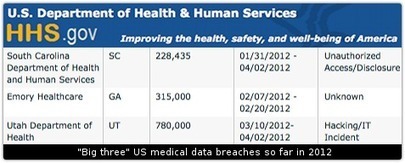
Indiana-based Cancer Care Group has lost server backups with data on 55,000 patients and staff from a parked car.
We have to ask, "Why would anyone, ever, leave an unencrypted laptop unattended ...
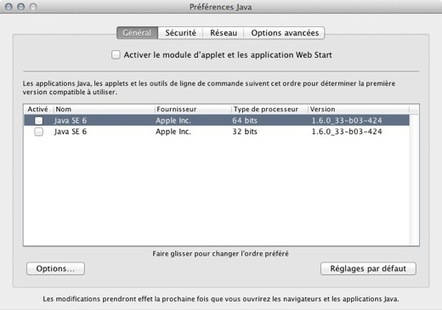
Actualité Apple : OS X : désactiver JAVA en attente d'un correctif de sécurité... JAVA ne se traine pas une formidable réputation en matière de sécurité, surtout sur nos Mac où Apple a souvent fait preuve d'une formidable lenteur pour mettre à jour la machine virtuelle JAVA. Désormais c'est Oracle qui préside aux destinées de la brique logicielle sur nos machines pommées. En attendant, si vous n'en avez pas un besoin immédiat et absolu, vous pouvez simplement désactiver JAVA pour régler la question. Pour cela, direction le dossier Utilitaires de votre dossier Applications. Lancez Préférences JAVA et, dans l'onglet gGénéral, désactivez Java SE 7 (oui, l'image montre un système avec JAVA 6). Et voilà. Pour réactiver, procédure inverse.
|
|
Scooped by
Gust MEES
August 29, 2012 1:29 PM
|
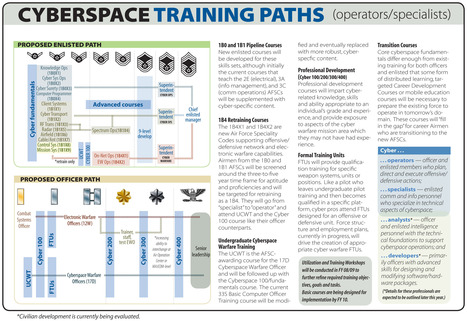
The Air Force Life Cycle Management Center (AFLCMC) posted a broad agency announcement [PDF] last week calling on contractors to submit concept papers detailing technological demonstrations of ‘cyberspace warfare operations’ (CWO) capabilities. The Air Force is looking to obtain CWO capabilities falling into a number of categories including: ‘cyberspace warfare attack’ and ‘cyberspace warfare support.’ The broad agency announcement defines ‘cyberspace warfare attack’ capabilities as those which would give them the ability to “destroy, deny, degrade, disrupt, deceive, corrupt, or usurp the adversaries [sic] ability to use the cyberspace domain for his advantage.” Read more: http://threatpost.com.mx/en_us/blogs/air-force-opnely-seeking-cyber-weapons-082812
|
|
Rescooped by
Gust MEES
from 21st Century Learning and Teaching
August 29, 2012 11:48 AM
|
Die Mozilla-Entwickler haben turnusmäßig neue Versionen ihrer Programme Firefox, Thunderbird und Seamonkey bereit gestellt. Darin haben sie bis zu 34 Sicherheitslücken geschlossen, die sie überwiegend als kritisch einstufen. ===> UPDATE!!! <===
|
|
Scooped by
Gust MEES
August 29, 2012 8:37 AM
|
Disable Java not Bob’s Java Jive (or JavaScript) A vulnerability in the most recent version of Java means that attackers can fool you into visiting a malicious or compromised web site and, without any interaction use the vulnerability to install malicious code onto your computer. It has already been used to install a well known backdoor, giving criminals remote control over the infected machine and been incorporated into several attack tool-kits, both professional and criminal. The fact that Java is a cross-platform environment means that it is relatively simple to create attack code for most major operating systems. In the absence of a patch for this widespread and already abused vulnerability, the best advice is simply to disable Java in your web browser and this is where the distinction between Java and JavaScript becomes key, otherwise you may very well end up disabling the wrong thing and remaining at risk. To disable Java in Internet Explorer: In the Tools menu of Internet Explorer, select Manage Add-Ons and disable Java™ Plug-in SSV Helper and Java 2™ Plug-in 2 SSV Helper To disable Java in Firefox (MacOS & Windows): In the Tools menu select Add-ons and disable the Java Deployment Toolkit, Java™ Platform and/or Java Applet Plug-in To disable Java in Google Chrome: Select the Wrench icon in the top right of the Chrome browser window, choose Settings and right at the bottom choose Show advanced settings. Find the Privacy section and click the Content Settings button. Find the Plug-ins section and click the Disable individual plug-ins, look for Java and hit the Disable link. That one is well-buried! To disable Java in Safari for MacOS: In the Safari menu, open the Preferences dialogue box and select Security. untick the box Enable Java To disable Java in Safari for Windows: Click the Gear wheel in the top right of the browser window and choose Preferences, select Security and untick the box Enable Java. JavaScript is a whole different security conversation, but for the purposes of this current vulnerability it is irrelevant. Image credit: Homini:)’s Flickr Photostream under creative commons. Read more: http://countermeasures.trendmicro.eu/disable-java-not-bobs-java-jive-or-javascript/#.UD4CfQccznw.twitter
|
|
Scooped by
Gust MEES
August 29, 2012 8:03 AM
|
|
|
Scooped by
Gust MEES
August 29, 2012 7:29 AM
|
Three websites which distributed copyrighted smartphone 'apps', or applications, have been shut down by law enforcement authorities in the US, in which the Department of Justice (DoJ) said was the first case involving "cell phone app marketplaces".27 Aug 2012 The DoJ said that the seizures were the result of "comprehensive enforcement action taken to prevent the infringement of copyrighted mobile device apps" involving international authorities, including those in France and the Netherlands. Visitors to any of the three sites - applanet.net, appbucket.net and snappzmarket.com - will now find a banner notifying them that the relevant domain name has been seized by the authorities and informing them that "wilful copyright infringement" is a federal crime. Read more: http://www.out-law.com/en/articles/2012/august/us-courts-order-first-seizure-of-android-app-piracy-domains/
|
|
Scooped by
Gust MEES
August 29, 2012 6:06 AM
|
Websense® ThreatSeeker® Network intercepted a malicious email campaign posing as antivirus notifications that warn users that their accounts may be blocked. These fake messages state that the victim's email address has been sending infected email to the mail server, and that the situation may be remedied if the user clicks a URL to download a free removal tool. The "free tool" is, of course, a malicious exectutable that connects to malicious websites, and then drops more executables on the victim's computer. This looks like a low-volume campaign, as we have seen (and blocked) approximately 2700 of this type of email yesterday and today.
Websense customers are protected from these threats by ACE™, our Advanced Classification Engine.
The email may contain a subject like this: [Symantec] - Your e-mail account may be blocked. The "from" address varies and may appear as:
scanner@symantec.com
scanonline@f-secure.com
symantec@verisign.com
scan@sophos.com
symantec@sophos.com
virscan@secureroot.com
noreply@verisign.com Read more: http://community.websense.com/blogs/securitylabs/archive/2012/08/28/malicious-e-mails-posing-as-anti-virus-notifications.aspx?cmpid=sltw
|
|
Scooped by
Gust MEES
August 29, 2012 5:23 AM
|
US Air Force Wants to Enhance Its Cyber Warfare Capabilities... The US Military has been successfully using cyber weapons for quite some time now, a speech held by Marine Lieutenant General Richard P. Mills at the AFCEA TechNet Land Forces conference revealed the other day. As it turns out, the US Air Force is also looking to enhance its cyber capabilities. ===> They explicitly say that they’re interested in cyberspace technologies that could help them destroy, deny, degrade, disrupt, deceive, corrupt or usurp the enemy’s ability to “use the cyberspace domain for his advantage.” <=== Read more: http://news.softpedia.com/news/US-Air-Force-Wants-to-Enhance-Its-Cyber-Warfare-Capabilities-288751.shtml?utm_source=dlvr.it&utm_medium=twitter
|
|
|
Scooped by
Gust MEES
August 31, 2012 8:35 AM
|
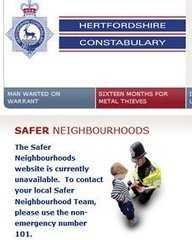
What appear to be computer logins and passwords for Hertfordshire Police officers are published online after the force website is hacked. The data, including phone numbers and IP addresses, relates to a number of officers in Safer Neighbourhood Teams. Part of the force's website has been taken down as a "precaution" while investigations continue. In a statement, the force said: "Hertfordshire Constabulary is currently investigating following the publication on the internet of information stored on a database linked to the public Safer Neighbourhoods pages of the external Constabulary website. Read more: http://www.bbc.co.uk/news/uk-england-beds-bucks-herts-19432487
|
|
Scooped by
Gust MEES
August 30, 2012 5:20 PM
|
|
|
Scooped by
Gust MEES
August 30, 2012 1:02 PM
|
A rather industrious piece of malware that - among other things - paves the way for other malware by disabling AV solutions and software update modules has been spotted spreading via several Instant Messaging applications (ICQ, Skype, GTalk, Pidgin, MSN, YIM) and Facebook: Gust MEES: For Newcomers to #IT-Security and its whole encyclopedia of technical words [YES, a whole dictionnary :(((, not funny anymore, but...]: AV means "Anti-Virus"... Apple related products and Mac users should get used to it now as there is NOW "NOBODYISPERFECT"!!! Learn it up from the beginning, sorry, MS users are used to it already and they have advantage of IT-Security knowledge now ;) Catch up ;) A challenge!? Read more: http://www.net-security.org/malware_news.php?id=2249
|
|
Scooped by
Gust MEES
August 30, 2012 10:20 AM
|
|
|
Scooped by
Gust MEES
August 30, 2012 1:34 AM
|
|
|
Scooped by
Gust MEES
August 30, 2012 1:18 AM
|
|
|
Rescooped by
Gust MEES
from 21st Century Learning and Teaching
August 29, 2012 12:31 PM
|
|
|
Scooped by
Gust MEES
August 29, 2012 8:52 AM
|
|
|
Scooped by
Gust MEES
August 29, 2012 8:24 AM
|
Vasco has announced that its Mydigipass authentication system has been incorporated into the WordPress platform. Launched earlier this year, Mydigipass is a token that allows a user to login to multiple web applications via one single sign-in, with the user logging into the web portal either directly on the Mydigipass website, or via a button on an approved website via the Mydigipass button, entering a user name, password and one-time password (OTP) generated by the token. Read more: http://www.scmagazineuk.com/wordpress-adds-vasco-one-time-password-technology/article/256391/
|
|
Scooped by
Gust MEES
August 29, 2012 7:40 AM
|
|
|
Scooped by
Gust MEES
August 29, 2012 6:12 AM
|
|
|
Scooped by
Gust MEES
August 29, 2012 5:39 AM
|
|