Your new post is loading...

|
Scooped by
Gust MEES
September 2, 2012 12:49 PM
|
Taiwan plans to beef up its cyberwar capabilities to counter a perceived threat from Chinese hackers targeting government and security websites. Taiwan will expand its cyberwar units next year while scaling back military spending due to budget constraints, the Taipei-based Liberty Times reported, citing a 2013 budget plan submitted by the National Security Bureau to parliament for approval. In the six months to June, hackers launched more than one million attacks on the bureau's website, making it one of the most heavily targeted government sites, the paper said. Read more: http://www.securityweek.com/taiwan-step-cyberwar-capabilities-report?utm_source=dlvr.it&utm_medium=twitter
|
|
Rescooped by
Gust MEES
from 21st Century Learning and Teaching
September 2, 2012 8:05 AM
|
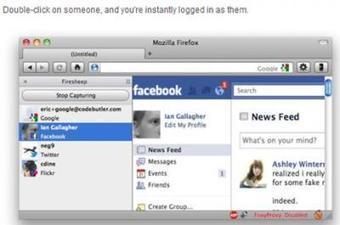
If you thought that capturing a user's social media session was only done by skilled hackers, now the Firesheep addon can allow even the truly clueless to become an Internet griefer. Even if you were drunk and surfing at a Wi-Fi hotspot, you probably wouldn't stand up and shout your username and password for anyone who might want it. But an attacker does not need to find out your username and password. If you thought that capturing a user's social media session was only done by skilled hackers, now the Firesheep addon can allow even the truly clueless to become an Internet griefer. If you were at a Wi-Fi hotspot, you probably would have no options and no encryption at all. Although many websites give lip service about how important their users' privacy and security is to them, very few have their entire site encrypted with HTTPS. Most sites encrypt the username and password during the login process, but most of those sites stop encrypting and protecting the user right there. As soon as a user moves on to a regular HTTP page on the site, an attacker can sniff and capture the user's cookie information. Many of us are busy multitasking, so we log into Twitter or Facebook, or even Flickr, and then move on to surf other sites without first logging out of those accounts. If any of those future sites have a Twitter or Facebook widget, or even a Flickr image embedded, if you didn't log out of those sites before continuing to surf, then HTTP session jacking, also called "sidejacking," can happen and leak the user's cookie. Security researchers explained that if a person can steal the cookie, then they can steal your session and allow them to do anything the user could do on the site. Gust MEES: a MUST READ for Mac, Linux and Windows users!!! Read more: http://blogs.computerworld.com/17226/firesheep_addon_allows_the_clueless_to_hack_facebook_twitter_over_wi_fi
|
|
Scooped by
Gust MEES
September 1, 2012 9:56 AM
|
|
|
Scooped by
Gust MEES
September 1, 2012 9:47 AM
|
Google engineer finds British spyware on PCs and smartphones FinSpy turning up in dictatorships across the world... Two security researchers have found new evidence that legitimate spyware sold by British firm Gamma International appears to be being used by some of the most repressive regimes in the world. Google security engineer Morgan Marquis-Boire and Berkeley student Bill Marczak were investigating spyware found in email attachments to several Bahraini activists. In their analysis they identified the spyware infecting not only PCs but a broad range of smartphones, including iOS, Android, RIM, Symbian, and Windows Phone 7 handsets. The spying software has the capability to monitor and report back on calls and GPS positions from mobile phones, as well as recording Skype sessions on a PC, logging keystrokes, and controlling any cameras and microphones that are installed. Read more: http://www.theregister.co.uk/2012/08/31/finspy_gamma_polcie_spying/
|
|
Scooped by
Gust MEES
September 1, 2012 8:42 AM
|
|
|
Scooped by
Gust MEES
September 1, 2012 8:08 AM
|
|
|
Scooped by
Gust MEES
September 1, 2012 7:30 AM
|
|
|
Scooped by
Gust MEES
August 31, 2012 4:05 PM
|
|
|
Scooped by
Gust MEES
August 31, 2012 3:54 PM
|
|
|
Scooped by
Gust MEES
August 31, 2012 12:41 PM
|
A test by heise Security demonstrates how important it is to install the Java update that has just been released. Only 9 of the 22 tested products managed to block both variants of the exploit (Avast Free, AVG, Avira, ESET, G Data, Kaspersky, PC Tools, Sophos and Symantec). Twelve virus scanners were found to be unsuccessful (AhnLab, Bitdefender, BullGuard, eScan, F-Secure, Fortinet, GFI-Vipre, Ikarus, McAfee, Panda Cloud Antivirus, Trend Micro and Webroot). Microsoft's free Security Essentials component at least managed to block the basic version of the exploit. Read more: http://www.h-online.com/security/news/item/Only-9-of-22-virus-scanners-block-Java-exploit-1696462.html
|
|
Scooped by
Gust MEES
August 31, 2012 10:34 AM
|
Oracle has finally issued an update for Java 7 (v 1.7.0_07) which solves the problem of the CVE-2012-4681 vulnerability (which actually consists of two distinct flaws). Still, researchers from Polish firm Security Explorations - the ones who alerted Oracle about them in the first place - claim that they have discovered a similar vulnerability (and, again, reported it to Oracle) that could very soon put Java users in danger again. And while attacks exploiting this new issue have yet to be spotted in the wild, I'm thinking that Oracle will have to reconsider their usual patching schedule if they want to keep their Java users. Read more: http://www.net-security.org/secworld.php?id=13510
|
|
Scooped by
Gust MEES
August 31, 2012 10:02 AM
|
|
|
Scooped by
Gust MEES
August 31, 2012 9:04 AM
|
|
|
|
Rescooped by
Gust MEES
from 21st Century Learning and Teaching
September 2, 2012 10:03 AM
|
Update plugs remote code execution flaw in imaging software... Adobe is advising Photoshop users to update their systems following the release of a security fix for the imaging tool.
The company said that the Photoshop CS6 13.0.1 ===> update would address a security vulnerability which, if exploited, could allow an attacker to remotely take control of a targeted system and execute malicious code. <===
Adobe said that Photoshop versions CS 5.1 and prior do not contain the vulnerable component and will not need to be updated.
Gust MEES: UPDATE asap!!! Read more: http://www.v3.co.uk/v3-uk/news/2202293/adobe-issues-update-for-photoshop-vulnerability?utm_source=dlvr.it&amp;utm_medium=twitter
|
|
Scooped by
Gust MEES
September 2, 2012 7:38 AM
|
|
|
Scooped by
Gust MEES
September 1, 2012 9:53 AM
|
===> Malware writers are interested in Linux after all. <=== Russian security firm Dr Web has reported finding a shadowy Trojan that sets out to steal passwords on the open source platform as well as OS X. Cross platform malware is rare but not unheard of, the usual technique being to hook into Java in search of victims using OS X. Malware specifically designed to steal credentials from Linux systems is almost unheard of but might, on the basis of this new discovery, become a little less so in future. "We do not have explicit evidence that it uses Java. To my knowledge it does not. This file was received from Virustotal," Dr Web analyst Igor Zdobnov told Techworld. Read more: http://news.techworld.com/security/3378804/linux-users-targeted-by-password-stealing-wirenet-trojan/?olo=rss&utm_source=dlvr.it&utm_medium=twitter
|
|
Scooped by
Gust MEES
September 1, 2012 9:43 AM
|
|
|
Rescooped by
Gust MEES
from Social Media and its influence
September 1, 2012 8:26 AM
|
|
|
Scooped by
Gust MEES
September 1, 2012 7:52 AM
|
(Phys.org)—Spyware sold legally can infect BlackBerrys, iPhones, and other mobile devices, according to a study from two security researchers at the University of Toronto Munk School of Global Affairs' Citizen Lab. Gust MEES: NOBODY IS PERFECT! Read more: http://phys.org/news/2012-09-toronto-mobile-spyware-shadow.html
|
|
Scooped by
Gust MEES
August 31, 2012 4:45 PM
|
Hundreds of domains serving up attack, tens of thousands of new victim machines since Java exploit was added to BlackHole toolkit... Widespread attacks are under way using a weaponized reliable Java exploit that relies on not one, but two zero-day exploits.
The Java exploit was originally used for targeted attacks to push remote access Trojans onto a victim's machine when it first went public, but this week was hurriedly added to the popular BlackHole crimeware kit, making it easily available to all types of cybercriminals. "When it got merged into BlackHole, it started to push malware of a more traditional type, like banking Trojans [and] Zeus variants," says Patrik Runald, director of security research for Websense. At least 100 domains are now serving up the exploit, according to estimates by Websense and other researchers, 83 percent of which are located in the U.S., according to Websense. And so far, the number of infected hosts is in the tens of thousands range, according to Seculert's latest data. Read more: http://www.darkreading.com/vulnerability-management/167901026/security/attacks-breaches/240006469/new-reliable-java-attack-spreading-fast-uses-two-zero-day-bugs.html
|
|
Scooped by
Gust MEES
August 31, 2012 3:58 PM
|
|
|
Scooped by
Gust MEES
August 31, 2012 1:04 PM
|
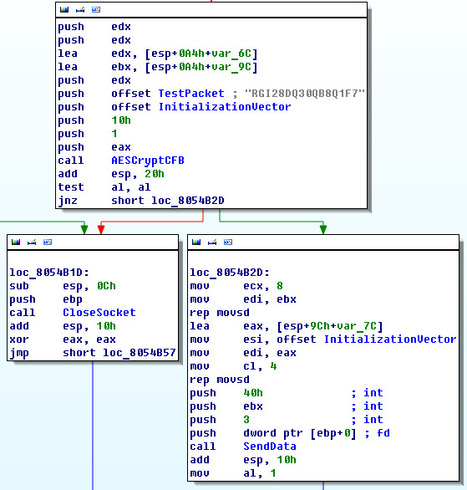
Mobile variants of the commercial FinFisher trojan target BlackBerry, Windows Mobile, Symbian, Android and iOS devices. The commercial FinFisher FinSpy spyware trojan was created by Gamma International, and its development is believed to take place in Germany. The company sells its trojan toolkit – which is thought to currently support all major operating systems including Linux, Mac OS X and Windows – to governments for use by security agencies. Until now, relatively little was known about the mobile variant of the trojan.
Based on the available code samples, Citizen Lab is convinced that the mobile trojans it analysed are a mobile variant of FinSpy. The trojan is believed to be capable of monitoring rooms through silent calls, downloading files, tracking a user's location, and forwarding phone calls, SMS text messages and emails. FinSpy can also apparently intercept BlackBerry Messenger messages. The trojan typically infects smartphones via specially crafted emails.
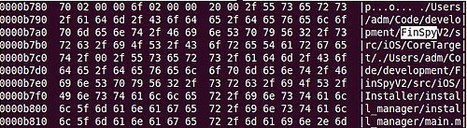
The iOS variant requires iOS 4 or later and is executable on all iPad models, on iPhone 4 and 4S devices, and on third and fourth generation iPod Touch devices. The app installs in the background, downloads further code, and injects this code into the startup routine, anchoring itself deep into the system. The researchers found "FinSpyV2" references in the binary. As the binary contains a valid developer certificate and an ad-hoc distribution profile, iOS devices accept it without the need for a jailbreak. The certificate was issued to Martin Münch – the managing director of Gamma International's German subsidiary.
|
|
Scooped by
Gust MEES
August 31, 2012 12:13 PM
|
Security researchers from Poland-based security firm Security Explorations claim to have discovered a vulnerability in the Java 7 security update released Thursday that can be exploited to escape the Java sandbox and execute arbitrary code on the... The new vulnerability discovered by Security Explorations in Java 7 Update 7 can be combined with some of the vulnerabilities left unpatched by Oracle to achieve a full JVM sandbox bypass again. Read more: http://www.computerworld.com/s/article/9230812/Researchers_find_critical_Java_7_flaw_hours_after_release
|
|
Scooped by
Gust MEES
August 31, 2012 10:08 AM
|
|
|
Scooped by
Gust MEES
August 31, 2012 9:27 AM
|
A mystery virus has infected the network of Qatar's natural gas pumper RasGas, prompting bosses to pull the plug on the biz's internet connection. Office systems have been unusable since the malware struck on 27 August, according to local reports. In a fax to suppliers, the company reportedly said: "RasGas is presently experiencing technical issues with its office computer systems. We will inform you when our system is back up and running." The RasGas website, rasgas.com, remains unreachable at the time of writing on Thursday afternoon. A spokesman for the firm told Arabian Oil and Gas that the malware outbreak was not affecting gas extraction and processing. The virus infection follows a strikingly similar attack against Saudi Aramco on 15 August, which hit 30,000 workstations and forced the world's largest oil company to suspend access to its internal and remote networks for 10 days. Oil production activities were not affected by that outbreak either. Read more: http://www.theregister.co.uk/2012/08/30/rasgas_malware_outbreak/
|