




Details of the exploit being used in the attacks on the new Java vulnerability have been published by DeepEnd research and Michael Schierl.
Read more:

 Your new post is loading...
 Scoop.it! Details of the exploit being used in the attacks on the new Java vulnerability have been published by DeepEnd research and Michael Schierl.
Read more:
No comment yet.
Sign up to comment
Scoop.it!

URI took a publicly available server offline after a breach compromised the information of faculty and students.
University of Rhode Island (URI) officials disabled the school's College of Business Administration computer server, after the personal information of more than 1,000 faculty and students, as well as students from another school, was publicly available. How many victims?
About 1,000 current and former URI faculty members, in addition to 22 former students of the university and 80 students from an unnamed out-of-state school.
What type of personal information? The names, birth dates, Social Security numbers and some compensation information of faculty members.
Former URI students had their Social Security numbers and names exposed, while students from the out-of-state school had their grades, names and Social Security numbers posted to the server.
Read more:
Scoop.it!

A new zero-day vulnerability in Java discovered on a Chinese web server being used in a targeted attack is being quickly adopted by online criminals.
Scoop.it!

Es bedarf keiner umständlichen Sicherheitsmaßnahmen, um Ihr WLAN-Netzwerk effektiv zu schützen. Folgen Sie einfach den vier Grundregeln, und Ihr WLAN ist unangreifbar.
Mehr lesen:
Scoop.it!
There is a new vulnerability in Java 7 that is being used in targeted attacks. It works against INternet Explorer, Firefox and versions of Chrome running on Windows XP.
The massive installed base of Java makes this vulnerability a particularly serious one, as any Java zero day is, but the other factor in the mix is that Oracle uses a scheduled quarterly patch cycle, and the next one isn't until mid-October. Unless the company issues an emergency patch, which is does rarely, the vulnerability will be fair game for attackers for nearly two months.
Read more:
Scoop.it!

Learning IT-Security - ThingLink...
Gust MEES: My first FREE course using "ThingLink's technology" who makes it possible to embed audio, video and ===> rich media <=== links directly in images and share them across the web. Encourage your fans, friends, and consumers to engage with images by watching videos, listening to songs and sound clips, and exploring social media.
Tip: first click on image where you will get directed to the image's location, then you need to hover your mouse over the image and you will see some spots where you get some information and links to videos and web sites...
Scoop.it!
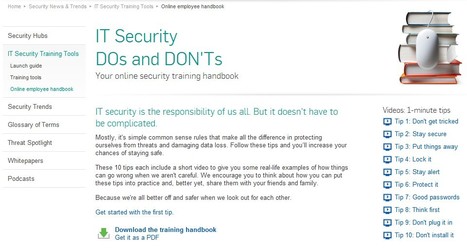
Free Training Handbook to Keep Your Employees Safe and Secure from Data Loss. Sophos is the Leader in Data Loss Prevention for Business.
These 10 tips each include a short video to give you some real-life examples of how things can go wrong when we aren't careful. We encourage you to think about how you can put these tips into practice and, better yet, share them with your friends and family.
===> Because we're all better off and safer when we look out for each other. <===
===> Security is the responsibility of us all. <===
Follow the tips in this handbook and you’ll be helping to keep yourself, your colleagues and our business safe.
Gust MEES: This a ===> MUST read <=== and watch the videos as it explains in ONLY 1 minute videos how to stay secure and you can download also PDF handbooks (very short and easy to understand in 1 minute also! The BEST Tips I have seen so far: I rate it 10/10 and will include it in my online courses...
Read more: http://www.sophos.com/en-us/security-news-trends/it-security-dos-and-donts/online-handbook.aspx
Scoop.it!

CIO.gov is the website for the United States Chief Information Officers Council...
Surfing the web. Social networking. Shopping. Even the most innocuous online activities can pose a threat to our nation’s cybersecurity, and all Americans should play a part in protecting it.
That’s the message behind the seventh annual National Cybersecurity Awareness Month this October. Sponsored by the Department of Homeland Security (DHS), National Cybersecurity Awareness Month encourages the practice of good “cyber hygiene”: taking simple precautions to reduce the cyber risks to our national and economic security. “Our nation is more reliant on computer networks than ever—networks that connect individuals, government, and the private sector. And therefore our nation’s cybersecurity is increasingly dependent upon our citizens’ cyber awareness,” said John Denning, Director of External Affairs at DHS’ Office of Cybersecurity and Communications.
Gust MEES: read also my FREE course about "Cyber-Hygiene" (Hashtag on Twitter = #cyberhygiene):
- http://gustmees.wordpress.com/2012/07/11/cyberhygiene-hygiene-for-ict-in-education-and-business/
Read more:
Scoop.it!

Denial of service (DoS) and distributed denial of service (DDoS) attacks are increasingly common phenomena, used by a variety of actors—from activists to governments—to temporarily or indefinitely prevent a site from functioning efficiently. Often, the attack saturates the target with server requests designed to flood its bandwidth, leaving the server unable to respond to legitimate traffic.
This EFF guide aims to assist the owners of such websites by providing advice on choosing an appropriate webhost, as well as a guide to mirroring and backing-up their websites so that the content can be made available elsewhere even if their site is taken down by a DoS or DDoS attack.
Read more and watch the video here: http://www.net-security.org/secworld.php?id=13474
Scoop.it!

Le programme malveillant Crisis peut se diffuser sur quatre plates-formes différentes, et en particulier sur les machines virtuelles VMware. Sans doute une première d’après Symantec.
En savoir plus :
Scoop.it!

Sensitive personal information about more than 1,000 children has been published on the UK Independent Schools Guide website after an alleged cyber attack.
Read more:
Scoop.it!

Dunkin’ Donuts launched its mobile payment app today as retailers race to take control of the ways we pay with our smartphones.
Dunkin’ Donuts’ new mobile payment app released today lets you set up an account and pay by scanning an on-screen barcode at the checkout counter. As with Starbucks’ popular mobile app, the system works like a glorified gift card. You can add money to your account by feeding the app your credit card information, and in the case of the Dunkin’ Donuts app you can send gift cards to friends. The Starbucks app tracks your purchases and rewards frequent buyers with free drinks.
In both cases, the user experience doesn’t exactly qualify as revolutionary. The convenience factor is about equal to using a physical gift card or a credit card. Such apps are most convenient for retailers themselves, who for the first time can advertise to customers via the same technology those customers are using to pay. Stores can tighten this retail feedback loop even further by creating a record of a single customer’s purchases in perfect detail, and even by tracking a customer’s physical location to send them an ad or a deal when they get close to the front door.
Read more:
Scoop.it!

Online security breaches are becoming increasingly common. But there are ways you can protect yourself. Read this blog post by Jen Haley on Security & Privacy.
Gust MEES: there is more even to consider, so check out please also my FREE courses (5 minutes ONLY...):
- http://gustmeesen.wordpress.com/2012/03/16/beginners-it-security-guide/
- http://gustmees.wordpress.com/category/get-smart-with-5-minutes-tutorials/
===> Don't have a good memory and being a "bad organizer"? Don't worry and check any Friday my specially created Hashtag on Twitter #FSCD where I remeber YOU what to take care about ;) Stay tuned and get valuable and necessary information... <===
Read more:
|
Scoop.it!
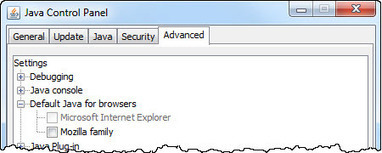
Java is a handy, cross-platform language that's been mightily abused by hackers. With the discovery of a new zero-day Java exploit, experts advise everyone to simply disable Java pending a patch. Here's how.
That fix may not be quick in coming. Neil McAllister of The Register notes that Oracle runs on a strict four-month update cycle, and the next update isn't due until October 16th. Both McAllister and FireEye recommend against downgrading to an earlier unaffected Java version, since older versions have their own vulnerabilities. So how do you go about disabling Java?
Read more: http://securitywatch.pcmag.com/hacking/302019-security-warning-disable-java-now
Scoop.it!

Dr Web, the Russian anti-malware company that did much to expose the growth of the Flashback botnet, has found the first Linux/OSX cross-platform trojan – which it calls BackDoor.Wirenet.1...
Read more:
Scoop.it!

Poorly written Mac NetWeird zombie available for just $60 online...
Read more:
Scoop.it!

Privacy for dummies....
10 Incredibly Simple Things You Should Be Doing To Protect Your Privacy
Please tell me you have a password protecting this. Over the weekend, I wound up at Washington, D.C.’s Trapeze School with a group of friends. Before one of them headed up a ladder to attempt a somersault landing from the trapeze bar, she handed me her phone and asked me to take photos. “What’s the password?” I asked. “I don’t use one,” she replied. My jaw dropped as it often does when someone I know tells me they’re choosing not to take one of the very simplest steps for privacy protection, allowing anyone to snoop through their phone with the greatest of ease, to see whichever messages, photos, and sensitive apps they please.
Read more:
Scoop.it!

ENISA took a snapshot of existing and future EU legislation on security measures and incident reporting. Their analysis underlines important steps forward, but also identifies gaps in national implementation, as most incidents are not reported.
Cyber security incidents significantly impact society. Here are five well-known examples:
Read more: http://www.net-security.org/secworld.php?id=13479
Scoop.it!
Using the social context of posts, researchers from UC Riverside create prototype Facebook app that detects social malware with 97 percent accuracy...
Read more:
Scoop.it!
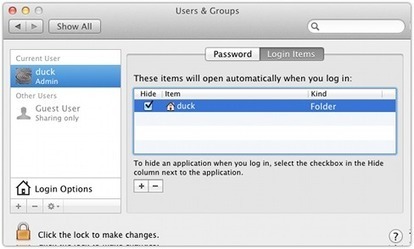
When we write Naked Security articles about Mac malware, we often end up creating a bit of a stir.
Read more, a MUST:
Scoop.it!

Le malware Crisis pourrait bien être le premier d’un nouveau type de virus qui, outre le fait de cibler les environnements Mac OS X et PC, vise également les machines virtuelles et les smartphones Windows Phone.
Signe d’une évolution technologique des auteurs de virus ?
En savoir plus :
Scoop.it!

If your organization develops intellectual property that would be valuable to other countries to copy, you are a target and probably have already been compromised.
In its threat report for the first half of 2012, F-Secure summarized the pieces of the Flame malware, which according to some researchers claimed the title of the most complex ever. Earlier this year, The Washington Post cited anonymous sources stating that the malware was linked to a joint effort by the United States and Israel, though American and Israeli officials officially declined to comment. While arms races in the physical world have centered on countries letting their rivals know about their capabilities for the sake of deterrence, the world has not yet reached this stage when it comes to cyber-attacks, wrote Mikko Hyppönen, chief research officer at F-Secure.
"Most likely, yes (we are in an arms race)," he told SecurityWeek. "But it's happening behind closed doors in classified programs, so we don't know much about it – so far. Only [the] USA has confessed doing this. But we must assume most technically advanced nations are stockpiling cyber arms."
Read more: http://www.securityweek.com/todays-cyber-war-cold-war-some-say
Scoop.it!
Just like modern hi-tech research revolutionized military operations over the last 50 years, we are going to see a new revolution, focusing on information operations and cyber warfare. This revolution is underway and it’s happening right now.
Read more, very interesting...
Scoop.it!

With its vast number of Android users and their preference for third-party online app markets, China is the perfect breeding ground for new Android malware.
Read more: http://www.net-security.org/malware_news.php?id=2230
Scoop.it!

By hunting through benign bits of code on your computer, the Frankenstein virus can turn itself into something rather nasty...
The monstrous virus software, dubbed Frankenstein, was created by Vishwath Mohan and Kevin Hamlen at the University of Texas at Dallas. Having infected a computer, it searches the bits and bytes of common software such as Internet Explorer and Notepad for snippets of code called gadgets - short instructions that perform a particular kind of small task.
Previous research has shown that it is theoretically possible, given enough gadgets, to construct any computer program. Mohan and Hamlen set out to show that Frankenstein could build working malware code by having it create two simple algorithms purely from gadgets. "The two test algorithms we chose are simpler than full malware, but they are representative of the sort of core logic that real malware uses to unpack itself," says Hamlen. "We consider this a strong indication that this could be scaled up to full malware."
Read more:
|





