


|
Scooped by
Roxana Marachi, PhD
November 20, 2013 9:51 PM
|
 Scoop.it!


No comment yet.
Sign up to comment

 Your new post is loading...
Scoop.it!
No comment yet.
Sign up to comment
Scoop.it!

By Audrey Kim, Dec. 4th, 2013 -
Several experts in the field, including our own Dr. Deborah Temkin, believed this study to be extremely problematic for several reasons. The study drew from data that had already been collected for a large, national dataset, and found a small correlation of .046 between those schools with anti-bullying programs and levels of peer victimization (bullying). Dr. Temkin points out that the “yes or no” question used to determine whether or not schools had anti-bullying programs in place did not account for whether or not that program was evidence-based or applied according to its design. A mere 8% of programs used by schools are evidence-based, while an even smaller percentage are both evidence-based and follow its intended design.
Dr. Patricia Hawley provided a similar critique of the controversial study, stating that the conclusion the authors drew about anti-bullying programs being associated with increased peer victimization is incorrect. While the study discovered that there were increased rates of reported peer victimization in schools with anti-bullying programs, Dr. Hawley points out that this is likely because students are more prepared to recognize and report incidents of bullying. Additionally, as mentioned by Dr. Temkin, schools with programs in place may have already had the highest rates of bullying to begin with. See more at: http://bullying.rfkcenter.org/2013/12/04/november-news-roundup/#sthash.FwAlc4xa.dpuf
Scoop.it!
Scoop.it!

APA - December 2013 - "Gun violence is an urgent, complex, and multifaceted problem. It requires evidence-based, multifaceted solutions. Psychology can make important contributions to policies that prevent gun violence. Toward this end, in February 2013 the American Psychological Association commissioned this report by a panel of experts to convey research-based conclusions and recommendations (and to identify gaps in such knowledge) on how to reduce the incidence of gun violence — whether by homicide, suicide, or mass shootings — nationwide."
Download Full Report here: http://www.apa.org/pubs/info/reports/gun-violence-report.pdf
Scoop.it!

From Restorative Justice Training Institute Website:
Scoop.it!

"Teachers using social-emotional learning to manage student behavior say they are encouraging more than just compliance—they're working to build more responsible and empathetic people."
Scoop.it!
http://www.nctsn.org/sites/default/files/assets/pdfs/talking_to_children_about_the_shooting.pdf
National Child Traumatic Stress Network Website: http://www.nctsn.org/
Scoop.it!
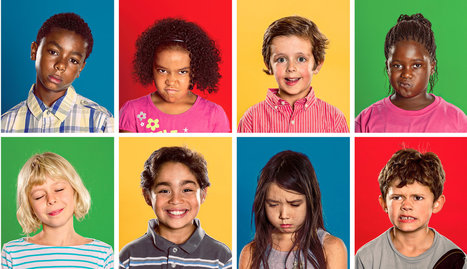
..."For children, Brackett notes, school is an emotional caldron: a constant stream of academic and social challenges that can generate feelings ranging from loneliness to euphoria. Educators and parents have long assumed that a child’s ability to cope with such stresses is either innate — a matter of temperament — or else acquired 'along the way,' in the rough and tumble of ordinary interaction. But in practice, Brackett says, many children never develop those crucial skills. 'It’s like saying that a child doesn’t need to study English because she talks with her parents at home,' Brackett told me last spring. “Emotional skills are the same. A teacher might say, ‘Calm down!’ — but how exactly do you calm down when you’re feeling anxious? Where do you learn the skills to manage those feelings?”... (Jennifer Kahn)

Garth Sanginiti's curator insight,
September 12, 2013 8:39 PM
"Once a small corner of education theory, S.E.L. has gained traction in recent years, driven in part by concerns over school violence, bullying and teen suicide. But while prevention programs tend to focus on a single problem, the goal of social-emotional learning is grander: to instill a deep psychological intelligence that will help children regulate their emotions."
Scoop.it!

"Striving To Reduce Youth Violence Everywhere (STRYVE) is a national initiative, led by the Centers for Disease Control and Prevention (CDC), which takes a public health approach to preventing youth violence before it starts."
Scoop.it!

"A new report that reviewed years of research says that it is hard to accurately monitor levels of bullying in schools because there is still no consensus on exactly what it is and that educators and scholars “should not limit themselves to the traditional definition” as they seek ways to combat it." http://www.washingtonpost.com/blogs/answer-sheet/wp/2013/05/08/why-it-is-hard-to-monitor-bullying-at-schools-report/
Scoop.it!

"The School-to-Prison Pipeline is a disturbing national trend wherein children are funneled out of public schools and into the juvenile and criminal justice systems."
Scoop.it!

..."Many public schools are still operating under the 1999 “Zero Tolerance” initiative, which tied federal funding to this mandate. “Zero Tolerance,” which came about after the horrifying Columbine tragedy, demands that kids be removed from schools the first time they transgress—even for minor offenses. This puts them into the juvenile justice system—a system that those who work within its confines admit too often does a better job of punishment than rehabilitation and re-integration into schools." For full post and video:
|
Scoop.it!

USDOE: "Research and best practices coming out of the field of public health and the Centers for Disease Control and Prevention (CDC) support the need for a comprehensive, coordinated approach to violence prevention. The Department of Education encourages campus and community efforts to increase awareness and engage in primary prevention campaigns."... Full post at: http://www.ed.gov/blog/2013/11/addressing-and-preventing-sexual-assault-on-campus/
Scoop.it!

The Greater Good Science Center's inaugural summer institute last week drew some 60 teachers and administrators eager to explore the science and practice of social-emotional learning.
Mindfulness, empathy and resilience were just some of the topics unpacked at UC Berkeley last week as teachers, administrators, counselors and other pre-K-through-12th-grade professionals came together for a six-day workshop exploring social-emotional learning in the classroom.
Organized by the campus’s Greater Good Science Center — which researches the neuroscience, psychology and sociology of well-being — the inaugural Summer Institute for Educators welcomed some 60 education professionals from California, across the nation and countries including Argentina, Australia, China and India.
By Roibín Ó hÉochaidh Via Edwin Rutsch, Developmental Studies Center

Erin Larcey's curator insight,
December 8, 2013 2:33 PM
This article reviews a workshop for educators to learn how to incooperate social and emotional elarning in their classrooms. A strong focus in this article is that "there is a very strong relationship between social-emotional learning and cognitive development and performance" . I think that this is a crutial idea that needs to be addressed in c lass rooms. If we fail to acknowledgethat there is a connection between social-emotional learning and cognitive development and performance, it good negatively impact our students capability to learn. Students must feel that they are safe and can trust the environment they are in or they will be unable to connect and learn what we want them to. Students are distracted by any inequillibrium that they feel whether its a sense of discomfort or not understanding a certain concept. They then are focused on setting things straight and finding a spot of equilibrium. Once they are able to find such a place they can focus on other things. As teachers we can help them to find equilibrium by creating a safe and comfortable environment. We can also create a feelings that we as adults are trust worthy and are willing to help them with any discomfort or uneasiness. Through these programs teachers can learn different techniques to incooperate in their classrooms to help the students feel at ease. I think that the fact that we as educators and as a society are acknowledging that students learn more than just the content is the most important piece. Education has in the past ingored this important fact, but it is becoming more and more apparent. Maybe they didn't actively ignore this aspect of schools and educations, but it wasn't actively supported. Now that emotional and social learning is being actively supported, students' development will greately benefit from such programs.
Scoop.it!

As we look at ways to create environments that allow teaching and learning to thrive, it's time to take a long, hard look at the critical role of recess in our schools. Recess has the potential to transform schools, and groups are finally speaking out about the powerful role it has in the school day, including the American Academy of Pediatrics which, earlier this year, released a policy statement to this effect. " Via John Evans, Developmental Studies Center
Scoop.it!

By Ron Avi Astor, Ph.D - "The tragedy in Sandy Hook has become a watershed moment that's changing the way we perceive our society. How could innocent young children be killed so senselessly in a seemingly safe school and quiet community?
This atrocity, along with the dozens of highly publicized mass homicides—such as Columbine—seen in the past decades worldwide have raised questions about the schools our children attend. Are they safe from inside and outside threats? What can be done to make schools safer?
Ironically, national data going back to 1994 suggest that our nation's schools and communities are experiencing far less serious violence and fewer threats than 20 years ago. However, many Americans feel things are getting worse for schools. Most of us respond on a personal level to the inhumanity intrinsic in such mass homicide atrocities. And we are seeing more of these cases and images in the news media."...
Scoop.it!

By Lizette Alvarez - FORT LAUDERDALE, Fla. Dec. 2nd, 2013 — Faced with mounting evidence that get-tough policies in schools are leading to arrest records, low academic achievement and high dropout rates that especially affect minority students, cities and school districts around the country are rethinking their approach to minor offenses.
Perhaps nowhere has the shift been more pronounced than in Broward County’s public schools. Two years ago, the school district achieved an ignominious Florida record: More students were arrested on school campuses here than in any other state district, the vast majority for misdemeanors like possessing marijuana or spraying graffiti."
Scoop.it!

By Susan Jennings - Digital Media First via San Jose Mercury News:
Then we found another account, this one sharing anonymous “confessions” (many appear to be rumors) from area students. Most of the posts involve drug abuse and casual sex. Many include first and last names and/or the name of the school the “confession” originated from. Few are fit to be reprinted here.
Reading through these was enough to make me want to ban both of my girls from the Internet and social media until they've graduated from college. After the local paper reported on the confessions account, I checked in with Google to see if this was just a local phenomenon. Unfortunately, it's not."...
For full post, click on title above or here: http://www.mercurynews.com/bay-area-living/ci_25066359/teen-confession-sites-what-they-are-and-what
Scoop.it!

"Taking selfies at funerals. Tagging pictures of teens drinking alcohol at parties. Kids (and adults for that matter) post a lot of silly stuff online — and although most of it is chatter, some of what might seem harmless leads to tragic consequences. But is it the job of schools to teach kids the dos and don’ts of social media?" Via EDTECH@UTRGV
Scoop.it!

by Tim Browse, headteacher of Hillcrest Primary in Bristol: We also have to educate parents. There is the assumption that cyberbullying won't affect their child until secondary school. We run workshops for parents of children in reception about staying safe online, primarily to highlight areas they wouldn't even think of – cyberbullying doesn't just happen on Facebook."...

Tom Wishart's curator insight,
October 31, 2014 4:29 PM
There's good advice in here for me as both a parent and a teacher. I particularly liked the following comment: "People need to understand they cannot hide behind a screen, computer, tablet or phone and bully others. The cyber world is part of the real world and should not be seen as being separate"
Scoop.it!
Growing Fairness is a short documentary film and companion guide for educators and community members looking to change their school climate for the better. F...
Scoop.it!

"Beyond Zero Tolerance focuses on two forms of exclusion from school that many Pennsylvania public school districts rely upon heavily: out-of-school suspensions (OSS) and removal from school by police, a category that includes arrests and summary offenses.
Scoop.it!
"Across the country, resistance is growing against public education's increased dependence on high-stakes standardized testing and on exclusionary discipline, such as suspensions, expulsions, and school-based arrests."
|




