Your new post is loading...

|
Scooped by
Roxana Marachi, PhD
September 14, 2012 2:42 AM
|
The Office of Safe and Healthy Student is the Federal government's vehicle for reducing drug, alcohol and tobacco use, and violence in our nation's schools.
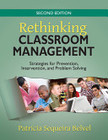
In this empowering book, motivational authors Bevel and Jordan illustrate an approach to achieve a positive, harmonious classroom environment that enables educators to evolve effectively from managers to leaders by rethinking their roles as teachers. This 2nd Edition provides new real-life examples, intervention techniques, and ready-to-use worksheets for addressing potential problems before learning is disrupted and demonstrates ways to foster student leadership in your classroom.
|
|
Scooped by
Roxana Marachi, PhD
August 14, 2011 12:17 PM
|
"Based on nine months of research, data analysis and investigation into dozens of successful programs around the nation, Less Hype, More Help: Reducing Juvenile Crime, What Works--and What Doesn’t shows that America has the knowledge to substantially reduce youth crime and violence without a substantial increase in spending. Unfortunately, the research also shows, the reforms that will solve the problem are not being widely used."
"Supported by the Walter S. Johnson Foundation, and written by Richard Mendel, the report was released by the American Youth Policy Forum in partnership with a broad coalition including the National Urban League, the Child Welfare League of America, the National Crime Prevention Council, the Coalition for Juvenile Justice, the National League of Cities and the National Collaboration for Youth."
|
|
Scooped by
Roxana Marachi, PhD
July 30, 2011 1:12 PM
|
The White House Conference on Bullying Prevention materials provide information on how all communities can work together to prevent bullying.
|
|
Scooped by
Roxana Marachi, PhD
August 14, 2011 3:40 PM
|
|
|
Scooped by
Roxana Marachi, PhD
August 13, 2011 1:41 PM
|
The FAST Track program is based on the hypothesis that improving child competencies, parenting effectiveness, school context and school-home communications will, over time, contribute to preventing certain behaviors across the period from early childhood through adolescence. This program has a strong base of research evidence for its effectiveness and has been highlighted by many evaluating agencies as a model for supporting youth development.
|
|
Scooped by
Roxana Marachi, PhD
August 2, 2011 5:05 PM
|
This blogpost links to a publication entitled "Multiple Responses, Promising Results: Evidence-Based, Nonpunitive Alternatives To Zero Tolerance," where authors Christopher Boccanfuso and Megan Kuhfeld posit that while zero tolerance policies are widespread in America, they are actually doing little to deter bullying, use of illegal substances and even violent behavior.
|
|
Scooped by
Roxana Marachi, PhD
January 30, 2012 3:00 PM
|
|
|
Scooped by
Roxana Marachi, PhD
August 13, 2011 2:28 PM
|
Resource list of current reports and documents for support of mental health and prevention of youth violence.
|
|
Scooped by
Roxana Marachi, PhD
August 13, 2011 4:39 PM
|
This study, conducted by NDPC/N, and sponsored by Communities In Schools Inc., finds that there are multiple risk factors which increase the likelihood that students will drop out. The evidence clearly shows that dropout is always the result of a long process of disengagement that sometimes begins before the child enrolls in kindergarten. The report also provides information on 50 programs that were found to be effective in addressing these risk factors. C. Hammond, J. Smink, & S. Drew: National Dropout Prevention Center. D. Linton: Communities In Schools, Inc. May 2007.
|
|
Scooped by
Roxana Marachi, PhD
August 28, 2011 4:25 PM
|
|
|
Scooped by
Roxana Marachi, PhD
August 18, 2011 12:53 PM
|
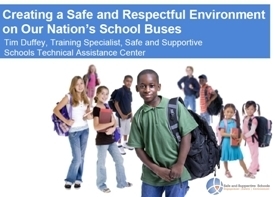
This website has great resources for starting the school year with an emphasis on community and connection. There are links as well to the The Safe and Supportive Schools Technical Assistance Center, a division of the Office of Safe and Drug Free Schools with free webinars and face-to-face events on a wide variety of topics related to improving conditions for learning.
|
|
|
Scooped by
Roxana Marachi, PhD
September 13, 2012 2:56 PM
|
|
|
Scooped by
Roxana Marachi, PhD
May 22, 2012 6:39 PM
|
|
|
Scooped by
Roxana Marachi, PhD
January 28, 2012 8:57 PM
|
Research related to the racial disparities in policies and practices related to school discipline.
|
|
Scooped by
Roxana Marachi, PhD
July 30, 2011 1:31 PM
|
At a meeting in May 2011, Dr. Ken Seeley provided current research and evidence based practices that can help school personnel manage high risk youth to help get them on-track for graduation. The group learned about how to assess current practices and policies and develop alternatives that promote engagement or re-engagement of students in school. This web page includes materials shared by Dr. Seeley that may be of use for administrators and educators.
This is a website which provides teachers with ideas about how to teach digital citizenship and also gives them access to lesson plans in this area
Via Judy O'Connell
|
|
Scooped by
Roxana Marachi, PhD
July 30, 2011 1:07 PM
|
Discusses freely available resources that teachers can use to educate their students about cyberbullying and online responsibility.
|
|
Scooped by
Roxana Marachi, PhD
October 11, 2011 10:27 PM
|
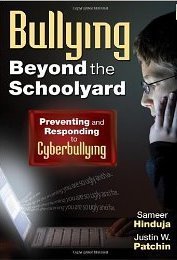
"Even though the vast majority of cyberbullying behaviors take place off school grounds, they very often make their way back into the school. In fact, many adolescent problems these days either begin at school and progress online or are initiated online and continue at school. Like it or not, educators will frequently have to deal with repercussions of disagreements or problems that began or escalated a great distance from the school house doors."
—Bullying Beyond the Schoolyard
|
|
Scooped by
Roxana Marachi, PhD
August 13, 2011 3:56 PM
|
"The Office of Juvenile Justice and Delinquency Prevention's Model Programs Guide (MPG) is designed to assist practitioners and communities in implementing evidence-based prevention and intervention programs that can make a difference in the lives of children and communities. The MPG database of over 200 evidence-based programs covers the entire continuum of youth services from prevention through sanctions to reentry. The MPG can be used to assist juvenile justice practitioners, administrators, and researchers to enhance accountability, ensure public safety, and reduce recidivism. The MPG is an easy-to-use tool that offers a database of scientifically-proven programs that address a range of issues, including substance abuse, mental health, and education programs."
|
|
Scooped by
Roxana Marachi, PhD
August 15, 2011 2:46 PM
|
This witty post (cracked.com folks) draws important attention to the tendency for over-reaction and over-policing of youth in the name of school safety. Nothing scientific, just basic common sense writing about ridiculous policies taken on in efforts to police children's behaviors. It actually comes as no surprise to me that this post has had 872,847 views in less than one day. Kudos to the writers, perhaps we should try the same approach in our advocacy campaigns to bridge the gap between research and practice!
|
|
Scooped by
Roxana Marachi, PhD
August 14, 2011 12:03 PM
|
Youth violence prevention, one of the oldest fields in violence, continues to advance rapidly. Research on youth violence has increased our understanding of factors that make some populations more vulnerable to victimization and perpetration.
|
|
Scooped by
Roxana Marachi, PhD
August 13, 2011 7:30 PM
|
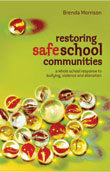
"Brenda Morrison proposes responsive and restorative practices to counter problems of bullying and violence in schools and to build safer school communities. Morrison introduces a whole school approach which can involve students, teachers, parents and others in the wider school community, depending on the seriousness of the incident. She explains the thinking behind the suggested responses and shows how they can be implemented."
|


 Scoop.it!