 Your new post is loading...

|
Scooped by
mhryu@live.com
August 16, 12:43 AM
|
Encapsulation enables microbial technologies across agriculture, biotechnology, and biomedicine by protecting microorganisms from environmental and process-related stresses while extending their functional performance. Natural materials, including polysaccharides such as alginate and chitosan, and biomineral nanoparticles, are emerging as key enablers of encapsulation performance, while supporting sustainability, scalability, and industrial implementation. In this review, we analyze recent advances in natural polymer- and biomineral-based encapsulation systems, focusing on how material selection, encapsulation architecture, and microbial metabolism shape engineered microenvironments. We further discuss how encapsulation becomes technologically and environmentally relevant only when functional gains justify material and processing costs. Finally, we argue for a conceptual shift in encapsulation strategies: from protective supports toward bioinspired microhabitats and living microcapsules capable of programmable microbial functions.
|
|
Scooped by
mhryu@live.com
August 16, 12:39 AM
|
Plant functional genomics requires the integration of sequence, expression, evolutionary, regulatory and literature evidence. However, the corresponding analyses are often distributed across disparate programs, scripts and databases, creating substantial barriers to task organization and result interpretation. Here, we present PlantAI, a multi-agent system that integrates bioinformatics analysis, project-level process tracking and knowledge-assisted interpretation. A Main Agent coordinates two complementary routes: an analysis route that invokes bioinformatics tools for RNA-seq and gene-family analyses, and a knowledge route that uses PlantAI-RAG for knowledge retrieval and evidence synthesis. PlantAI-RAG currently contains 31,207 plant-science literature records, comprising approximately 3.82 million normalized entities and 8.25 million literature-supported relation assertions. In an evaluation using plant-science questions, it achieved a Gold evidence-assertion recall of 86.7%, while strict accuracy ranged from 77% to 82% across three independent evaluator models. We further demonstrate an end-to-end task using 24 rice RNA-seq libraries collected under salt stress, spanning transcriptome analysis, candidate-family screening, HXK/HKL family analysis and knowledge-assisted interpretation, and prioritize OsHXK8 for experimental validation. By preserving analysis artifacts, run manifests, logs and environment records, PlantAI supports result verification and repeat execution while linking project-derived results to traceable literature evidence. Together, these capabilities provide an integrated and auditable framework to support plant functional genomics research.
|
|
Scooped by
mhryu@live.com
August 15, 10:58 PM
|
Engineered yeast-living drugs offer significant potential for oral protein therapy but remain limited by poor intestinal retention and lack of precise spatiotemporal control over therapeutic delivery. Here, we developed an ingestible hydrogel-encapsulated optogenetic yeast system controlled by a wearable electronic device for programmable interleukin-10 (IL-10) delivery in inflammatory bowel disease (IBD). We engineered Pichia pastoris with an EL222-based blue-light-inducible circuit achieving rapid, stringent IL-10 secretion (50% saturated concentration within just 1 h upon induction). The yeast was encapsulated in a photo-crosslinkable HAMA hydrogel that was gelated within 60 s upon blue-light exposure, exhibiting robust mechanical stability and tissue adhesion. A lightweight (2.27 g) wearable Bluetooth-controlled electronic device delivered targeted blue light transdermally, enabling simultaneous in situ hydrogel crosslinking and optogenetic activation in yeast cells. This system significantly extended the time yeast stays in the mouse gut, with reporter gene expression lasting over 5 h, while the unencapsulated control group lasted less than 2 h. In DSS-induced colitis mice, our strategy reduced proinflammatory cytokines (IL-1β, IL-6, and TNF-α) by >60%, restored intestinal barrier integrity, and normalized gut microbiota diversity to near-healthy levels, which performed significantly better than in other groups. This integrated “extracorporeal instruction−intracorporeal response” paradigm establishes a digitally programmable platform for precision live biotherapeutics. However, limited blue-light tissue penetration remains a key constraint; future work should focus on near-infrared photosensitive systems, programmable-degradation hydrogels, and wireless closed‑loop feedback to advance clinical translation.
|
|
Scooped by
mhryu@live.com
August 15, 7:44 PM
|
Engineering disease resistance in plants has traditionally relied on modifying pathogen perception, host susceptibility or immune signaling. Here, we explore a complementary strategy that couples pathogen-effector recognition to host proteostasis, aiming to reduce the intracellular accumulation of delivered virulence factors. We identified a minimal α-helical peptide from soybean GmRNF181, designated RXLR Effector Bait Tag (REBT). REBT bound PsAvh5 and a subset of WY1-type RXLR effectors, whereas recognition was constrained by the accessibility of the WY1 motif within full-length effectors. By fusing REBT to an ATG8-interacting motif (AIM), we generated AIM-REBT, a genetically encoded chimeric protein degrader (GE-CPDs) designed to recruit plant autophagy. In planta, AIM-REBT reduced the accumulation of REBT-bound effectors in a manner requiring both the AIM module and effector binding, and the observed effects were consistent with ATG8a-associated, autophagy-vacuole-related clearance. Transient and stable expression assays demonstrate robust resistance against multiple Phytophthora spp. in tobacco, soybean, and potato. Resistance was attenuated in NbATG8a-silenced leaves and was not observed against the unrelated fungal pathogen Alternaria alternata, supporting target-dependent activity. Under the tested conditions, stable AIM-REBT expression caused no obvious growth-related defects in tobacco or potato. These findings provide proof of concept that pathogen-effector recognition can be coupled to host degradation pathways to directly reduce intracellular virulence factors and complement existing disease-resistance engineering strategies.
|
|
Scooped by
mhryu@live.com
August 15, 12:37 PM
|
E. coli is a well-studied organism with extensive genomic and proteomic data. This study examines how gene loss reallocates cellular resources and impacts fitness. Genes were classified based on fitness measurements as essential, important, mean-effect, or fitness-enhancing. Using proteomic data, we analyzed the relationship between protein production cost and fitness, finding that genes with a high proteomic mass fraction are more likely to affect fitness, while fitness-enhancing deletions rarely improve fitness by reducing proteomic burden. We calculated the cumulative of proteome fractions encoded by genes classified as mean-effect and compared it with the results from the ME-model simulations. The mean-effect category constitutes 31-75% of the proteome, with the highest proportion LB, while enrichment analysis of core mean-effect genes highlighted transmembrane transport as the main functional category. Furthermore, we identified a subset of genes whose deletion increased fitness compared to the mean; they generally have low expression, and many have unknown functions. AI-assisted structural analyses identified domains and conserved features compatible with DNA-binding proteins, suggesting that some may represent putative transcriptional regulators requiring further validation. RpoS, stress sigma factor controlling up to 15% of the proteome is one of the transcriptional regulators in the fitness-enhancing category. Our findings suggest that the cost of being a generalist is linked to transcriptional regulation, while molecular transport represents a high burden for nutrient readiness.
|
|
Scooped by
mhryu@live.com
August 15, 12:16 PM
|
Picornaviruses, including foot-and-mouth disease virus (FMDV), enterovirus 71 (EV71) and encephalomyocarditis virus (EMCV), are important pathogens that cause fever, herpes, and myocarditis in humans and animals. The interplay between picornaviruses and their hosts remains enigmatic. Here we perform porcine genome-wide CRISPR/Cas9 screens and identify methionine sulfoxide reductase B3 (MSRB3) as an essential factor for FMDV. MSRB3 deficiency inhibits FMDV replication. Mechanistically, MSRB3 eliminates methionine oxidation of FMDV 3D polymerase and stabilizes its expression. Further studies show that radical SAM domain-containing protein 1 (RSAD1) catalyzes methionine oxidation of FMDV 3D polymerase and promotes its aggregation and subsequent degradation through the autophagy-lysosome pathway. Importantly, RSAD1-MSRB3-mediated redox modification also affects the stability of 3D polymerases of EV71 and EMCV, and regulates their infectivity and pathogenesis both in vitro and in vivo. Collectively, this study corroborates that RSAD1-MSRB3-mediated redox cycling of 3D polymerase plays a conserved function in modulating picornavirus infection, providing insights into viral pathogenesis and broad-spectrum antiviral development. Li et al. demonstrate that RSAD1-MSRB3-mediated redox cycling of 3D polymerase plays a conserved function in regulating picornavirus infection, facilitating the elucidation of viral pathogenesis and development of broad-spectrum antiviral therapies.
|
|
Scooped by
mhryu@live.com
August 14, 5:50 PM
|
Droplet-based microfluidics has transformed high-throughput screening by compartmentalizing biochemical reactions into nanoliter-to-picoliter soft microenvironments. However, precise on-demand reagent addition after droplet formation remains challenging due to interfacial tension barriers. This review comprehensively summarizes recent advances in reagent addition technologies from the perspectives of soft matter physics and interfacial engineering. Strategies are categorized into passive hydrodynamic merging and active injection approaches, highlighting the mechanisms used to disrupt surfactant-stabilized interfaces for reagent delivery. The broad impact of these spatiotemporally decoupled addition strategies is further discussed in applications including multistep synthesis of soft functional materials, drug screening, single-cell multi-omics, and directed enzyme evolution. Finally, current challenges limiting industrial translation are critically assessed. Continued advances in this field are expected to drive the development of intelligent droplet microreactor systems for next-generation biomedical and materials applications.
|
|
Scooped by
mhryu@live.com
August 14, 5:19 PM
|
Root hairs (RHs) are cellular outgrowths of plant root epidermal cells that are important for water uptake, nutrient acquisition and rhizosphere dynamics. Key genes controlling RH development have been identified, but the regulatory mechanisms of RH growth during drought stress remain largely elusive. Here we show that the bacterial root endophyte Flavobacterium sp. 98 (Flavo98) modulates root system architecture with a pronounced promotion of RH formation and cell elongation that is maintained under low-water conditions. We also show that Flavo98 improves plant performance under drought in diverse plant species, including Arabidopsis and wheat, and mitigates drought-associated seed yield loss. Using cellular, molecular and genetic analyses in Arabidopsis, we identified root stele-expressed ERF transcription factors, ERF115 and ERF114, as key mediators of Flavo98-induced RH development and plant drought responses. We show that both ERFs operate, in part, by inducing the expression of the small signalling peptide C-TERMINALLY ENCODED PEPTIDE 5 (CEP5). In addition, we present evidence for enhanced ethylene biosynthesis and signalling in Flavo98-induced ERF115 and ERF114 expression, revealing a new pathway that integrates ethylene signalling into RH regulation under drought. Together, our findings uncover a pathway that regulates RH growth as part of a broader, microorganism-dependent root system architecture plasticity under low-water conditions. This study highlights the potential of uncovering plant–microorganism mechanisms to strengthen crop resilience in a changing climate. Flavobacterium sp. 98 promotes root hair development and enhances plant drought tolerance via a novel signalling pathway, highlighting the role of plant–microorganism interactions for improving crop resilience under water limitation.
|
|
Scooped by
mhryu@live.com
August 14, 4:31 PM
|
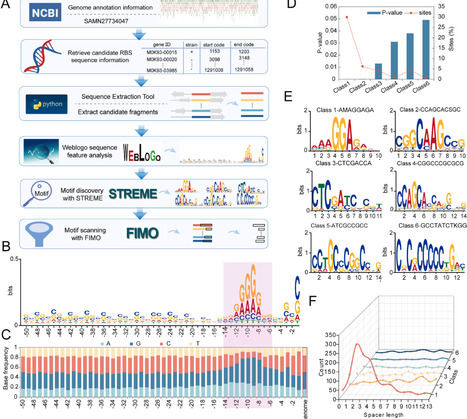
Paracoccus denitrificans is a heterotrophic nitrifying–aerobic denitrifying bacterium widely used in wastewater treatment and as a model system for studying electron transport chains, making it a promising chassis for environmental synthetic biology. Precise translational control of gene expression is essential for engineering desired traits in this organism, yet the design of functional ribosome binding sites (RBS) in P. denitrificans remains hindered by limited understanding of their sequence–activity relationships. To address this gap, we systematically profiled 1335 native RBS sequences via integrated transcriptomic and proteomic analyses. We found that RBS strength is predominantly governed by a purine-rich Shine–Dalgarno motif located 5–8 bp upstream of the start codon, with specific A/G patterns in this region serving as key determinants. Building on this dataset, we developed and compared CNN, BiLSTM, and Transformer models for RBS strength prediction; among them, the CNN achieved the highest predictive correlation (Pearson r = 0.68). Additionally, a WGAN-GP framework was implemented to generate novel RBS sequences, which were subsequently filtered and evaluated by the prediction framework to enable the design of RBSs with user-specified strengths. Experimental validation showed a relatively strong correlation between predicted and measured strengths (Pearson r = 0.75). This work establishes the first deep learning-enabled RBS design platform for P. denitrificans, offering a robust tool for precise translational regulation and advancing synthetic biology applications in environmental biotechnology.
|
|
Scooped by
mhryu@live.com
August 14, 3:40 PM
|
Engineered bacteria offer a distinct modality for cancer therapy by exploiting the ability of certain species to colonize tumors and deliver therapeutic payloads. Improving their efficacy and safety requires control over bacterial activity after tumor colonization, yet few microbial chassis permit it. Bifidobacterium longum, a probiotic with intrinsic tumor-targeting and antitumor activity, is a promising chassis but lacks such control. Here, we develop a genetic control system that regulates B. longum activity within tumors, from gene expression to bacterial abundance. A human-isolate-derived replicon supports plasmid maintenance without antibiotic selection, and promoter and ribosome-binding-site libraries provide ~150-fold and ~48-fold expression ranges, respectively. Signal peptides enable secretion of structurally diverse therapeutic payloads and B. longum secreting CCL21 or an anti-PD-L1 nanobody reduces tumor growth relative to PBS controls. Anhydrotetracycline delivered in drinking water induces transgene expression in tumor-resident bacteria and reduces intratumoral bacterial load through CRISPRi targeting essential genes. Together, these results establish a tumor-homing probiotic as an externally controllable therapeutic chassis.
|
|
Scooped by
mhryu@live.com
August 14, 12:51 AM
|
RNA-binding proteins are central to post-transcriptional regulation and are generally thought to recognize their target RNAs through direct binding. Here, we uncover a previously unrecognized mechanism in which a small RNA (sRNA) guides a protein regulator to specific target mRNAs, enabling programmable post-transcriptional control. By mapping in pathogenic E. coli the RNA interactome of CsrA, a global post-transcriptional regulator, we identify ~800 ternary complexes in which CsrA simultaneously binds an sRNA and an mRNA. Focusing on one class of these complexes, we show that PasE, a newly discovered sRNA, directs CsrA to virulence-associated mRNAs that are otherwise not targeted by CsrA, resulting in their repression. Altering the PasE seed sequence redirects CsrA to selected mRNAs, establishing a modular RNA-guided platform for gene regulation. Together, our findings reveal a new and likely widespread mechanism of bacterial post-transcriptional regulation and provide a framework for a new type of RNA-based synthetic regulation.
|
|
Scooped by
mhryu@live.com
August 14, 12:44 AM
|
Polyethylene terephthalate (PET) waste remains a major environmental and resource challenge, and enzymatic depolymerization offers a promising route for recovering terephthalic acid and ethylene glycol under aqueous conditions for closed-loop PET recycling. However, the practical deployment of PET-degrading enzymes is constrained by substrate crystallinity and morphology, limited thermal robustness near the glass transition temperature, biocatalyst manufacturability and reusability, product inhibition and pH-mediated activity loss, and the heterogeneity and contamination of post-consumer feedstocks. This review summarizes the evolution of PET hydrolase discovery from phenotype-driven bioprospecting to sequence-based mining, structure-guided searches, and AI-assisted prioritization. These approaches are compared in terms of throughput, novelty, false-positive risk, substrate relevance, and their capacity to identify enzymes with industrial fitness. We further discuss the importance of hierarchical validation, in which rapid screening is followed by activity measurements on PET substrates with defined crystallinity and process relevance. Finally, standardized substrate characterization, kinetic reporting, and open data sharing are highlighted as prerequisites for reliable comparison across studies and the development of AI-ready datasets. Such integration should help distinguish enzymes that are merely active under simplified screening conditions from candidates with measurable, comparable, and application-relevant potential for plastic circularity.
|
|
Scooped by
mhryu@live.com
August 14, 12:40 AM
|
Human milk oligosaccharides (HMOs) are complex sugars that play crucial roles in infant health by supporting the development of the gut microbiota and the immune system. HMOs are structurally based on lactose, which serves as the core disaccharide. These HMOs are synthesized in mammary epithelial cells through sequential glycosylation reactions catalyzed by specific glycosyltransferases, whereas little to no HMO production has been observed in other cell types and commonly used cultured mammalian cell lines. In this study, we reconstituted the biosynthesis of HMOs in cultured cells by applying targeted glycoengineering strategies. HEK293 cells expressing α-lactalbumin (LALBA) gene produced various HMOs including 3′-sialyllactose, 2′-fucosyllactose, sialyllacto-N-tetraose a/d, and disialyllacto-N-tetraose. We showed that different cell lines, such as HCT116 and CHO-K1 cells, can produce HMOs when engineered to express LALBA. By manipulating genes like B4GALT1, B3GNT2, and B3GALT5, we altered the complexity and composition of the HMOs produced. By supplementing the culture medium with N-azidoacetylmannosamine, we achieved efficient metabolic incorporation of azido groups into 3′-sialyllactose. Furthermore, HMOs produced by HEK293 cells promoted the growth of Bifidobacterium, demonstrating prebiotic effects. Our findings highlight the potential to tailor HMO production in vitro, offering a platform for generating these bioactive molecules.
|
|
|
Scooped by
mhryu@live.com
August 16, 12:41 AM
|
Analysing and concatenating phage annotation is time-consuming. Further, the output of phage annotation tools cannot be directly submitted to public repositories. To deal with these issues, we developed PhaGAMeToo. This command-line workflow for Linux integrates the functional annotations of two major viral annotation tools (Pharokka and VIBRANT), enabling faster and more accurate functional annotation. Furthermore, the workflow provides merged annotations as submission-ready GenBank files. PhaGAMeToo uses three steps to generate submission-ready GenBank files. The user uses the reoriented viral genomes as inputs for Pharokka and VIBRANT. Pharokka and VIBRANT-generated files are parsed through the PhaGAMeToo workflow to produce a merged GenBank file. Further, PhaGAMeToo also enables the use of BLASTP to annotate hypothetical proteins not identified by Pharokka and VIBRANT. It then merges the results into a submission-ready GenBank file(s). We tested PhaGAMeToo in three different Use Cases. We analysed reference and uncultivated viral genomes manually curated or directly recovered using MuDoGeR in our Use Cases. In the Use Case 1, we analysed four different NCBI reference genomes. In the Use Cases 2 and 3, we analysed seven recently described huge phage genomes and 56 uncultivated viral genomes recovered from 30 soil metagenomes, respectively.
|
|
Scooped by
mhryu@live.com
August 15, 11:50 PM
|
Modular DNA assembly based Golden Gate cloning (MoClo) is a widely used framework to assemble genetic constructs. A number of MoClo “destination vectors” have been developed, however, available options are still limited with regards to copy number and antibiotic resistance in bacteria, vector compactness, and industry researchers’ access to materials. Here, we assembled combinations of five resistance cassettes, four origins of replication and two colour markers to develop a collection of compact MoClo-compatible pCORE destination vectors. pCORE vectors support MoClo Level 1 and Level 2 assembly, and can serve as starting points for developing vectors for other hosts. We tested the performance of our vector collection in Escherichia coli, Agrobacterium tumefaciens and Saccharomyces cerevisiae. pCORE vectors are available to academia and industry under the terms of OpenMTA licence.
|
|
Scooped by
mhryu@live.com
August 15, 10:57 PM
|
Peptide binders provide a versatile modality for modulating protein targets that are poorly addressed by small molecules, but their discovery is constrained by sample-intensive screening or reliance on structural templates. Sequence-first generation offers a scalable alternative for targets lacking stable or representative structures, yet existing approaches often sacrifice target-specific control for diversity and are further limited by the imperfect transfer of protein language-model priors to short peptides. Here, we report BOND-PEP, an evidence-grounded framework for sequence-only peptide binder generation. BOND-PEP retrieves target-relevant peptide exemplars, aligns them with the query protein through bipartite message passing, and uses the resulting protein-centric representation to guide conditional decoding. In a matched AlphaFold-Multimer evaluation on a non-homologous held-out benchmark, BOND-PEP improved reference-beating ipTM success over RFdiffusion, PepPrCLIP and PepMLM. It further transferred to a compact external panel of targets with previously reported experimentally supported peptide binders. These results establish retrieval-augmented, topology-conditioned decoding as a practical route to controllable peptide binder design.
|
|
Scooped by
mhryu@live.com
August 15, 12:42 PM
|
Induced systemic resistance (ISR) is activated in leaves upon root colonization by beneficial microbes, yet the signals linking rhizosphere perception to shoot immunity remain unknown. In the Arabidopsis thaliana-Pseudomonas simiae WCS417 model interaction, the root-specific transcription factor MYB72 and its target gene BGLU42 regulate ISR and the production, activation, and root secretion of coumarins, specialized metabolites involved in plant iron (Fe) acquisition and rhizosphere microbiome assembly. Overexpression of BGLU42 confers constitutive ISR in leaves, suggesting a link between coumarin metabolism and systemic immunity. Here, two-photon multispectral imaging and targeted metabolite profiling revealed that, under Fe-sufficient conditions, WCS417 induces a distinct spatial pattern of F6′H1-dependent coumarin accumulation along the root system. These WCS417-induced coumarin signatures differed from those observed under Fe deficiency, indicating activation of a microbiota-specific coumarin metabolic program. Increased coumarin accumulation in roots was followed by a rise in coumarin levels in shoots. Time-resolved transcriptome profiling supported this metabolic reprogramming, showing rapid activation of Fe acquisition and coumarin biosynthesis genes in roots, including F6′H1, MYB72, and BGLU42, followed by delayed but similar transcriptional responses in shoots. Functional analyses demonstrated that coumarin biosynthesis is required for WCS417-ISR: the f6′h1 mutant failed to mount systemic resistance, whereas F6′H1 overexpression conferred constitutive resistance to bacterial and fungal pathogens. In addition, WCS417-mediated coumarin accumulation systemically modulated flg22-triggered reactive oxygen species production in leaves in an F6′H1-dependent manner. Together, our results identify coumarins as key mediators linking rhizobacterial perception in roots to systemic immune signaling and resistance in leaves.
|
|
Scooped by
mhryu@live.com
August 15, 12:23 PM
|
Transcription factors (TFs) span a regulatory hierarchy from local regulators that control one or few genes to global regulators that regulate hundreds. Local TFs typically operate through few, highly specific binding sites; global TFs through many of varying affinity. Whether this difference in TF biology systematically affects TFBS evolution is unclear. Here, we address this question by studying experimentally mapped adaptive landscapes of transcription factor binding sites (TFBSs) for five bacterial TFs that differ in their regulatory scope - TetR (local), LasR (semi-global), and CRP, Fis, and IHF (global). All landscapes are rugged and epistatic, but three topographic properties vary systematically with regulatory scope. First, mean mutational robustness increases from local to global TFs. Second, high-regulation-strength peaks are clustered in the local landscape but dispersed in the global ones. Third, adaptive evolution reaches high adaptive peaks more readily in local landscapes. All five landscapes also harbor many evolvability-enhancing (EE) mutations, which increase the likelihood that subsequent mutations are beneficial. The fraction of these mutations is approximately an order of magnitude higher than previously reported for a protein landscape. Populations experiencing EE mutations consistently reach higher regulation strength, an effect that is strongest in the local TetR landscape. Together, these results identify regulatory scope as an organising axis of TFBS adaptive landscapes.
|
|
Scooped by
mhryu@live.com
August 14, 6:05 PM
|
Biological generative models can predict biological functions without task-specific training data but often under-perform specialized models. This is due to a fundamental ‘alignment gap’, where the rules learned during unsupervised training are not related to the function of interest. Here we demonstrate how to provide task-specific information without losing the general knowledge learned during pretraining by using direct preference optimization to align a structure-conditioned protein language model to preferentially generate stable protein sequences. Our aligned model, ProteinDPO, achieves stability prediction competitive to task-specific models and consistently outperforms unsupervised and fine-tuned versions of the model. Notably, ProteinDPO generalizes beyond its training data to enable stabilization and improved binding affinity prediction of large multichain protein complexes. When applied to stabilization of the hemagglutinin trimer, a primary component of influenza vaccines, ~80% of designs achieve increased or similar stability compared with the native hemagglutinin and up to 32 °C improvements from recently emerged mammalian strains. Our results demonstrate how to augment generative models with biophysical information and, more broadly, provide a general framework for the alignment of biological foundation models. This Article demonstrates that direct preference optimization (DPO) can be used to effectively align an unsupervised structure-conditioned language model with biophysical information. The aligned model, ProteinDPO, achieves stability prediction competitive with that of task-specific models and consistently outperforms unsupervised and fine-tuned versions of the model.
|
|
Scooped by
mhryu@live.com
August 14, 5:34 PM
|
Membraneless organelles play essential roles in many cellular processes. In various photosynthetic organisms, they are a crucial part of CO2/carbon-concentrating mechanisms (CCMs) that increase photosynthetic productivity. One example is the pyrenoid in Chlamydomonas reinhardtii, a liquid-phase-separated organelle that localizes and improves CO2 fixation via the intrinsically disordered protein essential pyrenoid component 1 (EPYC1CR). Modern-day pyrenoids are complex structures with an elaborate cellular architecture and dozens of components, raising the question of how they could have developed from simpler condensates. Here we develop a bottom-up approach to study the function of EPYC1s and explore their sequence–function space across phylogenetic diversity and evolution. We demonstrate that extant and ancestral EPYC1 sequences induce phase separation of Rubisco into synthetic pyrenoids with functional CCMs. Surprisingly, these CCMs are mainly based on enhanced carboxylation rates (rather than increased specificity), offering new insights into the construction, function and evolution of natural and synthetic pyrenoids. This study shows that the structural protein essential pyrenoid component 1 (EPYC1) and the enzyme Rubisco are sufficient to assemble into pyrenoid-like structures that are functionally active and show a basic carbon-concentrating activity.
|
|
Scooped by
mhryu@live.com
August 14, 5:00 PM
|
The cytosolic delivery of therapeutic proteins remains one of the most persistent challenges in modern drug delivery. Here, we report the discovery and characterization of an encapsulin-based protein nanocage, QtEnc, with unexpected permeability properties and the ability to internalize cargo proteins in vitro, fundamentally departing from existing protein nanocage cargo loading paradigms. This permeability enables simple, rapid, and single-step post-assembly cargo loading, accommodating cargos as large as 482 kDa, and allowing multiplexed cargo co-encapsulation with tunable ratios. Leveraging this property, we develop a modular QtEnc-based NanoCarrier (QtEncNC) with a pH-responsive cargo detachment module and an endosomal escape module, enabling low pH-triggered cargo release from assembled shells and subsequent endosomal escape for cytosolic delivery. Using a cytotoxic protein, BLF1, as a proof-of-concept QtEncNC payload, we demonstrate efficient cytosolic protein delivery in HeLa cells. These findings establish QtEncNC as a versatile and modular platform for cytosolic protein delivery with broad biomedical potential. Cytosolic delivery of therapeutic proteins remains a challenge in drug delivery. Here, the authors report the discovery and characterisation of a permeable encapsulin based protein nanocage and use it to develop a modular nanocarrier for cytosolic protein delivery.
|
|
Scooped by
mhryu@live.com
August 14, 4:14 PM
|
Small RNAs (sRNAs) rarely cause strong growth phenotypes upon overexpression, complicating efforts to link regulatory interactions to physiological outcomes. Here, we report that high levels of the E. coli sRNA OmrA, but not its sibling OmrB, severely inhibit growth in glucose minimal medium. Genetic, biochemical, and physiological analyses indicate that OmrA-dependent toxicity results from reduced flux through the tricarboxylic acid (TCA) cycle. A UV-based suppressor screen identified mutations in the gene encoding Hfq, the RNA-chaperone that aids sRNA–mRNA interactions. Secondly, three independent mutations clustered in the ribosome-binding site of ppc, encoding phosphoenolpyruvate carboxylase, a key anaplerotic enzyme. OmrA directly inhibits Ppc translation via Hfq-dependent base-pairing in the ppc 5′ UTR, including the mutated nucleotides obtained in the genetic screen. OmrA is significantly more effective than OmrB in ppc repression in vivo and in vitro, consistent with sequence divergence in their central regions. Supplementation with glutamate, glutamine, or downstream TCA cycle metabolites fully restores growth, linking reduced Ppc levels to metabolic limitation. These results identify ppc as a physiologically relevant OmrA target and suggest how RNA toxicity can uncover central metabolic nodes used by sRNAs to modulate bacterial physiology.
|
|
Scooped by
mhryu@live.com
August 14, 3:25 PM
|
Fluorescent proteins are fundamental tools for cellular imaging. Most fluorescent proteins in routine use, including GFP, are derived from the jellyfish Aequorea victoria and emit blue-green light, which is strongly absorbed and scattered by tissue, limiting imaging depth. Far-red and near-infrared fluorescent proteins, engineered from bacteriophytochromes, address this limitation because far-red light penetrates tissue considerably further. However, these proteins are typically much dimmer than their A. victoria-derived counterparts. Improving brightness by conventional directed evolution requires screening large random mutant libraries, a process that is slow, labor-intensive, and often impractical outside specialized laboratories. We utilized an active-learning-guided directed evolution workflow that identified improved variants from substantially less data than conventional screening. Each round coupled automated, miniaturized cell-free protein expression directly from a DNA template without cloning or cell culture, with a machine-learning model retrained on cumulative sequence--function data to nominate the most informative variants for the next round. Applied to miRFP670nano3, this workflow screened 120 variants across successive rounds and identified twelve with improved brightness, the best four-fold brighter in bacterial systems. However, these gains did not translate when the variants were evaluated in mammalian cells, indicating that performance can be strongly dependent on cellular context. Retrospective simulation across benchmark datasets from ProteinGym showed that performing more experimental batches with fewer samples per batch consistently accelerated convergence to high-fitness sequences. Incorporating protein-language-model derived zero-shot fitness priors also accelerated convergence, but only in proportion to how well each prior score correlated with the true fitness landscape. Together, these findings established generalizable design rules, favoring smaller acquisition batches and confidence-weighted priors, for engineering proteins from minimal experimental data.
|
|
Scooped by
mhryu@live.com
August 14, 12:46 AM
|
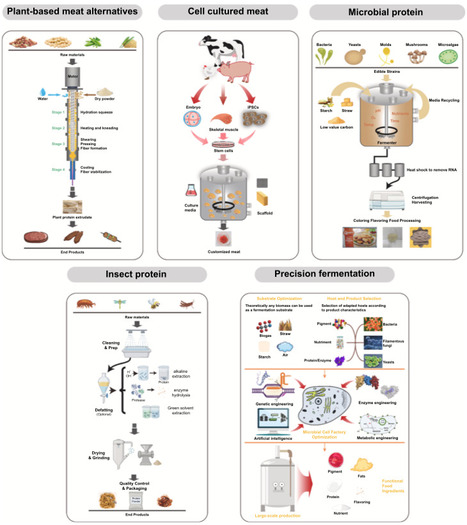
Global demand for meat is expected to increase by up to 50% by 2050. This crisis cannot be ameliorated by blindly increasing animal meat production. Innovative approaches are needed to replace or complement animal proteins, ensuring global access to safe, high-quality, and palatable foods while enhancing production and supply chain sustainability. Alternative proteins are an emerging branch of food science aimed at addressing the issues associated with the traditional meat industry. Alternative proteins integrate multidisciplinary technologies from food science, biotechnology, and material manufacturing. However, substantial modifications are required to facilitate the realization of large-scale production of alternative proteins for food supply. Here, we review the status of the alternative protein industry by covering aspects such as production efficiency, health attributes, China's and global industry scenarios, and hurdles in the progression of this industry. We further assess prospective development trajectories and offer constructive suggestions to guide sustainable growth in the alternative protein industry.
|
|
Scooped by
mhryu@live.com
August 14, 12:42 AM
|
Microbial co-cultivations remain relevant in the search for new antibacterial compounds and may be the most effective way to detect bioactive metabolites that may prove necessary to combat rising antimicrobial resistance. However, manual streaking of co-cultivation partners is labor intensive and induces variations, compromising the throughput and accurate assessment of microbial interactions. We propose a customizable method by repurposing an automated culture handling robot for precise and repeatable co-cultivation studies on solid medium. Sourced from two 96-well plates, microorganisms are gridded pairwise at defined distances, accounting for different growth rates and required space. For small bacteria colonies gridded in short distances, a maximum of 960 combinations can be tested in one run on two 24 × 24 cm culture trays. Additional to the monitoring of pairwise interactions, a secondary analysis using bacterial agar overlays can be employed to screen for zones of inhibition. We demonstrate the adaptability of our method by co-cultivating arctic marine actinobacteria and fungi, as well as human pathogenic bacteria for growth inhibition studies. This method allows for rapid screening of large isolate collections, addresses the shortage of automated co-cultivation methods, and leads to new findings in the field of natural product discovery.
|










encapsulation review