Your new post is loading...

|
Scooped by
mhryu@live.com
August 18, 12:14 AM
|
Recent FDA-approved gene-editing therapies illustrate not only the transformative potential of biotechnologies using CRISPR-derived ribonucleoproteins in treating a broad range of diseases but also the spectrum of possible molecular variations CRISPR therapeutics can adopt. These include exagamglogene autotemcel, an ex vivo therapy for hemoglobinopathies using CRISPR nuclease Cas9, and kayjayguran abengcemeran, an in vivo therapy using a protospacer adjacent motif-altered base-editing Cas9 variant for an ultra-rare metabolic disorder. Together, these therapies underscore how far CRISPR has advanced beyond its original use as a tool in biological/biomedical research. In this opinion article, we argue that as CRISPR biotechnologies advance beyond the relative simplicity of in vitro applications, our understanding must also evolve to address the challenges of optimizing ‘on-target’ and ‘off-target’ mutational activities across the diverse contexts in which they occur. clinical
|
|
Scooped by
mhryu@live.com
August 17, 11:36 PM
|
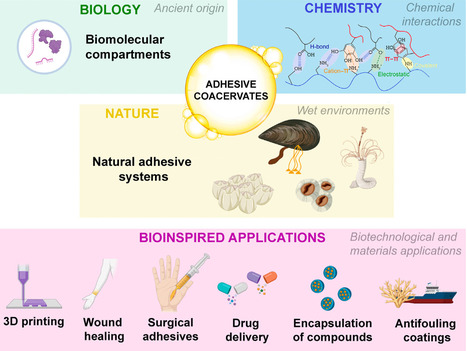
Achieving robust adhesion in wet and biological environments remains a major challenge in biotechnology and medicine. Coacervates are emerging as versatile adhesive platforms that function effectively under hydrated conditions. Their fluid-like nature enables efficient spreading at interfaces, while subsequent mechanical reinforcement stabilizes adhesion without permanent curing. In this review, we present a unifying framework in which adhesion arises from the interplay of interfacial wetting, multivalent interactions, viscoelastic energy dissipation, and kinetic arrest. We discuss how designing phase behavior and arrest dynamics can transform coacervates into functional bioadhesive interfaces for tissue sealing, drug delivery, and biointerface engineering. Finally, we outline challenges in predictive design, spatiotemporal control over arrest, and clinical translation, highlighting adhesive coacervates as multifunctional materials for complex wet environments.
|
|
Scooped by
mhryu@live.com
August 17, 4:56 PM
|
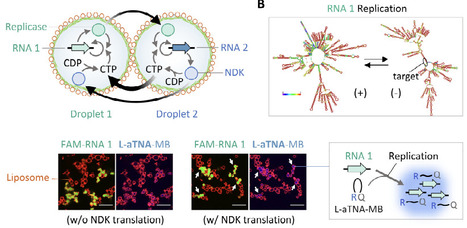
Multicellular organization enables biological functions to be distributed among specialized cells and coordinated through intercellular communication. Integrating this organizational principle with genome replication would link functional division of labor to the propagation of genetic information. Here, we show that genomic RNAs with complementary functions can cooperatively replicate across communicating artificial compartments. We constructed multicell-like colonies from all-aqueous droplets formed by phase separation of two incompatible polymers and stabilized at their interfaces by liposomes and amyloid-like proteins. The droplets assembled spontaneously while remaining permeable to protein-sized macromolecules. Two genomic RNAs encoding a replication enzyme and a metabolic enzyme were distributed in distinct colony-forming droplets and cooperatively replicated through cell-free translation and reciprocal molecular communication. These findings establish that genome replication can be collectively supported by communicating artificial compartments and provide a route toward multicell-like systems that coordinate spatially distributed genetic functions.
|
|
Scooped by
mhryu@live.com
August 17, 4:41 PM
|
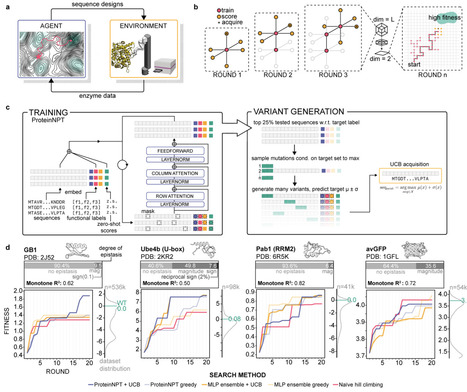
Biological AI learns primarily from existing observations, but many questions cannot be answered from available data alone. Here we show that AI can instead acquire knowledge by acting directly on biological systems and learning from the consequences. We developed a closed-loop framework in which autonomous agents design protein variants, construct and characterize them in a robotic laboratory, learn from the resulting experimental feedback, and decide what experiments to perform next. We then allowed the system to operate continuously and without human intervention for approximately one month, during which multiple agents independently explored protein sequence space while learning from shared experimental experience. Applied to glycoside hydrolases, the agents discovered enzymes with substantially altered substrate specificity toward non-native sugars and progressively learned the structure of the underlying sequence-function landscape. The resulting experimental experience also revealed determinants of substrate specificity and protein expression that were not specified as learning objectives. These results demonstrate that AI can autonomously interact with biology over extended periods to acquire knowledge through experience, establishing a framework for biological discovery driven by continuous experimental interaction.
|
|
Scooped by
mhryu@live.com
August 17, 3:50 PM
|
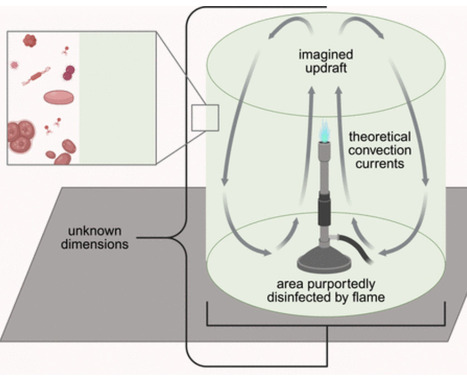
Microbiologists often use Bunsen burners to reduce airborne microbial contamination in their workspace. In theory, the burner’s flame pushes air—and the microbe-containing particles therein—up and away from research materials. This is purported to create a disinfected zone that improves asepsis. While such use of a Bunsen burner is promoted in numerous textbooks, peer-reviewed publications, and university-affiliated websites, our search for data on Bunsen burner efficacy revealed a dearth of experimental evidence in scientific literature. Therefore, we designed and conducted a series of laboratory experiments to test the utility of this method, hypothesizing that the flame would reduce airborne contamination. We intentionally inoculated the air in a laboratory space with bacteria, then collected data on the deposition of airborne contaminants using a paired settle plate method. On average, plates adjacent to an active Bunsen burner do not experience a reduction in colony-forming units (CFU) settling. Linear regression indicates that results are environmentally context dependent: plates adjacent to Bunsen burners with 18 mm flame diameter exhibit mildly decreased deposition of dry particles when control contamination rates exceed 83 CFU/min, but increased dry particle deposition at contamination rates below that cutoff. Duration of flame activity is not associated with improved aseptic outcomes, regardless of flame size or particle moisture. Taken together, these data suggest that 18 mm Bunsen burners should be selectively implemented only in situations of “high and dry” airborne contamination. Outside this specific context, their activity is either neutral or detrimental to laboratory asepsis.
|
|
Scooped by
mhryu@live.com
August 17, 3:30 PM
|
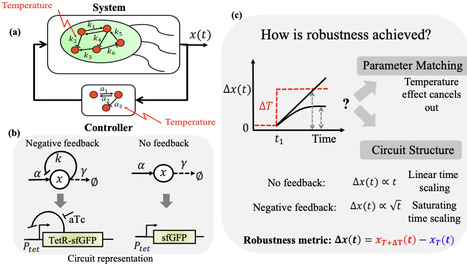
The dominant paradigm for temperature robustness in biomolecular circuits is for the parameters to be tuned to have matching temperature dependencies so that their overall effect cancels out. This contrasts with the robustness due to circuit structure, typically operative in circuits where robustness to a single input parameter is desired. The importance of the circuit structure in temperature robustness is generally unclear. We addressed this issue in a benchmark negative feedback circuit using a combination of theoretical modelling and experimental measurements. We found that the response to a temperature perturbation in a model of negative feedback was qualitatively different from the response in a model without feedback. We experimentally measured the response of the negative feedback circuit to a temperature perturbation and found that it was smaller than that of the circuit without feedback, in line with the theoretical finding. We confirmed this theoretical prediction experimentally. The initial response of the negative feedback circuit, paradoxically, was larger than the circuit without feedback. The resolution of this paradox was in accounting for the faster dynamics in the negative feedback circuit. These results show a simple design principle of temperature robustness that can operate in a widespread circuit motif and may also apply to other perturbations which, like temperature, affect multiple parameters simultaneously.
|
|
Scooped by
mhryu@live.com
August 17, 2:43 PM
|
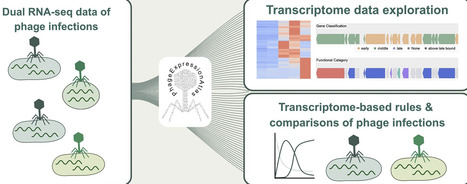
Time-resolved transcriptomic profiling has been used to study phage–host interactions for more than a decade. However, the resulting datasets are not readily accessible for custom re-analysis, and resources are lacking that provide standardized processing, storage, and analysis of transcriptomes from phage infections. Here, we present the PhageExpressionAtlas, the first bioinformatics resource for storing time-resolved dual RNA-sequencing data from phage infections. This data was processed uniformly using a custom analysis pipeline and is presented for interactive exploration through visualization. The PhageExpressionAtlas currently hosts 42 datasets from 23 studies. Using the PhageExpressionAtlas, we replicate key findings from original publications and extend hypothesis testing across multiple phage–host systems. By systematically querying and analyzing the underlying database, we evaluate approaches to phage gene classification and find that uncharacterized phage genes dominate all infection phases, with their distribution depending strongly on the classification strategy. Moreover, we provide a comprehensive view of the expression dynamics of anti-phage defenses as well as host- and phage-encoded anti-defense systems in the infection context, indicating unique and conserved patterns of transcriptional regulation underlying bacterial anti-phage immunity and phage counter-strategies. Together, the PhageExpressionAtlas is a unifying resource that democratizes transcriptomics-driven analyses of phage–host interactions and supports integrative cross-study assessment.
|
|
Scooped by
mhryu@live.com
August 17, 2:10 PM
|
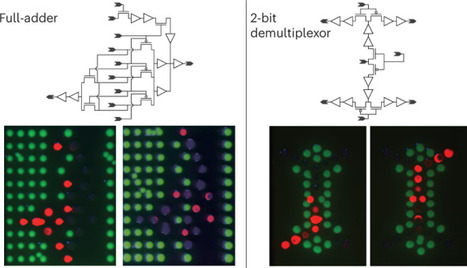
The multicellular forms and functions seen in biology are controlled by cellular communication and collective computation. Reprogramming natural systems is difficult because they comprise many signaling molecules connecting a web of regulatory networks within cells. Here we apply principles from pass transistor logic (PTL) to design bacteria that can be easily reconfigured to perform computations on a solid surface. Strains of Pantoea agglomerans were built to encode two transistors (N-type and P-type) whose inputs and outputs are small molecules. They are connected by three relay strains that convert molecular diffusion to unidirectional flow. To build circuits, an acoustic liquid handler prints patterns of these five strains on a surface. By changing the pattern, not requiring any genetic changes, different operations are implemented, including multi-input multioutput logic, demultiplexor, half-adder and full-adder. This work demonstrates that only five cell types, each encoding a simple operation, can be scaled to create complex computational operations. Electronic circuit boards carry out different operations on the basis of the configuration of their components. Now, equivalent biological circuits are engineered that compute functions on the basis of the spatial arrangement of different bacterial strains printed on a surface.
|
|
Scooped by
mhryu@live.com
August 16, 1:37 PM
|
Polystyrene (PS), a petroleum-based synthetic polymer which is extensively used in packaging, insulation, and consumer goods, has emerged as a major environmental pollutant. This report provides a comprehensive overview of recent advances in biological and synthetic biology strategies for novel PS-degrading microorganisms, including bacteria and fungi isolated from unique ecosystems such as insect gut microbiomes and extreme environments. Insects like mealworms and superworms have demonstrated the ability to ingest and degrade PS through symbiotic microbial activity, while fungi such as Aspergillus tubingensis and marine-derived fungi contribute enzymatically to polymer breakdown. Advances in enzymology involving oxidative enzymes like laccases and peroxidases have improved our understanding of PS degradation at the molecular level, supported by innovations in enzyme engineering and immobilization. The paper also examines the biodegradation abilities of bacteria, fungi, and microbes associated with insects and critically analyzes the methods used for degradation assessments, differentiating between genuine biodegradation and mineralization versus surface oxidation, fragmentation, and reduction in polymer weight. Moreover, the advancements in synthetic biology, which include metabolic engineering and engineered microbial consortia, and the biological upcycling of PS intermediates to valuable products, are also covered in light of the circular economy approach.
|
|
Scooped by
mhryu@live.com
August 16, 1:28 PM
|
Out-of-frame translation events, arising from ribosomal frameshifting or noncanonical initiation, are an unavoidable feature of translation. Their consequences depend on the distribution of stop codons in alternative reading frames, which determines the permissiveness of those frames: whether out-of-frame translation terminates quickly or generates extended products. Using quantitative dual-fluorescence reporters, we show that these stop codons function as molecular checkpoints that terminate out-of-frame translation. Genome-wide analysis across 10 organisms reveals that natural coding sequences maintain dense stop codon distributions in alternative frames, with a median spacing of approximately 20 amino acids. Codon optimization, the standard method for enhancing translation, systematically depletes this safeguard. Because all three stop codons (UAA, UAG, UGA) begin with uridine, and optimal human codons exclude uridine from third positions, stop codons in the −1 reading frame become structurally impossible in codon-optimized sequences. Analysis of 120 therapeutic sequences, including FDA-approved COVID-19 messenger RNA (mRNA) vaccines, confirms widespread −1 frame stop codon depletion: out-of-frame products average 164 amino acids, sixfold longer than in natural human genes. Strategic restoration of stop codons through synonymous substitutions eliminates detectable out-of-frame products by mass spectrometry while preserving the intended protein. Although such products and immune responses have been detected in COVID-19 mRNA vaccine recipients, there is no evidence they cause clinical harm; nonetheless, our approach offers a simple way to eliminate them through informed sequence design alone, without changes to manufacturing or regulatory frameworks. Our findings establish stop codon distribution as a critical design parameter for protein-coding nucleic acid therapeutics.
|
|
Scooped by
mhryu@live.com
August 16, 11:08 AM
|
Drug discovery (DD) is a complex, time-consuming, and resource-intensive process that involves the identification of therapeutic targets, selection of bioactive compounds, and extensive experimental validation. The discovery of promising therapeutic compounds from large libraries of phytochemicals and synthetic molecules remains a major challenge in modern drug development. Screening millions of compounds through conventional experimental approaches requires substantial time, cost, and computational resources. In recent years, in-silico molecular docking has emerged as an important computational approach for predicting interactions between small molecules and target proteins, thereby helping researchers prioritize promising compounds for further investigation. Several molecular docking webservers, including iScreen, SwissDock, CB-Dock2, DockThor, and MTiOpenScreen, have been developed to support virtual screening studies. However, many currently available platforms still face some important limitations. Most existing tools lack integrated repositories of medicinal plant-derived phytochemicals and organism-derived bioactive compounds, automated mapping between plants and their associated phytochemicals, and flexible ligand retrieval using chemical names, SMILES strings, PubChem CIDs, or drug names. In addition, many platforms require extensive manual protein and ligand preparation, provide limited support for AlphaFold-predicted protein structures, and lack efficient large-scale multi-target virtual screening. Most existing docking platforms offer limited support for interactive inspection of docked protein-ligand complexes, often requiring users to download the results and analyse them using external molecular visualization software. To address these limitations, we developed FlexAutoDock, an automated cloud-based molecular docking platform that provides a unified environment for protein-ligand docking and large-scale virtual screening. Unlike existing web servers, FlexAutoDock integrates curated repositories of medicinal plant-derived phytochemicals, organism-derived bioactive compounds, and synthetic compounds from the ZINC database while supporting flexible ligand acquisition through medicinal plant or organism selection, chemical names, SMILES strings, PubChem CIDs, and drug-name queries. The platform further streamlines the docking workflow through automated protein structure retrieval from the Protein Data Bank and AlphaFold databases, receptor and ligand preparation, chain-specific protein selection, blind and site-specific docking, interactive visualization of predicted protein-ligand complexes, and scalable multi-target virtual screening. The resulting platform enables rapid, flexible, and large-scale virtual screening while simplifying the molecular docking workflow, providing researchers with an accessible computational resource for accelerating early-stage drug discovery. FlexAutoDock offers a fast, reliable, and accessible computational platform for molecular docking and virtual screening, freely available to the scientific community at http://103.99.177.82:3000/ .
|
|
Scooped by
mhryu@live.com
August 16, 12:59 AM
|
The global spread of antimicrobial-resistant (AMR) bacteria represents one of the greatest threats to modern medicine, making the development of novel therapeutic strategies urgent. Phage therapy, which exploits bacteriophages (phages, viruses that infect and kill bacteria) has regained attention as a therapeutic approach for multidrug-resistant infections. One critical determinant of treatment outcome is the capacity of phages to sustain bacterial growth suppression; however, no metric has existed to directly quantify the duration of effective lytic activity. Here, we propose the Sustainability Index (SusI), a novel metric that quantifies both the duration and extent of phage-mediated bacterial growth suppression, restricted to the primary lysis period from lysis initiation to resistance emergence. Evaluation of individual phages and two-phage cocktails against both laboratory and clinical isolates of E. coli demonstrated that SusI provides information independent of the Virulence Index, which primarily reflects bactericidal activity during the initial phase of infection, and serves as a complementary metric to the Suppression Index, which may incorporate behavior beyond primary lysis. Cocktails composed of phages targeting different receptor specificities consistently exhibited higher SusI values, consistent with the notion that multifaceted selective pressure delays resistance emergence. Furthermore, in a mouse model of systemic infection established by intraperitoneal administration, cocktails with higher SusI values demonstrated superior therapeutic efficacy. These results confirm SusI as a practical metric for rational phage cocktail design. As phage therapy advances toward clinical implementation, standardized quantitative metrics such as SusI are expected to facilitate evidence-based selection of therapeutic phages across diverse pathogens and infection conditions.
|
|
Scooped by
mhryu@live.com
August 16, 12:47 AM
|
Production of customized yeast single-cell protein (SCP) from CO2 offers a sustainable avenue to convert a major carbon emission process into a carbon-conserving production route of food and feed. Here, we highlight a specific approach for SCP production from CO2 using sequentially connected yet spatially separated tandem biological systems, which consist of a first unit for CO2 fixation followed by a second unit for precision fermentation toward customized SCPs. We discuss the design principles of the system, review current efforts to convert CO2 using natural and engineered autotrophs, and outline the potential of yeast for customized SCP production. Finally, we underscore the critical role of nitrogen sources for efficient SCP production.
|
|
|
Scooped by
mhryu@live.com
August 18, 12:06 AM
|
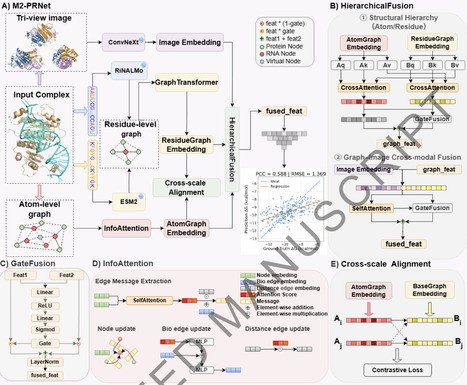
Predicting protein–RNA binding affinity is crucial for understanding cellular regulation and advancing RNA-targeted drug discovery. However, this task remains challenging due to structural complexity, limited labeled data, and insufficient modeling of fine-grained interactions. We propose M2-PRNet, a multi-scale and multi-modal framework that integrates atom-level graphs, residue-level graphs, and tri-view molecular representations to capture complementary structural information. A cross-scale contrastive learning objective is introduced to align representations across different structural resolutions of the same complex. Under a clustering-based five-fold cross-validation setting on benchmark datasets, M2-PRNet achieves state-of-the-art performance. To further assess generalization under reduced sequence homology, we construct homology-aware RNA-cold, protein-cold, and dual-cold evaluations under a stricter 40% sequence identity threshold, where M2-PRNet maintains competitive performance. To account for conformational flexibility, we evaluate the model on MD150-1ns and an extended MD75-10ns subset, demonstrating stable performance under MD-derived structural perturbations. In addition, representative case studies suggest that M2-PRNet can highlight relevant RNA-binding regions and support preliminary discrimination between strong and weak binders when plausible complex structures are available. These results demonstrate the effectiveness of integrating multi-scale and multi-modal representations with cross-scale alignment for protein–RNA affinity prediction.
|
|
Scooped by
mhryu@live.com
August 17, 11:24 PM
|
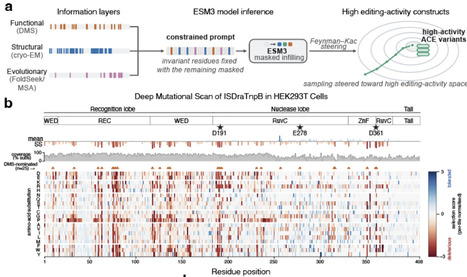
The problem of how protein sequences translate into defined functions remains largely unsolved despite decades of progress. New methods to efficiently explore protein sequence space will help to shed light on these sequence-function relationships, particularly for complex protein function. Here, we describe an approach to create novel, functional proteins through the integration of deep mutational scanning, structural analysis, and evolutionary mining within prompts for a generative protein language model (PLM). We demonstrate the utility of this approach with the generation of novel compact RNA-guided nucleases. This approach is highly efficient, resulting in active nucleases with ~40% sequence divergence relative to natural proteins and activity equivalent to or exceeding by up to ~3X that of other compact nucleases at multiple endogenous loci in human cells. The approach described here is rapidly deployable and produces new sequences that will serve as scaffolds for further exploration of complex protein functionality, as well as substrates for novel genome engineering applications.
|
|
Scooped by
mhryu@live.com
August 17, 4:54 PM
|
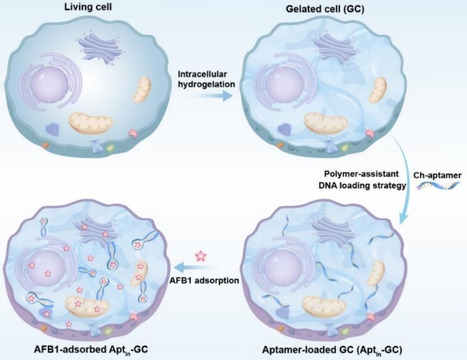
Aflatoxin B1 (AFB1) is one of the most common mycotoxins, which causes severe hepatic damage and even liver cancer. However, the development of specific tools for AFB1 diagnosis and detoxification remains elusive. Herein, we develop a DNA receptor-loaded gelated cell (DR-GC)-based adsorbent for specifically capturing and detecting AFB1, both in vitro and in vivo. In this system, fragile living cells are transformed into robust GCs using an intracellular hydrogel technique, and then loaded with aptamer-based artificial DNA receptors inside cells via a polymer-assisted strategy. These intracellular DNA receptors are excluded from a hostile environment, which exhibits high stability and retains their functionality even in complex biological media. Consequently, DR-GCs can be used to sensitively detect AFB1 and efficiently eliminate AFB1, both in vitro and in vivo. We also demonstrate the excellent therapeutic efficacy of DR-GCs using AFB1-treated male mouse models. Overall, this study is anticipated to offer useful solutions to the development of safe and effective tools for the diagnosis, elimination and treatment of mycotoxins. The mycotoxin Aflatoxin B1 is highly toxic to human beings. Here, Li and co-workers report that engineered cell particles carrying aflatoxin aptamers can be used to both detect and eliminate Aflatoxin B1, in vitro and in vivo.
|
|
Scooped by
mhryu@live.com
August 17, 4:39 PM
|
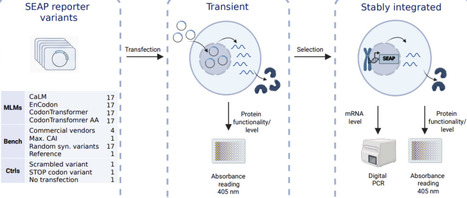
Codon optimization uses synonymous sequence changes to improve the expression and therapeutic performance of nucleic acid-based medicines. Masked language models (MLMs) have recently been proposed as alternatives to traditional, frequency-based codon optimization approaches, yet whether they offer a meaningful advantage over such simpler methods remains unclear. Here we benchmark three prominent MLMs --- CaLM, EnCodon and CodonTransformer --- across backtranslation fidelity, sequence generation and nine molecular phenotype prediction tasks, and experimentally evaluate model-designed sequences using a secreted embryonic alkaline phosphatase (SEAP) reporter. The models differed markedly in amino-acid fidelity and generated distinct synonymous sequence variants. However, no single model performed best across all benchmark tasks and simple sequence features remained competitive in several settings. Our interpretability analysis revealed that the models integrate a large window of codon context for making predictions, as opposed to frequency-based approaches. Our in vitro data showed that MLM-designed variants outperformed conventional and commercial vendor-derived sequences in both transient and stably integrated expression, supporting the models' ability to capture translational context beyond codon frequency. Together, our results establish MLMs as effective and complementary tools for codon optimization and suggest that sampling across multiple models may improve the likelihood of identifying high-performing therapeutic sequences.
|
|
Scooped by
mhryu@live.com
August 17, 3:38 PM
|
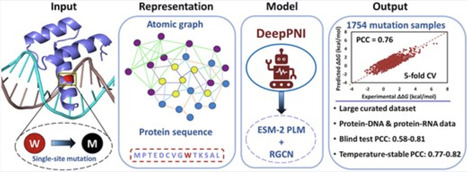
Protein–nucleic acid interactions (PNIs) are central to fundamental biological processes, and mutations can disrupt these interactions by altering local structural features and binding free energy. Here, we present DeepPNI, a deep learning regression model that integrates sequence- and structure-based features to estimate mutation-induced changes in binding free energy in protein–nucleic acid complexes. The model was developed using a comprehensive dataset of 1754 mutations spanning protein–DNA and protein–RNA complexes, representing one of the largest curated datasets for PNI binding free energy prediction. Structural features were encoded using an edge-aware relational graph convolutional network, while sequence features were represented using the Evolutionary Scale Modeling 2 protein language model. Despite the increased dataset size and heterogeneity, DeepPNI achieved an overall Pearson correlation coefficient of 0.76 in five-fold cross-validation. Consistent performance was observed across protein–DNA and protein–RNA subsets, datasets grouped by experimental temperature, and external blind test datasets, suggesting robustness against dataset heterogeneity. DeepPNI is freely available as a web server at https://research.iitbhilai.ac.in/molinfo/deeppni.
|
|
Scooped by
mhryu@live.com
August 17, 3:19 PM
|
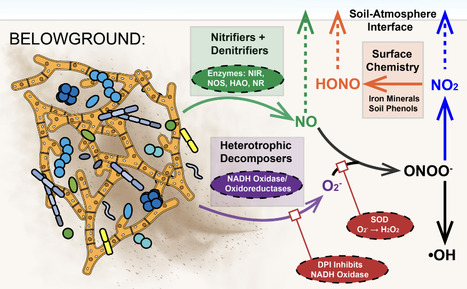
Nitrogen dioxide (NO2) is a critical atmospheric pollutant and ozone precursor, yet biogenic soil sources remain poorly constrained. Current models assume soil NO2 flux is exclusively depositional. Here we demonstrate that soils can produce NO2 through microbial superoxide (O2ˉ) production. Using controlled factorial slurry experiments, native microbial communities produced approximately 10 times more NO2 than sterile controls following nitric oxide (NO) exposure. Stimulating superoxide production with NADH increased NO2 formation 15- to 26-fold, while inhibiting NADH oxidase reduced production toward baseline levels. Superoxide dismutase decreased NO2 production by 46-71%, and O2ˉ concentration explained 60% of variation in NO2 production rates. Addition of peroxynitrite to soil increased headspace NO2, confirming this intermediate as the mechanistic link. These findings reveal a pathway linking carbon and nitrogen cycling where heterotrophic decomposers facilitate biogenic NO-to-NO2 conversion via superoxide chemistry, potentially explaining discrepancies between satellite observations and modelled soil NOx emissions. Soil microbes produce superoxide, which reacts with nitric oxide to form nitrogen dioxide directly in soil. This overlooked pathway means soils can emit NO₂ as well as NO, with implications for how nitrogen emissions are modelled.
|
|
Scooped by
mhryu@live.com
August 17, 2:34 PM
|
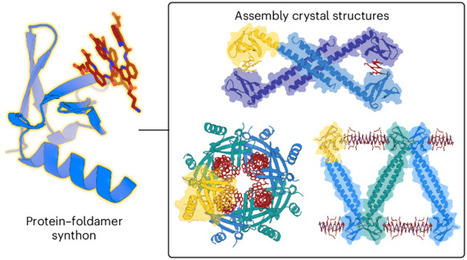
Constructing artificial assemblies that combine proteins and synthetic ligands has been hampered by the lack of protein–ligand interfaces that are sufficiently large and organized to enable precise structural control. Here ribosome display selection is used to identify a protein that binds a helical aromatic foldamer both tightly and selectively through a sizeable surface area. We used this complex as a supramolecular synthon to create well-defined hybrid foldamer–protein architectures. Examples include foldamers that bind two proteins and hold them at a precise distance, proteins that bind two foldamers and crystals in which proteins and foldamers are connected in cyclic or infinite arrays. The modularity of aromatic foldamers brings a further dimension to protein-based assemblies. A stable and modular artificial protein–foldamer helical supramolecular synthon enables the assembly of ordered architectures, in which the foldamer dictates protein orientation and spacing on the nanoscale.
|
|
Scooped by
mhryu@live.com
August 16, 1:47 PM
|
Microbial bio-surfactants are emerging as sustainable alternatives to synthetic surfactants due to their biodegradability, low toxicity, and multifunctional biological activities. Their potential in biomedical and pharmaceutical applications is increasingly recognized, yet integrated evaluations that link production strategies to translational outcomes remain limited. This review critically examines recent advances in biosurfactant production, optimization, and purification, as well as their applications in drug delivery, nanomedicine, antimicrobial therapy, vaccine formulation, wound healing, and immunomodulation. Major classes, including glycolipids, lipopeptides, phospholipids, and polymeric biosurfactants, are compared in terms of physicochemical properties and therapeutic potential. Evidence shows biosurfactants can reduce bacterial adhesion by up to 90%, inhibit biofilm formation by over 80%, and enhance antibiotic efficacy against multidrug-resistant pathogens. Biosurfactant-based carriers such as liposomes, micelles, nanoemulsions, and nanoparticles improve drug solubility, stability, bioavailability, and targeted release. Advances in engineered microbial platforms, low-cost substrates, and process optimization have enhanced production feasibility, though clinical translation remains constrained by cost, downstream processing, formulation stability, safety, and regulatory hurdles. Emerging approaches, including AI-assisted optimization and multiomics-guided discovery, promise next-generation biosurfactants with superior therapeutic performance.
|
|
Scooped by
mhryu@live.com
August 16, 1:35 PM
|
With 21 outer-membrane transporters dedicated to iron acquisition, P. aeruginosa possesses an extensive toolkit for securing this essential nutrient, but activates the expression only of those relevant to its immediate environment. Eighteen of these pathways rely on siderophores, two produced by P. aeruginosa and the others acquired from neighboring microorganisms through a siderophore-piracy strategy. Using fluorescent reporters and mathematical modeling, we quantified how catechol-type siderophores regulate transcription of their matched transporters, PfeA, FvbA, PirA, and PiuA. pfeA and fvbA showed switch-like induction by enterobactin and vibriobactin, starting at around 100 nM and plateauing at 1 µM. In contrast, N-(2,3-dihydroxybenzoyl)-L-serine, an enterobactin degradation product, selectively induced piuA transcription only in strains lacking endogenous siderophores, via a gradual response spanning 250 nM to 100 µM. pirA transcription was strongly induced by host catecholamines, with activation thresholds of 1 µM for epinephrine, 5 µM for norepinephrine, and 10 µM for L-DOPA, and plateaus between 30 and 150 µM. Iron repression uncovered distinct regulatory regimes: pfeA, fvbA, and pirA display biphasic Fur-dependent repression, with transcription decreasing beginning at 4 to 16 nM Fe and fully repressed by 32 µM, whereas piuA transcription began to decrease at 8 µM iron and was not fully repressed even at 2 mM. Together, these results reveal distinct transcriptional logics that allow P. aeruginosa to sense and decode a wide array of environmental catechols, integrate this information with iron availability, and thereby deploy an iron-uptake strategy finely tuned to competitive and host-associated niches.
|
|
Scooped by
mhryu@live.com
August 16, 11:12 AM
|
Despite growing interest in microbial lignin degradation, the ecological and taxonomic dynamics of fungal communities enriched under ligninolytic conditions remain poorly understood. We hypothesized that sequential enrichment on lignin would select specialized fungal communities, with assembly shaped by inoculum source, temperature, and lignin type. Fungal consortia from backyard compost soil and a commercial substrate were enriched on alkaline-extracted or Kraft lignin as the sole carbon source at 30°C or 37°C through six successive passages. Internal Transcribed Spacer amplicon sequencing assessed fungal diversity, taxonomic composition, and predicted ecological guilds. Richness and diversity progressively declined, indicating strong selective pressure and enrichment of specialized communities. Community composition was primarily influenced by temperature and inoculum source, whereas lignin type had limited and statistically nonsignificant effects at the genus level. Ascomycota dominated all enriched consortia, while several taxa initially detected in the source materials were progressively lost. Functional predictions indicated a predominance of saprotrophic guilds, although most assignments had moderate or low confidence. These findings highlight the importance of temperature and inoculum source in shaping fungal community assembly during lignin enrichment and provide guidance for designing and optimizing ligninolytic consortia for biotechnological applications.
|
|
Scooped by
mhryu@live.com
August 16, 11:05 AM
|
Environmental disturbances are ubiquitous in microbial ecosystems, yet their effects on community composition and interactions remain poorly understood. Here, we combine analytical derivations and large-scale generalized Lotka-Volterra simulations to examine how recurrent disturbances, varying in intensity (C), frequency (1/T), regularity, and evenness, affect microbial communities. We find that context-dependent interactions--representing the net effect of the entire community on each species--are robust to changes in disturbance intensity and frequency. Community composition is influenced by disturbance, but this effect is primarily captured by a single composite parameter T/log(C), reducing the two-dimensional disturbance space onto a one-dimensional axis. Species abundances and context-dependent interactions remain largely independent of specific values of T and C except near critical transition regions (survival thresholds and no-interaction zones). Sensitivity analyses show that disturbance-sensitive cases occur in the vicinity of these boundaries. This robustness extends to when the disturbance is irregular (even up to 50% stochastic variation in T or C), with uneven disturbances, when the disturbance is species-specific, and holds at any time point throughout the inter-disturbance growth phase. The patterns are independent of species richness, growth rates, carrying capacities, and interaction strengths. Our findings highlight that microbial community organization is largely conserved under recurrent environmental stress, with extinction acting as the dominant route by which disturbances reshape communities. These findings indicate that disturbance is not a strong driver of community structure and that minor variations in experimental or environmental conditions or sampling time are not expected to substantially impact microbiome composition.
|
|
Scooped by
mhryu@live.com
August 16, 12:48 AM
|
Accurate enzyme annotation remains a major bottleneck in translating rapidly growing protein sequence data into biological knowledge. Enzyme Commission (EC) prediction is particularly challenging because enzyme functions are organized hierarchically, annotations are often imbalanced across classes, and sequence similarity alone may be insufficient to resolve functional differences. To address these challenges, we developed ESM-ECForest, a two-stage framework that combines protein embeddings generated by the pretrained language model ESM-2 (Evolutionary Scale Modeling 2) with Random Forest classifiers. The first stage distinguishes enzymes from non-enzymes, whereas the second assigns one or more EC numbers to proteins predicted to be enzymatic. On an external benchmark comprising 25,778 protein sequences, ESM-ECForest achieved the highest weighted F1 score among the evaluated methods at all four EC levels, decreasing from 0.94 at Level 1 to 0.90 at Level 4. The largest relative improvements were observed for lyases (EC 4), ligases (EC 6), and translocases (EC 7), although EC 6 and EC 7 remained the most difficult classes internally. Visualization of the ESM-2 embedding space using Uniform Manifold Approximation and Projection (UMAP) revealed clustering patterns consistent with enzyme functional relationships, indicating that biologically relevant information is retained in the pretrained representations prior to supervised classification. These results support the use of pretrained protein language model embeddings as an effective foundation for enzyme annotation. By combining large-scale sequence representations with a lightweight supervised classifier, ESM-ECForest provides a scalable approach for EC prediction and may facilitate functional annotation of protein sequences derived from large genomic and metagenomic datasets.
|