


figure drawing tool, cartoon

 Your new post is loading...
 Scoop.it! 
DNA, the genetic material of life, encodes genetic information for most organisms, including humans. Its unique double-helix structure and base-pairing rules not only provide the foundation for the transmission of genetic information, but also offer a natural molecular tool for nanomaterial construction. DNA nanostructures, composed of DNA, possess advantages such as controllable structures, simple assembly, easily modified, and excellent biocompatibility. These features make them highly promising for applications in tissue engineering and biomedicine, such as providing new strategies to combat infectious diseases caused by pathogenic microorganisms. Their tunable sizes and shapes enhance cellular uptake and tissue penetration of antimicrobial agents, improving cell-DNA nanostructures interactions and therapeutic efficacy against pathogenic microorganisms. Meanwhile, their programmable and unique spatial configuration allows precise arrangement of probes, and their compatibility with other detection strategies improves the detection efficiency and sensitivity of pathogenic microorganisms and can block the pathways of pathogenic microorganisms into host cells. Furthermore, high drug-loading capacity and functional modification enable them to serve as carriers for various types of antimicrobial agents. These features position DNA nanostructures as key contributors to the detection, treatment, and prevention of pathogenic microorganisms, thereby supporting global public health security. Although numerous studies have demonstrated diverse successful applications of DNA nanostructures both in vitro and in vivo, substantial barriers still impede their translation into clinical use, particularly with regard to their employment in the treatment and prevention of pathogenic microorganisms. This review comprehensively introduces DNA nanotechnology, the advantages and limitations of DNA nanostructures, summarizes the progress and challenges of DNA nanostructures in the applications of pathogenic microorganisms, including detection, therapy, and prevention. Beside these, future perspectives are also discussed. 
Scoop.it!

From
www

Revisit the origin of folded proteins, using modern structure prediction tools to sample repeats of random sequences. The authors generated protein sequences of around 120 residues, comprising repeats from 5 to 120 residues, and predicted their structures. The predicted repeat sequences had a surprisingly high percentage of high-confidence predictions relative to nonrepeating sequences, 3.6% for 5-mers, and as high as 17.2% for 10-mer repeats. The predicted folded repeats were mainly β-solenoids, corresponding to previously known structures. These unusual solenoid predictions suggest that even ancient proteins were capable of metal-binding chemistry. Yang et al. find a transition from solenoid-style repeats to more globular proteins at a repeat length of 60 residues, all having similar representatives in the PDB. Even 120 residue sequences were predicted to be folded, albeit with lower confidence, at a frequency of 1 in 100,000, suggesting that even fully random short proteins might be functional. In a recent preprint, random non-repeating sequences sampled in vitro with amino acid frequencies from databases found a surprisingly high fraction of apparently folded proteins. Yang et al. show that repeats make folded islands in protein sequence space easier to reach. Their large-scale predictions recover known solenoid and globular folds, and their experimental HeliScrew structure shows that the same approach can also expose rare or previously undersampled architectures. Repeats may therefore have helped early life bridge the gap between short peptides and folded proteins, while also offering modern designers a route beyond the folds that biology happened to select.
mhryu@live.com's insight:
The emergence of novel versus known three-dimensional structures from random sequences
Scoop.it!

From
www
Engineered tumor-homing bacteria are a promising targeted treatment option for colorectal cancer (CRC). However, little is known about why they home to tumors. To investigate potential metabolic drivers of E. coli Nissle (EcN) tumor-homing, we performed targeted amino acid metabolomics using orthotopic mouse models of CRC. We identified enriched glutamate and asparagine in the tumor when compared to healthy colon tissue. To determine if the levels of glutamate and asparagine in the tumor were sufficient to support EcN survival and colonization, we generated glutamate (ΔgdhAΔgltBD) and asparagine (ΔasnAΔasnB) auxotrophic EcN mutants, resulting in bacteria that require exogenous supplementation of these amino acids for growth. The tumor-homing ability of these strains was tested in our CRC mouse model post oral dosing. Both strains survived gut transit. EcN biodistribution analysis showed that ΔgdhAΔgltBD EcN retained tumor colonisation ability, while ΔasnAΔasnB EcN had reduced tumor colonisation. Overall, our results suggest that increased levels of glutamate, but not asparagine, provided by the tumor microenvironment supports EcN growth and tumor colonisation. Conversely, endogenous asparagine production is vital for effective EcN tumor colonisation. These results help define the metabolic mechanisms required for EcN tumor-colonisation and point to novel and targetable metabolites enriched in the CRC microenvironment that could be harnessed for further EcN engineering.
Scoop.it!

Microbial food, food and ingredients produced leveraging microorganisms, represents a promising pathway toward sustainable and nutritious food systems. Translation of microbial food to everyday life, however, has lagged behind because of economic feasibility, regulations, and public perception. Innovative solutions are awaited to address current bottlenecks of microbial food in feedstock supply, microbial diversity, infrastructure requirements, and societal acceptance. At this point, local fermented food, an indispensable part of sustainable local food systems over a long period of time, can provide clues for innovation. Here, taking Indonesian fermented foods as example cases, we discuss alternative strategies for microbial food development, including feedstock and microbial host diversification, decentralized production, and culinary transformation of microbial biomass. Integrating such lessons from the local traditional fermentation strategies can help drive the translation of microbial food to daily life and sustainable production and consumption of nutritious food for human and planetary health.
Scoop.it!
Antifreeze proteins (AFPs), lower the freezing point via thermal hysteresis activity and/or ice recrystallization inhibition, playing a crucial role in protecting organisms from freezing damage under sub-zero milieu. This property endows them with promising applications in biomedicine and agriculture, ranging from tissue-organ cryopreservation to the development of frost-resistant crops. However, the lack of comprehensive resources dedicated for AFPs hinders further progress in elucidating their functional mechanisms and advancing their applications. Here, we report AFP-R, an online resource comprising AFP-DB and AFP-Predictor. AFP-DB is a comprehensive database with manually curated proteins bearing experimentally validated antifreeze activity derived from published literature, whereas AFP-Predictor is a sequence-based machine-learning model to identify AFPs. AFP-DB stores diverse AFP-related information, including sequences, structures, post-translational modifications, taxonomy and annotations of antifreeze-activity experimental assays. It now holds 186 entries, 607 sub-entries, and 1444 experimental records. AFP-Predictor, an AFP-identification algorithm built on protein language model ESM2 (Evolutionary Scale Modeling 2), is trained on data in AFP-DB and outperforms several existing models. This work offers a valuable resource for systematically dissecting the mechanisms underlying AFP antifreeze activity and will facilitate their broader applications.
Scoop.it!

From
www
Small RNA-mediated gene silencing contributes to plant immunity. The secondary small interfering RNA (siRNA) pathway promotes defense by silencing target genes in invading fungal and oomycete pathogens. Many secondary siRNAs are derived from transcripts potentially encoding pentatricopeptide repeat (PPR) proteins. Here, we report that siRNA production is an ancient function of a conserved clade of PPR genes that undergo extensive within-species diversification. In Arabidopsis thaliana, siRNA-source PPRs are physically clustered on Chromosome 1. These sequences are diversified through gene duplication followed by sequence diversification and accumulation of high-impact variations including pseudogenization, leading to the accumulation of a diverse siRNA pool. These features are consistent with the engagement of PPR-siRNAs in a co-evolutionary arms race with the pathogens. This study defines siRNA-producing PPRs as a class of defense genes and highlights the potential of PPR-siRNA-based engineering as a strategy to enhance disease resistance. Here the authors reveal a conserved small RNA-producing gene cluster that undergoes sequence diversification, driving a co-evolutionary arms race with pathogens. This native innate immunity offers new opportunities to engineer disease resistance in plants.
Scoop.it!

Although mRNA codon language models provide a generalizable framework for biological sequence design, effective CDS design requires both a learned sequence design space that captures biological constraints and context-configurable design preferences. Here we present CodonMamba, a codon language model framework for mRNA prediction and programmable CDS design. Pretrained on large-scale coding-sequence corpora, CodonMamba achieved state-of-the-art performance across a comprehensive benchmark of 12 mRNA prediction tasks, ranking first on 10 of 12 tasks. Furthermore, CodonMamba establishes a programmable CDS design framework, transforming codon optimization from a process dependent on preferences embedded during model training into an inference-time steerable generation framework. By introducing user-specified codon usage priors during generation, CodonMamba enables inference-time steering toward host- or application-specific codon preferences without retraining. In design experiments, CodonMamba enabled coordinated optimization over multiple design-relevant sequence properties and demonstrated programmable cross-host CDS retargeting through inference-time prior switching, while preserving most model-derived codon choices. Together, these results establish CodonMamba as a programmable foundation model framework for CDS design, enabling context-specific mRNA sequence engineering and highlighting a promising direction for precise mRNA design using foundation models.
mhryu@live.com's insight:
3st, Pretraining corpus and model architecture. CodonMamba was pretrained on approximately 9 million coding sequences from 1,544 organisms using masked codon prediction and a bidirectional Mamba backbone. scoring: a single number per sequence, where higher = "this sequence's codon/context patterns look more like what the model saw during its own pretraining.
Scoop.it!
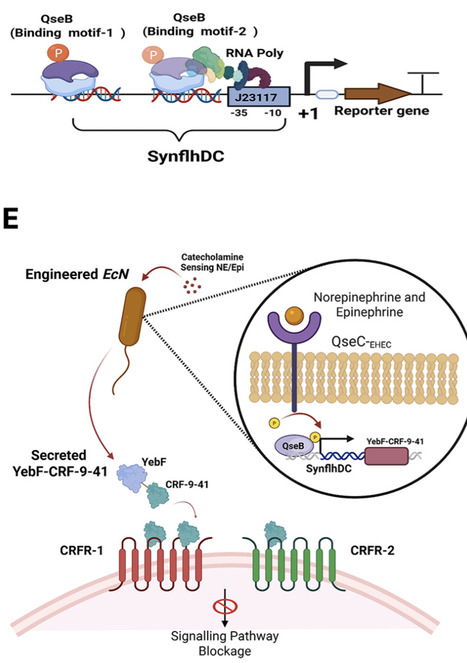
Host stress is associated with elevated catecholamine neurohormones that influence gut physiology and host–microbe interactions, yet how bacterial systems detect and interpret these signals remains incompletely understood. Enteric pathogens exploit inter-kingdom adrenergic signaling to sense host-derived norepinephrine and epinephrine, but whether such pathways can be rationally rewired to produce predictable, programmable outputs has not been systematically explored. Here, we reconstitute adrenergic signaling in E. coli Nissle 1917 by repurposing the enterohemorrhagic E. coli QseBC two-component system. Transcriptomic profiling revealed robust catecholamine-dependent activation of QseBC-regulated pathways in the engineered strain. Guided by these data, we redesigned a QseBC-responsive promoter through rational truncation, sigma-factor replacement, and optimization of QseBC expression, generating a synthetic promoter with enhanced sensitivity and dose-dependent responsiveness to stress hormones. Structure-guided mutagenesis of the QseC sensor kinase identified key residues required for catecholamine recognition, providing mechanistic insight into adrenergic hormone sensing. To demonstrate functional signal transduction beyond transcriptional reporting, we coupled the sensing module to a secretion cassette encoding a corticotropin-releasing factor (CRF) receptor antagonist as a model bioactive output and validated bioactivity in vitro. Together, this work elucidates principles governing bacterial stress hormone sensing and demonstrates how inter-kingdom signaling pathways can be engineered to yield programmable biological outputs.
mhryu@live.com's insight:
change mw, QseC is a natural sensor kinase that EHEC uses to detect norepinephrine/epinephrine in the gut. EcN has its own native qseBC genes that are ~97% identical to EHEC's, but those native EcN genes are naturally non-functional
Scoop.it!

Extracellular DNA (eDNA) plays crucial roles in biofilm formation and function, yet the role of bacteriophages, which can exist in a dormant state as prophages, in controlling eDNA synthesis, structure, and activity remains obscure. Here, we demonstrate that prophages harbored by environmental bacteria can be exploited for synthesis of programmable eDNA superstructures with a distinct function. We designed a custom circular template and used it to direct rolling circle replication of G-quadruplex (GQ) motifs in Shewanella oneidensis and Bacillus subtilis. Under nutrient-limiting conditions, prophage activation and proliferation triggered cell lysis and subsequent eDNA synthesis, producing multimeric GQ concatemers that self-assembled into spherical (≤10 µm) and wire-like (>50 µm) superstructures in S. oneidensis and B. subtilis, respectively. Real-time monitoring using fluorescent reporter strains revealed that DNA synthesis occurred predominantly after bacterial lysis, coinciding with prophage replication. The resulting eDNA superstructures enhanced the electrochemical properties of S. oneidensis and exhibited peroxidase activity through GQ-hemin DNAzyme formation in S. oneidensis and B. subtilis cocultured biofilm. This work unveils a previously unknown mechanism by which prophages contribute to biofilm architecture and establishes a novel biotechnological platform for engineering functional DNA materials in living bacterial communities with potential applications in synthetic biology.
mhryu@live.com's insight:
1str
Scoop.it!

Across all domains of life, functional amyloid fibrils serve structural, storage and signalling functions. In signalling pathways, assembly into the amyloid state constitutes a rapid and cooperative molecular switch that can reorganise protein function, promote multivalent interactions, and amplify downstream responses through templated self-propagation. Advances in the understanding of functional amyloids as regulators of signalling highlight their tailored structural properties and biological consequences. The nucleation-dependent polymerisation of amyloid enables sensitive control over activation thresholds, while the repetitive fibrillar architecture concentrates functional domains to enhance avidity and cooperativity. Controlled mechanisms for assembly, compartmentalization and reversibility prevent inappropriate persistence or activity. These features underpin diverse signaling systems, including the RIPK1:RIPK3 necrosome in mammalian necroptosis, fungal prion-based cell-death pathways and prion-like regulatory systems in yeast and metazoans that modulate translation, development and cellular memory. Functional amyloids represent a versatile and evolutionarily conserved mechanism for molecular signalling and offer opportunities for the design of programmable amyloid-based switches with potential applications in therapeutics and synthetic biology.
Scoop.it!

From
www
Reconstructing genomes from metagenomic assemblies is foundational to microbiome research, yet binning faces a persistent trade-off between fidelity and throughput. Many high-accuracy methods rely on GPU-intensive workflows, marker-gene postprocessing, or heavy computational resources, limiting reproducible use at scale. Here, we present QuickBin, a CPU-native, marker-free binning algorithm designed to recover near-complete, ultra-low-contamination metagenome-assembled genomes (MAGs) efficiently. QuickBin pairs a GC-coverage spatial index (BinMap) with an early-exit Oracle cascade of similarity tests (scalar composition/coverage filters and SIMD-accelerated k-mer comparisons), reserving a compact neural network exclusively for ambiguous merges. Across synthetic communities, evaluated by marker-based and contig-origin ground truth, QuickBin maximizes high-fidelity sequence recovery. In benchmarking 297 diverse real metagenomes, QuickBin completed all runs, recovering more high-quality MAGs (≥95% completeness, ≤1% contamination) than resource-intensive alternatives that frequently failed. QuickBin provides a practical path to reproducible, genome-resolved metagenomics at scale for downstream comparative analyses. Open-source at: https://github.com/bbushnell/BBTools . We develop and benchmark QuickBin, a fast, marker-free method for accurate and scalable metagenome binning. QuickBin recovers near-complete, low-contamination genomes while completing all real metagenome runs with short runtimes and low memory use.
mhryu@live.com's insight:
workflow: shotgun sequencing reads → metagenome assembly (a separate tool like metaSPAdes or metaFlye) → contigs → QuickBin groups those contigs into genome bins representing individual organisms in the sample. Each output bin is a FASTA file that approximates one organism's genome (a metagenome-assembled genome, or MAG), pulled apart from the mixed community.
Scoop.it!

Hemipterans (such as aphids, whiteflies, and leafhoppers) are some of the most devastating insect pests due to the numerous plant pathogens they transmit as vectors, which are primarily viral. Over the past decade, tremendous progress has been made in broadening our understanding of plant–virus–vector interactions, yet on the molecular level, viruses and vectors have typically been studied in isolation of each other until recently. From that work, it is clear that both hemipteran vectors and viruses use effectors to manipulate host physiology and successfully colonize a plant and that co-evolutionary dynamics have resulted in effective host immune responses, as well as diverse mechanisms of counterattack by both challengers. In this review, we focus on advances in effector-mediated plant–virus–vector interactions and the underlying mechanisms. We propose that molecular synergisms in vector–virus interactions occur in cases where both the virus and vector benefit from the interaction (mutualism). To support this view, we show that mutualisms are common in virus–vector interactions and that virus and vector effectors target conserved mechanisms of plant immunity, including plant transcription factors, and plant protein degradation pathways. Finally, we outline ways to identify true effector synergisms in the future and propose future research directions concerning the roles effectors play in plant–virus–vector interactions.
|
Scoop.it!
Type III secretion system effectors (T3SEs) are small bacterial proteins with big biological roles. They act as central molecular mediators of interactions between Gram-negative bacteria and eukaryotic hosts, spanning pathogenic, symbiotic and environmental contexts. Over the past three decades, T3SE discovery has progressed from genome-independent experimental assays to an expanding landscape of computational prediction methods. Early in silico approaches formalized empirically defined protein N-terminal properties into feature-engineered machine-learning models, followed by deep-learning methods that learn sequence patterns directly from amino acid sequences. More recent pipelines integrate multiple layers of information, including homology, regulatory elements, genomic context, pan-genomic context and protein language model embeddings, primarily to prioritize candidate novel effectors. Despite these advances, several challenges remain. Training data and available databases remain biased towards a limited set of well-known plant and animal pathogens; many tools are no longer maintained, and the extent to which current predictors generalize to non-pathogenic, symbiotic, environmental and host-unknown bacteria remains unclear. Here, we review the conceptual evolution of T3SE prediction, highlight persistent limitations and sources of bias, and outline open questions that must be addressed to enable robust, interpretable and ecologically inclusive prediction of T3SEs, pointing towards the need for centralized, user-friendly platforms that integrate diverse biological signals into transparent, ranked outputs suitable for experimental validation.
Scoop.it!

The emergence of antibiotic-resistant pathogens such as Staphylococcus aureus demands accelerated antimicrobial discovery strategies. Artificial intelligence (AI) enables large-scale inference of candidate antimicrobial peptides (AMPs), yet experimental validation remains essential to determine whether predictions translate into biological function. Genome-guided mining, rather than unconstrained or randomly generated sequence exploration, offers a biologically grounded search space derived from organisms shaped by ecological and evolutionary pressures. Here, we evaluate this principle using Malassezia furfur, a skin-associated yeast that coexists with bacterial colonizers such as S. aureus, as a genomic source for AI-prioritized antimicrobial candidates. Candidate fragments were generated from two M. furfur genomes, filtered by physicochemical properties, prioritized with deep-learning AMP predictors, synthesized, and experimentally characterized. Selected peptides underwent cross-kingdom antimicrobial screening against S. aureus, combining kinetic growth and ultrastructural assays, complemented by in silico structural prediction, lipid-membrane interaction analysis, and human keratinocyte cytotoxicity evaluation. AI-guided genomic mining enriched biologically motivated sequence space for peptides with measurable antimicrobial activity, while revealing biases and generalizability limits of AI-based AMP inference. Closing the loop between genome-derived candidate generation, AI-based inference, synthesis, and functional characterization, this study provides an experimental assessment of model-guided AMP discovery and a reproducible route from computational prediction to validated antimicrobial candidates.
mhryu@live.com's insight:
translate DNA fragments into peptide sequences --> Each fragment was scored on standard AMP-relevant descriptors (length, net charge, hydrophobic moment, instability index, isoelectric point) and only fragments meeting AMP-like criteria were kept: length 10–50 aa, net charge +3 to +7.5, hydrophobic moment ≤0.6. This cut the pool by >95%, down to tens of thousands of fragments. The remaining fragments were run through AMPs-Net, deep-learning AMP classifier, which assigns a probability that a sequence is antimicrobial. Only fragments with probability >0.90 were kept (roughly 800–1,000 per strain/enzyme combination). scored by AMPs-Net's multiclass head, which estimates subclass probabilities (antibacterial, antifungal, antiviral, antiparasitic). Only fragments with antibacterial probability >0.95 were retained
Scoop.it!

Dairy proteins are among the most nutritionally and functionally valuable proteins used in food, clinical nutrition, and infant nutrition, yet their supply remains structurally linked to livestock production and dairy processing streams. Precision fermentation offers, based on proven technology, a route to produce individual milk proteins independently of animal agriculture while preserving their molecular identity and application potential. Recent advances in host engineering, secretion capacity, and bioprocess optimization have moved recombinant milk proteins from proof-of-concept toward industrial relevance. However, not all milk proteins are equally tractable fermentation targets. In this opinion article, we examine β-lactoglobulin, α-lactalbumin, and caseins through the lens of nutritional value, functionality, manufacturing complexity, and commercial readiness. We argue that future success will depend less on sequence expression alone than on scalable biomanufacturing technology and know-how, post-translational fidelity, and application-driven target prioritization.
mhryu@live.com's insight:
m-1str, 21st
Scoop.it!
Electrical impedance for studying microbial biofilms: dynamics, disruption, and susceptibility | npj
From
www
Microbial biofilms contribute significantly to chronic and device-associated infections, exhibiting pronounced tolerance to antimicrobial therapies and host immunity. This review evaluates real-time electrical impedance-based technologies as complementary, label-free platforms for dynamic biofilm monitoring. We examine their applications in characterizing biofilm development, antimicrobial susceptibility, polymicrobial communities, and post-treatment regrowth, while discussing key methodological limitations, standardization requirements, and their potential to advance translational biofilm research and individualized infection management.
Scoop.it!

From
www
Gut Clostridia species, including commensal members of the Clostridiaceae and Lachnospiraceae families, maintain microbiota homeostasis and influence human health and disease; however, adequate genetic toolsets to study abundant but nonmodel gut Clostridia are lacking. Here we present a set of transferable and modular genetic toolsets that function broadly across phylogenetically diverse gut Clostridia. We first identify a panel of strong constitutive promoters that drive robust gene expression across diverse clostridial strains. We then develop an inducible promoter system that enables precise, tunable gene regulation and facilitates the implementation of CRISPR–Cas gene-deletion systems. We apply this system for targeted and reversible control of trimethylamine and deoxycholic acid production, two microbiota-derived metabolites implicated in host lipid metabolism and diseases, in mice. This robust genetic toolkit for nonmodel gut Clostridia enables functional studies to causally link microbiota genes to host physiology and disease, paving the way for therapeutic genetic engineering of microbiota. Genetic engineering tools are developed for nonmodel gut Clostridia, which influence human health.
mhryu@live.com's insight:
genetic part, toolkit
Scoop.it!
The 16S rRNA gene has - and continues to - play an important role in microbiology. It’s universality across prokaryotes and variation across species has allowed the sequencing of its hypervariable regions to be used to distinguish taxa within complex mixed bacterial communities. Although 16S rRNA gene sequencing has transformed our understanding of microbial communities, its use comes with important caveats and considerations, especially in light of the availability of whole-genome metagenomic sequencing. Within, we discuss the 16S rRNA gene and its important role in microbiome research, in the past, present, and future.
Scoop.it!

From
www
Biological nitrification inhibition (BNI) is a plant-mediated process that suppresses nitrification and is widely considered beneficial for reducing nitrous oxide emissions. Here, we show that methane oxidation is consistently suppressed in soil bioreactor systems containing the BNI-active plant Brachiaria and in methanotrophic pure cultures exposed to representative BNI compounds. Kinetic analyses indicated an uncompetitive-like inhibition pattern, characterized by concurrent decreases in Vmax and Km, while reversibility assays showed that inhibition was not associated with loss of cellular viability. Experiments under copper-replete and copper-depleted conditions further suggested that inhibition is primarily associated with particulate methane monooxygenase. Transcriptomic analyses demonstrated compound-specific responses, including suppression of methane oxidation pathways and altered expression of stress-associated genes. These findings suggest that plant-derived nitrification inhibitors may simultaneously inhibit methane oxidation while reducing N2O emissions, revealing a previously unrecognized trade-off in greenhouse gas regulation. Biological nitrification inhibition compounds suppressed methane oxidation and nitrification, suggesting a link between biological nitrification inhibition and methane cycling, based on soil bioreactor experiments and metagenomic sequencing.
Scoop.it!
The rhizosphere is a narrow and dynamic soil zone where bacteria and fungi establish symbiotic and synergistic relationships with each other and with plants, collectively influencing nutrient cycling, soil health, and overall ecosystem functioning. Mycorrhiza Helper Bacteria (MHB) are a diverse group of bacterial taxa that promote mycorrhiza establishment, together with those that positively influence already established symbiotic associations. MHB have been largely described from the perspectives of interaction mechanisms, ecological functions, or agricultural applications, treating them as generalized fungal growth-promoters or biofertilizers. However, how their effects change throughout fungal development has received little attention. This review addresses this knowledge gap by reframing MHB not as generic growth promoters, but as stage-specific regulators of the fungal development program. We integrate current evidence on transcriptional responses, metabolite-mediated signaling, and emerging small RNA regulatory networks across five sequential phases of the fungal life cycle: spore germination, presymbiotic hyphal growth, mycelial expansion, root colonization, and nutrient uptake. Elucidating these stage-specific regulatory mechanisms may provide the basis for the rational, stage-targeted design of MHB-based innovative strategies for sustainable agriculture.
Scoop.it!

From
www
Biomaterials underpin diverse clinical and technological applications, including orthopaedic implants, resorbable scaffolds, soft-tissue hydrogels and biosensing interfaces. Their design remains challenging because performance depends on the simultaneous optimization of mechanical, chemical and biological properties across composition, processing conditions and multi-scale structure. Machine learning (ML) and deep learning (DL) can be used to accelerate this process by modelling process–structure–property relationships, prioritizing informative experiments and supporting more systematic, data-guided design. These approaches can accelerate biomaterials discovery by enabling rapid property prediction, candidate generation and experiment prioritization across diverse material classes. In this Review, we survey these core methodologies alongside public datasets to illustrate their applications across four major biomaterial classes: metals, polymers, ceramics, and biological materials. Although ML models enable rapid optimization of material properties, their effectiveness is limited by challenges related to data scarcity, protocol heterogeneity, model interpretability and multi-scale integration. The combination of self-driving laboratories, multimodal data fusion and federated Findable, Accessible, Interoperable and Reusable (FAIR)-compliant infrastructures, together with physics-informed and explainable AI, offers the potential for autonomous, sustainable pipelines for personalized, high-performance biomaterials. This Review surveys machine learning methods, including surrogate modelling, generative design and active learning loops, for predicting and optimizing properties across metals, polymers, hydrogels, ceramics and biological biomaterials. Additionally, key datasets, challenges (such as data scarcity, heterogeneity and interpretability) and future autonomous discovery pipelines are outlined.
mhryu@live.com's insight:
elm
Scoop.it!
Despite increased recognition of the diverse resident microbiome of the urinary tract (i.e., the urobiome) in postmenopausal women, the roles and functions of these microbes remain largely unknown. Further empirical research is needed to understand the physiology, interactions, and antibiotic resistance evolution of urobiome members with pathogenic potential. However, experimental work relies on viable, culturable isolates. Standard urine culturing practices are designed for identifying a narrow set of known urinary microbes, and are thus poorly suited for cultivating taxa from the resident urobiome. Here we expand the urine culturing toolkit to reliably recover diverse urobiome taxa for downstream empirical research. Urine samples collected from postmenopausal women with recurrent urinary tract infections were shipped at ambient temperature to a central point for culturing. Microbial viability was maintained using boric acid preservative tubes during multi–day transport of sample aliquots. Selective media incubated under specialized conditions were used to promote recovery of diverse urobiome members, including fastidious taxa. Under 5% CO2 –enriched atmospheric conditions and with longer incubation times, we leveraged a chromogenic agar (UTIC) to further differentiate isolates based on colony color and morphology. We evaluated the workflow for its ability to isolate and characterize urobiome taxa, as determined by morphological differentiation and taxonomic identification. Across 108 urine samples, 6.3 ± 3.2 distinct isolates were recovered, with no detectable relationship between sample shipment duration and isolate richness. On chromogenic agar, colony growth and color intensity was improved with CO2 –enriched atmospheric conditions and extended incubation times. We identified diverse taxa that are typically underrepresented in standard diagnostic culture and provide novel morphological characterizations for members of the genera Actinotignum, Aerococcus, Facklamia, Lactobacillus, Latilactobacillus, Limosilactobacillus, and Streptococcus species, which have not been previously described on UTIC chromogenic agar. Using this novel workflow, we recovered a diverse collection of urobiome isolates from urine samples shipped over multiple days. We also demonstrated the utility of a chromogenic agar for the visual differentiation of key urobiome taxa. While sequencing approaches have enhanced our understanding of urobiome composition, culturing is needed to investigate microbial interactions, virulence mechanisms, and antimicrobial susceptibility. This protocol adds to the growing toolkit for the cultivation of diverse urobiome isolates needed to support downstream empirical studies and advance urinary tract infection research.
mhryu@live.com's insight:
isolation enrichment methods
Scoop.it!
From
www
Plants have coevolved with microbes for nearly 500 million years; however, their interrelationship is not well understood. Plant roots have an intricate relationship with soil microbes. Such relationships mold the growth, development, immunity and physiology of plants and thus are of immense interest to agriculture and the environment. Technological advancements in sequencing, imaging, omics, synthetic biology and artificial intelligence have allowed scientists to dissect such relationships to a higher resolution. Thus, these advances have facilitated a deeper understanding of plant–microbe interactions and their role in the life cycle of plants and the environment. However, factors such as microbial diversity, microbial abundance, heterogeneity of soil and plasticity of the environment have precluded a clear in situ understanding of microbial community structure. Thus, constructing synthetic microbial communities or SynComs and investigating their effect on plants in a controlled environment offers a reductionist and manageable approach to understand plant–microbe relationships. This approach reduces the confounding variables present in the natural environment and facilitates the understanding of such complex interactions. Members of such communities are identified using 16S rRNA sequencing and are constructed using few microorganisms; often fungal strains are added for cross-kingdom SynComs. Metabolic modeling, metabolic cross-feeding along with ecological and evolutionary principles, can be used while choosing candidates for SynComs. Scalability, transferability, reproducibility, predictability and stability are the major bottlenecks in SynCom research. This emerging area of science may have transformative impact in agriculture, environment and space colonization. In this article, we present our perspective on the latest advancements, challenges and future potential of this technology.
Scoop.it!

From
www
Sugar signalling is a cornerstone of anatomical plasticity and reproductive success, tailoring plant development to metabolic and environmental cues. The demonstration of a C-terminal hexapeptide-dependent mechanism for the autoinhibition of cytosolic invertase activity that is controlled by protein phosphorylation and 14-3-3 protein binding is pivotal to our understanding of carbohydrate metabolism and sugar signalling, as is the knowledge of how this mechanism has been tailored to optimize function during evolution.
mhryu@live.com's insight:
A conserved hexapeptide switch controls autoinhibition of plant cytosolic invertases https://www.nature.com/articles/s41477-026-02383-9 The cytosolic invertase enzyme contains a conserved C-terminal hexapeptide, which inhibits its activity. Upon recognition of environmental or metabolic signals, phosphorylation of the hexapeptide by a calcium-dependent kinase (CPK) enables the recruitment of 14-3-3 proteins, which stabilize the catalytic pocket and relieve the autoinhibition of the invertase activity, allowing sucrose to be catabolized to glucose and fructose, which can then, in turn, go on to serve multiple functions. 14-3-3 proteins control the activities of key metabolic enzymes, such as nitrate reductase8 and sucrose phosphate synthase9. Other studies have shown that 14-3-3 proteins regulate the acquisition of essential nutrients such as inorganic phosphate that are also important in photosynthetic carbon metabolism and partitioning. The 14-3-3 proteins originated early in evolutionary history and are present in all eukaryotes; crucially, they are inherently redox sensitive through conserved cysteine residues and have been shown to regulate transcription factor activity in response to changes in hydrogen peroxide levels.
|




