Your new post is loading...

|
Scooped by
mhryu@live.com
September 14, 11:14 PM
|
Live-cell DNA imaging provides a direct view of genome behavior in real-time and has advanced rapidly with the development of CRISPR-Cas system. Here, we review progress in live-cell DNA imaging from two major directions: non-repetitive loci visualization and multicolor imaging. We also highlight biological insights enabled by these technologies, covering DNA replication, damage and repair, chromatin organization and interactions, epigenetic regulation, extrachromosomal DNA, and viral genome dynamics. We then discuss future trends in live-cell DNA imaging and its potential impact on both biotechnology and biomedical research.
|
|
Scooped by
mhryu@live.com
September 14, 10:49 PM
|
Maturation of urease, a virulence factor for Helicobacter pylori infection, requires the delivery of nickel ions to the metalloenzyme. To avoid cytotoxicity, Ni(II) ions are transferred within protein complexes of metallochaperones to ensure that the toxic metal does not escape into the cytoplasm. In the urease maturation pathway, metallochaperone UreG receives its Ni(II) ions by forming a 2:2 complex with another metallochaperone UreE. Using C-terminal truncation variants of UreE [UreE(1-158) and UreE(1-148)], we determined the crystal structures of the UreE2G2 complex bound with Ni(II) ions and GMPPNP, a nonhydrolyzable GTP analogue. UreE–UreG interactions are asymmetric, with the UreG dimer interacting mainly with the proximal UreE (closest to UreG). GTP binding induces conformational changes in the residues Asp37-Asp43 and the CPH motif (Cys66-Pro67-His68) of distal UreG that enable its anchorage to the UreE2G2 complex. His68 of distal UreG moves toward and chelates a Ni(II) ion at the UreE binding site. Formation of the UreE2G2 complex juxtaposes the Ni(II) binding sites of UreE and UreG. Supported by in vitro binding analyses, structural comparison suggests that nickel transfer from UreE to UreG induces conformational changes that weaken UreE–UreG interactions, thereby providing a mechanism for the dissociation of Ni(II)-bound UreG from the UreE2G2 complex. Our work presents a paradigm on how GTP and Ni(II) binding allosterically regulate the formation of a metallochaperone complex to facilitate nickel transfer.
|
|
Scooped by
mhryu@live.com
September 14, 3:03 PM
|
The limited diversity and recognition scope of natural plant immune receptors impede resistance breeding against rapidly evolving pathogens. Here, we report the programmable design of synthetic plant immune receptors (SPIRs). De novo–designed binding modules targeting pathogen proteins were grafted into the integrated decoy domain of a plant immune receptor. SPIRs recognized proteins derived from viral, bacterial, fungal, and oomycete pathogens. Their performance was improved by combining artificial intelligence–guided protein design with in planta–directed evolution, enhancing immune activation while reducing autoactivation. The SPIRs exhibited high target specificity and could be stacked for multiplexed recognition of pathogen proteins. Viral-targeting SPIRs responded to infectious clones of plant viruses, and transgenic plants expressing SPIRs conferred disease resistance. This work establishes a versatile platform for the efficient engineering of plant immunity.
|
|
Scooped by
mhryu@live.com
September 14, 1:12 PM
|
Originally developed in mammalian systems as a genome editing strategy without double-strand breaks, prime editing (PE) has been adapted for precise genome modifications. However, its deployment revealed key limitations, including reduced efficiency, strong locus dependency, low germline transmission, and somatic chimerism. Consequently, diverse PE variants have emerged, resulting in fragmented landscape of architectures with context-dependent and inconsistent performance. This review consolidates these advances and outlines emerging design principles behind plant PE systems. It evaluates optimization strategies at multiple levels, discusses their applications in monocots and eudicots, and highlights persistent bottlenecks and future directions, including AI-guided protein engineering and improved delivery strategies. These advances position PE as a rapidly evolving platform toward enabling precision breeding in plants.
|
|
Scooped by
mhryu@live.com
September 14, 12:54 PM
|
Protein language models (PLMs) such as ESM-2 encode protein sequences as embeddings for downstream tasks. PLMs are trained on a masked learning objective that leverages evolutionary constraints. While interpretability studies of ESM-2 have focused on folded proteins, their behavior on intrinsically disordered proteins (IDPs), which constitute a substantial fraction of the human proteome and are implicated in numerous diseases, remains understudied. Because IDPs experience different types of evolutionary constraints on their amino acid sequences, we hypothesized that PLMs would behave differently on disordered versus folded regions. Here we show that ESM-2 exhibits reduced attention on disordered regions, yet still encodes meaningful biological signals. The model assigns heightened attention to disease-relevant residues even at high levels of disorder. Moreover, we show that both the radius of gyration and individual dynamic contact maps, key characteristics of IDPs, can be obtained from the model logits and embeddings. These findings suggest PLMs capture valuable information relevant to IDP biology despite their bias toward structured residues.
|
|
Scooped by
mhryu@live.com
September 14, 10:55 AM
|
Transcriptional and translational regulators (‘switches’) function as biosensors by controlling how gene circuits respond to specific stimuli. However, contemporary switches suffer from spontaneous activation or off-target responses, limiting sensitivity and specificity. Here we introduce base gap switches, a class of programmable transcriptional regulators that are selectively activated by DNA. Base gap switches are simple to design and install, provide tight control of gene expression and exhibit high specificity and orthogonality. They can discriminate single-nucleotide mismatches and integrate with nucleic acid amplification methods. Using base gap switches, we developed an assay for Trichomonas vaginalis with a limit of detection of 0.6 copies μl−1 and validated its performance using clinical samples. We further demonstrate a one-pot assay for differentiating Neisseria gonorrhoeae and Chlamydia trachomatis, and an assay for detecting single-nucleotide variants of EGFR-associated cell-free DNA. These results establish base gap switches as a versatile tool for gene circuit-based biosensing. Base gap switches provide a programmable platform for DNA-responsive gene circuit biosensing, enabling single-nucleotide discrimination and sensitive detection of pathogens and cancer-associated DNA variants.
|
|
Scooped by
mhryu@live.com
September 14, 10:30 AM
|
Single-molecule genomics (SMG) has transformed our ability to study the mechanisms that regulate the genome by enabling profiling of the activity of regulatory factors on individual DNA molecules genome-wide. SMG is able to quantify molecular heterogeneity and the co-occurrence of regulatory events, including epigenetic modifications, transcription factor binding and chromatin organization on single DNA molecules. SMG reveals dynamics of chromatin interactions that cannot be measured by conventional genomics assays. Therefore, SMG offers a unique platform to study how regulatory events combine to control genome activity. In this Expert Recommendation article, we provide a practical guide for adopting SMG and outline best practices. Single-molecule genomics methods are used to study the activity of regulatory factors on individual DNA molecules genome-wide, thereby enabling quantification of molecular heterogeneity and co-occurrence of regulatory events. This Expert Recommendation article provides a practical guide for adopting single-molecule genomics and outlines best practices.
|
|
Scooped by
mhryu@live.com
September 14, 10:16 AM
|
Our understanding of evolutionary genetics is based largely on chromosomes, but many organisms harbor extrachromosomal forms of DNA that exist in multiple copies per cell and segregate unequally on division. These alternative carriers of genetic information possess unique evolutionary capacities. Recent research on high-copy bacterial plasmids has established important principles about their role in gene amplification, increased mutational supply and the balance between selection and segregational drift. In human cancer, many tumors contain molecules known as extrachromosomal DNA (ecDNA) that exhibit strikingly similar dynamics. From an evolutionary perspective, cancer resembles a unicellular organism under strong selective pressure; because asymmetric segregation of ecDNA produces population-level heterogeneity, ecDNA can fulfil a similar evolutionary role to that of plasmids in bacteria. The analogy between plasmids and ecDNA has been noted previously but not explored in depth. Here, we compare their formation, expression, segregation and evolution, elucidate common principles that apply across both, and identify open questions. We propose that both plasmids and ecDNA function as ‘contingency loci’ that permit rapid adaptation. Despite important differences, we argue that these extrachromosomal genetic elements can be viewed as an example of convergent evolution. Plasmids in bacteria and extrachromosomal DNA in cancer both generate copy-number variation, alter gene expression and promote rapid adaptation. In this Perspective, Shaw and Henssen explore their shared evolutionary capacities and argue that these extrachromosomal genetic elements can be viewed as convergent contingency loci with implications for evolution, drug resistance and therapeutic opportunities.
|
|
Scooped by
mhryu@live.com
September 13, 3:06 PM
|
Integrases are site-specific recombinases encoded by phages and other mobile genetic elements. They mediate DNA integration, excision, and inversion between cognate attachment (att) sites. Although integrases are powerful tools for genetic engineering and synthetic biology, most systems lack intrinsic mechanisms that limit activity after expression, creating potential for unintended recombination. We hypothesized that extremophiles could provide temperature-responsive integrases because their enzymes evolved under selective pressure to operate within the thermal ranges experienced by their hosts. To test this concept, we linked integrase-att pairs from 458,683 prokaryotic genome assemblies to curated host growth-temperature metadata. This analysis revealed temperature-associated structure among integrase clusters and established a candidate pool for testing temperature-responsive recombinases. GC content in tyrosine integrase-associated attB sites showed a modest increase in higher-temperature hosts. We developed an inversion assay using a single-copy reporter plasmid and sacB counterselection to quantify integrase activity across temperatures. Thermophile derived integrases from Thermus thermophilus and Geobacillus stearothermophilus displayed hot-ON/cold-OFF activity profiles, whereas an integrase derived from the psychrotroph Pseudomonas cerasi showed cold-ON/hot-OFF activity. Together, these results establish host thermal niche as a guide for discovering intrinsically temperature switchable integrases and provide a foundation for engineering thermally controlled genome editing systems.
|
|
Scooped by
mhryu@live.com
September 13, 2:41 PM
|
Slowly translated codons are overrepresented among the first approximately 30 codons of natural genes across all domains of life, yet the functional basis for this conserved feature remains incompletely understood. Using the E. coli lacZ gene as a model, we previously showed that insertion of fast-translated codons into the early coding region dramatically reduces β-galactosidase production by increasing premature transcription termination and decreasing mRNA stability. Here we show that premature transcription termination events occur several nucleotides downstream of the fast-codon inserts, at positions coinciding with previously characterized Rho-dependent intragenic termination sites in lacZ. To exclude the possibility that the specific amino acid sequence of the inserts—rather than their translation speed—was responsible for termination, we constructed two additional lacZ variants with distinct fast-translated sequences, including one replacing the 30 earliest lacZ codons with their fastest synonymous alternatives. Both variants showed premature transcription termination of comparable magnitude to the original inserts, demonstrating that it is the high translation rate itself which causes premature termination. Analysis of a conservative set of seven high-confidence fast-translated codons across natural highly expressed genes and the synthetic constructs revealed that a run of consecutive fast codons is the feature that most clearly distinguishes the terminating sequences from natural genes. We propose that excessively rapid synthesis of the N-terminal part of a polypeptide may impair its proper entry into the ribosomal exit tunnel, thereby disrupting transcription-translation coupling and exposing downstream mRNA to Rho-dependent termination.
|
|
Scooped by
mhryu@live.com
September 13, 2:33 PM
|
Riboswitches are structured non-coding RNA elements that regulate gene expression in response to small molecules; they serve as valuable systems in both public health and biophysical research by elucidating principles around RNA–ligand interactions, structure, and cellular function. Traditional approaches to studying riboswitches have relied on low-throughput techniques such as reporter assays or gel electrophoresis analysis of transcriptional products, which are limited in scalability. In this study, we present a high-throughput protocol to characterize the transcriptional activity of nearly 2,000 natural variants of the fluoride riboswitch in in vitro transcription. Starting with bioinformatics, we compiled a comprehensive dataset of riboswitch variants and then employed massive parallel oligonucleotide synthesis to generate an oligo pool of the riboswitch library. This pool was transcribed in vitro, converted into an Illumina-compatible next-generation sequencing (NGS) library, and analyzed to identify transcriptionally active riboswitch candidates. The workflow integrates natural riboswitch bioinformatic acquisition into a quantitative readout in a single streamlined pipeline, enabling large-scale exploration of transcriptional riboswitch function. This protocol offers a scalable method for mapping genotype-to-function relationships across transcriptional riboswitch families, accelerating the identification of functional variants for desired applications.
|
|
Scooped by
mhryu@live.com
September 13, 2:27 PM
|
Mobile genetic elements like plasmids, viruses and transposons can considerably augment the genomic repertoire of individual bacterial members of a complex multi-species microbiome and influence community dynamics. As linking a mobile element to its bacterial host based on metagenome sequencing alone proves challenging, such assays have been augmented with high-throughput chromosome conformation capture (Hi‑C). However, the efficacy of Hi‑C metagenomics is constrained by the protocol limitations and a lack of ground-truth reference datasets. In order to overcome these limitations, we present Micro-C metagenomics (Micro-Cm) - an adaptation of a superior, restrictase-free Micro-C technique for processing microbiome samples and mapping plasmid-host associations. We validated the developed experimental protocol and bioinformatic workflow on a simulated, defined consortium of diverse gut bacterial species and applied them to a long-read human gut microbiome sample. The proportion of valid reads in the synthetic community was an order of magnitude higher than that observed in multiple Hi-C metagenomic studies. For both samples, we obtained high-quality contact maps, which in the case of the synthetic community revealed fine-scale chromosome interactions. Moreover, successful recovery of plasmid-host interactions in the simulated community validated the method, which we then applied to the real stool sample. Our plasmid-host association analysis in a complex bacterial community successfully identified bacterial hosts for most of the identified complete plasmids. Our results show that Micro-Cm method improves profiling of complex microbiomes, exploration of mobile genetic element dynamics and community-wide, detailed investigation of chromosomal conformation patterns.
|
|
Scooped by
mhryu@live.com
September 12, 7:55 PM
|
Biological reducing power is carried by nicotinamide adenine dinucleotide (phosphate) (NAD(P)/H), which supports cellular functions and cannot be specifically directed to engineered metabolic pathways. Nicotinamide mononucleotide (NMN(H)) has emerged as an orthogonal redox cofactor to address this. Herein, to create NMN(H)-specific enzymes that no longer interact with cellular NAD(P)/H pools, we perturb the ancient, conserved GxGxxG motif in Rossmann fold enzymes that enables persistent NAD(P)/H recognition. We build variants NRC-01 and NRC-02 on phosphite dehydrogenase (PTDH), which eliminate electron leaking to NAD(P)H-dependent side reactions while driving NMNH-dependent biotransformation with ~240-fold higher productivity than existing catalysts. Testing the design principle on 12 other vastly diverse enzymes yields additional NMN(H)-orthogonal enzymes catalyzing valuable biomanufacturing reactions, and reveals a potential rule predicting the translatability of this method. Rosetta modeling, structural alignment, and experimental results reveal that Rossmann fold reprogramming, paired with engineered structural reinforcement, may offer a general route to orthogonal redox biocatalysts. Developing NMN⁺ as an orthogonal redox cofactor could help biomanufacturing approach theoretical maximum yields. Here, the authors show that engineering the Rossmann fold can convert NAD(P)-dependent enzymes to selectively use the noncanonical cofactor NMN(H).
|
|
|
Scooped by
mhryu@live.com
September 14, 11:12 PM
|
Human N-glycoproteins represent a market worth hundreds of billions of dollars, yet their production in yeast is often limited by misfolding and degradation. However, few strategies have addressed this limitation by targeting differences between human and yeast N-glycan-dependent protein quality control (QC), including the absence of the UGGT-mediated reglucosylation–refolding cycle and the simpler glycoprotein degradation pathway in yeast. Here, we engineered the glycoprotein QC system of Kluyveromyces marxianus by introducing key human components and modifying native pathways. Human UGGT1 or UGGT2 enhanced soluble and secretory glycoprotein production in an activity-dependent manner, with further improvements achieved by co-expressing the human cochaperone SEP15 and reducing native glucosidase II trimming. Human EDEM2 delayed endoplasmic reticulum-associated degradation and increased secretion. Combining these strategies enhanced the production of diverse N-glycoproteins, including Fc, γ-glutamyl hydrolase, fungal xylanase, and Fc-fusion therapeutics, by up to ∼12-fold, demonstrating an effective strategy for engineering human-like glycoprotein QC in yeast to improve glycoprotein production.
|
|
Scooped by
mhryu@live.com
September 14, 10:44 PM
|
Over the past century, the generalized Lotka–Volterra (GLV) model has grown from a mathematical curiosity to a cornerstone of theoretical ecology. Here we celebrate the enduring legacy of Lotka and Volterra by tracing how their model has progressively shaped our understanding of ecological dynamics, even as fundamental questions remain open. Along this trajectory, the GLV model has emerged as a common framework linking ecology, evolutionary biology, and infectious disease dynamics and as a bridge between theory and experiment. Its distinctive balance of tractability and realism has made it a natural arena for studying complex phenomena such as ecological assembly and the behavior of large communities. The same features have attracted researchers from mathematics and physics, sparking advances such as the analysis of GLV models with random parameters. By weaving together these developments and highlighting future directions, we aim to guide the GLV model into its next century.
|
|
Scooped by
mhryu@live.com
September 14, 2:07 PM
|
Ribosomal RNA (rRNA) transcription rates vary during development, and their dysregulation is linked to diseases such as cancer and ribosomopathies. Owing to their high abundance and genomic redundancy, the functional significance of rRNA levels remains unclear. We developed TAPIR (Targeted Activation of Protein Translation), a CRISPR-based approach to elevate rRNA levels by inducing 47S ribosomal DNA transcription. TAPIR increased nucleolar size and enhanced protein synthesis, even in rapidly proliferating cells. In neural stem cells, elevated translation promoted self-renewal and proliferation in vitro and in vivo. Furthermore, TAPIR enabled the modeling and partial rescue of associated disease phenotypes. Our findings reveal that rRNA levels directly regulate translational output and that protein synthesis capacity can act as a key determinant of mammalian stem cell behavior.
|
|
Scooped by
mhryu@live.com
September 14, 1:03 PM
|
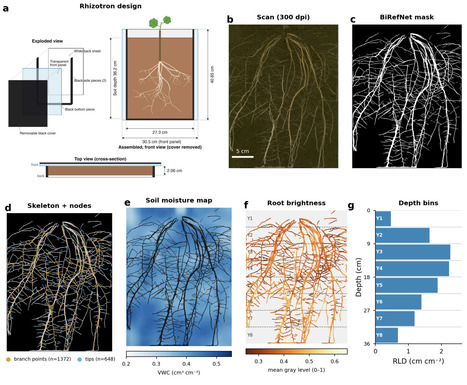
Root system architecture shapes how grapevine rootstocks take up water and nutrients, yet roots remain the least phenotyped grapevine organ because they are hidden and hard to image. We present a low-cost phenotyping pipeline that pairs custom acrylic rhizotrons (about US$30 each) with a consumer flatbed scanner and BiRefNet, a general-purpose deep-learning model used without training on root images, followed by automated mask cleaning, skeleton-based trait extraction, and soil moisture mapping. We tested it on nine commercial rootstocks scanned 16 times over 42 days after transplanting (DAT), with half under a ten-day water deficit. From 1,108 images we extracted 21 whole-root, depth-resolved, and topological traits. Genotypes differed in nearly every trait and in how they changed over time. Heritability of size and branching traits peaked at 0.92-0.93 between 21 and 31 DAT and fell for width, depth, and convex hull once roots reached the rhizotron walls, defining the best measurement window. The image-derived soil moisture map accurately tracked the deficit and its recovery. Deficit plants shifted new root growth to deeper soil without growing less overall, and the substrate dried fastest around older and denser roots. Root brightness decreased with root age and local moisture, and transport segments (axes serving several tips) were brighter than terminal laterals in every genotype. Root system size was associated with stomatal conductance in well-watered plants, and stomatal recovery after re-watering correlated with new root growth. The pipeline turns simple hardware into a quantitative, time-resolved root phenotyping platform suitable for breeding.
|
|
Scooped by
mhryu@live.com
September 14, 12:24 PM
|
To successfully translate microbiome knowledge into practical interventions for farmers, research must be designed with agriculture in mind and shift from retrospective observation to predictive actions.
|
|
Scooped by
mhryu@live.com
September 14, 10:40 AM
|
Simultaneous characterization of proteins, RNAs and glycans with a nanopore remains a substantial challenge. To advance toward this goal, we introduce a multifunctional adaptor, maleimido-C2-formylphenylboronic acid (maleimido-C2-FPBA), into the Mycobacterium smegmatis porin A (MspA) nanopore at the pore constriction site. Here we demonstrate that the engineered nanopore, MspA-FPBA, enables the simultaneous identification of a diverse set of analytes, including 21 proteinogenic amino acids, three post-translationally modified (PTM) amino acids, four canonical nucleoside monophosphates (NMPs), three epigenetically modified NMPs, four monosaccharides and five peptides. Combined with machine learning, this sensor achieves an overall accuracy of 98.7%. Furthermore, it generates predictable event signatures for specific analyte types, enabling the machine learning model to identify analytes without strictly relying on prearchived event features, as demonstrated by the nanopore analysis of yeast cell extract. Lastly, we apply MspA-FPBA for compositional analysis of G2 glycopeptides. Future integration of hydrolase with MspA-FPBA may further improve MspA-FPBA utility as a single system to identify diverse biomolecules. Modified nanopore simultaneously identifies diverse biomolecules and their modifications.
|
|
Scooped by
mhryu@live.com
September 14, 10:25 AM
|
Recognizing this mismatch, in 2023, the European Commission proposed a new framework for plants obtained by new genomic techniques (NGTs)6. Following a long legislative process, the framework was formally adopted in June 2026 (ref. 7). This regulatory shift illustrates another aspect of Franklin’s thinking: governance becomes part of the technological system itself. It shapes who can use a technology, under what conditions and how its benefits are ultimately shared. The new framework distinguishes between NGT-1 plants, considered comparable to conventionally bred plants, and NGT-2 plants, which remain subject to stricter GMO legislation. This is an important conceptual shift. Rather than focusing primarily on the technology used to produce a plant, the new framework increasingly considers the genetic characteristics of the final plant itself. The central regulatory criterion is whether the resulting genetic changes are comparable to those that could also arise through conventional breeding or natural mutation.
|
|
Scooped by
mhryu@live.com
September 14, 10:01 AM
|
Antibiotics have traditionally been defined as drugs that specifically target and inhibit pathogenic bacteria, forming the cornerstone of infectious disease treatment. However, resent research has expanded our understanding of what constitutes an antimicrobial substance. Many compounds not classified as antibiotics — including common pharmaceuticals, dietary substances, and agricultural or industrial chemicals — have been shown to exhibit antibacterial activity. Intriguingly, these non-antibiotic compounds often exert stronger effects on beneficial bacteria than on members of the Enterobacteriaceae family, which includes many classic pathogens for which new antibiotics are urgently needed. The selective pressure imposed by non-antibiotic antimicrobials can disrupt the balance of the human microbiome and create conditions favoring resistant or opportunistic pathogens. Such imbalances have implications not only for infectious disease but also for a range of chronic, non-communicable health conditions and the spread of antimicrobial resistances. In this Review, we highlight the latest advances in understanding the molecular mechanisms by which non-antibiotic compounds exert antimicrobial effects and examine key factors that modulate their activity. Lastly, we highlight the implications for translation and clinical practice. Many compounds not classified as antibiotics can exert antimicrobial activity, with drug–microbiome–host interactions having profound effects on the human microbiome and human health. This Review explores how non-antibiotic compounds exert these antimicrobial effects, highlighting which compounds can influence the microbiome, the underlying mechanisms, and implications for translation and clinical practice.
|
|
Scooped by
mhryu@live.com
September 13, 3:00 PM
|
Inferring ancestral states--determining, at each polymorphic site, which allele is ancestral and which derived--underpins many downstream population-genetic analyses, from selection scans and the unfolded site-frequency spectrum to demographic inference. However, no existing tool uniformly supports the full range of relevant inputs: plain variant data or ancestral recombination graphs (ARGs), with or without outgroups, while accommodating poly-allelic and recurrently-mutated sites. Here we present Ancestree, a likelihood-based engine that unifies these inputs within a single framework and returns full posteriors over the four nucleotide states at every site. It runs in three modes: a fixed-tree mode that assumes a single topology across sites and co-infers the per-branch substitution rates by maximum likelihood; an ARG mode that reads a different local tree at each site directly from a supplied ancestral recombination graph; and a local-tree mode that instead samples those local trees from the genotype data via a pairwise-coalescent HMM, needing no pre-existing ARG. On simulated data, the genealogy-based modes (ARG and local-tree) are more accurate and scale better, and remain robust under outgroup configurations that violate the fixed-tree assumption. Outgroups themselves remain difficult to replace: per-site inference accuracy on ingroup-polymorphic sites is markedly limited without them, and improves substantially with a single outgroup. The hardest sites are those fixed for the derived allele within the ingroup, which carry no within-ingroup signal and so need several sufficiently deep outgroups to recover, yet these are also highly informative downstream, carrying the high-frequency divergence signal on which selection and adaptation analyses often depend. https://github.com/Sendrowski/Ancestree
|
|
Scooped by
mhryu@live.com
September 13, 2:36 PM
|
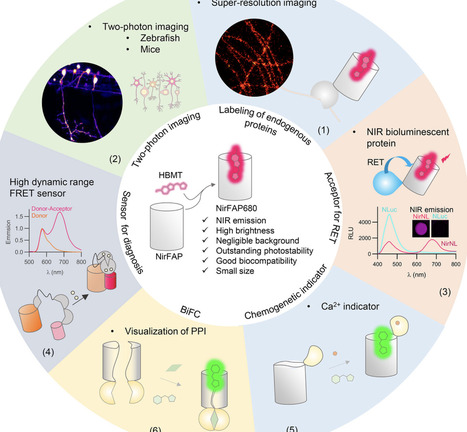
The development of NirFAP680 represents a significant leap forward in advanced imaging, effectively bridging the gap between fundamental discovery and potential clinical application. By providing a bright, stable and versatile NIR imaging tool, this technology not only overcomes the inherent limitations of previous NIR FPs but also opens up exciting new possibilities for visualising and understanding disease processes in their native, complex environments. We anticipate that NirFAP680 will catalyse a new wave of translational research, moving us closer to the realisation of truly personalised and image-guided medicine.
|
|
Scooped by
mhryu@live.com
September 13, 2:30 PM
|
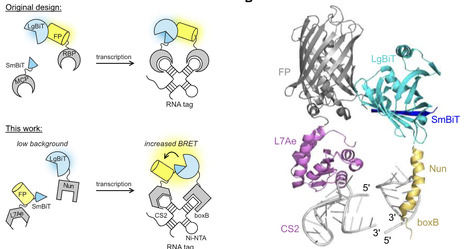
A complete understanding of RNA dynamics requires methods to continuously image transcripts in living systems. We recently developed a panel of bioluminescent tools for multiplexed RNA detection, comprising luciferase fragments fused to RNA-binding proteins (RNA lanterns). The RNA lanterns assembled a light-emitting luciferase upon binding unique, structured RNA tags. Different colors of emission were produced via bioluminescence resonance energy transfer to fluorescent protein fusions. In this work, we systematically optimized the RNA lantern platform for enhanced performance in live cells. A luciferase-fluorescent protein linkage was identified that enabled improved energy transfer and enhanced photon outputs. The RNA lantern was further optimized for selective recognition of structured RNA tags. The new RNA lantern-tag combination is orthogonal to existing probes and enabled the first demonstration of three-color bioluminescent RNA visualization in live cells. Overall, this work expands the suite of probes for real-time, multiplexed imaging of RNA.
|
|
Scooped by
mhryu@live.com
September 13, 2:20 PM
|
Orally administered engineered probiotics, including Saccharomyces cerevisiae var. boulardii (Sb), are of emerging interest as protein therapeutic delivery platforms to treat gastrointestinal diseases. Tools to readily optimize protein output are required to optimize the therapeutic index of Sb-produced therapies. In this study, a 125-plex Sb secretion construct library was developed consisting of all possible combinations of five promoters, five secretion signals, and five terminators, which enabled a greater than 1800-fold range in Sb expression of a Gaussia luciferase (GLuc) reporter. Secretion signal and promoter identities had significant effects on secretion output. This library further enabled a 28-fold improvement of binding activity of Sb-secreted haPD-1, an established anti-tumor immunotherapeutic, and improved haPD-1 detection in mouse stool samples following oral gavage of Sb_haPD-1. Sb secretion trends of both GLuc and haPD-1 in vitro mirrored payload expression in vivo. This protein secretion library toolkit will serve as a valuable resource to rapidly optimize protein therapeutic output from engineered Sb.
|