 Your new post is loading...

|
Scooped by
mhryu@live.com
September 16, 12:50 AM
|
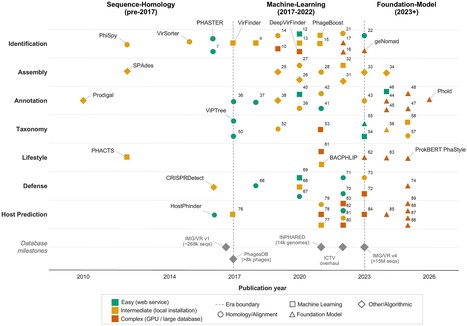
Rising clinical interest in phage therapy and the exponential growth of metagenomic sequence catalogues have driven a rapid expansion of bacteriophage bioinformatics. More than 80 dedicated tools, mostly published since 2020, now span identification, assembly, annotation, taxonomy, lifestyle prediction, defence-system detection, and host prediction. Aimed at experienced practitioners and developers, this review synthesizes the field through the lens of three successive computational paradigms: sequence homology, bounded by database completeness; machine learning, constrained by labelled training data; and foundation models, which now achieve Matthews correlation coefficients above 0.95 in identification tasks and, through structure-informed prediction, raise functional annotation to over half of phage genes. Furthermore, we map the upstream components, namely, gene callers, homology engines, protein language models, and structural search tools, that underpin most downstream pipelines, exposing shared infrastructure and ecosystem-level fragility when dependencies change. To translate this into practice, we propose web-based and command-line reference workflows calibrated to user expertise and sample types. Finally, we set an agenda for the next wave of tool development. Roughly half of phage genes still resist functional annotation despite structural methods; no broadly generalizable strain-level host predictor exists for phage therapy; varying true-positive rates (0%–97%) underscore the absence of standardized community benchmarks analogous to Critical Assessment of Structure Prediction or Critical Assessment of Metagenome Interpretation. As generative genome models begin designing synthetic phages, progress will depend less on producing standalone tools than on rigorous evaluation, interoperable infrastructure, and clinically meaningful prediction targets.
|
|
Scooped by
mhryu@live.com
September 16, 12:41 AM
|
Dormancy is a widespread strategy that enables microorganisms to survive unfavorable environmental conditions. While bacterial dormancy has been extensively studied, a comprehensive overview of fungal dormancy is missing, despite its ecological, medical, and industrial relevance. In this review, we summarize the diversity of structures in fungi that could play a role in dormancy and highlight their morphophysiological complexity, emphasizing their distinct developmental pathways and resistance mechanisms. Whenever possible, these structures are presented alongside a brief description of dormant bacterial cells to illustrate potential parallels between both groups and to highlight commonalities. We also explore the challenges of detecting and identifying fungal dormant structures in environmental samples, with a focus on our own research in deep geothermal environments. Despite recent advances, significant methodological gaps remain, particularly in the detection of structures like sclerotia. Recognizing the diversity of dormant structures and integrating multiple microbial models is essential to develop a unified framework for dormancy research. Such integration will enhance our understanding of microbial survival strategies and their roles in ecosystem resilience, biogeochemical cycling, and applied contexts ranging from food safety to human health. By identifying both shared and unique features of dormancy across microbial domains, the ecological significance of this fundamental strategy can be better explained and explored.
|
|
Scooped by
mhryu@live.com
September 15, 11:53 PM
|
Programmed ribosomal frameshifting (PRF) is a conserved viral strategy for expressing polyproteins from compact genomes. Although PRF is traditionally viewed as a structural mechanism, here we show that it functions as a regulatory signal that rewires host translation in favor of viral replication. A minimal SARS-CoV-2 PRF element is sufficient to activate the GCN2 arm of the integrated stress response (ISR) independently of the canonical ISR sensor ZAKα. This activation serves as a temporal switch during early infection to shut off host translation and is required for viral propagation in cells and human airway organoids. Proteomic and genetic screens identify DRG1 and IGF2BP3 as key mediators of PRF-induced GCN2 activation. We further show that this PRF-GCN2 axis is conserved in human immunodeficiency virus (HIV)-1 and West Nile virus, highlighting its broad relevance across RNA viruses. These findings reveal a sophisticated mechanism of viral translational control, highlighting PRF as a stress-inducing module that enhances viral replication.
|
|
Scooped by
mhryu@live.com
September 15, 10:56 PM
|
5-Aminolevulinic acid (5-ALA), a nonproteinogenic amino acid, has emerged as a versatile metabolite for applications in health, agriculture, and sustainability. Advances in ALA synthase engineering and metabolic rewiring have enabled scalable biosynthesis. The next frontier should expand beyond production, positioning it as a gateway to future biotechnological applications. heme
|
|
Scooped by
mhryu@live.com
September 15, 4:26 PM
|
Cells have built-in alarm systems to detect viruses. When a virus invades, infected cells produce small signaling molecules called cyclic dinucleotides, or CDNs. These molecules alert nearby cells and trigger immune defenses. Over millions of years, viruses have found ways to disarm this alarm. Large DNA viruses such as poxviruses and African swine fever virus carry enzymes that destroy these danger signals, allowing them to evade the immune system. Bacteria use a similar alarm system to defend against their own viral invaders, phages. Phages have evolved enzymes that destroy bacterial alarm signals. Viruses that infect animals and viruses that infect bacteria have independently arrived at the same solution to the same problem. In this Pearl, we review these recently discovered viral enzymes and show how they share the same basic protein structure despite separate evolutionary paths. We also discuss how understanding these enzymes could aid the development of new antiviral drugs. One strategy is to design molecules that block the viral enzymes and restore immune defenses. Another is to create CDN-like compounds that resist degradation by these enzymes. The convergence of viral immune evasion strategies across different branches of life reveals fundamental principles of host-pathogen conflict and opens new possibilities for therapeutic intervention.
|
|
Scooped by
mhryu@live.com
September 15, 3:26 PM
|
Plasmids are key drivers of bacterial adaptation, yet the mechanisms that generate their diversity remain poorly understood. Here, we show that mobile genetic elements (MGEs) orchestrate a fusion-deletion life cycle that repeatedly remodels plasmids in Staphylococcus aureus. Large-scale genomic analyses reveal that multireplicon plasmids are widespread and strongly enriched in transposases. Using experimental assays, we demonstrate that rare MGE-mediated fusion events, via homologous recombination or transposition, combine distinct plasmids into single multireplicon elements, expanding gene content and transfer potential. Antibiotic pressure selectively enriches these fused plasmids, rescuing bacterial populations under stress, whereas opposing selective forces, including phage predation, favor deletion derivatives that preserve essential functions and phage transmissibility. This cyclical process generates dynamic plasmid repertoires with conserved backbones and diverse accessory modules. We propose that MGE-driven fusion-deletion cycles represent a general principle of plasmid evolution, explaining the rapid emergence and persistence of multidrug-resistant plasmids across bacterial pathogens. Plasmids drive bacterial adaptation, but how their diversity arises has remained unclear. Here, they show that in Staphylococcus aureus, mobile genetic elements repeatedly fuse and delete plasmids, reshaping gene content under competing pressures and accelerating the emergence and persistence of multidrug resistance.
|
|
Scooped by
mhryu@live.com
September 15, 3:04 PM
|
CRISPR–Cas immunity depends on acquiring spacers that generate functional CRISPR RNA (crRNA) guides. For most RNA-targeting type III systems, this poses a paradox: spacers are captured from DNA but defense requires RNA interaction, thus the system must infer transcriptional relevance of DNA fragments. We compared spacer acquisition profiles for co-occurring type III (RNA-recognizing) and type II (DNA-recognizing) systems in Streptococcus thermophilus during lytic phage infection. Type III spacer acquisition was highly enriched for early phage genes whereas type II spacers were distributed genome wide. High-throughput spacer sequencing showed that the type III early gene bias arose during adaptation, was independent of interference, and peaked immediately downstream of a conserved early phage promoter. This bias for early phage promoters was also observed in natural type III spacers identified in publicly available S. thermophilus genomes. Cloning this early phage promoter and downstream gene into a plasmid recreated the type III-acquisition hotspot. Mutation to disrupt the promoter eliminated the spacer hotspot, while mutation to disrupt translation enhanced it. Thus, type III-A adaptation preferentially samples DNA associated with the earliest phage transcriptional program, enriching for spacers that generate crRNAs targeting early phage RNA.
|
|
Scooped by
mhryu@live.com
September 15, 2:40 PM
|
One of the main challenges of whole transcriptome sequencing is the difficulty in detecting and quantifying low-to-moderate abundance transcripts. Methods that address this are either complicated to scale or customize; long-range PCR is problematic to scale, and probe hybridization panels are expensive to customize. In this study, we developed an RNA-guided CRISPR–Cas9 nuclease-based enrichment strategy combined with long-read sequencing, which achieved up to 60-fold enrichment of the target. Our findings demonstrate that the CRISPR–Cas system is a highly effective method for customizable long-read sequencing of target transcripts, which preserves estimation of relative abundance.
|
|
Scooped by
mhryu@live.com
September 15, 2:18 PM
|
Gram-negative pathogens evade immune clearance and promote chronic infections by residing intracellularly. While outer membrane vesicles (OMV) hold promise as antibacterial vaccine platforms, their clinical potential is limited by lysosomal entrapment of antigens and endotoxin-induced toxicity. Herein, we present an innovative nano-encapsulation strategy to engineer OMVs and overcome these two obstacles. We engineered Porphyromonas gingivalis OMVs by incorporating metal ion adjuvants, coordinated with phenolic ligands, to form a rigid, acid-responsive nanoshell. This shell enhances dendritic cell uptake and promotes lysosomal escape, redirecting antigens to cytosolic cross-presentation and reprogramming CD8+ T cell responses through STING signaling. Nano-encapsulation also attenuates endotoxin-induced systemic cytokine storms, reducing lethality. In murine periodontitis, the engineered OMV vaccine lowers P. gingivalis burden, prevents T cell exhaustion, and mitigates inflammatory tissue damage. These findings provide a safe and effective strategy to counteract immune evasion by intracellular pathogens, with promising potential for immunotherapy against chronic bacterial infections.
|
|
Scooped by
mhryu@live.com
September 15, 1:05 AM
|
Genetic code expansion with noncanonical amino acids (ncAAs) opens new opportunities for the design and engineering of proteins by broadening their chemical repertoire. Unfortunately, ncAA incorporation into proteins is limited both by a small collection of orthogonal aminoacyl-tRNA synthetases (aaRSs) and tRNAs and by low-throughput methods to discover them. Here, we report the discovery, characterization, and engineering of a UGA suppressing orthogonal translation system mined from metagenomic data. We develop an integrated computational and experimental pipeline based on cell-free gene expression to screen the orthogonality of >200 tRNAs, test >1,250 combinations of aaRS/tRNA pairs, and identify the AP1 TrpRS/tRNATrpUCA as an orthogonal pair that natively encodes tryptophan at the UGA codon. We demonstrate that the AP1 TrpRS/tRNATrpUCA is highly active in cell-free and cellular contexts. We then use Ochre, a genomically recoded E. coli strain that lacks UAG and UGA codons, to engineer an AP1 TrpRS variant capable of 5-hydroxytryptophan incorporation at an open UGA codon. We anticipate that our strategy of integrating metagenomic bioprospecting with cell-free screening and cell-based engineering will accelerate the discovery and optimization of orthogonal translation systems for genetic code expansion.
|
|
Scooped by
mhryu@live.com
September 15, 12:06 AM
|
The trans-cleavage activity of CRISPR/Cas systems has catalyzed significant progress in molecular diagnostics. Compared with traditional methods such as PCR and its derivatives, CRISPR/Cas diagnostics are often credited with high specificity, portability, and visual readout. Among various CRISPR systems, CRISPR/Cas9, CRISPR/Cas12, and CRISPR/Cas13 have been extensively applied in pathogen detection owing to their distinct target-recognition and nucleic acid-cleavage mechanisms. In particular, Cas12- and Cas13-based systems exploit target-activated trans-cleavage activity for sensitive signal amplification, whereas Cas9-based diagnostic platforms generally rely on sequence-specific cis-cleavage. This review assesses the integrated CRISPR/Cas detection workflow from sample collection and processing through final result output, and systematically analyzes the intrinsic characteristics of Cas effector proteins with respect to target enrichment, reporter molecules, readout formats, sample background, and validation design. Based on a practical application-oriented framework, we analyzed the adaptability of various CRISPR/Cas systems in distinct scenarios, including point-of-care screening, quantitative laboratory testing, and multiplex pathogen identification. In addition, we highlight engineering innovations derived from mechanistic investigations of Cas9, Cas12, Cas13 and Class I CRISPR systems, discuss the specific diagnostic bottlenecks these effectors can resolve, and outline remaining challenges requiring further optimization prior to clinical translation.
|
|
Scooped by
mhryu@live.com
September 14, 11:47 PM
|
Site-specific recombinases, enzymes that bind to specific DNA attachment sites and catalyze DNA rearrangement reactions resulting in permanent and heritable genetic modifications, have emerged as powerful tools in synthetic biology. Their broad applications in genome engineering, genetic circuit design, DNA assembly, and computational design have significantly advanced the field over the past decades. To provide a systematic overview of both fundamental concepts and recent progress, this review comprehensively summarizes site-specific recombinases across enzyme categories, structural mechanisms, key characteristics of individual recombinases, recombination models, engineering strategies, and diverse functional applications. We anticipate that continued discovery, characterization, and engineering of site-specific recombinases will further accelerate the development of synthetic biology and support the establishment of more robust, versatile, and practical genetic toolboxes for future applications.
|
|
Scooped by
mhryu@live.com
September 14, 11:28 PM
|
Surface-layer (S-layer) proteins, forming the outermost envelope of many bacteria and archaea, exhibit extraordinary structural precision and self-assemble into two-dimensional crystalline lattices with square, hexagonal, or oblique symmetry. These monomolecular arrays, typically 5 to 25 nm in periodicity (varying by species), offer defined porosity and serve as robust biological nanoplatforms. Their innate capacity for self-assembly and molecular ordering has attracted significant attention in nanobiotechnology, vaccine development, biosensing, drug delivery, and ultrafiltration. S-layers are especially valued for their ability to mimic viral capsids, enhance antigen presentation, stabilize lipid bilayers, and provide highly organized scaffolds for enzyme immobilization and nanopatterning. Recent experimental achievements include the use of S-layer fusion proteins for mucosal vaccine delivery and the development of recombinant S-layer-based electrochemical biosensors. However, transitioning these advances to commercial-scale applications remains challenging. Limitations include the scalability of high-purity protein production, cost-effective recombinant expression, stability under harsh industrial conditions, and unresolved regulatory pathways for biologically derived nanomaterials. Additionally, synthetic alternatives present practical and economic competition. Nonetheless, interdisciplinary efforts in synthetic biology, materials science, and computational modeling are addressing these bottlenecks. Innovations such as cross-linkable domains, fusion with polymers or lipids, and predictive structure-function modeling are improving the robustness and adaptability of S-layer systems. As current research advances from theoretical potential to functional prototypes, S-layer proteins offer transformative prospects across medical, industrial, and environmental domains. This review uniquely integrates mechanistic S-layer biology with engineering-for-manufacture, protein-design workflows, and commercialization roadmaps — offering actionable protocols and benchmarks not covered in prior syntheses.
|
|
|
Scooped by
mhryu@live.com
September 16, 12:46 AM
|
E. coli-based expression systems are extensively utilized for recombinant protein production due to their simplicity, cost-effectiveness, and scalability. However, they often face challenges including leaky expression, codon bias, and poor solubility. Various strategies have been developed to address these issues but left several issues unresolved. Reducing expression plasmid copy number could minimize leaky expression but compromises plasmid yield. Auxiliary plasmids, typically with p15A origin and chloramphenicol resistance marker, were developed to address codon bias and protein misfolding by supplying either rare tRNAs or chaperones. However, due to plasmid incompatibility, these auxiliary plasmids cannot be used together, leaving genes that exhibit both codon bias and folding difficulties without an effective solution. In this study, we introduced a dual-plasmid system comprising an expression plasmid (pSE2) and an auxiliary plasmid (pRARE2a-GKJE). The pSE2 maintains a high copy number when alone, facilitating efficient DNA preparation. The pRARE2a-GKJE supplies Rop protein, LacI repressor, rare tRNAs, and molecular chaperones. When co-expressed with pRARE2a-GKJE, pSE2 undergoes Rop-mediated copy number suppression and LacI-mediated transcriptional repression, together preventing leaky expression. Simultaneously, the supplied rare tRNAs and chaperones synergistically enhance soluble protein expression. Compared to conventional systems, pSE2 achieved higher DNA yields during cloning and significantly reduced copy number during expression, minimizing leaky expression. Testing on several human-codon-optimized genes showed efficient soluble expression, reaching up to 97% for TurboID, 99% for SpyCas9, and 53% for PE6d, respectively. Moreover, pSE2 enabled direct eukaryotic functional validation without re-cloning. This dual-plasmid system provides a versatile platform for recombinant protein production and functional studies.
|
|
Scooped by
mhryu@live.com
September 16, 12:22 AM
|
Wastewater treatment, especially nitrogen removal, is a major contributor to global energy consumption and greenhouse gas emissions, driving the need for more sustainable nitrogen removal technologies. However, the practical application of anaerobic ammonium oxidation (anammox) systems is limited by persistent nitrate accumulation, as efficient cross-feeding between anammox bacteria and denitrifiers is hindered by metabolite diffusion and retention challenges. Here we present a strategy using 3D-bioprinted engineered living materials (ELM) with spatial confinement to enhance the spatial proximity between core species and retain the metabolites, thereby promoting multifaceted cross-feeding between anammox bacteria and denitrifiers. A sodium alginate/cellulose bioink was designed to print anammox consortia into a defined microstructure with both biocompatibility and mechanical stability. The high cell density within the ELMs enhanced microbial interactions, and spatial confinement activated synergistic metabolic pathways and facilitated the exchange of extracellular polysaccharides, amino acids and cofactors between key microbial taxa. The ELMs achieved a 71.43% reduction in start-up time and enabled complete nitrogen removal (100%) without external organic carbon supplementation, which was validated with real wastewater. This work provides a viable approach for the rapid establishment and enhanced performance of anammox systems, contributing to sustainable and energy-efficient wastewater treatment. Nitrate accumulation limits the sustainability of anammox-based nitrogen removal in wastewater treatment. This study shows that 3D-bioprinted engineered living materials with spatial confinement enable complete nitrogen removal by enhancing cross-feeding between anammox bacteria and denitrifiers.
|
|
Scooped by
mhryu@live.com
September 15, 11:17 PM
|
Protein language models have emerged as powerful tools for learning rich protein representations, improving tasks like structure prediction, mutation effect estimation, and homology detection. Their ability to model complex sequence distributions also holds promise for designing novel, functional proteins with applications in therapeutics, materials, and sustainability. Given the vastness of sequence space, efficient exploration is essential. However, most existing design approaches rely on single-mutant sampling strategies borrowed from natural language processing, which fail to capture epistatic interactions critical for function. Here, we develop an in silico framework to systematically compare sampling methods and introduce several approaches tailored for protein design. We show that sampling multiple mutations simultaneously substantially outperforms single-mutant approaches by better capturing epistatic effects. We evaluate these strategies across three protein families spanning eukaryotic, prokaryotic, and viral origins, examine key hyperparameters, and validate our findings on a de novo binder design task against a major therapeutic target.
|
|
Scooped by
mhryu@live.com
September 15, 4:49 PM
|
Generating high‑quality mutant libraries is a powerful strategy for systematic analysis of gene essentiality and function. However, current genomic tools perform poorly for bacteriophages due to a lack of efficient selectable markers. Here we show a Tn5-mediated essential gene insertion mutagenesis (Tn5-EGIM) approach, which employs an essential phage gene as the selection marker for transposon construction and performs transposition within this essential gene-deficient phage genome, allowing plaque formation only if transposon insertions land in non-essential genomic regions. This strategy achieves 100% transposition efficiency and simplifies mutant library construction. Using Tn5-EGIM, we confirm known non-essential genes in phage T7 and identify twenty previously uncharacterized non-essential genes in phage T1. Cumulative gene deletion yields a streamlined T1 chassis with a 16% genome reduction and expands foreign DNA capacity. An engineered T1 phage built on T1 chassis infects T1-resistant Escherichia coli and exhibits enhanced antibacterial activity. Tn5-EGIM provides an efficient tool to dissect phage gene essentiality and advance engineered phage development. A transposon mutagenesis system was constructed by using an essential phage gene as the selection marker, enabling efficient enrichment of transposon mutants for phage gene essentiality analysis and phage engineering.
|
|
Scooped by
mhryu@live.com
September 15, 4:16 PM
|
Lipoprotein and OmpW are two major components of the outer membrane (OM) in Gram-negative bacteria and play essential roles in various physiological processes, e.g., protein secretion, folding, and localization. They typically assist in maintaining client proteins in a folded state or form pore channels during secretion. However, how OM proteins facilitate the secretion of proteins that lack classical signal peptides remains elusive. Here, we demonstrate that they contribute to the secretion of unconventional B-type dye-decolorizing peroxidase (DypB2985) in Pseudomonas putida. The lipoprotein, Lpp1528, which contains a Sec signal peptide, is translocated to the periplasm through the Sec pathway and anchored in the inner leaflet of the OM. Lpp1528 recognizes the C-terminal hydrophobic region of DypB2985 in the cytoplasm and facilitates its coupling to the Sec machinery for inner membrane translocation, despite DypB2985 lacking a canonical N-terminal Sec signal peptide. Following translocation, the two proteins appear to dissociate in the periplasm. Subsequently, another OM protein, OmpW4836, recognizes the N-terminal hydrophobic region of periplasmic DypB2985 and mediates its incorporation into outer membrane vesicles (OMVs) for extracellular delivery. Our study reveals the crosstalk between the Sec pathway and OMVs in the secretion of a non-canonical peroxidase, in which OM proteins, acting as the molecular tethers, mediate the stepwise secretion process. It expands our understanding of non-classical protein secretion mechanisms and bacterial survival strategies. Moreover, the identified OMV sorting mechanism offers potential for the further functionalization of OMVs as versatile biotechnological platforms.
|
|
Scooped by
mhryu@live.com
September 15, 3:12 PM
|
Protein-based hydrogels have emerged as a versatile class of biomaterials that combine the intrinsic biological functionality of proteins with the structural adaptability of hydrated three-dimensional networks. Their biocompatibility, bioactivity, and extracellular matrix-mimetic characteristics have attracted significant interest in tissue engineering, regenerative medicine, and drug delivery. Advances in protein engineering, synthetic biology, supramolecular chemistry, and biomolecular conjugation have enabled precise control over protein structure, intermolecular interactions, and network organization, transforming proteins into highly programmable building blocks for multifunctional hydrogel systems. This review summarizes the design principles of engineered protein hydrogels, emphasizing the roles of structural motifs, bioactive domains, and stimuli-responsive elements in regulating hydrogel assembly and functionality. Recent developments in physical and chemical crosslinking strategies are highlighted, together with their impacts on network architecture, mechanical performance, degradation behavior, and stimulus responsiveness. Particular attention is given to structure-property-function relationships linking protein design and assembly to hydrogel performance. These advances have facilitated the development of protein hydrogels for tissue regeneration, wound healing, therapeutic delivery, three-dimensional cell culture, and biofabrication, underscoring their promise as next-generation biomaterials.
|
|
Scooped by
mhryu@live.com
September 15, 2:50 PM
|
Bacterial cellulose (BC)-producing taxa constitute a functionally coherent yet phylogenetically heterogeneous assemblage of acetic acid bacteria distributed across evolutionary lineages within Alphaproteobacteria. Despite the importance of BC as a biomaterial in diverse biotechnological applications, a dedicated resource for the study and comparative analysis of cellulose-producing bacteria is currently lacking. To address this gap, we developed CelluBase – an integrated, user-friendly database for the study of bacteria from the genera Komagataeibacter and Novacetimonas. CelluBase is a domain-specific database dedicated to the genetic and functional dissection of BC synthesis. It integrates high-quality genome assemblies, functional annotations, operonic architectural analyses, multi-omics datasets and comparative genomics analyses for investigating the molecular mechanisms governing BC biosynthesis. Key features of the database include characterization of cellulose synthase gene organization, regulatory network architecture, metabolic pathway diversification and phylogenomic relationships across cellulose-producing lineages. Results generated within the CelluBase framework are available as text, interactive plots, and publication-ready figures. CelluBase (https://cellubase.shinyapps.io/cellubase/) is the first publicly accessible repository for BC genomics. CelluBase is designed to support comparative studies of cellulose-producing strains, in addition to providing the framework for future studies related to strain enhancement, cellulose yield improvement, and targeted metabolic engineering.
|
|
Scooped by
mhryu@live.com
September 15, 2:25 PM
|
For farmers and consumers to reap the benefits, guidelines for farming gene-edited plants must be implemented with careful thought. The latest rules split gene-edited crops into two groups, called new genomic techniques 1 (NGT-1) and NGT-2 (see go.nature.com/3t3ewxt). NGT-1 crops, which can have limited alterations, are considered equivalent to plants bred through conventional means and are regulated accordingly. All other NGT plants fall under NGT-2 and remain regulated under strict GMO rules. gmo
|
|
Scooped by
mhryu@live.com
September 15, 2:13 PM
|
RNA interference (RNAi)-based pesticides use a natural cellular mechanism to specifically silence genes essential for pest or pathogen fitness, offering a targeted and potentially safer alternative to conventional chemical sprays. The recent registration of the first products targeting Colorado potato beetle and varroa mite marks the transition of this technology from proof of concept to practical reality. With technical feasibility established, attention is shifting to the drivers determining adoption into pest management strategies. The potential for uptake by farmers can be framed within a decision-making process that weighs the choice to deploy this new tool against a backdrop of environmental concerns, widespread pesticide resistance and increasing regulatory restrictions related to conventional synthetic chemistries. Shifting dynamics have influenced the return-on-investment proposition, where agricultural utility (safe and reliable efficacy against pests and pathogens), regulatory reality (barriers to availability) and social licence (public perception and acceptance of novel biotechnologies) act as the levers shifting the cost–benefit ratio of RNAi-based biopesticides relative to conventional options. Advancements in bioinformatics-driven double-stranded RNA design, risk assessment and delivery systems position RNAi-based biopesticides as an alternative to fill the market gap created by the withdrawal of conventional chemistries. However, widespread adoption must navigate fragmented international regulatory harmonization and the challenges of developing a social licence to operate, specifically regarding public perceptions of safety, residues and the use of novel biotechnology tools. This Review examines how reliability, regulation, public acceptance and advances in design and delivery will shape growers’ decision-making and the adoption of RNA interference-based biopesticides within integrated pest and disease management. industry
|
|
Scooped by
mhryu@live.com
September 15, 12:29 AM
|
Disordered flexible linkers (DFLs) are functional elements found within intrinsically disordered regions that carry out key functions by connecting domains and/or short linear motifs. Understanding the features of DFLs is limited by the lack of comprehensive datasets and accurate predictive models. In this study, we propose a classification for DFLs that includes linkers joining two domains (DLD), a domain and a motif or two short linear motifs. We developed a workflow that allows the systematic identification of DLD-type linkers from protein structures and created a comprehensive dataset known as the DLD dataset. The DLD dataset includes 1640 independent domain linkers (IDLs) which expands currently available linker datasets and annotates related regions such as dependent-domain linkers, intra-domain loops, and termini. Our data collection process integrates missing residue completion and smoothing of short secondary structure stretches enabling to capture a higher number of longer IDLs. We assessed the features of IDLs using t-SNE analysis and protein language model embedding with a CNN-based classifier as well as PCA analysis. IDLs can be distinguished from other disordered and folded protein regions, and their features highly overlap with DisProt Linkers, considered the gold standard for linker annotation. The DLD dataset offers a valuable resource for researchers seeking to investigate the features of disordered flexible linkers and to improve the accuracy and generalizability of DFL predictive models. The DLD dataset is available via an interactive web server at https://dld.chemeslab.org/ where linkers are annotated with sequence and structural features and can be visualized using a structure viewer.
|
|
Scooped by
mhryu@live.com
September 14, 11:59 PM
|
Against the backdrop of green biomanufacturing, engineering methanol-utilizing Komagataella phaffii represents an effective strategy to expand the one carbon product profile and speed up the industrialization of C1-based bioeconomy. To address the technical challenges of low efficiency and cumbersome experimental procedures for multiplex gene editing and precise large-fragment integration during the reconstruction of complex metabolic pathways in K. phaffii, this study established a CRISPR toolkit — Efficient Multi-Gene Editing System 3.0 (EMGES 3.0) — which enabled one-step large-fragment integration coupled with multiplex gene knockout. EMGES 3.0 was constructed through the synergistic optimization of a repair-engineered chassis and an episomal CRISPR vector. For chassis engineering, five DNA repair modules: Δlig4 (DNA Ligase IV, non-homologous end joining end ligation), ppMRE11(The endogenous MRE11 gene from Pichia pastoris) overexpression (The Meiotic Recombination 11, DNA double-strand break end resection), Δrad9 (Radiation-Sensitive 9, DNA damage checkpoint regulation), Δmph1 (Mutator Phenotype Helicase 1, improvement of homologous recombinant strand extension), and PapRecT-PaSSB co-expression (stabilization of recombination intermediates) were integrated to generate the highly recombinogenic strain Y09. For vector engineering, cenARS was replaced by panARS and the endogenous promoter PGAP was employed to drive the double hammerhead ribozyme-single guide RNA-hepatitis delta virus ribozyme (double HH-sgRNA-HDV: dHgH)-mediated sgRNA expression, yielding the optimized vector Nov_pGAP_panARS_pLAT1_Cas9. These two features on K. phaffii together enhanced the EMGES 3.0 to a higher standard of transformation rate and editing efficiency. According to our results, EMGES 3.0 achieved dual-functional gene knockout efficiencies between 76.6% and 100%. For insertion of medium-long fragments (>4.5 kb), the efficiency achieved 93.3%. In addition, the one-step integration of ultra-long fragments (>16 kb) achieved 14.8%, which was reported for the first time. Furthermore, the efficiency of simultaneous long-fragment integration at three neutral loci reached 38.4% (>15 kb). We applied the system for one-step production of free fatty acids (FFAs, yield: 5.82 ∼ 7.30 mg/L/OD600) and resveratrol (yield: 1.14 ∼ 1.28 mg/L) using methanol as the sole carbon source. EMGES 3.0 provides a robust technical foundation for complex compounds biosynthesis and high-yield industrial strains, while also advancing K. phaffii as an industrial synthetic biology chassis for efficient C1 utilization.
|
|
Scooped by
mhryu@live.com
September 14, 11:36 PM
|
The human gut microbiome is a complex and constantly evolving community of trillions of microorganisms that are crucial to various aspects of health and disease. It impacts digestion, metabolism, immune function, neurological processes, and vulnerability to illnesses. Recent technological advancements in biology and engineering have transformed microbiome research, allowing for more detailed analysis of microbial composition, functions, and interactions with the host. This review offers a thorough overview of both current and emerging methods for studying the gut microbiome, including sample collection techniques, culture-based approaches like culturomics and microfluidics, as well as culture-independent methods such as 16S rRNA sequencing, shotgun metagenomics, and the integration of multi-omics approaches like metabolomics, proteomics, and transcriptomics. It also discusses innovative tools including single-cell genomics, spatial transcriptomics, and microbiome-on-a-chip platforms, which hold promise for revealing host-microbe interactions at unprecedented levels of detail. The review underscores the importance of combining biological insights with engineering innovations particularly microfluidics and organ-on-a-chip models to recreate gut environments that mimic physiological conditions. Additionally, it explores the potential of artificial intelligence and machine learning in analyzing data and developing predictive models for personalized microbiome-based diagnostics and therapies. Acknowledging challenges such as microbial diversity, environmental sensitivity, and technical hurdles, this review aims to guide researchers in choosing optimal tools to study the gut microbiota, deepen mechanistic understanding, and translate findings into clinical applications that enhance human health.
|









2st, phage software list