 Your new post is loading...

|
Scooped by
mhryu@live.com
September 17, 12:15 AM
|
The honeybee gut microbiota plays a key role in shaping host health and susceptibility to disease. Yet, the nutrient environment it experiences within the gut remains poorly characterized. In particular, little is known about the spatial distribution of nutrients across the microbial community, as resolving such fine gradients in vivo has been technically challenging. Here, we engineer the native honeybee symbiont Snodgrassella alvi as a living biosensor to quantify the bioavailability of the dietary sugar arabinose within the gut. By expanding the genetic toolkit for S. alvi through chromosomal integration of high-burden genes and a suite of low-strength promoters, we achieve stable multi-gene expression without compromising host colonization. The resulting biosensor generates a specific, dose-dependent fluorescent response to arabinose in the living host, enabling visualization of sugar gradients across gut-associated bacterial biofilms at micron-scale resolution. Upon co-colonization with distinct Gilliamella species that differ in arabinose metabolism, the biosensor reported differential in vivo arabinose consumption, directly validating species-specific metabolic specialization within the host. Feeding bees with pollen further uncovered pronounced radial heterogeneity in the distribution of pollen-derived arabinose. These findings demonstrate how diet composition and microbial specialization generate fine-scale microenvironments within the gut. More broadly, this work establishes S. alvi as a genetically tractable platform for in situ biosensing, opening new avenues for dissecting metabolic interactions and nutrient distribution within living hosts.
|
|
Scooped by
mhryu@live.com
September 16, 6:15 PM
|
Predicting enzyme kinetics directly from sequence remains a central challenge in computational biology, particularly in resolving the effects of mutations at catalytically essential residues. Existing models frequently overlook the functional consequences of such perturbations, defaulting to wild-type predictions even in cases of substantial activity loss, thereby limiting their reliability for enzyme design and mechanistic inference. Here, we introduce CatRange, a machine learning framework trained on CatLog-27k, a human-in-the-loop, AI-agent trustworthy dataset of 27,176 in vitro enzyme–substrate kinetic records created by a systematic audit and correction of BRENDA and SABIO-RK. All mutant entries are manually reconciled against 2,158 source articles. CatRange reframes kinetic prediction from exact numerical regression into classification over log10-spaced bins for catalytic turnover (kcat) and substrate affinity (KM), matching the order-of-magnitude scale at which experimental enzyme kinetic measurements are commonly interpreted. This biologically grounded formulation mitigates assay-level variability while preserving distinctions among functional catalytic and binding states. Using joint enzyme–substrate representations and gradient-boosted classifiers, CatRange predicts kinetic ranges for wild-type and mutant enzymes across standard held-out, out-of-distribution, and few-shot mutation settings. The model shows robust order-of-magnitude recovery with class-balanced discrimination and captures mutation-induced movement across kinetic regimes, including losses associated with perturbation of annotated catalytic residues. CatRange detects non-enzyme sequence inputs and emphasizes rigorous data curation, transparent training data dissemination (CatLog), biochemically informed task formulation, and balanced evaluation metrics. These position CatRange as an interpretable, mutation-sensitive framework with utility in enzyme engineering and kinetic metabolic modeling.
|
|
Scooped by
mhryu@live.com
September 16, 6:03 PM
|
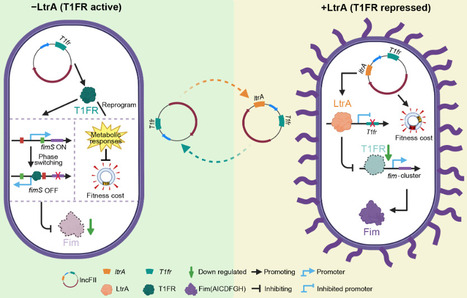
The global dissemination of multidrug-resistant plasmids poses a major threat to antimicrobial therapy. While these plasmids are known to carry antibiotic resistance genes, how they balance bacterial fitness and virulence to ensure their own persistence and dissemination remains unclear. Here, we identify a previously unannotated IncFII plasmid-encoded protein, which we name type 1 fimbrial repressor (T1FR). T1FR directly binds the fimS phase-variation switch, locking it in the “off” orientation to suppress type 1 fimbria (T1F) biogenesis, thereby attenuating bacterial adhesion, colonization, and pathogenicity. Concurrently, T1FR reprograms central carbon metabolism to offset the fitness cost of plasmid carriage, thereby enhancing plasmid transconjugative efficiency and host competitive fitness. This dual function is dynamically modulated by LtrA-mediated suppression of T1fr transcription, introducing plasticity into the virulence-fitness trade-off. Collectively, the LtrA-T1FR system orchestrates an evolutionary trade-off between plasmid fitness and host pathogenicity. Targeting the T1FR-T1F axis may offer a novel anti-adhesion therapeutic that avoids selection for antibiotic resistance.
|
|
Scooped by
mhryu@live.com
September 16, 3:10 PM
|
Ligand optimization is central to drug discovery, with hundreds of analogues often designed and synthesized between an initial hit and a therapeutic candidate. The efficiency of this process is unclear, partly because there is no random background for optimization to compare against. Such a random background might emerge from systematic random small substitutions across starting ligands, measuring the likelihood of achieving a substantial improvement in affinity or potency, or other property by any single perturbation. Recent literature has suggested that perhaps 10% of analogues with minor modifications improve upon the potency of a parent by tenfold or more, but this number is clouded by reporting bias, intentional improvement and inter-group variability. To begin to establish a background expectation for ligand optimization, here we systematically modified 18 lead molecules across six targets with single-atom changes; 257 compounds were synthesized. Unexpectedly, 11.3% of these random small perturbation analogues improved potency by tenfold or more. Conversely, they typically had worse in vitro pharmacokinetics. Although it was possible to find analogues where the potency increase compensated for inferior exposure and half-life, resulting in more potent compounds in vivo, overall, a frustrated landscape for ligand optimization is revealed. This study begins to establish a background expectation for ligand potency optimization and offers a simple strategy to do so. It also begins to quantify the challenges confronting the field in moving beyond in vitro potency. An approach to improve efficiency and establish a background expectation for ligand potency optimization is described.
|
|
Scooped by
mhryu@live.com
September 16, 2:08 PM
|
Phage therapy is a promising antibacterial approach but it has limited efficacy against enteric bacterial infections, such as Salmonella enterica Typhimurium (STm). Here we hypothesized that establishing high concentrations of a pathogen-targeting phage in the gut before infection would prophylactically protect against future infection. To this end, we engineered non-pathogenic E. coli to encode a prophage that produces obligately lytic phage progeny targeting STm while overcoming its host defence systems, including restriction–modification systems. We show that prophylactic gut colonization with this lytic phage-producing lysogen of E. coli produces high levels of lytic phage before infection, inhibits the establishment of STm after infection and improves survival in mouse models of STm-induced colitis. Using a mutant STm strain limited to intestinal colonization, we show that phage-producing E. coli consistently colonized, produced high phage levels and eliminated STm from the intestinal tract. Our findings present a proof-of-concept that prophylactic prophage therapy can protect against an enteric infection. An engineered non-pathogenic bacterium produces lytic phages and is protective in mouse models of Salmonella infection.
|
|
Scooped by
mhryu@live.com
September 16, 1:42 PM
|
Antimicrobial resistance (AMR) is a threat to modern medicine. To combat AMR pathogens, natural predators like bacteriophages and predatory bacteria have gained interest recently. Predatory bacterium Bdellovibrio bacteriovorus is ubiquitous and has a broad prey range. It is particularly potent at killing many AMR Gram-negative bacterial pathogens featured on the WHO priority list. However, it is currently unclear whether prey bacteria can evolve genetically-determined resistance against predation by B. bacteriovorus. Here, we show that the model bacterium E. coli K-12 consistently evolves resistance against B. bacteriovorus during experimental evolution. Selection for resistance scaled positively with predation pressure and was widespread after two cycles of predator exposure. Similar to antibiotics, predation resistance was costly, manifesting in a trade-off between predation resistance and fitness in the absence of predators. Genetic analysis combined with proteomics identified mutations that lead to the down-regulation of the outer membrane porin OmpF as a common resistance mechanism. In addition, a rarer mutation in cell envelope lipopolysaccharide-modifying enzyme WaaF also conferred predation resistance, likely by a pleiotropic effect, which included OmpF down regulation. While our study uncovers evolutionary and mechanistic aspects of prey escape from predation, it also highlights that the high cost of resistance reflects a handicap for the pathogen and can thus be exploited to increase treatment sustainability. Altogether, our work generates essential knowledge in ecologically important predator–prey interactions and can advance predatory bacteria as “living antibiotics” to combat AMR.
|
|
Scooped by
mhryu@live.com
September 16, 1:17 PM
|
The ability to use vesicles to deliver cargo safely across distance is a valuable strategy that appears to be universal across all life. The ability of prokaryotes to accomplish this is a relatively new idea, but one that is expanding rapidly. In this review, we will describe what bacterial extracellular vesicles (bEVs) are and where they come from. We will also summarize what has been learned about their biogenesis and function through foundational planktonic studies. Using this as a backdrop, we will then contextualize new and exciting discoveries made as the focus of the field has shifted to studying bEVs in more complex multi-species and biofilm communities. We will explore how, when and where bEVs are produced in biofilms and how the circumstances of their formation can affect communication, matrix remodeling, community metabolism, organization, and defense. The boundless versatility of bEVs makes them essential contributors to bacterial community life and also offers great potential for exploitation as applied biologics.
|
|
Scooped by
mhryu@live.com
September 16, 12:50 PM
|
Here we introduce Paper2Agent, an automated framework that converts research papers into artificial intelligence (AI) agents. Paper2Agent transforms research output from passive artefacts into active systems that accelerate use and discovery. Conventional research papers require readers to understand and adapt the paper’s code, data and methods to their work, creating barriers to dissemination and reuse. Paper2Agent addresses this challenge by converting a paper into an AI agent that functions as a virtual corresponding author, exposing its manuscript, supplementary materials, datasets, code and workflows as active, agent-native knowledge rather than static text. It analyses the paper and codebase using multiple agents to construct a model context protocol (MCP) server, then generates and runs tests to refine and increase robustness of the MCP. These paper MCPs can be connected to a chat agent (such as Claude Code) to carry out complex scientific queries through natural language while invoking tools and workflows from the paper. We demonstrate Paper2Agent’s effectiveness through case studies. Paper2Agent created an agent that leveraged AlphaGenome1 to interpret genomic variants and agents based on Scanpy2 and TISSUE (transcript imputation with spatial single-cell uncertainty estimation)3 to conduct single-cell and spatial transcriptomics analyses. We validate that these agents reproduce the results of the original papers and carry out novel user queries. Paper2Agent created multiple agents that collaborate to prioritize a causal gene for psoriasis. By turning static papers into interactive AI agents, Paper2Agent introduces a paradigm for knowledge dissemination and a collaborative ecosystem of AI co-scientists. Paper2Agent converts research papers into interactive artificial intelligence agents by turning manuscripts, code and data into model context protocol-based tool-invoking systems that reproduce original results, answer new scientific queries and collaborate to generate novel insights.
|
|
Scooped by
mhryu@live.com
September 16, 12:18 PM
|
The type III secretion system (T3SS) is a well-characterized virulence apparatus in pathogenic bacteria; however, its role in beneficial rhizobacteria remains poorly defined. In the current study, we integrated multi-omics analyses with molecular genetics to systematically characterize the regulatory network and secretory output of the T3SS in the plant growth-promoting rhizobacterium (PGPR) Pseudomonas fluorescens 2P24. The canonical effector repertoire of 2P24 is markedly streamlined, and the conserved effector homolog HopM12P24 has lost virulence-associated activities. The sigma factor RspL is a root-responsive regulator that reprograms 31.92% of detected bacterial genes, promoting energy generation and metabolic pathways while repressing behavioral and signaling programs. Furthermore, T3SS integrity directly governs extracellular protein allocation by facilitating the secretion of non-canonical metabolic enzymes—including a validated hydrolase and decarboxylase—while restricting the release of flagellar components. Collectively, these findings establish the RspL-T3SS axis as an integrated regulatory and secretory module that coordinates transcriptional reprogramming with selective protein secretion during root interaction. This study expands our understanding of the classic virulence-associated T3SS as an adaptive machinery for rhizosphere colonization and yields mechanistic insights into bacterial rhizosphere fitness.
|
|
Scooped by
mhryu@live.com
September 16, 10:35 AM
|
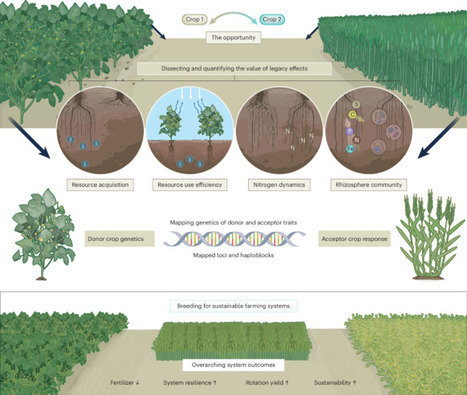
Food production must rise while its environmental footprint falls, an imperative sharpened by pressure to use fewer external inputs. Meeting this challenge requires gains from aspects that crop breeding has so far overlooked. One such source is the soil, because every crop transforms the environment in which it grows, shaping the conditions experienced by the next crop. We propose that these legacy effects, expressed through altered soil nutrients, water, structure and microbial communities, could offer new breeding targets. Many traits that modulate these effects vary within major crop species, and this variation is heritable and therefore selectable. We advocate breeding for farming systems to exploit this untapped genetic dimension. We outline the mechanisms underpinning this relationship, the frameworks needed to quantify it and the practical challenges of integrating legacy-aware selection into breeding pipelines. Every crop leaves a legacy, and understanding this provides a pathway to a more sustainable agricultural future. Crops leave a legacy in the soil that shapes the next season’s harvest, and the size of that legacy depends on the variety’s genetics. This Perspective proposes breeding for entire rotations rather than single crops to build more sustainable farms.
|
|
Scooped by
mhryu@live.com
September 16, 1:38 AM
|
The escalating global demand for high-quality protein, coupled with the environmental burdens of conventional animal husbandry, has driven the rise of microbial synthesis of lactoprotein as a sustainable cell-agriculture technology. This review describes multidisciplinary approaches to enhancing heterologous lactoprotein expression, spanning from host chassis engineering to downstream purification. We systematically integrate low-cost feedstock utilization, life cycle costing, and economic evaluation as independent core chapters, alongside a comparative analysis of different expression platforms spanning microbial, animal, and plant cell systems. Recent advances in post-translational modification and expression element optimization have driven the heterologous biosynthesis of lactoferrin in Komagataella phaffii to highest titers of 5.4 g/L. Furthermore, with this progress, a strategic shift from refined sugars to renewable feedstocks, including lignocellulosic biomass, crude glycerol, and methanol, has been realized. Notably, CO2-derived methanol enables a foundational paradigm for carbon-negative lactoprotein biosynthesis. The economic analysis identifies downstream purification as the principal cost driver, accounting for 45-92% of total production costs. Despite the marked economic and environmental advantages of microbial synthesis over traditional animal husbandry, this bottleneck must be addressed to enable commercial viability. Adopting scalable ion-exchange chromatography instead of affinity-based methods, together with AI-optimized workflows, is critical to achieving cost-competitive manufacturing. Collectively, this review provides actionable insights into the industrial feasibility, economic constraints, and scale-up challenges of animal-free lactoprotein manufacturing.
|
|
Scooped by
mhryu@live.com
September 16, 1:27 AM
|
Biological systems possess high robustness and intricate genetic redundancy, rendering traditional single-gene perturbations largely inadequate for comprehensively elucidating the true regulatory mechanisms underlying complex phenotypes. To address this, combinatorial CRISPR interference (CRISPRi) has emerged as an essential tool in systems and synthetic biology, offering reversible epigenetic control, multi-target regulation, and an absence of DNA toxicity. Unlike pooled single-gene screens, combinatorial CRISPRi facilitates the systematic dissection of buffering, synergy, and metabolic trade-offs by targeting multiple loci simultaneously. This review explores the latest advancements in pairwise and higher-order combinatorial CRISPRi screening, beginning with design strategies for multiplex guide RNA (gRNA) arrays and orthogonal systems. Computational techniques utilized for analyzing high-dimensional screening data and visualizing complex genetic networks are subsequently examined. Building upon these methodological foundations, crucial applications within microbial engineering are highlighted. Specifically, the review details the optimization of carbon flux in microbial cell factories to circumvent production bottlenecks, alongside the elucidation of protective multigenic networks against severe environmental stress. Furthermore, it addresses current obstacles, such as system noise and library construction challenges, and outlines future research directions. Ultimately, this review provides a comprehensive guide for decoding complex traits and driving rational designs of next-generation cell factories.
|
|
Scooped by
mhryu@live.com
September 16, 1:14 AM
|
Engineering microbial populations to perform complex functions requires programming not only cellular behavior but also the functional organization through which biological activities are distributed across populations. While phenotypic heterogeneity is often regarded as variability to suppress, it can also serve as a foundation for organizing specialized functions within genetically homogeneous microbial systems. Here, we introduce PROMETEO, a modular genetic-circuit framework that programs population composition through architecture-encoded regulatory and translational asymmetries. Using a library of 27 asymmetric bistable circuits, we demonstrate that circuit architecture reproducibly specifies phenotypic distributions spanning a broad range of population compositions without continuous external induction. Programmed population structures remained stable over serial propagation and were qualitatively conserved across E. coli and Pseudomonas putida. Stochastic and deterministic modelling accurately predicted architecture-dependent population compositions and hysteresis regimes, providing a quantitative framework for rational design. We further show that programmable population composition supports multiple modes of functional organization, including stable parallel specialization, inducible temporal redistribution of cellular states, and spatial ecological compartmentalization through biofilm-associated and planktonic subpopulations. As a demonstration of these capabilities, architecture-programmed organization enabled distributed Congo Red biotransformation through coordinated reductive and oxidative activities, achieving up to 98% dye removal in spatially compartmentalized populations. Together, these results establish population composition as a programmable property of genetic circuit design and provide a general strategy for engineering distributed functions within genetically homogeneous microbial populations.
|
|
|
Scooped by
mhryu@live.com
September 16, 6:23 PM
|
Harmful cyanobacterial algal blooms (HCBs) are a prominent worldwide environmental concern. Proliferation of HCBs outpaces the development of mitigation and management technologies. Recently, cyanophages began to emerge as a potential abundant resource that can be harnessed for target-specific HCB treatment. However, there exist two major technical barriers in applying cyanophage-based treatment to HCB mitigation: host specificity and lysogenic life cycle. This review attempts to parse documented studies that developed or applied genetic engineering approaches or technologies to tackle the barriers through expanding host range and bypassing or abolishing the lysogenic life stage. We summarized representative technical approaches that may be extrapolated from bacteriophage to cyanophage, discussed genes and pathways that regulate host binding and infection or determine the switch between lytic and lysogenic lifecycles, identified existing knowledge and technological gaps and challenges, and proposed some attainable solutions and future perspectives for this fast-growing field of engineered cyanophage-mediated HCB remediation.
|
|
Scooped by
mhryu@live.com
September 16, 6:07 PM
|
Long-read metagenomic sequencing improves assembly contiguity and enables genome-resolved analysis of complex microbial communities, but accurate taxonomic classification of long reads and assembled contigs remains challenging. Highly scalable k-mer-based classifiers such as Kraken2 frequently over-assign fine-rank taxonomic labels when applied to long-read data, producing high false positive classification rates driven by sparse or localized k-mer matches, particularly in microbiomes with extensive taxonomic novelty. We present Perseus, a lineage-aware confidence estimation framework for taxonomic classification that models the spatial distribution and hierarchical consistency of k-mer evidence along sequences. This formulation reframes taxonomic classification as a hierarchical confidence estimation problem rather than a single-rank prediction task. Perseus refines k-mer-level taxonomic signals from Kraken2 using a multi-headed convolutional neural network that estimates calibrated confidence scores for taxonomic correctness at each canonical rank. Using these estimates, Perseus confirms assignments, backs off to higher taxonomic ranks, or abstains when evidence is insufficient, prioritizing correctness and lineage consistency over overly specific assignments. Across simulations of taxonomic novelty and real-world metagenomic datasets, Perseus consistently and substantially reduces the false assignment rate while improving precision and lineage-consistent accuracy. These improvements are most pronounced for long reads and assembled contigs, where spatial context enables reliable discrimination between consistent taxonomic signal and spurious matches.
|
|
Scooped by
mhryu@live.com
September 16, 4:38 PM
|
Fluorescent timers (FTs), including tandem FTs (tdFTs), enable real-time visualization of precise protein localization and turnover within living cells, an essential property for elucidating protein function. In plants, application of FT has been limited largely because of the mismatch between FT maturation kinetics and the slow growth rate of plant cells. Here, we systematically evaluated multiple FT configurations to identify tdFTs optimized for plant systems. Using Arabidopsis thaliana, we tested a range of fluorescent proteins (FPs) differing in maturation times. Functional tdFT expression was confirmed in diverse organelles. Selected tdFT configurations were developed to track protein biogenesis/turnover in autoimmunity, protein transport in abiotic stress, and polarized protein translocation in determination of cell fate. When the large size of tdFT interfered with protein mobility, we developed a bipartite FT, separately tagging proteins with different FPs. This resource provides a framework for selecting FTs to dissect dynamic protein behaviors in plant cells.
|
|
Scooped by
mhryu@live.com
September 16, 2:56 PM
|
The discovery and engineering of enzymes capable of depolymerizing synthetic polymers with hydrolysable backbone linkages is now enabling biotechnological solutions for plastics recycling. Polyolefins and other non-hydrolysable polymers, however, have saturated carbon–carbon linkages that are more challenging to cleave biologically. Despite decades of research, the evidence that biocatalysts can appreciably deconstruct carbon–carbon-linked polymers remains ambiguous, often stemming from inconsistent assays and qualitative, low-resolution analytical methods and from the lack of proper identification and biochemical characterization of the enzymes involved. To aid in definitive polymer deconstruction measurements for non-hydrolysable polymers, here we survey abiotic and biological oxidation mechanisms and provide critical commentary on experimental assays and substrate and product characterization approaches. From this foundation, we propose best-practice experimental design principles, including reaction conditions, control experiments, analytical approaches, biochemical assays and characterization methods that should promote reproducibility and impact across this field. The evidence for biological degradation of non-hydrolysable synthetic polymers is critically evaluated to propose best-practice principles for experimental design that should promote reproducibility and impact across this field.
|
|
Scooped by
mhryu@live.com
September 16, 1:53 PM
|
Siderophores are classically viewed as shared iron-scavenging public goods, yet their ecological roles in multispecies communities remain incompletely understood. Here, we establish a synthetic microbial community syncom to dissect how different siderophores, their uptake compatibility and spatial structure shape iron competition. Using Corynebacterium glutamicum as a model, we show that this siderophore non-producer accesses diverse xenosiderophores, including enterobactin secreted by E. coli. However, exploitation was constrained and co-cultures converged to stable compositions. Dose-response experiments combined with mathematical modelling indicated that the producer retains more effective access to enterobactin than the exploiter. The presence of Pseudomonas putida altered this interaction, as it exploited enterobactin while producing pyoverdine, a siderophore inaccessible to the other community members that restricted their iron access. Across different cultivation scales, community dynamics was strongly influenced by spatial organization and initial composition. These findings identify siderophores as context-dependent iron-allocation agents that can promote microbial coexistence or exclusion.
|
|
Scooped by
mhryu@live.com
September 16, 1:31 PM
|
Quorum-sensing bacteria (QSB) play a crucial role in coordinating microbial activities in activated sludge. However, our knowledge is primarily based on cultivated or taxonomically classified species, neglecting microbial dark matter (MDM), which comprises lineages lacking reference genomes and is prevalent in wastewater communities. Herein, 3,569 high- and medium-quality metagenome-assembled genomes were obtained from 69 full-scale wastewater treatment plants. 1,289 MDM lineages were identified to possess quorum sensing (QS) capabilities, designated as MDM-QSB. Among them, 127 novel genera were identified. These organisms possess larger genomes enriched in genes for energy metabolism and environmental information processing, allowing a broader ecological niche compared to non-QS MDM (p < 0.001). They occupy central positions in co-occurrence networks and are predicted as dominant keystones by a deep learning model. Their robust metabolic potential and network keystone position enable coordinated community-level metabolic responses, as evidenced by stronger carbon, nitrogen, phosphorus, and sulfur element cycling functions and higher associations with COD, TN, and NH3-N removal (p < 0.05). Furthermore, genome-scale metabolic modeling reveals they engage in extensive cross-feeding with nitrifiers, denitrifiers, and polyphosphate-accumulating organisms, supplying metabolites such as protoheme and serine alongside QS signals. Together, these findings identify MDM-QSB as previously overlooked multifunctional hubs of activated sludge microbiomes. Given their crucial roles in community stability and process performance, incorporating these previously overlooked populations into monitoring and control frameworks is expected to improve the resilience and predictability of biological wastewater treatment processes.
|
|
Scooped by
mhryu@live.com
September 16, 1:12 PM
|
Yeasts, particularly Saccharomyces cerevisiae, are important eukaryotic chassis for synthetic biology because of their tractable genetics, versatile toolkits, and broad utility in metabolic engineering and functional genomics. Progress in this field has been driven by biological parts that enable programmable control of gene expression and cellular behavior. Early efforts focused mainly on promoters, terminators, and other regulatory elements for tuning individual genes. However, as engineering expanded to multigene pathways, genetic circuits, and dynamic regulatory systems, the limits of part-centric design became clear. Part performance is often shaped by genomic context, chromatin state, host physiology, and interactions with other components, which restricts modularity and predictability. In response, yeast synthetic biology is shifting toward integrated design frameworks combining multilayer regulation, standardized assembly, automated experimentation, and computational modeling. This review provides an integrated perspective on the evolution of biological parts across DNA-, RNA-, and protein-level regulation, connecting these advances with assembly frameworks, biofoundries, and machine learning to trace the trajectory from part-centric engineering toward predictive, system-level design in yeast synthetic biology.
|
|
Scooped by
mhryu@live.com
September 16, 12:26 PM
|
Since the discovery of the genetic code, a frequently discussed question is whether the numbers of synonymous codons for the various amino acids are randomly distributed or were shaped by evolutionary constraints. In this study, we analyze for the standard as well as alternative genetic codes, the correlations between codon degeneracy and amino acid frequencies in proteins (neglecting differences in gene expression). To taking into account the effect of GC content, expected codon frequencies rather than codon multiplicity need to be considered. A strong correlation of these frequencies with amino acid abundance is revealed. Furthermore, we identify consistent patterns of over- and underrepresentation of amino acids across domains of cellular life as well as viruses. For example, the codons for glutamate, aspartate, lysine, and methionine are consistently overrepresented across domains, while cysteine, arginine, histidine, and proline are underrepresented. Subsequently, we discuss the role of biosynthesis costs of amino acids and other factors such as the order of amino acid recruitment in early evolution, exposure to oxidative stress, and sulphur availability. We hypothesize that in a first phase of evolution, the genetic code evolved in a way so as to comply with the different demands for amino acids. In a second phase, after the code was frozen, changes in demand led to deviations from the strong correlation between codon multiplicity and amino acid frequency by natural selection. This comprehensive analysis offers new insights into the interplay between genetic code structure and amino acid usage across all domains of life.
|
|
Scooped by
mhryu@live.com
September 16, 12:10 PM
|
The discovery of RNA viruses from metatranscriptomic data remains challenging due to extreme sequence divergence and length heterogeneity, ranging from massive polyproteins to short assembly artifacts. We present Rider, a two-stage framework that synergizes deep representation learning with scalable domain-specific structural validation. In the first stage, Rider leverages a compact pretrained protein language model to broadly detect highly divergent viral signals. To overcome the inherent input length limitations of language models and accurately capture catalytic core domains, the second stage employs an overlapping sliding-window structure prediction strategy. These structures are then aligned against our curated database of non-redundant RdRp (RNA-dependent RNA polymerase) domains. This domain-centric design detects RdRp domains embedded within long polyproteins and truncated fragments. Across >10,000 metatranscriptomes spanning diverse ecosystems, Rider achieves sensitivity comparable to LucaProt, recalling >99% of previously cataloged RNA viruses. Rider identifies thousands of deeply divergent sequences and clades that elude existing methods. In a human inflammatory bowel disease (IBD) cohort, Rider agrees with other methods in detecting RNA viruses while extending detection to divergent lineages, providing a scalable pipeline for global RNA virome exploration. Here, the authors develop Rider, a method that integrates protein language modelling with domain-specific structural validation to detect divergent RNA viruses across more than 10,000 metatranscriptomes, including long polyproteins and short fragments.
|
|
Scooped by
mhryu@live.com
September 16, 9:59 AM
|
Small peptides have emerged as an important class of biologics with broad therapeutic applications. Limitations of conventional solid-phase synthesis have intensified the interest in microbial production systems. Komagataella phaffii, a widely used host for secretory protein production, represents a promising alternative platform; however, the efficient secretion of very small peptides (<3.5 kDa) remains a major biotechnological challenge due to constraints in detection, proteolytic processing, and overall secretion efficiency. To systematically investigate bottlenecks in small peptide secretion, we established the 3×FLAG peptide (23 amino acids) as a tractable, immunologically detectable model system. We evaluated the impact of peptide chain length and signal sequence selection on secretory performance. Furthermore, we assessed the effect of overexpressing the translocon components and conducted a random mutagenesis screen to identify novel genetic determinants influencing secretion. Finally, we tested the transferability of our engineering strategies on the disulfide-rich peptide dQ-brazzein and the therapeutic fusion peptides α-melanocyte-stimulating hormone and salmon calcitonin. Secretion efficiency exhibited a strong dependency on peptide chain length and signal sequence selection, likely reflecting limitations during endoplasmic reticulum translocation. Overexpression of Sec61 partially alleviated this bottleneck, enhancing secretion approximately 2-fold. Through the random mutagenesis screen, we identified AQR1, FMS1-2, SKG3, and CDC48 as novel targets, which increased secretion up to 9-fold. These engineering strategies were tested on dQ-brazzein, yielding up to ∼100% improvement, though the magnitude of transfer was cargo-dependent. Furthermore, the pronounced secretion limitations observed for α-melanocyte-stimulating hormone and salmon calcitonin based fusion peptides were partially mitigated utilizing these strategies, resulting in a ∼2-fold improvement. This study provides a systematic evaluation of engineering strategies targeting the unique constraints of very small (<3.5 kDa) peptide secretion in K. phaffii. The identified genetic targets and mechanistic insights serve as a starting point for cargo-specific optimization efforts and highlight the unique challenges that short peptides pose to the native secretory machinery.
|
|
Scooped by
mhryu@live.com
September 16, 1:30 AM
|
Synthetic biology has redefined the therapeutic role of microbes, transforming them from passive commensals or delivery vehicles into programmable living therapeutics capable of sensing, computing, and actuating within host tissues. This transformation is particularly relevant to metabolic disorders and oncological conditions in which pathophysiology is spatially heterogeneous, dynamically regulated and strongly modulated by host-microbe interactions. Engineered bacterial strains and other microbial platforms can be designed to degrade toxic metabolites, replace deficient enzymes or hormones, alter bile-acid and short-chain-fatty-acid profiles, modulate host immunity, and deliver antitumor payloads with spatial precision. In metabolic disorders, early live biotherapeutic programs have demonstrated that engineered E. coli is capable of metabolically degrading phenylalanine in phenylketonuria, thereby providing a clinical proof of mechanism for gut-restricted metabolic interception. In oncology, tumor colonizing bacteria have been engineered to express cytokines, checkpoint inhibitors, lytic toxins, and diagnostic signals, and their application has been recently demonstrated in colorectal cancer detection and localized immunomodulation. Despite this progress, clinical translation remains limited by variable survival and functional activity in vivo, inconsistent engraftment, metabolic and genetic instability, biocontainment requirements, manufacturing complexity, and uncertain dose control, persist in biogenetic engineering. This review highlights chassis selection, circuit architectures, applications for metabolic diseases and cancer, metabolic bottlenecks, and future directions for precision microbial therapeutics.
|
|
Scooped by
mhryu@live.com
September 16, 1:24 AM
|
Leveraging data from innovative experimental approaches, omics technologies, and bioinformatics, we offer new insights into how fungi communicate with and perceive their environment to achieve ecological success. By integrating comparative data from both the fungal and plant kingdoms, we critically reassessed the evolutionary, biochemical, and functional landscape of phytohormones in fungi, challenging the conventional notion that these molecules serve exclusively as plant regulators or as means of communication with them. Our analysis demonstrates that fungi not only synthesize a diverse array of phytohormones—including auxins, cytokinins, gibberellins, abscisic acid, ethylene, brassinosteroids, salicylic acid, and oxylipins—but also possess hormone-sensing and signal transduction mechanisms architecturally distinct from those of plants. Employing genomics, phylogenetics, and structural analyses, the review uncovers that many hormone biosynthetic and sensing pathways in fungi are evolutionarily ancient, sometimes predating their roles in plant–fungus interactions, and that some pathways show convergence rather than direct gene homology. Fungal phytohormones regulate development, growth, and metabolism, thereby playing key functions in their ecological context. The review emphasizes that, while biosynthetic pathways tend to be highly conserved, perception and signaling mechanisms in fungi are more varied and often remain poorly understood. We conclude that fungi have an intrinsic and autonomous hormonal physiology that underpins their ecological adaptability and success. Collectively, this analysis reframes fungal biology, highlighting the need for deeper investigation into the signaling and regulatory roles of phytohormones in fungi beyond their interactions with plants.
|











schaerli y