 Your new post is loading...

|
Scooped by
mhryu@live.com
September 18, 1:05 AM
|
Alkylamine production depends on ammonium produced via the energy-intensive, fossil-based Haber-Bosch process. Diazotrophic bacteria could offer a biological alternative by supplying nitrogen directly from air to heterotrophic whole-cell biocatalysts for alkylamine production. However, their integration with yeast production systems remains largely unexplored. Here, we evaluated the use of an ammonium-excreting strain of Azotobacter vinelandii (AZBB664) to supply nitrogen to an engineered Saccharomyces cerevisiae biocatalyst for vanillylamine production using air as the sole nitrogen source. A modified Burk’s medium was developed to support S. cerevisiae growth and enable evaluation of biologically supplied nitrogen. Co-cultivation of both organisms was feasible under diazotrophic conditions, however, vanillin oxidation by A. vinelandii prevented effective vanillylamine production. To address this, a sequential process was implemented in which A. vinelandii was first used to generate ammonium in a modified Burk’s medium, followed by cell removal and use of the resulting medium (AZM1) for yeast cultivation. In this medium, the yeast strain CEN.PK 113-7d exhibited a growth rate of 0.27 h− 1 and reached higher final cell density compared to the control medium supplemented with synthetic ammonium. Cultivation in AZM1 was associated with a more stable pH profile, which may have contributed to the improved growth of the yeast. S. cerevisiae strain TMBNM033 expressing recombinant transaminase and alanine dehydrogenase was able to convert vanillin to vanillylamine, although a significant amount of vanillic alcohol was also observed due to competing endogenous reductase activity. A. vinelandii-derived medium enables yeast growth and whole-cell reductive amination using air as the sole nitrogen source. This demonstrates that biologically fixed nitrogen can directly sustain heterotrophic whole-cell biotransformations, establishing a strategy for coupling diazotrophy with biocatalytic production systems.
|
|
Scooped by
mhryu@live.com
September 18, 1:00 AM
|
Ecological communication is traditionally interpreted through diffusion-limited chemical signalling. Here, we argue that bioelectricity provides a complementary dimension of microbial ecological interaction, arising from ion-driven electrical signalling between responsive cells and extracellular electron transport through redox-active or conductive pathways. These mechanisms operate over distinct physical regimes, with ion-driven signalling mediating information-bearing interactions when electrical or electrochemical perturbations are sensed and decoded by biological recipients, whereas extracellular electron transport enables metabolic and redox coupling. We define “handover distance” as the effective functional interaction range over which a biologically generated electrical or electrochemical perturbation can elicit a measurable response in a biological recipient. In analogy to the phycosphere, which describes the diffusionlimited chemical interaction radius surrounding microorganisms, handover distance provides an experimentally testable means of linking cellular electrophysiology to the spatial range of biological interactions. This Perspective proposes that bioelectrical interactions represent an underappreciated dimension of microbial ecology that complements established chemical communication across complex environments.
|
|
Scooped by
mhryu@live.com
September 18, 12:25 AM
|
Genetic engineering can transform bacteria (including Salmonella, E. coli, Listeria, and Yersinia) from naturally occurring microbes into programmable therapeutics. Unlike passive platforms, engineered bacteria can localize to defined biological niches, sense environmental cues, regulate programmed activity in situ, interact with host tissues in novel ways, and persist for controlled periods. These properties make bacteria versatile medicines but require genetic control of precision, safety, stability, and activity under clinical conditions. Major design layers include strain or “chassis” selection, attenuation and biocontainment, control of therapeutic activity, targeting and persistence, and genotype-to-phenotype stability during manufacturing and in vivo use. These features also create liabilities, including off-target behavior, unstable expression, and evolutionary loss of function under selection. Progress depends on safe, clinically translatable chassis with integrated, bounded, and durable behaviors. This review examines the genetic design principles and liabilities of bacteria-based therapeutics, approaches used to produce clinical and near-clinical candidates, and the emergence of programmed bacteria delivering complete gene editing systems to therapeutically relevant cells.
|
|
Scooped by
mhryu@live.com
September 18, 12:20 AM
|
Tuning protein expression in non-model organisms is often constrained by the lack of validated genetic parts and predictive design tools. Translational tuning through the modulation of upstream untranslated regions (5′-UTRs) offers a potentially organism-agnostic route, but existing methods typically rely on mechanistic assumptions, prior knowledge that may not be available in non-model contexts, or the screening of sequence libraries. Here, we present a simple generative approach for creating synthetic 5′-UTR libraries based solely on the genomic sequence statistics of any desired organism. The method uses a sliding-window n-gram language model applied to native 5′-UTR sequences to produce novel sequences that preserve organism-specific base distributions and motifs without hard-coding specific motifs or mechanistic rules into inflexible statistical templates. We have applied this approach to the model bacterium Escherichia coli and the non-model probiotic Limosilactobacillus reuteri. Libraries of approximately 1,000 sequences were generated for each organism, from which about 100 unique sequences were experimentally tested for translation of a fluorescent reporter protein. In both organisms, the synthetic libraries yielded a broad range of translation levels from this relatively small number of tested variants. Sequences derived from an organism’s own genomic statistics provided a more uniformly distributed range of translation rates in that organism than sequences derived from the other species. Correlations of individual sequence performance across the two species were weak, and thermodynamic predictions of ribosome binding strength showed very little predictive power, especially in the non-model L. reuteri. The results demonstrate that simple statistical language model approaches applied to genomic data can generate functional translational regulatory sequence libraries without detailed mechanistic knowledge or explicit reference to consensus motifs. The approach requires minimal computational resources, avoids reproducing native sequences, and can be readily applied to any organism with a sequenced genome. This strategy may lower technical barriers to expression tuning in non-model organisms.
|
|
Scooped by
mhryu@live.com
September 17, 11:27 PM
|
The coding sequence of an mRNA directs its own decay, yet how codons, codon context, and amino acids collectively regulate mRNA stability remains poorly understood. Here we use a massively parallel reporter assay to decode this regulatory layer in zebrafish embryos. We find that codon pairs and amino acid pairs regulate mRNA stability beyond the level of individual codons. This regulation depends on the identity and order of neighboring codons and their encoded amino acids in a translation-dependent manner. The relative contributions of codon and amino acid combinations to mRNA stability can be quantified using machine learning. We further found that endogenous mRNAs are regulated by codon pairs, thereby governing developmental gene regulation and biological function. This codon context-dependent decay requires deadenylation and decapping by Cnot7 and Dcp2, with Upf1 acting on long non-optimal ORFs. Together, our results redefine codon optimality as a context-dependent, pair-level code with implications for RNA biology and therapeutic mRNA design.
|
|
Scooped by
mhryu@live.com
September 17, 10:53 PM
|
DNA damage is an important component of the antibacterial response of phagocytes, but which DNA repair mechanisms are active in intracellular bacteria remains unclear. We developed a live-cell single-molecule tracking approach to directly measure DNA repair activity in E. coli within macrophages. Phagocytosis activates bacterial base excision and nucleotide excision repair pathways and increases DNA mismatch repair foci indicative of DNA replication errors. Phagocyte-generated stresses also cause a general slowdown in protein diffusion within bacteria, consistent with a transition of the cytoplasm towards a glass-like state, which is associated with reduced metabolic activity. At the single-cell level, DNA repair activity is highly heterogeneous, with metabolically inactive bacteria showing the greatest engagement of repair proteins. Together, these findings reveal how distinct DNA repair pathways are deployed during macrophage infection and link repair activity to the metabolic and biophysical states of individual intracellular bacteria.
|
|
Scooped by
mhryu@live.com
September 17, 4:48 PM
|
Cyanobacterium aponinum UTEX 3222 is a fast-growing marine cyanobacterium that reaches high cell densities, making it an attractive chassis strain for low-cost biomanufacturing. However, past efforts to genetically engineer UTEX 3222 have been unsuccessful. We hypothesized that the complex restriction modification systems in the UTEX 3222 genome constitute a major barrier to genetic transformation. Using a combined methylation avoidance and methylation mimicking approach, we overcame this barrier and successfully transformed UTEX 3222 by natural transformation, generating a large panel of fully segregated axenic strains. Transformation method was also established for a novel shuttle vector that replicates in UTEX 3222. A large-scale promoter screen identified promoters which exhibited strong expression at high cell density. These advances establish the foundation for developing UTEX 3222 as a scalable platform for photosynthetic biomanufacturing.
|
|
Scooped by
mhryu@live.com
September 17, 12:26 PM
|
Alternative σ factors enable bacteria to reprogram transcription in response to environmental cues and provide powerful tools for synthetic gene regulation. Extracytoplasmic function (ECF) σ factors have recently been implemented as orthogonal transcriptional switches in several bacteria, including the α-proteobacterium Sinorhizobium meliloti. Here, we investigated how promoter sequence context influences the activity and specificity of heterologous ECF-dependent core promoters. Combining ECF core promoters from Pseudomonas syringae and E. coli with flanking sequences derived from strong promoters of S. meliloti and other proteobacteria increased promoter activity by up to 45-fold while preserving σ factor specificity. We identified a short upstream AₙT motif, resembling a minimal UP element, as a key determinant of promoter strength. Targeted mutagenesis confirmed its role in supporting transcription initiation. Engineering promoter-flanking sequences together with the AₙT motif generated promoter libraries spanning up to a 75-fold range of activities. Importantly, promoter activity hierarchies were maintained within synthetic multi-gene regulons controlled by a single ECF master regulator, demonstrating modular and predictable gene expression. Our results establish promoter environment engineering as a robust strategy for expanding the dynamic range of orthogonal ECF regulatory systems and facilitate the scalable design of synthetic transcriptional programs in bacteria.
|
|
Scooped by
mhryu@live.com
September 17, 12:09 PM
|
Root-associated microbiomes are shaped by the plant, yet vary across environments and hosts, challenging prediction and engineering. Here, to uncover principles of bacterial selection at the root–soil interface, we applied a systems-level approach using reconstitution studies with communities of isolates from Arabidopsis, barley and Lotus grown in soil. Functional divergence among the microbiota of the host plants reflected distinct strategies: in Arabidopsis and barley, recruitment was primarily shaped by inoculum, while Lotus root environment favored fewer, functionally diverse isolates, akin to a ‘Swiss army knife’ strategy. Despite taxonomic variability, root microbiomes encoded overlapping functions. Across major taxa, isolates with broad but distinct functional repertoires within their families were consistently more abundant. Using a genome-to-function framework that is function centric, taxonomically inclusive and host-context aware, we identified 266 functions enriched across all root microbiomes. This functional backbone emerged as a core signature of plant-associated bacteria, providing a solid foundation for microbiome engineering in agriculture. Functional versatility plays a key role in shaping root microbiota.
|
|
Scooped by
mhryu@live.com
September 17, 11:11 AM
|
Preserving the genotype-phenotype linkage is critical in high-throughput screens exploring large parameter spaces. Screening pooled libraries for recombinant protein secretion is therefore particularly difficult, since protein diffusion into the medium disrupts this linkage. Existing methods impose significant restrictions on the environment of the screened cells. Here, we present AutoGrowth, a growth-based screening strategy linking growth rate to secretion via a single-cell biosensor. We demonstrated the proportional modulation of growth rate by secretion and validated the approach on five model proteins. As proof of concept, we screened a signal peptide library in bioreactors for improved secretion of a single-chain variable fragment by coupling AutoGrowth with deep sequencing. Additionally, through spike-in experiments, we showed that AutoGrowth can identify favorable variants diluted at ratios as low as one in hundreds of millions in three days. Our growth-based strategy provides unprecedented throughput potential and ensures selection of genetic variants presenting advantageous secretion and fitness capabilities.
|
|
Scooped by
mhryu@live.com
September 17, 10:39 AM
|
Degron tags enable rapid, tuneable and reversible control of protein expression, and have become a critical tool for target validation and elucidating biological mechanisms. Tag engineering uses genome editing to generate biallelic gene fusions, though this process remains laborious and requires new donor vectors to be generated for each locus. Here, we have generated a series of universal donor vectors to enable biallelic integration of different degron tags (AID, dTAG, BromoTag, SMASh) using different selection strategies (FACS, drug selection). Using this system, tags can be fused in-frame to endogenous protein C-termini via homology-independent repair following Cas9-induced double strand breaks, as shown here using human lymphoma cells, mouse embryonic stem cells and colonic tumour organoids. This workflow simplifies the genetic engineering of degron tags and is applicable in contexts where homology-dependent repair is challenging.
|
|
Scooped by
mhryu@live.com
September 17, 1:04 AM
|
RNA is built from a four-nucleotide alphabet. Complementary sequences inevitably arise, creating pervasive opportunities for promiscuous RNA–RNA interactions. Here, we show that this chemistry makes the transcriptome intrinsically prone to self-association. We simulated the simultaneous interactions of ~7,500 mRNAs representing the E. coli transcriptome at physiological concentrations. These large-scale simulations predict widespread, dynamic clustering driven by RNA alone and organized by long, multivalent transcripts. Purified mRNA recapitulates this behavior in vitro, with aggregate composition mirroring model predictions. Strikingly, native mRNA sequences are markedly less prone to self-association than matched randomized controls: They fold more stably, expose shorter single-stranded regions, and form weaker intermolecular contacts. Similar signatures are observed in abundant human mRNAs, suggesting that evolution has shaped coding sequences to minimize self-association. These findings identify transcriptome solubility as an unrecognized constraint on mRNA sequence evolution and provide a framework for understanding how cells keep their transcriptomes dispersed and functional.
|
|
Scooped by
mhryu@live.com
September 17, 12:58 AM
|
Host-associated microbiomes often display host specificity and heritability, yet the evolutionary processes under which such structured communities first emerge are still unclear. In particular, the conditions by which intergenerational (i.e., vertical) transmission of microbes can evolve and generate host-specific microbiomes are still unresolved. Here, we present an eco-evolutionary theory of microbiome assembly under minimal assumptions of microbial dynamics (i.e., neutrally driven by environmental fluctuations) and host control. We consider the adaptive evolution of microbial and host traits, including microbiome size and vertical transmission. We show that environmental fluctuations can generate enough among-host microbial variation to enable host-level selection favoring beneficial microbiome configurations. Vertical transmission can then evolve and, even when weak, allow microbiome specificity to be inherited and amplified across generations despite continuous influx from the external environment. Selection is most effective at intermediate levels of environmental fluctuation and host lifespan, revealing fundamental trade-offs between stochastic assembly, inheritance, and dispersal of microbes. The resulting microbiomes are dense, host-specific, and heritable, yet retain high intraspecific variability and lack strict phylosymbiosis. Simulated patterns of microbial dominance, diversity, and host–microbiome dissimilarity closely match those observed in nature, as evidenced using marine sponge microbiomes. Our results provide a mechanistic theory for the early evolution of host-associated microbiomes, showing that beneficial and species-specific communities can arise through selection and inheritance prior to the evolution of dedicated host-control mechanisms.
|
|
|
Scooped by
mhryu@live.com
September 18, 1:02 AM
|
Understanding how the three-dimensional (3D) organization of the genome relates to chromatin and epigenetic landscapes requires methods capable of measuring chromosomal DNA interactions and chromatin modifications in an integrated manner. Current approaches typically use separate assays to assess chromatin conformation and epigenetic state, thus these features are not assessed on the same DNA molecules. Here, we describe Epi-PoreC, an Oxford Nanopore long-read sequencing-based method that combines the chromosome conformation capture method, PoreC with Fiber-seq, a method for detecting accessible chromatin regions based on their ability to be labeled using an exogenous adenosine methyltransferase. The positions of chromosome contacts, 6-methyladenosines, and endogenous 5-methylcytosines are then detected by nanopore sequencing, all on the same DNA molecules. Using Arabidopsis thaliana nuclei, we demonstrate that Epi-PoreC yields genome-wide chromatin contact maps comparable to those obtained by standard PoreC and DNA methylation and accessibility profiles comparable to standard Fiber-seq experiments. Epi-PoreC is thus an efficient means for conducting epigenetic and 3D genome profiling on individual DNA sequences in a single assay.
|
|
Scooped by
mhryu@live.com
September 18, 12:52 AM
|
Bacteriophages are not only the most ubiquitous biological entity on earth, they also display remarkable genetic diversity across and within populations. While macrodiversity has been extensively studied, the drivers of microdiversity (intra-species genetic diversity) remain poorly understood, particularly in relation to phage lifestyle. The distinguishing ability of temperate phages to integrate themselves into the host genome has an unknown influence on the microdiversity present. This difference in microdiversity could impact the adaptability of phages to (a)biotic factors. To identify a possible association between microdiversity and lifestyle, we analysed 12 existing viromics datasets focusing on soil bacteriophages, including 43 171 viral genomes in total. We found that phages predicted to be temperate consistently exhibit higher microdiversity than their virulent counterparts in eight of 12 datasets. Of the remaining four datasets, one showed the opposite trend and three datasets did not show a significant trend at all. The detected pattern holds across multiple quality thresholds and lifestyle prediction methods. These findings suggest that lifestyle has a significant impact on genetic variation within phage populations, with potential implications for phage-host coevolution and environmental adaptability.
|
|
Scooped by
mhryu@live.com
September 18, 12:22 AM
|
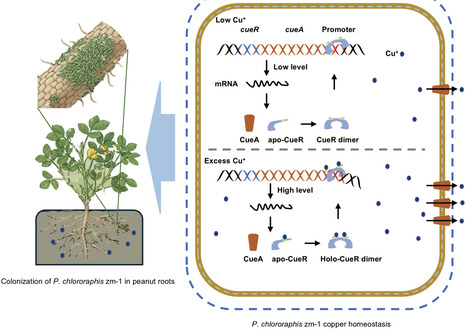
Copper serves as an indispensable trace element in living organisms, playing pivotal roles in fundamental physiological processes including enzyme assembly, antioxidant defense, and metabolic regulation. However, excess copper can induce oxidative damage. MerR-family regulator CueR acts as the core mediator of copper homeostasis in prokaryotes, but its mechanism of action in P. chlororaphis zm-1, a plant biocontrol bacterium that inhibits peanut stem rot, remains unclear. In this study, we investigated the regulatory function of CueR using molecular techniques including gene deletion, electrophoretic mobility shift assay, and quantitative real-time PCR. The results demonstrated that the transcriptional regulator gene cueR and the P1B-type ATPase gene cueA (involved in copper efflux) form the cueRA operon in strain zm-1, with a 4-bp overlap and co-transcriptional feature. CueR directly binds to the promoter region and positively activates cueRA expression upon copper ion induction, thereby driving CueA-mediated efflux of excess copper ions. The deletion of cueR or cueA significantly reduced copper tolerance, increased intracellular copper content, and impaired peanut rhizosphere colonization ability of the strain, while these phenotypes were restored in the complementation strains. This study deciphers the regulatory mechanism of the cueRA operon in P. chlororaphis and establishes a correlation analysis between this mechanism and the rhizosphere colonization capacity of the strain. The findings provide a molecular basis for understanding the diversity of copper homeostasis regulation in Pseudomonas and optimizing the biocontrol application of this bacterium.
|
|
Scooped by
mhryu@live.com
September 18, 12:18 AM
|
The canonical vocabulary of 20 amino acids limits the chemical space available to proteins and peptides. Expanding this vocabulary to hundreds of noncanonical amino acids (ncAAs) allows the engineering of proteins with novel function and activity, and is of particular interest for therapeutic peptides such as macrocycles, where ncAAs can improve proteolytic stability, membrane permeability, and immunogenicity. However, existing structure-based design tools either cannot model ncAAs at all, or are restricted to a small, fixed vocabulary of ncAAs seen during training, and ncAA data in the Protein Data Bank is scarce and heavily biased. We present NCFlow, a flow matching generative model that places any arbitrary ncAA into a given protein backbone using only its atom types and bond connectivity, and therefore generalizes to ncAAs never seen during training. To supplement sparse training data in the Protein Data Bank, NCFlow is pretrained on millions of small molecule structures and a large set of protein–ligand complexes before finetuning on native noncanonicals found within proteins. NCFlow outperforms AlphaFold3-based methods in the structure prediction of unseen ncAAs. We further present a peptide design pipeline akin to in silico deep mutational scanning, and propose a scoring strategy combining deep learning-based and molecular dynamics-based alchemical binding free energy calculations to identify improved peptide variants. We apply the method on four protein–peptide complex test cases, and observe that incorporating noncanonicals can improve predicted binding affinity by up to -7.0 kcal/mol.
|
|
Scooped by
mhryu@live.com
September 17, 11:10 PM
|
Cas12a is a CRISPR-Cas nuclease with biochemical features that make it useful for genome editing and nucleic acid diagnostics. However, its off-target and non-specific trans and CRISPR RNA-independent DNA cleavages can reduce the accuracy and limit applications requiring high fidelity. Here, we analyzed the role of two conserved arginine residues, R918 and R921, found in the RuvC active site pocket of Francisella novicida Cas12a. Through amino acid substitutions, biochemical assays, kinetic analysis, and computational study, we establish that a positive charge at 921 is required for CRISPR RNA-dependent DNA cleavage (cis cleavage), whereas R918 primarily enhances cleavage efficiency. Replacing R918 with lysine or alanine eliminates trans activity while retaining cis cleavage, whereas replacing R921 with lysine eliminates trans activity and replacing with alanine abolishes cis and trans cleavages. Furthermore, these changes significantly decrease RNA-independent cleavage and improve mismatch discrimination during cis cleavage, especially at PAM-distal sites. Structural analysis shows that R918 assists in the conversion of the lid covering the RuvC active site to an alpha helical form, while R921 stabilizes the DNA in the active site. Molecular dynamics simulations reveal that while R921 is critical in supporting the positioning of scissile phosphate, R918 is essential in maintaining catalytic-site organization through lid’s conformational change as well as in positioning DNA through its role in stabilizing the active site framework. Together, our results highlight the importance of R918 and R921 in Cas12a’s activity and the potential of modifying active pocket residues to reduce unwanted DNA cleavage while increasing on-target specificity.
|
|
Scooped by
mhryu@live.com
September 17, 4:55 PM
|
Klebsiella phage depolymerases degrade polysaccharide capsules and exhibit narrow substrate specificity for particular capsular types. Despite a growing number of experimentally characterized enzymes, these data remain scattered throughout the scientific literature, while existing protein sequence repositories are dominated by entries with computationally assigned, unverified functional annotations. Here we present DepoCat, the first interactive database of phage depolymerases with experimentally verified function and specificity http://depocat.uwr.edu.pl The database currently contains 131 proteins meeting rigorous inclusion criteria, spanning 75 distinct capsular types. Each entry integrates experimental and computational resources. The web interface provides an integrated Classifier tool with two search modes: sequence-based search and structure-based search – enabling preliminary structural classification and inference of putative substrate specificity of newly identified depolymerases. We demonstrated the utility of both modes on a set of 17 experimentally verified non-Klebsiella phage depolymerases, for which structural analysis enabled unambiguous class assignment in almost all cases despite low or undetectable sequence similarity to the database reference dataset. DepoCat constitutes a publicly accessible resource supporting research into the structural diversity and sequence-structure-specificity relationships of phage depolymerases, while also facilitating the identification of candidates for therapeutic and diagnostic applications.
|
|
Scooped by
mhryu@live.com
September 17, 12:37 PM
|
Microbial communities are highly diverse, making it difficult to distinguish stable ecological patterns from stochastic variation. The core microbiome offers a widely used framework for simplification, but prevalence-based definitions are often criticized for relying on arbitrary thresholds. We propose an alternative view in which the core microbiome is not a biologically complete or functionally exhaustive subset, but a data-driven abstraction that preserves dominant ecological information under strong dimensional reduction. Using bacterial (16S rRNA) and fungal (ITS2) communities from leaves, roots, and rhizosphere of clonally replicated pedunculate oak (Quercus robur) across a continental environmental gradient, we defined cores using a non-arbitrary threshold derived from the prevalence distribution. Despite retaining fewer than 6% of bacterial and 3% of fungal OTUs, cores preserved composition patterns, reproduced site differentiation, retained most predicted functional information, maintained network structure, and were robust across a wide range of sampling efforts. Prevalence and abundance captured distinct ecological dimensions: consistently occurring taxa were not necessarily the most abundant, and vice versa. Our results show that core value therefore lies not in identifying the most important microorganisms, but in providing a reproducible, information -preserving representation of complex communities - though core taxa nonetheless retained fundamental ecological and functional roles.
|
|
Scooped by
mhryu@live.com
September 17, 12:23 PM
|
Viral transcriptional regulators (vTRs) reprogram host gene regulatory networks to promote replication, persistence, and immune evasion. Despite the identification of hundreds of vTRs in human viruses, how they rewire host pathways remains unclear. Here, we systematically profiled 95 vTRs from diverse human viruses across multiple functional assays. vTRs perturb immune, cell proliferation/death, and signaling pathways through various mechanisms; some bind DNA directly, others cooperate or antagonize human transcription factors (hTFs), and some remodel chromatin. vTRs can act as activators or repressors and recruit similar but not identical repertoires of proteins as hTFs. These findings reveal vTRs as versatile transcriptional modulators that converge on conserved host “pressure points” while diversifying across pathways to promote viral replication and persistence. Notably, many vTR dysregulate genes within autoimmune, neurological, and cardiovascular risk loci, revealing potential mechanistic links to disease. Together, we provide a large-scale resource for understanding and targeting viral control of human transcription. The authors here show how viral transcriptional regulators reprogram human gene activity through diverse mechanisms, revealing shared strategies used by different viruses to control host pathways and potentially influence disease risk.
|
|
Scooped by
mhryu@live.com
September 17, 11:37 AM
|
Bacterial growth is straightforward to measure, complex in origin and exquisitely sensitive to environmental and genetic perturbations. As a quantifiable parameter, growth rate is central to modern microbiology, conflictingly portrayed as both an output and an input of physiological state. Here we provide a short history of bacterial growth measurement and explain the centrality of growth rate to modern microbiology. We then examine the physical and regulatory connections between nutrient availability, macromolecular synthesis and growth rate. We focus particular attention on (p)ppGpp, a nucleotide alarmone that offers the best-characterized mechanism for coordinating environmental conditions with growth. We end by addressing the cell-autonomous nature of homeostatic control as the basis of growth rate heterogeneity, discussing why the individual cell is paramount when it comes to understanding the relationship between different aspects of physiology, including macromolecular composition, cell size, cell cycle progression and growth rate. In this Perspective, Levin and Wang give a brief history of bacterial growth rate and discuss how it is connected to nutrient availability and macromolecule synthesis, with a focus on (p)ppGpp as a central hub regulating resource allocation and, indirectly, growth rate at the single-cell level.
|
|
Scooped by
mhryu@live.com
September 17, 10:44 AM
|
Base editors act on the DNA strand displaced within an R-loop, and the set of positions they convert, the activity window, has been engineered for a decade on the assumption that linker length and attachment geometry determine it. We built a geometric model that predicts where a tethered deaminase acts from linker statistics, steric exclusion, and R-loop geometry alone; fitted three parameters to two previously reported profiles, held them fixed, and scored predictions against 50 architectures from seven studies, with each substrate coordinate withheld. Varying the contour length by a factor of 16 does not shift the predicted window at all, whereas changing the attachment site does: across 185 buildable single-linker designs at thirteen attachment sites, the predicted peak never leaves protospacer positions 3 to 12, positions 1, 2 and 13 to 20 are reached by no design, and transfer to Cas12a fails by five to six nucleotides in a way that localizes to the fusion junction rather than to reach, sterics or substrate. Tether geometry, therefore, bounds where a fused deaminase can act without predicting where it does so, making attachment site rather than linker length the effective design variable.
|
|
Scooped by
mhryu@live.com
September 17, 10:08 AM
|
In the hydrogenotrophic methanogenic pathway, formylmethanofuran dehydrogenase (Fmd) reduces and fixes CO2, driven by low-potential electrons provided by electron-bifurcating heterodisulfide reductase (Hdr) complexed with electron-donating proteins such as Mvh hydrogenase. Here, we report the structure of a C2-symmetric (Mvh-Hdr)2-Fmd4 supercomplex from a Class I methanogen, Methanothermobacter marburgensis, which is architecturally different from the previously reported ring-shaped D3-symmetric supercomplex of a methanogen belonging to phylogenetically distinct Class II methanogens. In this C2-symmetric form, the redox active sites of Hdr and Fmd are connected by two MvhB polyferredoxins, whose branching electron paths appear to be available for electron transfer to/from other partners. The ancestral form was likely C2 symmetric, whereas D3-symmetric supercomplexes were acquired by horizontal gene transfer, a transition probably helpful for growth in substrate-poor environments.
|
|
Scooped by
mhryu@live.com
September 17, 1:00 AM
|
Over the past two decades, the field of bioorthogonal chemistry has transitioned from emerging to an established cornerstone of scientific inquiry. In parallel, advances in microbial and host–microbe research have highlighted the need for functional approaches that extend beyond genomic and transcriptomic analyses to directly interrogate protein-level activity. Despite this need, proteomic strategies capable of resolving dynamic, heterogeneous, and low-abundance protein populations remain underdeveloped in microbial systems. This review highlights the convergence of chemo-selective proteomic technologies with microbial biology, focusing on bioorthogonal non-canonical amino acid tagging (BONCAT), activity- or affinity-based protein profiling, and bioorthogonal post-translational modifications, and comments on possibilities for novel applications for the use of click chemistry-based tools in the functional interrogation of microbial systems. Together, these strategies enable spatiotemporal resolution of protein synthesis, selective profiling of microbial subpopulations, and direct characterization of protein activity and regulation in complex biological contexts, including single-species cultures, host-associated environments, and polymicrobial communities. Continued development and utilization of these technologies will enable deeper mechanistic insight into how microbial systems function and respond to environmental and host-derived cues.
|









r-1str